Stanbic Bank
Stanbic Bank
22.7 C
Kampala
Stanbic Bank
Stanbic Bank
Home Blog Page 1045

Parliament summons Finance Minister over delayed replacement of Kasekende at BoU 

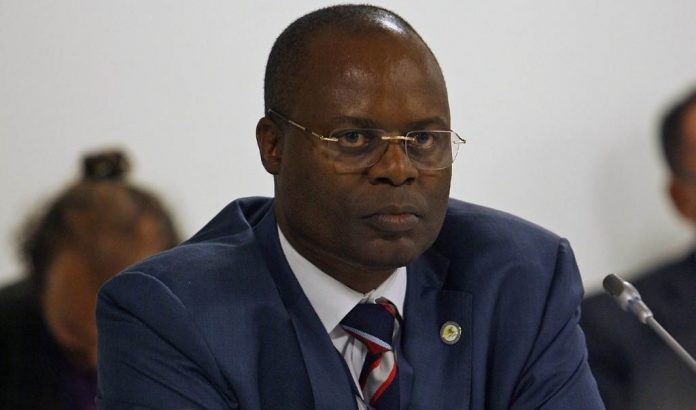
On the spot: Former Deputy Governor Dr. Louis Kasekende.

The Speaker of Parliament, Rebecca Kadaga, has summoned the Finance Minister, Matia Kasaijja to explain why government has not appointed the deputy governor of Bank of Uganda  replacing Louise Kasekende.

According to Kadaga it’s only Emmanuel Tumusiime Mutebile taking on all the responsibilities of the governor yet he is supposed to have a deputy

“I am concerned about this crisis, therefore, I hereby order the Minister of Finance Matia Kasaijja to appear before Parliament to tell us when the deputy governor is going to be appointed,” Kadaga said.

This comes after Igara County East Member of Parliament Michael Maranga Mawanda raised an issue of national importance in parliament tasking government to appoint a deputy governor for central bank.

“Madam Speaker, I am here to raise on an issue of national importance, I am currently working on the Bank of Uganda amendment bill 2019.But madam Speaker as I speak now, we don’t have a deputy governor for the Bank of Uganda, and the position is vacant. Can government explain to me why they are not appointing a new person?,” Mawanda said.

Former Bank of Uganda deputy governor Louis Kasekende contract expired on January 13 and he subsequently handed over his office to the governor after President Yoweri Museveni had declined to renew his contract.

Kasekende is one of the bank officials who witnessed dubious selling of seven defunct banks. Teefe in (1993), international credit Bank ltd in 1998, Greenland bank (1999), The Co-operative Bank (1999), National bank of commerce 2012, Global Trust Bank (2014) and the dubious sale of Crane Bank Ltd to Dfcu bank in 2016.

In 2018, Parliamentary Committee on Commission, Statutory Authorities and State Enterprises (COSASE) led by the then chairperson, Abdul Katuntu embarked on an investigation into the closure of banks after Auditor General’s (AG) report which showed irregularities into the sale and closure of banks.

COSASE established that, some banks including Crane Bank Limited were liquidated on telephone calls without thorough evaluation. Crane Bank Limited was in 2016 put under receivership and later sold to Dfcu bank at a mere Shs200 billion whose value was to be recovered from the bad book. Crane bank had initial capital of Shs478 billion.

When BoU sold CBL to Dfcu bank it also transferred to the same bank freehold properties of CBL/Meera Investments Limited without following the law. CBL was renting the properties from Meera that were wrongfully transferred to Dfcu bank.

It also established that Kasekende and Mutebile failed their mandate of adequately supervising the management in the process of liquidating the financial institutions.

Stories Continues after ad

Absa Group completes renaming of African ubsidiaries

ABSA

Absa Group Limited’s Barclays branded subsidiaries in seven African countries of Botswana, Ghana, Kenya, Mauritius, Seychelles, Tanzania and Zambia were renamed as ‘Absa’ today, completing the name change across the continent. Absa Group’s subsidiaries in Uganda and Mozambique were renamed in November.

The renaming of the remaining subsidiaries today marks another substantial milestone in Absa’s separation from Barclays PLC, a three-year process scheduled for completion by mid-2020.

“More than a name change, this is a milestone that brings us closer to realising our ambition as a leading African bank to support growth and development on the continent and beyond,” said Absa Group Chief Executive Daniel Mminele. “We are now united under a single brand in 12 countries in Africa.” Absa also has representative offices in London and New York.

The group-wide rebranding programme, one of the largest corporate rebranding projects in Africa currently, started with the launch of a refreshed visual identity in South Africa in July 2018 to reflect the group’s new identity as a standalone African bank. The name and brand change programme has seen the Absa logo replacing Barclays branding on thousands of asset types, including branches, offices, ATMs, uniforms, cards, stationary, forms, apps, websites and more.

“Today, we as the Absa Group, re-affirm our commitment to contributing to growth and economic development in Africa. We have a long-established and respected legacy in all our African markets, which will serve us well for the future,” said Peter Matlare, Absa Group Deputy CEO and Chief Executive of Absa Regional Operations. “By adopting the Absa name, we are leveraging our rich African heritage in order to drive relevant initiatives that will further unlock our continent’s potential, deepen regional integration and support accelerated growth,” he said.

The renaming of the subsidiaries is being celebrated with an array of events across the countries, as part of the marketing and communications drive to create awareness of the name change.

The rebranding programme unites Absa’s operations in 12 African countries behind a single identity, purpose and strategy.

Absa brand transition timeline

March 2016: Barclays PLC announces that it will reduce its ownership of Barclays Africa Group Limited (now called Absa Group Limited) from 62.3% to a minority shareholding, over time. This comes as global bank regulations tighten after the 2008 financial crisis, making it less attractive for international banks to own stakes in banks abroad.

December 2017: PLC concludes the sell-down, leaving the UK company with a 14.9% stake in the Group. Barclays PLC indicates that this is its long-term desired ownership level, and says that it does not plan to effect further sales at this time.

March 2018: Barclays Africa Group announces new Group strategy focused on growth, of which Absa Regional Operations (Absa’s operations outside of South Africa) is crucial.

July 2018: The Group’s name is changed from Barclays Africa Group Limited to Absa Group Limited, and the decision to change subsidiary names to ‘Absa’ is announced. A refreshed brand is unveiled in South Africa.

November 2019: Barclays Bank Uganda and Barclays Bank Mozambique are renamed as Absa

February 2020: All remaining Barclays-branded subsidiaries are renamed as ‘Absa’

Stories Continues after ad

African Development Bank approves $1m grant for Uganda to stem Ebola transmission

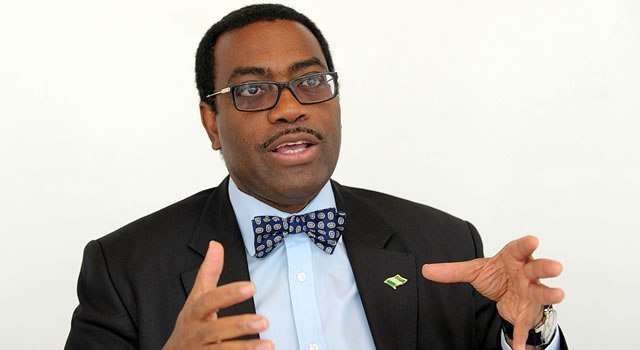
ADB President, Dr. Akinwumi Adesina

The African Development Bank has released a $1 million grant to Uganda to help the East African country tackle an outbreak of the Ebola virus.

The grant to support Uganda’s National Ebola Viral Disease (EVD) Preparedness and Response Plan, was approved in January. Funds have been disbursed through the World Health Organization (WHO), which is the implementing agency.

The grant follows a request by the Government of Uganda to the African Development Bank to support the country’s efforts in containing the Ebola scourge that has so far killed three people in the East African nation. The Bank is working with Uganda’s Ministry of Health, and the WHO, a specialized agency of the United Nations on health-related issues.

The agreement was signed by the Bank’s Uganda Country Manager, Kennedy Mbekeani,  Uganda’s Minister of Finance Planning and Economic Development, Matia Kasaija, and Dr. Rebecca Matshidiso Moeti, the WHO’s Regional Director for Africa.

The funds will be used for the management of suspected and confirmed EVD cases in Uganda, including the procurement and distribution of medical supplies, and care of people affected by Ebola. The grant will also be used to strengthen readiness and capacity at the national level and in high-risk districts, including training and emergency support. With this support, response teams will be quickly deployed and surveillance of the disease will be strengthened.

The Bank praised the Ugandan government for its vigilance, and called upon other development partners to support its efforts to stem transmission of Ebola infection and prevent new outbreaks in non-affected areas.

The Government of Uganda’s request for emergency relief assistance will help to save and protect lives, and restore the normal livelihoods and economic activity of people in 31 districts in the country. The request falls within the Bank’s revised policy guidelines and procedures for emergency relief assistance. Uganda’s Ebola response plan is aligned with the Bank’s High priority which aims to “Improve the quality of life for the people of Africa.”

Stories Continues after ad

Gen. Saleh’s daughter asks court to take ex-husband for mental checkup as he marries Kutesa’s girl

Esteri Mugulwa Akandwanaho and Eng. Ronald Ndizeye Sekaziga during their happier days.

The daughter of Caleb Akandwanaho aka Gen. Salim Saleh, Esteri Mugulwa Akandwanaho has petitioned  court to have her ex husband and father to her children Eng. Ronald Ndizeye Sekaziga, to have him psychologically evaluated.

The businesswoman and mother of three broke up with her former husband in 2017 due to irreconcilable differences and any attempts of mediating between the two parties were of no help.

On February 11, 2020, Ms Akandwanaho, through her lawyers at Kashillingi Rugaba Associates sought for an mental evaluation of her ex-husband Sekaziga after the former repeatedly refused to follow protocol and continuously put their children at risk by taking strangers to their schools. This is believed to have terrified the young mother who currently seeks sole custody of the divorcees three children.

However, sources close to the pair and their families believe there is more to the story than meets the eye. Although the two were madly in love with each other by the time they married in 2010, theirs was a short lived marriage as things took a turn for the worse shortly after that and the pair separated. A source who wishes to stay anonymous states that the two were majorly separated by the betrayal on the husbands part; after he fell in love with his wife’s best friend a daughter to Maj. Gen.Pecos Kutesa. It seems that any attempts to stay faithful to his wife failed, leaving he young bride without a husband and close friend.

This not only rocked the newly weds but also caused a huge scandal in the family as the two girls were not only close but family friends; further severing any Kutesa and Akandwanaho ties despite the families having been very close prior to the breakup.

Although Ms Akandwanho continues to fight for the custody of her children, Sekaziga on the other hand looks happy to move on as he plans to marry and settle with his new bride,…. This new development doesn’t seem to settle well with his ex-wife who quickly ruched to The Nakawa magistrate’s Court to have him mentally checked before anyone else can claim him as their own. Whether this is an attempt to besmirch the young engineer is not yet clear however it seems not have been powerful to halt any marriage plans as the new couple seem intent on tying the knot despite the sabotage from any family members or friends(ex).

Stories Continues after ad

EAC partner states directed to enforce laws banning plastic carrier bags

Plastic bag pile


East African Community partner states have been directed to enforce relevant laws to effectively ban the manufacture and use of plastic carrier bags with immediate effect.

The 7th Meeting of the EAC Sectoral Council on Environment and Natural Resources Management which met in Dodoma, Tanzania further directed Partner States that have not completely banned the single use plastic and plastic carrier bags to do so urgently.

So far, Burundi, Kenya, Rwanda and Tanzania have fully enforced the ban on the manufacture of single use plastic and plastic carrier bags.

The Sectoral Council further adopted the EAC Comprehensive Action Plan on Disaster Risk Reduction and directed the Secretariat to expedite its implementation.

The Sectoral Council received a status report on the implementation of the Sendai Framework for Disaster Risk Reduction (SFDRR) which was adopted by African Union Member States and the rest of the world during the 3rd UN Conference on Disaster Risk Reduction.

The Council was, among other things, informed that in implementing the SFDRR, the overall disaster risk had generally increased in the EAC region in recent years.

Further, mortalities from biological and hydro-meteorological hazards remained stable but the number of people affected by disasters dropped from 32 million to 1.5 million.

The Sectoral Council further heard that the direct economic impact of disasters in the EAC dropped from $1.8 million to $483,600 over the period with Kenya and Tanzania sustaining the highest economic losses.

The Council was informed that massive impact had been noted including landslides, floods and drought on health, educational and transportation systems.

The Sectoral Council further adopted the final Draft EAC Forestry Policy and EAC Forestry Strategy (2020/21 – 2031/32), which strategy is expected to address the social and environmental impact and investment gap in the forest sector.

The Council observed that the EAC Forestry Policy and Strategy will support Partner States in embracing landscape approach as one of the vehicles for achieving multiple objectives of biodiversity conservation, resilient and productive forest ecosystems, improvement of livelihoods, and mitigation of climate change.

The landscape approach to conservation refers to balancing competing land use demands in a way that is best for human well-being and the environment. It means creating solutions that consider food and livelihoods, rights, restoration and progress towards climate and development goals.

The meeting noted that the validated draft EAC Forestry Policy and Strategy would also enhance and strengthen coordination of programmes on natural resource conservation and initiatives supported by the respective Conventions and regional agreements.


Stories Continues after ad

Gen. Biraro was a patriot-Gen. Muntu

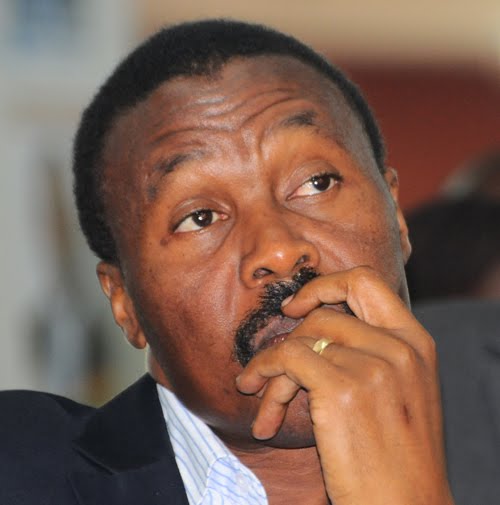
Gen. Mugisha Muntu.

Former Army Commander of Uganda people’s Defence forces (UPDF) and now coordinator of Alliance for National Transformation (ANT), party retired Major General Mugisha Muntu has eulogized late Major General Benon Biraaro and described him as a patriot who diligently served his country.

The former presidential candidate who wowed many of over his oratory skills and intelligence during 2016 general election, died yesterday  Wednesday morning at Kampala Hospital of colon cancer

In his condolence message, Gen Muntu said, “our country has lost a patriot. General Benon Biraaro served his country diligently and unreservedly. Amidst all the temptations of power he has passed on by God’s Grace before bowing to the sense of entitlement that many within our ranks who fought the Bush war succumbed to.”

He said that Gen. Biraaro stuck to the ideals they fought for in 1981 to 1986 and never bowed to what has completely derailed the cause for which they made significant sacrifices and he did not succumb to greed and arrogance that have seen many loose bearing.

“He may not have often been critical in open public fora but I know that he boldly expressed his views to the powers that be on the most critical political and constitutional challenges of our time even when he was still in uniform. Amidst the trials and temptations of this world and the pain he experienced he has passed on in at ease with himself and his God.” He said

“I would like to extend my heartfelt condolences to Joy and the family for your great and irredeemable loss. We will stand with you through this really dark period. A grateful nation salutes you. May the Lord rest his soul in eternal peace?” Muntu said

While still in active military, he served as the commandant of the Uganda Senior Command and Staff College in Kimaka, Jinja among other deployments.

He was born on March 1, 1958 in Isingiro District. He attended Makerere University, in Kampala, Uganda’s oldest and largest public university, graduating in 1982 with a Bachelor of Arts in political science. Later, he attended Cranfield University in the United Kingdom, graduating with a Masters in Global Strategic Studies.

Stories Continues after ad

South Sudan Civil Societies in Kenya support Ten States

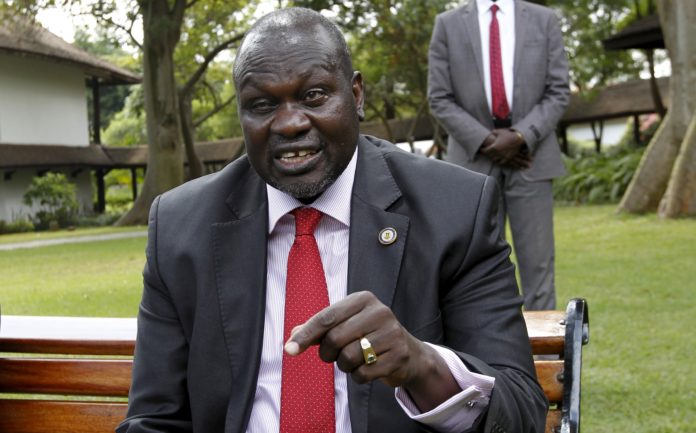
Riek Macha, SPLM-IO strongman who declared war against Salva Kiir and his regime in Juba.


An Open Letter to Amb. Dr. Islmail Wais, IGAD Special Envoy for South Sudan

By the Leaders of Civil Societies,

Nairobi, Kenya,

Feb 12, 2020 — Following the Summit of the IGAD Heads of States and Government on the situation of the Republic of South Sudan, held in Addis Ababa from 8-9 February 2020, the Summit delegated His Excellency Dr. Abdalla Hamdok, Prime Minister of the Republic of Sudan and Chair of IGAD General Assembly and His Excellency General Yoweri Kaguta Museveni, President of the Republic of Uganda, both as co-guarantors of the Revitalized Agreement on the Resolution of Conflict in the Republic of South Sudan (R-ARCSS ) 2018. The Summit mandated the two leaders to separately and jointly meet with His Excellency General Salva Kiir Mayardit, President of the Republic of South Sudan, and His Excellency Dr. Riek Machar, leader of the Sudan People Liberation Movement in Opposition (SPLM-IO) with objective to reach amicable solution on the outstanding issue of number of States in the Republic of South Sudan.

As a result, Dr. Riek recommitted the position of the SPLM-IO to only 10 States plus Abyei Administrative Area, while President Salva Kiir, on behalf of the Government first agreed to return the country back to ten States but after meeting with his delegation, changed his mind and maintained the government position of 32 states plus Abyei Administrative Area respectively.

The two guarantors of the R-ARCSS could not resolve the stalemate and accordingly closed the meeting with conclusion that the Government will go back to South Sudan and conduct popular consultation with people of South Sudan and thereafter, the final outcome shall be communicated to the regional and international community during the upcoming tripartite meeting to be held in Addis Ababa on February 15,2020,

Noting that only thirteen days are left before the end of the one hundred-day extension of the deadline for the formation of the Revitalized Transitional Government of National Unity on February 22, 2020,

Acknowledging that the formation of the Revitalized Transitional Government of National Unity has been postponed twice in May and November 2019,

Realizing the fact that no genuine Revitalized Transitional Government of National Unity can be formed without agreeing on the number of States and their borders,

Recognizing the fact that 2015 peace agreement was based on 10 States,

Having recognized the enormous sufferings being experienced by people of South Sudan, particularly women and children and the cost of non-implementation of the peace agreement going up for the international community,

IGAD Council of Ministers having recommended reduction in the number of States from 32 to 23 or 10, while IGAD Heads of States Summit, having noted the recommendations of the Council of Ministers to reduce the number of States in South Sudan,

Noting the fact that economy of South Sudan has collapsed,

Government of South Sudan having requested further consultations on the number of States,

Reducing the number of States back to 10 which have some positive legal and constitutional implications and is affordable in light of the current economic crises in the country and majority of South Sudanese communities in the Country, at IDPs camps and outside the country in refugee camps, being in support of 10 States,

We the Civil Society Organizations leaders in Kenya, would like to register our support for reduction of South Sudanese States from 32 to 10.

This is because of the following reasons: –

1. The 2015 Agreement was signed based on 10 States

2. The independence of South Sudan was based on 10 States

3. The border of 10 States are very clear and have no disputes

4. The 10 States are economically viable and sustainable

5. The 10 States promotes unity and social cohesion as opposed to 32

6. States which are created on tribal basis promotes tribalism and disunity among South Sudanese

7. The 10 States were created by Sudan government and affirmed by independence of South Sudan,

8. The current budget of South Sudan is based on 10 States

9. The population of South Sudan is smaller than Kenya, Uganda, Sudan, Tanzania, Nigeria and USA among others and therefore does not require 32 States

10. The economy of South Sudan has collapsed and cannot sustain 32 States
Creation of 32 States gives political and economic domination of South Sudan to an elite and the expenses of remaining 64 tribes of South Sudan and therefore supporting the current 32 States is blessing permanent political and economic domination of the 63 tribes by one tribe.

11. Maintaining 32 States may force other communities to unite and form a country of their own, so as to come out of political and economic domination by one tribe.
Conclusion

In order to maintain unity of South Sudan, overcome economic and political domination by one tribe, bring lasting peace in South Sudan, we call upon IGAD, AU, UN, C5, EU, TROIKA, Amnesty International, Enough Project, Human Rights Watch and other international groupings and institutions to put more pressure on South Sudan Government to reduce the number of States from 32 to 10 and ensure that an all-inclusive, transparent, regional and tribal balanced Revitalized Transitional Government of National Unity is formed on schedule in South Sudan in line with the signed Revitalized Peace Agreement, without neglecting any of the articles of this agreement.

Signed:

Mr. Daniel Deng
Dr. Wesley Natana
Noel Night
Tut Michael

You can reach these Civil Society leaders through email at bnatana@yahoo.com for more information.

Stories Continues after ad

Open your offices to advocates-PJ tells judges 

The new Principal Judge, Dr. Flavian Zeija, has urged judges to consider advocates key stakeholders in court business and allow them more access to their chambers.

“Have an open-door policy for the lawyers to see you anytime if you are available in chambers. There is no reason they shouldn’t see you, unless you have something to hide. Lawyers remain important stakeholders to us because their contributions carry weight in the decisions we make,” he said.

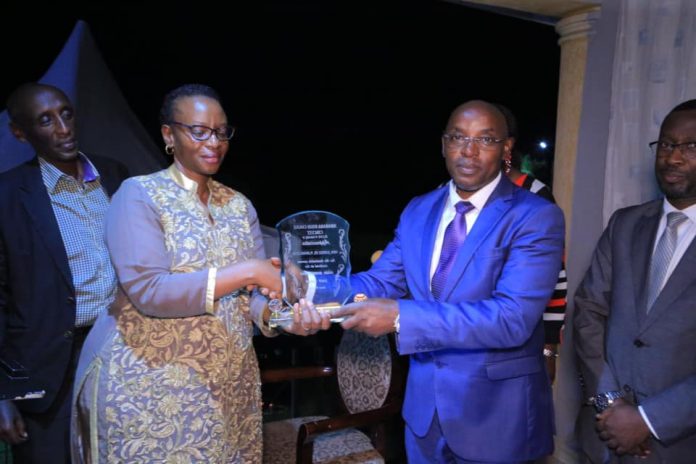
Dr. Zeija spoke during a farewell dinner organized for him by the Justice, Law and Order Sector stakeholders in the Mbarara High Court Circuit, where he served as senior resident judge. The occasion was also used to welcome the new Senior Resident Judge, Tadeo Asiimwe, to the Circuit.

Mbarara’s second Resident Judge, Joyce Kavuma spoke on behalf of the JLOS Stakeholders: “It is befitting for us to celebrate with you this big achievement as a family and we thank God for his blessings…Mbarara is one of the biggest (High Court) Circuits in Uganda and they usually send Judges who can deliver. Indeed, your promotion has proved it right.”

Justice Zeija will be remembered for time management, fighting backlog through initiatives like Plea Bargain, efforts towards decongestion of prisons, pushing for session facilitation from Kampala, as well as being result-oriented, according to Judge Kavuma.

“For the incoming Senior Resident Judge…feel at home and just know that we are all ready to work with you,” she said.

The occasion was attended by Deputy Registrar, Amos Kwizera; Mbarara Bishop, Rt. Rev. Sheldon Mwesigwa; the district leaders, the heads of JLOS institutions in the area, advocates and other Mbarara-based Judiciary staff.

Stories Continues after ad
Top NRM mobilizer on rampage as his men kill a person in Mubende

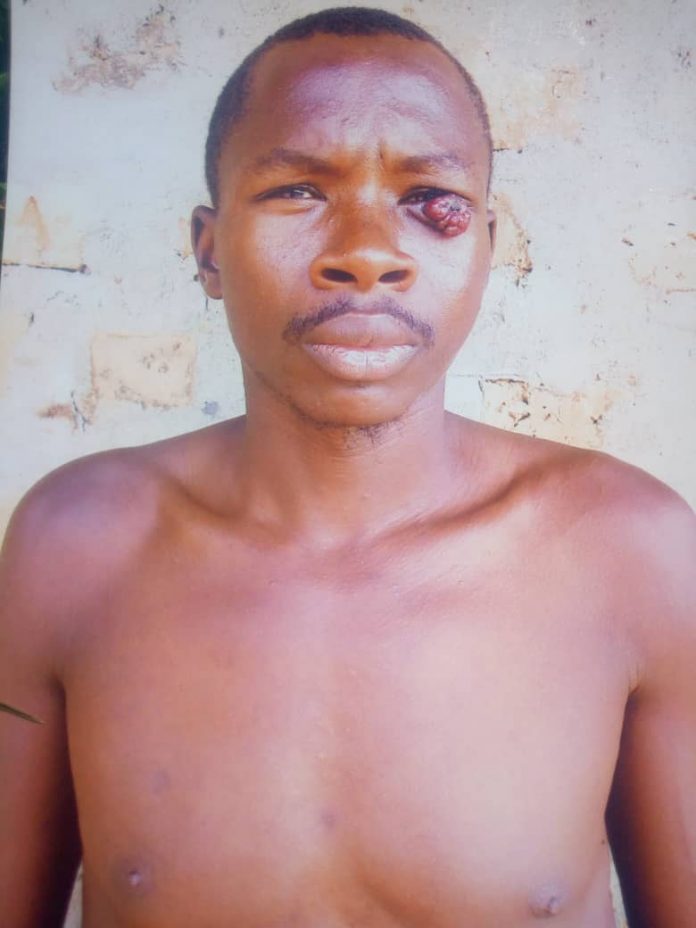
The Vincent Karemera, who was reportedly killed by Karangwa's men.

Residents of Kanyogoga parish, Butorogo Sub-county, Mubende District are living in fear following a series of incidents that resulted in the death of one of their own, Vincent Karemera, 33 years on February 9.

In December last year, Vincent Karemera, a farmer, was carrying on his daily activities alongside fellow villagers in Mpiive Forest when they were set upon by a group known as ‘Group Gang’.

The group was led by three individuals, Khalid Bikongolo, Elia and Kanyamuhare known associates and employees of Moses Karangwa, NRM District Chairman Kayunga. Khalid is a manager in the security company owned by Mr Karangwa, Skariatic Group.

It is said that Karangwa uses the name of Gen. Salim Saleh in doing some of his dubious activities. However, this is not the first time Karangwa who is known for evicting people on land. He has previously clashed with former Miniser Idah Nantaba in Kayunga and other areas in Busoga sub-region.

The villagers were subjected to beatings using gun butts and machetes for several hours leaving many nursing injuries.

An assault case REF 07/31/12/2019 was reported at Kanyogoga Police post but no action was taken despite a subsequent meeting involving the district RDC, DPC and NRM Kayunga chair Moses Karangwa. However, none of the above security personnel could intervene for fear.

Eagle Online was informed that Karangwa boosts of having influence and therefore, whoever tries to summon him finds it hard in operating in the area. It is alleged that he influenced the transfer of the current RPC from Kayunga to greater Mubende.

Fast forward to Monday February 11, still reeling from the assault the previous year, the gang descended on the villagers again and subjected them to another beating which left among others Vincent Karemera in critical condition.

Karemera  was then rushed to Kifumbira Health centre for treatment and returned home to rest. Unfortunately he passed on the same day.

It was at this point that a team lead by the OC Station Mubende collected the body of the deceased and drove to Mubende Referral Hospital to carry out a post mortem under the directive of the RPC and DPC Mubende (a one Ahimbisibwe).

A deep cut on the head of Rasta Nzeyimana who went missing.

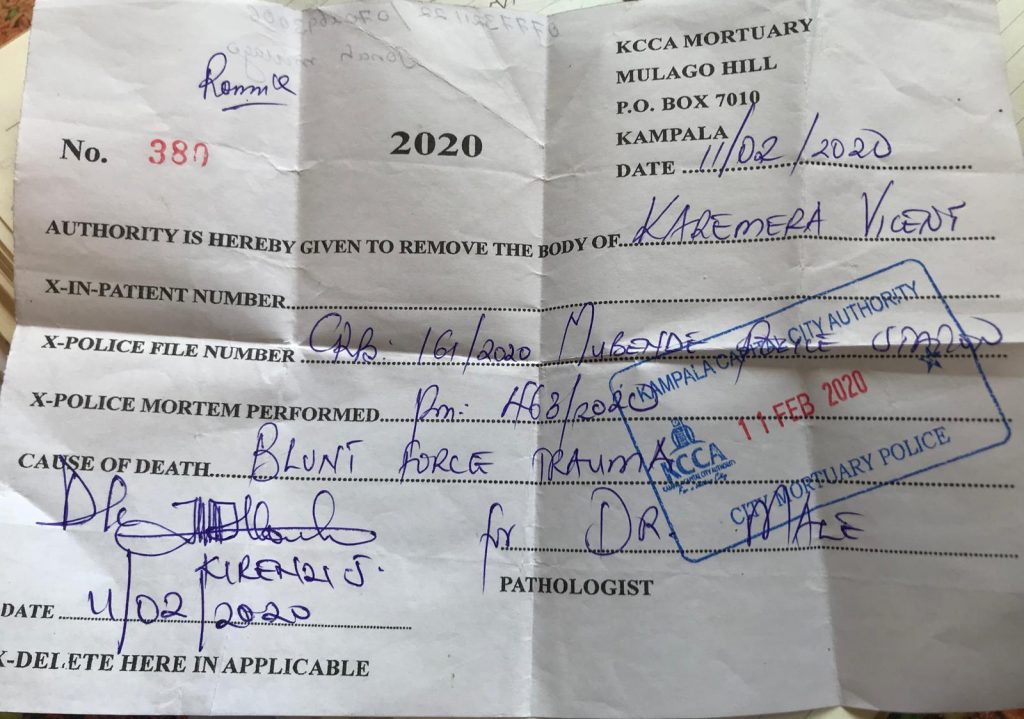
The deceased family was then verbally informed that the cause of death had been identified as cancer. However following protests from the family, the body was transferred to Mulago for a second post mortem and the cause of death was listed as blunt force trauma.

Other villagers subjected to the assaults that have been identified include Rasta Nzeyimana, Sam Gombya, Seruvumba Faustine. Other villagers refused to be identified for fear of reprisals which have become endemic in the area.

A deep cut on the arm of Rasta Nzeyimana of those whose whereabouts isn’t known.

Rasta Nzeyimana is missing and has not been heard from since the incident

Khalid Bikongolo has since been arrested following pressure from the community

This incident adds to a growing number of incidents involving the seemingly untouchable Moses Karangwa across several districts including theft, extortion, grevious bodily harm and assault. In many cases, there has been no conclusive end as witnesses or evidence have been tampered with or lost.


Stories Continues after ad
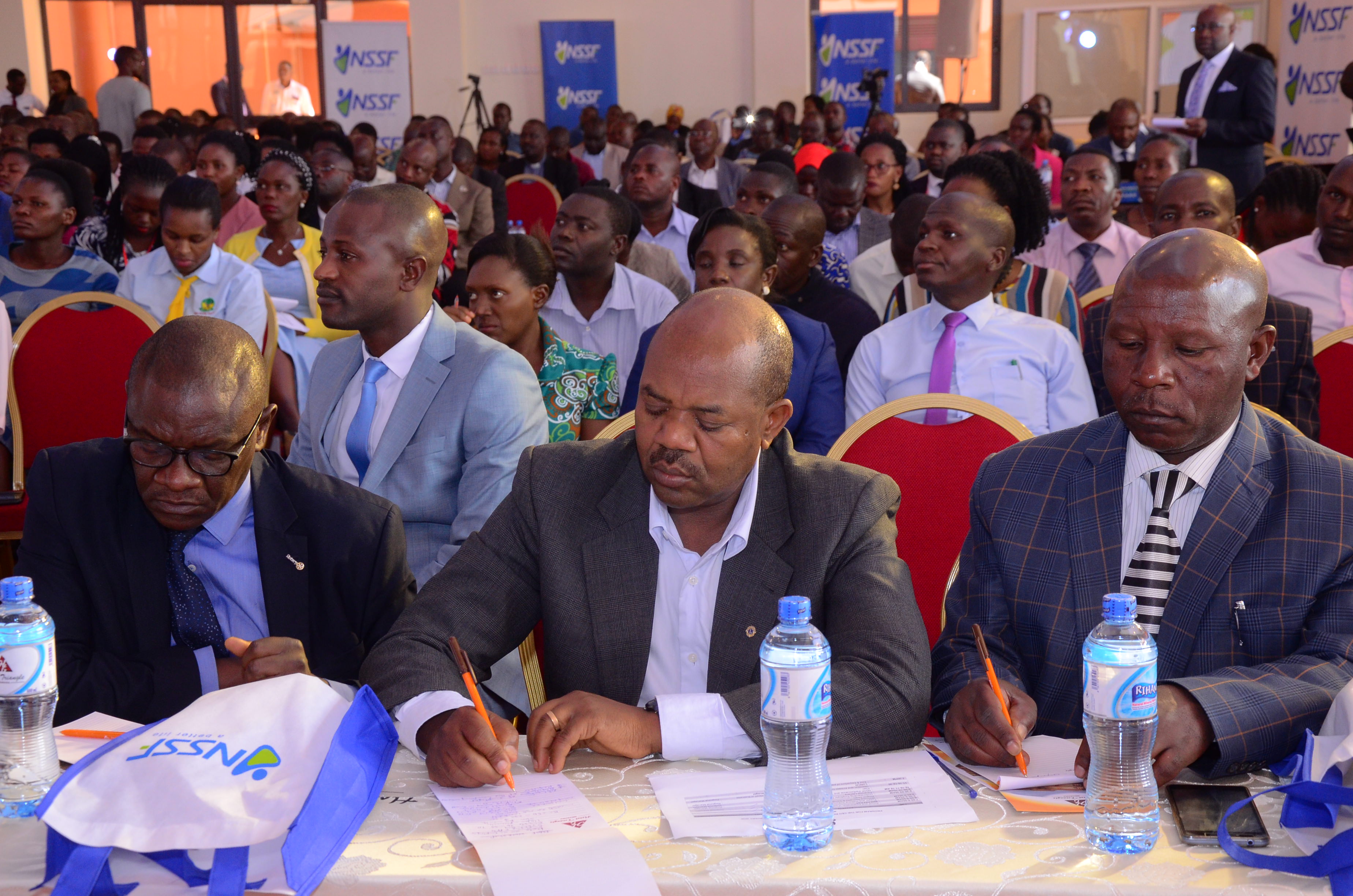
Western Region asked to embrace NSSF’s technological innovations.

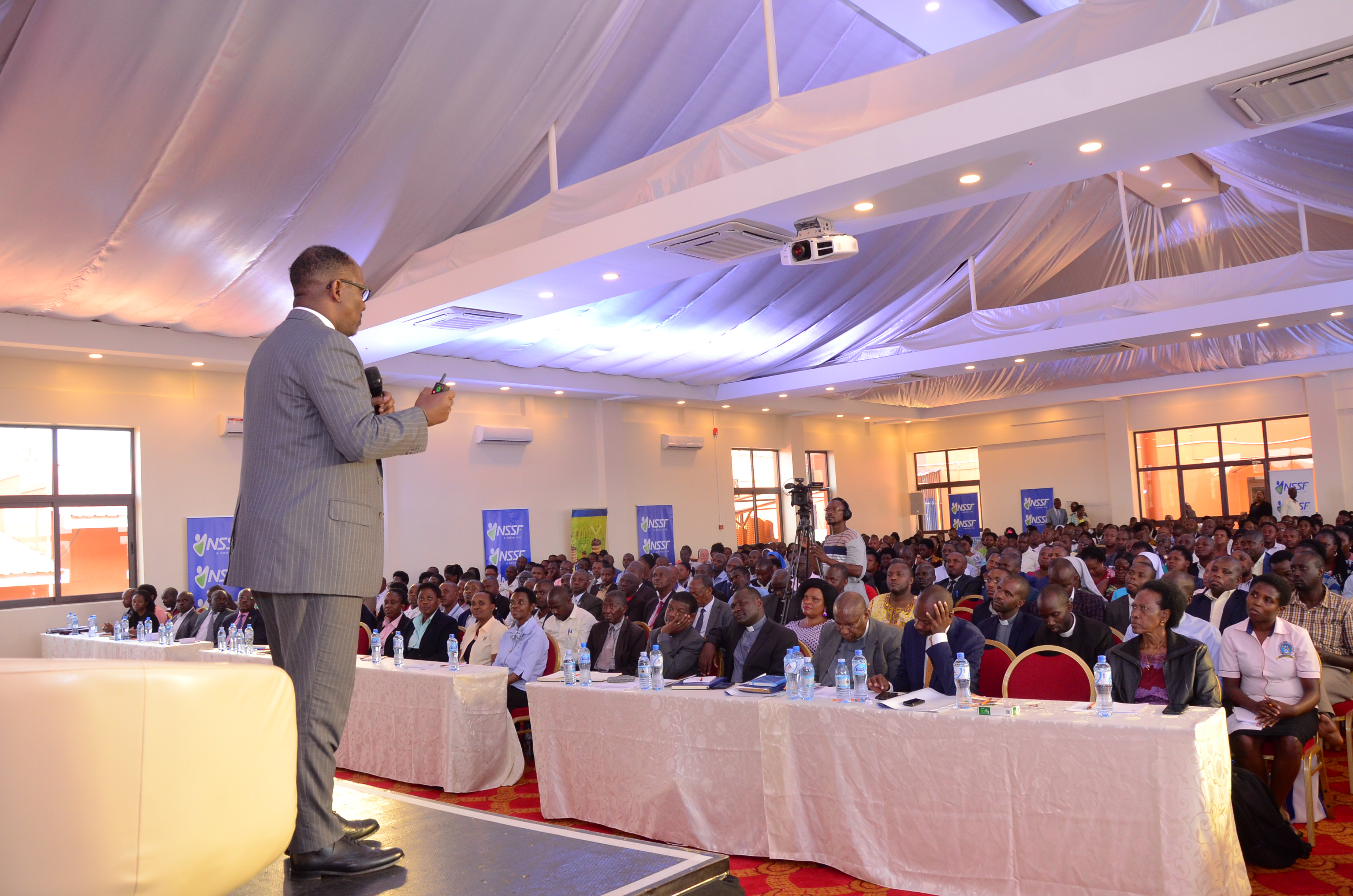
On Tuesday, The National Social Security Fund encouraged all its members, including employers and employees to embrace and fully utilize the organization’s technological innovations that are aimed at improving and providing better quality services for its customers. This was announced during the western-regional employer meeting held at the Hotel Triangle, Mbarara District.

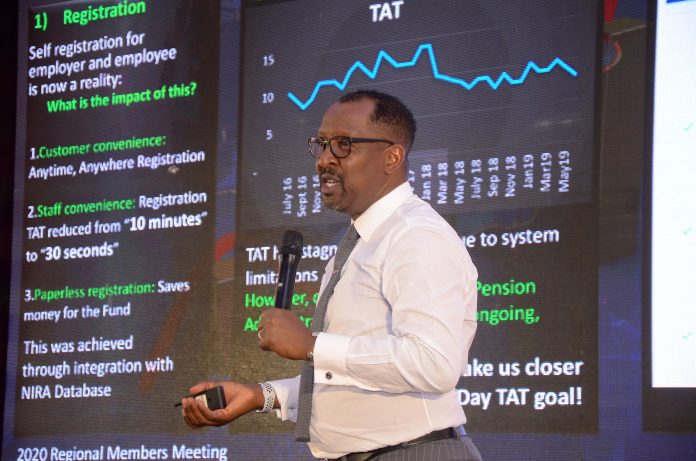
“We must accept that the environment of doing business has changed due to the sophisticated technological progressions that are happening now, we as NSSF, have pushed for a paperless economy in all our branches , therefore we request all our customers to appreciate our e-services for a better service delivery,” Managing Director, Mr. Richard Byarugaba said.

This meeting was the fourth in the Western region and the second of its kind to take place in Mbarara town. The NSSF Western belt is comprised of districts like Masaka, Mbarara, Bushenyi, Kanungu, Kabale Kisoro and Fort portal.

The Fund’s current statistics show that 70% of their members access their services such as self-registration, clearing remittances and checking balance statements via their online portal where as only 30% are still visiting the branches for services.

According to Mr. Geoffrey Ssajjabi, NSSF Head of Business, this percentage is promising but it’s not their target, therefore, to be able to hit their intended target of 100% e-services, members have to appreciate the existing Fund’s online channels and interact with them more often.

Mr. Byarugaba highlighted the key importance of the online tools such creating customer satisfactory, saves money and time, staff convenience and customer convenience.

Members in the Western region have expressed their sincere gratitude towards the fund for always being transparent and interactive with its members on issues that needed clarity.

Stories Continues after ad