Stanbic Bank
Stanbic Bank
24.6 C
Kampala
Stanbic Bank
Stanbic Bank
Home Blog Page 1046

#Covid-19: Uganda, four more people test positive as the number hits 52

President Museveni
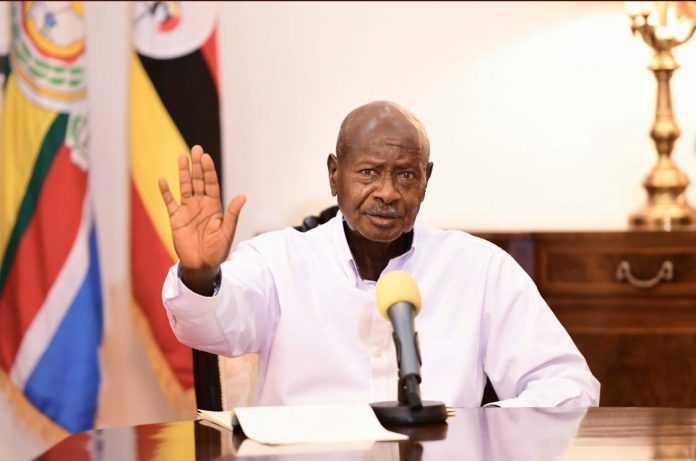
The number of Coronavirus patients in Uganda has increased from 48 to 52 as President Yoweri Museveni announces more four patients to have tested positive  for #Covid-19.
In post on his social media platforms, Museveni says out 300 samples tested today, said four people had tested positive.
Countrymen, Countrywomen and the Bazzukulu, Greetings!
I have received your comments and I will answer them on Tuesday.
In the meantime, today the 5th of April, 2020, 300 samples were tested and 4 were positive. All the 4 were in the quarantine.” President Museveni posted
further adding “This, therefore, brings the total of the people who are positive to 52.
All the patients are doing well under medical care. I will inform you more on Tuesday.”
Stories Continues after ad

Ruparelia Foundation donates 2 double cabins to #Covid-19 team

Chairman Ruparelia Group, Sudhir Ruparelia.

Ruparelia Foundation under the leadership of Sudhir Ruparelia, Jyostsna Ruparelia and Rajiv Ruparelia have donated two double cabin picks from Tata Uganda to the #Covid-19 team.


According to Sudhir Ruparelia, the donation is in line with the presidential call for the rich and those in position to help the taskforce.

The foundation last week gave 5000 care packages to the less privileged across the country.

According to Mr. Rajiv Ruparelia, Managing Director of the Ruparelia Group said the gesture of giving the 5000 care package is part of their core principles of reaching out to the needy in such circumstances like it is under the outbreak of the Coronavirus.

Stories Continues after ad

Meera Investments writes to Kasaija over Tax Amendment bills-2020

Finance Minister, Matia Kasaija


Says the proposals are not business friendly

Likely to kick many players out of the real estate development

More to lose jobs if the bill is passed in the current form


the expenses incurred for the rental income shall be limited to 50% of the rental income.” We find this particularly unfair especially since other businesses can claim all their expenses incurred in the production of income. This will limit investment in the real estate business especially if we have rental income of 1billion, and expenses of 700 million.

Meera Investments through their lawyers have Kampala Associated Advocates have written to Finance Minister, Matia Kasajia objecting some of the proposed amendments in the Tax Amendment bills-2020 which is before a committee of parliament.

Meera Investments which is the top tax payer for rental category in their letter to the minister say the bills will have adverse effect on many businesses given that the entire world will be resurrecting from the effects of Coronavirus.

Government has introduced the Tax Amendment Bills 2020 and now before parliament with a hope of filling that taxation gaps in the budget. However, the bill is facing resistance from real estate developers and owners given the proposals contained in the bill.

“During the current lock down, we were made aware of the tabling of the 2020 Tax Amendment Bills. We have had consultations with our tax lawyers, Kampala Associated Advocates, and we write to inform you that some of the bills will have an adverse effect on many of our businesses and we seek your indulgence to prevent an adversity. Below are the amendments that we humbly propose you further scrutinize and change based on areas of specialty” reads part of the letter from KAA.

The proposed amendment is that an “owner of more than one commercial building shall account for the tax on each building separately and shall not claim input of incomplete buildings.

However, Meera Investments says many of them in the real estate industry run their businesses through companies and therefore, one company will have may be five to fifty buildings. Under the proposed amendment, it would mean that for each of the fifty buildings one must account for the tax separately. This creates the following complications:

“It would mean that if I have ten acres on plot 41 Kampala Road and on them I have ten buildings, I have to account for each building separately. This means that I must now demarcate between buildings one to ten and each must have its own tax identification number (TIN). The reason that each must have its own TIN is because I must account for the tax separately. The effect of this is that at the end of the day, I shall have one company with ten to fifty TIN numbers. Worse still, this also means that I shall have one company with ten to fifty different invoices for the same project. This makes accounting difficult and will create confusion among the real estate companies. The company would also have to obtain various tax clearance certificates for each of the buildings. This would be outrageous because one company would have over 50 tax clearance certificates”.

Meera Investment further contested the amendment to section 22(2)(n), which states that “the expenses incurred for the rental income shall be limited to 50% of the rental income.

“We find this particularly unfair especially since other businesses can claim all their expenses incurred in the production of income. This will limit investment in the real estate business especially if we have rental income of 1billion, and expenses of 700million. It means that we can only claim 500 million as expenses yet in actual sense, our expenses are over that. What then happens to the amounts that are over and above the 50% of our rental income? Currently, properties in Uganda have an average of 47% occupancy levels.”


Below is the letter in full 


02 April 2020


The Minister of Finance,
Planning and Economic Development,
2-12 Apollo Kaggwa Road,
Kampala, Uganda

Attn: Hon. Matia Kasaija

TAX AMENDMENT BILLS 2020

With reference to the subject matter above, we would like to address you on our views with respect to the amendments proposed in the respective acts below;

We, Meera Investments are the largest real estate company in Uganda, employing thousands of people. We have built a reputation for delivering innovative solutions in the construction of commercial and residential structures throughout the country. In relation to tax, we are the top tax payer for rental tax.

We cannot go forward without thanking you and your team for guiding this economy through the worst pandemic of our generation. We offer our continued support and availability in the fight against Covid 19.

With the current global situation regarding Corona Virus, we do believe that this is not the right time to introduce the proposed amendments. Together with our lawyers, we propose some tax incentives we believe shall boost the reckoning and heal businesses and the local people from the devastating effects of the virus.

During the current lock down, we were made aware of the tabling of the 2020 Tax Amendment Bills. We have had consultations with our tax lawyers, Kampala Associated Advocates, and we write to inform you that some of the bills will have an adverse effect on many of our businesses and we seek your indulgence to prevent an adversity. Below are the amendments that we humbly propose you further scrutinize and change based on areas of specialty.


This proposal is only for the Real Estate Industry in Uganda.

 Value Added Tax Amendment Bill

The VAT Amendment Bill 2020 has proposed some changes to the current section 28. The proposed amendment is that an “owner of more than one commercial building shall account for the tax on each building separately and shall not claim input of incomplete buildings on the tax collected from complete buildings”. We have the following challenges with this provision:

  1. Many of us in the real estate industry run our businesses through companies. Therefore, one company will have may be five to fifty buildings. Under the proposed amendment, it would mean that for each of the fifty buildings I must account for the tax separately. This creates the following complications:


  1. It would mean that if I have ten acres on plot 41 Kampala Road and on them I have ten buildings, I have to account for each building separately. This means that I must now demarcate between buildings one to ten and each must have its own tax identification number(TIN). The reason that each must have its own TIN is because I must account for the tax separately. The effect of this is that at the end of the day, I shall have one company with ten to fifty TIN numbers. Worse still, this also means that I shall have one company with ten to fifty different invoices for the same project. This makes accounting difficult and will create confusion among the real estate companies. The company would also have to obtain various tax clearance certificates for each of the buildings. This would be outrageous because one company would have over 50 tax clearance certificates.


  1. There is also the problem of how to allocate expenses. For instance, if I hire Kampala Associated Advocates and they bill me 1 Million Shillings for work they have done for my real estate company which owns all buildings, who would we allocate this expense to? Would this go to building one, two or ten? This, in our view, has the potential of placing so many expenses on one building and leaving the rest out. This also exposes the Companies to rejection of expenses which will make it impossible to claim any credits justifiably.


  1. The proposed amendment against claiming tax credits for an incomplete building is also disastrous for many of our companies. For instance, we all know that in construction, about 18% of the costs are expenses due to VAT. If I start the construction of a building and am not able to complete it, it would mean that for the time I can’t complete the building, my input is unfairly withheld (not forgetting when you refund it shall not come with interest). This in effect means that for a business man, if a building is worth 1billion at in-complete stage, the real estate company cannot claim any input until the project is completed. This in effect means about 180 million of the investors’ money is tied up and cannot be used until the project is completed. If the property is sold in the incomplete state, the company would incur a loss since the input is not carried by the property but the company. Practically, when we construct a property and don’t claim the VAT, it becomes a cost to the business. The net effect means that the cost of the property would have to increase by 18%. This cost would then be transferred to the tenants of the property. This in turn would increase the cost of renting by 18%. It also means that the cost of investment in Uganda would go up by 18% since this money is not claimable until the property is complete. Therefore, for individuals that want to invest in real estate, they will be discouraged because the cost has increased. For the youth that are employed in real estate, they will lose jobs because of the 18% increase in the cost of investment. Yet if the company was allowed to claim money on the incomplete building, it would probably be used to complete some sections of the property that would generate the investor money which would then be taxed by the URA a rental income. This, in our view would be a win-win for both parties.

Income Tax Amendment Bill

The Amendment to section 5 (3)(a) of the bill proposes that “rental income is accounted for separately for each of the buildings”. This will have the same challenges as we mentioned in the VAT part discussed above. Accounting for the income separately means that in each case we have to have a TIN for each building. This also creates complications in allocating expenses such as legal fees from the various service providers. More so, it makes business cumbersome as we must have different invoices for each of the buildings. It also makes it cumbersome when filing returns. If all buildings are managed under one company, the Company can file one single return for each buildings rental income. However, if every building must file a return, the Company will be faced with a challenge of fling returns in different periods since the buildings will have been built in different periods.

The Amendment to section 22(2)(n), states that “the expenses incurred for the rental income shall be limited to 50% of the rental income.” We find this particularly unfair especially since other businesses can claim all their expenses incurred in the production of income. This will limit investment in the real estate business especially if we have rental income of 1billion, and expenses of 700million. It means that we can only claim 500 million as expenses yet in actual sense, our expenses are over that. What then happens to the amounts that are over and above the 50% of our rental income?

Currently, properties in Uganda have an average of 47% occupancy levels. For us as a real estate business, if we put up a property and can only fill 47% of said property under the proposal made in the amendment, it would mean that we would only claim 50% of the rental income. This means we can only claim 50% from the property with a 47% occupancy level. Yet, when we are making renovations, we do so for the entire property. We do not do renovations for only 47% of the property. This means that the amendment is not taking cognizance of the fact that we incur expenses for an entire property and not part of it. Buildings have a useful life of up to 30 years, this would also mean that in the 30 years, we might never recover all our money. As a result, the cost of the investment is too high. Therefore, we do propose that the amendment provides for 100% deduction on expenses.

The amendment to section 118(3) provides that “a resident person who purchases land that is not a business asset shall withhold 0.5% of the purchase price”. First of all, if this is not a business asset why would anyone have to pay any tax? Under section 21(k), there is a clear exemption from tax on the capital gain that is not included in business income. A one-off sale is not business income and therefore would be exempt under section 21(k). More so, if it is acknowledged that this is a not a business asset, then why tax it in the first place. And how would a resident person determine that this land is not a business asset? This kills the informal sector who speculate on buying a plot of land and sell it after five years. The tax imposed on such a person will only curtail people’s interest in acquiring property.


Our team, together with our lawyers, Kampala Associated Advocates, is available to have a teleconference to discuss these challenges at a time convenient to you.

Yours faithfully,


_______________________

Chairman,

Meera Investments.


Stories Continues after ad

Brig. Ronnie Balya recalled from South Sudan set to return to ISO as DG

Brig. Ronnie Balya. Photo credit/URN.


Uganda’s Ambassador to South Sudan and former Director General of Internal Security Organisation Brig. Ronnie Balya has been recalled from his duty station to Kampala for redeployment.

According to reliable sources in security, Brig. Balya is already in Kampala carrying out some assignments.

Balya served initially as a District Internal Security Officer (DISO) in Northern Uganda and Western Uganda. In 1997, Balya was moved to ISO headquarters where he served in various capacities like Director of Inspectorate, Director Analysis and Director Technical intelligence. In August 2006, Balya was appointed Deputy Director General of ISO.


In July 27, 2010, Balya was appointed Director General (DG) of ISO, replacing Amos Mukumbi who was given another engagement in government as Presidential Advisor. In December 2010, he was promoted to the rank of colonel and February 2014, he was promoted to the rank of brigadier.


 In January 2017, Balya was relieved off his duty as DG-ISO and sent to South Sudan as Uganda’s Ambassador. He was replaced by retired Col. Kaka Bagyenda who sources say is on his way out. Whereas it isn’t readily established why Brig. Balya is returning to replace a man, who replaced him, sources at ISO told Eagle Online that one of the reasons could be the issue of none payment of allowances for operatives for the last six months.

However, other sources said whereas it is true, Brig. Balya has been recalled, it wasn’t established where he going to be placed as it is rumoured that he is heading to Naguru at Police headquarters where he is going to replace Deputy Inspector General of Police Maj. Gen. Muzeeyi Sabiiti.

Before he removed from ISO, there had been a rumour to the effect that Brig. Balya was to replace Gen Kale Kayihura as IGP of police.


Stories Continues after ad

#COVID-19: Uganda patients reach 45 after one person tested positive

Coronavirus victims


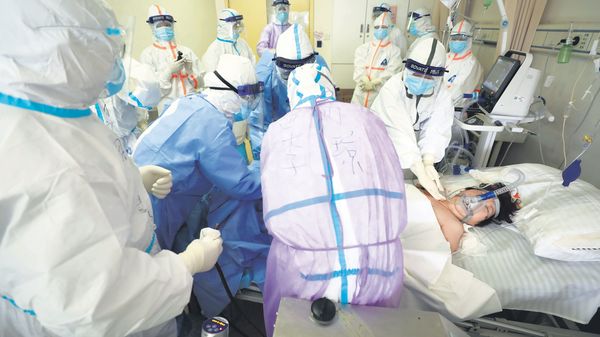
#COVID-19: Uganda has registered its 45th patient of Coronavirus after one more person tested positive today.

According to the statement from the Ministry of Health, out of 302 samples tested today, 301 tested negative while 1 person tested positive.

“On April 2,2020, one sample tested positive for COVID-19 out of the total 302 samples that were tested at Uganda Virus Research Institute (UVRS). This brings the total number of COVID-19 confirmed cases in the country to 45. The case is a 22 year old Ugandan female, resident of Nkokonjeru, Wakiso district and wife to a previously confirmed case who arrived from Dubai, UAE on March 20. She did not have any signs and symptoms consistent with COVID-19” reads the statement from Ministry of Health.

Uganda has a total of 1,026 individuals are under follow-up in institutional quarantine while a total of 962 conatcts to the confirmed cases are under follow-up.

Stories Continues after ad

Appointment of Rujoki as CG URA raises questions on powers of the President

Mr. Deus Mukalazi


By Deus Mukalazi


This week the President posted on his twitter handle firing Dorsi Akol as the Commissioner General (CG) of the Uganda Revenue Authority (URA) and replaced her with Johnson Musinguzi Rujoki. Akol confirmed her dismissal also on the CG URA’s twitter handle. The decision has  sparked yet another debate over the President’s power to effect appointments of high-ranking officials during this time when the country is fervently battling the corona virus pandemic.

It’s been argued that the 1995 constitution gives much powers to the President yet according to him a lot of it is concentrated in the legislature – he said so while opening the 20th Judges conference in January 2018.

Over the last 25 years period, various incidents have been happening regarding this contested presidential powers. The notable one regarding appointments being the appointment of Benjamin Odoki as an Acting Chief Justice after he clocked 70 years of age against the advice and reservations of the Judicial Service Commission and the provisions of the Constitution. The Constitutional Court nullified the president’s decision on grounds that it contravened Articles 133, 142, 144, 147 of the Constitution on the position of substantive Chief Justice and his or her appointment and qualifications.

The issue of presidential powers and its limits seems to have again resurrected by his recent disappointing of Akol and appointing of Musinguzi. Section 9 of the URA Act empowers the Minister of Finance to appoint a CG of the URA on recommendation of the Board of URA. This has aroused a number of issues given the manner in which this was done. First, there are those who argue that the President is by implication the Minister of Finance and so he has the powers to make the appointment. Others think this is a grey area considering the laws of delegation as I will show later. Secondly, the Minister appoints the CG on recommendation of the Board of URA. Third, for the appointment to be made there ought to have been a vacancy. In essence the former CG Akol should have either been relieved of her duties, resigned or contract expired for the appointment to be legally made.

Article 99 of the constitution vests all executive powers in the Presidency. Article 99(4) gives the President powers to exercise these executive powers directly or through officers subordinate to the President. Further, Article 113(3) says a Cabinet Minister shall have responsibility for such functions of Government as the President may, from time to time, assign to him or her.  Section 9 of the Uganda Revenue Authority Act gives powers to the Minister of Finance to appoint the CG of URA on recommendation of the Board. Further S.31 of the Interpretation Act is to the effect that were a power is conferred on a minister by any Act, it can either be exercised by the President or the Minister. Therefore, in this case the president seem to have exercised his powers as the chief executive and more so as the minister of Finance.

Reading the provisions of the law above together, some people have argued, the President, even after appointing a subsisting Minister of Finance retains the powers to exercise the powers he delegated. This, in my view, seems to go against the established principles of delegation, and could not have been the intention of the law makers. It’s a cardinal principle of delegation that once a person has delegated his power, he ceases to have the same powers to be exercised concurrently. Once the President opts to exercise the option of delegating his powers to a Minister, he can not purport to retain them. It can’t be the intention of the law makers that a law would create a situation where the Minister Kasaija now can sack the newly appointed CG.

Also, the Interpretation Act does not indicate at what point the President is supposed to exercise the powers conferred upon the minister, is it when the minister is incapacitated or active? The appointment of the CG is regulated by the URA Act and not the Constitution as S.9 of the URA Act provides. It cannot be inferred that the intention of parliament was to give the powers of appointment of CG to the President as a Finance Minister even when the appointed minister is available. The argument that he exercised his powers under 99(4) is saddled with problems and is a grey area that should be put to a litigation test.

However, assuming the President was indeed justified in assuming powers of the Minister, there are limitations. Section 9 of the URA Act requires the Minister to appoint the CG on recommendation by the Board. There seems to be no evidence of involvement of the Board in this appointment. In the case of Gerald Karuhanga v Attorney General, while nullifying the appointment of Benjamin Odoki as Acting Chief Justice, the court emphasised that where the law provides for another body to advise on the appointment by the President, the President cannot bypass this process. Should it be true that the Board wasn’t involved in this appointment, then the appointment is null and void.

Related to the above, the Act further guides that the CG can only be relieved of his or her duties by the Minister after consulting with the Board. This can be for misbehaviour, inability to perform functions of his or her office or any other sufficient cause. Doris Akol, had just served 5 months of her 5-year term which was renewed by Minister Kasaija in 2018. Her contract should have been terminated by the minister upon recommendation by the Board and the process of getting a new CG undertaken by the Board and thereafter recommends to the minister. The appointment of a CG is not the same with ministers.

The laws put in pace to guide and regulate such appointments are not merely procedural. The law makers in putting in place such guidelines are reinforcing the doctrine of checks and balances which is essential for good governance. It’s important that the President follows the law in exercise of his duties as provided for under Article 99 (2) and (3) of the constitution. His powers are not absolute.

Stories Continues after ad

Kampala people buy and stock food in fear of price hiking

Traders around Kamwokya market lining up to buy food stuffs.


As the numbers of #COVID-19 cases increase to 44, Ugandans are busy shopping and stocking food stuffs in fear that prices will hike in months to come.

According to Junior Kabangira, a wholesale businessman in Kamwokya, people are preparing for future, since everything in Kampala is becoming tougher.

“You see president announced the curfew, so now whoever has money, they buy and stock their food because time will come when the money you have in house won’t help you at all.” Kabangira said.

Kabangira further says, most of the things they sell come from far, now that many people fear moving because of Coronavirus, it will bring shortage of food which is likely to make prices go high, so people are stocking food to avoid those moments.

Philemon Mujuni the food stuff supplier says all the people are worried of the sickness, they know that time will reach when the president shall tell the people to stay in their houses, not even getting out of their houses.“Last time president said no one should be moving after 7 pm, even us who supply food to the retail shops, we are always very busy now days because the demand and supply is very high “says Mujuni.

Jimmy Mbabali, the Vice Chairperson Kisenyi 2, Kamwokya, one of the highly populated slums says when president directed the curfew and since the modes of transport are limited, people have to buy enough food and stock in their houses to be on safe side.

Joseph kakooza Sande the Chairperson Mulimira zone Kamwokya, said ordinary people are  badly off even in these few days they have been stopped from working and that impacts on their living.

Kakooza says that people suspect in few days there will be no more movements, so if a person cannot walk to buy food from markets like Kalerwe, then this is the time, they are buying those foods they think will take them for good months ahead.

According to the situation at hand, there is a possibility that the food supply from different parts of the country will reduce. This is because most people in this business could send trucks of foods and they get onto public or private means of transport to come to Kampala transact, and they could use the same means to get back to their villages.


Stories Continues after ad
Global bus and YY coaches resort to cargo business

After President Yoweri  Museveni, announced suspension of all forms of public transport in Uganda for 14 days as government moved to contain the spread of Coronavirus infections, Global and YY bus companies have resorted in indulge in cargo business.

According to Patrick Mwesigwa the manager in charge of luggage of global bus company the company has over 86 buses that have been operating, and now that they are all not in operation, we have decided to be transporting cargo in order to keep the company moving.

He says they decided to continue giving services to people mostly especially transporting food stuffs and other things that people need to continue surviving.

“Regarding with what the president said about cargo, global is helping in taking peoples luggage to and fro, which includes food stuffs and many other things. Mwesigwa said.

Moses Godfrey Kaita an employee with YY coaches Bus Company, this time; it is only the cargo business that is available at YY Park.

However, he says they still face a challenge in that when people send luggage from villages, it becomes hard to pick them from their offices since people no longer trust Boda boda guys.

Kaita further says that YY makes sure that it pays its employees working on vehicles and they make sure they provide the necessary to make their life easy.

“They provide transport to and from where the workers stay and they also know that now day’s things are very complicated. Kaita said.

However, there are other bus companies that are into cargo business in Uganda, this includes HMK Transport & Logistics baby coach bus Company etc.


Stories Continues after ad

BAT working on potential COVID-19 vaccine through US bio-Tech subsidiary

Coronavirus victims


  • Potential vaccine in development for COVID-19 using new, fast-growing tobacco plant technology – pre-clinical testing under way
  • Tobacco plants offer the potential for faster and safer vaccine development compared to conventional methods
  • Potential to manufacture 1-3 million doses of vaccine per week


April 1, 2020: BAT’s US bio-tech subsidiary, Kentucky BioProcessing (KBP), is developing a potential vaccine for COVID-19 and is now in pre-clinical testing. If testing goes well, BAT is hopeful that, with the right partners and support from government agencies, between 1 and 3 million doses of the vaccine could be manufactured per week, beginning in June.

While KBP remains a commercial operation, the intention is that its work around the Covid-19 vaccine project will be carried out on a not for profit basis.

The vaccine in development uses BAT’s proprietary, fast-growing tobacco plant technology which has several advantages over conventional vaccine production technology:

  • It is potentially safer given that tobacco plants can’t host pathogens which cause human disease.
  • It is faster because the elements of the vaccine accumulate in tobacco plants much more quickly – 6 weeks in tobacco plants versus several months using conventional methods.
  • The vaccine formulation KBP is developing remains stable at room temperature, unlike conventional vaccines which often require refrigeration.
  • It has the potential to deliver an effective immune response in a single dose.


BAT’s US subsidiary, Reynolds American Inc, acquired KBP in 2014, with the aim of using some of its unique tobacco extraction technology to aid further development of its new category non-combustible products.

In 2014, KBP made headlines as one of the few companies with an effective treatment for Ebola, having manufactured ZMapp™ with California-based company Mapp BioPharmaceuticals in partnership with the U.S. Biomedical Advanced Research and Development Authority (BARDA).

KBP recently cloned a portion of COVID-19’s genetic sequence which led to the development of a potential antigen – a substance which induces an immune response in the body and in particular, the production of antibodies. This antigen was then inserted into tobacco plants for reproduction and, once the plants were harvested, the antigen was then purified, and is now undergoing pre-clinical testing.

BAT is now exploring partnerships with government agencies to bring its vaccine to clinical studies as soon as possible. Through collaborations with government and third-party manufacturers, BAT believes that between 1 and 3 million doses per week could be manufactured.

Dr David O’Reilly, Director of Scientific Research, BAT said: “We are engaged with the US Food and Drug Administration and are seeking guidance on next steps. We have also engaged with the UK’s Department for Health and Social Care, and BARDA in the US, to offer our support and access to our research with the aim of trying to expedite the development of a vaccine for Covid-19.

“Vaccine development is challenging and complex work, but we believe we have made a significant break-through with our tobacco plant technology platform and stand ready to work with Governments and all stakeholders to help win the war against Covid-19. We fully align with the United Nations plea, for a whole-of-society approach to combat global problems.”

“KBP has been exploring alternative uses of the tobacco plant for some time. One such alternative use is the development of plant-based vaccines. We are committed to contributing to the global effort to halt the spread of Covid-19 using this technology.”


 About BAT: BAT is a leading, multi-category consumer goods business, established in 1902. Our purpose is to build A Better Tomorrow by reducing the health impact of our business through offering a greater choice of enjoyable and less risky products for our consumers. Our ambition is to increasingly transition our revenues from cigarettes to non-combustible products over time.

About Kentucky Bioprocessing (KBP): BAT owned KBP is located in Owensboro, Ky., where it began operations in 2006. In January 2014, KBP was acquired by and became an independently operated, wholly-owned subsidiary of Reynolds American Inc. (RAI), owned by BAT. KBP continues to house its large, multilevel indoor plant-growth space, as well as its research and production laboratories, clean rooms and manufacturing operations in Owensboro.

KBP develops and executes processes to transform tobacco plants into “biomanufacturing factories” that efficiently produce complex proteins they would not otherwise produce. The company can grow, harvest and process as many as 3 million protein-producing tobacco plants in a production cycle that typically takes about six weeks – compared with many months using traditional biomanufacturing methods.

The company uses licensed and proprietary technologies to temporarily encode tobacco plants with the genetic instructions to produce specific target proteins. The plants are grown in an automated, climate-controlled environment that can be adjusted to optimize their production of a protein of interest.

Forward Looking Statements

References to ‘British American Tobacco’, ‘BAT’, ‘we’, ‘us’ and ‘our’ when denoting opinion refer to British American Tobacco p.l.c. (the Company, and together with its subsidiaries, the “Group”).

This release contains certain forward-looking statements, including “forward-looking” statements made within the meaning of Section 21E of the United States Securities Exchange Act of 1934, regarding our intentions, beliefs or current expectations reflecting knowledge and information available at the time of preparation and concerning, amongst other things, prospects, growth, strategies and uncertainties related to regulatory approval and the results of pre-clinical testing. BAT undertakes no obligation to update or revise these forward-looking statements, whether as a result of new information, future events or otherwise. Readers are cautioned not to put undue reliance on such forward-looking statements.

These statements are often, but not always, made through the use of words or phrases such as “aim,” “believe,” “explore,” “anticipate,” “could,” “may,” “would,” “should,” “intend,” “plan,” “potential,” “predict,” “will,” “estimate,” “strategy” and similar expressions. It is believed that the expectations reflected in this release are reasonable but they may be affected by a wide range of variables that could cause actual results to differ materially from those currently anticipated, including uncertainties related to regulatory approval and the results of pre-clinical testing.


Stories Continues after ad

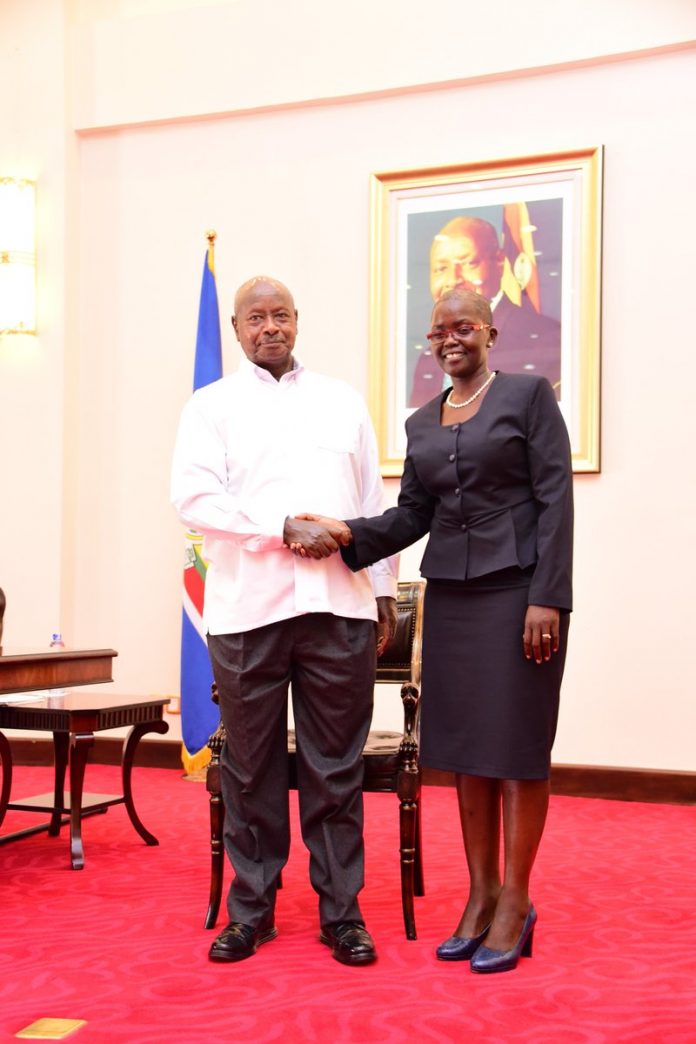
Museveni appoints Justice Jane Francis Abodo as DPP

Justice Abodo and President Museveni at State House during the swearing in as judge of High Court.

President Yoweri Museveni has appointed Justice Jane Francis Abodo as the new Director of Public Prosecution replacing Justice Mike Chibita.

She is a High Court judge at Criminal division of the High court who recently presided over the case in which Dr Stella Nyanzi was seeking a revision of the criminal proceedings against her before Buganda Road Court. She has previously worked at the Directorate of Public Prosecution.

According to the names sent the parliamentary appointment committee, the president also sent Dr. Johnson Byabasaija and Mr. James Mwanje for approval of their contracts as Commissioner General and Deputy Commissioner General respectively.

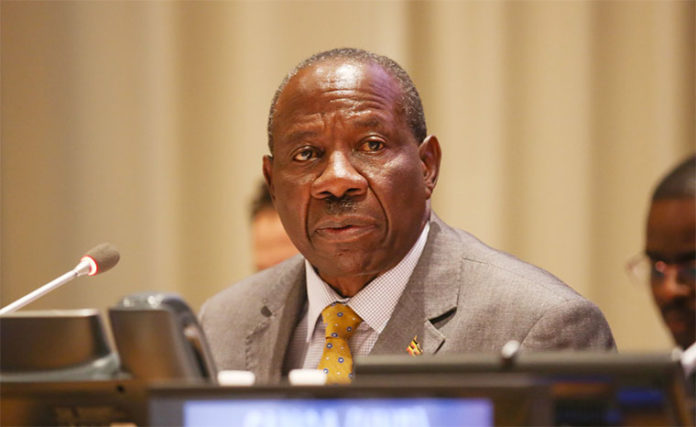
The President further sent Dr. Michael Ating-Ego for Deputy Governor. Dr.Ating-Ego was appointed last week by the President Museveni to replace for deputy Governor, Louis Kasekende whose contract ran out in January.

In same communication to parliament, Museveni  constituted the leadership code tribunal and appointed Ms. Irene Karugonjo Seggawa as the chairperson, Former State Minister of Works and Bugabula South legislator Asuman Kiyingi as Deputy Chairperson, Jane Okelowange, Diddas Bakunzi Mufasha and Joyce Nalunga Birimumaaso as members.

All the nominees are scheduled to appear before the committee on Monday, April 6, at 11 am.


Stories Continues after ad