Stanbic Bank
Stanbic Bank
19.7 C
Kampala
Stanbic Bank
Stanbic Bank
Home Blog Page 1047

Gov’t airlift pesticides after the invasion of desert locusts in Karamoja sub region

UPDF helicopter seen at Kololo airlifting pesticides to Amudat, Nabilatuk and Nakapiripirit districts for spraying locusts.


Government has started airlifting pesticides following the invasion of Desert Locusts in some parts of Amudat, Nabilatuk and Nakapiripirit districts that share a common border with Kenya.

Upon confirmation of desert locusts in Kenya, government of Uganda through Ministry of Agriculture, Fisheries and Animal Husbandry has been preparing on how best to counter them. Last week Accountant General in the Ministry of Finance, Lawrence Ssemakula said Shs15 billion budget has been set aside as contingency to fight the spread of locusts.

The pesticides, manual and automatic pumps, are being packed and airlifted from Kololo ceremonial grounds. The pesticides include Fenitrothion 96 per cent low volume formulation, Malathion which is an organophosphate insecticide commonly used to control mosquitoes and a variety of insects that attack fruits, vegetables, landscaping plants, and Parathyroid insecticides.

The State Minister for Agriculture Aggrey Bagiire confirmed that locusts had entered the country on Sunday evening. He however said that there is nothing to worry since government has a stock of chemicals for spraying.

“The exercise requires a lot of water and they have asked the districts to avail their water bowsers and other equipment to support the fetching and delivery of water.” He said.

Originating from Yemen all through to the coast of Somalia, scientists believe harsh environment and the conflict in Yemen have denied the government there an opportunity to marshal efforts to contain the insects.


Stories Continues after ad

African leaders meet to discuss the Silencing of Guns in Africa

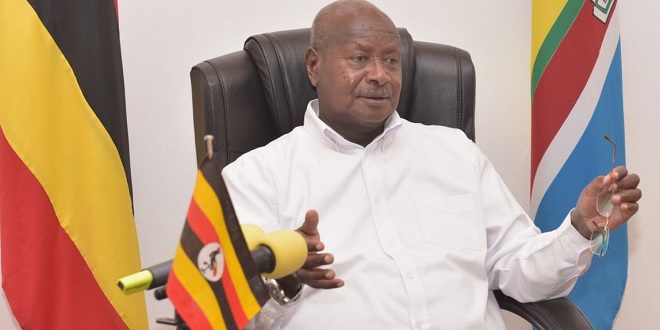
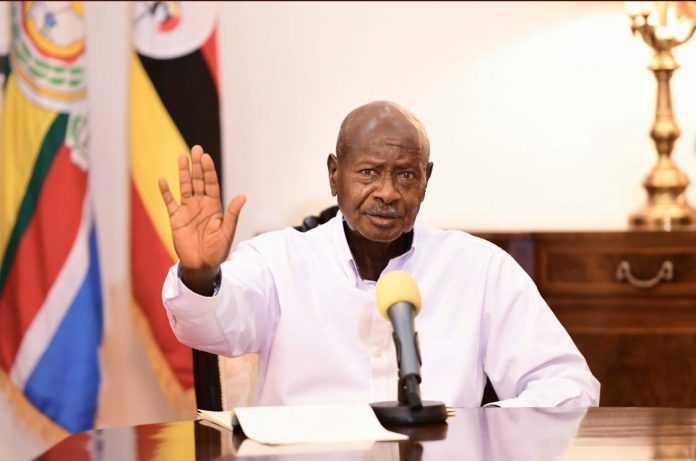
Uganda President Yoweri Museveni attending the AU summit.


The 33rd Ordinary Session of the Assembly of Heads of State and Government of the African Union kicked off at the AU Headquarters in Addis Ababa, Ethiopia. The two days meeting is being held under the 2020 theme of the year, “Silencing the Guns: Creating Conducive Conditions for Africa’s Development. “

The newly elected chairperson AU, President Cyril Ramaphosa of the Republic of South Africa, outlined the priorities that will need to be the focus of the Union to bolster the progress being made in driving Africa’s growth trajectory within the framework of Agenda 2063 including; Deepening the unity of the continent, Advancing inclusive economic growth and sustainable development, Ensuring political and economic unity, good governance and peace and Conflict resolution.

Ramaphosa noted that the African Continental Free Trade Area (AfCFTA) AfCFTA will be a major driver for reigniting industrialization and paving the way for Africa’s integration into the global economy as a player of considerable weight and scale.

“The potential of the AfCFTA to boost intra-African trade should not become a conduit for products with minimal African content under the guise of continental integration” he said

He emphasized the need to move beyond the clichés and general statements and work towards achieving practical solutions such as the implementation of awarding 25 per cent of public procurement to women owned businesses in line with Agenda 2063.

Ramaphosa noted that along with Africa taking charge of its peace and security agenda and finding African solutions to African problems, there was an urgent need to “deal with the action of countries outside our continent that are fighting proxy wars and fuelling ongoing conflicts on our continent.”

The UN Secretary General Mr Antonio Guterres spoke on the importance of including women and youth in Africa’s peace initiatives. He said Peace, social cohesion and sustainable development require women’s contribution and leadership. Women clearly have an essential role to play in conflict prevention and political transitions.

He proceeded to say it is also necessary to engage and empower Africa’s youth, whom he said have become advocates for peace through dialogue and addressing the root causes of conflict. In this respect he commended the 1 million by 2021 initiative of the African Union which aims to reach millions of African youth with opportunities.


Stories Continues after ad

IGAD leaders discuss South Sudan, locusts invasion


President Yoweri Museveni has attended the 34th Extra-ordinary summit of the assembly of IGAD Heads of State and government that took place at the sidelines of this year’s annual African Union Summit at the AU headquarters in Addis Ababa, Ethiopia.

It is understood that on the agenda of the closed-door meeting were; the two critical outstanding pre-transitional tasks in the South Sudan peace process related to the number of states and their boundaries and transitional security arrangements.

And: the assessment of national and collective regional responses to the locust invasion and the leveraging of international political and financial support to address the emergency.

The regional body is concerned about the speed and scale with which the locust invasion is affecting IGAD Member States and the adverse impact it has on food security in the region.

Shortly before the meeting was closed to the media, the Chairperson of IGAD who is the President of the Republic of Djibouti, H.E. Ismail Omar Guelleh, welcomed IGAD member states and commended them for their remarkable efforts of ensuring peace and security in South Sudan.

He said some of the issues related to boundaries in South Sudan need to be addressed and resolved before the formation of a transitional Government due on 21st February 2020.

“As we are approaching the 100 days extension due on 21st February 2020, we urge all warring parties in South Sudan to resolve all the outstanding issues and pave way for the everlasting peace,” H.E. Ismail Omar Guelleh said.

The African Union (AU) Commissioner for Peace and Security, Amb. Smaїl Chergui commended President Yoweri Museveni for his peace efforts in South Sudan. He urged all parties in South Sudan to respect the extension of 21st February and form a unity government.

The meeting was attended by Presidents’ Yoweri Kaguta Museveni of Uganda; Salva Kiir of South Sudan; Mohamed Abdullahi Farmajo of Somalia; Ismail Omar Guelleh of Djibouti and representatives from Sudan, Kenya, Ethiopia and Eritrea among others.

The Intergovernmental Authority on Development (IGAD) is an eight-country trade bloc in Eastern Africa. The member States of IGAD are: Djibouti, Ethiopia, Eritrea, Kenya, Somalia, Sudan, South Sudan and Uganda.


Stories Continues after ad

youthful Kisembo, Mafumo seek to replace Gen. Kyaligonza and Kigongo in NRM 

Mr. Kisembo


Two National Resistance Movement party youth league members have expressed interest in replacing long serving members of the party in the forthcoming party elections.

the two young turks are Dr. Emmanuel Diini Kisembo who has threatened to Western Region Vice Chairman, Maj. Gen. Matayo Kyaligonza.

While Kefa Mafumo who works at State House Presidential Assistant in charge of Youth Affairs wants to replacing aging Moses Kigongo as First National Vice Chairman of the party. Mr. Mafumo has previously served as Manafwa district youth council chairman as well as head of the NRM youth league in the same district.

“Our tomorrow is now but we are coming in to re-enforce mzee who is currently overwhelmed. But above all, to ensure continuity. Mr. Mafumo told Eagle Online.

If the two are  elected they will seat on the Central Executive Committee, which is the second highest organ of the ruling party.

According to the ruling party roadmap, the NRM shall elect regional vice chairpersons in May 2020.

A number of senior party officials have expressed interest in a number of positions.

In Northern Uganda expect fireworks as the incumbent Sam Engola and deputy speaker Jacob Oulanyah tussle it out for the vice chairmanship of Northern Uganda.

In Buganda, Ministers Sam Kutesa and Godfrey Kiwanda will seek the coveted seat.

In Western Uganda, Kisembo, wants to ride on the wave of youths to take on the old guard.

Kisembo is the executive director of Bunyoro Kitara Youth Initiative for Development whose aim is to find ways of uplifting the lives of the youths and the underclass.

He said they had undertaken a number of income generating projects that have greatly improved household politics.

On his foray into politics, Kisembo said the time is now for the youths to be part of decision making in the country.

He said there is a vacuum between NRM youths and their party leaders because the young ones fear to engage the old guard.

Mr. Mafumo

“I will restore and revive NRM party structures in Western Uganda, engage youths who are now taken up by Bobi Wine’s People Power,” he said poor leadership at the grassroots had led some NRM supporters to abandon the party in the sub region.

He said over the last four years, no NRM party conferences, training or mobilization from grassroots have taken place in the sub region.

“I will bring back peoples’ support to NRM given the mandate as a youthful person who understands the youth and their dilemmas,” he promised.

He warned that the People Power wave could sweep aside the NRM in the sub region.

If elected as NRM vice chairman for Western Uganda, Kisembo promised to embark on a number of key tasks including; making party structures functional; recruiting new NRM members to ensure visibility from the grassroots and follow up on new government projects and those implemented in western Uganda.

He also promised to advocate for a monthly stipend for NRM chairpersons from village to district level.


Stories Continues after ad

The Coronavirus in the Democratic Party

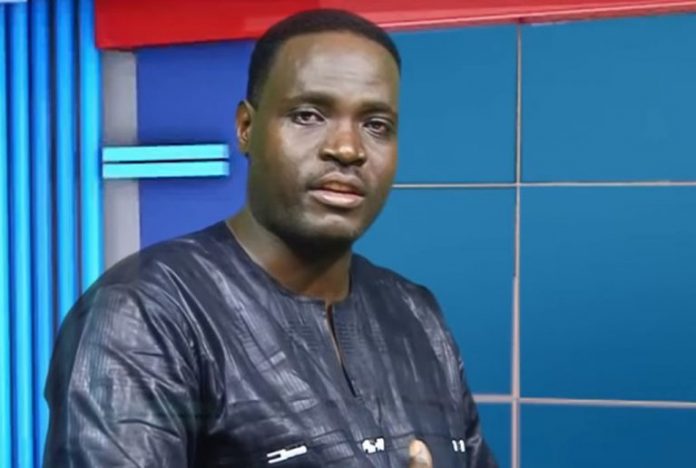
Mr. Michael Woira


By Michael Woira


Political parties are at it again!, Instead of being genuine organizations and vehicles for influencing government policy and development agenda, they are fast turning into tribal enclaves. While the path to ethnic orientation of parties is deeply rooted in Uganda since Independence, different parties belonged to different kinds of people. Democratic party belonged to the Catholics and many if not all of its followers were Catholics and mainly Baganda and the same was for Kabaka Yekka (KY).This couldn’t happen again at this moment when the president is trying as much as possible to make sure that we have a united and peaceful country that can stand the test of peace, unity and democracy.

From the past, the Democratic Party was led by Paul Ssemwogerere for 25 years until his retirement in November 2005 then John Ssebana Kizito took over from him and led the party until February 2010, when Norbert Mao was elected party president of the party but looking at the past presidents of the party and the history of the party you can observe that it’s been so tribal favoring only those from the central region.

As we can all remember that on  December 31, 1964, history was made when the then Leader of Opposition Basil Bataringaya with five other MPs from DP crossed the floor and joined the UPC which did not go well with the DP leadership. The DP members that decided to join UPC were; Francis Mugeni, M. K. Patel, James Ochola, MP South East Bukedi, Stanislaus Okurut, and Joseph Magara. These members decided to cross to the ruling party because they saw their own party was not performing as required and that’s the same situation happening now to the DP.

Us as viewers have been treated to several exchanges and drama between the leaders of this very old barren party, late last year the president during the State of the Nation address stressed that he was also once in the Democratic Party but he later left because he saw nothing good staying in the party that had unserious leaders.

Therefore, Ugandans should know that the political class is busy building tribal groupings and whipping up ethnic support. It is bad for the country; it stifles democracy, promotes insecurity, and scares away investors. It is bad for our children and their future to keep on having such divisions amongst us.

Tribal groupings are being launched at the expense of internal democracy in parties, which is sacrificed for self-survival. For as long as there is always conflict between current leaders and upcoming leadership, internal party processes take second place and patriotism is compromised. Tensions are evident between political rivals and parties continue to be built around personalities, which are used to push vested interests.

It is common knowledge now in Uganda that many members of the Democratic Party have been fighting and contesting the leadership of Norbert Mao kindly because he is an Acholi yet Baganda claim to be owning the party citing history and the foundation of the party.

Now the party is having a very serious infection which is more deadly than the Corona virus , the bitter war is between the Betty Namboze faction and the Norbert Mao faction and to prove this is tribal most Baganda members of the party have decided to disagree with Mao and all agreed to follow a faction led by Hon. Namboze. Its fine they have the freedom to do all they want but basing political party leadership on tribes is an ancient practice that does not suit this century.

All along factions have been in a number of parties but none of the parties have experienced tribal political leadership like the one that is being showcased by the Democratic Party but for the good of our country I request that the party settles down their grievances amicably to avoid any inconveniences to the party operations and also stop any insecurities that may be sparked off by the tribalism in the party.

We are all Ugandans no matter the difference in political ideologies so we should always put this at the back of our minds and remember that at one moment we voted as a country to follow the multi party system of leadership that allows every person to fall under a party that best suits his/her ideology.

Stories Continues after ad

MP Mbwatekamwa presents  censure motion against Security Minister Gen Tumwine

Gen. Tumwine

Kasambya County MP, Mbwatekamwa Gaffa has presented a censure motion against Security Minister Gen Elly Tumwine over allegations of operating safe houses.

Last year, Kawempe north MP Latif Ssebagala supported by Arua Municipality’s Kassiano Wadri, successfully moved a motion to have the House investigate the alleged existence of safe houses.

Last week, the chairperson of the Committee on Human Rights, Jennifer Egunyu pinned Tumwine for obstruction. “The Minister for Security be held accountable for failing the committee work by denying the committee access to safe houses and for blocking the committee’s interaction with the security heads,” said Egunyu.

MPs then, in near unanimity heaped blame on Tumwiine and government security apparatus for alleged torture, and rebuked Gen. Tumwine for saying he would not permit the  committee’s interaction with Internal Security Organisation Director General, Col Frank Kaka Bagyenda and the Commander of the elite Special Forces Command (SFC), Maj Gen James Birungi, to interact with MPs.

According to rule 108 of the Rules of Procedure details the process of getting a Minister censured, which has to contend with the Member spearheading the censure notifying the Clerk to Parliament in writing, giving reasons and a proposed motion with the basis for the censure.

In his letter to the clerk of parliament, Mbwatekamwa accuses Gen Tumwine of contempt of Parliament as after he declined MPs from accessing safe houses, incompetence after he failed to implement parliament decisions on torture and maintaining the existence of safe houses.

He also accuses him of indiscipline noting that he undermined Human rights committee members when he last appeared of safe house.

Alluding to rules of procedure, the Clerk will within three days notify Parliament by pinning on the Members’ notice board and depositing a copy with the Sergeant-at-Arms for 10 working days.

At least one third of the Members of Parliament should appended their signatures on the list if the motion is to proceed. But if after 10 days elapses when one third the MPs have not signed on the list, the Notice of Censure shall lapse.

According to Rules of Procedure, Tumwine however has a right to defend himself on the floor of parliament.

Stories Continues after ad

Francophone Neo-Colonialism has captured African Union

Writer of the article David Matsanga.


By Dr. David Nyekorach -Matsanga in London


1.,The AU Heads of State Summit starts in Addis Ababa but I have little hope as an African that the dreams of Nkrumah, Jomo Kenyatta , Obote , Nyerere , Mugabe, Lumumba ., Haile Silesia ., Gaddafi and millions of those who mounded OAU have been met. I weep when I see conflicts killing the economies of Africa . Therefore, I will not attend the Summit that I have attend for the last 34 years in PROTEST against Moussa Faki . I pray that the conflicts in Nigeria Biafra where Buhari regime has slaughtered his own people will be discussed . I pray that conflict in Ambazonia where Paul Biya has killed his own people will be discussed .

2. I further believe that the South Sudan conflict will be brought to an end . Lastly I believe we shall pacify Somalia and bring sanity to that nation . I believe that the matter of bad elections in Africa that has brought conflicts will be discussed . I believe as Gaddafi lies in the grave and the one of our own in East Africa Late President Moi lies in state in Nairobi , those attending should ask why we were sold to highest bidder ?

3. The level of Foreign capture by non-African states has worried me and millions of Africans . I am therefore very determined that before God calls me back to him , I will work hard and tirelessly to restructure Africa union Commission so as to remove the current Chairperson Moussa Faki who has sold us out to the highest bidder .

4. The sacking of this Pan African lady from Zimbabwe has added to the hatred I had for the French paid mercenary in the AU chairperson’s office. Despite apparently going as quickly as it came up, the recent disagreement between the African Union (AU) and one of its employees created a few interesting insights into the current state of official Pan-Africanism, and also allowed an opportunity for reflection.

5. In summary, one Dr. Aneka Chihombori-Quao took to the fringes of radical African American media to begin denouncing the state of economic relations between France and the various West African countries descended from France’s colonial empire.

6. Her point was that an essentially colonial (by which she meant paternalistic and exploitative) relationship between France and Africa continues to exist. This, she contends, is a matter that the African Union, Africans and Africa’s well-wishers should all be concerned about, and be fighting against.

7. The medical doctor-turned-diplomat, and long-term resident of the United States previously, was to make a series of strongly-worded attacks on France. All this coincided with the announcement that the AU was to terminate her services as ambassador.

8. “Fourteen African countries are obliged by France through a colonial pact”, said Dr. Chihombori, “to put 85 per cent of their foreign reserve into France’s central bank under the French minister of finance’s control.”

9. She continued: “…… if you look deeper, of the roughly 68 coups that have happened in Africa, 61 per cent have taken place in so-called Francophone countries.

10. In other words, any African leader wanting to take his country out from under the economic control of France was subject to be overthrown by a French-engineered coup…A case in point: Togo’s first democratic leader was assassinated by Etienne Gnassingbe, an ex-French Foreign Legionnaire army sergeant who allegedly received a bounty of $612 million.

11. Similar things can be said of coups or political instability in Mali, Burkina Faso, Benin and the Central African Republic.” (Some of her statements have tested the bounds of credibility, especially in the financial figures she gave.)

12. These attacks then formed the basis of her criticism of the AU as an institution for failing, in her view, to end this robbery. Her insinuation was that the real reason for her sacking was because of criticising a powerful European country to which the AU was somehow beholden.

13. On its part, the AU defended itself not by answering the charges, but rather by challenging the credibility of the one making the accusation. Describing Dr. Chihombori as running a “misleading campaign” in an October 15th statement, Ebba Kalondo, the AU Commission chair’s spokesperson, explained that Dr. Chihombori’s tour of duty had simply ended, and that a string of irregularities were uncovered in the normal review undertaken at the end of such a cycle.

14. She stated that the ambassador had initiated a whole series of projects and activities without the knowledge or authority of her employer. These attacks then formed the basis of her criticism of the AU as an institution for failing, in her view, to end this robbery.

15. Her insinuation was that the real reason for her sacking was because of criticising a powerful European country to which the AU was somehow beholden. In so doing, the accusation goes, Dr. Chihombori utilised the African Union logo and official address so as to present these activities as official ones, and went on to appoint people to these tasks, as well as to solicit for funds from the private sector to support them.

16. Fraud, basically. The implication, it appears, is that these broadsides against France served as a diversion. But this is not really the problem: everything that the AU has said about their former employee can be true, without everything that the employee said about France-Africa relations being untrue. It is indeed a fact that the French government maintains an undue beneficial influence on fiscal matters among its former West African colonies.

17. This is an arrangement that began in all cases well before independence, and has continued long after it. It is also a fact that Official Africa, including the collectivity of the African Union, benefits from European Union and French aid largesse. Furthermore, there is ample historical evidence of France’s penchant for ripping off whole nations of black people.

18. From slavery to colonialism to post-colonialism After the enslaved Africans in the French Caribbean island colony of Haiti rebelled in 1791 by killing most of the slave plantation managers and defeating the resident French forces, the revolutionary government of France sent reinforcements at the request of the absentee slave plantation owners.

19. These forces – Napoleonic, no less – were also defeated, and the formerly enslaved of Haiti declared themselves an independent republic in 1804. In 1825, a decade after the end of Napoleon, twelve French warships armed, it is said, with 528 cannons, sailed to Haiti and delivered a demand: France was willing to finally recognise the new independent republic on condition that Haiti committed to paying France 150 million French francs in gold for the “loss of property” incurred during the rebellion.

20. What’s more, this was to be borrowed from French banks. Haiti, faced with the prospect of a naval blockade, accepted. This “debt” was kept in force until the final payment was made in 1947. That is a period of 122 years.

21. To complete it, Haiti had to take an additional loan from the United States. As a result, Haiti remains one of the poorest countries in the world. France continues to offer what I shall term “intervention services” aimed at resolving security problems in the various countries with which it has historical linkages to the tune of $665 million a year.

22. However, the line between friendly assistance, and imperial overlordship is quite blurred. Following a helicopter collision that caused the death of thirteen French soldiers in a November 26 combat operation against jihadis in northern Mali, France’s President Emmanuel Macron announced that he was summoning the heads of Mali, Burkina Faso, Mauritania, Niger, and Chad to a December 16 Paris meeting to explain themselves. (France has a heavy military presence in the Sahel, ostensibly to combat terrorism.) “

23. I can’t, nor do I want French soldiers on the ground while there is anti-French sentiment that is sometimes held by the leaders of some of the African countries,” declared Macron at a press conference during a NATO summit in London early this month. “

24. The leaders of five West African nations…should come to France on December 16 to provide clarifications,” he added, more than a little imperiously. Normally, revelations, such as the ones made by Dr. Chihombori, could promote a wider discussion of what effect a wholesale African rejection of Franco-African economic arrangements would have on the domestic French economy, and the wider European Union economy in which it is embedded.

25.,France is, after all, the EU’s third, and the world’s seventh largest economy. With the revolts taking place against power globally, it is worth reflecting on how France, already dealing with twelve months of Yellow Vest rioters protesting the general fall in the standard of living, would then cope if it were dropped any lower.

26. Indeed, there are already rumblings afoot regarding what should be the future of that financial relationship. The challenge of the imperfect messenger But the problem may be the challenge of the “imperfect messenger”. The challenge, rooted perhaps in the Christian foundations of Western-built discourse, is the expectation that those who offer us redemption must first be above all blemish themselves.

27. The New African magazine and has been beating the drum on French trickery in Africa for at least two decades. One hears a lot of things. For example, that Francophone countries are only allowed to access 10 to 15 percent of their own money held in the France Reserve Bank at any given time, and that any requests for more are charged at punitive rates, with the Bank having the discretion to deny the request.

28. Furthermore, that this power extends to French government officials sitting on the boards of more than a few West African central banks as representatives of France, and having veto powers. Normally, revelations, such as the ones made by Dr. Chihombori, could promote a wider discussion of what effect a wholesale African rejection of Franco-African economic arrangements would have on the domestic French economy, and the wider European Union economy in which it is embedded.

29. What Dr. Chihombori has done is perhaps what the writer Parselelo Kantai has described to me as the “privatisation of Pan-Africanism”. She would not be the first African person we have seen in our long history to take it upon herself to appear to speak for the whole race, and to establish organisations supposedly to advance this project.

30. The historical record of this is murky and riven with division and polarising interpretations. The principal and most famous of these, of course, is the story of the grandfather of Pan-Africanism himself, Mzee Marcus Garvey. Looking at the bare facts, there is much to cast doubt on Garvey’s credentials as a leader.

31. He had already been labelled as a charlatan by some other black activists in the period before he rode to global prominence between the two great European wars. By the time his political career was over, he had been successfully sued for criminal libel by a fellow activist, and had been sued by numerous journalists for non-payment for their contributions to his newspaper.

32. He had been married twice, after what can only be described as a chaotic short-lived first marriage, and somewhat messy divorce. He had overseen the failure of a number of business ventures seeded by money from his followers, and served a prison term for financial fraud before being immediately deported from the United States after the sentence was commuted.

33. The key point is this: If Official Africa will not step into the breach and actually do something effective about these long-running problems, then nobody should be surprised to see the rise of self-appointed lions. And therefore, nobody should be surprised that among those lions there may well be a good portion of chancers who have sensed an opportunity.

34. Neither Dr, Chihombori nor Marcus Garvey are necessarily either. What we need to note is the fact that that most well-known Africanist movements aimed at liberating black people, and whose legacy lives on today in a variety of ways, were not founded by a native African institution, nor an Africa-based political party, nor an African country; they were started by a person of African descent who did not speak a word of any African language, and who would reach the end of his life having never set foot on African soil.

35. This is in no way an attempted defence of Dr Chihombori and her actions. Nor is it an attempt to understand her initiatives. I am certainly not attempting to place her alongside Marcus Garvey. I am, however, making the point that when it comes to the politics of other wider Pan-African struggles, all will be condemned, be they prophets or phonies.

36. As things stand, the AU approach could be accused of being an attempt to reduce the whole incident to a matter of mere human resources management. And even within that context, no explanation was offered as to why any such irregularities were not picked up earlier by Dr. Chihombori’s superiors, nor how a person of such alleged dubious character came to be in the AU’s employ at such an important deployment in the first place. Instead the statement ended on an ominous note: “

37. The African Union Commission reserves the right to take any legal action, if necessary, against any use and/or misuse of its name, logo and resources by any unauthorised individuals or entities.” Whether that is a cover-up or a blind spot is a matter that only further discussions can bring out.

38. The fact remains that not just Africa as a continent but the people of African descent everywhere remain the most precarious on the planet in terms of the conditions faced by the continent’s people wherever they are interfacing with the modern world. Unlike Asia, where amidst the poverty, there are large economic classes of more or less indigenous wealthy people, and unlike South America, where, despite the weight of exploitative American capital and a large domestic class often descended from long-term European settlers, the ordinary people have sustained generations of resistance and are even now are in the midst of several uprisings.

39. In contrast, Africans on the continent remain dispossessed, and even the rich are not rich. As for the diaspora, they remain the targets of an institutionalised racism, whose underlying workings are only being fully exposed by a new generation of activists and researchers. Other questions arise.

40. The AU does have policies committed to a vision for relationships with and between the various African communities long domiciled in countries outside Africa, and, in particular, relationships with the First Diaspora comprising the descendants of those Africans taken from this continent during the various stages of Western and Eastern enslavements. Had there ever been any discussion on the implementation of those policies between Dr. Chihombori and the AU before she subsequently allegedly embarked upon her unauthorised initiatives?

41. Does the AU see any merit in and of itself in initiatives of the type begun by Dr. Chihombori Quao in the USA? Does the AU have its own plans, or even existing practical programmes, for such initiatives? If not, why not? The fact remains that not just Africa as a continent but the people of African descent everywhere remain the most precarious on the planet in terms of the conditions faced by the continent’s people wherever they are interfacing with the modern world.

42. Does the AU have a view on the justness, or otherwise, of the existing financial relations between France and some of her former colonies? Perhaps these are not matters discussed in the course of a sacking. However, they should be of interest with us. I did put these questions, and more to the AU communications office, using the provided official address.

43. I had not received a response by the time of submitting this article. Even before Macron’s Napoleonic reaction to the French soldiers’ deaths (one the worst losses of life in France’s military in decades) Bloomberg news agency had reported an announcement of intent by the West African Monetary Union, which is the mechanism created to maintain the currency unit binding former French colonies to France (while France, ironically, has no independent currency of her own anymore), to make a significant adjustment to the arrangement.

44. Benin’s President Patrice Talon announced that the Africans had “unanimously” agreed to repatriate some their cash reserves from the French treasury. This is no longer a private matter between them. In January this year, one Luigi Di Maio, a member of Italy’s populist Five Star movement, had already dragged the issue into an internal European Union quarrel over EU fiscal policy that he was having with Emmanuel Macron’s France. “

45. Therefore because of the points raised above I will not attend the AU Summits in any capacity until there the Chadian AU Chairperson leaves office and new Chairperson comes in . I will all those who have forgotten Gaddafi so soon and who meet to drink wine and champagne while Libya is bleeding because of FRANCE a good success in Addis Ababa Ethiopia

Thanks

Dr. David Matsanga of Pan African Forum (UK)Ltd

8.02.2020

London United Kingdom

Stories Continues after ad

Kyabazinga in Korea for World Summit


In his auxiliary efforts to agitate for peace among Kingdoms,Busoga’s reigning monarch,His Majesty william Gabula Nadiope,IV is in the Republic of Korea’s capital Seoul for a World Summit.

In his remarks,the Kyabazinga enumerated the importance of Culture in modern times as the world embraces the digital era.He noted that cherishing cultural values among people is a symbol of identity.

“We are at a time of blending culture with modernity which is a good thing.However,of great importance is that the former is more ideal to us since it acts as our symbol of identity meaning that we should at all times defend it to deter its extinction”,the Kyabazinga emphasized before noting that he wishes for a world of peace where people would love one another, a world without poverty,hunger,conflict and suffering.

Running under the theme “Realizing World Peace through Interdependence,Mutual Proseprity and Universal Values”, the 2020 World Summit has drawn both current and former leaders like the former South Korean born UN Secretary General,Ban Ki Moon,H.E Good Luck,H.E Olusegun Obasanjo and several dignitaries.

At this very Summit,Senegalese President H.E Mackay Sall was awarded for Good governance,Ban Ki Moon for being an exemplary international leader among others.

Stories Continues after ad

Obesity-related diseases among top three killers in most countries,says World Bank

Very-large-male-belly

Long believed to be a problem exclusive to high-income countries, evidence shows that over 70 per cent of the world’s two billion overweight and obese individuals live in low- or middle-income countries. Faced with increasing disability, mortality, health care costs, and lower productivity, obesity is a growing concern for all countries regardless of income level, says a new World Bank report launched here today.

Obesity has a major impact on national economies and on human capital by reducing productivity and life expectancy and increasing disability and health care costs. It is projected that in the next 15 years, the costs of obesity will total more than US$7 trillion in developing countries.

The report Obesity: Health and Economic Consequences of an impending global challenge states that obesity-related diseases are now among the top three killers across the globe, except in Sub-Saharan Africa. Recent data show that since 1975 obesity has nearly tripled and now accounts for 4 million deaths worldwide every year.

Factors escalating the obesity epidemic include ultra-processed and sugary foods, reduced physical activity, and higher incomes, which often go hand-in-hand with a higher consumption of unhealthy foods.

“As countries grow economically and per capita income rise, the devastating impacts and burden of obesity will continue to shift toward the poor,” says Dr. Meera Shekar, Global Lead for Nutrition at the World Bank and co-author of the report along with Dr. Barry Popkin from the University of North Carolina.

In China between 2000 and 2009, health care costs associated with obesity grew from half a percent to more than 3 per cent of China’s annual health care expenditure. In Brazil, obesity-related health care costs are expected to double, from less than $6 billion in 2010 to more than $10 billion in 2050.

In addition to directly increased health care costs, there are also indirect costs associated with, for example, reduced work productivity, absenteeism, and early retirement, which affect individuals and societies.

Many countries across the globe are also suffering from what is referred to as the “double burden of malnutrition” high stunting and increasing obesity rates, further compromising their human capital.

“One of the most effective ways to address obesity and other non-communicable diseases is by ramping up investments in affordable, quality primary health care”, says Dr. Muhammad Pate, Global Director for Health, Nutrition and Population at the World Bank. “This makes sense both from a health and an economic perspective. Putting more resources on the frontlines to detect and treat conditions early, before they become more serious, saves lives, improves health outcomes, reduces health care costs and strengthens preparedness.”

The report stresses that in order to avoid the rise of obesity in future generations, governments and development partners must adopt a comprehensive approach. Effective primary health systems will be crucial together with a strong focus on preventative measures such as mandating the labeling of processed foods; increasing consumer education; reducing salt and sugar-sweetened beverages; and investing in early childhood nutrition programs.

The report also highlights the importance of strong fiscal policies, such as taxation of unhealthy foods; and enhancing urban design, such as playgrounds in schools and walking and bicycle paths.

Financial support for the preparation of the report was provided by the government of Japan through the Japan Trust Fund for Scaling Up Nutrition.

Stories Continues after ad

UCC board picks Irene Kaggwa in acting ED capacity as Mutabazi is sent packing

Outgoing UCC ED Executive Director Godfrey Mutabazi.

Ms Irene Kaggwa Sewankambo has been appointed in acting as the Executive Director of Uganda Communications Commission (UCC), replacing Eng. Godfrey Mutabazi, whose ten year contract expires on Sunday February 9.

Flamboyant Mutabzi replaced Eng. Patrick Masambu in 2010 as UCC ED. is credited for the growth of the communication industry but at the same time he was seen as barking dog of government especially in clamping down critical media houses who are sometimes accused of favouring the opposition.

Eng. Mutabazi has played a significant role in clamping down of all radio, TV shows that criticize president Museveni’s leadership claiming that the shows incite violence.

In May last year, Mutabazi ordered 13 media house to suspend 39 journalists who were accused of airing live videos and sound bites as police arrested Kyadondo East MP, Robert Kyagulanyi aka Bobi Wine on April 29, at Kalerwe market as he proceeded to Kibuli Police Criminal Investigation Department (CID) where he was summoned over allegations of breaching of police guidelines and traffic rules.

He was hence caught up in a feud with the Chief Executive Officer (CEO) of Metro FM, Capt. Francis Babu after Babu told him to mark where he stops in communication industry.

During, the former inspector general of police (IGP), Kale Kaihura’s reign, Mutabazi was frequently ordered to shutdown social media platforms infringing of people’s rights of access to information.

During, the former Inspector General of Police (IGP), Gen. Kale Kaihura’s reign, Mutabazi was frequently ordered to shutdown social media platforms infringing of people’s rights of access to information.

“Considering that the executive director’s tenure of office expires on February 9, 2020, he hands over office to avert an unlawful stay in office without a formal contract. That the director, engineering and communications infrastructure, Engineer Irene Kaggwa Sewankambo takes over as the acting executive director until a substantive director is appointed,” reads part of the February 7 letter written by Ms Nabakooba to the UCC board chairperson Eng Dr Dorothy Okello.

According to the UCC Act, the executive director shall be appointed by the minister on the recommendation of the board.

Stories Continues after ad