Stanbic Bank
Stanbic Bank
18.2 C
Kampala
Stanbic Bank
Stanbic Bank
Home Blog Page 1048

Over 16% fail UBTEB exams

Education Minister, Janet Museveni receiving results


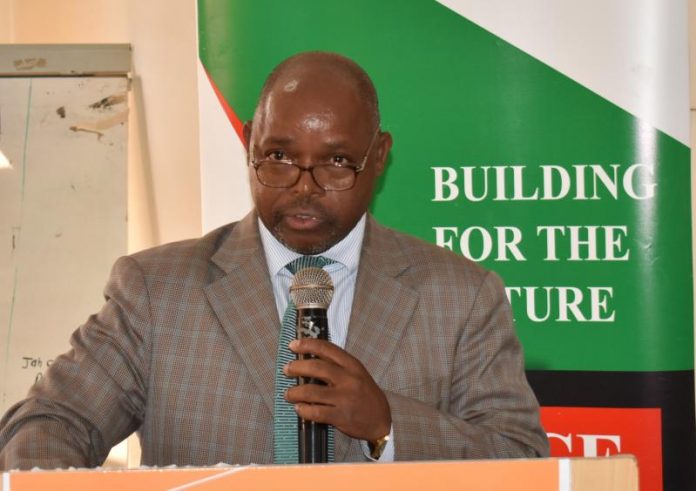
The Executive Secretary, Uganda Business and Technical Examinations Board (UBTEB) examinations, has said 16 per cent of the students who sat for last year’s exams failed.

A total of 4,102 (84 per cent) successfully completed their studies while 728 (16 per cent) have not acquired all the competences and will attempt the papers when next offered. Out of 5,251 who registered 4,895 representing 93 per cent sat the examinations while 356 candidates representing seven percent were absent. This category of examinations results were administered in 258 Examination Centres.

A total of 5,251 students, 991 Females and 4,260 Males candidates registered for Uganda Community Polytechnic Certificates (UCPC) and Advanced Craft programs. Only 4,895 representing 93 per cent sat the examinations while 356 candidates representing seven percent did not turn up for examinations.

In line with Uganda Community Polytechnics Programs a total of 82 356, 28,177 females and 54,179 Males registered for these examinations from 556 accredited examination centres countrywide.

Uganda Community Polytechnic Certificates in Carpentry and Joinery, Garment Design and Construction, Block laying and Concreting Practice and Motor Vehicle Mechanics performed very well with 90 percent, 89 per cent, 84 per cent and 82 per cent completion rates respectively.

According to Onesmus Oyesigye, there was an improvement in completion rate of four per cent from 80 per cent in 2018 to 84 per cent in the year 2019. The excellent performance is attributed to adequate syllabus coverage and continuous improvement in assessment mechanisms.

“The UBTEB board has enhanced its security measures and has contained examination malpractice, as such, there were no reported cases of malpractice during the conduct of these examinations.” He said

The Board Chairperson of UBTEB Dr. Silver Mugisha who is also the Managing Director of National Water and Sewerage Cooperation, (NWSC) said people should not come here telling us how we don’t have capacity to train practical skills. Even at NWSC, they have related programs the private sector is also willing to work with UBTEB to improve the capacity of our economy.

“We need only Shs5 billion to construct our offices as UBTEB, Madam First Lady we are tired of renting people’s premises. We are also very willing to employ these candidates at NWSC, Umeme and the private sector should employ them too” he said

On her part, Janet Kataha Museveni, Minister of Education and urged students take technical and vocational skills development seriously asserting that 728 trainees failed to complete their courses especially girls.

“Uganda like many developing countries is faced with unemployment, skills development has been brought in the country and the country is now emphasizing skills development than ever before to reduce unemployment and increase household income.” She said.

Adding “I note  the poor performance of mathematics and English, yet Mathethatics is the mode of communication in technical and English is the mode of socialization in technical. I urge the teachers in these subjects improve on learning materials.” She said

She implored partners in the public and private sectors to mentor young graduates as they serve their apprenticeship in industries and firms so that they are equipped with workplace attitude and practical skills to prepare them for self-employment.

Stories Continues after ad

$675m needed for new coronavirus preparedness and response global plan

A lady wearing protective gears against coronavirus

To fight further spread of the new coronavirus (2019-nCoV) outbreak in China and globally, and protect states with weaker health systems, the international community has launched a US $675 million preparedness and response plan covering the months of February through to April 2020.

“My biggest worry is that there are countries today who do not have the systems in place to detect people who have contracted with the virus, even if it were to emerge,” said Dr Tedros Adhanom Ghebreyesus, WHO Director-General. “Urgent support is needed to bolster weak health systems to detect, diagnose and care for people with the virus, to prevent further human to human transmission and protect health workers.”

The Strategic Preparedness and Response Plan (SPRP) for the new coronavirus lays out activities and resources needed by international health organizations globally, including WHO, to implement priority public health measures in support of countries to prepare and respond to nCoV-2019 for a period February-April 2020. The objectives of the plan are to limit human-to-human transmission of the virus, particularly in countries most vulnerable if they were to face an outbreak; identify, isolate and care for patients early; communicate critical risk and event information; minimize social and economic impact; reduce virus spread from animal sources; and address crucial unknowns.

“The effectiveness of outbreak response depends on the preparedness measures put in place before outbreaks strike,” said Dr Mike Ryan, head of WHO’s Health Emergencies Programme. “That is why we are seeking resources to safeguard the most vulnerable countries to protect people from the new coronavirus before it arrives on the doorstep.”

As noted in the SPRP, WHO assesses that the outbreak poses a very high risk in China, and high risk regionally and globally. The risk assessment was based on factors including the likelihood of further spread, the potential impact on human health, and the varying levels of effectiveness in national preparedness and response measures. Accelerated action, as called for in the plan, can address these risks and areas requiring support.

As of 10 am Central European Time on  February 5, 25 countries have reported confirmed cases of the new coronavirus, including China, where 24,363 people had contracted the virus, or over 99 per cent of all cases. In all other countries, 191 cases have contracted the virus.

Stories Continues after ad

 World Bank wants Mutebile’s powers trimmed as reforms take shape at BoU

Bank of Uganda's Emmanuel Tumusiime-Mutebile

World Bank has in a wide range proposals suggested to government to trim the many powers Governor of Uganda enjoys.

Currently, Governor Emmanuel Tumusiime Mutebile is holds three titles at BoU. He is the governor, chairman of the board and chairperson of the disciplinary committee.

The redrafting of rules follows the recent flaws exhibited in the sale and closure of the seven defunct banks in Uganda.

The Constitution of Uganda under article 161 (40), provides that the governor and deputy shall be chairperson and vice chairperson of the board, however under the new rules, the position of chairperson and vice chairperson of the Board will be separated from the position of chief executive officer (CEO) and his deputy after Mutebi and Kasekende failed their mandate of adequately the management in the process of liquidating the financial institutions.

It is also averred that BoU will base on the recommendations made by Parliamentary Committee on Commission, Statutory Authorities and State Enterprises (COSASE) after thorough investigations into the closure and sale of banks.

Recently Finance Minister, Matia Kasaijja revealed that BoU with assistance from World Bank, they are in the process of putting up bank resolution unit they will be responsible implementation of the resolution framework.  Under this, the framework will cover the operation of the liquidator, maintenance of financial ledgers and records.

Government has also put a special committee that will draft financial sector crisis management plan.

In 2018, Parliamentary Committee on Commission, Statutory Authorities and State Enterprises (COSASE) led by the then chairperson, Abdul Katuntu embarked on investigating into the closure of banks after Auditor General’s (AG) report which showed irregularities into the sale and closure of banks.

The closed banks include Teefe in (1993), international credit Bank ltd in 1998, Greenland bank (1999), The Co-operative Bank (1999), National bank of commerce 2012, Global Trust Bank (2014) and the dubious sale of Crane Bank Ltd to Dfcu bank in 2016.

In its findings, COSASE established that, some banks including Crane Bank Ltd were liquidated on telephone calls without thorough evaluation. Crane Bank Limited was in 2016 put under receivership and later sold to Dfcu ta Shs 200billion who value was to be recovered from the bad book. Crane bank had initial capital of Shs478 billion.

When BoU sold CBL to Dfcu Bank it also transferred to the same bank freehold properties of CBL/Meera Investments Limited without following the law. CBL was renting the properties that were wrongfully transferred to Dfcu Bank.

In May last year, BoU would controversially extend the duration of Dfcu bank’s possession of freehold properties of Meera Investments Limited for extra 24 months after the first 34 months elapsed, having transferred CBL to Dfcu Bank on January 25, 2017 on account of undercapitalization.

Stories Continues after ad

IMF report:  Mutebile, Ssekabira, Margaret Kasule and others face exit at BoU

BoU Legal Counsel Ms Margaret Kasule whose accused of misleading on Crane Bank Limited legal status.


International Monetary Fund has cautioned government to retire senior servants at Bank of Uganda in public interest.

According to knowledgeable sources, Governor Emmanuel Mutebile is among those who the IMF report says should be retired or never retained. However, it is reported that Mutebile has refused to make the report public as he is among those being mentioned.

According to sections of the leaked report which a source at BoU have seen, several directors who are currently holding offices have been recommended for sacking or retirement in public interest.

The directors listed are head legal services, Margaret Kasule, Benedict Ssekabira, the director of Financial Markets Development Coordination (FMDC), Director Statistics Charles Abuka, Director Medical Administration, Olive Kamuli, Director Financial Markets, and David Sajjabi. Others are director Administrative Services plus a host of deputy directors.

However, this has created panic at the central bank saying the report is biased as it only affects those directors who are said to have forged their age.

Eagle Online has learnt that just last week, there was a bitter exchange between the governor and one of the lawyers brought in to defend those accused for falsifying the age.

BoU last week took the accused directors to disciplinary committee known as EXCOM. EXCOM is composed of the governor, deputy governor and executive directors. Currently BoU has 10 Executive Directors without the deputy governor.

As the meeting sat down to business, one of the lawyers for director Olive Kimuli objected to the constitution of EXCOM saying poorly constituted because the governor conflicted because he is a member of EXCOM at the same time chairman of the board which makes it hard for member implicated to appeal. The same lawyer also further expressed their reservation on why Executive Director in charge of Supervision was part of the meeting when he wasn’t confirmed by the board.

Nevertheless, it is here that the governor informed the meeting that whether they win or lose, the IMF report had implicated all those directors for dismissal. However, one thing that Mutebile didn’t tell the affected parties is that the same report recommends his for retirement or dismissal as well.

Parliament last year recommended that contracts of the governor Emmanuel Tumusiime Mutebile and his deputy, Dr Louis Kasekende should not be renewed, the report of the Parliamentary Committee on Commissions, Statutory Authorities and State Enterprises (COSASE) has recommended.

The report, which was tabled in Parliament last year by Abdu Katuntu, the then chair, accused the top management of the central bank of mismanaging the sale of seven commercial banks, including that of Crane Bank.

Other officials that COSASE wanted to be held culpable are Benedict Ssekabira, the director of Financial Markets Development Coordination (FMDC), Justine Bagyenda, the former executive director for Commercial Banks supervision; and Margaret Kasule, the legal counsel.

The IMF’s primary purpose is to ensure the stability of the international monetary system—the system of exchange rates and international payments that enables countries (and their citizens) to transact with each other. The Fund’s mandate was updated in 2012 to include all macroeconomic and financial sector issues that bear on global stability.

BoU lately has had challenges over its governance and management systems after it emerged that the bank has no developed template it bases on to supervise commercial banks.

The IMF report which was released late last year is the latest international report asking the Ugandan leadership to revamp BoU of the current leadership.


Stories Continues after ad

Ugandan economy continues to perform well- IMF

Bank of Uganda

The Ugandan economy continues to perform well with growth expected to reach 6 percent in financial year 2019/20 a minor slowdown from the earlier projection of 6.3 percent, indicates the international monetary fund (IMF).

Recently an International Monetary Fund (IMF) team, led by Ms. Clara Mira, visited Kampala from January 20 to 24, 2020 to discuss Uganda’s economic outlook, the budget for FY2020/21, and the direction of monetary policy.

The IMF mission met with Governor Tumusiime-Mutebile, Permanents Secretary/Secretary to the Treasury Muhakanizi, senior government officials, and private sector representatives.

According to IMF, the Bank of Uganda (BoU) monetary policy remains accommodative and the current account deficit widened to 9.7 percent of GDP in FY2018/19, largely due to private sector-related imports financed by foreign direct investments (FDI).

The re-basing of the GDP points to an increase in the size of the economy by 11.6 percent. Annual headline and core inflation were 3.4 and 3 percent, respectively and are projected to stay below 5 percent over the next 12–18 months.

“The Ugandan shilling has remained broadly stable. Overall, the banking sector remains healthy. Downside risks have increased linked to uncertainty related to oil production, the electoral period, and the complex external context.” The funds notes

The execution of the current budget continues to be challenging among revenue and financing shortfalls and large expenditure pressures, which have resulted in a supplementary budget and increased borrowing needs. The authorities have negotiated two commercial loans to address such needs.

The IMF noted implementation of the externally financed capital investment projects has lagged behind, underlying the need to continue efforts to strengthen public investment management. The team discussed with the authority’s potential revenue measures and the need to carefully prioritize and contain expenditure pressures, while protecting social spending.

Regarding the preparation of the 2020/21 budget, the team encouraged the authorities to prioritize the implementation of the new Domestic Revenue Mobilization strategy, targeting an increase in the tax-to-GDP ratio by O.5 percent per year.

Similarly, the large expenditure pressures should be carefully prioritized. Overall, the team encouraged the authorities to ensure that the budget is realistic, remains consistent with debt sustainability while avoiding exacerbating debt vulnerabilities, and is consistent with available domestic financing. It is also essential that the capital position of the central bank is strengthened to ensure that the BoU can continue pursuing its operations efficiently.

The mission team lauded the authorities for the productive and cooperative discussions.

Stories Continues after ad

MPs move to censure Gen. Elly Tumwine over safe houses

Former Security Minister Gen. Elly Tumwine.

Parliament has embarked on a process to censure Security Minister, Gen. Elly Tumwine over alleged operation of ‘safe houses’.

Shadow Internal Affairs Minister, Muwanga Kivumbi amended a report on ‘safe houses’, a generic term to denote torture chambers, to include the censure of Gen. Tumwine.

The Chairperson of the Committee on Human Rights, Jennifer Egunyu had earlier pinned Tumwine for obstruction. “The Minister for Security be held accountable for failing the committee work by denying the committee access to safe houses and for blocking the committee’s interaction with the security heads,” said Egunyu.

MPs then, in near unanimity heaped blame on Tumwiine and government security apparatus for alleged torture, and rebuked Gen. Tumwine for saying he would not permit the  committee’s interaction with Internal Security Organisation Director General, Col Frank Kaka Bagyenda.

The main committee report also sanctioned Col Bagyenda for shunning the Committee.

 “I propose that we amend the motion and have the Minister of Security censured by this Parliament,” said MP Louis Mbwatekamwa

Deputy Chief Opposition Whip, Roland Kaginda Mugume said Parliament should take the step to censure Tumwiine, saying that will form a basis for government to take Parliament seriously. “If we start with Tumwine, other Ministers will follow suit,” said Kaginda.

With Tumwine a no-show, it was up to the Minister for Karamoja Affairs, John Byabagambi, to defend government.

“The government does not at all condone the torture of anybody whether guilty or not; even the President [Yoweri Museveni] said there are civilised methods of getting information from suspects,” he said.

He added, “We have listened to the concerns of MPs genuinely; the government is going to take action; I will report to the Prime Minister on the concerns of MPs; whoever l has committed a crime will answer.”

Speaker Rebecca Kadaga, however, said government is taking so long to present treasury memoranda on human rights detailing actions taken against officers specifically named by Parliament.

“I would be happy if government would come up with a memorandum to Parliament on human rights with actions taken; show your commitment by taking action which everyone can see,” she said.

The pace was already set for MP Kivumbi to proceed with his amendment, which can threaten to end Minister Tumwiine’s tenure as Security Minister.

“…all safe houses and ungazetted detention facilities be closed with immediate effect; I also move that a motion of censure against Gen Elly Tumwine be initiated,” said Kivumbi.

His motion was unanimously endorsed.

Rule 108 of the Rules of Procedure details the process of getting a Minister censured, which has to contend with the Member spearheading the censure notifying the Clerk to Parliament in writing, citing the grounds and a proposed motion with the basis for the censure.

Last year, Kawempe MP Latif Ssebagala (IND, Kawempe North), supported by Arua Municipality’s Kassiano Wadri, successfully moved a motion to have the House investigate the alleged existence of safe houses.

Gen. Tumwine then told the Committee that he will not sanction Col Bagyenda and the Commander of the elite Special Forces Command (SFC), Maj Gen James Birungi, to interact with MPs.

Stories Continues after ad

Say a prayer of gratitude for our men in uniform

Mr Wanyama

By Don Wanyama


A vivid recollection of my childhood is that of a night, in 1984, when soldiers of the UNLA burst into our house at Tororo Girls School in the dead of the night, supposedly looking for guns.

The soldiers claimed my mother, a deputy headteacher, was hoarding guns and was a rebel collaborator. Of course the accusations were hogwash. The true story, as I learnt later, was that my mother was involved in a school leadership tussle with another senior administrator.

To sort out what was a professional issue, this administrator had bribed rogue soldiers and whereas they claimed to look for guns in the house, their exact intentions were more sinister, especially if my mother had been in the house that night.

Luckily, earlier in the day, my mother had travelled to Mbale and slept there. A househelp, my sister and myself took the brunt of the threats, with the househelp physically assaulted, hit with the butts of guns. They left, visibly disappointed but warning they would return to “sort out” my mother.

She could not take chances. When another teacher rode a bicycle to Mbale, about 50kms away, and briefed her, the instinctual reaction was to flee. She found her way to Malaba, Kenya, sent an emissary to pick my sister and I–and just like that, with our clothes as the only possession we could salvage, we began a decade of a challenging life in exile.

Listening to my mother and several victims of military brutality years later and reading multiple accounts of my country’s history, I totally appreciate why she could not stay around and try to seek justice.

The army, specifically the UNLA, had become the personification of state breakdown. Human Rights Watch estimates that UNLA soldiers between 1980 and 1985 killed over 300,000 innocent civilians.

Peter Bouckaert, a Human Rights Watch official, wrote: “Military exccesses by UNLA against civilians are believed to have exceeded the brutality of the Amin era…By 1984, 200,000 civilians were slaughtered by the Obote regime and the number was higher by 1985.”

The army had become a mercenary force, one that could be hired by politicians to fix opponents, businessepeople to get rid of rivals even professionals would use them to settle scores as it was with my mother.

In all this, those tasked with reining in the wayward soldiers looked the other side, looked on helplessly or actually encouraged this bloody  decimation of its own citizens.

In explaining the cornerstones of a functional state, scholars from as early as the Bible’s Old Testament, Plato’s “Republic” (375 BC) and a host of contemporary academics, the role of a disciplined army has always been emphasised.

At the heart of a state true to its word, is stability, an ingredient that is then able to facilitate the free functioning of the other arms of state like the Executive, Legislature and Judiciary plus support arms like the Media.

It is therefore true to assert that pre-1986 Uganda was in a deep crater and a failed state with the institution charged with enforcing stability instead superintending over and dishing out instability.

At the 1985 Nairobi Peace Talks, it was one of the salient issues raised by then rebel leader Yoweri Museveni, warning that he would not hesitate to move onto Kampala if the army did not stop killing innocent civilians.

So, what is my point and why the walk down memory lane? This Thursday, on February 6th, the country will celebrate 39 years since the National Resistance Army (now UPDF) was born, in what is dubbed “Tarehe Sita”.

The NRA of course has roots earlier than 1981, going way back to President Museveni’s student days and the first team of fighters he took to Montepuez for training.

To appreciate the general strides the country has been able to make across these 34 years, one must understand the cardinal role of the NRA/UPDF in this journey.

The ideological clarity for the NRA is unmistakable: You are a people’s army and subordinate to civilian authority. You are the keeper of Ugandans’ lives and property, not the destroyer. You unfairly take away a life using a gun, you lose yours too.

This has ensured an over-supply of peace. It is so much that many, especially young Ugandans, have no idea what it means to be flagged down at a roadblock and flogged just for speaking in English to a soldier who is holding your identity card (often called ‘diagram’) upside down, while demanding you introduce yourself.

At the heart of this impeccable conduct of the UPDF has been President Museveni’s stellar guidance as Commander-in-Chief. He stays as the army’s enduring chief strategist, ethicist, guide and disciplinarian.

Today, it all looks so effortless. From border to border, Uganda is pacified. The economy has grown, social life is booming, we go to bed sure that we shall wake up to a stable country the next day.

Beyond our borders, this army is helping stabilize the rest of the region. Numerous surveys place the UPDF at the apex of the public’s most trusted institutions. It is a complete cycle–from an institution that represented the worst of the state to now the fresh beacon of hope and trust.

In that kind of situation, it is possible to forget the effort of those, especially President Museveni, who has worked for decades to see a reversal in what had become a major national stain.

Here is my prayer and suggestion. This Thursday, take a moment to say a prayer of gratitude for our soldiers. If you know a man or officer in uniform, send them a text to appreciate them. It is the least we can do for those who literally lose their lives so that the rest of us can have ours.

The writer is the Senior Press Secretary to His Excellency the President

Stories Continues after ad

UN pledges support to Burundi in attaining peaceful, credible and democratic elections

The United Nations Assistant Secretary General for Africa, Ms. Bintou Keita, has expressed the United Nation’s desire for peaceful, credible and democratic elections in Burundi.

Ms. Keita made the statement during a meeting with the EAC Secretary General, Amb. Liberat Mfumukeko, in Bujumbura, Burundi, adding that peaceful elections in Burundi were a prerequisite for political stability in the nation and the region as a whole.

Speaking on regional peace and security, Ms. Keita said the UN had high expectations that the EAC would play a central role in ensuring peaceful and credible elections in Burundi.

“We are willing and ready to work together with and support the EAC in this endeavour,” she added.

On his part, Amb. Mfumukeko informed the UN delegation that the EAC observes elections within the context of the National Constitutions of the Partner States.

He informed the delegation that preparations were underway for the launch of a long-term EAC Observer Mission that will monitor the Burundi electoral process in its entirety, as well as a short-term EAC Observer Mission that will monitor the polling only.

“I am confident that the peaceful spirit we have experienced during the party nominations will continue during and after elections,” said the Secretary General.

“The EAC is calling on all the people of Burundi to side-step violence, regardless of the situation,” he added.

In 2018, Burundi promulgated a new Constitution. The May 2020 elections will be the first elections under the new Constitution.

Amb. Mfumukeko was accompanied by the EAC Deputy Secretary General in charge of Planning and Infrastructure, Eng. Steven Mlote, and other EAC senior officials.

Stories Continues after ad

UPDF donates Shs30m to Bidabujja communities.

The UPDF Chief of Defence Forces Gen. David Muhoozi has donated Shs30 million to two development groups of Bida-Bujja village in Kasangombe Sub-County in Nakaseke district. The money which was delivered by the Joint Chief of Staff of the UPDF Lt. Gen. Joseph Musanyufu was handed over to Kasangombe stationers Association and Kasangombe Youth hatchery to develop themselves.

The cash donation was promised to the two groups at the regional launch of Tarehe Sita activities where the area L.C III chairperson Mr James Makanda requested the groups to be assisted.

Mr. Makanda promised continuous supervision of the groups so as to achieve the objective of the project.

The UPDF will celebrate 39th Tarehe Sita Anniversary in Nakaseke Butalangu grounds tomorrow 6th Feb 2020 under the theme “Consolidating the strategic partnership with the people to guard the gains of liberation”.

The UPDF together with Rose Namayanja Foundation is also renovating Bidabujja health center II in Kasangombe subcounty in Nakaseke district. This is part of the ongoing Tarahesita activities in Greter Luwero region.

Speaking at the inspection of the work progress Rose Namayanja who is also the chairperson Rose Namayanja Foundation thanked God for the wonderful things done to people of Nakaseke by UPDF.

“Bulemezi had a hand in the struggle and should celebrate Tarehe Sita based on the historical significance of greater Luwero”. She added.

Tarehe Sita always leaves a trail behind basing on a series of activities and development done in the communities where it is celebrated.

Namayanja applauded UPDF for the support, quality and speedy work done in the construction of the health centre.

Stories Continues after ad
Coronavirus: 71 Ugandan students trapped in China, call for evacuation

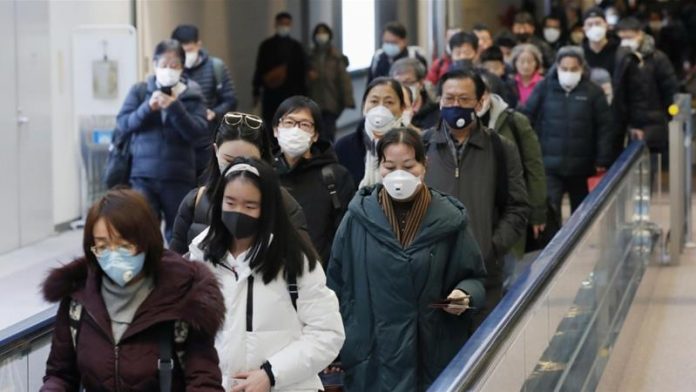
People wearing preventative gears China.


Ugandan students trapped in Wuhan, the Chinese epicentre of the coronavirus epidemic, have called on government to take swift action that will see them evacuated from China.

According to Uganda’s deputy Ambassador to China, Henry Mayega, and Uganda has a total of 71 students in Wuhan, a province where the virus was first confirmed. Chinese authorities have since assured Ugandans of safety following the outbreak of coronavirus in China.

As of January 3, 2020, World health organisation (WHO) reported that 17336 cases of acute respiratory disease were confirmed in 24 provinces, regions and cities and 21558 suspected cases in China. The virus has claimed 362 people.

Over 50 cases of the virus have also been confirmed in other countries in Europe and Asia. Progress as so far been registered with 505 cured cases. So far no case of novel coronavirus has been confirmed Uganda.

According to government Spokesperson Ofwono Opondo, Ugandans in Wuhan have been advised by President Museveni Yoweri Kaguta Museveni to remain there and observe all the precautionary measures placed by the Chinese government.

Yesterday, the President of Kenya, Uhuru Kenyatta said they have embarked of the program to see Kenyan students back home.  “I am sure all East African students in Wuhan can fit in a KQ B787. For the spirit of the EAC please evacuate our Ugandan brothers and sisters too. Reach out to whoever you can reach out to Evacuate Ugandans in Wuhan” one Musoga wrote.

Following government failure evacuate them, students led by Thomas Kanzira, a Ugandan medical student in Wuhan have resorted to moving hashtag dubbed #EvacuateUgandansInWuhan sharing their agonizing stories since the outbreak of the virus.

“Hi Uganda Ministry of Foreign Affairs, I am 100 per cent sure that you’re seeing this tweet. I’m only here to beg you to Evacuate Ugandans in Wuhan. The situation in China as portrayed in the media isn’t what it really is. No shops or pharmacies with gloves, sanitizers and face masks. Nothing.” Thomas wrote on twitter.

“For two weeks we have cried and have been told to keep calm. We cannot keep calm down, we are frustrated, and we have run out of supplies and masks. The number of those infected is increasing rapidly. Help us” he said

He said two weeks back there were 639 cases and 17 deaths at the time of initiation of the Wuhan Lockdown, today there are 28,000 cases and 563 deaths…do you think these 28,000 people did not take ‘precautionary measures’.

“Please I don’t want to be the next person in those body bags. Is this the same Wuhan the Gov’t says we’re safer in, if I die here my body will be cremated. My people won’t even get a chance to bury me.” He said.

The Minister of Health, Jane Ruth Aceng, has since urged the Ugandan business community travelling back from China to adhere to our strict rules of isolation too. She said the ministry will continue screening all travelers since the virus is spread to many other countries but travelers from China will be isolated for 14 days for follow up.

“Please let’s do this willingly to ensure our country is safe. I appeal to all of you to wash hands at all times and report any suspected cases to nearest health facility” she said.

Stories Continues after ad