Stanbic Bank
Stanbic Bank
19.7 C
Kampala
Stanbic Bank
Stanbic Bank
Home Blog Page 1062

AfDB allocates €1.2 million to train policymakers in boosting mining revenues

Gold mining in Bugiri

The African Development Bank has allocated a €1.2 million grant to provide training to help resource-rich countries improve their mining revenues.

The Bank’s Regional Development, Integration and Business Delivery Complex approved the first-of its kind grant from the Transitional Support Facility for the project on Financial Modelling for the Extractive Sector (FIMES) in December. The project will be implemented in Africa’s transitional countries from 2020 to 2022.

The FIMES project will train policymakers responsible for the extractive sector to realise greater returns from natural resource investments in their countries.

The Bank’s African Natural Resources Centre (ANRC) will implement the pilot project in the eight beneficiary countries, namely Guinea, Liberia, Niger, Mali, Madagascar, South Sudan, Sierra Leone and Zimbabwe.

“Africa’s transitional countries need to build state capacity to mobilise revenues from natural resource investments, to address reconstruction, infrastructure and socio-economic priorities. The FIMES project will equip transitional countries with the right skills and knowledge to enhance domestic resource mobilisation for accelerated growth and sustainable development,” said Vanessa Ushie, Manager of the Policy Analysis Division in the African Natural Resources Centre.

“Given the strategic importance of natural resource revenues for building peace, stability, and resilience in transitional settings, the project is timely for the Bank and the beneficiary countries,” she added.

AfDB research shows that many African governments do not extensively use financial models to inform investment decisions, or monitor revenue flows from extractive industry concessions, leading to significant revenue losses for the state.

The FIMES project has been informed by the Bank’s Strategy for addressing fragility and building resilience, its Governance Strategic Framework and Action Plan, and Human Development Strategy. More broadly, the FIMES initiative will support the implementation of African countries’ natural resource development plans. It will further contribute to the achievement of the Bank’s High 5s, AU Agenda 2063 and the UN Sustainable Development Goals by boosting domestic resource mobilisation from Africa’s natural resource sector.

Stories Continues after ad

2021 Africa Cup of Nations moved to January

AFCON Trophy

The 2021 Africa Cup of Nations will start on 9 January after its dates were moved, hosts Cameroon have announced.

The tournament was scheduled to take place in June and July but was changed because of the “unfavourable” weather in the country at that time of year.

It means a number of European clubs could be without first-team players at a crucial stage of the season.

The 2019 tournament in Egypt was the first one to be held in the summer.

Before that, the Cup of Nations had been held in January and February, clashing with the European domestic season.

The change back to a January start means that the tournament will not clash with the expanded Club World Cup, being held in China in June 2021.

Following a meeting on Wednesday with representatives from the Confederation of African Football (Caf), including president Ahmad, the Cameroon Football Federation (Fecafoot) tweeted: “It [2021 Africa Cup of Nations] will be played in Cameroon from 9 January to 6 February, 2021. Date changed for weather reasons at Cameroon’s request.”

Caf’s deputy general secretary Tony Baffoe said: “We have reviewed the period of the competition as requested by the Cameroonian party due to unfavourable climatic conditions during the period initially slated.

“After listening to the various arguments and viewpoints – and in particular from the Cameroonian meteorological authorities, the coaches and players – the representatives of the Afcon organising committee, which received the mandate from Caf Executive Committee to take the decision, has granted this request.

“A detailed reported shall be presented to the members of the Executive Committee during its next session on 6 February.”

Cameroon had been scheduled to host the 2019 Cup of Nations, but were stripped of that honour in November 2018. At the time, Caf said the decision had been made because of delays in the progress of Cameroon’s preparations.

A month later, Caf announced that Cameroon had agreed to host the 2021 edition instead.

Stories Continues after ad

Confusion as NRM rebel MP Ssekikubo is arrested again

MP Theodore Ssekikubo

Lwemiyaga County Member of Parliament, Theodore Sekikubo has been arrested again after being granted court bail yesterday.

The police have confirmed his arrest, saying Ssekikubo is in cells for inciting violence. “All I can tell you is that he will appear in court tomorrow,” said Paul Kangave, the Greater Masaka Region Police Spokesperson.

Ssekikubo who subscribes the ruling National Resistance Movement (NRM) party but regarded as undisciplined by his party, was first arrested on Friday last week and remanded for allegedly possessing an illegal firearm, engaging in acts calculated to cause death, inciting violence and causing physical injuries to voters.

His arrest followed attempts by cattle keepers to forcefully enter Lwemiyaga Cattle Market, in protest against the continued ban on the movement of cattle due to Foot and Mouth disease. Ssekikubo is said to have urged the herdsmen to invade the closed market.

He denied all the charges brought against him, and was later remanded to Masaka Central Prison.

He was however granted a non-cash bail of Shs10 million yesterday.

Stories Continues after ad
Drama as NRM legal expert orders party to allow rebel MPs attend national conference

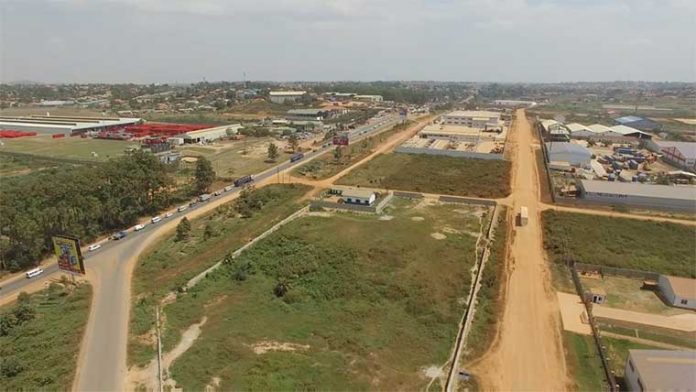
NRM rebel MPs

The National Resistance Movement (NRM) legal director Oscar John Kihika has rescinded the party’s General Secretary’s decision to block all legislators who voted against the removal of the presidential age limit in the constitution from attending the forthcoming National Conference at Namboole Stadium.

In a letter dated Wednesday January 15, it says arrangements should be made to ensure that the dropped legislators attend the National Conference just like all other party members who were invited by virtue of the Notice of the National Conference.

NRM Secretary General Kasule Lumumba at a press conference on Tuesday said such MPs have not been invited to the party’s forthcoming delegates’ conference scheduled for next week. She said that they will first have to be cleared by the party’s disciplinary committee.

“It has come to my notice via press reports that there is a proposal to block some 30 NRM members of Parliament from attending the National Conference which is slated to convene on the 25 of January 2020.” Kihika says in the letter.

“As you are well aware, the 30 NRM Members of Parliament were entitled to attend the upcoming National Conference by virtue of Article 11(2) (j) of the NRM Constitution which lists them as members of the National Conference. To the best of my knowledge, these MPs have thus far not been dismissed from the NRM.”

“Arrangements should therefore be made to ensure that they attend the National Conference just like all other members who were invited by virtue of the Notice of the National Conference that was published in the New Vision News Paper some time in December of 2019,” the letter concluded.

The party will convene the 2nd Meeting of the 3rd Mainstream National Conference on 25th January 2020 at Mandela National Stadium, Namboole. The main purpose of this conference is to effect amendments to the NRM Constitution.

The NRM MPs who resisted the party line on the age limit Bill were Patrick Nsamba, John Baptist Nambeshe, Dr Sam Lyomoki, Monica Amoding, Gaffa Mbwatekamwa, Barnabas Tinkasimire, Theodore Ssekikubo, Sylvia Rwabogo, Silvia Akello, Maurice Henry Kibalya, Johnson Muyanja Ssenyonga, and Dokolo County MP Felix Okot Ogong.

But Tinkasimire scoffed at the party plans, saying that he is not in Parliament because of NRM.

“Should I commit suicide because NRM has blocked me from attending the Delegates Conference? Am I in Parliament because of the Delegates Conference? My powers are in the people of Buyaga County,” he said..

Workers MP Sam Lyomoki described Ms Lumumba’s announcement as baseless and illegal, adding that he is a founding member of the party who cannot be pushed away like that.

The lists of delegates to attend the conference have been verified and approved by the District NRM Leadership, according to Ms Lumumba.

“The public is hereby informed and cautioned that only displayed delegates on the lists at the NRM Offices will be accredited to attend the above meeting and therefore no claims whatsoever will be entertained from any non-participants travelling to Kampala for the Conference. Delegates are also advised to come with their national Identity Cards,” she said yesterday.

The National Conference will be preceded by the Central Executive Committee (CEC) and the National Executive Council (NEC) meetings that will be held on 23rd and 24th respectively. Accreditation for NEC will be on January 23rd while for the National Conference will be on January 24, 2020 both at Kololo Airstrip. The conference is being organised by the National Secretariat under the supervision of the oversight committee comprising some CEC members headed by the First National Vice Chairperson Moses Kigongo.

Stories Continues after ad
Over 60 defilement cases registered in Busia in January

Crime scene

About 67 defilement cases have been registered in the eastern Uganda border district of Busia since the beginning of the year 2020, causing worry among district leaders.

According to Patrick Lule, the operation commander at Busia Central Police Station majority of the cases registered are from Masafu, Masaba, Buteba and Busitema Sub Counties, involve girls between 14 and 17 years of age who were defiled by married men aged above 30.

According to the Penal Code Act, any person who performs a sexual act with another person who is below the age of eighteen years, commits a felony known as defilement and is on conviction liable to life imprisonment.

Any person who performs a sexual act with another person who is below the age of eighteen years in any of the circumstances specified in subsection (4) of the Penal Code commits a felony called aggravated defilement and is, on conviction by the High Court, liable to suffer death.

Stories Continues after ad
Bududa boy on run after stabbing friend to death over ‘fiancé’

Police in the eastern Uganda mountainous district of Bududa is hunting for a 10-year old boy who allegedly stabbed to death his friend, accusing him of having a love affair with his “girlfriend”.

The District Police Commander, Jaffar Magyezi says the suspect is Moses Nangwale Mukamba, a pupil of Buwali Primary School and resident of Bunamubi Trading Center in Bunamubi Parish in Bukigai Sub County.

The murder suspect is currently on the run together with his father, John Mukamba.

The suspect reportedly stabbed 16-year old Sam Watsosi in the stomach with a knife on suspicion that he was dating his longtime “girlfriend”.

After the attack, Watsosi was rushed to Bududa hospital where he succumbed to the wounds sustained.

The deceased was a senior two student at Bulucheke Secondary School in Bududa District.

Meanwhile, tension remains high in the area as the relatives of the deceased have threatened to attack the family of the suspect in retaliation, however, Magyezi has asked them to exercise restraint, assuring the aggrieved that the suspect will be apprehended and charged with murder.

Stories Continues after ad

40 economies make 62 legal reforms to advance women’s economic participation

Women

The regulatory environment for women’s economic participation has improved over the past two years, with 40 economies enacting 62 reforms that will help women – half the world’s population – realize their potential and contribute to economic growth and development, says a new World Bank study. Still, the results are uneven — women in many countries have only a fraction of the legal rights of men, holding back their economic and social development.

The study, Women Business and the Law 2020, measures 190 economies, tracking how laws affect women at different stages in their working lives and focusing on those laws applicable in the main business city. It covers reforms in eight areas that are associated with women’s economic empowerment, conducted from June 2017 to September 2019.

“Legal rights for women are both the right thing to do and good from an economic perspective. When women can move more freely, work outside the home and manage assets, they are more likely to join the workforce and help strengthen their country’s economies,” said World Bank Group President David Malpass. “We stand ready to help until every woman can move through her life without facing legal barriers to her success.”

The areas of Workplace and Marriage saw many reforms, especially in the enactment of laws that protect women from violence. In the last two years, eight economies enacted legislation on domestic violence for the first time. Seven economies now have new legal protections against sexual harassment in employment.

Twelve economies improved their laws in the area of Pay, removing restrictions on the industries, jobs and hours that women can work. Globally, the most frequent reforms were in areas related to Parenthood, with 16 economies enacting positive changes. Reforms included expansion of the amount of paid maternity leave available to mothers, introduction of paid paternity leave and prohibition of dismissal of pregnant employees.

Achieving legal gender equality requires strong political will and a concerted effort by governments, civil society, and international organizations, among others. But legal and regulatory reforms can serve as an important catalyst to improve the lives of women as well as their families and communities.

“This study helps us understand where laws facilitate or hinder women’s economic participation. It has incentivized countries to undertake reforms that can eliminate gender imbalances,” said World Bank Group Chief Economist Pinelopi Koujianou Goldberg. ”Achieving equality will take time, but it is encouraging that all regions have improved. We hope that this research will continue to serve as an important tool to inform policy making and level the playing field for women.”

The WBL index measures only formal laws and the regulations which govern a woman’s ability to work or own businesses– a country’s actual norms and practices are not captured. The global average score was 75.2, which improved slightly from 73.9 two years ago. Clearly, much more work remains as women in many countries have only a fraction of the legal rights of men, holding them back from opportunities for employment and entrepreneurship.

The eight areas covered by the index are structured around women’s interactions with the law through their careers: Mobility, Workplace, Pay, Marriage, Parenthood, Entrepreneurship, Assets, and Pension.

Reforms are urgently needed in the area of Parenthood, which scored just 53.9 on average. In almost half of economies that provide any form of paid maternity leave, the burden falls on the employer, making it more costly to hire women. But paid maternity leave can help to retain female employees, reducing turnover cost and improving productivity.  These longer-term benefits often outweigh the short-term costs to employers, according to the study.

Of the ten economies that improved the most, six are in the Middle East and North Africa, three are in Sub-Saharan Africa and one is in South Asia. While there was considerable progress, the Middle East and North Africa remains the region with the most room for improvement.  Eight countries now have a score of 100, with Canada joining Belgium, Denmark, France, Iceland, Latvia, Luxembourg and Sweden due to a recent reform in parental leave.

Regional Highlights

Advanced Economies: Advanced economies continue to make progress on the indicators. Of the 40 economies with scores above 90, 27 are OECD high-income economies. The Czech Republic and the United States reformed laws related to paternity and parental leave, giving parents more opportunity to share childcare responsibilities, while Italy and Slovenia equalized pension benefits between men and women.

East Asia and the Pacific: Four economies conducted four reforms in three areas. Thailand introduced a reform in the area of getting paid, and Timor-Leste in the area of getting a pension. Fiji increased the duration of paid maternity leave and introduced paid leave for fathers for the first time.

Europe and Central Asia: Four economies enacted five reforms in five areas, and two economies changed laws to reduce opportunities. Armenia enacted legislation protecting women from domestic violence. Cyprus introduced paid paternity leave. Georgia adopted legislation to provide for civil remedies in the case of the unfair dismissal of a victim of sexual harassment.  Moldova lifted some restrictions on women’s employment by limiting them to pregnant, nursing, and postpartum women.

Latin America and the Caribbean: Four economies made four reforms in four areas. Barbados enacted legislation on sexual harassment in the workplace. Peru and Paraguay received high scores in the 90s. Economies in this region made important strides toward lifting restrictions placed on women in the 1980s and 1990s, but the pace of reforms slowed over the past decade.

Middle East and North Africa: Seven economies enacted 20 reforms in seven areas, although one economy implemented a negative reform. Saudi Arabia made the biggest improvement globally, enacting reforms in six out of eight areas measured including in women’s mobility, sexual harassment, retirement age and economic activity. The United Arab Emirates also reformed in five areas. Djibouti, Bahrain, Jordan, Morocco and Tunisia implemented an additional nine reforms.

South Asia: Four economies enacted seven reforms in four areas. Nepal introduced a new labor law that prohibits discrimination in employment, paternity leave and new pensions regulation. Three other countries also enacted reforms: Pakistan and Sri Lanka made progress in the area of Parenthood. In India, the state of Maharashtra eliminated restrictions on women’s jobs.

Sub-Saharan Africa: Eleven economies implemented 16 reforms in seven areas. The Democratic Republic of Congo introduced social insurance maternity benefits and equalized retirement ages. In Côte d’Ivoire, spouses now have equal rights to own and manage property. Mali enacted reforms on non-discrimination in employment. São Tomé and Príncipe adopted a new labor code to meet job market demands and bring laws in compliance with international standards. South Sudan adopted its first labor law since independence.

Stories Continues after ad

Ugandans among newly deployed police officers inducted into AMISOM

Newly deployed AMISOM police officers

The African Union Mission in Somalia (AMISOM) has completed an induction course into the mission for 22 AMISOM Police Officers from Nigeria, Sierra Leone and Uganda as part of a mandatory training to help them understand Somali culture and operating environment.

The seven-day course also acquainted the officers with the AMISOM mandate, concept of operations, Improvised Explosive Devices (IED) awareness, gender awareness and code of conduct.

Speaking to the newly deployed officers at the closing ceremony of the course in Mogadishu on Monday, AMISOM Police Commissioner, Assistant Inspector General of Police, Augustine Kailie thanked the inductees for their patience and discipline during the course. He urged them to respect the laws of the country and be sensitive to the Somali culture.

“You have to be kind and friendly with the Somali Police and understand their situation,” Commissioner Magnus told the officers.

“It’s not easy for a country to be at war and expect all things to be rosy. So you have to communicate with them, encourage them and tell them that in the future, they will also be on peacekeeping missions in other countries.”

Assistant Superintendent of Police (ASP) Isatu Kargbo, from Sierra Leone said the induction course was timely and beneficial.

“We are ready to work, that is why we are here to help bring peace together with my colleagues from other countries. We will impart knowledge that is being given to us to our counterparts from the Somali Police Force,” she noted.

On his part, Superintendent of Police (SP) Stephen Yeje of Nigeria noted that the induction course has broadened his knowledge about Somalia and he will be better placed to execute his mentoring and advising duties.

“We see the Somali Police Force as partners. They will lead and we will give them support. We are here to help restore order in regards to peace and security and the SPF will be in the forefront while we give them support,” Stephen said.

The officers from Nigeria, Sierra Leone and Uganda replaced another group of Individual Police Officers (IPOs) who recently returned home after completing a year’s tour of duty in Somalia.

2020 is a crucial year for Somalia and the deployment of these officers will boost the number of IPOs at both federal and regional levels.

Stories Continues after ad

Seven personal attributes that attract investor attention

Martin Zwilling

By Martin Zwilling

As a startup mentor, I’m always amazed that some entrepreneurs seem to be an immediate hit with investors, while others struggle to get any attention at all. Finally I realized that venture capital and angel investors are actually humans, despite some views to the contrary. As with most business and personal interactions, first impressions tend to become lasting ones.

Investors know that building any business is a challenging and risky proposition, so they start with entrepreneurs who give a first impression of passion, commitment, and work ethic to succeed. There is no room in this realm for negativism, excuses, or lack of confidence. People like Elon Musk, who have the energy to work 100-hour weeks for years, will always attract investors.

But the right personal characteristics are just the beginning. Successful businesses are measured by their results, so relevant skills, attention to details, and problem-solving abilities are critical. Early in the relationship, every investor instinctively looks for some key indicators of the ability to get results, like the following:

Communicates well in every business medium. Some entrepreneurs love to talk and produce videos, but hate to write anything down. Others send investors email and business plans in all uppercase or no punctuation. Effective communication requires real listening, as well as talking. Message delivery must be customized for each investor.

Surrounded by the right people and track record. It takes more than one person to build a business, so the lone entrepreneur, without support from any visible team, advisors, partners, or potential customers, will not attract investors. Of course, previous successes provide more direct evidence of a network of the right people.

Exudes integrity, humility, and stability. Even business plan has strengths and weaknesses, and the best entrepreneurs are able to recognize the difference. They seek to establish win-win relationships with all partners, including investors, and treat them all as trusted advisors, rather than win-loss opportunities.

Registered patents and other intellectual property. From an investor perspective, understanding and acting early to establish a sustainable competitive advantage, and barrier to entry, is the best assurance of a financial return. Being the first mover or lowest cost is not a good long-term strategy.

Already set and achieved initial milestones. Contrary to popular belief, most investors are not looking for entrepreneurs who are desperate for funding. They prefer to see a rational staged plan, already in progress, with some checkpoints achieved, as well as future ones planned. A proven business model, ready to scale, is particularly attractive.

Evidence of adaptability and flexibility. A strategy of learning and willingness to pivot, based on market feedback, is a great survival skill and attitude, cherished by investors. Rather than hide seemingly non-productive gaps in your work to-date, investors look for logical actions, and iterative small steps that could be quick to market or quick to fail.

Expert in your chosen domain. Many key insights to success in any business can’t be learned from books or the Internet. There is no substitute for experience and trained skills in the business area you are attacking. In this context, investors are attracted to thought-leaders visible on social media, and people with strong technical credentials.

By definition, entrepreneurs need to love the art of the start, and that love needs to come across as part of the first impression you deliver to any investor. Since your product or technology may still be in the early stages of development, the investor in actually investing in you, and your previous achievements, as much as your current startup.

My advice is to start your networking early with potential investors, to establish a relationship before they see you as an entrepreneur asking for money. The strengths of those early relationships can override all of these results indicators, and let you fly with the angels without a second look when the time is right.

The Writer is a veteran startup mentor, executive, blogger, author, tech professional, professor, and investor. Published on Forbes, Entrepreneur, Inc, Huffington Post, etc.

Stories Continues after ad

2020s will test leaders’ conviction, gold and the global reserve currency system

Mark Sobel

By Mark Sobel

The first instalment in this two-part series examined the global economy of the 2020s, painting a baseline picture of stagnant, if not worrisome and declining, global growth.

If recent past is prologue, it is questionable whether world leaders can find the vision and will to tackle key global challenges.

The US policy course in the 2020s will hinge in part on forthcoming presidential elections, in which a few thousand votes in Wisconsin, Michigan and Pennsylvania could be more decisive than millions across the country. There is little hope that common ground will be found.

The US’s enormous challenges – fiscal sustainability, entitlements, stagnant real incomes, climate change, infrastructure demand – must be addressed amid a path of slow, gradual consolidation. But tackling longer-term challenges does not seem probable, despite the burdens being placed upon future generations.

Fiscal policy may become broadly neutral or mildly expansionary. Many Republicans are tiring of their party’s recent profligacy. Democrats have their priorities, and meeting those is incompatible with gradual consolidation. Many believe the US can sustain higher debt loads given lower-for-longer interest rates, despite excessive deficits. Monetary policy may by default need to continue shouldering the burden of stabilisation policy.

Europe offers little ground for cheer. It should boost productivity and strengthen the euro area by better forging union-level institutions and tackling national imbalances.

The European Central Bank carries an inordinate burden for macroeconomic policy stabilisation. But with nationalism ascendant, it is unlikely to receive much fiscal support from countries where space exists, nor from reforms in over-indebted nations. Structural change proceeds languidly. Hesitant progress will be made in strengthening European institutions given divisive debates about the proper balance between risk sharing and reduction. Italy remains burdened by low growth and high debt and could be one shock away from crisis. On Britain’s exit from the European Union, divorce may prove far easier than settlement. Germany’s reliance on manufacturing may face overhaul, especially the automotive industry. France faces perpetual struggle in reforming the state’s heavy presence.

Reform may be hampered in China, despite its greater capacity to institute change. Macroeconomic space is viewed as constrained. Fiscal authorities worry about large off-budget contingent risks. Monetary authorities seek to avoid excess leverage and stay clear of the zero lower bound. They do not see monetary policy as the answer to China’s structural woes.

China’s leadership well comprehends the country’s demographic challenges and need to shift to consumption and services. But to sustain growth in the face of slowdown, China relies on financial repression and pumping credit from state-owned commercial banks to state owned-enterprises, often to the detriment of a burgeoning private sector. When authorities’ efforts to curb excess leverage hurt growth, they renew credit growth and local government financing – though more judiciously than in the past.

Huge financial risks abound.

In Tokyo, one senses Japan’s citizens are seemingly content with lowflation and slightly rising real per capita incomes. Perhaps that is a vision for satisfaction in advanced economies. But it rests on a baseline scenario. Shocks inevitably occur.

Perhaps with fiscal space viewed as limited and monetary policy’s impact diminished around the lower bound, authorities will turn to implicit fiscal/monetary policy coordination. That may intensify assaults on central bank independence.

Nor will the cause of multilateralism and globalisation offer much comfort. It is not just President Donald Trump’s trade wars and their disruptive impact on global manufacturing, investment and confidence. Populism and unilateralism seemingly have strong global roots. The US is engaged in a longer-term process of reducing its global footprint. Even if Washington finds a wiser way to deal with Beijing, stepped up US/China global competition is here to stay.

Globalisation may thus be further set back as trade integration loses more momentum, global value chains and export-led growth models are disrupted, World Trade Organisation powers are eroded and technological competition heats up.

Are there silver linings among this overcast worldview? Much is made of artificial intelligence boosting productivity. Perhaps it will play some role, but the process of technological diffusion into daily life takes a long time. Pressing infrastructure needs offer sound returns. But can politicians agree on what these needs are and how to finance them? Climate change looms as the greatest challenge facing mankind. Massive investments could prove a boon to global activity.

Hope springs eternal, but will it be enough to compel world leaders to affect meaningful change? That will be the defining question for the 2020s.

The Writer is US Chairman of Official Monetary Institutions Forum (OMFIF)

Stories Continues after ad