NSSF Managing Director, Richard Byarugaba donates blood during the 2018 edition of the NSSF Blood Drive- the fund's social initiative that has raised 21,425 since 2012. This year, the fund aims to raise at least 15,000 units so as to end the cyclic blood shortage in the December-January period.
By Richard Byarugaba
From this Monday, 13th to Friday 17th January 2020, your Fund, National Social Security Fund (NSSF), working with Ministry of Health and the Uganda Blood Transfusion Services (UBTS) will yet again run the NSSF Blood Donation Drive campaign.
This will be the 9th NSSF Blood Drive for 9 years in a row, since we launched the campaign in 2012. During this time, we have mobilised blood donors all over Uganda to donate 21,425 blood units.
But even with this, and a compounded annual growth rate of 34% in units collected, this is not enough blood. According to the Uganda Blood Transfusion Services, Uganda’s healthcare system, uses about 1,500 units of bloods daily, but UBTS is able to collect on average 1,250 units daily (83% of the required blood) meaning that there is a 17% deficit every day.
But presenting this problem in percentages, obscures the actual gravity of the crisis. Let us look at it this way. Blood is critical in the care and treatment of coronary heart diseases, HIV/AIDS, perinatal conditions (complications before during and after child birth), malaria, road traffic accidents, cancer and sickle cells etc., which are some of the leading causes of death in sub-Saharan Africa- including Uganda.
Blood can be used whole, or separated into its component parts, such as red blood cells, platelets, plasma, and other “substances” that can be used to treat a wide range of diseases. A single unit of blood can be used to benefit several patients.
A 17 percent deficit therefore means that for every 100 people above, who need blood, 17 people never get it. These 17 people could be anyone- it could be me, you or your loved one.
This deficit, according to UBTS varies across Uganda, but North Western Uganda, has a wider deficit (30 percent), followed by Eastern Uganda (19 percent) and Western Uganda (15 percent). But across board, this period of the year, December- January, has the widest shortages. This is largely attributed to the long school holidays- yet students are the largest single group of blood donors. This is exacerbated by the prolonged rainy season which intensifies disease occurrence and prevalence.
Given that blood is unique and cannot be manufactured anywhere and that it is also extremely perishable- lasting for maximum of 35 days, it therefore means that regular donations by unpaid blood donors remains the only source of sufficient, quality and safe blood. Voluntary, unpaid blood donations is therefore almost equivalent to an act of giving or extending life. It is the greatest gift any person can receive or give to anyone.
It is in light of this that I on behalf of NSSF and our partners- Ministry of Health and UBTS invite you all- all able bodied adults, living in Uganda to participate in this noble life-giving exercise- that is taking place across at 23 locations across the country, starting today, Monday, 13th January 2020.
This time round, we aim to collect up to 15,000 units of blood in this 5-day campaign, to both bridge the annual blood supply deficit but also plug the recurring high demand for blood during the rainy season that is associated with the high disease incidences.
For sustainability purposes, in the medium to long term, the NSSF Blood Drive campaign, also seeks to inculcate a blood donation culture amongst Ugandans, thus enabling Uganda to sustainably meets the World Health Organisation recommended blood collection rates i.e. 10 whole blood units per 1,000 inhabitants
We have made it so convenient- for five (5) days and in the Kampala area alone, we have designated 10 locations i.e. City Square, Clock Tower, Mukwano Arcade, Sekaziga House, Goods Shade, Bwaise Roundabout, NSSF lobby at Workers House, William Street; Opposite Standard Chartered bank, KIbuye Roundabout and Nateete at Samona Building.
In Mukono, we will be at Sombe Supermarket and in Lugazi, we will be at the NSSF office while in Entebbe, we will be in Kitooro town. Other towns are Hoima (Katikara Market), Masaka (Kirumba TC and Katwe TC), Jinja (Central Market), Mbarara (Independence Park Grounds) and Gulu (Gulu Main Market). In Lira we will be at Alebtong Ajuri Market, while Fort Portal, we will be at Mpanga Market, Bududa at Bududa Corner and Buwangani and then Nebbi at Pentagon Grounds.
All blood donations centres shall be open between 08:00am and 06:00pm.
As we are at the tail end of the festive season, I would like to remind and urge everyone that voluntary, unpaid blood donation is a real act of giving life – the greatest gift any person can give to anyone. Since blood can’t be manufactured- getting ourselves to develop a blood donating culture is very vital to reducing complications and sometimes deaths related to lack of safe blood.
Let us all do everything within our abilities- let us donate, let us encourage our friends and families to donate and also encourage them tell their peers to donate too.
Together, we can end blood shortage in our healthcare system.
People who have been followers too long as an employee don’t realize how hard it is to be a leader. Every new entrepreneur has to initiate the right actions to be perceived as a leader in their chosen business domain by their team and by their customers, or the road to success and satisfaction will be lost along the way.
Driving these actions are some basic principles that entrepreneurial leaders, such as Airbnb CEO Brain Chesky and LinkedIn CEO Jeff Weiner, seem to have learned early. These have helped them build trust and confidence among team members, and effectively sell their message to partners, investors, vendors and customers.
If you want to be like them, it’s time to take a hard look in the mirror to see how many of these actions already show in your persona, and which need a bit more of your focus and learning:
Ability to communicate clearly where you are going and why. This requires that you first know who you are and what you stand for and have a vision for change. Then you need to be willing to communicate that vision to everyone around you. People won’t follow you if they have no idea where you are headed and why it’s good for them as well.
Feels a passion and commitment to the cause behind your business. This conviction is what motivates everyone around you to their best efforts, and keeps them going in hard times as well as good. Building a business is harder than it looks. Seth Godin said that “the average overnight success takes six years,” and he is an optimist.
Can demonstrate domain expertise and experience. In any business domain, there is no substitute for skills acquired by personal experience to supplement any academic training and the Internet. You have to lead by example, setting a personal standard for competence for all to follow if you intend to lead your competitors and customers.
Constantly strengthening your network of relationships. No entrepreneur can build a business alone. Your network of connections needs to grow with you and your business. That only happens if you take an active role in your community and relevant business associations with like-minded people. Make an honest effort to help others.
Willingness to make timely decisions and take action. Remember that a good decision made early will more likely save your business than a better decision made later. In general, any decision is better than no decision. Smart entrepreneurs take reasonable time to consider alternatives, and then move forward, never looking back.
Practices self-discipline and calm predictability. People don’t like to follow a leader who is unpredictable, inconsistent and prone to daily changes in direction. Authentic leaders are willing to open up and establish a connection with everyone around them. They build trusting relationships that result in loyalty and commitment from others.
Encourages innovation and out-of-the-box thinking. In business, this means fostering a mindset of creativity, risk-taking and continuous improvement. Don’t wait for competitors to force the need for better products, lower prices and better customer service. Reward failures as well as successes if the result is a lesson that advances the company.
Allocates adequate resources to overcome constraints. Hoping for good luck and applying pressure is not leadership. Being able and willing to size and allocate the resources to win the small battles will ultimately win the war. This means hiring the right people, providing training and tools, and improving systems to overcome challenges.
Incents business growth and people’s well-being. As a role model, you must continuously upgrade your own skills, be alert for new developments and hone your listening ability. It means rewarding team member growth, no punishment for failures and opportunities for success. This applies to suppliers and business partners as well.
Always accepts responsibility for business actions and results. Entrepreneur leaders don’t need excuses, like a down economy, bad timing or demonic competitors. Every company and every one of us makes mistakes, which are a normal consequence of tackling new business challenges and unknowns.
The good news is that no one is a born leader — all of these habits and mindsets can be acquired by learning and a determination to improve. Leadership doesn’t come with success, but success does come with leadership. Don’t wait for someone else you can follow — you want your team, as well as customers, to follow you.
The Writer is a veteran startup mentor, executive, blogger, author, tech professional, professor, and investor. Published on Forbes, Entrepreneur, Inc, Huffington Post, etc.
More than 1,500 delegates and high-level participants including prime ministers, ministers, heads of international and regional organisations together with leaders from financial institutions and private sector entities gathered in Abu Dhabi for the Tenth Session of the International Renewable Energy Agency (IRENA) Assembly. The decision makers will come together to accelerate the uptake of renewable energy and advance the global energy transformation.
“As the lead intergovernmental agency for the energy transformation, IRENA and its Assembly will endeavor to set in motion a decade of rapid energy sector development to ensure that renewables support a new age of universal energy access, sustainable economic growth and climate action,” said IRENA Director General Francesco La Camera.
“There is no question we are moving in the right direction but a significant increase in the speed of transformation is critical to global development,” he added.
“This Assembly also marks an important moment in the Agency’s evolution. The need for multilateral cooperation and long-term decision making has never been greater in the context of energy planning,” continued Mr. La Camera. “The 10th Assembly will engage women and youth, address low-carbon investment needs, discuss climate and energy policy and explore emerging technology options, to promote actionable outcomes that advance energy transformation.”
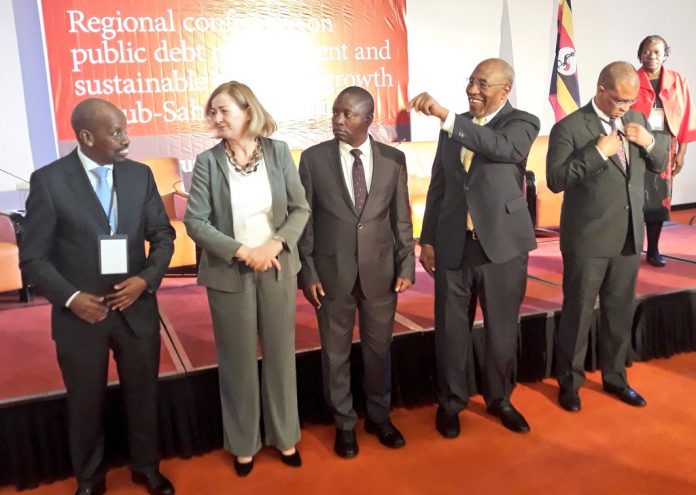
The 10th Assembly took place at an important time in the pursuit of global goals aimed at addressing key social needs and climate change whilst building sustainable economic outcomes. With renewable energy recognised as a central contributor to the achievement of several development objectives delegates will discuss issues related to renewable energy policy, investment and technology. The Assembly will be presided over by Uganda’s Deputy Prime Minister, Ally Kirunda Kivejinja.
A day of preliminary meetings and discussions took place on January 10 including the IRENA Legislators Forum, a High-Level Meeting on the Geopolitics of the Global Energy Transformation and a High-Level Meeting on Accelerating the Energy Transformation in Small Island Developing States.
Youth featured on the agenda for the first time at an IRENA Assembly. The Agency invited young people from around the world to the first IRENA Youth Forum, offering young people an opportunity to make concrete contributions to the global energy discourse and stay informed on developments in the renewable energy sector.
Across the two main days of the Assembly on January 11-12, three ministerial discussions covered issues that are central to the acceleration of sustainable sources of energy. The ministerials covered financing the climate response together with climate and energy policy making, the potential of green hydrogen to decarbonise hard-to-reach sectors such as transportation and industry, and hydropower.
Additionally, the countries selected as recipients of project funding under the 7th cycle of the IRENA/ADFD Project Facility were announced, and three loan agreements will be signed.
A high-level dinner celebrating the role of women in the renewable energy sector featured. The evening session included the launch of a new publication on the role of women in the wind energy sector, presented by IRENA in collaboration with the Global Wind Energy Council and Global Women’s Network for the Energy Transition.
The Assembly happened at the beginning of Abu Dhabi Sustainability Week (ADSW) and precedes the World Future Energy Summit (WFES), a global gathering of energy leaders and decision makers. Throughout the week, IRENA will host and participate in a series of events and discussions across a range of topics.
Cyclones in the Caribbean and Pacific, devastating bushfires in Australia, recurrent floods and droughts in Asia and Africa, increasingly bring tragic loss of life to our nations and communities, inflicting physical and mental trauma on survivors, and causing irreparable damage to centuries old ways of life and undermining prospects for future prosperity and growth.
The current bushfires in Australia have been among the most distressing manifestations, leading the government to declare a state of emergency. The total cost to the economy of the bushfires with which Australia is grappling seems likely to run into billions of dollars. Continuous drying of undergrowth creates optimal conditions for bushfires, leading to tragic loss of human lives and destruction of infrastructure. There is devastating impact on the precious biodiversity of flora and fauna, threatening drastically to affect the ecology of the region. Heightened levels of air pollution in the affected and adjoining regions are having adverse impacts on the respiratory health of scores of people.
Such extreme events are occurring with rising frequency, destroying the means of livelihood for millions people in Commonwealth countries, increasing vulnerability and reducing resilience. The Commonwealth collectively recognises that without well-planned and integrated national and international action, natural disasters and extreme events will continue to challenge the resilience of affected communities and smaller countries. The Commonwealth Secretariat is working alongside member nations to protect the environmental health of fragile and susceptible ecosystems, including through increased national preparedness for tackling natural disasters and mobilising resources.
For the arid and drought-prone member countries, which are highly vulnerable to dryness and bushfires, the Commonwealth provides support for governments to develop projects on sustainable and resilient landscape management, with the Commonwealth Climate Finance Access Hub (CCFAH) helping to unlock necessary financial resources. Similarly, by pooling information into a streamlined platform for better and more convenient access to information, the Commonwealth Disaster Risk Finance Portal currently in development will help countries find suitable sources of finance and support to deal with disasters.
On behalf of citizens of all Commonwealth countries, I express my heartfelt condolences to all families and communities who have lost loved ones in the tragic events of recent days. I commend the courage and commitment of firefighters, emergency service personnel and all others who are battling to rescue and protect people and property, wildlife and natural resources, or human infrastructure. In these testing times, the wider Commonwealth family stands in solidarity alongside the Government and people of Australia.
The New York Times, has listed Uganda among the 52 Places one should visit in 2020. Landlocked in east-central Africa, Uganda has long been in the shadow of Kenya, Tanzania and other countries more popular with visitors on safari.
But the ‘Pearl of Africa,’ with its own rich wildlife, is set to become more accessible, thanks to the resurrection last summer of the country’s national carrier, Uganda Airlines.
Uganda is one of the world’s primate capitals, with 15 species, four of which are endangered and the Bwindi Impenetrable Forest National Park, a renowned mountain gorilla sanctuary.
The UNESCO world Heritage Site, in southwestern Uganda, is home to roughly half the world’s mountain gorillas. The park’s gorilla-trekking safaris limit contact to eight visitors per gorilla group per day, and proceeds from their trekking permits go toward conservation efforts and protecting the animals from poachers.
The dense forest mountain park, which ranges in elevation between 3,810 feet and 8,880 feet, also features a scenic waterfall trail framed by ancient ferns and wild orchids, and is a birder’s paradise, with 350 species of forest birds.
Other places include; Washington, British Virgin Islands, Rurrenabaque, Bolivia, Greenland, Kimberley Region, Australia, Paso Robles, Calif, Sicily, Salzburg (Austria), Tokyo, Caesarea (Israel), National Parks (China), Lesotho, Colorado Springs, Krakow (Poland), Jodhpur (India), Western Sweden, Egypt, La Paz (Mexico), Grand Isle (La), Chow Kit (Kuala Lumpur, Malaysia), Jevnaker (Norway) and The Bahamas.
Others are; Kampot, (Cambodia), Christchurch (New Zealand), Asturias (Spain) Haida Gwaii (British Columbia), Austin (Texas), Sabah (Malaysia), Churchill (Manitoba), Paris, Lake District (England), Tajikistan, Antakya (Turkey), Leipzig (Germany), Lima (Peru), Molise (Italy), Copenhagen, Richmond (Va), Mount Kenya, Minorca (Spain) Oberammergau (Germany), Plymouth (England) and Atlantic Forest (Brazil)
Belle-Île (France), Val d’Aran (Spain), Mongolia, Juliana Trail (Slovenia), Addis Ababa (Ethiopia), Transylvanian Alps (Romania), Urbino (Italy) and Glacier National Park and Whitefish (Mont).
A select task force by the parliamentary Committee on Commission, Statutory Authorities and State Enterprises (COSASE) purportedly investigating circumstances under which departed
Asians properties that were fully compensated for by the government ended up in hands of individuals and companies.
But queries are arising after MPs led by COSASE Sub-committee chair Makindye East legislator Ibrahim Kasozi, this weekend take take a month long trip to Canada and the UK, on what is primarily a fishing expedition.
Background issues:
=================
The repossession of formerly expropriated Asian properties in Uganda is mainly governed by the Expropriated Properties Act Cap. 87.
Who is eligible to apply for repossession?
1. Any former owner, who includes among other; a registered proprietor at the time of expropriation, a shareholder of a company (where the application is for repossession of company property)
2. A duly appointed attorney of any former owner. (some former owners donated powers of attorney to different individuals to act on their behalf and apply for repossession)
Was/is there need for company resolution when applying to repossess property belonging a company?
This was clearly not a requirement, as the same was not expressly provided for in the laws governing repossession. The divesture committee and other relevant authorities which were responsible for scrutinizing the documents of the applicants did not demand that company resolutions be presented either.
If the law allows a shareholder to apply for repossession of company property in his/her individual capacity then clearly there is no need for company resolution.
Is the physical return to Uganda within 120 days upon receiving authorization to repossess mandatory?
The Act uses mandatory language but the Courts of Law have held that the Act is a remedial statute and should be interpreted liberally as the sole purpose of the same is to return properties taken over by the military regime of Idi Amin to the former owners. If that particular provision were to be strictly applied or interpreted, it would mean that, former owners under genuine disability would be shut out of the principle remedy of the Act.
What is the effect of a repossession letter viz a viz repossession certificate?
A letter of repossession has the same effect as a repossession certificate and grants the applicant with equitable rights in the repossessed property.
Once a certificate of repossession is issued, it is deemed to be proof that all the necessary steps of verification have been under taken under the Expropriated Properties Act, Cap 87. The Minister cannot revisit this decision and the only remedy for one who is aggrieved is to appeal to High Court.
Can a certificate of repossession be cancelled and if so who has the power to cancel it?
Once a certificate of repossession has been issued, the Minister and/or the Departed Asians’ Property Custodian Board ceases to have any authority whatsoever to interfere, cancel the certificate of repossession or cause any investigation in to a property.
The Attorney General of the Republic of Uganda, basing on case(s) decided by the Supreme Court of Uganda has opined to this effect and clearly stated that irrespective of the allegations, after the Minister has issued a repossession certificate, the Departed Asians’ Property Custodian Board is estopped from interfering with the property has mandate to inquire into the property of a person to whom a certificate of repossession was issued.
In a legal opinion to the Finance Minister Mr. Matia Kasaija, on August 15, 2019, the Attorney General Mr William Byaruhanga said such properties cannot be subjected to a further Parliament inquiry.
The Attorney General was responding to a letter by the Departed Asians Properties Custodian Board that is lying claim to Plot 98-104 Nakivubo Road, which belongs to Hajji Abdu Kasai, a businessman.
The AG explains that the powers of the Departed Asians’ Property Custodian Board are governed by Section 4 of the Assets of Departed Asians Act Cap 83, which stipulates that the Board shall take over and manage all assets transferred to it by virtue of Section 13 of the Assets of Departed Asians Decree, 1973.
He added that the same Section 13 mandates the Board to discharge all the liabilities to it by this Act, collect all debts or other monies due to the departed Asian; and may sell or otherwise deal with such assets in the same way as the departed Asian may do.
However, he explains that the Expropriated Properties Act Cap 87 and the Expropriated Properties (Repossession and Disposal)(No.1) Regulations S.I 87-8 limit the involvement of DAPCB and the Minister of Finance to transfer property already allocated to a person and take it back to the former owner.
“Section 3 of the Expropriated Property Act Cap 87 provides; (J) Subject to this Act; the Minister shall have the power to transfer to the firmer owner of any property or business vested in the Government under this Act that property or business,” the Attorney General’s letter reads in part.
He adds: “Nothing in this Act shall be construed as empowering the Minister to Transfer property or business to a former owner unless the Minister is satisfied that the former owner shall physically return to Uganda, repossess and actively manage the property or business. Subsection (2) shall not apply to a former owner who jointly participates with the Government in the ownership and management of any property or business pursuant to section 5.”
My Byaruhanga explains that in light of the above provisions, “it is evident that the DAPCB’s involvement is limited to only when the property is still vested in the Government by virtue of Section 2 of the EPA and before the issuance of a repossession certificate by the Minister”.
Remedy provided by the EPA
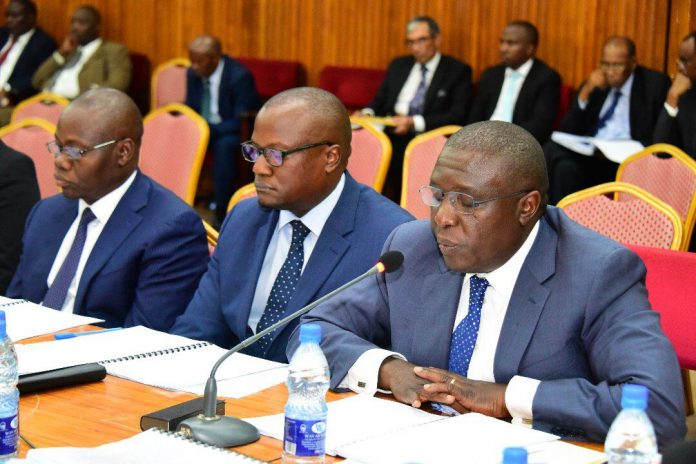
Members of the Association of the Expropriated Properties’ Owners Association on September 11, 2019, appear before parliamentary sub-committee investigating properties left behind by Asians who left the county during the reign of President Idi Amin.
The only remedy that is provided for under the law governing expropriated properties is that any person aggrieved by any decision made by the Minister under the Act, may within 30 days from the date of communication of the decision to him or her appeal to the High Court.
The law is very clear on when the Minister and/or Departed Asians’ Property Custodian Board ceases to have any authority whatsoever to interfere with a properties for which repossession certificates have been issued. The same law is also clear on the remedy and procedure to be followed by any party aggrieved by the issuance of the repossession certificate(s) over any property.
As a matter of fact, the law sets a limit of thirty (30) days from the date of issuance of the repossession certificate for aggrieved party to appeal to High Court.
Is the law being followed by the relevant authorities and COSASE?
The answer is a bold NO.
Time and again, the Departed Asians’ Property Custodian Board through its Executive Director, a one George William Bizibu has continued to reallocate properties which were repossessed over twenty years ago to his close associates, including but not limited to Hon. Betty Amongi the outgoing Minister for Lands, Housing and Urban Development.
This is of course in total disregard of the law, decided cases and the advice of the Attorney General.
These allocations have been successfully challenged in Courts of law which have always held that the decisions to allocate properties which were duly repossessed are unlawful, illegal and a nullity.
For example, in his August 15, 2019 l letter to the Ministry of Finance, the Attorney General quotes a Supreme Court ruling in the case between Mohan Musisi and Kiwanuka Asha Chard. In the case, Justive Mulenga held: “The Minister has no power to cancel a Certificate issued under the Act. in providing in section 14 of the Act, that a person aggrieved by a decision made by the Minister under the Act may appeal to the High Court, Parliament did not expressly reserve in tire Minister, any power to review such a decision upon request by an aggrieved person.”
DAPCB ED Bizibu in spotlight over recent developments concerning repossessed properties
The Departed Asians’ Property Custodian Board through its Executive Director George William Bizibu, while deliberately ignoring legal advice from the Attorney General, court rulings and judgments has now instigated a probe by the COSASE (The Parliamentary Committee on Commissions, Statutory Authorities and State Enterprises), by sending a “confidential” dossier to Parliament alleging that several properties were fraudulently repossessed and should be taken over by government.
Is this a racist motive?
The probe is directly targeting Ugandans of Asian descent who repossessed properties as duly appointed attorneys, bought formerly expropriated properties from the registered proprietors and/or are majorly managing various properties on behalf of the registered properties currently living in different parts of the world, including but not restricted to Canada, the United Kingdom and United States of America.
The COSASE which has also turned a blind eye to the Attorney General’s opinion and various court decisions is now accusing the targeted Ugandans of Asians descent of among other things repossessing properties which were duly compensated for and using “forged” powers of attorney among other documents.
Who are being targeted?
This most shocking element is that the registered proprietors of these targeted properties have not complained or are not complaining that they have been deprived and/or defrauded of their properties by the individuals that the probe is targeting now. Therefore where does a one George William Bizibu who has no propriety interest whatsoever in these properties get the right to complain? Where does the cronies he is using, disguising as “whistle blowers” get the right to complain yet they do not have any propriety interest in these properties. The “complainants” cannot claim to be acting in government interest either because upon issuance of a repossession certificate, government ceases to any interest in these properties, rather than property tax (property rates) and stamp duty where applicable.
The COSASE has also surprisingly adopted a mode of operation which is clearly against the rules of natural justice. It has not provided the “accused” individuals with the claims or allegations against them, the details of the complaints and over which properties the allegations arise but has rather made blanket accusation. It is now directing each individual to avail all documents used to apply for repossession and management of the properties.
What is the motive behind demanding for documents relating to arrangement between individuals and/or private companies over management of private property? Is private property now part of Commissions, Statutory Authorities and State Enterprises?
Some of the targeted individuals participated in the repossession exercise over twenty years ago and all these documents the COSASE wants were duly submitted to the relevant authorities then and the Departed Asians’ Property Custodian Board must be having all these documents.
What happened to the documents which were submitted and verified by the Divesture Committee?
Is the Departed Asians’ Property Custodian Board through the direct influence of a one George William Bizibu deliberately hiding these documents or has tampered with the documents?
Are the documents lost?
In a legal opinion to the Finance Minister Mr. Matia Kasaija, on August 15, 2019, the Attorney General Mr William Byaruhanga said such properties cannot be subjected to a further Parliament inquiry.
The only logical presumption is that the documents have deliberately been tampered with. Working on the presumption that the said documents are lost yet this is a whole government body that we are talking about, how then does COSASE expect individuals to have all documents they used to repossess properties over twenty years ago?
Ordinarily, he who alleges must prove. If George William Bizibu and COSASE claim the some of the documents used by the individuals they are selectively targeting are forged, then the onus is on them to prove and not the other way round.
The whole probe is time barred and misconceived as upon issuance of repossession certificates, government and/or any of its agents including the Minister and/or Departed Asians’ Property Custodian Board ceased to have any interest in the said properties.
In the absence of any complaints from the registered proprietors of the various properties, the whole probe by COSASE is a mere scheme to persecute the individuals managing these properties, deprive the registered proprietors of their properties and reverse the repossession exercise.
Compensation of Asians
The COSASE also claims some of the properties which were repossessed were actually compensated for by the government. It should avail the proof of these alleged compensation if any as it is in the best position to access any information regarding compensation.
Can the alleged compensation for these properties be traced to the intended registered proprietors?
There are three categories of Asians that were supposed to have been compensated; the compensation was only in respect of movable assets as land as well as buildings beyond ten years were valued for compensation. Clearly the properties which were repossessed were not compensated for.
Asians of undetermined nationality: As of 1977 following an agreement between the government of Uganda and UNHCR, these were to be paid a total of Shs. 40,509,996/56 (forty million five hundred nine thousand nine hundred ninety six and fifty one cents only). The payment was to be in 21 installments over a period of 11 years. However only the first three instalments were of Shs5,509,966/51/= were made and no further payments were made. Did these payments reach the intended recipients?
Indian Citizens: the information available is that the arrangement of compensating this category of persons was between the Government of Uganda and the Government of India directly.
British Citizens: In 1987 an agreement was reached between the Government of Uganda and the British Government for government to compensate the 67 elderly British Asians whose properties had been expropriated. Then in 1991, there was a world-wide appeal to Asians to come and repossess their properties. 19 elderly British Asians were subsequently compensated while 32 applied for and repossessed their properties.
If the compensation was majorly for movable assets other than immovable real property like land, then what compensation is the COSASE referring to? Only the 19 elderly British Asians can be confirmed to have been compensated for real immovable properties.
The some members of the COSASE Sub-Committee are planning to travel to Canada and the UK, this weekend apparently to verify information concerning repossessed properties and the alleged compensation.
There is no better example to the old saying that history repeats itself than what is happening now.
In the early 1970’s just before Idi Amin expelled persons of Asian descent from Uganda, there was a citizenship verification exercise whose motives were not known but at the end of it all the expulsion was the result. The current probe is a move to reverse the repossession exercise.
COSASCE team investigative visit to Canada
The selected members are also travelling the instigator of the probe, a one George William Bizibu. He is not a member of parliament, he is not on the COSASE and/or Sub-committee and above all he is the accuser. Does he run another office of the Departed Asians’ Property Custodian Board in Canada? The “accuser” is travelling with what is clearly the “panel” of judges in this probe. So the “accuser” is clearly in bed with the “judges”. Is the probe and/or any recommendations that will be made thereafter be fair to the targeted Asians? The answer is a definite no.
Petition to Parliament
The above notwithstanding, some of the Ugandans of Asian descent being targeted by the probe have petitioned the Constitutional Court challenging broad day light abuse of human rights and inconsistent actions of the COSASE, the Departed Asians’ Property Custodian Board and George William Bizibu in his individual capacity. A copy of the petition is attached hereto and marked “Annexure C”.
The whole intention of the probe is clearly mischievous and only intended to instigate another expropriation of private property. It is targeting small group of Ugandans of Asians descent with intention frustrating their businesses as property managers, possibly extorting money from them through harassment and publicly embarrassing them with unfounded accusations and above all reversing the repossession exercise
The continued disregard of the law, legal advice from the Attorney General and decided cases by those targeting Ugandans of Asian descent and seeking to reverse the repossession exercise and deprive a certain category of individuals of their private property while hiding behind an organ of government should be condemned in the strongest terms by the international community.
Minister for East African Community Affairs, Rebecca Kadaga
Parliament of Uganda is set to diversify the use of technology in an effort to enhance public participation in plenary and committee proceedings and other activities of the House.
This follows Speaker, Rebecca Kadaga’s directive to the ICT team at Parliament to develop a mobile application that will see parliament ably achieve this.
The development comes at the time when the Speaker is attending the 25th Conference of Speakers and Presiding Officers of the commonwealth in Ottawa, Canada where Parliament of Uganda was hailed for its transparency and openness in deliberation of issues that affect Ugandans.
“Uganda’s Parliament has done quite a lot in being open to the public with a live broadcast that has been done for over 10 years, giving all Ugandans an opportunity to follow in real time, the goings-on in the House,” the conference convener commended Kadaga.
Besides the live broadcast that is shown on the national television, Uganda Broadcasting Corporation (UBC), Parliament of Uganda also runs the annual Parliament Week that welcomes members of the public to access Parliamentary Chambers, obtain necessary information and interact with MPs about the affairs of their constituencies.
Parliament is now set to make a quantum leap giving both MPs and Uganda an opportunity to contribute to debate, submit on topics and access parliamentary resources on-the-go via a mobile application.
Although MPs already have iPads which makes it easy for them to use the application to send and receive messages and also research extensively on matters they intend to contribute, Kadaga said that public input into the legislative processes in the House is still lacking.
“Where I am not yet satisfied is the public input into our legislation. I asked ICT people to prepare this App but its taking a long time. I hope during this third meeting they will deliver because it is very essential that we able to reach out to the public on relevant discussion about the bills in committees,” Kadaga argued.
Kadaga also intimated that although the Parliamentary Commission established a radio station in the spirit of openness and public accountability, acquiring a frequency for it has been a big challenge.
“We already have the equipment, the studios but the Uganda Communications Commission (UCC), has not helped us in securing frequency. This is hindering our desire to interact with the public through radio so that the country can follow what Parliament is doing,” she added.
Absa Group Limited (AGL) has announced the appointment of Aaron Daniel Mminele as the Group Chief Executive of Absa Group with effect from 15 January 2020.
Mminele will be taking over from René van Wyk, who has been leading the bank on an interim basis since Maria Ramos’ retirement in February 2019.
“We are delighted to welcome Daniel to the Absa family. He brings with him a deep understanding of the financial services industry both in South Africa and abroad,” said Wendy Lucas-Bull, Chairman of the Absa Group Board. “His unique skills set and global perspective make him a suitable leader to drive our bank’s focus on long-term growth that is digitally-led across our markets.
Absa launched its strategy in March 2018, which focused on regaining market share in core businesses. We then reconfigured our operating model and made changes to our Executive Committee to set up the business for implementation of the strategy.
“In terms of his starting point, Daniel will want to assess where we are in implementing that strategy and assess how he can play a role in strengthening the team’s ability to continue on that journey. As a leader, he will make his own assessment of what is required but he has a complete open mandate as the Group CE to lead this organisation,” said Lucas-Bull.
Mminele spent more than 20 years at the South African Reserve Bank (SARB), where he rose through the ranks to be a Deputy Governor and a member of key committees such as the Monetary Policy Committee and Financial Stability Committee. His other main responsibilities at the SARB included financial markets and international economic relations and policy.
He has represented South Africa in a number of international forums such as the G20, BRICS and the International Monetary Fund. He was also a regular participant in National Treasury’s international investor roadshow to promote South Africa.
“I am delighted to be joining the Absa group. I look forward to being part of and leading the exciting journey that Absa has embarked upon to regain its rightful place in the South African market as well as to fully establish itself as an independent African financial services group with deep roots in South Africa.”
Before joining the SARB, Mminele worked as a banker. After completing a Diploma in Banking at Sparkasse Paderborn in Germany in 1987, he spent eight years in various roles at the Westdeutsche Landesbank Girozentrale, at its Düsseldorf and London offices. He continued his studies while in the UK and obtained various certificates from the UK’s Chartered Institute of Bankers.
He came back to South Africa in 1995, then spent about two years each at Commerzbank, working as a customer relations manager in corporate banking, and at African Merchant Bank, as a project and structured finance specialist, in Johannesburg.
“We are really looking forward to Daniel joining the Absa Group and to his leadership in driving our strategy and guiding this organization into the future,” said Lucas-Bull.
“We are also thankful to René for the job that he is doing especially overseeing the progress we have made in our separation from the PLC and the key milestones we have achieved in 2019,” she added.
Van Wyk will step down as Chief Executive on 14 January 2020, but remain with the Group as an executive director for handover purposes until 31 January 2020. He will rejoin Absa Group and Absa Bank’s boards as a non-executive director, following a six-month cooling-off period
Global economic growth is forecast to edge up to 2.5 per cent in 2020 as investment and trade gradually recover from last year’s significant weakness but downward risks persist, the World Bank says in its January 2020 Global Economic Prospects.
Growth among advanced economies as a group is anticipated to slip to 1.4 per cent in 2020 in part due to continued softness in manufacturing. Growth in emerging market and developing economies is expected to accelerate this year to 4.1 per cent.
This rebound is not broad-based; instead, it assumes improved performance of a small group of large economies, some of which are emerging from a period of substantial weakness. About a third of emerging market and developing economies are projected to decelerate this year due to weaker-than-expected exports and investment.
“With growth in emerging and developing economies likely to remain slow, policymakers should seize the opportunity to undertake structural reforms that boost broad-based growth, which is essential to poverty reduction,” said World Bank Group Vice President for Equitable Growth, Finance and Institutions, Ceyla Pazarbasioglu. “Steps to improve the business climate, the rule of law, debt management, and productivity can help achieve sustained growth.”
“Low global interest rates provide only a precarious protection against financial crises,” said World Bank Prospects Group Director Ayhan Kose. “The history of past waves of debt accumulation shows that these waves tend to have unhappy endings. In a fragile global environment, policy improvements are critical to minimize the risks associated with the current debt wave.”
Regional Outlooks:
Europe and Central Asia: Regional growth is expected to firm to 2.6 per cent in 2020, assuming stabilization of key commodity prices and Euro Area growth and recovery in Turkey and Russia. Economies in Central Europe are anticipated to slow to 3.4 per cent as fiscal support wanes and as demographic pressures persist, while countries in Central Asia are projected to grow at a robust pace on the back of structural reform progress. Growth is projected to firm in the Western Balkans to 3.6 per cent although the aftermath of devastating earthquakes could weigh on the outlook and decelerate in the South Caucasus to 3.1 per cent.
Latin America and the Caribbean: Regional growth is expected to rise to 1.8 per cent in 2020, as growth in the largest economies strengthens and domestic demand picks up at the regional level. In Brazil, more robust investor confidence, together with a gradual easing of lending and labor market conditions, is expected to support an acceleration in growth to two per cent Growth in Mexico is seen rising to 1.2 per cent as less policy uncertainty contributes to a pickup in investment, while Argentina is anticipated to contract by a slower 1.3 per cent.
In Colombia, progress on infrastructure projects is forecast to help support a rise in growth to 3.6 per cent. Growth in Central America is projected to firm to three per cent thanks to easing credit conditions in Costa Rica and relief from setbacks to construction projects in Panama. Growth in the Caribbean is expected to accelerate to 5.6 per cent, predominantly due to offshore oil production developments in Guyana. Regional data.
Middle East and North Africa: Regional growth is projected to accelerate to a modest 2.4 per cent in 2020, largely on higher investment and stronger business climates. Among oil exporters, growth is expected to pick up to 2 per cent. Infrastructure investment and business climate reforms are seen advancing growth among the Gulf Cooperation Council economies to 2.2 per cent.
Iran’s economy is expected to stabilize after a contractionary year as the impact of US sanctions tapers and oil production and exports stabilize, while Algeria’s growth is anticipated to rise to 1.9 per cent as policy uncertainty abates and investment picks up. Growth in oil importers is expected to rise to 4.4 per cent. Higher investment and private consumption are expected to support a rise to 5.8 per cent in FY2020 growth in Egypt.
Sub-Saharan Africa: Regional growth is expected to pick up to 2.9 per cent in 2020, assuming investor confidence improves in some large economies, energy bottlenecks ease, a pickup in oil production contributes to recovery in oil exporters and robust growth continues among agricultural commodity exporters.
The forecast is weaker than previously expected reflecting softer demand from key trading partners, lower commodity prices, and adverse domestic developments in several countries. In South Africa, growth is expected to pick up to 0.9 per cent, assuming the new administration’s reform agenda gathers pace, policy uncertainty wanes, and investment gradually recovers.
Growth in Nigeria expected to edge up to 2.1 per cent as the macroeconomic framework is not conducive to confidence. Growth in Angola is anticipated to accelerate to 1.5 per cent, assuming that ongoing reforms provide greater macroeconomic stability, improve the business environment, and bolster private investment. In the West African Economic and Monetary Union, growth is expected to hold steady at 6.4 per cent. In Kenya, growth is seen edging up to six per cent.
The Ministry of Agriculture is seeking for Shs 5 billion in preparation for the Desert Locust which may invade the country followings swarms in the neighboring countries of Ethiopia, Kenya, Sudan, Eritrea, and Somalia.
According to Minister of State for Agriculture, Animal Industry and Fisheries Aggrey Bagiire, he said funds will cater for aircraft fuel, pesticides for control, provide for ground spray equipment and spray teams and to continuously create awareness to the population in case of an invasion.
Uganda is a member of the Desert Locust Control Organization for Eastern Africa (DLCO EA) and is currently closely working and sharing information on the current status of the desert Locust in the Region.
The Ministry urged the country not to panic saying they are following up developments and control efforts in Kenya and ready to handle any outbreak.
By October 2019, the Desert Locust situation had worsened in Ethiopia, Sudan, Eritrea, and Somalia and the governments had instituted aerial spray control operations with support from DLCOEA and other Development partners.
As earlier predicted by FAO experts, the Locusts invaded North Eastern Kenyan County of Mandera by December 2019. Currently they have spread to the six Counties of Mandera, Marsabit, Wajir, Garissa, Meru and Isiolo. The Kenyan government working with DLCOEA and partners has instituted control operations to suppress the population and stop further spread.
About Desert Locust
Desert Locust is a species of short- horned grasshopper family. It is characterized by its nature of high mobility and broad spectrum feeding habits.
Locusts have ability to alter their behavior, colour, size and shape. When the population density is low, locusts behave as individuals, when the population is high, they swarm and migrate. The locust life cycle comprises three stages of egg, hopper and adult and it lives a total of three to six months.
In Solitary phase, the Desert Locust lives individual life until it rains with availability of vegetation, the females lay eggs. Desert Locusts usually fly with the wind and swarms can travel five to 150 km or more a day depending on weather conditions and normally taking off two to three hours after sunrise in warm weather and four to six hours in cool weather.
Locust swarms vary from less than one km2 to several hundred km2. There can be at least 40 to 80 million locusts in each km2 of swarm. Coupled with its amazing ability to build up and multiply to colossal numbers, a locust can eat its own weight in fresh food. Half million locusts weigh about 1 ton and they can eat about one ton of food enough to feed 2500 people.