Stanbic Bank
Stanbic Bank
16.7 C
Kampala
Stanbic Bank
Stanbic Bank
Home Blog Page 1085

BoU holds CBR at 9 percent in December

The Bank of Uganda (BoU) held its key lending rate at 9.0 percent on Monday, with its governor, Prof Emmanuel Tumusiime-Mutebile, saying that economic activity was moderating.

Tumusiime-Mutebile told journalists in Kampala that a combination of slowing global economic activity and domestic factors like falling tourism and export earnings in the first 10 months of this year were expected to contribute to slowing economic performance.

BoU reduced the CBR to 9 percent in October 2019 from 10 percent in August 2019.

Stories Continues after ad

Fwd: More than 140,000 die from measles as cases surge worldwide

Measels patient

Worldwide more than 140,000 people died from measles in 2018, according to new estimates from the World Health Organization (WHO) and the United States Centers for Diseases Control and Prevention (CDC). These deaths occurred as measles cases surged globally, amidst devastating outbreaks in all regions.

Estimating the total number of cases and deaths globally and by region, the report finds that the worst impacts of measles were in sub-Saharan Africa, where many children have persistently missed out on vaccination.

 In 2018, the most affected countries – the countries with the highest incidence rate of the disease – were Democratic Republic of the Congo (DRC), Liberia, Madagascar, Somalia and Ukraine. These five countries accounted for almost half of all measles cases worldwide.

Most deaths were among children under five years of age. Babies and very young children are at greatest risk from measles infections, with potential complications including pneumonia and encephalitis (a swelling of the brain), as well as lifelong disability – permanent brain damage, blindness or hearing loss.

“We’ve had a safe and effective measles vaccine for over 50 years,” said Dr. Robert Linkins, Branch Chief of Accelerated Disease Control and Vaccine Preventable Disease Surveillance at the CDC and Chair of the Measles & Rubella Initiative. “These estimates remind us that every child, everywhere needs and deserves – this life-saving vaccine. We must turn this trend around and stop these preventable deaths by improving measles vaccine access and coverage.”

While the greatest impacts have been in the poorest countries, some wealthier countries have also been battling measles outbreaks, with significant ramifications for people’s health.

Recently published evidence shows that contracting the measles virus can have further long-term health impacts, with the virus damaging the immune system’s memory for months or even years following infection. This ‘immune amnesia’ leaves survivors vulnerable to other potentially deadly diseases, like influenza or severe diarrhoea, by harming the body’s immune defenses.

“The fact that any child dies from a vaccine-preventable disease like measles is frankly an outrage and a collective failure to protect the world’s most vulnerable children,” said Dr Tedros Adhanom Ghebreysus, Director-General of the World Health Organization. “To save lives, we must ensure everyone can benefit from vaccines – which means investing in immunization and quality health care as a right for all.”

Measles is preventable through vaccination. However, vaccination rates globally have stagnated for almost a decade. WHO and UNICEF estimate that 86 per cent of children globally received the first dose of measles vaccine through their country’s routine vaccination services in 2018, and fewer than 70 per cent received the second recommended dose.

Worldwide, coverage with measles vaccine is not adequate to prevent outbreaks. WHO recommends that 95 per cent vaccination coverage with two doses of measles vaccine is needed in each country and all communities to protect populations from the disease.

In addition to rapidly immunizing against measles, outbreak response also includes efforts to reduce the risk of death through timely treatment, especially for related complications like pneumonia. With partners, WHO is therefore providing support to help countries manage cases, including training health workers in effective care for children suffering the effects of the disease.

 “It is a tragedy that the world is seeing a rapid increase in cases and deaths from a disease that is easily preventable with a vaccine,” said Dr Seth Berkley, CEO of Gavi, the Vaccine Alliance. “While hesitancy and complacency are challenges to overcome, the largest measles outbreaks have hit countries with weak routine immunization and health systems. We must do better at reaching the most vulnerable, and that will be a fundamental focus of Gavi’s next five-year period.”

Over the last 18 years, measles vaccination alone is estimated to have saved more than 23 million lives.

Stories Continues after ad

Ugandan singles lucky as UPDF prepares to recruit 4000 officers

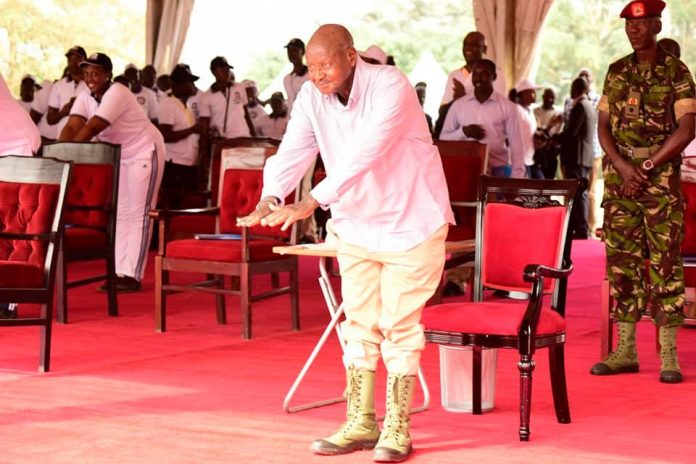
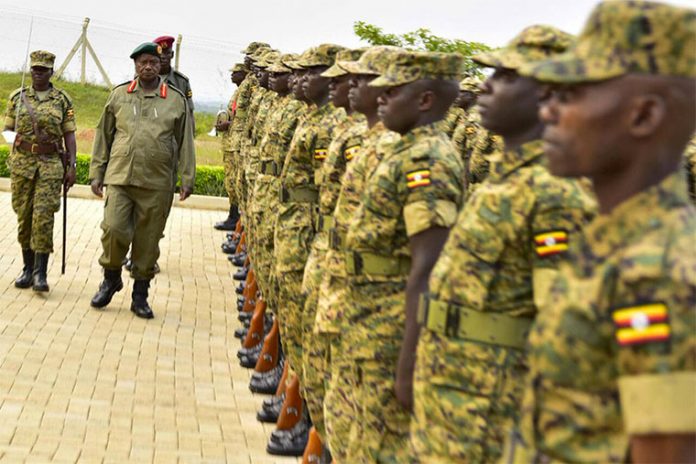
President Museveni inspecting army parade

The Uganda Peoples’ Defence Forces (UPDF) is to recruit 4000 officers, according to its Spokesperson Brig Gen. Richard Karemire. But the jobs have been spared for only Ugandan singles who the force thinks will not be distracted by family issues.

Those to be recruited are meant to serve in the regular, professional and specialised units of the Force. The recruitment exercise is slated for December 27-January 5, 2020.

They should also fall between the ages of 18-25 or 18-30, if he/she is to enlist as a regular or professional respectively.

The recruits will the gaps left behind by those who retired from different units. UPDF also wants to tap into skills of personnel with competences ‘in science subjects required by the modern army.’

Those also desired must be; Ugandans holding national identification cards, must be in good health, regular recruits must possess a minimum education of S4 and S6 with bias in Physics, Chemistry or Mathematics.

Professionals should be holders of diplomas/degree in Medicine, Engineering, Chemistry, Education or possess qualifications in vocational studies.

Stories Continues after ad

UGANET to hold high level national dialogue on HIV and the Law

ED-Dora-Kiconco.

The Uganda Network on Law, Ethics and HIV/AIDS (UGANET) will on Tuesday, December 10, 2019, host a high-level national dialogue to discuss issues related to HIV, health and the law.

UGANET is hosting the dialogue alongside a number of partners who include the Uganda AIDS Commission, The AIDS Support Organization (TASO), UNAIDS, UNDP, Human Rights Awareness and Promotion Forum (HRAPF), and the International Community of Women Living with HIV/AIDS.

Among the at least 100 delegates expected for the national dialogue, which will be held at the Pearl of Africa Hotel in Kampala, are senior officials in government, the donor community and civil society.

The theme for the workshop is “Leaving No One Behind: Working in unison towards effective approaches to addressing human rights barriers hindering the attainment of the goal to end the HIV/TB epidemics.”

The half-day conference is scheduled to start at 8 A.M. and end at 1:30 P.M. The opening ceremony will be headlined by a speech from the Minister for the Presidency, Esther Mbayo, while the closing remarks will be delivered by the Minister of Health, Dr Jane Ruth Aceng.

Justice James Ogoola, a retired principal judge, will deliver the key-note address titled, “Health and Justice Systems Leaving No One Behind.”

The conference will have four different panels to discuss different aspects of the day’s theme. These include the state of HIV, TB and human rights today (Panel One); What are the evidential approaches to addressing rights violations? (Panel Two); Taking a stand for human rights (Panel Three); and Catalyzing leadership, action and partnership in ending HIV-related abuses (Panel Four).

During the conference, UGANET will also release two reports. The first is a legal review and assessment of the impact of existing progressive and punitive laws, policies and regulations. The second is on the annual state of human rights violations for Key Populations (KPs) and Persons Living with HIV/TB.

Stories Continues after ad

Acholi to face Bukedi in 2019 FUFA Drum final

lango players (yellow) taking on Bukedi in fufa drum semifinal

Bukedi will lock horns with Acholi province in the 2019 FUFA Drum final on Tuesday 10 December at the Akii Bua Stadium in Lira.

Bukedi surprised the hosts Lango 1-0 to storm the final that will be played on Tuesday, 10th December 2019 in Lira.

Forward Ibra Nsimbe, who plays at FUFA Big League club MYDA scored in the third minute of the game much to the agony of the home crowd.

For the second time in the knock out stages, Bukedi goalkeeper Derrick Emukule was named man of the match.

The Wakiso Giants goalkeeper was also man of the match in Bukedi’s 4-2 victory over Buganda in Gulu.

Acholi overcame Bugisu 1-0 in the first semi-final that was played at Pece War Memorial Stadium, Gulu. Tito Okello scored an 8th minute goal for the lone strike.

A total of 32 goals were scored in 12 matches of the quarter finals played over 6 match days.

The winner of the final will take home Shs 32M, gold medals and a glittering trophy.

The losing finalist will pocket Shs 15M and each of the losing quarter finalists taking Shs 5M.

The third and fourth in group provinces shall part with Shs 1.5M and Shs 1M respectively.

The most valuable player of the tournament will bag Shs 1M, Top scorer (Shs 1M), best goalkeeper (1M) and Shs 1M for each player on the tournament best XI.

The theme of the tournament is “Celebrating Our Ancestry”. The sponsors Eagle Poa beer joined Uganda Tourism Board (UTB) and National Insurance Corporation (NIC).

Buganda are the reigning champions having won the first edition.

2019 FUFA Drum final

Tuesday, 10th December

Acholi Vs Bukedi

Akii Bua Stadium, Lira (4pm)

Stories Continues after ad

Another scandal as BoU declines to sack 12 staff for falsifying their age

From left, PS Keith Muhakanizi, Emmanuel Tumusiime-Mutebile and Louise Kasekende

The Bank of Uganda (BoU) board is once again on the wrong side of the law by not sacking 12 staff who were found guilty of falsifying their age and instead allowed the officials to retire voluntarily. The BoU Administration Manual (April 2018) says such staff must be dismissed with disgrace.

The irregularity was established after BoU management asked all staff to submit copies of their national identification cards, where it was found out that 12 staff had their dates of birth not matching with on their national IDs.

The staff that should have been dismissed by BoU Board outright include; Modesto Auka-Director of the National Payment System Department, Stephen Ssemugga-Director Administrative Services and Solomon Oketcho-Executive Director of Administrative Services. Others are; Patrick Opio-Assistant Director Security and Peter Rumanzi Ivan-Assistant Director of the Petroleum Fund.

More others include; Sophie Odongo Ekuka (Currency Department), Julius Enyasu (Security), Adonia Mpora (Administrative Services), Fred Olonga (Non-banking institutions Department), Patrick Simon Katamba (Commercial banking), Stella Kaitesi Lubega (Statistics) and Peter Musai Wamurumba (Banking).

The board, according to a source, sat last month and decided that the affected individuals retire voluntarily which would make them enjoy their retirement benefits as opposed to if they were dismissed.

Dr Jan Tibamwenda, Director Human Resources, on November 16, 2019 wrote to BoU Deputy Governor Dr Louise Kasekende to actualize what the board had decided as regards the affected staff who it said it would not have their age submitted when they joined BoU altered but allow them retire voluntarily.

“The purpose of this memo is to seek for your approval for the above mentioned staff to voluntarily retire rather than considering the Administrative Manual (April 2018) penalty recommendation under Section 6.9.11 that calls for outright dismissal,” Tibamwenda wrote.

BoU board is headed by Governor Prof. Emmanuel Tumusiime-Mutebile. Kasekende is his deputy on the board as well. Other board members include; Josephine Okui Ossiya, James Kahooza, Judy Obitre Gama, Dr. William Kalema, Keith Muhakanizi-Finance Ministry PS and Secretary to the Treasurer.

Parliament’s Committee on Commissions State Authorities and State Enterprises (COSASE) which probed BoU over the irregular sale of seven commercial banks faulted the board for watching as officials mismanaged the closure of banks like Teefe Trust Bank, Greenland Bank, International Credit Bank, Cooperative Bank, National Bank of Commerce, Global Trust Bank and Crane Bank Limited.

Having established the weakness of the BoU Board, COSASE, in its report recommended that management of the Central Bank be separated from the board, which plays the supervisory role. Currently it appears both Tumusiime-Mutebile and Kasekende have powers to dedicate what the board should do despite the same officials playing the management role as well.

The Ministry of Finance which supervises BoU promised sweeping changes after the COSASE report but the current development at BoU means the ministry is yet to do anything as per the recommendations.

It should be remembered that another report faulted Tumusiime-Mutebile for recruiting some senior staff without the involvement of other board members. Among them is the current executive director of Bank Supervision Dr. Tumubweine Twinemanzi.

However, by allowing staff who falsified their age to retire voluntarily instead of the BoU board dismissing them with disgrace, it means the taxpayer will lose.

Stories Continues after ad

FUFA Awards 2019: The final 3 shortlist for Men and Women released

Mustafa-Kizza

The final three in each of the categories of Male and Female player of the year has been released by the FUFA awards organising committee.

The 2019 Airtel FUFA Awards dinner will be held on 14th December at Speke Resort Munyonoyo where the winners in the two categories will drive away in new cars.

KCCA FC duo Allan Okello and Mustafa Kizza make the final shortlist together with Proline’s Bright Anukani to contest for the top gong

Bright Anukani – Proline FC

He guided Proline FC to winning a double (The StarTimes FUFA Big League and the Stanbic Uganda Cup). He was named the Most Valuable Player in the StarTimes FUFA Big League last season.

Allan Okello – KCCA FC

He won the StarTimes Uganda Premier League, the FUFA Super Cup and the CECAFA Kagame Cup and was part of the Cranes team that qualified for the 2020 Championship of African Nations (CHAN).

Mustafa Kizza – KCCA FC

The left footed attack minded defender won the StarTimes Uganda Premier League, the FUFA Super Cup and the CECAFA Kagame Cup and was part of the Cranes team that qualified for the 2020 Championship of African Nations (CHAN).

In the women’s category, Fauzia Najjemba (Kampala Queens), Juliet Nalukenge (Kampala Muslim) and UCU Lady Cardinal’s Hasifa Nassuna are the final three.

Fauzia Najjemba (Kampala Queens)

Joint top scorer in the FUFA Women Elite League (2018/19) scoring 14 goals same as Hasifa Nassuna.

Top scorer at the 2019 National Secondary Schools’ Championship in Mbale scoring 14 goals.

Top scorer at the East Africa Secondary Schools’ Championship in Tanzania, scoring 10 goals.

Captained Mukono High School to winning the FUFA Independence Cup, a tournament where she emerged as the top scorer with 4 goals.

Was part of the Uganda U17 Girls’ national team that won the COSAFA U17 Championship in Mauritius where scored 12 goals, five behind top scorer and teammate Juliet Nalukenge.

Recently, she helped Uganda to finish third at CECAFA Women’s Challenge Cup in Tanzania scoring two goals.

Juliet Nalukenge (Kawempe Muslim Ladies)

Helped Kawempe Muslim to win both the national and East Africa Secondary Schools’ championship.

Nalukenge captained Uganda to winning the COSAFA U17 Championship and emerging as the tournament top scorer with 18 goals.

During the CECAFA Women’s Challenge Cup, she was Uganda’s top scorer with 5 goals.

She has scored 53 goals for school, club and country in 2019.

Hasifa Nassuna (UCU Lady Cardinals)

Helped UCU Lady Cardinals to win the 2018/19 FUFA Women Elite League

She was named the Most Valuable Player and finished as the overall top scorer with 16 goals.

Nassuna played a key role to help Uganda finish third at the CECAFA Women’s Challenge Cup, scoring three goals.

Stories Continues after ad

ADF rebels kill at least 17 in eastern DR Congo – local official

ADF rebels


Rebels of the Allied Democratic Forces (ADF) hacked to death at least 17 people in two attacks in eastern Congo on Thursday, a local official said, part of a surge in violence that is hampering efforts to contain the second-worst Ebola epidemic on record.

The ADF, a jihadist group originally from Uganda, has killed more than 100 civilians in near-daily raids since late October when the army launched a large operation against them.

On Thursday afternoon the rebels killed 14 people in Mantumbi, a village 17 km (11 miles) west of the city of Oicha, said Donat Kibwana, administrator of Beni territory.

Earlier that day they had killed two and beheaded a third in Kolokoko, a suburb of Oicha, said.

“Everybody has fled the village (Mantumbi). There are only soldiers here, who are in the process of helping to remove the bodies of the people who were all killed with knives,” he said.

The U.N. says deteriorating security in the region may reverse recent progress made combating the Ebola outbreak, which has infected 3,313 and killed 2,203 people since August 2018.

Aid groups suspended operations and withdraw staff from the epidemic’s last strongholds following attacks on their facilities by a different rebel group late last month.


Stories Continues after ad

10 financing alternatives for your next new venture

Martin Zwilling


By Martin Zwilling


The “valley of death” is a common term in the startup world, referring to the difficulty of covering the negative cash flow in the early stages of a startup, before their new product or service is bringing in revenue from real customers. I often get asked about the real alternatives to bridge this valley, and there are some good ones I will outline here.

According to a well-researched Motly Fool report, the challenge is very real, since around half of all businesses fail in the first five years. Only one-third make it past their tenth anniversary. The problem is that professional investors (angels and venture capital) want a proven business model before they invest, ready to scale, rather than early projections and product development.

My first advice for new entrepreneurs is to pick a domain, such as online web sites and smart phone apps, that doesn’t have the sky-high up-front development costs. Leave the world of new computer chips and new drugs to the big companies, and people with deep pockets. For the rest of us, the following suggestions will help you survive the valley of death:

Accumulate some resources before you start. It always reduces risk to plan your business first. That includes estimating the money required to get to the revenue stage, and saving money to cover costs before you jump off the cliff. Self-funding or bootstrapping is still the most common and safest approach for startups

Keep your day job until real revenue flows. A common alternative is to work on your startup on nights and weekends, surviving the valley of death via another job, or the support of a working spouse. Of course, we all realize that this approach will take longer, and could jeopardize both roles if not managed effectively. Set expectations accordingly.

Get a loan or line-of-credit. This is a most viable alternative if you have personal assets or a home you are willing to commit as collateral to back the loan or credit card. In general, banks won’t give you a loan until the business is cash-flow positive, but there are notable exceptions. Nevertheless, it’s an option that doesn’t cost you equity.

Solicit funds from friends and family. After bootstrapping, friends and family are the most common funding sources for early-stage startups. As a rule of thumb, it is a required step anyway, since outside investors will not normally consider providing any funding until they see “skin in the game” from inside.

Use crowd funding to build reserves. The hottest new way of funding startups is to use online sites, like Kickstarter, to request donations, pre-order, get a reward, or even give equity. If your offering is exciting enough, you may get millions in small amounts from other people on the Internet to help you fly high over the valley of death.

Apply for contests and business grants. This source is a major focus these days, due to government initiatives to incent research and development on alternative energy and other technologies. The positives are that you give up no equity, and these apply to the early startup stages, but they do take time and much effort to win.

Join a startup incubator. A startup incubator is a company, university, or other organization which provides resources for equity to nurture young companies, helping them to survive and grow during the startup period when they are most vulnerable. These resources often include a cash investment, as well as office space, and consulting.

Barter your services for their services. Bartering technically means exchanging goods or services as a substitute for money. An example would be getting free office space by agreeing to be the property manager for the owner. Exchanging your services for services is possible with legal counsel, accountants, engineers, and even sales people.

Joint venture with distributor or beneficiary. A related or strategically interested company may see the value of your product as complementary to theirs, and be willing to advance funding very early, which can be repaid when you develop your revenue stream later. Consider licensing your product or intellectual property, and “white labeling.”

Commit to a major customer. Find a customer who would benefit greatly from getting your product first, and be willing to advance you the cost of development, based on their experience with you in the past. The advantage to the customer is that he will have enough control to make sure it meets his requirements, and will get dedicated support.

The good news is that the cost for new startups is at an all-time low. In the early days (25 years ago), most new e-commerce sites cost a million dollars to set up. Now the price is closer to $100, if you are willing to do the work yourself. Software apps that once required a 10-person team can now be done with the Lean Development methodology by two people in a couple of months.

The bad news is that the valley’s depth before real revenue, considering the high costs of marketing, manufacturing, and sales, can still add up to $500K, on up to $1 million or more, before you will be attractive to angel investors or venture capital.

In reality, the financing valley of death tests the commitment, determination, and problem solving ability of every entrepreneur. It’s the time when you create tremendous value out of nothing. It’s what separates the true entrepreneurs from the wannabes. Yet, in many ways, this starting period is the most satisfying time you will ever have as an entrepreneur. Are you ready to start?


The Writer is a veteran startup mentor, executive, blogger, author, tech professional, professor, and investor. Published on Forbes, Entrepreneur, Inc, Huffington Post, etc.


Stories Continues after ad

EALA report on Partner States’ level of preparedness to combat Ebola and Dengue viruses adopted

Vaccination


As the region puts out all its arsenal and explores modalities of containing the Ebola and Dengue viruses, the East African Legislative Assembly has stepped up to adopt the Report of the Committee on General Purpose on the oversight activity assessing levels of preparedness of Partner States in management of the epidemics.

The House in its debate days ago reiterated need for the Council of Ministers to develop an EAC Policy on the management of communicable diseases in the region and to strengthen collaborative engagement with key stakeholders. In effect, the Assembly wants further collaboration with stakeholders such as the World Health Organization (WHO) and the German Technical Co-operation (GiZ) to enhance oversight in the promotion of the health sector in the region.

The assessment took place in Rwanda and Uganda, between September 12-16th, 2019, while Tanzania, requested for a new date for the exercise, according to a letter tabled in the House and confirmed by Deputy Minister for Foreign Affairs and EAC Co-operation, Dr Damas Ndumbaro.

Chair of the Committee on General Purpose Committee, Hon Abdikadir Aden, presented the report to the House yesterday, affirming three other Partner States, (Republics of Burundi, Kenya and South Sudan) are also targeted in the next oversight activity. The report was tabled on October 3rd, 2019, during the 1st Meeting of the third Session held in Arusha.

The principal objective of conducting the oversight activity, was to assess the level of preparedness of the EAC Partner States in managing/containing the Ebola and Dengue fever epidemics and to explore possible sustainable interventions to combat these epidemics. The Committee took the initiative to get briefs on the Ebola and Dengue epidemics/pandemics and the progress made in controlling/managing the same; assessing challenges and ascertaining existence of any specific bilateral or international engagements/interventions to combat the epidemics.  The oversight activity further sought to establish the impact and effects of the said epidemics on the economies and welfare of the citizens of EAC.

Under Article 117 of the Treaty for the establishment of the East African Community, Partner States make a commitment to co-operate in, among others, health activities within the Community. Precisely, under Article 118(a) of the Treaty, Partner States undertake to joint action towards the prevention and control of communicable and non-communicable diseases and to control pandemics and epidemics of communicable and vector – borne diseases that might endanger the health and welfare of the residents of the Partner States and to co-operate in facilitating mass immunization and other public health Community campaigns.

During debate, Hon Pamela Maasaay lauded the initiatives of the Partner States, saying caution had been taken at the district levels by establishing laboratories including permeating such measures within the Communities by having surveillance modes in place.    “It is important for Communities to embrace strategies that ensure peculiar signals are picked up,” Hon Maasaay said.  Hon Kasamba Mathias lauded the efforts undertaken by the Republics of Rwanda and Uganda and said continued surveillance in the control of communicable and non-communicable diseases was vital.

“What we need now is a regional disease surveillance mechanism to enable us to be able to respond as a region,” he reiterated. Hon Oda Gasinzigwa said the exercise gave Members an opportunity to build their capacities on Ebola and called for behavior change on the part of the clinical officers. Hon Dr Anne Itto, supported the report and called for an urgent oversight activity in Republic of South Sudan, citing the conflict prone areas and the minimal presence of authorities in the border points between South Sudan and the Democratic Republic of Congo had made health infrastructure challenging. Other Members who contributed to the debate were Hon Dr Pierre Celestin Rwigema, Hon Dr Woda Jeremiah Odok, Hon Mary Mugyenyi and Hon Francoise Umuwukiza.  Others were Hon Kennedy Mukulia Ayason, Hon Dr Francois Xavier Kalinda, Hon Jean Marie Muhirwa, Hon Paul Musamali and Hon Eng Mohammed Mnyaa

The report further informs of various interventions undertaken by the Republic of Uganda and the Republic of Rwanda with regards to containing the disease. The House was informed of interventions made through a multi-sectoral approach and such include, development of a contingency plan for Ebola preparedness and response and a National Disaster Management Committee made up of Ministers in charge of emergency who advise and co-ordinate relief efforts in Rwanda.  In Uganda, the House heard of enhanced capacity building in surveillance and contact tracing and the effective use of community-based disease surveillance approach.

“Over 7 million have been screened at ground points of entry; with the Entebbe Airport recording screening of 225,804,” a section of the report states.

Prior to undertaking the oversight activity, the Committee according to Hon Aden, received a brief from the EAC Secretariat’s Health Department indicating that disease outbreaks were a common occurrence in the region and posed myriad of challenges.

“Each Partner State has had at least two notable disease outbreaks in every five-year period between 2000 and 2019”, Hon Aden said. Examples of outbreaks include Rift Valley Fever, Ebola, Marburg, Crimean Congo Hemorrhagic Fevers and Yellow Fever”, a section of the report said.

According to the Chairperson, it took Republic of Kenya and the United Republic of Tanzania, six months respectively to contain the 2006 Rift Valley Fever (RVF) outbreaks. The region and neighboring Democratic Republic of Congo have also experienced several outbreaks of the Ebola Virus Disease (EVD). “In January 2017, a Bird Flu outbreak was reported along the shores of Lutembe bay (Lake Victoria) in Uganda. In October 2017, a Marburg Fever outbreak was reported in Eastern Uganda, Kween district, close to the Kenyan border with one confirmed fatality”, the report added.

In his response, the Chair of the Council of Ministers, Hon Amb Olivier Nduhungirehe, assured the House all recommendations made would be implemented and affirmed that Secretariat was developing a regional policy on communicable and non-communicable diseases. “The Council will in due course interest the East African Science and Research Commission to champion research to enable the Community to fully benefit”, the Minister remarked.

What is Ebola?

The Ebola Virus Disease (EVD) is a severe and often deadly disease caused by an Ebola virus. It falls under the category of viral hemorrhagic fevers.  A person can get the disease by direct contact with body fluids of an infected person.

Signs and Symptoms of Ebola

The following are the signs and symptoms of Ebola: High fever, severe headache, Fatigue, Muscle pain, Sore throat, Body weakness, Diarrhea, Vomiting, Stomach pain and Bleeding from body openings.

Preventive Measures

Avoid direct contact with body fluids from an infected person;

Wash hands with soap and water;

Use protective materials when handling an infected person and contaminated clothes; and

Allow safe burial of bodies by trained personnel.


Stories Continues after ad