Stanbic Bank
Stanbic Bank
16.8 C
Kampala
Stanbic Bank
Stanbic Bank
Home Blog Page 1087

23 Ugandan referees approved for 2020 FIFA badges

dick-okello

Uganda’s list of international referees for the year 2020 is out.

The world soccer governing body FIFA sent the list to FUFA on Thursday 5th December 2019. The list of 23 referees has now been approved for FIFA badges.

The number has significantly increased by one slot from 22 last year, with five new faces added on the list.

The list has new faces Madanda Ronald (Referee), Mulindwa Hakim (Assistant Referee), Okudra Emmanuel (Assistant Referee), Nsubuga Brian Emmy and Sengendo Isaac (Futsal Referees) while Atuhaire Docus bounces back on the list as Woman Assistant referee.

The list of Uganda FIFA referees for the year 2020;

Male referees: Ssali Mashood, Muhabi Alex, Sabilla Ali Chelangat, Oloya William and Ronald Madanda

Assistant referees: Okello Dick, Katenya Ronald, Okello Lee, Masembe Isa, Mulindwa Hakim, Okudra Emmanuel

Futsal Referees: Nsubuga Brian Emmy, Sengendo Isaac

Beach Soccer: Kintu Ivan Bayige, Mugerwa Shafic, Ssenteza Muhammad and Kawagga Bazirio Kennedy

Women referees: Nabadda Shamirah and Murungi Diana

Women Assistant referees: Nantabo Lydia Wanyama, Nakitto Marex Nkumbi, Mutonyi Jane and Atuhaire Docus

Stories Continues after ad
Uber reports 6,000 sexual assault cases in US

UBER

Uber said it received almost 6,000 reports of sexual assault in the United States in 2017 and 2018.

While the number of cases rose in 2018, the rate of incidents dropped by 16%, as the number of journeys was higher.

The data was published in a report which Uber said showed its commitment to “improving safety for Uber and the entire industry”.

Uber is facing growing scrutiny around the world, and recently lost its licence to operate in London.

The report showed 5,981 sexual assault incidents were reported out of the 2.3bn US trips over the two-year period.

ome 99.9% of the total journeys were concluded without safety issues, it said.

Passengers – as opposed to drivers – accounted for nearly half of those accused of sexual assault, the report added.

Uber said the report was the first comprehensive safety review of its ride-hailing business.

“Voluntarily publishing a report that discusses these difficult safety issues is not easy,” said Tony West, chief legal officer at Uber.

“Most companies don’t talk about issues like sexual violence because doing so risks inviting negative headlines and public criticism. But we feel it’s time for a new approach.”

The company told the BBC there were currently no concrete plans to release safety reports for any non-US markets.

This is a hugely significant document that for the first time details the extent to which the gig economy puts people in harm’s way.

Uber described it as a complex project that was two years in the making, with much of that time spent auditing the data ensure to accuracy.

It should be noted that, knowing it would provoke grim headlines, the firm opted to release this data voluntarily.

The firm has committed to releasing the report every two years.

Now that Uber has proven it can produce this data in a digestible form, it must keep doing so at regular intervals and, eventually, for all its markets around the world.

That’s not an easy undertaking, but the company can afford it.

Continual publication of the report would bring focus and urgency: is Uber’s record on safety getting better or worse? Why might that be? Are certain regions safer than others? What can we learn from that?

Attention must also turn to the other gig economy firms out there. Lyft – which is facing a lawsuit over sexual assault filed just this week – has no excuses now that its bigger rival has acted.

Uber said 3,045 sexual assault reports were made in 2018 compared with 2,936 in 2017.

Last year, 1.3 billion trips were completed in the US, up from one billion in 2017.

The head of the US National Sexual Violence Resource Center, Karen Baker, welcomed the report, saying it “provides an opportunity to shed light on how this information-sharing emboldens our work for a safer future”.

Passenger safety, in particular sexual violence, have been major challenges for Uber and its US rival Lyft, as well as China’s Didi.

In November, London’s transport regulator announced that Uber would not be granted a new licence to operate after repeated safety issues.

The firm has appealed against the ruling and continues to operate during the process.

Stories Continues after ad

Vote on new cities deferred as most MPs don’t show up in Parliament

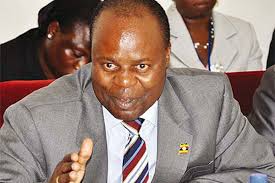
Deputy Speaker Jacob Oulanyah could not raise quorum to vote on new cities

A vote on creation of new cities has been delayed after Parliament yesterday failed to raise the required quorum to take a decision.

The Deputy Speaker, Jacob Oulanyah who chaired the sitting yesterday guided members that the Constitution makes a specific requirement that such a vote is taken by a majority of all members of Parliament.

“The activity we are going to engage in to take a decision is dictated by the Constitution meaning, we should have a record of that majority. I suspended the House for 15 minutes and on return, the number has even reduced,” he said.

On Tuesday, the Minister of Local Government, Tom Butime presented a motion for creation of new cities including; Arua, Gulu, Jinja, Mbarara and Fort Portal. Others are; Mbale, Masaka, Hoima, Entebbe, Lira, Soroti, and Wakiso.

“There have been a series of consultations because we have to agree on boundaries and demarcations. The last and most agreed upon besides other resolutions, are the ones I have brought here,” he said.

Butime added that boundaries of Moroto, Nakasongola, Kabale and Wakiso will be determined by April 2020 and presented for approval.

“Consultations as of Tuesday were not yet concluded. Yesterday, we were able to discuss and conclude very comfortably with members from Teso region and we agreed,” he said adding that, “I have no doubt that by April next year, I will bring the configuration of the parts that constitute Wakiso, Nakasongola and Kabale”.

According to Butime, operationalisation of the new cities will be phased in the next three years.

MP Medard Sseggonna (Busiro East) however, raised concern over creation of two cities in Wakiso which are Entebbe Municipality and the rest of Wakiso district, arguing that whereas there is need for cities, they need to be viable and conform to the law. “We are not objecting to those areas where thorough studies have been made and are ready to go. In respect of those particular areas where more needs to be done, I would seek the indulgence of this House that the matter be referred to the relevant committee with timelines,” he said.

MP William Nzoghu (Busongora North) on the other hand moved a motion for an amendment of the Minister’s motion to elevate Kasese Municipality to City.

The Minister however, said that Kasese still lacks the requirements to attain a city status, adding that government is currently focusing on developing the Municipality in preparation for city status.

Stories Continues after ad

Low revenue as gov’t seeks Shs2.4 trn loan to finance current budget deficit

Minister David Bahati

Government wants to borrow Euros 600 million (about Shs2.4 trillion) from both Stanbic Bank and Trade Development Bank to finance the 2019/2020 budget deficit, state minister for finance, David Bahati says.

According to Bahati, Uganda’s national debt has hit a record high of Shs45.8 trillion.

As at end June 2019, total public debt amounted to US$12.43 billion  equivalent to Shs45.825 trillion out of which external and domestic debt accounted for US$ 8.27 billion (66.6 percent) and USD4.16 billion (33.4) respectively.

The Minister further says that nominal Debt as a percentage of GDP stands at 35.9 percent using the rebased GDP of Shs128.49 Trillion for Fiscal year 20l8/2019.

He says that the impact of borrowing Euros 600 million on the debt position for financial year 2019/2020 will add about 2 percent to Debt to GDP ratio but maintained that despite the impending borrowing, Uganda’s debt levels will remain sustainable.

In June 2019, the Minister of Finance, Hon. Matia Kasaija, presented a Shs40.5 trillion budget for the financial year 2019/2020.

However, five months into the financial year, government has realised a low revenue performance, which is attributed to delays in implementation of some administrative measures which had been projected to generate revenues including: the Digital Tax Stamps (Shs150 billion), electronic fiscal devices (Shs170 billion), rental income tax (Shs 174.63 billion) and the MTN Uganda national operator license fees of US$100 million.

In order to implement the Budget for financial year 2019120 and meet the additional expenditure pressures, Government must borrow either domestically or externally to cover the budget deficit,” says Bahati.

He said that the Ministry received four offers from the market which included Trade and Development Bank (TDB), Stanbic Bank (U) Ltd, ABSA and Citi Bank, two of which offered the best terms.

The shortfall has also been caused by additional expenditure pressures; non-receipt of World Bank budget support funds; and non-receipt of capital gains tax totaling to Shs 2,473.55 billion

The Minister also says that the current financial year has additional expenditure pressures amounting to Shs1,432 billion intended for security or classified expenditure; wage shortfalls; counterpart funding obligations for projects; and emergencies.

Further, the Minister says that certain decisions of Parliament including the refusal of the proposal for accounting for rental tax, imposition of a minimum tax of 0.5 per cent on losses carried forward beyond seven years and the repeal of one per cent of withholding tax on agricultural supplies led to a Shs48 billion revenue shortfall.

He says that even after submitting a supplementary request of Shs437.6 billion to Parliament, the national budget has additional expenditure pressures amounting to Shs1, 432 billion intended to cover security and classified expenditure; wage shortfalls; counterpart funding obligations for projects; and emergencies.

According to the Report of Budget Committee on 2019/20 budget estimates, Uganda’s  total public debt stock increased by 12.5 percent to US$11.52 billion (about Shs43.31 trillion) as at end December 2018 from USD10.24 billion (about Shs38.5 trillion) at end of December, 2017.

Stories Continues after ad

Museveni commissions nine factories in Nakaseke district

Museveni in factory

President Yoweri Museveni yesterday commissioned nine factories at Namunkekera Industrial Park at Kapeeka, Nakaseke District. The factories are manufacturing concrete products, agricultural products, food items, electrical appliances, shoes and fishnets among others.

“This Industrial park is proof that when you sort out certain issues, development happens. With the peasants in Luweero here, we launched a struggle that birthed peace and stability, resulting into the investments we see now,” Museveni said.

He said the industrial park was also made possible by a deliberate policy to promote liberalisation, enabling private investors to put money where they see opportunities.

“We are also making a case for market integration so that ultimately, these products have adequate market. It explains our push for a vibrant EAC, COMESA and strong links with partner countries like China, the EU among others,” he said.

Museveni lauded Mr Zhane Hao, the Managing Director of Liao Shen, who is steering the development of the industrial park. “I am also happy to note that the factories here are contributing to value addition, buying maize, mangoes and other fruits from the population.”

He said the 16 factories in the park so far employ 2,500 people directly and the projection is 8,000 in the next few years. Additionally, he said, government will rehabilitate Kapeka Secondary School and Butalango Technical College so that they supply human resource to the industrial park.

On the environment, NEMA will have to come and advise on factories that produce fumes, but also the locals should vacate swamps and stop cutting trees, he said.
“I congratulate Liao Shen group and the people of Kapeka for this achievement, I am optimistic that with these good policies and available peace, we shall achieve more.”

Stories Continues after ad

Rhino Fund Uganda dismisses allegations of seizing Zziwa Rhino Sanctuary

Rhino with young one

The Rhino Fund Uganda has dismissed as untrue, recent media reports that indicated the organisation is involved in a wrangle with Capt. Joseph Charles Roy over the land housing the Zziwa Rhino Sanctuary in Nakasongola district.

Roy had reached out to different individuals accusing Rhino Fund Uganda of denying him and close associates access his farm and hospitality facilities on it. Roy alleged also that Rhine Fund Uganda had plans to grab his land.

According to a statement released by the Rhino Fund Uganda, the reports by Roy are twisted and misinterpreted to create a non-existent land wrangle in which he is said to have sought court order to evict Rhino Fund Uganda, despite an existing running contract which has not been abused by the latter.

“What has been reported, quoted and published in various/diverse media and forums have been grossly misrepresented with ulterior motives best known to the authors. And the same should be disregarded, condemned and ignored with contempt,” says Rhino Fund Uganda in a statement.

It adds: “The land wrangle being referred to in the media is twisted and misinterpreted. Rhino Fund Uganda, its Executive Director and D & D International Ltd (Amuka Lodge) have no desire or have never attempted to “steal” any Leasehold or Mailo land from Joe Roy. What is referred to as a “Land Wrangle” is merely the above contesting the early termination notices and protecting their interests and investments on the said land.”

In May, Roy through his lawyers petitioned the European Union ambassador, the World Bank and UNDP asking them to stop funding the Rhino Fund Uganda over what he termed as illegal activities and conflict of interest.

This prompted the organisation to seek redress in courts of law and on November 21, the High Court registrar, Flavia Nabakooza issued an injunction stopping Capt.Roy from carrying out any further activities until the main case is disposed of.

“An order is issued for a temporary injunction against the respondent , his agents, workmen, servants or any other persons acting on his behalf restraining from alternating, evicting, intimidating, threatening in any way interrupting or doing any act adverse to the applicant’s operations on the land particularly the safety and sustainability of the rhinos including but not limited to constructing buildings, airfields or any other structures on Ziwa rhino sanctuary until hearing and final disposal of the main suit,” said the High Court Registrar.

The Rhino Fund management, however, says the temporary injunction did not stop Capt.Roy or his clients from accessing his land as was reported.

 “Our lawyers secured a court injunction to foster the security and safety of the Rhinos, an extremely vulnerable and endangered species but the same did not by any glimpse of error or wildest interpretation bar Joe Roy from accessing his land, business or client guest house which he refers to as his home,” says Rhine Fund Uganda in the statement.

“Joe Roy, his colleagues and family have been and still have access to the sanctuary whenever and wherever he wishes. There are bundles and volumes of evidence both documentary and photographic showing Roy happily in the sanctuary.”

The organisation says that the element of war was played to the gallery to distort facts and clear sequence of events.

Management also refuted claims that the Rhino Fund Board was disbanded by President Museveni, saying their constitution was only adjusted to increase the board members to accommodate two or three members of Joe Roy on the board.

“The Rhino Fund Uganda will remain the organization responsible for the management of the rhino program on the sanctuary as per the cooperation agreement that Rhino Fund Uganda has with Uganda Wildlife Authority. Joe Roy will not be involved in the management of this project other than having seats on the Rhino Fund Uganda Board.”

 “It needs to be reiterated that the Rhino Fund Uganda Board has not been disbanded by His Excellency the President.  It was clearly stated by His Excellency the President that the Rhino Fund Uganda constitution will be adjusted to increase the Board Member numbers in order to accommodate 2 or 3 members of Joe Roy on the Board and that Rhino Fund Uganda will remain the organization responsible for the management of the rhino program on the sanctuary as per the cooperation agreement that Rhino Fund Uganda has with Uganda Wildlife Authority,” Rhino Fund Uganda Board,” it adds.

On or about the 16th October,2017 and with no basis at all, Rhino Fund Uganda was stunned to be served with what purported to be a termination  notice  from M/s Omongole & Co. Advocates ,Counsel for Joe Roy allegedly terminating the 30 years  License agreement between Rhino Fund and M/s Ziwa Ranchers Ltd.

Stories Continues after ad

Germany commits US$128m towards health and education programmes in East Africa

Amb. Libérat Mfumukeko and Jörg Herrera after signing the agreement

The Government of the Federal Republic of Germany announced additional funds of US$128 million (EUR 115.8 million) towards supporting health and education programmes in the East African Community (EAC).

The majority of the funds will be going towards the EAC’s immunization programme with Gavi, the Vaccine Alliance.

The EAC Secretary General, Amb. Libérat Mfumukeko, and the Chargé d’Affaires of the Federal Republic of Germany, Jörg Herrera, jointly signed the Agreement in Arusha today.

With the additional grant, the programme will be financing the procurement of at least four different types of vaccines (Pentavalent, Rotavirus, Pneumococcal and Measles) for children in all six Partner States of the East African Community. The programme is financed through the German Development Bank, KfW, and implemented in collaboration with Gavi, the Vaccine Alliance.

The cooperation aims at reducing child mortality in the region and mainly targets newborns. To date, German Development Cooperation with the EAC has financed nearly 80 million doses of life-saving vaccines for the region since the support started in 2013 and the average immunization coverage in the region was substantially increased, making the EAC’s immunization programmes the strongest in Sub-Sahara Africa.

Other funds including US15.5 million will be going towards the “EAC Regional Centre of Excellence for Health Supply Chain Management,” located at the University of Rwanda in Kigali, US$2.2 million to the support of Ebola preparedness within the ongoing EAC-German project “Regional Network of Reference Laboratories for Communicable Diseases” and US$5.3 million to the “Academic Centre for Digital Innovation in East Africa” at the Nelson Mandela African Institution of Science and Technology located in Arusha.

Speaking at the event, Amb. Mfumukeko lauded Germany for its continued support to the EAC and the integration process in general. Mfumukeko said the immunization programme in particular would go a long way in saving the lives of millions of children in the six EAC Partner States.

“The implementation of 2018 (Phase VI) which had a commitment of EUR 30 million (US$34.1) million has been fully concluded. The amount was fully disbursed to GAVI in December 2018 and spent on Pentavalent, Rotavirus and Pneumococcal vaccines in all EAC Partner States. GAVI has provided full documentation on the use of the fund including the number of doses per vaccine and country,” said the Secretary General.

“The new commitment of US$105 million for Phase VII will be used for the procurement of four vaccines of Pentavalent, Rotavirus, Pneumococcal and Measles with possible extension to Yellow Fever and HPV vaccines in all EAC Partner States. Vaccine procurements may take place in 2019 and 2020,” added Mfumukeko.

In his remarks, Jörg Herrera, underscored Germany’s commitment to extend the ongoing health and education programmes with the EAC Secretariat saying the programmes would especially benefit the young generation of East African citizens.”

“Investing in the health sector is not only an investment for sustainable social development but also for a country’s and the region’s economic development. Vaccinations are a highly effective and cost efficient means to fight child mortality. The German Government highly commends the EAC’s efforts to immunize every child,” said Herrera.

EAC and Germany can look back on over 20 years of successful development cooperation which focusses on Health as well as Regional Economic and Social Integration. Germany’s development cooperation, on behalf of the German Federal Ministry for Economic Cooperation and Development (BMZ), has to date contributed to the regional integration in East Africa through a variety of programmes and projects. Including the commitments announced today, the German contributions to EAC-German Development Cooperation programmes will have added up to over USD 480 million (EUR 436.8 million).

The Signing of the Government Agreement was witnessed by the Deputy Executive Secretary of the Inter-University Council for East Africa, Prof. Mike Kuria, the Director of Infrastructure at the EAC Secretariat, Dr. Kamugisha Kazaura, Ms Norzin Grigoleit-Dagyab, the Head of Regional Cooperation from the German Embassy and Pascal Kanyinyi, KfW’s Senior Project Coordinator Health.

Stories Continues after ad

Bobi wine nominated for Africa Freedom Awards

Bobi Wine

Kyadondo East MP who doubles as patron of People Power, a political pressure in Uganda, Robert Kyagulanyi aka Bobi Wine, is in South Africa ahead of Africa Freedom Award organised by the Friedrich Naumann Foundation for Freedom (FNF).

The ceremony will take place tomorrow in Johannesburg, South Africa.

Bobi wine arrived last evening and shared his views on African perspective show at SABC TV moderated by South African journalist, Aldrin Sampear.

“We are happy to announce that Bobi Wine, representing the People Movement has accepted the 2019 Africa Freedom Prize nomination from the Friedrich Naumann Foundation for Freedom in Africa.” The foundation announced.

Responding to the nomination, Bobi wine said “I would like to thank Freedom Foundation Africa for the nomination. It means a lot to the movement and we need as much support for our work as we can get.”

The political wave in Uganda is turning against the liberation President who has been in power since 1986. The political atmosphere in the country has turned hostile to opposition Political leaders. The president under the guise of Public order management act, has banned them from campaigning, rallying and organizing, a different approach to advance freedom became necessary.

People Power is a freedom movement in Uganda that is seeking democracy, human rights and the rule of law in Uganda in this lifetime. Several attempts to silence Bobi Wine and the People Power movement has been made since their inception.

Their leader Bobi Wine has been imprisoned for ‘annoying the President’, their members have been attacked in public and attempts on their lives have been made in the name of silencing the movement. These attempts however have done little to stop the movement. With a drive to make a change from freedom, they keep moving forward.

Stories Continues after ad

Most Ugandans not satisfied with country’s direction in fighting corruption – Survey

Father Simon Lokodo

70 percent of citizens in Uganda are disappointed and dissatisfied with the country’s direction towards fighting corruption, a survey has proved.

The findings were released by Twaweza in a research brief titled ‘More food, less money: Ugandans’ experiences and opinions on poverty and livelihoods’. The brief is based on data from Sauti za Wanainchi, Africa’s first nationally representative high-frequency mobile phone survey.

The findings are based on data collected from 1,905 respondents across Uganda in November 2018.

According to the survey, citizens were asked if they are satisfied or dissatisfied with the direction that Uganda is taking in the areas of managing the economy, fighting corruption in government, creating income/job opportunities and improving security in the country.

72 percent were completely somewhat dissatisfied with the way the government has handled the economy, 70 percent was disappointed in the way corruption has been handled in the country, while 67 percent were dissatisfied with how the government has handled the problem of solving unemployment in the county.

48 percent of the sample space was however pleased or satisfied with how the security concerns have been handled.

Yesterday President Yoweri Museveni was Chief Walker in Anti-Corruption Walk, aimed at telling the world that he was committed to fighting corruption. He would later say at Kololo Airstrip that among others like the need for material possessions, Ugandan public officials lack integrity which has partly contributed to corruption.

Museveni said he recently followed up a case in which a pupil had been defiled but the police was not serious about the issue. He however did not pledge to the public how his government was going to boost the fight against corruption, apart from mentioning agencies anti-graft agencies like IGG, State House Anti-Corruption Unit and the courts.

 A few former top officials in government are serving sentences in Luzira over corruption, though citizens think more should be arrested.

Uganda is the 149 least corrupt nations out of 175 countries, according to the 2018 Corruption Perceptions Index reported by Transparency International. Corruption Rank in Uganda averaged 115.45 from 1996 until 2018, reaching an all-time high of 151 in 2016 and a record low of 43 in 1996.

The Corruption Perceptions Index ranks countries and territories based on how corrupt their public sector is perceived to be

Corruption constitutes a major challenge for businesses operating or planning to invest in Uganda. The police, the judiciary and procurement are areas where corruption risks are very high and under-the-table cash payments are expected. The core of Uganda’s legal anti-corruption framework is the Anti-Corruption Act, the Penal Code, the Inspectorate of Government Act 2002, the Public Finance Management Act 2015 and the Leadership Code Act 2002 (LCA).

The Penal Code provides instruments to deal with various corruption offenses including embezzlement, causing financial loss, abuse of office and fraud. The LCA is designed to increase transparency and to curb corruption among senior public officials; it also criminalizes attempted corruption, active and passive briberyextortion, bribery of a foreign public official and abuse of office.

Under the LCA, gifts or donations must be declared if they exceed five currency points in value. Corruption challenges are exacerbated by weak law enforcement, which fuels a culture of impunity. There is no distinction between a bribe and a facilitation payment under Ugandan law.

Stories Continues after ad

Uganda tops Africa in coffee exports in October

Uganda coffee exports

Uganda’s coffee exports of 378,238 bags led shipments from African countries, followed by Ethiopia, according to the International Coffee Organisation (ICO)’s Coffee Market Report for November.

The total volume of exports from Africa was 958,055 bags, says the report. But in comparison with the same month in the previous year, Arabica exports from Uganda fell 30 percent to 75,501 bags, while Robusta exports rose by 24.6 percent to 302,737 bags.

Exports of Arabica from Uganda have declined for most of 2019, dropping 16.6 percent in the first ten months compared to the same period in 2018. However, the increase in Robusta exports have more than offset the fall, and as a result total exports from the country increased 7.4 percent for the same period. The Uganda Coffee Development Authority attributed this increase to good main and secondary harvests on account of favourable weather in 2019.

Meanwhile, global exports in October 2019 totalled 8.91 million bags, their lowest monthly level since September 2017. According to the report, this represents a drop of 13.4 percent compared to the same period in the previous year, and of 2.4 percent compared to October 2017.

Shipments of Robust as fell 21.6 percent to 2.82 million bags and Arabicas fell 9 percent to 6.08 million bags. Other Mild Arabicas saw the largest decline, falling 23.2 percent to 1.33 million bags, while Brazilian Naturals fell 9.5 percent to 3.44 million bags. Colombian Milds, conversely, saw an increase of 13.5 percent to 1.31 million bags compared to October 2018.

The depreciation of the Colombian Peso against the US Dollar for much of 2019 could be a contributing factor for higher shipments of Colombian Milds, the report says.

Exports from South America amounted to 5.29 million bags in October 2019, led by 3.42 million bags from Brazil. Brazil’s exports—which accounted for 38.4 percent of the total coffee exports in October 2019— fell 12.9 percent compared to October 2018, owing to its smaller 2019/20 off-year crop.

 Despite the monthly fall in shipments compared to 2018, the report says Brazil’s export total to date for its 2019/20 crop year is at a record level of 23.62 million bags. This is 7.2 percent greater than its next highest level of 22.04 million bags, reached in April–October 2014.

Stories Continues after ad