Stanbic Bank
Stanbic Bank
24 C
Kampala
Stanbic Bank
Stanbic Bank
Home Blog Page 1089

Shortlist of 2019 CAF Awards nominees unveiled

caf awards 2019

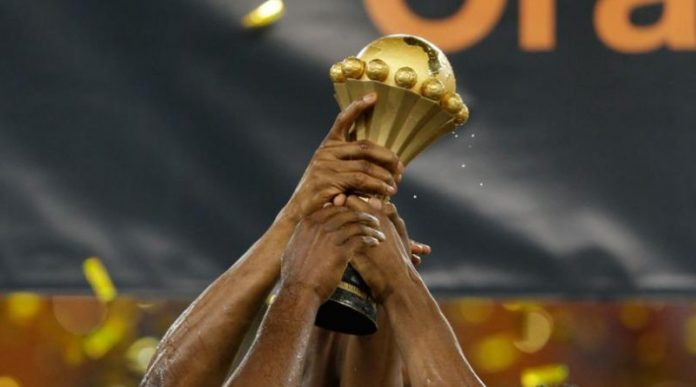
The shortlist of nominees from various categories for the 28th edition of the annual CAF Awards was unveiled on Tuesday, 03 December following the completion of the first phase of the voting.

The shortlist of nominees was decided upon by votes from a CAF Technical & Development Committee and a panel of media experts with emphasis on the nominees’ performance of during the year under review, 2019.

The final phase of voting for the men’s and women’s African Player of the Year, as well as the male and female Coach of the Year,  will be selected by Head Coaches/Technical Directors and Captains of senior national teams from CAF Member Associations.

The Interclubs Player of the Year will be decided upon by the Head Coaches and Captains of the group phase of the current season of CAF Interclubs competitions.

The award winners for each category will be announced during the CAF Awards ceremony on Tuesday, 7 January 2020, at the Albatros Citadel Sahl Hasheesh, Hurghada, Egypt.

The event will celebrate African footballers and officials who have distinguished themselves during 2019. There will also be several new award categories in recognition of exceptional contributions to African football and inspiring individuals.

Full list of shortlists

Player of the Year

André Onana (Cameroon & Ajax)

Hakim Ziyech (Morocco & Ajax)

Ismail Bennacer (Algeria & AC Milan)

Kalidou Koulibaly (Senegal & Napoli)

Mohamed Salah (Egypt & Liverpool)

Odion Ighalo (Nigeria & Shanghai Shenhua)

Pierre-Emerick Aubameyang (Gabon & Arsenal)

Riyad Mahrez (Algeria & Manchester City)

Sadio Mane (Senegal & Liverpool)

Youcef Belaili (Algeria & Ahli Jeddah)

Women’s Player of the Year

Ajara Nchout (Cameroon & Valerenga)

Asisat Oshoala (Nigeria & Barcelona)

Gabrielle Onguene (Cameroon & CSKA Moscow)

Tabitha Chawinga (Malawi & Jiangsu Suning)

Thembi Kgatlana (South Africa & Beijing Phoenix FC)

Interclubs Player of the Year

Anice Badri (Tunisia & Esperance)

Kodjo Fo Doh Laba (Togo & RS Berkane / Al Ain)

Taha Yassine Khenissi (Tunisia & Esperance)

Tarek Hamed (Egypt & Zamalek)

Youcef Belaïli (Algeria & Esperance / Ahli Jeddah)

Youth Player of the Year

Achraf Hakimi (Morocco & Borussia Dortmund)

Krépin Diatta (Senegal & Club Brugge)

Moussa Djenepo (Mali & Southampton)

Samuel Chukwueze (Nigeria & Villarreal)

Victor Osimhen (Nigeria & Lille)

Men’s Coach of the Year

Aliou Cisse (Senegal – Senegal)

Christian Gross (Switzerland – Zamalek)

Djamel Belmadi (Algeria – Algeria)

Moïne Chaâbani (Tunisia – Esperance)

Nicolas Dupuis (France – Madagascar)

Women’s Coach of the Year

Alain Djeumfa (Cameroon)

Bruce Mwape (Zambia)

Clementine Toure (Côte d’Ivoire)

Desiree Ellis (South Africa)

Thomas Dennerby (Nigeria)

Men’s National Team of the Year

Algeria

Madagascar

Nigeria

Senegal

Tunisia

Women’s National Team of the Year

Cameroon

Côte d’Ivoire

Nigeria

South Africa

Zambia


Stories Continues after ad

Museveni conducting armed robbery in Uganda – Besigye claims

Dr. Kiiza Besigye, the former FDC president

The former President of Forum for Democratic Change (FDC), Rtd Col. Dr. Kizza Besigye, has alleged that “President Yoweri Museveni is conducting armed robbery in Uganda” which he said is a form of corruption, though he did not expound on the allegation.

In an interview with NTV in the morning at his Kasangati home that was surrounded by police and other security agents, Besigye said Ugandans must rise up against the guns in order to fight corruption in public offices.

But When asked to comment on Besigye’s allegation that Museveni was conducting armed robbery in Uganda, Senior Presidential Press Secretary Don Wanyama said: “Besigye seem not to understand Museveni and I think it is nonsense. Don Wanyama.”

“When the people whose resources are being stolen have no say then those who are doing it, will do it with impunity. The first institution in the fight against corruption should be the people,” Besigye said.

“It’s not surprising that today, those who challenge the thieves, the corrupt are the targets,” he added.

He said Ugandans have not been empowered to fight corruption and that the current government of NRM was using guns to deny them that power.

“In Uganda, no leader has ever left power peacefully, every leader has come to office by use of guns, force and has left office by use of force,” Besigye added.

Besigye said leaders and institutions in Uganda should be accountable to the people, which he said is not the case today, further claiming that some corrupt people in government fight Ugandans who are suffering from corruption.

“Once people are corrupt, those they steal from start suffering, when they come out to show their displeasure, those who are corrupt fight them,” Besigye said.

Museveni this morning led thousands of Ugandans in Kampala an Anti-Corruption Walk to show his commitment in the fight against corruption especially in public offices which has seen the country lose hundreds of billions of shillings over the decades he has been in power.

Uganda Police officers this morning surrounded Besigye’s home to block him from having a parallel Anti-Corruption Walk. But he beat security and found his way on the road. He was besieged at Mpererwe along Kampala Gayaza road. Besigye had scheduled to lead a parallel anti-corruption walk from his Katonga offices to the constitutional square.

Apart from Besigye, other people say Ugandans are not empowered to fight corruption.

“People are not empowered, they do not know that you can stand up, put your foot down and say no to taking bribes,” said Samantha Byarugaba, another official at Uganda Debt Network, a civil society organisation involved in the fight against the vice.

“Many times, people see corruption as taking bribes but corruption goes to the simplest of things, for example, If I have a company and I’m employing only my relatives, that is corruption” she said.

She said government should confront big government officers like ministers, MPs and others to show its commitment in the fight against corruption.

Get the corrupt and not the ‘small fishes’ because usually the blame is taken by the under dogs, then it disappears. Look for the ‘big dogs’, take punitive action, then Ugandans will be convinced – Samantha Byarugaba – Uganda Debt Network.

Ramadan Goobi, a lecturer at Makerere University Business School, has urged government to carry out property audit if it is to end the rampant corruption in the country. According to Goobi, owners of mansions and commercial buildings in Kampala and elsewhere in Uganda should be identified and tasked to explain where they got the money to set up the multi-billion shillings buildings.

A section of economic analysts also believe the community has promoted the vice by praising the corrupt who set a bad example, which makes making corruption acceptable.

But corruption in Uganda is not limited only to the public service. For example, yesterday the Allied Health Professional council discovered that a huge percentage of microscopes in several clinics in Kampala are faulty, meaning that many people are issued false results after testing their blood.

The Anti-Corruption featured members Museveni’s cabinet, civil service heads, political appointees like RDCs, diplomats, media, religious leaders, students, civil society organisations, private sector, traditional leaders, the army and police and of course Ugandans.

The Minister of State for Ethics & Integrity, Simon Lokodo has praised President Yoweri Museveni’s stand against corruption in a speech at Kololo Ceremonial Grounds.

Museveni, Deputy Speaker Jacob Oulanyah, Chief Justice Bart Katureebe, IGG, Justice Irene Mulyagonja, endorse Uganda Anti-Corruption Pledge at Kololo Airstrip in Kampala.

Stories Continues after ad

Business Bootcamp for 100 SME’s in Africa

Business Bootcamp for 100 SME’s in Africa

The African Union Development Agency (AUDA-NEPAD) will be launching its first Business Bootcamp for 100 SME’s in Africa on December 4-6, 2019 in Lomé Togo, in partnership with Ecobank.

The Business Bootcamp is in line with the African Union Commission (AUC) Chairperson’s “1 million by 2021 Initiative” which aims to provide concrete opportunities for 1 million youth by the year 2021, in the areas of Education, Employment, Entrepreneurship and Engagement. The initiative aims to leverage strategic partnerships, build ecosystems of efficiencies and test new ideas to move the needle on youth development.

The opening ceremony will be attended by Fati N’zi-Hassane AUDA-NEPAD Head of Human Capital, Josephine Anan-Ankomah Ecobank Group Executive Commercial Banking.

AUDA-NEPAD aims to contribute towards decent employment for Africa’s youth by supporting sustainable youth owned SME’s especially for young women. More specifically, AUDA-NEPAD seeks to contribute towards the AUC campaign by focusing on building the capacity of young entrepreneurs, engaging various stakeholders to avail sustainable financial mechanisms including the establishment of regional guarantees funds for youth and women led SMEs. There is vast potential for African economic growth to be driven by SME’s and there is even greater potential in the African youth taking up this challenge.

Ecobank, the Pan-African bank, believes in SMEs, not only as clients, but also as partners in driving social economic development. Ecobank, through its Academy and other business units, is working with the AUC on a number of initiatives to support SMEs and the youth attaining their full potential.

The Business Bootcamp will train 100 SME’s on business and entrepreneurial skills, broaden their markets beyond their local markets toward regional trade. It will also contribute to sustainable SME’s through good financial management, increase SME profitability, business growth and expansion to create more jobs.

The 100 SME’s were selected through a rigorous application and assessment exercise to ensure there is full representation of all the regions in Africa.

Stories Continues after ad

Climate Change: River Nile turns wild in East Africa floodings

Tourists stranded on about to be submerged vehicle

Rainfall in East Africa from October to mid-November was as much as 300 per cent above average across the Horn of Africa, according to the Famine Early Warning Systems Network. The areas hit hardest include parts of Ethiopia, Somalia, and Kenya, where most of the deaths have occurred.

Floods have cut off West Nile from the rest of Uganda after R.Nile burst its banks on Tuesday. This north-western part of the country is now only accessible via ferries and air after the floods deposited heavy debris and weed on the road near the Pakwach Bridge in Pakwach district.

Flash floods and landslides triggered by heavy rainfall have killed at least 250 people in recent months in East Africa, adding to a weather-fueled crisis that has impacted some 2.5 million people in the region.

In response, Uganda National Roads Authority (Unra) has a temporary closed Packwach bridge until further notice and advises travelers going to and from West Nile to use the Gulu-Adjumani-Leropi ferry, Gulu-Adjumani-Obongi ferry or the Masindi Wanseko ferry.

A statement from UNRA, says their teams in Gulu and Arua are mobilizing equipment to clear the road for immediately use.

The Situation in South Sudan:

Response activities have been scaled-up across the affected locations where floods devastated the lives and livelihoods of some 908,000 people. As of 29 November, about 7,000 metric tons of food commodities have been distributed, reaching some 704,000 people with emergency food assistance.

Food distributions are ongoing in some locations. Additional response teams have been deployed to the affected areas to rapidly expand the registration and distribution.

About 11,000 households in Ayod and Akobo counties have received agricultural inputs, vegetable seeds and fishing kits, while more distributions are proceeding in the affected-counties in Upper Nile, Jonglei, Unity and Abyei, targeting another 65,000 families. About 2,500 households have been assisted with the minimum water, sanitation and hygiene (WASH) packages.

Some 9,000 households have been assisted with the Emergency Flood Rapid Response Kits (EFRRK), while distribution is underway for another 12,000 families. An estimated 23,000 households in priority locations need assistance.

Humanitarian organizations are using air and waterways to transport aid to hard-to-reach locations where people are taking shelter. In some areas where water levels remain high, particularly in Pibor in Jonglei, the affected people have to walk through mud and water to the distribution points at the airstrips.

To increase access and response activities, humanitarian organizations are repairing roads, particularly in the Maban area, with the participation of the local community. More than 220 metric tons of emergency aid items—assorted food items, health, nutrition, shelter, protection and WASH supplies—were transported to priority locations.

US $15 million from the UN’s Central Emergency Response Fund is being released to replenish pipelines that agencies are already drawing upon to forward response. Another US $10 million from the OCHA managed South Sudan Humanitarian Fund will be allocated to enable an immediate, frontline response. These represent 41 per cent of US $61.5 million, the total funding required to meet the immediate needs of the most vulnerable people.

Stories Continues after ad
Seven questions to test your potential as an entrepreneur

Martin Zwilling

By Martin Zwilling

As a mentor to aspiring entrepreneurs, the most common question I get is, “I want to be an entrepreneur — how do I start?” The obvious answer is that you need an idea first, but I’ve come to realize that the process is really much more complex than that. Many people with great ideas never make it as entrepreneurs, and true entrepreneurs can make a business out of anything.

The first myth you have to get past is that having the right idea will make you an entrepreneur. In fact, even implementing the idea into a solution doesn’t make you an entrepreneur. According to my definition and Wikipedia, an entrepreneur is someone who builds a new business. Based on my experience, creating the solution is usually the easy part of starting a successful business.

So before you quit your day job, task all your friends and investors for money, or max out your credit cards to design and build a product, I recommend that you seriously contemplate the following more basic questions:

Are you prepared to adopt the entrepreneur lifestyle? Starting a new business is not a job, but an adventure into the unknown, similar to Columbus setting out to find the New World. It’s a big step into a new lifestyle, like getting married after being single for many years. Yet startup founders are often lonely, since no one else can make their decisions.

How strong is your passion for people and business? You have to enjoy working with people — partners, customers, investors and more — as well as products to start a business. You have to embrace making decisions and the responsibility of setting milestones, measuring progress and celebrating the victories and defeats.

Are you confident and disciplined in facing tough challenges? Starting a business at home or on the Internet is hard work — not a get-rich-quick scheme. You will be operating outside of any proven realm, no mentor can give you the answer, and it won’t help to blame anyone else for missteps and environmental changes you can’t predict.

How familiar are you with the contemplated business domain? Remember that the grass always looks greener on the other side of the fence. It may make more sense to work for a similar startup before charging ahead on your own. The ultimate best teacher is failure, but a less painful one is getting related work experience and training.

Which business model best suits your mentality? Some people love to deliver services, where personal acumen is tested every day. Others love technology and products, to be replicated and sold while you sleep. If something totally new is not your forte, you can always buy a franchise, acquire an existing business or be a consultant.

Have you mapped out a realistic plan? Few entrepreneurs can assimilate and hone a complete plan in their head. That’s why I believe the process of writing down your plan is more valuable than the result. Also, a written plan multiplies your ability to communicate to constituents, and facilitates parallel feedback. Money is not a substitute.

What is your funding situation and alternatives? Fundraising is stressful and difficult, which is why 90 percent of successful entrepreneurs choose bootstrapping (self-funding). Too much money too early kills many startups, according to investors. There are always non-cash alternatives, such as recruiting partners with equity and bartering services.

After asking yourself these questions, and finding yourself still determined to be an entrepreneur, you will have already started. From there, it’s a simple matter of forging a trail to success, and conquering all the problems and challenges that are sure to surface. Starting a business is a marathon, so you have to make an overt decision to enjoy the journey as well as the destination.

The Writer is a veteran startup mentor, executive, blogger, author, tech professional, professor, and investor. Published on Forbes, Entrepreneur, Inc, Huffington Post, etc.

Stories Continues after ad
I am not corrupt – Museveni blasts Deputy Speaker Jacob Oulanyah

Museveni addressing Ugandans at Kololo on Wednesday

President Yoweri Museveni has said he is not corrupt despite being a wealth man.

“I have never stolen. But I am rich. I have never stolen anything from anybody but I am also not a poor man,” Museveni said at Kololo Independence Grounds while addressing thousands of Ugandans who participated in the Anti-Corruption Walk, where he was the Chief Walker.

Museveni came up to say he is not corrupt after Jacob Oulanyah, the deputy speaker of parliament, in his earlier speech insinuated all Ugandans are corrupt, a statement that didn’t go well with a section of people who had gathered on Wednesday morning to say no to corruption.

Oulanyah referred to the Bible and quoted Jesus Christ’s statement he made after realising people who had gathered wanted to stone a prostitute to death for committing adultery. “If any one of you is without sin, let him be the first to throw a stone at her,” Jesus said.

Museveni was Chief Walker in Anti-Corruption Walk

Museveni further said that corrupt people are parasites. “They are parasites because they get wealth which they did not earn,” he said, adding that the nation needed to address itself to issues of morality, spiritual and materialism, if corruption is to be wiped out.

“Spiritually they are bad investors because they think that the bad things they do the people don’t see them, they think God doesn’t see them, yet God sees things that people don’t see,” he said.

Museveni said that has not seen these corrupt people being successful sustainably in the last 60 years.

He asked political leaders to help people get out of material needs by creating jobs and wealth through commercial agriculture Industrial development, services sector and ICT. “Anybody who delays a project in commercial agriculture, services and ICT is an enemy of the fight against corruption,” he said.

On using laws to fight corruption, Museveni said that the laws are in place, but the problem is with implementation. He urged Revenue Authority, State House Anti-Corruption Unit and the Inspector General of Government to hire staff on the basis of integrity rather than papers, saying when a person has integrity it is hard to bribe them.

He however said other public offices like the Judiciary, civil service, and army can recruit according to papers.

The Anti-Corruption Walk was on today in Kampala

Poor supervision has led to corruption tendencies in institutions like the police. He said public officers should engage the public to get information on service delivery and others.

The Anti-Corruption Walk featured members Museveni’s cabinet, civil service heads, political appointees like RDCs, diplomats, media, religious leaders, students, civil society organisations, private sector, traditional leaders, the army and police and of course Ugandans.

The Minister of State for Ethics & Integrity, Simon Lokodo has praised President Yoweri Museveni’s stand against corruption in a speech at Kololo Ceremonial Grounds.

Oulanyah urged every Ugandan to fight corruption. “Don’t wait to be president to fight corruption,” he said.

Stories Continues after ad
Kenya, Tanzania and Uganda must do more to improve access to ICT for PWDs

Paul Kimumwe

By Paul Kimumwe

On the occasion of the International Day of Persons with Disabilities (IDPD) 2019, the Collaboration of International ICT Policy for East and Southern Africa (CIPESA) is calling upon governments and communication services providers in East Africa to take decisive steps to enable meaningful usage of Information and Communication Technologies (ICT) for persons with disabilities.

In a new policy brief, CIPESA highlights Kenya, Tanzania, and Uganda’s obligations on enabling digital accessibility for persons with disabilities and challenges the three countries to live up to their commitments, as contained in national laws and policies, as well as international instruments they are party to.

Although recent advances have made an ever-greater number of people use ICT for a growing range of tasks, persons with disabilities (PWDs) in East Africa still find it hard to access and use digital technologies and thus continue to miss out on the benefits that the technologies bring.

While Kenya, Tanzania, and Uganda have enacted various laws and policies to advance the rights of persons with disabilities, including those on access to and use of ICT, these have largely remained on paper with key provisions not being implemented. As a result, a large section of persons with disabilities continue to face digital exclusion.

The situation is exacerbated by the high cost of assistive technologies, low literacy levels among persons with disabilities, and lack of investments in supportive infrastructure by public and private entities.

According to national census data, the percentage of persons with disabilities in Tanzania is 8% of the total population, 3.5% in Kenya, and 14% in Uganda. However, the lack of comprehensive disaggregated data, including the specific challenges that persons with different types of disabilities face in accessing information and using ICT, also undermines the design and implementation of interventions that would improve their access.

The provision of accessible information to persons with disabilities is essential to enable them to exercise their fundamental freedoms and human rights. In this regard, one of the pillars of the 2030 Agenda for Sustainable Development and Sustainable Development Goals (SDGs), is the pledge to leave no one behind, including in the use of ICT.

Besides endorsing the SDGs, Kenya, Tanzania, and Uganda have ratified the United Nations Convention on the Rights of Persons with Disabilities (CRPD), the first international human rights treaty requiring that ICT tools and systems should be accessible as a necessary condition for persons with disabilities to fully enjoy their fundamental rights without discrimination.

Yet, while these governments are increasingly offering e-services, and in some instances have developed guidelines for managing government websites that set out requirements for accessibility for audio, visual and speech-impaired users, as well as compatibility with assistive technologies and devices, these guidelines remain unimplemented and unenforced. Moreover, in the three countries, majority of people that need assistive technologies lack them, because of prohibitive cost and low awareness of such technologies and their functionalities.

The CIPESA brief notes that the countries have sufficient laws and policies, but the weakest link is the lack of their implementation and enforcement. For example, Tanzania’s National ICT Policy 2003 calls for provision of special attention to providing new learning and ICT access opportunities for disadvantaged groups, including persons with disabilities, in order to address social inequities. Kenya’s National ICT Policy of 2016 outlines, under article 13, strategies for “an accessible ICT environment in the country in order to enable persons with disabilities to take full advantage of ICTs.”

In Uganda, Section 21 of the Persons with Disability Act mandates the government to develop and use sign language, tactile, and sign language interpreters in all public institutions and at public functions; and to braille public information such as government documents and government newspapers. It also obligates television stations to provide sign language inset or subtitles.

Many of the challenges faced by persons with disabilities in accessing information can be mitigated through equitable access to ICT, meaningful implementation of the laws, and innovative investments in technologies that support inclusion of persons with disabilities.

Accordingly, CIPESA is calling upon governments to take decisive steps in this direction, for instance:

  • Promote access to affordable assistive devices and technologies beyond tax exemptions and relying on donations.
  • Ensure that all e-government, e-services and emergency services comply with international web accessibility standards and are accessible for persons with disabilities.
  • Ensure that communication service providers have accessible handsets and other mobile devices embedded with accessibility features for persons with different kinds of disabilities within their sales outlets.
  • Ensure that licensed television service providers deliver accessible services such as audio description, audio subtitles, closed captions and signage language interpretation in their programmes to ensure access for persons with disabilities.

The Writer is Senior Program Officer, The Collaboration on International ICT Policy in East and Southern Africa (CIPESA)

Stories Continues after ad

Ethiopia withdraw from 2019 CECAFA tournament

ethiopia-fans

The Ethiopian Football Federation (EFF) has confirmed that it will not be sending a team to the regional Cecafa Regional Senior Challenge Cup in Uganda later this month.

The EFF also said that it will not be entering a team into the Cecafa Women’s Under-17 Challenge Cup, which Uganda is also hosting.

No official reason was given for the federation’s decision not to send the teams to the tournaments but according to BBC Sport, it understands that financial difficulties are at least part of the reason for the withdrawals.

The withdrawal means Group A at this year’s Senior Challenge Cup will feature hosts Uganda, Burundi and Eritrea.

The tournament is due to be held between 7 and 19 December.

Earlier, Rwanda pulled out of the regional tournament citing lack of funds to finance the team.

Djibouti are already in Uganda for the tournament while DR Congo will be the tournament’s guest tem.

The tournament will be used by the teams to prepare for the 2020 Total Africa Nations Championship (CHAN) in Cameroon.

Uganda are the record champions having won the championship on 14 occasions with the last one coming in 2015 in Ethiopia.

Group A: Uganda, Burundi, Eritrea.

Group B: Sudan, South Sudan, Somalia, Democratic Republic of Congo

Group C: Kenya, Tanzania, Djibouti, Zanzibar

Stories Continues after ad

Mighty dollar maddens President Trump

Desmond Lachman

By Desmond Lachman

It is no secret that President Donald Trump is displeased with the dollar’s strength. Whether there is much he will or can do about this is another matter. Indeed, regardless of what course of action he chooses, there is every reason to expect further appreciation in the year ahead.

Rather than as a result of the intrinsic strength of the US economic, the dollar’s anticipated appreciation is more likely to be caused by the relative weakness in the rest of the global economy. Moreover, the currency will continue to appeal to investors as a safe haven in times of unsettled international financial markets. Put another way, the dollar will remain the tallest dwarf in the room.

One of the president’s principal campaign promises was to eliminate the US trade deficit and level the international trade playing field. It is against this background that he persistently bemoans the dollar’s strength and accuses the European Central Bank and Chinese authorities of manipulating their currencies.

Yet despite these exhortations, the dollar has shown little sign of weakening. Since Trump assumed office, the dollar has appreciated by almost 10%. That has taken its overall appreciation since the beginning of 2014 to around 30%.

The currency’s continued strength should have come as no surprise to the president. By engaging in a large deficit-busting tax cut in 2017 at a time when the US economy was at close to full employment, Trump contributed to the divergence in monetary policy between the Federal Reserve and the world’s other major central banks. At the same time, by engaging in a trade war on multiple fronts, he abetted a greater slowdown in the rest of the world’s relatively open economy than has been the case in the relatively closed US economy. This led to a situation where foreign interest rates were forced lower relative to US ones.

The rest of the world’s economy will probably continue to weaken relative to the US. That in turn will keep US interest rates at more attractive levels than those abroad, which will further buoy the dollar.

The global economic outlook gives cause for concern. Europe is on the cusp of recession, and Germany remains reluctant to use fiscal policy to stimulate its weakening economy. China is registering its lowest growth rate in more than a decade. Latin America is beset by economic policy uncertainty in Brazil and Mexico and by political uncertainty in Argentina, Bolivia, Chile and Venezuela.

If the global economy were to succumb to recession, the dollar could be propelled significantly higher. With the world drowning in debt and with credit risk grossly underpriced, there is the risk that a recession could cause serious dislocation in the world’s financial markets as credit markets reprice risk. Were that to occur, money would seek the safe haven of US Treasury bonds and provide strong support to the dollar.

A weakening global economy and strong dollar will hamper mightily Trump’s chances of reducing the US trade deficit. In fact, since Trump entered the White House, the deficit has widened by around 40%. Further widening may clarify for the president the futility of his trade wars, and perhaps focus his mind on the need to reign in the ballooning US budget deficit.

Desmond Lachman is a resident fellow at the American Enterprise Institute. He was formerly a deputy director in the International Monetary Fund’s Policy Development and Review Department and the chief emerging market economic strategist at Salomon Smith Barney.

Stories Continues after ad

River Manafwa disrupts traffic flow as it bursts banks

river manafa bursts banks

River Manafwa that flows from the slopes of Mt. Elgon in Bududa district has burst banks, cutting off transport system between Bududa and Manafwa districts, all prone to effects of climate change.

Residents say rains have hit Bududa for the past days and fear water borne diseases like Cholera will occur as floods invade people’s homes. Eagle Online brings some pictures of what is happening in that district known for landslides occurrences as well.

Elsewhere, reports indicate River Nile has burst banks at a certain spot on the Kampala-Gulu Highway.

Stories Continues after ad