Stanbic Bank
Stanbic Bank
18.7 C
Kampala
Stanbic Bank
Stanbic Bank
Home Blog Page 1093

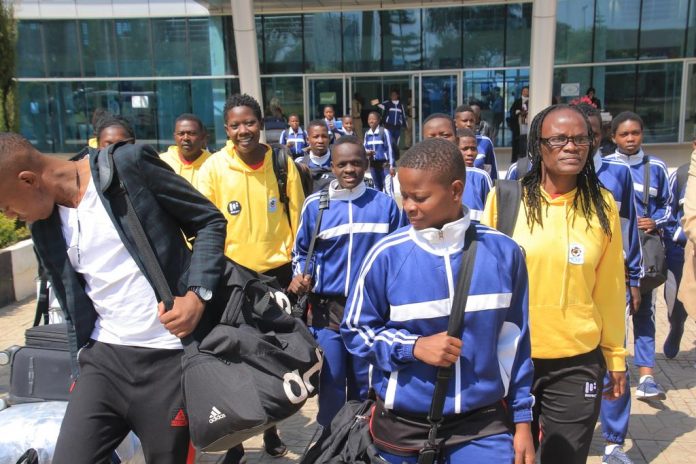
Uganda U17 national team in Ethiopia for Women World Cup qualifiers 

U17 Cranes Women's team


The Uganda U17 women National team head has arrived in Bahar Dar, Ethiopia for the return leg of the first round of the FIFA Women World Cup qualifier on Sunday 26, 2020.

The contingent will flew out of the country at 5am on Friday aboard Ethiopian Airlines.

Head coach Ayub Khalifa Kiyingi named the final squad of 18 players for the return leg and believes the girls will deliver what is required of them by beating their hosts come Sunday.

The squad is  relatively unchanged from the one that featured in the first leg in Kampala two weeks ago that Uganda won 2-0at the Star Times stadium.

The Contingent to Ethiopia 

Leader of Delegation: Chrizestom Kalibbala

Head coach: Ayub Khalifa Kiyingi

Assistant coach: Hadijja Namuyanja

Goalkeeping coach: James Magala

Team Physician: Stella Nankumba

Team Manager: Joan Namusisi

Team Media Officer: Stephen Mayamba

FUFA Officials:

Peter Atyang (Delegate- Northern Region FA)

Fairfax Johnson Nyiria (Delegate North East Region FA)

Isaac Ssengendo (FUFA staff- Kampala Region FA General Secretary)

Players

1. Daphine Nyayenga

2. Samalie Nakachwa

3. Sumaya Komuntale

4. Bira Nadunga

5. Musibika Stella

6. Kevin Nakacwa

7. Kunihira Margret

8. Shakira Nyinagahirwa

9. Juliet Nalukenge

10. Nandago Hadijja

11. Fauzia Najjemba

12. Namusisi Joan

13. Catherine Nagadya

14. Gillian Akandinda

15. Namugerwa Gloria

16. Akiror Patricia

17. Namaganda Zaituni

18. Zaina Nandede

Stories Continues after ad

You are the love of my life – Pastor Jessica Kayanja acclaims husband on his birthday

The loverbirds pour out their love in the earlier years

Pastor Jessica Kayanja, the wife to Pastor Robert Kayanja of Rubaga Miracle Cathedral, has praised her husband as the best thing that ever happened to her life.

The gorgeous Jessica was on Friday all praises on social media as she wished hubby Kayanja happy birthday. “Happy birthday to you, the Love of my life,” she wrote on her Facebook page.

“Happy Birthday to a loving Husband, an amazing father to our children and an anointed vessel. Robert, you are my counselor and yet my greatest support, my leader and yet the one who tends to serve me the most, my boss at work and yet I can still say you are my best friend,” Jessica said.

She asked God to grant her husband more years in service. “May God grant you many more years in his service and may He continue to accord you the honor of showcasing the Holy Spirit,” she posted.

Stories Continues after ad

Nagenda passes on

James Nagenda

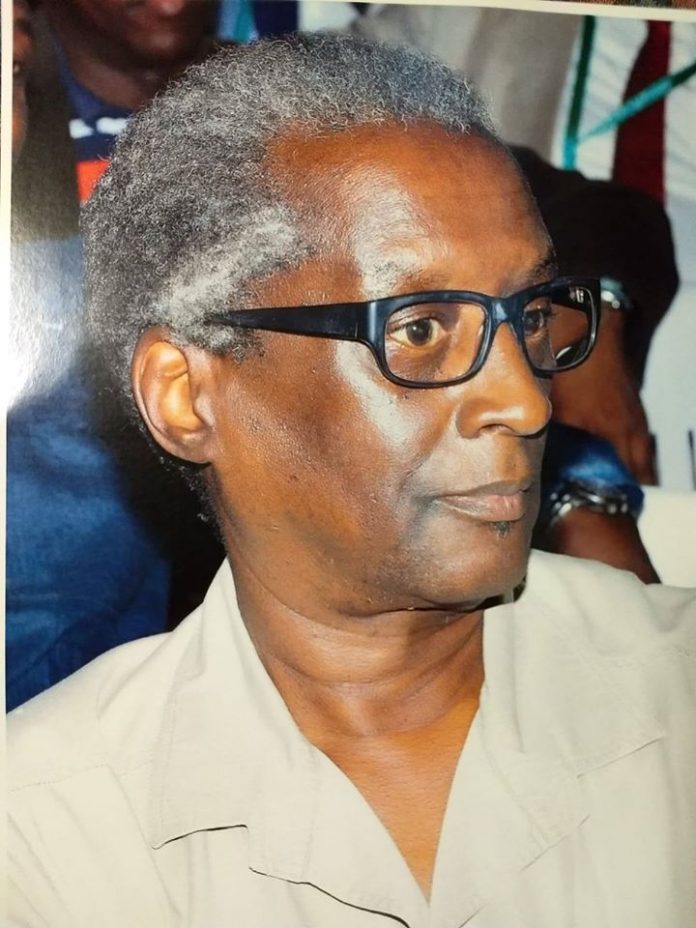
News coming in from California, USA indicates James Nagenda, brother to former Minister and Senior Presidential Press Advisor on Media Relations, John Nagenda, has died.

According to the statement issued by Ugandan North America Association (UNAA), Nagenda lost the long battle with cancer yesterday. James is survived by his wife and children.

The late Nagenda owned a newspaper, Collector in Greater Los Angeles Area

Stories Continues after ad

Dipu Ruparelia likely to win FMU presidency

dipu ruparelia

The Federation of Motorsport of Uganda (FMU) set to hold its presidential elections following the end of Dusman Okee’s term in office.

The election is scheduled to take place on February 1, 2020 at federation offices. The federation is currently led by former journalist Dusman Okee who is accused of maladministration among other accusations.

Okee defeated Jack Wavamunno by one vote in 2016 to become the FMU president.

Contestants in the hotly contested FMU presidential elections include; Ruparelia Dipu and Geoffrey Nsamba, a city lawyer and an active rally competitor, Jack Wavamunno and former president George Kagimu.

Dusman Okee is also seeking re-election for another four-year term but former rally driver Dipu Ruparelia, is the favourite to unseat the incumbent.

According to the Observer, Okee is accused for hijacking the FMU secretariat and other influential departments and singlehandedly run the federation. He has killed all the structures and virtually become the federation’s finance, audit and spokesman in the three years.

In the process of his leadership, Okee has clashed with his executives including Jeff Kabagambe (vice technical), Joseph Mwangala (secretary general), Herbert Rutagerwa (finance) and Haj Hamid Ggombe (vice administration).

In fact, Ggombe informally quit after Okee stampeded his role of overseeing major events such as Pearl of Africa Uganda Rally. While others opted to keep a low profile, Kabagambe resisted Okee’s interference.

Recently when contacted, Okee dismissed all accusations described it as malice spearheaded by his competitors.

Stories Continues after ad

Dfcu plots to force parliament delete COSASE findings as CDC fails to sell shares

COSASE chairperson, Mubaraka Munyagwa.


By Our Reporter

Dfcu is facing challenges as UK’s Commonwealth Development Corporation (CDC) Group is stuck with shares, the bank last year having announced that the British company had identified the buyer of its shares.

Indeed CDC Group identified the Danish Investment Fund for Development Countries to buy its 9.97 percent share in Dfcu but the challenge is that the Danish company wants minutes to look at minutes that okayed the transfer of Crane Bank Limited (CBL) to Dfcu by the Bank of Uganda.

The demand by the Danish Company to look at the minutes, according to sources, has forced Dfcu top gurus to look at the possibility of approaching parliament and see if they can delete one of the findings of parliament’s Committee on Commissions, State Authorities and State Enterprises (COSASE) that investigated BoU over the controversial sale of seven commercial banks between 1993 and October 20, 2016. That finding is that BoU transferred CBL assets without any minutes written, something that COSASE found unusual in the transaction of such a magnitude.

During the probe of BoU, the then Executive Director of Supervision, Ms Justine Bagyenda confirmed to COSASE that the sale of CBL to Dfcu was done over telephone and that there was no any minutes written to effect the sale. The same was confirmed by MMKAS Advocates who were the transactional advisors acting on behalf of BoU.

Sources say top managers from Dfcu want to sort of forge minutes for the sale of CBL so as to enable CDC Group transfer its share to the Danish company owned by the Danish government. It is alleged that the bank allegedly approached COSASE chairman Mubarak Munyagwa with a view of deleting the clause in the report implicating them admitting that they had no minutes. Eagle Online failed to obtained a comment from Clerk to Parliament, Jane Kibirige as she was reportedly out of the country.  Kibirige’s name has also come up in the allegations.

Another area of interest to the Dfcu group is have minutes forged at BoU so as they are exonerated from any bad undertaking and have minutes to clear the Dfcu-Crane bank transaction.

However, sources in parliament that this website talked to said DFCU’s alleged move to have the finding of lack of minutes in the sale of CBL in January 2017 will not be achieved as it is already recorded in the Hansard. “It will be hard to retract that from the Hansard,” an MP who participated in COSASE inquiry said, when asked about the possibility of removing the shocking finding.

Unlike CDC which participated in the acquisition CBL without documents, Danish Investment Fund for Development Countries is reportedly insisting on all documents surrounding the acquisition of CBL to be availed so that in future, there shouldn’t be any litigation involving the new buyer.

CDC Group didn’t want to their reputation to be associated with the scandal in which Dfcu acquired CBL as it would damage tis standing in the banking industry.

During the parliamentary probe into the closure of commercial banks by BoU, it was revealed that most banks were sold with no supporting documents.

The issue of minutes is reported to have halted the smooth transfer of the shareholding until it is resolved. Eagle Online has learnt that faced with this challenge, the board and top managers decided to call Mr. Kisaame back to handle the matter since he was the one in charge of the transaction.

The Danish fund are said to be straight that nobody at the body can convince them accept concluding the transfer.

Last year in February COSASE chased away Dfcu Bank officials from parliament for presenting documents which were unconvincing as they were not signed.

During COSASE probe, Dfcu officials led by chairman board of directors Jimmy Mugerwa who appeared before COSASE as witnesses in the closure and purchase of Crane bank, made a defense presentation in regards to the terms of purchase of Crane bank agreement, however, the presentation was backed by fake documents which were neither dated nor signed by the bank authority. However, this prompted MPs of the committee to kick them out and allow them reorganize themselves.

“It’s prudent for this committee to throw out Dfcu team because they are so confused and disorganised; they are fidgeting with their own documents. It is in the best interest that Dfcu withdraws and reorganizes themselves,” the then COSASE chairman, Abdu Katuntu said.

Some of the documents that caused the MPs to chase away Dfcu bank officials led by Chairman Juma Mugerwa and new MD Mathias Katamba included one on “Fair valued loans and advances of customers of Crane Bank Limited (CBL). The other included schedules of CBL loans and advances.

The Auditor General John Muwanga in his report on defunct banks faulted Dfcu bank for engaging in transactions that did not follow proper guidelines as it bought of CBL assets at Shs200 billion, paid in installments. Dfcu Bank also bought the assets of Global Trust Bank without following guidelines as laid in the Financial Institutions Act, 2004.

However, matters were made worse when former Chief Executive Officer of Dfcu, Juma Kisaame confirmed to MPs on the Committee on Commissions, Statutory Authorities and State Enterprises that the invite for Dfcu to come and buy Crane bank was done on phone.

Kisaame who was appearing before the committee then confirmed earlier remarks by Ms Bagyenda that she simply picked up her phone, called Kisaame to discuss matters of the liquidation of Crane Bank Limited.

Kisami informed the committee that Bagyenda contacted him on phone to come to her office where he was informed of a potential bank that they would acquire.


Stories Continues after ad

BoU made losses of Shs855b – Auditor General Report

Emmanuel Tumusiime Mutebile.

The Auditor General’s report released December 2019, has named Bank of Uganda (BoU) as the most loss-making government entity, making losses of about Shs855.585 billion.

According to the breakdown, BoU had losses grew from about Shs424.113 million in profits the company recorded in 2018.

The report authored by the Auditor General, John Muwanga says that in comparison to the previous year, 13 enterprises posted improved (increased profits or reduced loss) performance, with Uganda Electricity Generation Company, Uganda Property Holding and Civil Aviation Authority registering over 300 percentage increase.

Meanwhile, Uganda Development Corporation (UDC), Uganda Air Cargo Corporation and Bank of Uganda posted losses for the year from profit positions in the previous year with a reduction in performance of over 300 percent.

UDC made losses of Shs17.571 million from the Shs383.820 million profits the company made, while Kilembe Mines Limited maintained extended its loss-making streak in 2019 with Shs2.321,001,684 losses recorded an increment from Shs1,624,302,143 losses in 2018.

Other companies that recorded losses were Capital markets Authority (CMA) which made loss of Shs43,833,000, although this was a reduction from Shs1,330,205,000 the company made in 2018 and the other loss-making company was NEC Tractor Project whose losses soared to Shs389,305,722 up from Shs70,636,203 recorded in 2018.

Stories Continues after ad
Ericsson raises dividend 50% as profits improve, margins on track

Ericsson

Ericsson announced a 50 percent increase in its dividend to SEK 1.50 per share, after reporting full-year results it says are on track to meet its medium and long-term targets. For the fourth quarter, the company posted sales up 4 percent to SEK 66.4 billion, and the adjusted operating margin more than doubled to 9.7 percent, close to its target of 10 percent for 2020.

Adjusted for comparable scope and currency effects, quarterly sales rose 1 percent and annual sales were up 4 percent.

Ericsson said a reduction in North America in Q4 due to uncertainty over the T-Mobile merger with Sprint was compensated by growth in other markets, primarily in the Middle East and North East Asia. The main Networks business posted an adjusted gross margin of 41.1 percent, similar to 41.0 percent a year ago, while the adjusted operating margin fell to 14.5 percent from 17.5 percent.

Stories Continues after ad

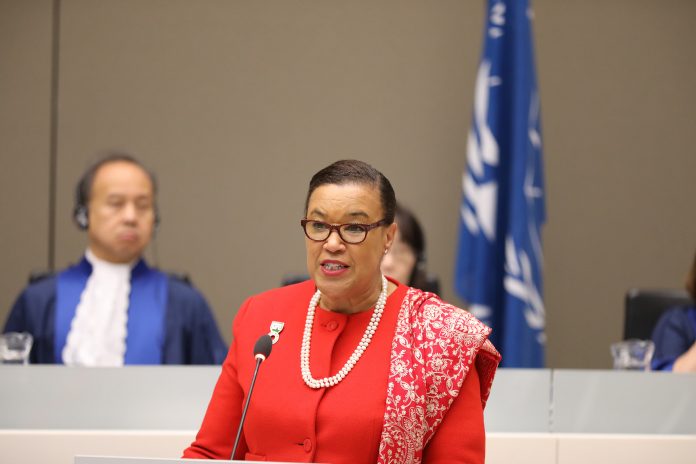
Commonwealth Secretary-General tells The Hague there can be no lasting peace without justice

Patricia Scotland

Lasting peace and the prosperity that comes with it cannot be achieved without justice, the Commonwealth Secretary-General has declared, during a keynote speech in the Hague.

Patricia Scotland was addressing the International Criminal Court (ICC) as guest of honour for the opening of the new judicial year.

The distinguished lawyer and former Attorney General in the United Kingdom explained how a fair justice system is an indispensable precondition for democracy, adding that systems must be trustworthy and accessible if they are to be effective.

She said: “That is why building strong public institutions capable of delivering sustainable, democratic development, has always been central to the work of the Commonwealth.”

She added: “Whether justice is delivered through the International Criminal Court, domestic courts or other mechanisms, lasting peace is virtually impossible to attain without justice.

“Our Charter expresses it clearly – international peace and the rule of law are essential to the progress and prosperity of all.”

She highlighted how countries can enshrine recognition of international law in their domestic legislation as an important step towards increasing access to justice.

Praising the important role in promoting peace and security that the ICC plays, she said: “Commonwealth nations seek to realise their commitment to increasing access to justice. We realise that we need to keep in mind the victims of offences such as war crimes, crimes against humanity and genocide.

“The ICC was not designed to hear from all victims of these crimes, so it is crucial for domestic justice systems to be equipped to provide some form of redress.

“The inclusion of international crimes in domestic law represents an important step in this process, to be followed then by effective prosecution.”

The Secretary-General outlined how the Commonwealth assists member countries in meeting their international obligations.

The Rome Statute, the treaty adopted in 1998 that established the ICC, has been ratified by 36 of the 53 Commonwealth countries – more than 60 percent of members.

The Commonwealth has developed a model law to assist further implementation of the Rome Statute, while extensive experience in legislative drafting and law reform can also help countries include international crimes in their domestic laws.

The Secretary-General also spoke on other elements of the Commonwealth’s long-standing programme of work to strengthen public institutions.

This includes curbing corruption through the development of anti-corruption benchmarks that will be presented to heads of government for endorsement at their next meeting in Rwanda in June this year.

She added: “The benchmarks address the importance of combating corruption in the court system and enabling the judiciary to operate effectively and independently.”

Stories Continues after ad

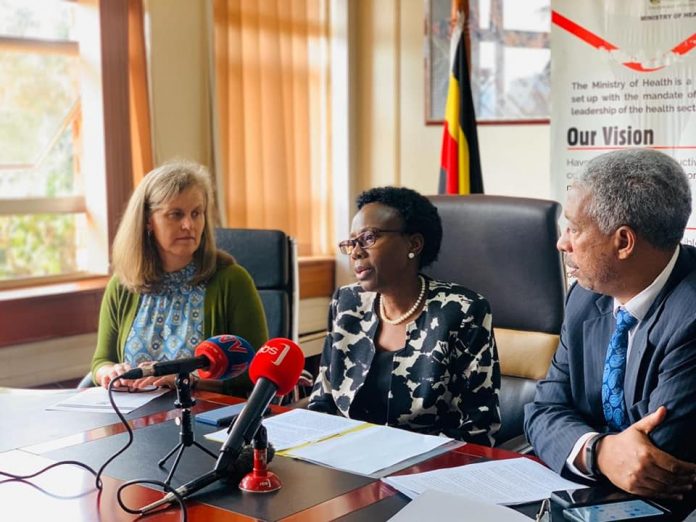
Health ministry issues alert on Yellow Fever outbreak in Uganda as three die

Dr Ruth Jane Aceng, Minister of Health

The Ministry of Health has confirmed an outbreak of Yellow Fever in Moyo District in West Nile region and Bulisa District in Hoima region, with three deaths already reported in West Nile and Western Uganda.

According to the Minister of Health Dr Jane Ruth Aceng, in Moyo District, there are two confirmed cases of males aged 18 and 21 years. The two cases were dealing with cutting and trading timber between Uganda and South Sudan. They travelled from South Sudan to Moyo on January 2, 2020.

“Upon arrival, they got ill and on 3 January 2020, they were admitted at Logobo Health Center III in Moyo District. They were later referred to Moyo General Hospital with symptoms of fever, vomiting, diarrhea, fatigue, headache, abdominal and joint pain, confusion and unexplained bleeding.
Unfortunately, they later died in the isolation ward of Moyo General Hospital. Blood samples were withdrawn and sent for testing at the Uganda Virus Research Institute (UVRI). Results from UVRI confirmed Yellow Fever infection,” Minister Aceng said on Friday.

Aceng said  a 37-year old male and his 38-year old wife also got attacked by the disease. The husband was a cattle farmer trading in milk between Uganda and the Democratic Republic of Congo (DRC). On 31 October 2019, he visited Buliisa Hospital with a headache, vomiting, and abdominal pain and received supportive treatment. He died on 4 November 2019 at Buliisa Hospital. At this time, there was little suspicion, however, his blood sample was withdrawn and sent to UVRI for testing,” she said.

She said On December 10, 2019, the sample tested positive for Yellow fever virus, prompting health teams to follow up with investigations. Samples, she said were collected from seven of his contacts, including his wife. “On 22 January 2020, the wife tested positive for Yellow Fever virus. The other 6 samples tested negative. She is alive and well.”

The minister said district health teams of Moyo and Buliisa have initiated investigations. In addition, she said, the Ministry of Health and the World Health Organization (WHO) have dispatched Rapid Response Teams to Moyo and Buliisa districts to support investigations, active search for cases, community mobilization and sensitisation.

The Ministry of Health has requested for the Yellow Fever vaccines from the International Coordination Group that manages Global Stockpiles of Yellow Fever and Meningitis vaccines. We anticipate that within the next two weeks, vaccines will be available and vaccination will commence in Moyo and Buliisa districts.

Appeal to GAVI and WHO
She said her ministry has also applied to GAVI and WHO for inclusion of the Yellow Fever vaccination into the routine immunisation schedule. “Having faced four outbreaks, Uganda now qualifies to introduce the Yellow Fever vaccine as a long term measure to prevent Yellow Fever outbreaks,” she said.

Yellow fever is a disease transmitted through bites of mosquitoes infected by the Yellow Fever virus (flavivirus).

Symptoms

Symptoms include high fever, headache, general body aches, fatigue, vomiting, blood in urine or stool and or yellow discolouration of skin and or eyes.

Prevention
The Ministry of Health appeals to the general public to observe the following:
All travellers in and out of the country MUST be vaccinated against Yellow Fever.

Travellers are urged to comply with this travel requirement to ensure that the risk of spread of yellow fever through international travel is minimized.

The population is advised to always sleep under a mosquito net. Report any suspected cases to the nearest health facility.

“The Ministry of Health re-echoes its call to the public to cooperate with officials during the investigation and response to the outbreaks. The Ministry would also like to re-assure Ugandans and all other residents that with the experience and expertise available in the country, the disease will be contained.
We appeal to the public to remain calm and vigilant and report any suspected cases to the nearest health facility or call our toll-free number 0800-203-033,” she said.

Stories Continues after ad

MPs disagree on the proposed panel of speakers

Hon Niwagaba(C) presented his proposals to the committee. He was accompanied by the LOP, Hon Aol Ocan(R) and Hon Sseggona

Legislators on the Committee of Legal and Parliamentary Affairs are divided on the proposal within the Constitutional Amendment Bill, 2019 to establish a panel of speakers saying it is unclear as has potential to cause discord in the leadership of Parliament.

The bill moved by Ndorwa MP, Hon Wilfred Niwagaba proposes a panel of three  speakers to assist the sitting speakers of Parliament in transaction of Parliament’s business arguing that it is tiring for a Speaker to chair the House for more than six hours as is the case currently.

“The Speaker and Deputy Speaker are human beings like any other person on earth. They get different engagements and also become exhausted; they need time to refresh yet Parliament’s business should not be affected,” said Hon Niwagaba.

Niwagaba made his proposals while was appearing before the Legal and Parliamentary Affairs Committee on Thursday, 23 January 2020.

He said that the speakers being proposed would be at the level of parliamentary committee chairpersons, and thus would not attract an extra charge on the consolidated fund.

“This proposal is intended to have specified persons as members of Parliament who can be called upon to assist the speaker when need arises” said Niwagaba.

This sparked dissenting views among legislators with a section of MPs rejecting the proposal that speakers would simply be called upon to chair sessions as and when need arises.

Hon Jovah Kamateeka (Mitooma District) said that the decisions made by these speakers would be doubted.

“Will the decisions of such speakers who are not facilitated financially and simply called upon to chair sessions be taken seriously?” she asked.

The Chairperson of the Committee, Hon Jacob Oboth Oboth said that  it was ‘unattractive’ to have a constitutional amendment if the proposed panel is to be selected from committee chairpersons when need arises.

Bugweri County MP, Hon Abdu Katuntu rejected the proposal on the election of a panel of speakers saying it would cause discord in the leadership of Parliament.

“The speaker needs a panel she can closely work with; don’t bring this into elections.  It will be another problem in the leadership of Parliament,” Katuntu said.

To allay the fears of legislators, Niwagaba said the aim of the bill is to introduce a panel of speakers in the Constitution and have details such as qualifications of the speaker, the way they will run business debated on a later stage and enclosed in Parliament’s Rules of Procedures.
The bill also proposes expansion of the category of the citizenry that can challenge a presidential election.

If the bill is passed into law, any voter who can gather 100 signatures from 2/3 of districts in Uganda is liable to challenge the presidential elections.

Stories Continues after ad