Stanbic Bank
Stanbic Bank
18.7 C
Kampala
Stanbic Bank
Stanbic Bank
Home Blog Page 1094

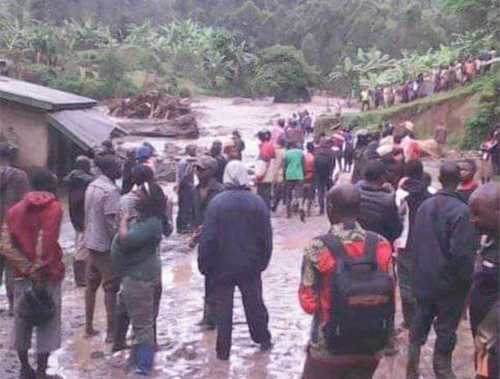
U.S. govt offers relief support to communities affected by floods and landslides

Bududa landslides

The U.S. government has offered US$ 100,000 in response to the needs of disaster-affected people in Uganda as a result of extensive flooding and landslides.  The Government of Uganda has requested international support.

Heavy rains and flooding that began in September 2019 have negatively impacted nearly 300,000 people across Uganda.  The immediate needs of affected populations include blankets, shelter materials, soap, jerrycans, mosquito nets, medicine to treat water- and vector-borne disease, and food assistance.

According to Information Assistant, U.S. Mission Uganda, Dorothy Nanyonga, the United States Agency for International Development (USAID) in Uganda is awarding the international disaster assistance funds to Catholic Relief Services (CRS) to support over 1,000 flood-affected individuals in the Rwenzori sub-region.

“Through the USAID award, CRS will provide emergency shelter, water, sanitation and hygiene (WASH), and non-food items to communities with the greatest need in Bundibugyo.”

To ensure the U.S. assistance targets the most vulnerable households, CRS will coordinate with local government officials and affected communities and consult with marginalized groups such as women, children, persons with disabilities, and the elderly to adapt programming to their specific needs and challenges.

They will work with a local sub-partner, Caritas, to implement activities, with the secondary aim of strengthening Caritas’ capacity to respond to reoccurring disasters.

USAID will continue to liaise with the Ugandan government and relief agencies to determine the type and amount of potential additional assistance.

Stories Continues after ad

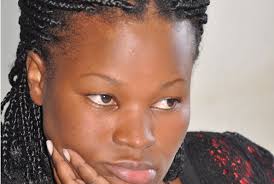
Late Cerinah Nabanda’s mother threatens to sue former minister Nantaba over defamatory utterances

Idah Nantaba

The mother to the former Butaleja Woman MP, the late Cerinah Nabanda, has threatened to sue former state minister of information and communication technology (ICT), Aida Erios Nantaba over blatant blackmail and defamation utterances.

On Tuesday, Nantaba said that the mother to late Cerinah ,Alice Namulwa Mukasa told her that the killers of her daughter were out to end her life. The controversial MP said she received a phone call from Cerinah Nebanda’s mother and told her (Nantaba) that you are going to be killed by the same person who killed my daughter.

Nebanda died in 2012 and her death at the age of 24 sparked off political controversies in the country. A government chemist’s post-mortem report stated that cocaine, heroin, alcohol, and several other chemicals were found in Nebanda’s blood, intestinal tract, and tissue samples. At Nebanda’s funeral, however, Speaker Rebecca Kadaga rejected this report.

“Indeed I am very certain that you know very well that I have never in my life telephoned you, neither have I ever had any connection dealings with you whatsoever . For that matter, I cannot and will not be party to your renown continued immature political gimmicks,” Cerenah’s mother, Alice  told journalists.

She urged the MP to retract blackmail utterances both in electronic and print media and on the floor of parliament in any case not later that Tuesday 28th January 2020. Failure to do that, Namulwa said she will instruct family lawyers to take legal action against her (Nantaba).

When contacted, the MP said there is evidence from telecom companies and ‘watch the space’.

Stories Continues after ad

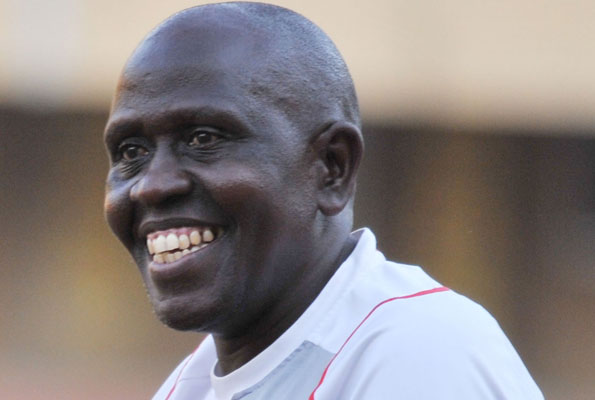
Edward Golola sacked as Vipers head coach

Edward Golola

Edward Golola has been sacked by Vipers SC after a shock defeat to Kajjansi United in the Stanbic Uganda Cup.

A statement on the Vipers weboste read: “Vipers sports club announces that head coach Edward Golola and his entire technical team have been relieved of their duties with immediate effect.

“The club would like to thank Golola and his team for their work during their time at Vipers SC and to wish them success in the future.

“A caretaker technical team will be appointed until the end of the current season, while the club conducts a thorough recruitment process for a new, full-time coach.”

Stories Continues after ad

Five crowdfunding approaches to tempt every entrepreneur

Martin Zwilling

By Martin Zwilling

Even if you ignore all the hype around crowdfunding, there can be no doubt that it is a real alternative for entrepreneurs to achieve visibility and funding today. According to a recent article on Thrinacia, there are now aver 600 crowdfunding platforms in existence, currently estimated to add more than $89 billion to the economy at a compound growth rate of 17% from 2019 to 2022.

Yet as I mentor entrepreneurs around the country, it still seems to be one of the least understood approaches to startup funding, with more myths than accredited angels and professional venture capital investors combined. The primary challenge seems to be that the crowdfunding term is used to encompass so many different concepts that everyone is confused.

In fact, perhaps the most important model, equity crowdfunding for non-accredited investors was only legalized via the SEC in 2016, so its impact is still in the early stages. Even with this, crowdfunding today means any one of the following five quite different models:

Rewards model. Many platforms, such as IndieGoGo, allow startups to solicit funding commitments from non-professional investors in exchange for a pre-defined reward or perk, such as a T-shirt or other recognition, but no ownership in the company. The crowd gets the satisfaction of helping, with minimal risk, and no expectation of any high return.

Product pre-order model. With this model, a startup pre-sells their product early, at a cheaper price, in exchange for a pledge. A much-touted early success was the Pebble Watch on Kickstarter, now owned by FitBit, with advance orders exceeding $10 million. Of course, there are thousands of other companies that don’t achieve their minimum goal, requiring all contributions to be returned.

Donation good-cause model. This model facilitates donations to charities and creative projects, and has been around for a long time via sites such as GoFundMe. No startup ownership or financial return should be expected, but contributors can enjoy the satisfaction of furthering non-profits or causes with a passion to change the world.

Interest on debt model. In this model, often called micro-financing or peer-to-peer lending (P2P), people contribute with the intent to create a pool for all to borrow against. This model been popular in many countries for years, where banks loans are not available, via sites such as LendingClub and Kiva. The allure is the ability to get small loans easily, or excellent returns from the interest, but the risks are high.

Startup equity model. In the U.S., only accredited investors can use crowdfunding sites such as EquityNet to buy ownership in their favorite startup. In Europe, other investors can buy equity, with platforms such as Seedrs. Equity investing is very risky, but huge returns are possible if you pick the next Facebook, but failure means your entire investment is lost.

Beyond these models, the crowdfunding term is often used interchangeably or confused with crowdsourcing idea and open source development sites, such as BrightIdea, to get your ideas off the shelf and give you the wisdom of the crowds, or IdeaScale to facilitate the outsourcing of application development in an open source call to others on the Internet.

Other popular sites for startups, including StartupNation and Startups.co are not for crowdfunding, but actually are matchmaking sites between entrepreneurs and professional investors or banks, or incubators. These sites often sponsor pitch contests with small cash prizes for funding, as well as other valuable services to support entrepreneurs.

In fact, entrepreneurs can and do gain from any and all of these approaches, either by achieving some funding, or at least testing their approach and the level of public interest in their startup idea. Smart entrepreneurs often learn the most from their failures, using the feedback to pivot their solutions before squandering a large investment from friends, angels or VCs.

Concurrently, I am seeing an upswing in the number of entrepreneurs and startups, with the cost of entry at an all-time low, and the new focus on entrepreneurship in every university and every community development organization. Since there is never enough money to feed the startup beast, I don’t see crowdfunding replacing or crowding out angels or VCs in the near future.

The Writer is a veteran startup mentor, executive, blogger, author, tech professional, professor, and investor. Published on Forbes, Entrepreneur, Inc, Huffington Post, etc.

Stories Continues after ad

Justice Gaswaga hands over office to Judge Wolayo

The outgoing head of the Executions and Bailiffs Division, Justice Duncan Gaswaga has formally handed over the reins of the Division to Justice Henrietta Wolayo.

In his handover report, Justice Gaswaga highlighted some of the Division’s achievements since he assumed office one and half years ago. These included; securing spacious office space, organising the archives and registry and establishing the court users committee.

Others included securing partnerships with development partners such as SUGAR-TAF, JLOS, LASPNET, IJM; weeding out exercise that saw 947 cases resolved in 2019, initiated monthly meetings of bailiffs, trainings; and supervision of their offices and warehouses and procuring furniture, installation of CCTV cameras, biometric system, court recording and other equipment, among others.

He said that funds had been secured for engaging and training bailiffs and for holding the Division’s first open day.

He tlauded the Judicial Officers and staff at the Division for the assistance rendered to him and wished his successor a successful stay.

Lady Justice Wolayo pledged to further the good work of her predecessor. “I intend to build on those reforms,” she said, adding that disappearance of files won’t happen under her watch.

Stories Continues after ad

Increase public involvement in legislative processes – Law don urges parliament

Dr Busingye

Makerere University law professor has called for the establishment of platforms for the public to take part in legislative and accountability processes that are carried out by Members of Parliament (MPs).

According to Dr Kabumba Busingye, Parliament is a reflection of the society which calls for the input of the persons who vote and send legislators to represent them. “If you get a Ugandan on the street and ask them if they know the roles of a Member of Parliament, very few of them will mention debating and passing bills. They will say an MP is supposed to provide for their welfare, which is not the case,” Busingye said.

He added that the path to democratisation would be difficult owing to the fact that society has its own conceptions of how legislators do their representative role, which is majorly misconstrued.

Busingye made the remarks at a Stakeholders Debate on Wednesday, 22 January 2020. The debate is part of the Parliament Week activities.

Irene Ikomu, a lawyer involved in advocating for good governance and democracy in Uganda lauded Parliament for taking itself closer to the public especially through the newly launched bill tracking mobile application and called for more involvement. “A good place to start in trying to understand how to enhance participation of citizens is to ask what the public really need in terms engagement and participation; and who does Parliament see as the public,” Ikomu said.

She also suggested that journalists ought to get information from complicated debates and break it down for citizens to understand.

The Government Spokesperson, Ofwono Opondo urged the civil society to stop telling half-truths on democracy and legislation in Uganda which he said misleads the public. “Government always admits its problems and challenges and comes to such dialogues to seek solutions,” Ofwono Opondo said.

MP Jacob Oboth Oboth who represented the Speaker said that such debates were healthy for resolutions to be made. “Does Parliament have an intention and if we do, does the public appreciate that intention? This is the bridge being built so that you come closer and appreciate what the institution does,” Oboth said.

The debate was also attended by Members of Parliament, FDC Party President, Patrick Amuriat, community leaders, student leaders and members of the public.

Stories Continues after ad

Uganda set to host Africa Water Association International Congress & Exhibition 2020

NWSC Managing Director Dr. Eng. Silver Mugisha is the president of the Congress

Uganda through the National Water and Sewerage Corporation will next month host the 20th Africa Water Association (AfWA) International Congress & Exhibition (AfWA ICE).

The four-day event, which will run under the theme: Breaking grounds to accelerate access to water and sanitation for all will gather researchers, policymakers and various executives to discuss how the continent can solve problems of water scarcity and stress, through innovations and diplomatic efforts.

According to officials, the event will be held at Kampala Serena Hotel’s Conference Centre from Feb. 24-27.

The conference is hosted every two years.

The 19th AfWA ICE was held in Bamako, Mali in February 2018 and that’s when it was decided that Kampala becomes the next host.

NWSC executive director Dr. Eng. Silver Mugisha is the president of the Congress.

The African Water Association (AfWA) is a professional association of establishments, enterprises and utilities operating in the areas of drinking water, sanitation and environment in Africa.

Sub-Saharan Africa suffers from chronically overburdened water systems under increasing stress from fast-growing urban areas.

“Weak governments, corruption, mismanagement of resources, poor long-term investment, and a lack of environmental research and urban infrastructure only exacerbate the problem,” argues Christopher Tatlock in a blog post on Cfr.org.

Experts define water stress as “economic, social, or environmental problems caused by unmet water needs”.

Lack of supply is often caused by contamination, drought, or disruption in distribution.

The Joint Monitoring Programme for Water Supply and Sanitation set up by the World Health Organization (WHO) and United Nations Children’s Fund (UNICEF) defines safe drinking water as “water with microbial, chemical and physical characteristics that meets WHO guidelines or national standards on drinking water quality.”

Sub-Saharan Africa had the largest number of water-stressed countries of any other place on the planet and of an estimated 800 million people who live in Africa, 300 million live in a water-stressed environment.

It is estimated that by 2030, 75 million to 250 million people in Africa will be living in areas of high water stress, which will likely displace anywhere between 24 million and 700 million people as conditions become increasingly unlivable.

In Uganda, numerous efforts are being taken to address the problem of unsafe water.

For instance, NWSC announced that it will soon be commissioning the first and biggest plant in East and Central Africa using dissolved air flotation water treatment technology.

It is being constructed in Katosi and it will be using AquaDAF and AquaZur water treatment technologies, officials revealed.

NSWC Senior Manager Infrastructure planning and Development Eng. Sulum Taremwa said they are now moving away from the traditional treatment of water by sedimentation to the use of dissolved air floatation, in order to deal with the problem of increasing algae on Lake Victoria.

Stories Continues after ad

Harnessing Africa’s Potential: The Uganda Example

President Museveni

By Yoweri Kaguta Museveni

I am pleased, to be part of the Africa Leadership Magazine Dialogue (ALM) 2020, in London. I wish to thank Dr. Ken Giami, the Chief Executive Officer of Africa Leadership Magazine, for inviting me to deliver a keynote address, on this important occasion. The topic: Harnessing Africa’s Potential: The Uganda Example” has been central to my various efforts, for the last 60 years, as an active participant on the political scene of Africa’s journey to socio-economic transformation and in particular, Uganda.

I thank you for giving me the award for leadership.  Leadership, to succeed, must be collective. It is true, that for 60 years now, I have been in leadership roles as a student leader (1960-70), a resistance leader (1971-86) and a State leader from 1986 upto today.  In all those 60 years, one of my primary tasks was to transform the traditional life-style of the Ugandans (from obujajja to modernity). I could not have had any impact if I did not always work with colleagues, many of them, perishing in the struggle or departing this world since. Those who died in the struggle included: Raiti Omongin, Natolo-Masaba, Martin Mwesiga, Mwesigwa Black, Valerian Rwaheeru, Kahuunga-Bagira, Joy Mireembe, Mukomboozi, etc.

It is the sacrifice of those comrades and the millions of our followers that enabled us to achieve what we achieved. Stand up, please, to salute the contribution and memory of these comrades.  There is no doubt, that the NRM and its pre-cursors (Fronasa, the study groups) rescued Uganda from total collapse.  We did it by a correct diagnosis.  Our diagnosis was that man, in the last 600 years, had acquired scientific tools, that helped him to perform the mandate given to him by God, in the Book of Genesis (Chapter 1:26) ─ “to establish dominion over nature.  In other-words, control the floods, cope with drought through irrigation, deal with disease, detect and mitigate the consequences of earth-quakes, etc.  Moreover, do all this using machines that produce on a large scale alot of goods and services efficiently.

It is this capacity accompanied by man in the last 600 years that is now being called the 3 Industrial Revolutions. By 1960, when I started following global events closely, the more enlightened parts of the globe had gone through the 2 Industrial Revolutions and were entering the 3rd.

The big problem we noticed was that, for a number of reasons, mainly internal weaknesses with in Africa, this enhancement of human capacity had by-passed Africa.  Africa was backward scientifically and also sociologically.  Mass production in Europe had restructured the European society and given birth to new social classes that never existed before: the middle class (the bourgeoisie) and the working class (the proletariat).  This was in addition to the old feudal, peasant and artisan classes.  Given the huge size of Africa, 12 times bigger than India, 4 times bigger than China or the USA, also given the under-population of Africa, this crisis was not easy to see.

After all, people were eating, sleeping, etc. It was, however, a crisis we noticed and started exposing.  Given the sociological backwardness of the society, philosophical and political ideas were also backward ─ emphasizing identity of tribe and religion rather than interest ─ e.g. the markets.  Who will buy what I produce?  How can this be a serious problem if you are only producing a few goats that graze on one hill?

Since that time, our prescription was to fight the sectarian ideas of identity, emphasize patriotism (unity within Uganda), pan-Africanism (unity in Africa), social-economic transformation (sociological leap) to create a middle class and a skilled working class and to deal with global players on equal and mutually beneficial terms through trade, investments and tourism.

It is those four pillars of our social-political diagnosis and prescription that formed the base of our ideology and strategy.  These are: Patriotism, Pan-Africanism, Social-economic transformation and Democracy.  This means that we banish sectarianism of religion and tribe and gender-chauvinism against women because they do not address the crucial modern issue of market. The one who buys what you produce supports your prosperity. Therefore, there must be no sectarianism in Uganda because it fragments our market.  Moreover, even the Ugandan market is not enough.  We need the African market.  Hence, Pan-Africanism is core to our programme.  With a united African market, we can negotiate for access to other markets of the USA, China, India, Russia, Japan, etc.

This is how you can talk of “harnessing Africa’s economic potential”. Once you deal with the ideology, the diagnosis and prescription, you must deal with the strategy now:  How do you administer the prescription?  This is how you come to the other strategic bottlenecks that are not part of the primary diagnosis. All the bottlenecks are 10. However, ideological disorientation and market integration are also part of the 10 bottlenecks. The other bottlenecks are: lack of education, a weak State (Army, etc.), mishandling the private sector, under-developed agriculture, undeveloped services sector, etc.

We cannot modernize the economy for instance, if we do not solve the problem of infrastructure. High electricity costs, high transport costs, etc., cannot allow the economy to grow. By addressing the diagnosis issues (ideology and prescription) and by addressing the bottlenecks, the economy of Uganda has been able to grow at the rate of 6.3% per annum. This was even before we addressed some of the bottlenecks.  Now that we are addressing almost all the bottlenecks, the economy will grow faster and transform completely. We already have proto types of our own indigenously designed cars, buses and min-buses.  Our scientists have got quite a bit of patents for inventions.  We are continuing to share our views with other African leaders and the vision of Africa is continuing to coalesce for a united and modernized Africa that will close the 600 years gap of Africa’s lagging behind.  The potential of Africa is huge and it has always been there.  The population of 1.3billion people, 12 million square miles of land area is 12 times the size of India and 4 times the size of China or the USA. We have resources of every kind. The only problem has been social-political organization and the consequent social-economic organization ─ e.g. subsistence farming versus commercial farming; exporting raw-materials versus value addition; etc., etc.

Finally, I am very happy to be here with the Royal Geographical Society. It was, actually, the Royal Geographical Society that sent out Hannington Speke in 1862 to come to Uganda, HM Stanley to come to Uganda in 1874 and HM Stanley to come to Uganda, again, in 1887/9 to rescue Emin Pasha.  These inquisitive persons were able to link us with the outside world for the first time.  The first non-black person to get to Uganda was an Arab man, known as Ibrahimu, who got to Uganda in 1841.  Otherwise, our people had never seen a non-black person.  I do not know the original motivation of the Royal Geographical Society. However, that link up led to the opening up of Africa. I salute you and commend you.

Stories Continues after ad

How potatoes and cassava helped Museveni shed 30kg

President Museveni after shedding off weight

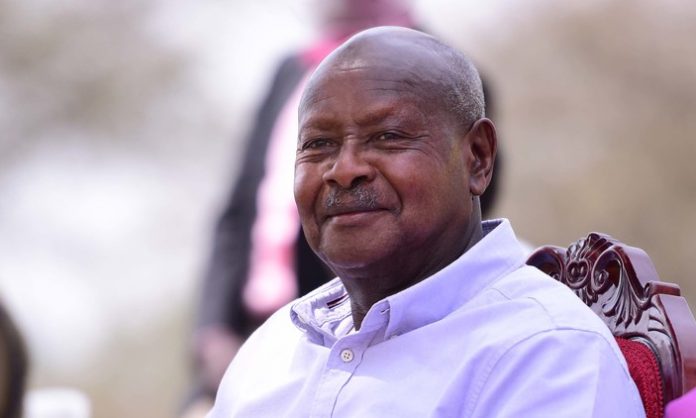
A diet of cassava, Irish potatoes and indigenous vegetables helped Uganda’s President Yoweri Museveni shed 30kg (4 stone), he told the BBC.

“I am always fit but the doctors pointed out the mistakes and then I decided to shed off,” Mr Museveni said.

The 75-year-old leader said he had not been watching his weight, which had gone up to 106kg.

He denied comments on social media that he “looked tired”, saying that he had deliberately shed some fat.

In his personal blog last month, he said he “had allowed fat to accumulate in his body frame because the doctors had not explained to us clearly the mistake of not fighting fat”.

He added that his current weight of 76kg was suitable for his 5ft 7in (170cm) height.

Mr Museveni did not say how long it took him to shed the 30kg.

“I eat some cassava, because I don’t eat your European food and your Asian foods. I eat our food; which is cassava, some bananas, millets and our vegetables,” Mr Museveni told BBC Newsday presenter Alan Kasujja.

“So I normally eat a little bit of that in the morning. Then no lunch, I just drink water and coffee without sugar because it’s very bad – sugar is not good,” he said.

“Then at around seven [in the evening] I eat two Irish potatoes because they have got low starch, and a lot of vegetables to deceive the stomach that I am putting there something when in fact it’s just the roughage,” he added.

Presentational grey line

How healthy is Museveni’s diet?


It is hard to assess President Museveni’s diet without knowing the quantities involved.

However, cutting down on sugar is certainly advised if weight loss is the aim.

And going without lunch presumably means that, overall, he is eating less and if there are more locally-grown vegetables in his diet, that is also a change for the better.

Potatoes and cassava are packed full of carbohydrates and fibre – an essential part of any diet, although they are not normally associated with losing weight.

In 2015, he said that then US President Barack Obama told him during a meeting in Ethiopia that he looked young.

“I forgot to tell him that it’s because I eat Ugandan grown foods,” Mr Museveni said.

He has advised Ugandans several times to shun Western foods for local ones, which are, according to him, healthier and also stave off diseases.

Mr Museveni has been in power since 1986 and plans to run for a sixth term in 2021.

Pop star-turned politician Bobi Wine, 37, plans to run against him.

Two weeks ago Mr Museveni walked 195km (121 miles) through central Uganda to retrace the journey his forces used in 1986 when they seized power after the fall of Milton Obote’s government.

Stories Continues after ad
Standard Chartered and Uganda Bankers’ Association in campaign to combat Cybercrime

Standard Chartered Bank

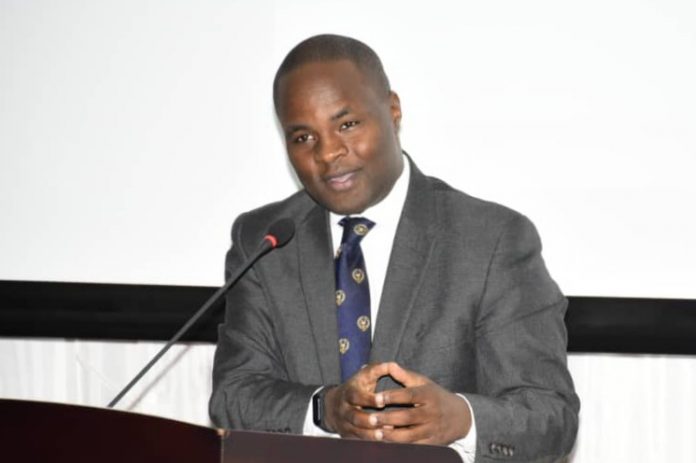
Standard Chartered Bank Uganda in partnership with Uganda Bankers’ Association (UBA) on Wednesday spearheaded industry discussions on Information and Cyber Security (ICS) as a principal risk arising from the digital and technology revolution that aims at boosting service delivery to clients of banks.

The session held at Golden Tulip Hotel in Kampala was attended by local banks’ heads of operations, heads of information technology, and heads of compliance, heads of risk management and audit departments as well as the media.

The session also attended by government representatives was held to make banking industry players understand the global and local trends in ICS, discuss the emerging regulations and learn how to build a Cyber Secure culture within the local banking industry which of recent has seen rising cases hacking into ATMs and banks’ systems, with hundreds of millions of shillings lost.

Speaking to participants at half-day session, Standard Chartered Uganda CEO, Albert Saltson, said his institution takes ICS as a key risk and has put in place dedicated initiatives to identify, respond to and protect the bank from the Cyber security risks.

Saltson said Cybercrime w is a growing threat to everyone and corporations and they have created dedicated forums and resources to discuss the ICS risk and find ways to mitigate it.

“We have taken this step to spearhead industry discussions in partnership with Uganda Bankers’ Association and other stakeholders on this important topic as part of our commitment to share our knowledge, expertise and best practice within the Ugandan market,” he said.

He said Stanbic Bank Uganda team have the advantage of learnings from the bank’s network and believes adds value to the Uganda Banking sector. “We will continue to premise our services proposition to our clients on the provision of high-quality service to remain trusted and reliable business partners to them.

He said they would continue to study and …understand the local operating environment, manage any emerging risks and support the sector.

UBA CEO Wilbrod Owor, while addressing participants, said investment in digital solutions comes with risks associated with electronic connections to clients and others. “ICS risks have never been greater and the consequences of failure more impactful for our clients and our firms. We are therefore pleased to partner with Standards Chartered Bank to share knowledge and experience of Information and Cyber Security with us,” he said.

Owor said over 90 per cent of Ugandans are Cyber insecure, which he said calls for information sharing to combat Cybercrime, which he said is growing in complexity.

“I appeal to financial services sector to understand the risk environment, be security cautious and vigilant around cyber risk events,” he said.

John Jonathan Kwofie, Regional Head Business ICS at Standard Chartered Bank said emerging ICS threats present themselves in different ways such as: Denial-of-service attacks, data espionage, natural threats, sabotage, computer frauds, malicious attacks, message falsification or injection, vandalism and copyright violations, among others.

“It is also envisaged that as technologies advance, a resultant proliferation of cyber threats will be witnessed. The recent ATM frauds and system hacking attacks that we have witnessed in the Ugandan market are a clear indication that Cyber risk is already here with us so we nee3d to move ahead of the culprits.

Leah Kimata, the Country ICS Officer at Standard Charted Bank Kenya said the annual cost of cybercrime damage is estimated at US $6 trillion by 2021 and beyond. “I therefore appeal to all stakeholders including, government, financial and non-financial institution and other organisations to strategically plan and implement structures and technologies to help in combating cyber threats,” she said, urging banks to build a security culture conscious amounts their staff and that the role of security cannot be left to concerned heads of department.

Head of Legal and Compliance department at National Information Technology Authority (NITA), Caroline Akello Mugisha, said Cybercrime is real in Uganda and urged banks and other institutions to read and understand related laws and policies such as the Computer Misuse Act, 2011, National Information Security Framework, though he said penalties in Computer Misuse Act are not deterrent enough.

Edward Mugerwa, Bank of Uganda IT  Director said Cybercrime in Uganda needs collaboration amongst stakeholders at the bank together with UBA are working to have a Security Operations Centre (SOC) where banks can share information related to cyber-attacks.

Dr. Dorothy Okello, a member of Standard Chartered Bank Uganda board of directors appreciated the bank and UBA for coming with the imitative to fight cyber threats within the banking industry.

Standard Chartered Bank has organised stakeholder engagements from January 20-23, 2020 for regulators, the industry, clients and senior management.

Stories Continues after ad