Stanbic Bank
Stanbic Bank
17.6 C
Kampala
Stanbic Bank
Stanbic Bank
Home Blog Page 1102

Security operatives storm FDC office, confiscate journalists’ gadgets

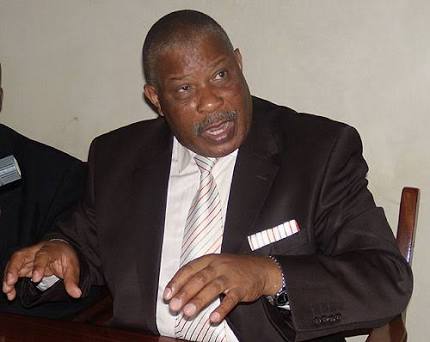
Kasese District Chairperson Geoffrey Sibendire Bigogo addresses the media after the raid

About 30 security operatives on Wednesday allegedly stormed and ransacked the office of opposition political party the Forum for Democratic Change (FDC) in Kasese District, South Western Uganda confiscating journalists’ gadgets and taking with them documents from the office.

The confiscated items include two smartphones belonging to Eric Mwesigye and his trainee, a one Amos, a camera memory card and two other phones belonging to Kasese FDC official, Saul Maathe.

According to Eric Mwesigye, he was interviewing Matte about the status of the ongoing campaign by the FDC party to petition the International Criminal Court (ICC) when over ten (10) plain-clothed security operatives stormed the office, took away phones and forcefully removed the memory card from the camera which was on the tripod stand being used for recording the interview.

“I cannot tell the security agency to which those people are attached but the speed and tenacity with which they removed my card from the camera and the ransacking of the office in broad daylight shows that these were not ordinary street goons,” said Mwesigye.

Mwesigye says he reached out to the Rwenzori East Police Spokesperson Twesigye Vincent about the incident but was advised to record a statement at police. He adds that he reported to the District Internal Security Officer, Lt Johnson Tashoba who promised to investigate the matter.

However, the Rwenzori East Police Spokesperson Twesigye Vincent denied having knowledge of the alleged incident and could not say anything about it.

Maathe says the security personnel without identifying themselves started searching the offices and scattered the items therein. He said it was after they saw them in possession of firearms especially pistols that they realised they were security operatives.

He says the security officials confiscated and took with them a series of documents from the office including petition forms to the ICC, party’s minutes for the different meetings, his National Identity Card and his phone.

Maathe says they are yet to get information from the office the regional police commander to explain why the party’s offices were raided. He says the invasion is an indicator of a continued shrinking space for political parties to execute their duties.

This incident comes on the heels of other similar happenings involving different journalists in Kasese in the month of September 2019. Two journalists, Joel Kaguta, a Daily Monitor correspondent, and Dennis Mumbere, working with Messiah Radio, were arrested separately on 24th and 26th September respectively for allegedly covering Opposition party activities.

Kasese district FDC chairperson Geoffrey Sibendire Bigogo condemned the raid and said it is a suffocation of the development of multi-party democracy in the country.

Bigogo argued that the best thing the security would have done if they needed any documents from the FDC would have been to secure a search warrant from court so that they get legal access to the party premises and subsequently all party documents in the office.

The district boss said the raid confirms the security agencies want to intimidate FDC supporters ahead of the 2020-2021 general elections. He said the party would stay strong and committed to the cause for better governance in the country.

Gilbert Muhanguzi, also an employee of Messiah Radio was on September 26, 2019 arrested at the magistrate’s court while filming his colleague, Robert Kule, a reporter with Bukedde TV, who was appearing before Rukooki Chief Magistrate’s Court.

Stories Continues after ad

CAF introduces new award categories, approves FIFA Forward projects for 2020

CAF President Ahmad Ahmad

The Confederation of African Football (CAF) Executive Committee (ExCo) led by its President Ahmad Ahmad yesterday held its second statutory meeting of 2019 in Cairo, Egypt.

Among the decisions officials took was the introduction of three new award categories, namely, the African Interclubs Player of the Year, the best African Club President and a special recognition award for contributions to society were approved.

The 28th edition of CAF Awards for footballers and officials who have excelled in 2019 will take place in Egypt on January 7, 2020 with Official Event Partner, the PickAlbatross Hotel Group.

Meanwhile, the committee approved FIFA Forward football development projects for 2020. The initiative calls on each football association, zonal association or confederation to contribute financial resources towards the development of football, among others, targeting young boys and girls.

They also ratified CAF’s first-ever Safety and Security Regulations as well as the Emergency Committee’s decision to terminate the CAF/Lagardère Sports contract.

Also approved were new organisational chart and refereeing reform project. The lists of the CAF Standing Committees were also approved.

Concerning competitions

The committee approved the hosting of the groups for the CHAN Cameroon 2020. As such, the members chose April 4-25, 2020 as the dates for the final phase of the CHAN Cameroon 2020. They also decided to February 14, 2020 as the date for the Super Cup.

The FIFA Club World Cup 2021 representatives from Africa will be the first, second and third place winners of the Champions League 2020/2021. New formats for youth and women’s competitions based on 12 teams were approved.

The committee also approved opening a tender for the Women’s CAN 2020.

Due to metrological issues, the committee held that the dates of the CAN 2021 will be decided jointly by CAF and the host country. “The CAF administration will now decide the dates, times and venues of matches after analysis of the opinions of the teams concerned,” said a statement.

During the meeting FIFA Secretary General and General Delegate for Africa, Fatma Samoura presented the ExCo members with an overview of the joint FIFA-CAF Roadmap to Reform, which focuses on financial management, good governance, efficient and professional organisation of competitions and the growth and development of African football.

The CAF President thanked the Fatma Samoura, as well as the FIFA team of experts who are advising and assisting CAF with its reform process, for their commitment to elevating African football to the highest levels. These sentiments were strongly echoed by members of the ExCo.

At the end of the meeting, Special Adviser to Ahmad Ahmad Samuel Eto’o was invited by the CAF President to present a new proposal to the CAF ExCo, the creation of the CAF Foundation.

During his address, he said: “We all know the unique role football plays in Africa and how it can unite people and countries and I believe it has the power to change lives. I am delighted to have the opportunity to share the idea of the CAF Foundation with the members of the ExCo today and I hope you share my conviction in this important project.”

Following his presentation, an agreement in principal was reached to give the green light for more reflection on the establishment of the CAF Foundation.

Stories Continues after ad

KCB Group’s nine-month profit rises 6 percent

KCB head office in Nairobi Kenya

Kenya’s biggest bank by assets KCB Group reported on Wednesday a 6% increase in gross profit for the first nine months of this year to Ksh27.2 billion from Ksh25.6 billion generated in the same period last year.

 KCB, which also operates in Uganda, Tanzania, Burundi, Rwanda and South Sudan, attributed its profit growth to a 10 percent increase in its total income as lending on its digital platform surged.

The lender’s total assets saw a 12 percent rise to Ksh764.3 billion from Ksh684.2 billion attained in the same time frame last year.

Its lending via mobile phones, which are offered on Safaricom’s M-Pesa platform typically for one month, increased more than three times during the period to Ksh98 billion, boosting non-interest income, the group said.

Shares of Kenyan banks have attracted renewed interest from foreign investors after the government removed a three-year old cap on commercial lending rates last week.

KCB said it also cut operating expenses, its cost to income ratio as well as its funding costs in January-September.

KCB said it expects its acquisition of National Bank of Kenya, which closed in October, to strengthen its position in the domestic market.

Stories Continues after ad

Donkeys face population ruin due to skin trade

Donkeys

Donkeys are in a state of global crisis with the animals facing population collapse across a number of countries as traders target their skins to export as an ingredient for ejiao, a traditional Chinese medicine, international animal welfare charity The Donkey Sanctuary can reveal.

The charity’s latest report into the trade, Under the Skin Update, has found that local donkey populations have crashed in a number of countries as increasing demand for ejiao has led to an unsustainable number of donkeys being slaughtered.

Gelatine in donkey hides is a key ingredient in ejiao and The Donkey Sanctuary is now calling for an urgent halt to the largely unregulated global trade in donkey skins before donkeys are virtually wiped out in some areas.

The supply of donkey skins cannot meet demand in China, which needs around 4.8 million hides per-year for ejiao production, so traders, mainly in Africa, Asia and South America, are exporting additional skins to China.

Donkey populations in China have collapsed by 76 percent since 1992. Since 2007 donkey populations have declined by 28 percent in Brazil, by 37 percent in Botswana and by 53 percent in Kyrgyzstan.

In Kenya and Ghana, both countries where the skin trade operates, donkeys are also being exploited by traders with fears that their numbers could be devastated in the near future.

With just under five million skins needed every year for ejiao production, the industry would need more than half the world’s donkeys over the next five years to meet demand.

The collapse of the donkey population will have a hugely damaging impact on the livelihoods of an estimated 500 million people in some of the world’s poorest communities that the animals support.

Donkeys transport goods to market, carry water and wood, provide access to education and are a vital source of income for vulnerable communities, particularly women.

The report reveals appalling animal welfare abuses and biosecurity risks at every stage of the skin trade both in its legal and illegal forms.

Tens of thousands of donkeys, many of whom are stolen, are rounded up to endure long journeys to slaughterhouses on crowded trucks without access food, water or rest with an estimated 20 percent of animals dying on route, in some cases.

Demand for skins is so high that even pregnant mares and young foals as well as sick and injured donkeys are indiscriminately caught and transported, contrary to international animal welfare guidelines.

The report revealed that many skin trade donkey handlers have little or no training in animal handling, often resorting to cruel and illegal methods of controlling donkeys such as kicking, dragging and the use of spiked sticks called goads.

Conditions in many of the donkey slaughterhouses are appalling. The Naivasha slaughterhouse in Kenya was immediately closed after witnesses recorded footage of dead and dying donkeys some with open, maggot-infested wounds. Aborted foetuses were also seen as well as skinned carcasses dumped next to live donkeys awaiting slaughter. The slaughterhouse has since reopened.

In Bahia, Brazil, 800 donkeys were found starving to death in holding pens alongside hundreds of rotting carcasses which had polluted their only water source.

Donkeys are often brutally slaughtered in front of other animals. Footage obtained by The Donkey Sanctuary from a slaughterhouse in Tanzania revealed animals being repeatedly hit with hammers in failed attempts to stun them.

The Donkey Sanctuary has also discovered links between the skin trade and wildlife crime, with some traders offering donkey skins for sale on online platforms that are also selling illegal wildlife products including ivory, pangolin scales and rhinoceros horn. In one instance, tiger skins were found hidden underneath donkey skins.

Unhygienic practices during transport, in slaughterhouses and when the hides are processed onwards have resulted in an increased risk of the spread of dangerous diseases such as anthrax and equine diseases, equine flu and strangles.

More than 60,000 donkeys died in West Africa this year along live skin trade routes, which the World Organisation for Animal Health have said are almost certainly linked to the trade.

These deaths demonstrate the potentially high risk of contagious diseases being spread as a result of the skin trade. Donkey skins from this area are being exported untreated direct to China.

Mike Baker, Chief Executive of The Donkey Sanctuary, said: “This is suffering on an enormous and unacceptable scale. This suffering is not just confined to donkeys as it also threatens the livelihood of millions of people.

“The skin trade is the biggest threat to donkey welfare we have ever seen. Urgent action needs to be taken.”

Stephen Njoroge from Kiserian, near Nairobi, Kenya, is totally dependent on his donkeys for his livelihood. He said: “I used my donkeys for general transport, collecting water, taking vegetables to market and carrying construction materials.

“My donkeys were very close together and were stolen in the same night, and I am still recovering from the loss. I have heard much about the donkey slaughterhouses and they are causing the donkey thefts in this area – they should be closed down straight away; it is the only way to stop the thefts.”

The Donkey Sanctuary is calling for the ejiao industry to cut links with the global skin trade and move towards more sustainable sources of raw materials provided by cellular agriculture such as the use of artificially grown donkey-derived collagen.

The charity is also recommending that the Chinese Government suspends the import of donkeys and their products until both can be proven to be disease free, humane, sustainable and safe and for national governments to take immediate steps to stop the trade.

Stories Continues after ad

Police mourns Medi Kaggwa, contributes Shs1m towards burial expenses

Late Meddie Kaggwa

The inspector general of police (IGP), Martin Okoth Ochola, has mourned the death of the chairperson of Uganda Human Rights Commission (UHRC), Medi Kaggwa who passed on yesterday and contributed Shs1 million towards burial arrangement.

Mr. Kaggwa died yesterday after he collapsed in his car near Mulago round about. His car stopped suddenly and knocked the car that was in front of it. He was rushed into intensive care unit (ICU) at Case medical Center where he was pronounced dead.

In a condolence message issued by police IGP said “It is with great sadness that I learned about the passing on of the chairperson of Uganda human rights commission which occurred yesterday.”

Mr Ochola described him as a gentle but a recognized champion for human rights and a great teacher, Medi Kaggwa has been a very great ally with police leadership in articulating links between human rights and law enforcement.

“Just a day before this sad occurrence, on the 19th day of November, he delivered a lecture to police council at police headquarters in Naguru. His fight for having equal human rights and opportunities was not only for civilian population but also for the law enforcement officers. His gentle approach and interaction with government offices, stands a testament human rights enforcement and law enforcement can co-exist peacefully.” He said.

”As the inspector general of police, I was also fortunate to have been one of his students at Law development centre in 1983/83 academic year and every time I met him I was struck by both the force of his personality and the quality of his intellect.” He wrote

Ochola, said the demise of this great man is a great loss to human right activists and law enforcement officers and therefore we all mourn that our dearest friend has passed away. Therefore on behalf of Uganda police force and I send our deepest condolence to the family of the med Kaggwa, human rights commission and the entire country at this difficult time.

He said police force mourns with you and celebrates the extra ordinary life of this remarkable teacher and the friend of police who devoted his life to peacefully protecting rights of all Ugandans. The force makes a humble contribution of Shs1 million towards burial expenses.

Stories Continues after ad

NSSF advocates for more pension contribution to finance health care

Patrick Ayota

The National Social Security Fund (NSSF) has proposed that individuals in formal employment should contribute an extra two percent to close the gaps in the health sector as opposed to the proposed National Health Insurance scheme.

The proposal is that collections be made where both the employee and employer contribute one percent bringing the total contribution to NSSF to 17 percent.

According to Patrick Ayota, the Deputy Managing Director of NSSF, this will not only ensure universal health coverage but will be sufficient for infrastructural development like renovation of health centres.

“If I fall sick and I seek care from a health centre III in my village, I will have all I need; there will be a nurse with all the required diagnostic equipment,” said Ayota.

Ayota said this while appearing before the Committee on Health over the proposed National Health Insurance Bill, 2019.

He explained that currently NSSF collects shs 96 billion per month and estimated that the extra two per cent fees will yield shs13 billion per month.

“If you collect this money and you deploy a billion to a health centre III, in one month you could stock 20 health centres in a district and within a year you could have renovated about 200 health centres,” said Ayota.

The Fund also proposes a one per cent charge on the minimum wage of shs130, 000. This form of funding, NSSF observed will ensure quality services in public health facilities leaving private health facilities to offer specialized services.

Legislators on the Health Committee were concerned that the public may reject this proposal, thinking it is one way of government evading its core mandate on health care provision and infrastructure.

“We had a challenge with OTT; people thought we were charging them more money. This might be worse if they know their contribution will also be output to construction of hospitals,” Kyotera District Woman MP, Hon Robinah Ssentongo said.)

Robert Ntende was concerned that NSSF’s proposal loads a huge burden on citizens and proposed that Government should take a pivotal role by making substantial contribution.

“Our people will ask why they should shoulder this burden when it is government’s mandate,” he said.

The Committee Chairperson, Hon Michael Bukenya said that the committee will have to assess and weigh NSSF’s proposal against the proposed National Health Insurance scheme.

Stories Continues after ad

Ugandan referee to officiate at U23 AFCON final

dick-okello

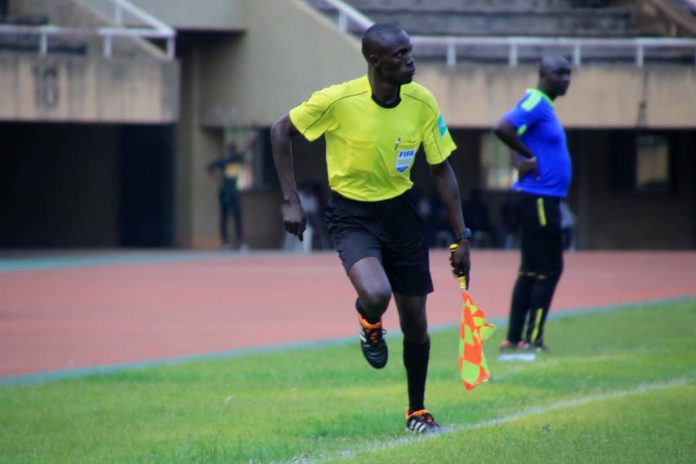
Ugandan match official Dick Okello has been selected as the first assistant referee for the U-23 Africa Cup of Nations final between Egypt and Ivory Coast on Friday, 23 November.

The center referee for the game will be Andofetra Avombitana Rivolala Manda Aroniaina Rakotojaona from Madagascar while James Fredrick Emile from Seychelles will be the second assistant referee.

The fourth Official will be Ahmed Souleiman Djama (Djibouti), match commissioner will be Jean Guy Blaise Mayolas from Congo and the Referee Assessor Sidi Bekaye Magassa (Mali).

FUFA CEO Edgar Watson Ssuubi has been selected as the head of Technical Study Group.

Hosts Egypt proved too strong for South Africa, defeating them 3-0 in the semifinal on Tuesday evening at the Cairo International Stadium, to reach the final and the Tokyo 2020 Olympics in style.

Cote d’Ivoire needed a penalty shootout to defeat Ghana 3-2 after a 2-2 draw in regular time of the semifinal at the Cairo International Stadium to secure their place in Friday’s final and grab an automatic ticket in next year’s Tokyo 2020 Olympic Games.

South Africa will face Ghana for the third place and the last Olympics ticket earlier on the same day.


AFCON U-23 Final

Friday, 22nd November 2019

Egypt Vs Cote D’Ivoire

Cairo International Stadium

Stories Continues after ad

EC starts update of voters’ register for 2020-2021 general elections

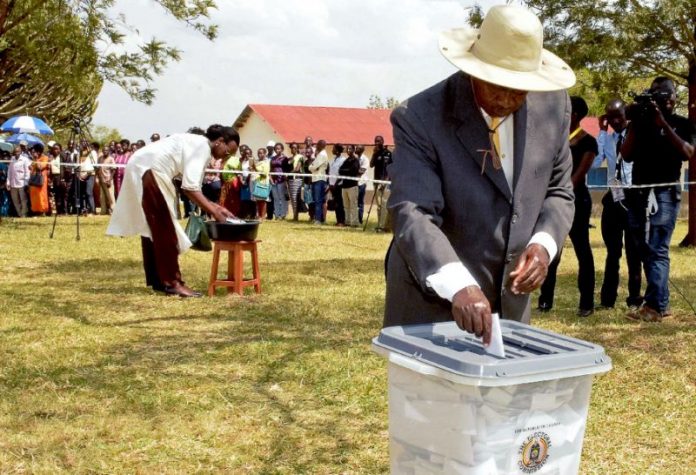
President Yoweri Museveni casting his vote in past election

In accordance with Article 61 (1)(e) of the Constitution of the Republic of Uganda (as amended), and Sections 18 and 19 of the Electoral Commission Act (Cap 140), the Electoral Commission (EC) has started a general update of the national voters’ register, in preparation for the 2020-2021 General Elections, its Chairperson, Justice Simon Byabakama Mugenyi has said.

According to Byabakama, the exercise will be conducted at update stations as shall be publicised for each parish throughout Uganda, from November 21, 2019 to Wednesday December 11, 2019, starting from 8:00am to 6:00pm, on each of the appointed dates, including weekends.

“During the General Update exercise, the Electoral Commission will register eligible Ugandan citizens of 18 years and above, who are not yet registered as voters,” said Byabakama on Thursday at the Commission’s head offices in Kampala.

An eligible person who wishes to register as a voter will be able to do so at any of the update centres countrywide where a registration kit will be stationed. However, a person who is already registered as a voter anywhere in Uganda must not register again.

During the update exercise, registered voters who wish to transfer to new voting locations will be able to apply for such transfer. A voter who wishes to transfer to a new voting location will be required to present confirmation that he/she originates from or is, at the time of application for transfer, a resident of the Parish of that (new) voting location. Such applicants should ensure they have details of their previous voting location.

The update exercise will also enable registered voters to check and confirm that their particulars are on the Register at voting locations which they indicated during registration.

Byabakama said his office would display at each update station, the Register of each polling station within the respective Parish/Ward.

During this exercise, the details of learners who were registered under the Learners Project in 2017 and have since attained the age of 18 years will be updated and assigned a polling station within their parish of residence or origin.

The eligible learners will not register afresh but will be required to present themselves at the registration/update centre with their National Identification Number (NIN) in order to specify their preferred polling stations for purposes of voting.

“The Electoral Commission has appointed Wednesday December 11, 2019, as the cut-off date for registration of voters in Uganda. Registration and transfer of voters from one polling station to another within Uganda will not be conducted after this date,” Byabakama said.

After the processing of returns from the reorganisation exercise, Byabakama said the EC has updated its list to the current figure of 34,236 polling stations.

As of November 21, 2019, the number of registered voters was 16,435,315 from 135 districts of Uganda with 34,236 polling stations.

Stories Continues after ad

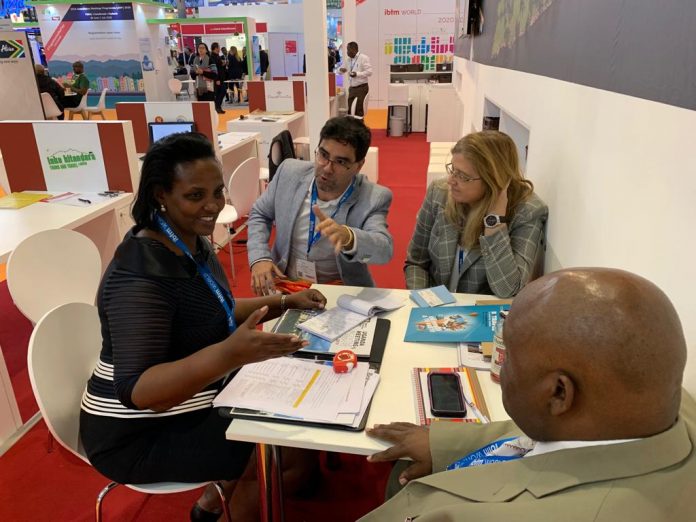
Uganda positions as meetings and conferences destination at IBTM world 2019

Ms. Muhwezi interacting with hosted buyers at the event

A team from Uganda Tourism Board (UTB) led by Susan Muhwezi the Vice-Chairperson of the board, along with tourism and hospitality private sector are currently representing Uganda at the 32nd edition of IBTM World 2019 in Barcelona, Spain. This is one of the leading marketplaces for the Meetings, Incentives, Conferences, and Events (MICE) industry. Some of the attending private sector from Uganda include; Lake Kitandara Tours, Speke Resort, The Uganda Safari Company, Purposeful Incentives, MICE Uganda, Serena Hotels and Last Events; among others.

IBTM World 2019 is taking place from November 19-21, 2019 at Fira Barcelona Gran Via and will host more than 3000 exhibitors from different destinations and quality suppliers ready to meet and network with over 15,000 industry professionals and 4000 buyers from over 150 countries across the world.

Leading the delegation, Muhwezi said that IBTM presents an enormous opportunity for Uganda and in particular the hotel and accommodation segment to meet leading hosted buyers. She noted, “MICE tourism boosts hotel revenue and the economy. Our visit here is strategic and ties into the overall plan to not only boost tourism receipts and contribute to the growth of Uganda’s economy.”

According to a report published by Allied Market Research, titled, “MICE Industry by Event Type: Global Opportunity Analysis and Industry Forecast, 2017-2023”, the global MICE industry was valued at US$752 billion in 2016 and is projected to reach US$1,245 billion in 2023, registering a compound annual growth rate of 7.5 percent from 2017 to 2023.

Commenting on the same, Lilly Ajarova, the UTB CEO said that Uganda’s participation in MICE exhibitions has been part of our bigger strategy to position Uganda as not only a leisure destination but a business host destination as well. The development of the MICE tourism sector offers vast opportunity to diversify Uganda’s tourism offering thus deepening and sustaining its tourism success, providing new business opportunities, building human resources, stimulating economic growth and earning significant additional tourism revenues.

In the recent past, Uganda has joined the league of preferred MICE Tourism destinations in the global MICE industry through the participation in MICE expos, hosting of international conferences and meetings such as the just-concluded Commonwealth Parliamentary Conference and membership of key MICE associations such as ICCA (International Congress and Convention Association), MPI – (Meeting Professionals International) and SITE – Society for Incentive Travel Excellence.

IBTM World is the leading global event for the Meetings, Incentives, Conferences, and Events industry, taking place annually in Barcelona – Spain. The event has one goal; to inspire the events world to deliver exceptional experiences for their customers. It brings together the global meetings industry, with everyone having that one common purpose – to meet the right people that can create better business results for their organisation. Furthermore, it helps build face to face connections with the right people, gain key industry insight and of course, engage in unrivalled networking opportunities over the three days.

Stories Continues after ad

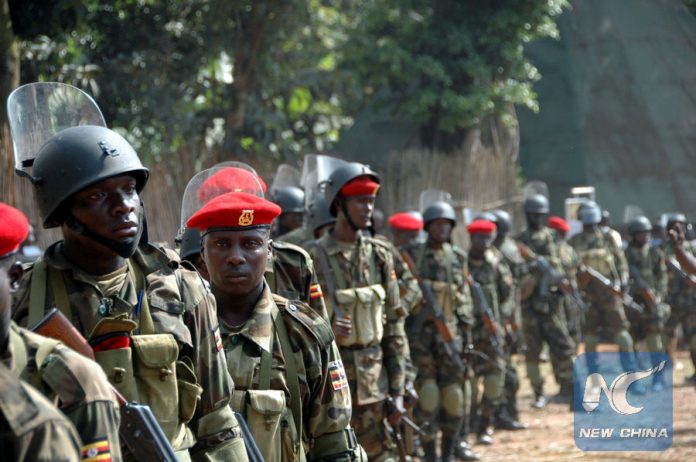
ADF kill 19, burn church in Eastern DR Congo

ADF rebels in DR Congo

The Ugandan Allied Democratic Forces (ADF) rebels based DR Congo killed at least 19 people overnight in eastern part of that country, stepping up attacks on civilians in response to a military campaign against them in border areas with Uganda, local officials said on Wednesday.

 ADF, an Islamist group is also said to have kidnapped several people and torched a Catholic church during two separate attacks about 35 km (22 miles) apart.

The Congolese army began an offensive three weeks ago near the Ugandan border. The ADF has been operating there for more than two decades and is one of dozens of rebel groups active in the mineral-rich areas where civil wars resulted in millions of deaths around the turn of the century.

Several previous ADF attacks have been claimed by Islamic State, but the extent of their relationship remains unclear.

Army spokesman Mak Hazukay said the ADF killed at least seven people on the outskirts of the city of Beni, adding that two soldiers were wounded and several people were missing.

Stories Continues after ad