Stanbic Bank
Stanbic Bank
17.6 C
Kampala
Stanbic Bank
Stanbic Bank
Home Blog Page 1103

Denis Onyango amongst CAF Best XI nominees

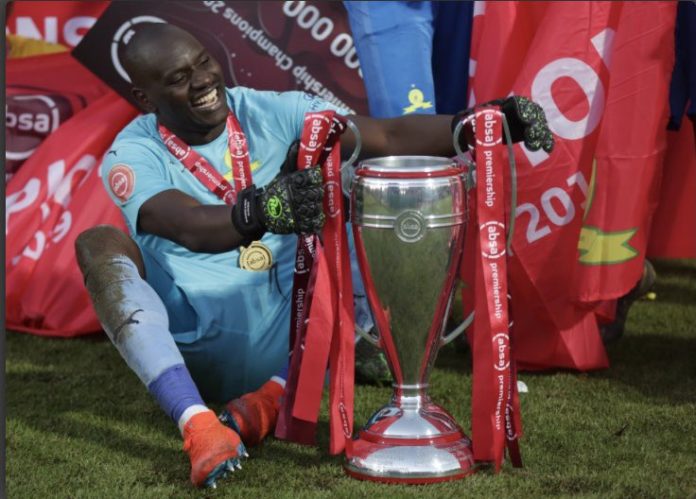
Onyango with the absa PSL trophy

Uganda Cranes Captain Denis Masinde Onyango has been listed amongst the 2019 CAF Best XI nominees after his exceptional performances for both club and country.

Onyango had an outstanding year winning the Absa Premiership league title with Mamelodi Sundowns in South Africa and captaining the Cranes back to Afcon having kept five clean sheets out of the six qualifier games.

Last year Onyango was named the best goalkeeper in the Caf FIFPro team of the year 2018.

Africa Cup of Nations champions Algeria dominate the list with a total of 10 players amongst the full list of 55 players.

The final team will be announced on the 7th of January 2020 at the CAF headquarters in Cairo at the annual awards ceremony.

Nominees in full:

Goalkeepers: Moez Ben Cherifia, Yassine Bonnou, Mohamed El Shenaway, Sylvain, Gbohouo, Rais M’bolhi, Edouard Mendy, Richard Ofori, Andre Onana, Denis Onyango, Francis Uzoho.

Defenders: Youcef Atal, Serge Aurier, Mehdi Benatia, Ahmed El-Mohammadi, Lamine Gassama, Faouzi Ghoulam, Achraf Hakimi, Ahmed Hegazi, Kalidou Koilibaly, Christian Luyindama, Issa Mandi, Joel Matip, Noussair Mazraoui, Yassine Meriah, Youssouf Sabaly.

Midfielders: Andre-Frank Anguissa, Ismael Bennacer, Sofiane Feghouli, Idrissa Gueye, Tarek Hamed, Alex Iwobi, Wahbi Khazri, Naby Keita, Franck Kessie, Wilfried Ndidi, Riyad Mahrez, Thomas Partey, Mubarak Wakaso, Victor Wanyama, Hakim Ziyech.

Forwards: Pierre-Emerick Aubameyang, Jordan Ayew, Anis Badri, Cedric Bakambu, Youcef Belaili, Baghdad Bounedjah, Odion Ighalo, Sadio Mane, Moussa Marega, Mbaye Niang, Nicolas Pepe, Mohamed Salah, Islam Slimani, Percy Tau, Wilfried Zaha.

Stories Continues after ad

Quelling German excess saving: Why Britain should care about EMU’s shortcomings

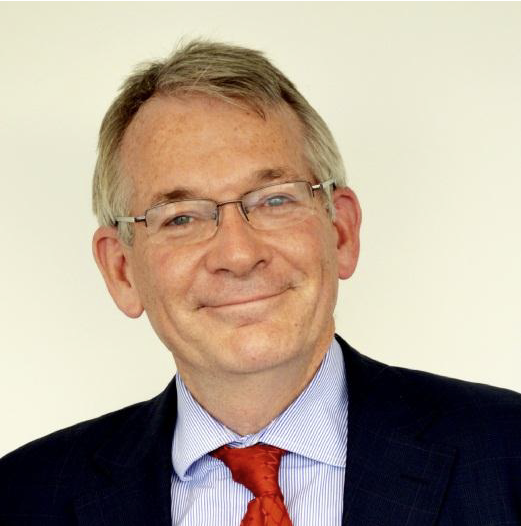
David Marsh


By David Marsh  


Europe’s expectations of economic and monetary union have gone into reverse. Two decades ago, member states hoped the euro would hand them back their economic and political destiny, making them more self-reliant, less vulnerable to external crises, less dependent on foreigners. In fact, since the 2008 financial crisis, the opposite turns out to be true.

Outside turbulence ranging from the US-China trade dispute to the UK’s European Union withdrawal hampers EMU’s dynamism. Low growth produces a spiral of resentment and fatigue. Enacting much-needed changes in European economic structures becomes increasingly complex. And shorter-term palliatives such as more European Central Bank bond-buying through this month’s resumption of quantitative easing run into political flak that counters positive effects and intensifies detrimental ones.

The diagnosis is particularly prevalent among policy-makers in Italy, where OMFIF held last week at the Banca d’Italia its latest seminar  on the future of the area. Senior figures rail against a German-orientated export-led continent-wide model that relies unduly on external demand and locks EMU into a vicious circle of over-saving , low wages and insufficient domestic demand. The critics – well-regarded technocrats with high standing in Berlin – make plausible points. Their arguments find resonance in the UK, too – and should be given greater attention during the 12 December election campaign. Whatever its future EU links, Britain has no wish to rely partly (still) on a currency area that remains its most important business partner but is condemned to years of lacklustre growth.

German and Italian representatives agree that solutions to ‘break the deadlock’ (as Ignazio Visco, the Banca d’Italia governor, put it in a lunchtime speech  remain bedevilled by enormous political complications. Rome officials welcome as a conciliatory gesture proposals by Olaf Scholz, the German finance minister, for breaking the impasse on European banking union with a route to a common European deposit insurance (or reinsurance) system. However, they criticise Scholz’s plan as incomplete, and hedged with caveats about introducing (even with phasing-in) capital weightings for banks’ holdings of sovereign (i.e. Italian) bonds that would be dangerously procyclical – disruptive in a crisis, likely to spark rather than damp capital flight. Visco, in public remarks, highlights Scholz’s failure to address the need for a ‘safe asset’ for the euro area. He sees this as ‘a clear and immediate objective’ – ‘the common denominator to the three unions (banking, capital markets, fiscal) that must flank monetary union.’ German officials, suspected of seeing the ultimate safe asset as the German government bond, dismiss talk of a technically constructed ‘safe asset’ as ‘financial engineering’. They prefer blending European financial assets into a ‘safe portfolio’ – seen among southern euro states as, at best, a long-term solution.

One German official in Rome predicted wrangling about sequencing ‘risk-sharing’ and ‘risk-reduction’ would follow past patterns and end in an Italian-German compromise. But it could be uglier. At the heart of tension lies a lack of trust. The euro was the harbinger of a post-modern Europe, setting aside past centuries’ conflicts and confrontations with a new form of stateless money. ‘Probably more than any other currency, the euro represents the mutual confidence at the heart of our community,’ said Wim Duisenberg, the first ECB president, in 2002. ‘It is the first currency that has not only severed its link to gold, but also its link to the nation-state.’ Compare this with Visco’s sobriety last week: ‘The tide of the global financial crisis and the sovereign debt crisis has long fallen, but its poisonous legacy and geopolitical tensions are fuelling distrust, fears and even prejudices once thought long buried.’

Euro area real domestic demand has risen an annual average 1 per cent over the last 10 years, compared with 2.2 per cent in the UK and 2.5 per cent in the US – although UK-euro area (downwards) convergence has become much more marked in the last five years and especially since the 2016 EU referendum. The arithmetical accompaniment to substandard domestic expansion: a euro area current account surplus averaging 3.5 per cent of GDP in recent years, nearly $500 billion, led by Germany with a surplus of 7 per cent of GDP, 60 per cent of the EMU total. Quelling German excessive saving – through tax cuts, scrapping the balanced budget constraint, infrastructure spending, higher wages – is the key to a better EMU future. Easier said than done. Almost certainly, more ECB QE is not the answer.

David Marsh is Chairman of OMFIF.


Stories Continues after ad

Making our own luck: What Africa’s future liquefied natural gas producers can learn from Qatar in the era of Billions At Play

NJ Ayuk


By NJ Ayuk


As I got into the process of writing my recent book Billions At Play, The future of African Energy and doing deal, the story of Qatar intrigued me. Its success is contagious and African LNG producers can learn from this country.

Qatar learned that it possessed truly huge reserves of natural gas in 1971, when Royal Dutch/Shell discovered the North Dome structure, also known as the North field. At the time, though, neither Shell nor Qatar’s government had a great deal of interest in developing the site. Their focus was on crude oil, which was then making the country very rich.

As a result, nothing much happened at North Dome for more than a decade. Shell did not actively pursue development work there, and neither did Qatar General Petroleum Co. (QGPC, now known as Qatar Petroleum or QP), which was the beneficiary of Doha’s nationalization of the oil and gas industry in 1977.

Conditions began to change in the late 1970s. Qatari crude production started to decline after 1979 as the country’s largest oil fields matured. In turn, international oil companies (IOCs) began to lose interest in signing service contracts with QP, since they did not believe Qatar’s aging reserve base warranted massive long-term investments.

These developments did not have much immediate impact, since crude prices were rising enough to keep revenues high. But in the 1980s, oil prices sank – and brought oil revenues down along with them. As a result, Qatar’s government began looking for new ways to generate income. Gas was an obvious option, since global demand was rising and national reserves were ample. Officials in Doha began to draw up plans for monetizing production from the North field, which is now known to contain at least 450 trillion cubic feet (13 trillion cubic meters) of gas in recoverable reserves.

Eventually, they developed a three-phase plan that called for beginning with domestic sales and then proceeding to pipeline exports before finally launching marine exports of liquefied natural gas (LNG). To implement the plan, they set up a joint venture known as Qatar Liquefied Natural Gas Co. Ltd. (Qatargas) between QP, BP (UK) and Total (France).

The first phase, which provided for domestic gasification, was a relatively simple process due to the small size of Qatar’s population. But events in the late 1980s and early 1990s made the second phase, which called for the construction of an export pipeline capable of delivering up to 20 billion cubic meters per year to other member-states of the Gulf Cooperation Council (GCC), more difficult.

There were multiple reasons for this, including but not limited to the following: Saudi Arabia lost interest in Qatari gas after discovering reserves of its own, Qatar and Bahrain became embroiled in a border dispute, and Kuwait found itself preoccupied by the Iraqi invasion that led to the First Gulf War. Doha floated proposals for alternative routes in the hope of drawing interest from markets outside the GCC, but to no avail.

The failure of the pipeline gave Qatargas an opportunity to skip the second phase of the project and proceed directly to the third – namely, using production from the North field as feedstock for a gas liquefaction plant that could turn out LNG for export by tanker. At the same time, rising demand for gas in Japan, South Korea and Taiwan gave Qatar an incentive to focus on LNG. Additionally, BP made the decision to exit Qatargas, the venture formed to develop North. This cleared the way for the U.S. company Mobil (now part of ExxonMobil) to join the project.

Mobil was a good fit, partly because it had ample financial resources and partly because it had extensive experience with LNG through its participation in the Arun scheme in Indonesia. It was able to access and deploy the technologies needed to launch Qatar’s first LNG plant. That facility brought its first 2 million ton per year production train on line in late 1996 and began commercial production and exports the following year.

Since then, Qatar has continued to ramp up gas production and to expand its LNG industry. It has worked with foreign partners to build more gas liquefaction facilities and is now home to three LNG mega-trains with a combined production capacity of 77 million tons per year. These plants helped make Qatar into the world’s largest LNG producer in 2006, and they have kept the country at the top of the list ever since. Meanwhile, Doha decided last year to build another mega-train that will raise the figure to 110 million tons per year by 2024. Qatar operates the largest fleet of LNG tankers in the world, and its LNG goes to customers all over the world.

In short, its LNG program has been a smashing success.

Showing the way

The story of Qatar’s success is interesting in its own right. But does it have any deeper meaning? Could it serve as a template – that is, as a map that other gas-producing countries can use to blaze their own trails toward success?

I believe it can. Specifically, I believe African gas producers pursuing LNG projects have a lot to learn from Qatar. They will have a better chance of maximizing their gains if they follow Qatar’s example.

Obviously, Africa can’t duplicate Qatar’s experience. Its gas-producing states don’t have the same geography or demography, and they don’t have access to the same marine trade routes. But it can benefit from some of the lessons that Qatar learned along the way. I’ll list a few of them here.

A little help from my friends

Qatar began looking into plans for launching LNG production less than a decade after nationalizing its own oil and gas industry. Even so, it had a clear understanding of the fact that it could not pursue this goal without outside help.

More specifically, QP and the Qatari government knew they would need partners with plenty of cash, experience, and access to gas liquefaction technology. They also knew they would need partners that were willing to absorb the risks involved in opening up a new frontier. As it happened, Mobil met all these criteria.

Africa’s future LNG producers like Senegal, Equatorial Guinea, Mozambique, Tanzania, Congo, Cameroon, South Africa, Nigeria and Angola will need help too. Like Qatar, they will need to pair up with IOCs that can help cover the costs of establishing a new sector of industry, that have experience in handling all of the physical and logistical complications of such projects, and that can supply the sophisticated technologies needed to compress and cool gas into a liquid state that can be transported by tanker. Also like Qatar, they will need investors that are ready to build this sector of the economy from the ground up (this last point is particularly important in countries such as Mozambique, Tanzania, Senegal and South Africa that are trying to launch LNG projects in short order after the first discoveries of gas.)

Staying flexible

Qatargas’ original plan called for starting small, with domestic gasification, and then scaling up – first by building pipelines, a type of infrastructure that had already been in use for the better part of a century, and then by taking on the more complicated task of building a gas liquefaction plant, marine terminal, and other associated facilities. But as noted above, efforts to move the pipeline phase of the project forward foundered due to unexpected obstacles.

Instead of focusing on these obstacles, Qatargas decided instead to take a different approach. It accepted that its efforts to draw up new plans and engage in further negotiations had failed, and it moved on. It dispensed with the second phase of the project altogether and got to work on the third phase. And that marked the first step of Qatar’s journey to becoming the largest LNG producer in the world.

This is an important lesson for Africa’s future LNG producers: sometimes the original plan simply doesn’t work out, even when all parties make good-faith efforts to resolve their differences. So, it’s time to try something different. It’s time to look for a new solution. For example, if an African gas producer reluctantly concludes that there’s no way to build an onshore gas liquefaction plant without incurring unacceptable environmental, financial, or social risks, it shouldn’t give up. Instead, it should look into floating LNG (FLNG) options or consider the possibility of using gas liquefaction facilities in a neighboring country.

Resource management

Qatar can also teach African gas producers a thing or two about resource management. This is a crucial consideration for QP and its partners in Qatargas, since most of their feedstock comes from a single source – the North field. This field may be huge, but it is hardly inexhaustible. In fact, Doha imposed a moratorium on new development initiatives at North in 2005, saying that it needed to conduct a thorough study of the site in order to assess its long-term potential and keep reservoir pressure at adequate levels.

The moratorium was not permanent. Qatar’s government lifted it in 2017, and QP responded by drawing up plans for the North Field Expansion (NFE) project and for the construction of new gas liquefaction facilities. In September of this year, the company said it had shortlisted several firms and invited to bid for the NFE contract.

These events are significant because they demonstrate that Qatar wants to keep its LNG plants in business for a long, long time. They show that the country is willing to accept some short-term setbacks in order to ensure that its largest source of gas can remain in production over the long term.

Again, Qatar’s example should give African gas producers food for thought. It shows that there are good reasons for taking a measured approach to the development of major reserves – and that the LNG sector can keep growing even when key feedstock suppliers must abide by certain restrictions on production levels. In other words, it serves as a reminder that Africa ought to do more than simply extract and sell its gas. African producers should aim to develop their resources in ways that offer the most benefit to the most people for the most amount of time.

Making our own luck

Of course, Qatar owes some of its success to sheer luck. Its gas sector emerged at a time when the country was highly motivated to find a replacement for dwindling oil revenues, when demand for gas was on the rise, when there were few viable alternative markets in the region, and when Mobil happened to be on the lookout for a new LNG project following the maturation of the Arun field in Indonesia.

Once again, Africa can’t duplicate Qatar’s experience. It can’t count on that sort of luck, on everything coming together at just the right time.

But it can learn from Qatar’s example – and create a little bit of its own luck. Hopefully, Africa can benefit from the fact that global demand for gas is still rising and will continue to do so for some time, even as more and more consumers pin their hopes on renewable energy. Now is certainly a good time to try – not least because LNG projects should also generate interest in gas-to-power projects and other African initiatives. The Gas Exporting Countries Forum’s meeting in Malabo Equatorial Guinea will be a good start.

NJ Ayuk is an experienced oil and gas dealmaker who heads the Pan-African legal conglomerate Centurion Law Group and serves as executive chairman of the African Energy Chamber. He is a passionate advocate of the idea that oil and gas can help propel economic development in Africa, as detailed in his newly released book, Billions at Play: The Future of African Energy and Doing Deals.


Stories Continues after ad

Dfcu kicks out conflicted Sebalu and Lule lawyers in the fraudulent acquired Meera Investment property case

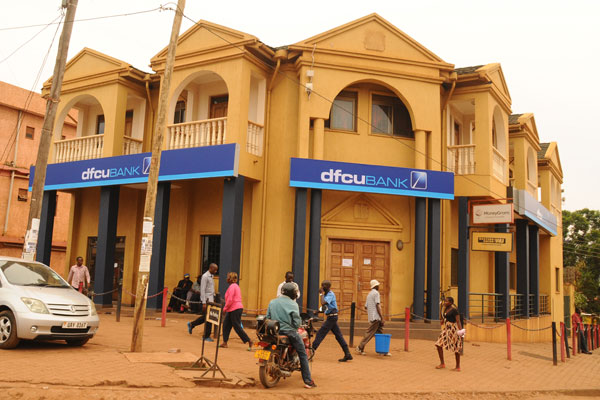
The Former Crane Bank Ntinda branch, which DFCU took over and illegally rebranded in its name, was ordered by the court to vacate and compensate Meera Investments because the property belongs to Meera.

Dfcu Bank has finally conceded, as ruled by court, and has kicked out lawyers of Sebalu, Lule and Company Advocates from representing the lender in the case filed against it (Dfcu) by tycoon Sudhir Ruparelia’s real estate and property management firm, Meera Investment Limited.

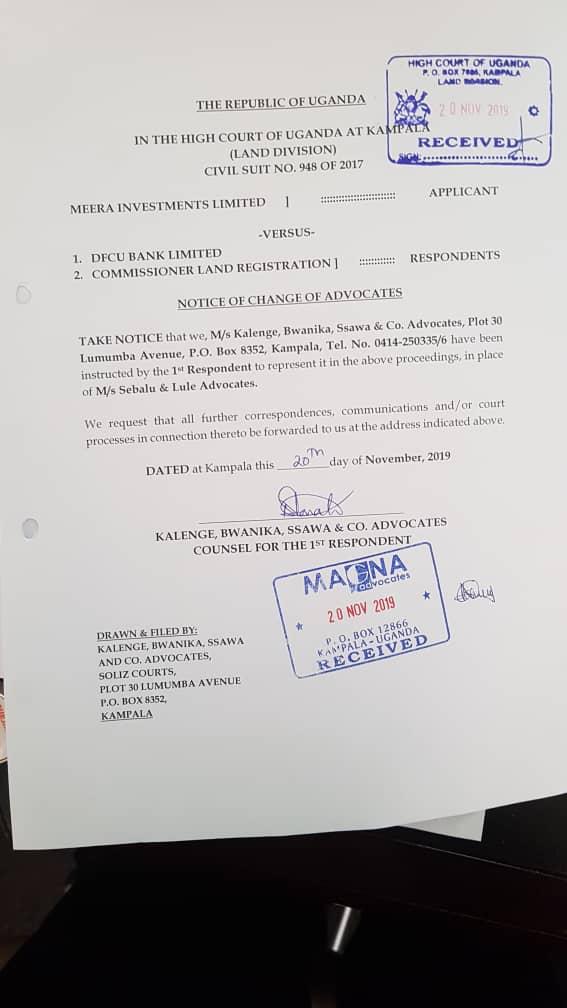
Dfcu Bank has now recruited new lawyers of yet another Kampala law firm M/S Kalenge, Bwanika, Ssawa & Co Advocates, according to the notice of change of advocates dated November 20, 2019.

The High Court on April 29, 2019 declared Sebalu & Lule Advocates as conflicted, and therefore, unfit to represent the Dfcu Bank in a longstanding a commercial dispute.

Court agreed with Meera Investments Limited that the lawyers had relevant information concerning Crane Management Services having participated in the review of its tenancy agreements.

“The Applicant has made out a case that the first respondent has relevant information of the applicant. The information is relevant and I accordingly grant an injunction restraining the first respondent from handling any case involving the applicant,” court said then.

David Mpanga who was kicked out of the earlier case involving Sudhir.

Meera Investment Limited  sued Dfcu Bank demanding rental arrears amounting to Shs2.9b and US $385,728.54 in respect of tenancies of suit properties that are owned by the Meera Investment Limited which is part of the Ruparelia Group of Companies.

In the suit, Meera Investment Limited  contended that when Dfcu Bank took over management of Crane Bank Limited, it illegally took possession of the rental facilities from which the real estate company seeks to recover its arrears.

However, in defence, Dfcu Bank contracted the Law firm of Sebalu & Lule Advocates but Mr. Rupareria says he contracted the same law firm in 2006 to draw and review tenancy agreements in respect of the said rental premises thus there is conflict between the lawyer and his client.

The company also asked the court to issue a permanent injunction, restraining Sebalu & Lule Advocates from appearing as defence counsel for Dfcu Bank in the other court case that the two principals are battling out.

Section 4 of Advocates Act  regulations,  provide that an advocate shall not accept instructions from any person in respect of a contentious or non-contentious matter if the matter involves a former client and the advocate as a result of acting for the former client is aware of any facts which may be prejudicial to the client in that matter.

As if that was not bad enough, Sebalu and Lule Advocates misadvised Dfcu Bank that it could take over Meera Investment Limited properties which had been leased to Crane Bank Limited before Dfcu Bank to some assets of the latter in January 2017.

Lawyer Timothy Masembe Kanyerezi whom declared conflicted in BoU/Sudhir case.

The transaction has brought Dfcu Bank and the Bank of Uganda (BoU) into a financial misunderstanding after former decided that it could not takeover the freehold Meera Investment properties. Dfcu Bank now wants Shs47 billion from BoU as compensation for the loss of the properties. But BoU says it cannot pay that money. However, reports indicate that the governor of BoU, Emmanuel Tumusiime Mutebile and the board refused to pay Shs47 billion to Dfcu stating the transaction was illegal.

Also in December 2017, the Commercial disqualified city lawyers Mr Kanyererezi Masembe of MMAKS Advocates and Mr David  Mpanga  of Bowmans Advocates from the  Sh397 billion  Sudhir Ruparelia’s case against Bank of Uganda (BoU), citing conflict of interest.

In his ruling delivered on December 21, 2017, the head of the Commercial Court Division, Justice Wangutusi stated that Mr. David Mpanga of A.F. Mpanga Advocates and Timothy Masembe of MMAKS Advocates acted in violation of the Advocates (Professional Conduct) regulations.


Stories Continues after ad

PICTORIAL: Rema, Dr Hamza enjoy honey moon at Murchison falls national park

rema and sebunya

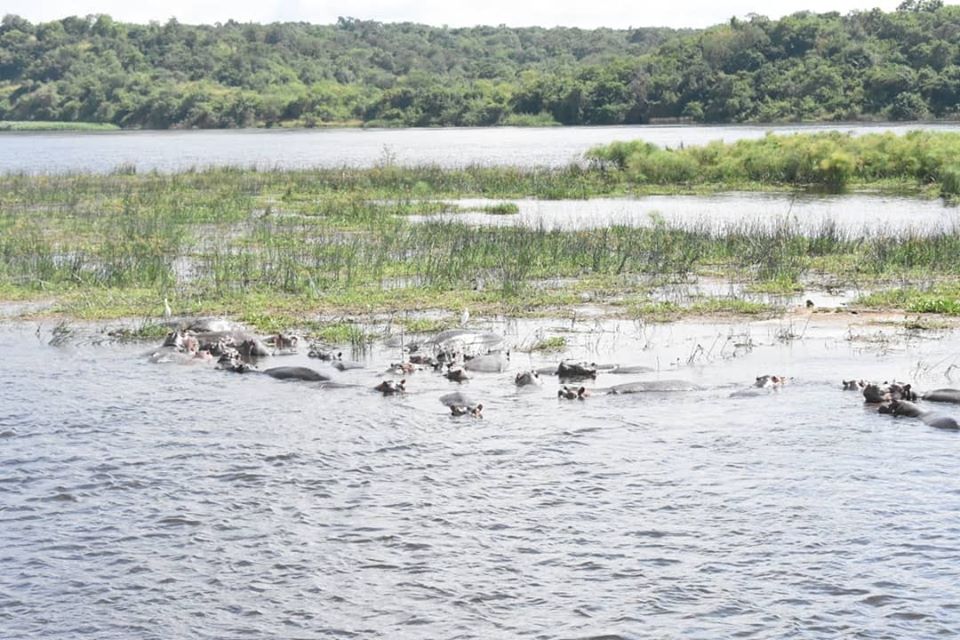
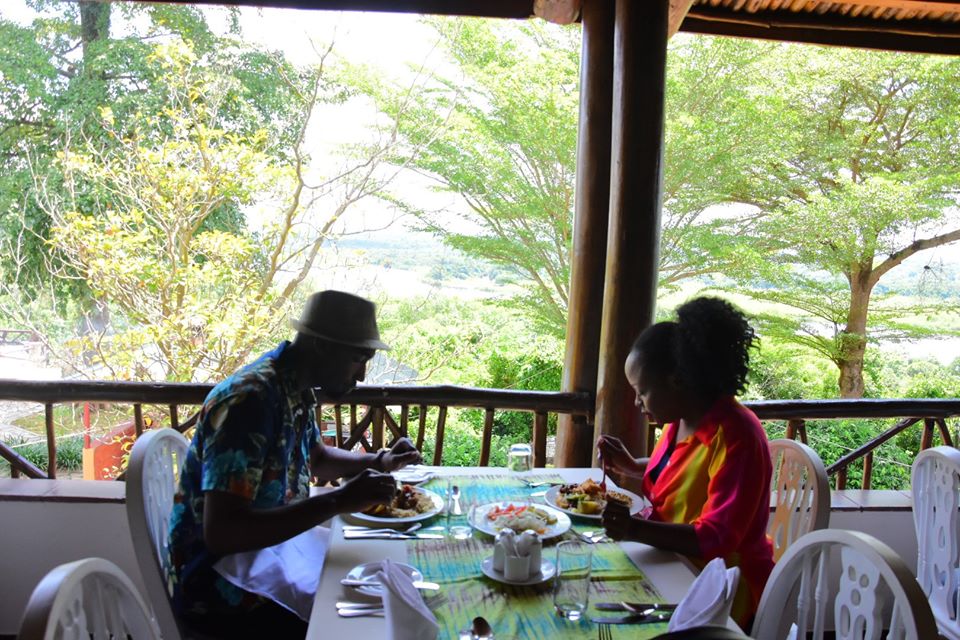
Singer Rema Namakula and Dr Hamza Sebunya are currently enjoying their honeymoon at Murchison falls national park.

The two lover birds have camped at Paraa Safari Lodge, in Murchison fall national park.

Last week, Rema introduced Dr. Sebunya  to her family members at a colorful function held at their ancestral home in Nabbingo.

The function was attended by a number of guests from Buganda kingdom, central government, city tycoons, talented musicians, Muslim clerics, friends and relatives.

Nabagereka Sylvia Nagginda was the chief guest as Uganda witnessed Rema move to a recognized marriage. She implored Rema to always respect her husband, and take care of him for their desired life to move on.

Sebunya, donated a number of gifts to Rema’s family members who included Halima Namakula among others.  Among the gifts included: A Refrigerator, Television set, Sofa sets, solar panel and more.

Stories Continues after ad

Local Think Tank, Brookings Institution to undertake a study on youth unemployment

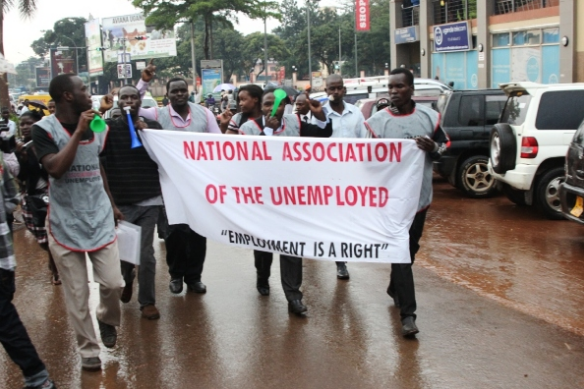
Ugandan youth march in Kampala over lack of jobs

Makerere’s Economic Policy Research Centre (EPRC) and Brookings Institution, USA, have inked  a  memorandum of understand to jointly undertake a study addressing African Youth unemployment through Industries without Smokestacks(IWOSS).The 2019-2021 initiative is focused on the formal employment creation of these industries to address the youth unemployment challenges in Africa.

It is conceived that while many efforts and interventions have focused on the supply side of the labour market, large-scale demand –side efforts have been limited. The project’s goal is to fill this gap and inform strategies and effective policies to address youth unemployment and job creation challenges in Africa.

Over the next three years, activities will include in-depth research, high-level engagement and broad dissemination. Specific countries of focus besides Uganda include Ghana, South Africa, Senegal and Kenya.

This project is a joint initiative between EPRC and Brookings’s Africa Growth Initiative (AGI) with specific deliveries being a series of workshops to discuss research methodology, review of draft publications; in-depth country and sector studies. Others will be disseminations including supplemental blogs and or podcasts, in country and US based events and discussions, policy briefs and contributions to related publications and presentations at select fora.

In support of the goals of the initiative led by Dr.Brahima  S.Culibaly,AGI Director and Senior Fellow,Dr.Haroon Bhorat a Non-resident Senior Fellow at the Brookings Institution ,EPRC will lead  the country case study for Uganda to assess the  scope for  IWOSS in the country to generate large scale formal employment opportunities for young people.

Leveraging frameworks developed for this purpose,EPRC will also conduct action oriented  research to identify ,in collaboration with the project leadership team, the key IWOSS in Uganda with greatest scope  to contribute to economic development; identify the key constraints to growth of these industries including infrastructure,s kills, regulatory requirements, capacity to export, agglomeration, and firms’ capabilities.

The study will assess the current employment creation potential along the value chains, where applicable, of these industries both under the current sectoral growth trajectory and economic and policy environment, as well as projected employment opportunities where constraints are addressed.

It will also assess the labour skills, particularly soft and digital skills, requirements of IWOSS, compare these requirements to existing labour skills of the unemployed youth to document any gaps, and suggest policy interventions to bridge them.

As part of the research, EPRC will conduct, as appropriate, interviews with a gender-balanced sample of key stakeholders including unemployed or underemployed youth, policy makers, the private sector, and experts.

Stories Continues after ad

Deputy Speaker Jacob Oulanyah blasts EU over interfering in African politics

Deputy Speaker of Parliament Jacob Oulanyah

The Deputy Speaker of Parliament, Jacob Oulanyah has castigated the European Union (EU) and urged the bloc to respect the sovereignty of African states.

He accused the EU of continuously influencing how African countries define democracy, saying that whilst many African states are independent, they cannot practice their own ideologies of democracy.

“Why are we disrespecting people? If a country wants to do what is best for them, allow them to seek and find on their own what is best for them as a country,” Oulanyah said.

Oulanyah made the remarks at the ongoing 55th Session of the African Caribbean and Pacific (ACP) and the 38th Session on Joint African-Caribbean and Pacific-European Union (ACP-EU) Parliamentary Assembly in Kigali, Rwanda.

The Joint Political Committee which is meeting from 13 to 22 November 2019 debated and adopted a report on democracy and respect for the constitution in EU and ACP states.

Oulanyah expressed dissatisfaction with the report for criticizing 18 nations without presidential term limits in the Sub Sahara Africa arguing that some developed countries do not have written constitutions.

“What should be clear is the respect of the constitution and how, if at all, the people wish to amend it to suit their country’s evolving needs,” Oulanyah said.

According to Oulanyah, the EU should instead focus on investing in the stability and prosperity of nations through practical policies and creating a platform for equal dialogues on global matters.
Weidou Adjedoue a delegate from Madagascar said, “I support wholesomely the idea that dignity and respect to African members in the ACP-EU should be focused on”.

The report which was generated by the ACP joint political committee received overwhelming support and it recommends that continued efforts should be made to ensure people’s participation in decision-making processes, including the role of the opposition and the involvement of civil society without discrimination.

The ACP-EU partnership agreement, signed in Contonou in June 2000 was concluded for a 20-year period from 2000 to 2020. It has been the framework for the EU’s relations with 79 ACP countries.

Stories Continues after ad

Ugandans mourn late Meddie Kaggwa, Besigye says he was humble man

Late Meddie Kaggwa

Ugandans continue to mourn and send condolences to the family of late Meddie Kaggwa, who was the Chairperson of the Uganda Human Rights Commission (UHRC) and was at the forefront of defending the rights of Ugandans in all ways possible.

News of the passing of Dr Meddie Kaggwa broke Wednesday morning, creating a somber mood among staff at UHRC head office in Kampala.

Kaggwa, 64, died after reportedly collapsing in his car on the way to work this morning. He was pronounced dead by doctors at Case Hospital where he was rushed on Wednesday morning on basic life support.

“Med Kaggwa was brought here by a doctor who found him lying unconscious in his car at Mulago roundabout. He arrived here at 7:55am. We worked tirelessly but at 9:00 am, he breathed his last. The cause of his death is not known yet,” Dr. Patrick Kaliika, Director of Case Hospital said.

But the family has reported he was on hypertensive on treatment.

Officials at the UHRC confirmed the development saying that he collapsed while driving his official car around Mulago.

The officials said that Kaggwa was driving himself in the UHRC official vehicle on Wednesday morning at about 7.30am.

His car was broken into by standers as it was locked. He was found convulsing and unresponsive. Doctors at Case Hospital said he was unresponsive after arriving there despite efforts to resuscitate him.

A number of politicians and others members of the public continue to mourn the late lawyer and former legislator.

“OMG! Another outrightly “strange” high profile death. Let’s now wait for versions of what (could have) happened. Hon Medi Kaggwa has been a humble, self-effacing &respectful public servant. My thoughts and prayers go to his family &friends. Inna lillahi wa Inna illahi raj’un,” said veteran politician Dr. Col. Kizza Besigye on his Twitter habdle.

The President of opposition political party Forum for Democratric Change Patrick Amuriat upon learning of Kaggwa’s death said the late was objective as much as he served the government, hardworking and peaceful officer asking all Ugandans embrace his good deeds.

 The UPDF Spokesperson, Brig.Richard Karemire on his Twitter handle said: “The UPDF fraternity conveys its condolonces to the family and colleagues of the late Dr. Meddy Kaggwa. We on many occassions worked closely with his office and salute his contribution towards entrenching constitutionalism and the rule of law in the country. Rest in peace.”

Yesterday Kaggwa made a presentation before the Police council on the status and observance of human rights.

The Uganda Law Society (ULS) is among the institutions that were first to learn of Kaggwa’s demise and wished his soul to rest in peace. “@ug_lawsociety informs you of the death of our member Advocate Med Kaggwa, the Chairperson of the @UHRC UGANDA which occurred today morning. Burial arrangements will be communicated to you later. May his soul rest in eternal peace.”

“Shocker. Rest In Peace my friend Med Kaggwa. Inna Lillahi wa inna ilaihi raji’un!,” Crispin Kaheru, former coordinator of CCEDU said on his Twitter handle.

Other MPs including Allan Sewanyana and Latif Sebaggala praised the late for his contribution in the fight against the abuse of human rights in Uganda, though Sewanyana said his office was not empowered enough to do its work.

Stories Continues after ad

Uganda overcomes Ethiopia to storm Cecafa Women’s Challenge Cup semis

crested-cranes-XI

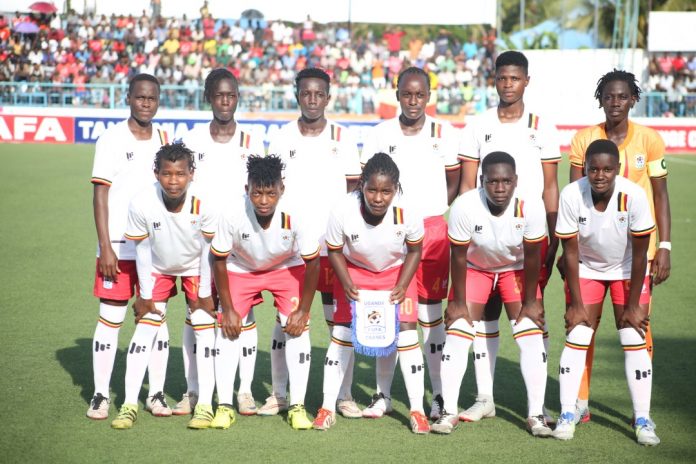
Uganda Women’s national football team, The Crested Cranes beat Ethiopia 1-0 in the second group B match of the 2019 CECAFA Women Challenge cup at the Chamazi Stadium in Dar es Salaam, Tanzania on Tuesday.

Fauzia Najjemba was the heroine on the evening, scoring in the 73rd minute of the well contested duel. Najjemba’s shot off her lethal left foot inside the goal area in an acute angle for the lone strike.

Uganda sealed a slot to the semi-finals of the regional competition with a game to play against Kenya on Thursday, 21st November 2019.

Kenya humbled Djibouti 12-0, coming one goal shy of Uganda’s 13-0 over the same opponents on Sunday.

The two teams are tied on six points each with 14 goals scored and none conceded. They will play the last Group game on Thursday to decide which team tops the group.

In group A, hosts and defending champions Tanzania also qualified to the next stage but the battle for the second slot is between South Sudan and Burundi who face off on Wednesday.

Stories Continues after ad

Local banks tighten credit standards to enterprises in first quarter of FY 2019/20

Local commercial banks have eased credit standards for SMEs

In the first quarter of FY 2019/20, local commercial banks tightened credit standards on loans to enterprises contrary to the easing observed in the previous quarter, the Bank of Uganda (BoU) says in a recent survey that was conducted to enhance BoU’s understanding of the lending behaviour and loan financing conditions among the deposit-taking institutions and but also to capture leading information on credit developments.

Credit standards consist of internal banking rules/criteria/guidelines which determine lending based on sector, area, size, duration, financial indicators, what type of loans (collaterised, non-collaterised, investments, overdrafts and amounts to be provided, and to which clients. The survey measures changes in such standards including cases where banks have introduced new lending policies or amended existing ones.

BoU says banks reported tightened credit standards on a net basis of 15.5 percent during the quarter. Across firm size, credit standards were eased for loans to SMEs (6.4 percent), while loans to large enterprises recorded a net tightening of 18.1 percent. In terms of loan duration, banks eased credit standards for short term loans and tightened long term loans in the quarter to September 2019.

According to BoU, the major reason cited for the easing of loans to SMEs and short term loans was the deliberate strategy by banks to grow new lending to SME’s and short term facilities while maintaining good portfolio quality and the impact of International Financial Reporting Standard 9 (IFRS9).

On the other hand, BoU says the approval of loans to large enterprises has tightened as the banks seek to reduce on the large risk exposures and slowdown in economic activities.

However, the central bank reports that in the quarter to December 2019, banks expect to tighten overall credit standards on a net basis, at a much higher pace compared to the previous quarter’s expectations. “The net tightening applies to credit standards on short term loans, long term loans and loans to large enterprises. On the other hand, banks anticipate easing credit standards for only small and medium sized enterprises on a net basis in the coming quarter to December 2019,” it says.

BoU says that the main explanations provided by banks for the expected tightening of credit standards over the quarter to December 2019 include: unstable foreign exchange rates especially the dollar rates which make borrowing expensive, and unpredictability of the markets within the banking sector.

Credit Standards by Economic Sector

Banks reported that they had tightened credit standards for the majority of the sectors of the economy on a net basis in the quarter to September 2019. The following sectors recorded a net tightening; Building, Mortgage, Construction and Real Estate (11.0 percent) followed by Transport and Communication (9.7 percent), Trade (5.9 percent), Manufacturing (5.1 percent), Mining and Quarrying (4.3 percent), Agriculture (2.7 percent), Electricity and water (1.3) and Business Services (0.3) while Personal and Household and community, social and other services eased with 13.8 percent and 0.7 percent, respectively.

The major reason given for the net tightening for Building, Mortgage, Construction and Real Estate sector was the increased price fluctuations within the sector; Transport tightened because of the increased risks of accidents; Trade recorded a net tightening due to the slowdown in economic activities. The tightening to the Agriculture sector was attributed to the declining prices of produce due to bumper harvests with constant demand e.g. sugar.

The survey covered the outturn for the quarter ended September 2019 and expectations for the quarter to December 2019.

Stories Continues after ad