Stanbic Bank
Stanbic Bank
26.7 C
Kampala
Stanbic Bank
Stanbic Bank
Home Blog Page 1106

Makerere Impis win the shield finals of rugby

Impis celebrate victory

Last weekend on Saturday, Makerere Impis Rugby Club with their slogan ‘Arrogance’ faced the Rams with their slogan “endijjo eliwa tugirye” at the Makerere Rugby grounds for the finals.

The match was not easy as the two warriors showed energy and skills as the struggled for points in the eighty minutes of the full game. The ruby grounds which the termed the grave yard, indeed it was more of that. Players exhibited all their strength skills and speech to overcome each other.

However the Impis were the first to score in a penalty and led the game for the half time and later the Rams scored and went ahead of the opponent. The game was so tough as the spectators called it a Derby and they expected a lot of reactions from both sides.

As it is that in every game there is a loser and a winner, the Impis arrogantly tried their last chance from their striker Anthony and led the game in the last minutes.

The game went 14 points against 13 points in the favour of the Impis.

Talking to the Impis couch, Emmanuel Katuntu, he said that for the past they had never achieved such a win with a difference of one point. That this showed that the Rams were a good and focused team although the trough went to their side.

“This has been a tactical game that needed a lot of energy and endurance by my players. I have never received such a result with a mere difference of one point” he narrated.

Katuntu is a couch player, so when he noticed the weakNess of his boys he also entered the field an striked with his players to attain a late win.

Katuntu added they had lost in the first match and pushed to the shield category which is a lower position in the Uganda Rugby league.

In the shield category the defeated the Withens and Kyambogo University Club to appear for the final.

“We were annoyed after losing our first game but I had to motivate my players for this stage. And I am now happy that we have gone to the big league for the Nile Competitions,” he excitedly  added.

Ivan Semuwemba former presidential aspirant of the Rugby Competitions was the chief guest and handed over the trophy excitedly to the Impis.

“Rugby is the only game for life and I retired still wanting to play but the body could not allow. I appreciate the two teams and wish well the Impis in the Uganda league,” he said.


Stories Continues after ad

MPs accuse labour ministry officials of stealing migrant workers’ money

MPs Nambeshe, Abala and Mwine addressing journalists at Parliament

A section of Members of Parliament (MPs) have accused officials from the Ministry of Gender, Labour and Social Development of transferring about Shs257,000 (US $70) charged on each migrant labour worker on a personal account.

The MPs want the Ministry investigated over the matter.

The MPs including; Western Region Youth MP, Mwine Mpaka, Ngora County MP-David Abala and Manjiya County MP- John Baptist Nambeshe, said the money is reportedly wired to a personal account of Yasin Abdlatiff Musoke who uses it to ‘purchase suits, shoes and perfumes.” The money is meant to monitor Ugandan migrant workers while abroad.

Mwine said that each labour company remits US $70 for every Ugandan worker exported to Middle East or else the company risks losing its working license.

“We have discovered that this money is channeled to a labour liaison officer in our embassy in Riyadh (Saudi Arabia) and put on his personal account. If each of the 185 registered companies takes 50 Ugandans abroad, and each Ugandan pays US $70, we are looking at a tune of about Shs30 billion per year,” Mwine said.

“We Parliament to set up a committee into the status of this Fund, under what legal framework was this Fund set up, how is this money being used?”

Flashing copies of Musoke’s purported bank statement, Mwine said the details indicate he is misusing the money meant to help vulnerable Ugandan migrant labourers.

He said bank statements indicate Musoke has so far received Shs668 million. This is much more than budget the embassy has,” he said.

Abala wondered why money that is meant for public use finds its way to Musoke’s personal account.

“When you talk about migrant labour, we are talking about human beings. He opened account in Stanbic bank in Uganda not Riyadh. This money was meant for monitoring labour force and when the labour workers get into problems, this money should help them, but it has been mismanaged. Why should this money be put in an individual account if it is public money?” the MP wondered.

Nambeshe described the US $70 charge on each migrant labourer as a form of extortion orchestrated by officials at the Ministry of Gender, Labour and Social Development.

 “This is broad day robbery; we are wondering which legal framework they’re basing on. This is illegal. We have been hearing mafias (sic) in government little did I know many are in the Ministry of Gender. This money would be in consolidated fund. It’s an illegal fund on migrant labourers,” Nambeshe said.

According to the Uganda Association for External Recruitment Agencies, there are 140,000 skilled and semi-skilled Ugandans working in the Middle East as blue-collar professionals as well as technicians, security personnel, porters, drivers, cleaners, housekeepers, catering and hospitality personnel.

Stories Continues after ad

Sudhir elected trustee of Indian Association Uganda

Sudhir and other members of the Indian Association of Uganda.

Ugandan businessman, Sudhir Ruparelia of Ruparelia Group of Companies, has been elected as one of the new Trustees of the Indian Association Uganda and is expected to steer the association to greater heights.

Sudhir was elected during a function that was held at the Association’s offices in Kampala on Sunday.

After being elected, Dr Sudhir said: “Friends, today I was elected one of the trustees of Indian Association. Thank you all for entrusting me.”

Sudhir’s companies like Crane Management Services and Kampala International School Uganda (KISU) have always topped  the tax payers chat at Uganda Revenue Authority.

Indian Association Uganda has for more than 100 years led Uganda’s Indian communities.

In 1972 President Idi Amin Dada ordered expelled Indians from Uganda accusing them of benefiting more economically than indigenous Ugandan, which marked the journey of slowing the country’s economy as factories and other businesses collapsed as they were put in hands of poor Ugandan managers.

However, since the Indian communities returned to the country in the 1980s and 1990s and reinstated the association they members have worked hard to improve their relations and participated in charitable activities aimed at helping the disadvantaged in Uganda.

Over 27000 Indians are living in Uganda peacefully life, with different communities helping each other and working towards the development of Uganda.

Economically, Indians have once again become instrumental in Uganda despite being less than 1 percent of the population. The Indians are estimated to contribute up to 65 percent of the revenue collected by government.

Stories Continues after ad

Tullow commits to reducing stake in Lake Albert Development Project

Rig site

Oil company, Tullow Oil plc says it remains committed to reducing its equity stake in the Lake Albert Development Project ahead of the delayed final investment decision (FID) and that when appropriate it will initiate a new sales process to achieve the now pending transaction worth US$900 million

Tullow retains a 33.33 percent stake in the Lake Albert project which has over 1.7 billion barrels of discovered recoverable resources and is expected to produce over 230,000 barrels of oil per day (bopd) at peak production. “The Joint Venture Partners remain supportive of the development and conversations with the Government of Uganda are ongoing, the company says briefly in the trading update for the period 24 July to 13 November 2019.

In August 2019, Tullow announced that its farm-down to Total and CNOOC lapsed following the expiry of the Sale and Purchase Agreements (SPAs). The expiry of the transaction was a result of being unable to agree all aspects of the tax treatment of the transaction with the Government of Uganda which was a condition precedent to completing the SPAs.

“While Tullow’s capital gains tax position had been agreed, as announced in the Group’s 2018 Full Year Results, the Ugandan Revenue Authority and the Joint Venture Partners could not agree on the transfer of capital allowances related to the consideration to be paid by Total and CNOOC as buyers,” it says in a statement.

Since the deal lapsed, Total has also suspended work on the East Africa Crude Oil Pipeline (EACOP) project, it says.

Kenya

On August 26, 2019, East Africa’s first ever export of oil, a cargo of 240,000 barrels, was flagged off from the port of Mombasa by President Uhuru Kenyatta.This was the first lifting of oil from the Early Oil Pilot Scheme (EOPS) to the international market. The EOPS production of 2,000 bopd continues with oil being transported by road from Lokichar to Mombasa.

“Following the signing of the commercial Heads of Terms with the Government of Kenya in June 2019, Project Oil Kenya continues to make good progress. The upstream and midstream Engineering, Procurement and Construction (EPC) tenders are expected to be issued to the market by the end of 2019. Well tender activities are on track, with bids received and evaluations ongoing. The midstream Environmental and Social Impact Assessment (ESIA) has been submitted to the National Environment Management Authority (NEMA) with approval expected in the first quarter of 2020. Consultations for the upstream ESIA are ongoing, ahead of the ESIA being shared with NEMA before the end of the year,” the company says.

It says the government of Kenya continues to provide strong support on land acquisition, and the National Lands Commission has now completed over 75 percent of the midstream land surveys and valuations. This work is now complete in four out of six counties affected. A draft framework agreement for use of water from the Turkwel Dam has been prepared and is currently being negotiated.

“The Joint Venture Partners and the Government of Kenya are set to commence discussions with prospective lenders for the project financing of the export pipeline that will run from Turkana to the new Lamu Port at Manda Bay. The FID for Project Oil Kenya continues to be targeted in the second half of 2020.” It says.

The Group will publish a Trading Statement and Operational Update on 15 January 2020 and Full Year Results for 2019 will be announced on 12 February 2020.

Trading update summary

· Full year 2019 West Africa net oil production from Ghana and non-operated portfolio forecast to average c.87,000 bopd

· Full year capex forecast of c.$540 million, free cash flow forecast of c.$350 million, full year net debt of c.$2.8 billion

· Uganda farm-down lapsed; Tullow and Joint Venture Partners remain committed to the Lake Albert Development

· Kenya exports East Africa’s first cargo of 240,000 barrels of oil from Mombasa

· Good progress on Project Oil Kenya; targeting Final Investment Decision (FID) late 2020

· Guyana exploration programme delivers two Tertiary oil discoveries; Carapa well underway targeting Cretaceous play

· 3D seismic survey completed in the Comoros; preparations underway for exploration well in Peru in the first quarter of 2020

Operational update – Group production
Full year 2019 Group oil production, including production-equivalent insurance payments, is forecast to average around 87,000 bops. This is slightly below guidance primarily due to Ghana production performance as detailed below.

Stories Continues after ad

About 3000 students graduate from KIU

Mary Karooro Okurutu

2,962 students have today graduated during the 21st Graduation Ceremony of Kampala International University (KIU). They graduated with Diplomas, Bachelors, Masters, PhDs and Postgraduate degrees.

Among the graduates, 41 per cent were female, while 59 per cent were male. Also, 38 per cent of the students graduated with science-based awards while 62 per cent graduated with arts-based awards.

The Guest of Honor who doubles as the Minister in Charge of General Duties in the Office of the Prime Minister, Mary Karooro Okurut, lauded the Chairman of the university,  Hajji Hassan Basajjabalaba for investing to produce graduands from KIU every year.

“The government congratulates KIU for launching a program in field of Health Sciences, and for launching the state of the art School of Science and Technology,” she said.

She further urged the University to concentrate on the achievement of PhD holders from the university, and advised the graduands to overcome new challenges every day to achieve success and commit themselves to lifelong learning.

The Deputy Vice Chancellor Academic Affairs Prof. George William Nasinyama presented the special awards in recognition of the 38 students that scored first class degrees. “Only 16 per cent of the students have been unable to graduate due to financial constraints,” he said.

He further beckoned to sponsors to come forward and aid in these students’ completion in their pursuit of education and also urged the graduands to jealously guard what they have earned.

The Vice Chancellor Dr. Mouhamad Mpezamihigo, on behalf of the Chancellor, commended KIU for its achievement in graduating wholesome students in contribution to society.

“KIU has become a center of knowledge creation and other universities should benchmark their curriculum with that of this institution,” he said.

The Chairperson University Council, Prof. Fred Mangeni Wabwire, in his speech, commended KIU for maintaining its stature by having world class infrastructure and quality ranking human resource. He also urged the students to pursue further education at KIU.

Basajjabalaba recognised other higher institutions of learning like Kyambogo University for offering their facilities for KIU’s engineering students to access. He also thanked the Government of Nigeria for providing over 30 PhD staff in service to the university.

At the end of the event, graduated students picked up their certificate as well as transcripts of academic records.

Stories Continues after ad

East Africa continues to develop as important gas hub

Launch of Coral South FLNG Project

East Africa and the Indian Ocean have witnessed substantial discoveries of oil and gas in in the last decade, but the full potential of the region has yet to be realised. At this year’s Africa Oil Week event there was a big focus on the region and its growing importance.

Two of the regions brightest projects are located on the south east coast of the continent in Tanzania and Mozambique. The massive Coral South FLNG Project sits atop the prolific Rovuma basin, offshore Mozambique. ENI’s Coral South FLNG facility is the first step in accessing the estimated 450 billion cubic metres of gas. The first gas is expected in 2022 and thereafter ENI expect to produce five billion cubic feet each year.

Further north is the Tanzania LNG Project that hopes to access the massive 1.6bn cubic metres of gas that lies in Tanzanian acreages. The $30bn facility located at Lindi would sit on Tanzania’s coast, acting as a terminal and gas liquification hub.

Keeping it local

One company that is active in the region is Orca Exploration Group who operates one licence in Tanzania which comprises two blocks known as the Discovery Blocks. The license has a total area of approximately 170 km2 and they are in shallow water, approximately 15km off the coast and 200km south of Dar es Salaam. The license contains the large Songo Songo gas field which is positioned just offshore Songo Songo Island (SSI).

Nigel Friend, CEO at Orca Exploration Group explains that his company has a different strategy when it comes to exploiting Africa’s resources. “Over the last ten years there have been some significant gas discoveries in Africa, primarily is Senegal, Mauritania, and also in Mozambique,” he explains. “The majority of that gas will be exported to markets around the world as LNG.

“Orca operates on the other end of the spectrum. We are looking for those proven gas reserves that fall below the threshold for an LNG project and therefore the only way that we can commercialise that gas is to sell it into the local market. We like to see ourselves as an African developer and operator of natural gas resources for the domestic market.

“In Tanzania we have working interest in the Songo Songo fields. We are currently producing 59 million cubic feet a day. That compares with 40 million cubic feet a day for the average of the last year, so we are beginning to see some real step changes in the growth in Tanzania, and that is only going to continue as new power generation comes on stream. I think that with the finance that we have in place, there is significant scope to increase the production to fuel Tanzania’s economic growth.

“There are eight wells in the field four onshore and four offshore, with five currently on production, producing about 135 million cubic feet a day. We will be undertaking some workovers during 2020 which will take that number up. When the original project was put together, we put a gas processing plant in on Songo Songo, this is Songas’s processing plant. They then constructed an offshore pipeline and onshore pipeline taking the gas up to Dar es Salaam.

“The gas processing capacity the Songas plant is 110 million cubic feet a day, but the actual amount of gas that we can transport is limited to about 102 million cubic feet a day which is a function of the pipeline diameter. We are fortunate that in 2016 a second gas processing plant was commissioned, and a second set of infrastructures to take the gas up to the market. This gas processing facility is 140 million cubic feet a day and the pipeline capacity, including the one that takes the gas to Dar es Salaam is 300 million cubic feet a day. So, we have got significant spare capacity in the infrastructure to process and transport the gas up to the main markets.”

A collaborative approach

One company that has been proclaiming the benefits of the region for many years is E&P advisors, ION. “When we first started in Kenya and then in Tanzania, there was very little understood about the potential of the region; none of the gas in Mozambique had been discovered,” Dr Brian W Horn, senior vice president and chief geologist at ION explains. “But I would say that there is a lot of remaining potential. I think we probably have not found a tenth of what is out there. I think there are significant gas reserves undiscovered, but there is also a lot of remaining discovered resource where we have not really explored this margin very thoroughly. I really believe that with another look we can probably come back and find equal amounts which would bode well.”

However, to fully exploit this potential he believes that there needs to be a change of strategy, with nations working closer together. “The countries in East Africa must work together as opposed to trying to do all these things individually because gas to liquid projects are incredibly expensive,” he says. “Somehow they must form consortia to work together to export and bring that to market instead of duplicating efforts. There is a lot of stratigraphic potential, many untested play types and I think looking forward will probably become one and the main oil and gas hubs of the future.”

Stories Continues after ad

New report warns too little is being done to prevent pharmaceutical residues entering the environment

Some of pharmaceutical residues

A new Organisation for Economic Co-operation and Development (OECD) report warns that too little is being done to prevent pharmaceutical residues seeping into soil, water supplies, freshwater ecosystems and the food chain, or to assess potential risks.

Pharmaceutical Residues in Freshwater: Hazards and Policy Responses says the vast majority of the roughly 2,000 active ingredients currently used in human and veterinary pharmaceuticals have never been evaluated for environmental risks. Several dozen new active ingredients are typically approved for use each year.

A study cited in the report estimates that 10 percent of pharmaceuticals have the potential to cause environmental harm. Those of greatest concern include hormones, painkillers and antidepressants. Concern over rising antibiotic content in wastewater fuelling the spread of drug-resistant microbes have been raised at G20 level.

Pharmaceutical residues can enter the environment during the manufacture, use and disposal of medicines. When humans and animals ingest medicines, between 30% and 90% of the ingredients are excreted as active substances into the sewage system or the environment. Some medicines are thrown away unused, going into landfill, or from bathroom disposal into sewer systems. In the United States an estimated one third of the 4 billion medicines prescribed each year ends up as waste.

Conventional wastewater treatment plants are not designed to remove pharmaceuticals, and water resources are not systematically monitored for residues. High levels of pharmaceutical residues have been found downstream of drug manufacturing plants. Veterinary pharmaceuticals used in farming and aquaculture can enter water bodies directly or via surface runoff without any treatment.

Because pharmaceuticals are designed to interact with living organisms at low doses, even low concentrations can affect freshwater ecosystems. There is growing evidence of negative impacts, with laboratory and field tests showing traces of oral contraceptives causing the feminisation of fish and amphibians, and residues of psychiatric drugs altering fish behaviour.

Unless adequate measures are taken to manage the risks, the situation is set to worsen as the use of pharmaceuticals rises with ageing populations, advances in healthcare, rising meat and fish production, and as emerging countries increasingly administer antibiotics to livestock.

The report says countries should:

  • Increase monitoring and reporting of pharmaceutical residues in the environment.
  • Consider environmental risks in the authorisation of pharmaceuticals
  • Provide incentives to design pharmaceuticals that do not accumulate in or harm the environment.
  • Reduce pharmaceuticals entering the environment e.g. by using public procurement to demand high standards of manufacturers or with “take-back” systems to return unused or expired medicines for safe disposal.
  • Raise awareness among the public, doctors and vets to reduce excessive consumption.
  • Upgrade wastewater treatment plants with technology to remove pharmaceuticals.
Stories Continues after ad

Commonwealth young champion named among TIME Magazine 100 leaders of tomorrow

Oluwaseun Ayodeji Osowo

Time magazine has named Commonwealth Young Person of the Year Oluwaseun Ayodeji Osowobi among its 100 world rising stars who are shaping the future.

Nigerian women’s rights activist Osowobi is one of 53 women on a list of 100 names Time has dubbed “the world’s most ascendant leaders” who are “rising stars in their fields”.

In March, she won the title of Commonwealth Young Person of the Year 2019 after helping thousands of sexual and domestic abuse victims in Nigeria.

Osowobi, who is a survivor of sexual violence, set up the Stand to End Rape initiative to provide support to women, men and young people who have experienced any form of gender-based abuse.

Speaking with the Commonwealth, she said this recognition reinforces her belief in young people’s potential to create change.

She continued: “As young people, our relationship must surpass government collaboration on financial relations, rather, we must collectively protect the human rights of those within our community, especially vulnerable women and girls, persons with disabilities and LGBTQI people across the Commonwealth.”

Founded in 2014, her initiative works to advance women’s sexual reproductive health rights, advocate against gender-based violence and provide medical, legal and psychological support to survivors of sexual and domestic violence.

Advising the survivors of gender-based violence, Osowobi said: “Don’t stay silent. There is no judgement or condemnation as nobody owns the rights to your story or healing.

“My advice to you is first to stop blaming yourself and seek mental, legal and health support.”

Layne Robinson, the Commonwealth’s Head of Social Policy Development, said: “The Commonwealth Youth Awards, particularly the Commonwealth Young Person of the Year, shines a spotlight on the unsung efforts of our young people who have made a major impact in transforming our communities.

“We are happy our Commonwealth Person of the Year, Osowobi, is being recognised for her outstanding work beyond the Commonwealth.”

Time magazine unveiled its first annual collection of the next generation of world’s 100 young leaders today in New York City.

Every year, the Commonwealth Youth Awards for Excellence in Development Work recognise the exceptional contribution of young people from across the Commonwealth’s member countries who are leading initiatives to help deliver sustainable development goals.

Stories Continues after ad

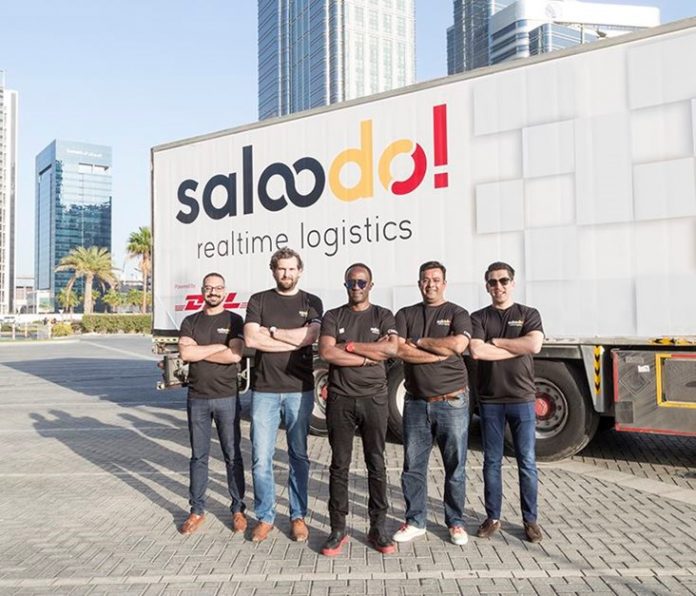
Road freight in Sub-Saharan Africa goes digital with DHL’s Saloodo!

Launching DHL’s Saloodo!

First international digital road freight platform to be launched in the continent; Provides shippers and carriers a one-stop platform for road freight connections for domestic shipments within South Africa and international movements to several neighbouring countries; Further expansion to connect shippers and carriers within Sub-Saharan Africa (SSA) is planned for early 2020.

Digital freight forwarder Saloodo! a subsidiary of DHL Global Forwarding, the leading international provider of air, sea and road freight services, today launched its digital logistics platform for shippers and transport providers in South Africa, bringing the first digital road freight solution to the region.

An efficient road freight network is a key conduit of trade within a geographically wide-spread country such as South Africa but also with 16 landlocked countries within Sub-Saharan Africa (SSA). However, much of the region’s road freight operations remain fragmented and highly traditional, missing out on the visibility, efficiency and security that logistics technology offers.

“Digital transformation is a top priority for the industry and given the demographics, we expect demand for digital transformation to be driven by emerging markets globally,” said Tobias Maier, CEO of Saloodo! Middle East and Africa. “Africa is the world’s youngest continent with 60% of the continent below 25. This is a dynamic generation of digitally-minded young adults, demanding smart, digital solutions both on the business and home front.”

With South Africa as its launch pad into Sub-Saharan Africa, Saloodo! is the first digital logistics platform available in the region that offers a single, simple and reliable interface for shippers and transport providers to best optimize cost, routes, cargo and transit times. Backed by DHL’s global and regional footprint and expertise, all contractual relationships on the platform are organized via the existing local DHL entity, providing trust and peace of mind to carriers and shippers alike.

“With real-time visibility, Saloodo! will inject greater transparency and efficiency to the road network in the region, enabling shippers – from small enterprises and start-ups to large multinational groups – to find trusted and reliable freight carriers in South Africa. This will in turn help carriers manage existing fleets and optimize capacity with full truckload shipments,” Maier added.

With a market value of R 121.1 billion (~€7.5 billion) in 2018, road freight volumes in South Africa have been increasing steadily exhibiting a growth of 5.6% in June 2019 when compared to the previous corresponding period. Equally, intra-Africa exports already accounted for 26 per cent and 12 per cent of South Africa’s 2018 total exports and imports respectively – almost 50% of which are with neighboring countries in this landlocked region.

The intuitive and simple-to-use platform was first launched in 2017 in Germany to connect companies and transport providers within Germany or from Germany throughout Europe.

Moving swiftly into emerging markets, the digital freight service was introduced in the Middle East just six months ago where some 350 shippers are already registered. Collectively, the service has grown to more than 30,000 shippers and over 12,000 carriers covering 35 countries.

During this time, the trucks managed by Saloodo! have travelled a total distance of 18 million km, which is equivalent to approximately 450 round-the-globe trips or more than 23 voyages to the moon and back.

Stories Continues after ad

4 Convenient Ways To Further Your Career In 2020

As the New Year approaches, expect your inbox, TV screens and letterboxes to be invaded by an absolute avalanche of aspirational advertising material for services and products promising to help you make 2020 your best year ever.

But before you spend a small fortune on tickets to see a so-called guru who’ll whip you up into a frenzy before selling you a slim volume of snake oil self-improvement tips for the equivalent of a month’s salary, or wasting your hard-earned cash on speed networking sessions that are such a whirlwind of manic activity that you leave barely remembering your own name, much less your new contacts’, please pause for a minute to take a proverbial chill pill!

There are several awesome, authentic ways to enhance your life and career prospects without compromising your self-respect and sending your credit card into meltdown. And what’s more, you can engage in most of these activities from the comfort of your own home.

With that in mind, here are four convenient ways to further your career in 2020.

  1. Join a MOOC

MOOC means Massive Open Online Course and these free and fascinating online resources have been offered by a wide variety or established and new educational bodies and corporate entities for several years now.

The quality varies and they typically have no formal academic value, but if you do your research you’ll probably find one of these freebie offerings that provides bona fide knowledge on a topic of professional interest – browse Class Central’s MOOC comparison ratings to see what floats your vocational boat.

  1. Enroll with The School Of Life

The School of Life is an emotional intelligence organisation which helps individuals live more fulfilling lives and choose careers wisely by considering philosophical, psychological and creative concepts from history’s greatest minds.

It has physical campuses across the world, but you can benefit from its sage approach to everything from finding a career which has meaning to balancing work with love by tuning into the accessible videos on its YouTube channel. Find out more at theschooloflife.com.

  1. Get To Grips With Storytelling

‘Storytelling’ has been a thought leadership buzzword for several years now, but most of what you’ll read online will never explain the tricky technical elements of telling a story that’s genuinely engaging.

However, take a John Yorke Story course and this renowned screenwriter will train you to use the classic five act story structure which audiences around the world find gripping and addictive – check out his website for online courses on storytelling for business, videogames, script development, business and more.

  1. Take a Distance Learning Degree

A higher education degree can still be one of the most reliable ways to climb the career ladder in your current company or sector or migrate to a totally different field.

And when you enroll with the likes of ARU Distance Learning, you’ll have the kudos of a British degree and the convenience of being to study remotely in your own time, thus earning while you learn and taking care of your family and financial responsibilities.

Any one of these four convenient career-boosting plans could genuinely make 2020 the year you achieve your career ambitions – in a steady and sensible manner without a get-rich quick con artist in sight!

So ends our list, but please share your own career development tips in the comments section.

Stories Continues after ad