Stanbic Bank
Stanbic Bank
19.8 C
Kampala
Stanbic Bank
Stanbic Bank
Home Blog Page 1125

2019 FUFA Women’s Super League Kicks off Saturday

UCU Lady Cardinals

The fixtures for the first round of the newly created FUFA Women Super League have been released.  The eight team league to be played over three rounds kicks off on 2nd November 2019.

Reigning League champions UCU Lady Cardinals will open their campaign with a match against She Corporate in Mukono while Kampala Queens play host to Olila High School at IUIU Kabojja Campus.

No playoffs will be considered this season. The team that accumulated the highest points after the three rounds (21 games per club) will be declared Champion.

The bottom two teams get relegated to the FUFA Women Elite League.

Fixtures

Match Day 1

Saturday 2nd Nov 2019

Kampala Queens Vs Olila High School IUIU Kabojja 4:00PM

UCU Lady Cardinals Vs She Corporates UCU Mukono 4:00PM

Sunday 3 rd Nov 2019

Muteesa 1 Royal Vs Lady Doves FC IUIU Kabojja 4:00PM

Kawempe Muslim Vs Uganda Martyrs H/S Kawempe Muslim 4:00PM


Match Day 2

Saturday 9th Nov 2019

Muteesa 1 Royal Vs Kawempe Muslim IUIU Kabojja 4:00PM

Uganda Martyrs H/S Vs Kampala Queens FC UMHS-Lubaga 4:00PM

Lady Doves FC Vs She Corporate FC Katusabe Dove Grd 4:00PM


Match Day 3

Saturday 16th Nov 2019

Olila High School vs Muteesa 1 Royal Olila Ground 4:00PM

Kampala Queens FC Vs UCU Lady Cardinals IUIU Kabojja 4:00PM

Sunday 17th Nov 2019

Kawempe Muslim Vs Lady Doves FC Kawempe Muslim 4:00PM

She Corporate FC Vs Uganda Martyrs H/S Namboole 4:00PM


Match Day 4

Saturday 23rd Nov 2019

Olila High School Vs She Corporate FC Olila Ground 4:00PM

Uganda Martyrs H/S Vs Lady Doves FC UMHS-Lubaga 4:00PM

Sunday 24th Nov 2019

Kampala Queens FC Vs Kawempe Muslim IUIU Kabojja 4:00PM

UCU Lady Cardinals Vs Muteesa 1 Royal UCU Mukono 4:00PM


Match Day 5

Saturday 1st Dec 2019

Lady Doves FC Vs Olila High School Katusabe Dove Grd 4:00PM

She Corporate FC Vs Kampala Queens FC Namboole 4:00PM

Sunday 2nd Dec 2019

Muteesa 1 Royal Vs Uganda Martyrs H/S IUIU Kabojja 4:00PM

Kawempe Muslim Vs UCU Lady Cardinals Kawempe Muslim 4:00PM


Match Day 6

Saturday 7th Dec 2019

Olila High School vs Kawempe Muslim Olila Ground 4:00PM

Uganda Martyrs H/S vs UCU Lady Cardinals FC UMHS-Lubaga 4:00PM

Sunday 8TH Dec 2019

Muteesa 1 Royal vs She Corporate FC IUIU Kabojja 4:00PM

Sunday 8TH Dec 2019 Lady Doves FC vs Kampala Queens FC Katusabe Dove Grd 4:00PM


Match Day 7

Sunday 14th Dec 2019

Uganda Martyrs H/S vs Olila High School FC UMHS-Lubaga 4:00PM

She Corporate FC vs Kawempe Muslim FC Namboole 4:00PM

Sunday 14th Dec 2019

UCU Lady Cardinals vs Lady Doves FC UCU Mukono 4:00PM

Kampala Queens FC vs Muteesa 1 Royal WFC IUIU Kabojja 4:00PM

Saturday 21st Dec 2019

UCU Lady Cardinals vs Olila High School UCU Mukono 4:00PM

Stories Continues after ad

Makerere concedes, reviews tuition policy and appoints committee to investigate police torture of students

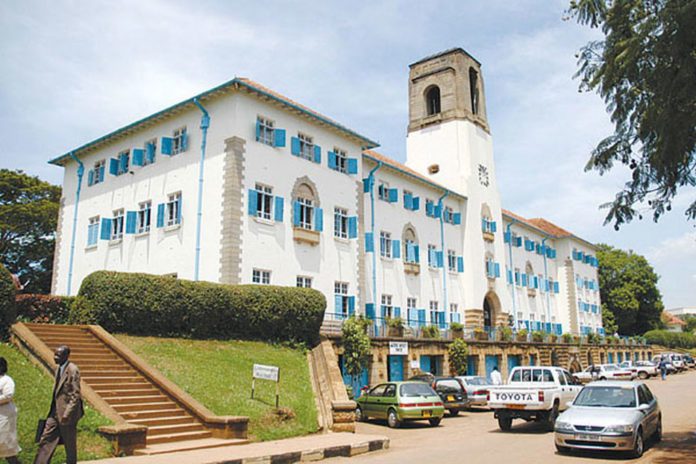
Makerere University Administration Building.

Makerere University Council, the administrative arm of the university, has bitterly agreed to make changes in the implementation of the 15 percent cumulative tuition policy in a bid to resolve a students’ demonstration that lasted for a week, forcing some lecturers to abandon teaching.

In an emergency meeting held with student leaders on Tuesday, the university council resolved to scrap the 15 percent increment from functional fees for the next three years.

“The 15 percent adjustment in fees shall not apply to functional fees for the remaining period of implementation of fees structure adopted in July 2018. Functional fees shall be capped at the rate applied on the admission cohort for 2019/2020 academic year for the next three years,” reads part of the statement signed by the council chairperson Ms Lorna Magara and the council secretary Mr Yufuf Kiranda.

However, the university council maintained that the 15 percent fees adjustment shall continue to be applied on tuition fees for the remaining period of three years.

Justifying the fees adjustments, the university council noted that it was conscious of the financial requirements to run the university alongside the economic circumstances in the country.

Further, the council said Makerere had not increased fees for 13 years before the current fees structure was passed.

Yesterday President Yoweri Museveni ordered the university administrators hold meetings with students’ leaders to solve the standoff. He also ordered the removal of the military from the university.

Meanwhile the council also ordered for investigations into the alleged involvement of two top university officials; Gordon Murangira, the Personal Assistant to the Vice-Chancellor and Prof. Eria Hisali, the Principal of College of Business and Management Sciences, in sanctioning military raids and brutalization of students at the institution and some are nursing injuries.

“That the allegations of threatening and battering students are taken seriously and need to be investigated. The chairperson of the council needs to communicate the matters of alleged threatening and battering of students to the vice-chancellor,” the council’s statement reads further.

A four-member select committee of council was formed to investigate the two officials and allegations of threatening and battering students.

Stories Continues after ad

Volkswagen and Siemens launch joint electric mobility pilot project in Rwanda

VW's electric car launched in Rwanda

In a first for the African continent, the Volkswagen Brand has launched a pilot project in partnership with Siemens to test the feasibility of electric mobility in an African country.

The pilot project, which will form part of Volkswagen’s operations in Rwanda, was officially announced today by Thomas Schäfer, CEO of Volkswagen Group South Africa and responsible for the Sub-Sahara Africa Region, in the presence of the Prime Minister of the Republic of Rwanda, Right Honourable Dr. Edouard Ngirente.

During the pilot phase, four e-Golfs and one charging station will be introduced in the capital of Rwanda, Kigali. Volkswagen has signed a joint development agreement with Siemens to provide the charging infrastructure for the electric cars.

With the launch of the pilot project, Rwanda becomes the first African country to introduce a Volkswagen electric car.

Thomas Schäfer said: “The success of our innovative and pioneering mobility solutions business has shown us that Rwanda has the potential to leapfrog the internal combustion engines into electric cars. Rwanda has a young and progressive population that appreciates individual and modern mobility. Together with our development partner Siemens and with the support from the Government of Rwanda, Volkswagen wants to make the e-Golf pilot project in Rwanda a blueprint for electric mobility in Africa.”

Sabine Dall’Omo, CEO for Siemens Southern and Eastern Africa said: “Our partnership with Volkswagen on this project solidifies our commitment not only to Rwanda but to the East Africa region.  By contributing towards shaping the African market for intelligent, adaptive infrastructure, while addressing skills challenges in this sector, Siemens is helping to build a more sustainable future for the people of Rwanda.”

The pilot e-Golfs will be added into the Volkswagen Mobility Solutions Rwanda fleet to provide customized mobility service.

The plan is to increase the number of the electric cars to 50 units and 15 charging stations, depending on the outcomes of the pilot project.

The drivers and technicians who will be working with the electric cars have received specialized training in preparation for launch of the pilot project.

“Africa’s youth need sustainable jobs and better prospects for a future in their home countries. Therefore, German development cooperation supports innovative ideas for vocational education and environmentally friendly mobility concepts for African cities. In this respect, initiatives such as Moving Rwanda are yet another step towards implementing the Marshall Plan with Africa,” said Dr. Gerd Müller, German Federal Minister for Economic Cooperation and Development.

The electric mobility project was developed within the Moving Rwanda initiative, a cooperation between Volkswagen, Siemens, SAP and Inros Lackner and the Deutsche Gesellschaft für Internationale Zusammenarbeit (GIZ) GmbH. GIZ supported the e-mobility project by bringing together relevant partners from the private and public sector and by advising on the development benefits of the project.

The Moving Rwanda Initiative was established as the result of Volkswagen’s initial investment in Rwanda, which saw the launch of Africa’s first Integrated Mobility Solutions business in June 2018.

Volkswagen Mobility Solutions Rwanda offers mobility solutions services such as ride-hailing and corporate car sharing. The services are offered on the Move App, an innovative IT mobility solution which was developed by a local IT start-up company, Awesomity Lab.

The services are offered using a fleet of vehicles assembled at Volkswagen Rwanda’s assembly facility in Kigali. By the end of 2019, Volkswagen Mobility Solutions Rwanda will have a fleet of more than 200 vehicles consisting of Polo, Amarok, Teramont and Passat.

Move App has about 27 000 registered users. Over 59 500 rides have been completed in the ride-hailing service since the beginning of 2019.

Thomas Schäfer commented: “The integrated mobility solutions business in Rwanda is our lighthouse project. In the past year, our operations in Kigali have provided us with valuable lessons and business intelligence which we plan to utilise in our growth strategy into other African markets like Ghana and Ethiopia.”

Sub-Sahara Africa expansion strategy gaining momentum

Africa is the last frontier for the automotive industry. Volkswagen’s long term goal is to play a leading and pioneering role in the development of the automotive industry in the continent. As such, Volkswagen has significantly expanded its engagement in Africa with the establishment of assembly facilities and marketing activities in Kenya, Rwanda and Nigeria. Ghana and Ethiopia are planned as the next locations.

Stories Continues after ad

Commonwealth gold medalist Stella Chesang receives Mitsubishi pick-up from Museveni

Stella Chesang (L)

President Museveni has awarded athlete Stella Chesang with a brand new vehicle to appreciate her for delivering gold medal for Uganda during the April 2018 Commonwealth games in Australia.

The vehicle, a Mitsubishi double cabin pickup truck L200, was handed to Chesang by the State House Assistant Private Secretary for Sports, Ms. Norah Nassimbwa at State House Nakasero.

Speaking at the handover over ceremony, Ms. Nassimbwa once again congratulated the gold medalist and tipped her to use the car as motivation for better results.

“This car is a result of your hard work on track and field. It is a token for represented Uganda so well. Keep working hard for better results and I hope this car does not cause you to relax but motivate you to push for greater things in life,” Ms. Nassimbwa said.

Chesang on her part she was grateful to President Museveni for ‘the blessing”.

“I am lost for words but so happy and grateful to President Museveni for this wonderful gift. I thank him for supporting Ugandan sports and I promise never to let him down,” Chesang said.

The 21-year old raced to gold in the 10,000m finals at the Gold Coast event in Australia in April 2018 to become the second-ever Ugandan champion in women’s events after Dorcus Inzikuru’s steeplechase gold medal in Melbourne in 2006.

Chesang’s gold medal was the second and final at the event, following Joshua Cheptegei who had won gold for Uganda in the men’s 5000m final.

However, while President Museveni gave a double cabin pick-up truck to Cheptegei upon his request, he saw it fit to award Uganda’s other winner (Chesang) with the same.

Stories Continues after ad

MPs asked to rescue Ugandans jailed in Zambia and Zimbabwe

Jail

Ugandans living in Southern Africa have urged parliament to help rescue nationals who have been jailed in Zambia and Zimbabwe.

Those languishing in jails were arrested as they attempted to cross into South Africa without valid travel documents that could help them travel through the two countries. They have been detained for several months without signs of their cases being disposed of.

The matter that now intertwines three governments was raised during a meeting with Uganda’s representatives to the Pan African Parliament (PAP) and the leadership of the Confederation of Ugandans in Southern Africa (COUSA) in South Africa on October 24, 2019.

“There are more than 40 Ugandans rotting in jail in Zimbabwe and several others in Zambia,” Moses Ssentongo, the COUSA President General told the meeting, adding that there is limited consular support to the incarcerated Ugandans.

Whilst Uganda has a high commission in Zambia, there is none in Zimbabwe meaning that Ugandans in distress can only be assisted by the High Commission in Pretoria, hundreds of kilometres away. Uganda and Zimbabwe continue to enjoy cordial relations so much that on October 9, 2019, President Emmerson Mnangagwa was a special guest at Uganda’s 57th Independence Day celebrations.

COUSA purposes to bring together and promote the social and economic development of the Ugandan community living in South Africa, Eswatini (formerly Swaziland), Lesotho, Botswana, Namibia and Zimbabwe.

A wide range of matters was discussed at the meeting including the tax regime and recent xenophobic attacks in South Africa in which some Ugandans were affected, with one losing a building to arsonists.

“We submitted our losses to the Embassy and also to the President when he was in Pretoria. However, we have since not heard from them,” Ssentongo said.

“Nigeria and Ghana have pushed South Africa to make concessions in regard to compensating their citizens who lost property during the xenophobic crisis. How do you offer lip service to somebody who has lost 10 years of hard work in just one day?” Raymond Wamala from the Organisation of Ugandans in South Africa, Johannesburg Chapter said.

Ssentongo, who also requested for removal of restrictions on visas and acquiring the “Go Home”, an emergency travel document issued by the Uganda High Commission further passionately appealed for government assistance in repatriating the bodies of Ugandans who die in the country.

“The cheapest we can spend on repatriation is South African Rand 24,000 (Shs6 million). Some Ugandans have ended up being buried here, not by choice but because of circumstances,” he said.

The association is currently stranded with the bodies of four Ugandans who perished in an accident on Saturday, 19 October 2019 in Kimberly, Northern Cape.

With the general elections due in 2021, they requested that the Electoral Commission works out mechanisms that allow the diaspora to vote.

The leader of Uganda’s delegation to PAP, Jacquiline Amongin, told the COUSA members that they had raised the issue of xenophobia attacks in Parliament back home which then requested the South African government to take measures to end the violence permanently.

Uganda’s other representatives at PAP are Prof. Morris Ogenga Latigo,  Anifa Kawooya,  Felix Okot Ogong and James Kakooza.

“We are going to raise these issues with the line ministers not only to cater for the concerns of Ugandans in Southern Africa but Ugandans the world over,” Amongin said and pledged to present their detailed report to Parliament.

Kawooya said there was need to put into place systems that work for all and advised COUSA to work hard at maintaining a good relationship with the High Commissions in their territories.

“What affects you, affects me,” she said, adding that terrorism and human trafficking had made governments around the world jealously guard their borders.

Okot Ogong encouraged them to legalise their status in the host countries before seeking assistance.

“The government back home wants to work with organised people. Organise yourselves and then ask for some money to support your activities,” he said.

Stories Continues after ad

Gulu: Stigmatisation causes high viral load among children living with HIV/AIDS

Clinician in lab

Children below 15 years of age living with HIV/AIDS are not showing signs of signs of low viral load suppression despite the fact that they are on anti-retroviral therapy (ART), according to officials the Aids Support Organisation, Gulu Branch.

The officials attribute the challenge to various factors like stigmatisation and lack of close support from the caretakers.

Martin Opok , a clinical officer at the facility says due stigmatisation, most children who are in high schools tend to dodge taking their medication as they fear being seen by their close friends.  “That’s the most hindering factor frustrating the suppressions of viral load in people living with HIV/AIDS,” he says.

Mildred Obirizeno, a child and adolescence counselor says it is high time parents began to take up responsibility of close monitoring of the sick children as well as effecting  timely and consistent medication of the sick children.

She says school heads should ensure that they support the children especially in providing food rich in diets as well as counselling them time and again so as not to lose hope.

Currently, Taso Gulu has a total 456 children on Anti-retroviral therapy. 115 of them are registering unsuppressed Viral Load of which 66 of them are under five years, while 15 are between the ages of 5 to 14 years.

Stories Continues after ad

NSSF Friends with Benefits: Edson Mwine inspired by paradigm shift from woodwork to metal work

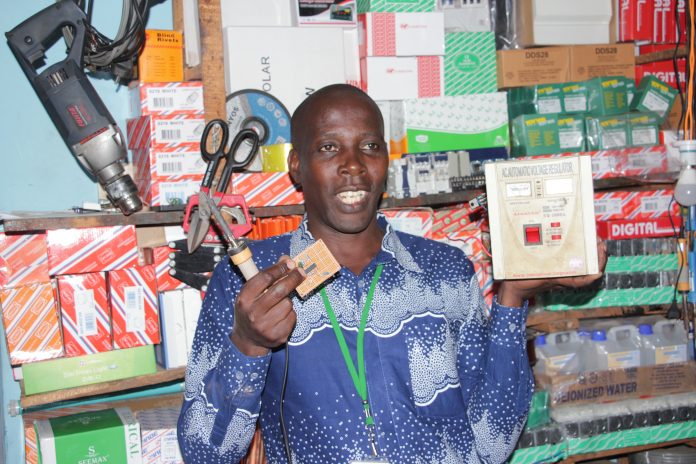
Edson Mwine Mataara

Well, like they say, Passion drives portfolio, Mr. Edson Mataara, a former Kyambogo University electric technician resigned from his job to start his own welding machine business in Rugando, Mbarara District.

A 46-year-old  Edison decided to resign after realizing that there was need for power and electricity services in the hard to reach areas like Rugando, a skilled Edison started by moving from door to  door looking for clients but because he had not established a workshop( what he called an address) and people did not trust him with their money.

In an attempt to be relevant in the community, Edison started teaching at a local technical training institute in Rugando and started another private coaching session for interested students. Therefore, these students trained started spreading word of mouth in the community and this subsequently instigated demand of Edison’s electrical services in the community.

Edison who had crossed from Kyambogo to the government technical training institute decided to withdraw his NSSF benefits in the scheme known as exemption employment benefits in 2018

These benefits are paid to contributing members who join employment categories that are excepted i.e. have their own social protection schemes that are recognized under the existing law and are exempted from contributing to NSSF; e.g. the Police, Army, Prisons, Civil Service and Government Teaching service employees or members of any scheme who have received exemption from the Ministry in charge of Social Security.

Unlike many of us who think that saving and investment is done by only the rich, Edison received Ugx 600,000 only as his NSSF benefits. He first registered a company known as Mataala electrical contractors and Engineers then opened up an electrical shop that is mainly stocked by his hand-made welding machines.

“I was inspired by the paradigm shift from wood work to metal work that is trending globally. I am a skilled person and therefore I have to exploit and pass on the skills to the next generation especially in this village of Rugando. My welding machine business serves two functions and that is training and business, “Edson said

Edison who started with only Shs.600,000 from NSSF has so far made 20 welding machines and each fully finished welding machines is costs Ugx1M and has established an electrical shop in Rugando Trading centre.

The demand of his products has been driven by many factors such as the government policy of Electricity Connection Policy (ECP) of all villages country wide, the Paradigm shift from wood work to metal work, the quality his welding machine and finally the student trained in the same field.

Mr. Edison has only been challenged by financial constraints to manufacture enough welding machines and we speak; demand is overwhelming the supply plus inadequate raw material to manufacture enough welding machines.

Surprisingly enough, Edison has been able to sell some of his products as far as Kasese, Bushenyi and Masaka.This has been his source of inspiration to continue in business despite the existing challenges.

Edison has so far trained more than 200 students in the field of industrial training (electrical installation and welding manufacturing) and these range from graduates to certificate students who are awarded with an informal certificate commonly known as certificate of participation.

“In future, I look forward to training more than 1000 students because there is need for this kind of skill. I decided to participate in this NSSF friends with benefits because I need to increase the number of employees and boost industrialization in our region, “Edison said

Saving with the NSSF has been an opportunity for Edison because he has been able to follow his passion that is coincidentally in line with his profession. Therefore, he requests everyone especially the youth to start saving with the Fund with little they have.

To vote for Mr. Mwine Edison Mataala in the NSSF Friends with Benefits competition, dial *254# or go to www.nssfug.org

Stories Continues after ad

NSSF Friends with Benefits: How Dr. Sarah Lubanga used her savings to take advantage of sweet opportunity

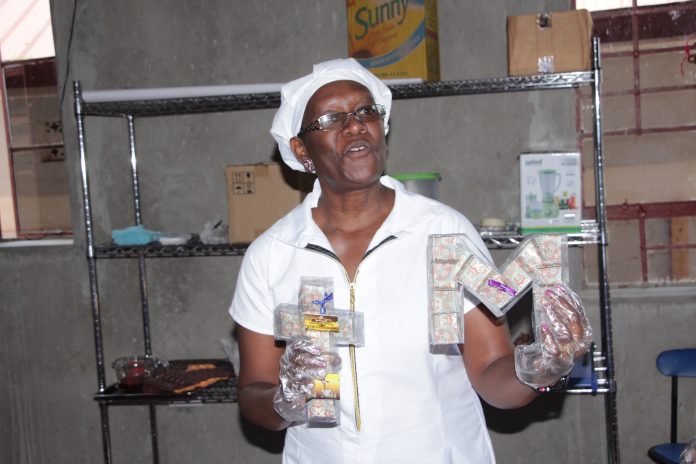
Dr Sarah Mubiru

Without change there is no innovation, creativity, or incentive for improvement. Those who initiate change will have a better opportunity to manage the change that is inevitable. Dr. Sarah Lubanga Mubiru an Agricultural scientist has changed the sweet business in Uganda by innovating a sweet out of honey.

Dr. Sarah Mubiru who is the only the female contestant in this NSSF Friends with benefits competition had worked with different Organizations such as National Agriculture Research Organization, Association for Strengthening Agricultural Research in East and Central Africa, Netherlands Development Organization and lastly Food and Agricultural Organization of the United Nations.

In 2016, a 50-year-old Dr. Sarah receded from her work to start her own business because according to her, there many things she would have done but couldn’t because of the work pressure. During her working time Sarah was saving with NSSF and therefore, after retirement, she decided to withdraw her NSSF benefits and this process to took her only one week to access her benefits

An amount of Shs150 million was deposited on her account as her NSSF benefits and as someone who had an innovative mind with a sweet tooth, Dr. Sarah prioritized a sweet manufacturing factory which she named Aroma Honey Toffee where she makes sweets out honey and this investment was worth Shs50-60M

As an Agricultural Scientist with vast experience in the field of research, Dr Sarah started a consultancy firm known as Sow and Grow foundation with her research fellows across the world which makes them able to bid for any business worldwide.

In attempt to create an extra income that can sustain the rest of the family needs, Dr. Sarah purchased a plot in Kasangati that can be rented and bring in income on a monthly basis.

 “ I have used my NSSF benefits to invest in many businesses but Aroma Honey Toffee is still  an outstanding innovation  because I  have not seen any sweet that is locally made in Uganda and this gives me the morale to improve  the quality of my product to meet the world standards,” Dr Sarah said

Aroma Honey Toffee has already been recognized by the Bio-innovate Africa and the institute has recommended the sweet to be sold across East Africa. This prompted Dr. Sarah to get more partners in the region. Aroma Honey Toffee has now got its regional partners such as Salongo rehabilitation group and Union of bee keepers of ishuwari in Kenya and Rwanda respectively

Aroma Honey Toffee employs 3 part-times skilled employees whose daily job is to make sweets, package them and distribute on orders because apparently Aroma Honey toffee is not yet in supermarkets due to delays in certification.

Dr. Sarah, unlike other entrepreneurs, her main challenge is lack of adequate and relevant information in the industry of manufacturing and business development for example she has been asking her how best can one organize the confectionery product like Aroma Honey Toffee?

Despite this challenge, Dr. Sarah has read many books with relevant information, attended workshops and went back in a classroom to study business development and according to her, learning is a continuous process.

A 53 -year- old Dr. Sarah Mubiru looks at a future where Aroma Honey Toffee is going to develop into a big regional sweet industry in the East and central Africa employing over 1000 employees because of its current potential.

The agricultural scientist decided to apply for voluntary saving with the NSSF even after she had withdrawn her NSSF retirement benefits and according to her that should serve as an inspiration to all people both employed or unemployed. Dr. Sarah does not agree with the current debate roaming around that savers should get their benefits at the age of 45 years.

 To vote for Dr. Sarah Lubanga Mubiru in the NSSF Friends with Benefits competition, dial *254# or go to www.nssfug.org.

Stories Continues after ad

Makerere strike: Museveni summons NRM MPs for urgent meeting

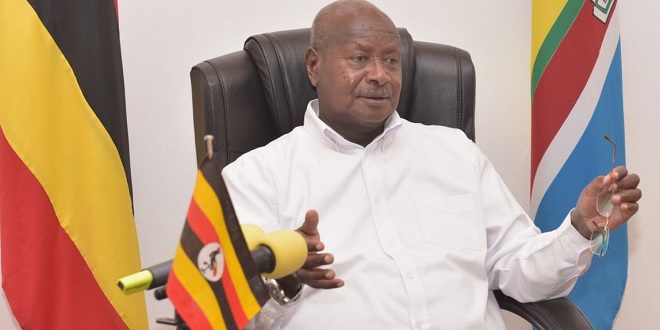
President Yoweri K. Museveni

President Yoweri Museveni, who doubles as the Chairperson of National Resistance Movement (NRM), has summoned NRM Parliamentary Caucus for an urgent meeting to discuss the ongoing strike at Makerere University.

The protests that commenced on Tuesday last week were spearheaded by Mollie Siperia, the Guild Representative Councilor for School of psychology and one Frank Bwambale who were later nabbed and suspended by the university vice chancellor Prof. Barnabas Nawangwe.

Unconfirmed reports indicate that Siperia who was brutally assaulted is currently hospitalized at unknown medical facility in Kampala.

The strikes are arising from 15 percent cumulative tuition increment, a policy that was passed and will go for five years. The cumulative tuition policy is only applicable to new students.

Police and other security agencies have been engaging into running battles with students to curb chaos that has always ensued for the past seven days.

On Thursday last week, Police other security organs broke into students halls of residence such as Mary Stuart and others in the latest reign of terror at the university where even disabled students were battered by the police and the army officers.

And yesterday, the dialogue that was meant to resolve the impasse between the Makerere University administration and guild leadership, turned rowdy and ended prematurely as students threatened to beat up members of University central admin including the acting Vice Chancellor Umar Kakumba.

The University central administration maintained, the 15 per cent tuition increment policy and revoked suspension of two students, Mollie Spellia and Frank Bwambale however the two will face Makerere university disciplinary committee presided over by grade one magistrate.

Stories Continues after ad

First Lady Janet Museveni speaks out on Makerere strike, accuses student leaders of corruption and disrespect of police

First Lady Janet Kataaha Museveni

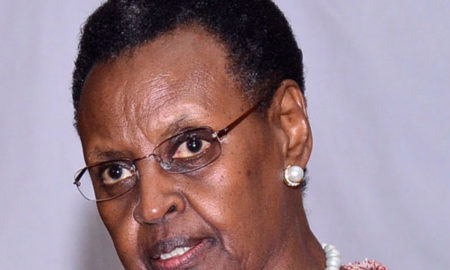
The First Lady Janet Museveni who also doubles as the Minister of Education and Sports has finally spoken out on the on-going students’ strike at Makerere University, saying the 15 tuition percent  increment was agreed on between the university administrators and students’ leaders and that the students turning against it is a form of corruption.

“It is important to understand that Makerere University Management took the trouble to ensure that students were fully involved and consulted in the process of establishing an acceptable tuition fee structure for the Institution, through a series of consultations with the student leadership, and the outcomes were agreed upon by both parties, as well as bench-marking with other similar universities. How then do students turn around, afterwards, and accuse the University management of imposing “high costs” on the students?” She asks.

On police brutality the First Lady says she does not condone it but went ahead to quote the Bible (Romans 13:1-5) that speaks of respect for those with authority.

“Let everyone be subject to the governing authorities, for there is no authority except that which God has established. The authorities that exist have been established by God. Consequently, whoever rebels against the authority is rebelling against what God has instituted, and those who do so will bring judgment on themselves. For rulers hold no terror for those who do right, but for those who do wrong. Do you want to be free from fear of the one in authority? Then do what is right and you will be commended. For the one in authority is God’s servant for your good. But if you do wrong, be afraid, for rulers do not bear the sword for no reason. They are God’s servants, agents of wrath to bring punishment on the wrongdoer. Therefore, it is necessary to submit to the authorities, not only because of possible punishment but also as a matter of conscience.”

Below is Frist Lady’s full message

To the Ugandan Children who Call me Maama by Choice

Today, I would like to discuss the topic of corruption with you. The Oxford English Dictionary defines corruption as the dishonest or illegal behavior especially of people in authority. This word is used a lot these days. It is possible that many people, especially young people, often wonder but never try to understand what corruption really means.
In the last two days or so, we have had some students from Makerere University demonstrating over an increase in tuition fees agreed upon in 2018 which was to start with first year students of the academic year 2018/2019. Recently, I got concerned and tried to find out whether there are good and genuine reasons that may have caused this unrest.

First of all, I thought it reasonable to compare Makerere University fees structure with those of other Universities. The University whose fees structure I got readily and quickly was that of Uganda Christian University – Mukono – whose comparison is as follows for a select number of courses (the fees shown are per Semester; not Academic Year):

Undergraduate Course Makerere UCU
Bachelor of SWASA 1,110,900.00 1,618,000.00
Bachelor of Arts/Science in Educ 888,720.00 1,618,000.00
Bachelor of Dental Surgery 1,777,440.00 5,000,000.00
Bachelor of Medicine 1,777,440.00 5,000,000.00
Bachelor of Laws 1,666,350.00 2,225,000.00
BS Computer Science 1,666,350.00 2,225,000.00
Bachelor of Business Administration 1,520,875.00 1,618,000.00
B. Industrial Fine Art &Design 1,110,900.00 1,741,000.00

That aside, however, you may ask, “What has all this to do with corruption?” Corruption has so much to do with what is happening at our Universities – not just Makerere University but several others. First of all, it is important to understand that Makerere University Management took the trouble to ensure that students were fully involved and consulted in the process of establishing an acceptable tuition fee structure for the Institution, through a series of consultations with the student leadership, and the outcomes were agreed upon by both parties, as well as bench-marking with other similar universities. How then do students turn around, afterwards, and accuse the University management of imposing “high costs” on the students? Surely, the logical and right thing to do would have been to ask for further consultations so as to revisit the issue and find a new way forward.

That notwithstanding, I have learned with dismay that some of the people involved in this “demonstration” are not students from Makerere University or any other university for that matter. They are people who have made it their way of life to be paid to join any riot wherever it is happening. Apparently, the political opposition in this country – who are well funded “somehow” by some “unknown sources” – find it useful to pay unemployed young people to riot wherever and whenever they believe they see a viable opportunity.

What is most disheartening is that some of the students at the forefront of these dubious demonstrations at Makerere University are the “privileged ones”. For example, many of these students are sponsored by Government, Master Card Foundation, State House while others are beneficiaries of the Higher Education Students Loan Scheme. One young student lied about his “vulnerable family” to get on the State House Scholarship program only for us to learn later that he has an able-bodied mother with a well-paying Government job! That makes one wonder: What is behind these student demonstrations?

For these vulnerable young people and the adults who pay them it seems as if nothing else matters – not these young people whose minds are distorted early in life; not the fact that the resources used to replace destroyed University property could have solved another problem somewhere; not the consideration that this is very wrong instruction to students of how problems are solved in life without confrontation and destruction of life and property. Nothing constructive or educational at all is achieved. Instead, the public is misled through their skewed propaganda as to what is really happening.

Unfortunately for those who stir trouble and mislead young minds, there is One who sees what is in people’s hearts and He is the One who is the ultimate Judge; that Judge holds all of us to account; soon or later. We may not see that judgment quickly but in due time it does catch up with each one of us.

Therefore, I address this article to all our young people, but especially to those at Makerere University and other institutions of learning, to advise them to desist from being used by unscrupulous people who do not care about what happens to them now or in the future, and who will abandon them as soon as they have achieved their mischievous purposes.

This then is the corruption we talk about so much without understanding what it is or where it is found. When you hear of corruption, start by examining yourself: Is it possible that you are corrupt too? Are you paying young people to do what is not lawful for them to do? Are you paying people to go and masquerade as University students demonstrating? Are you paying foreign journalists to come here and tell lies about things they know nothing about, just so you can convince the world that your story is the true one? Are you using the University fees scenario as a façade to cover up something else?

Next time you are tempted to point a finger at corrupt people, if you are guilty of any of the above, know that you too are corrupt; begin with yourself. The Bible has many stories that tell you what the ultimate Judge sometimes does with corrupt people. For example in the old biblical days, a man called Naaman, Army Commander of the Syrian Army, was suffering from leprosy. Naaman got to know that in Israel there was a man called Elisha who was a true Prophet of the Living God who could heal his disease (you may look it up in 2 Kings Chapter 5:1-27). Naaman packed money and precious gifts and went to see Prophet Elisha in Israel. The Prophet and a servant called Gehazi who met Naaman. After Naaman had been cured of his disease, he offered Prophet Elisha the gifts he had brought him but the Prophet refused the gifts. A while later, after Naaman and the Prophet had parted, Gehazi ran and caught up with Naaman and claimed that the prophet had sent him to pick the gifts. Thereafter, Gehazi appropriated the gifts for himself. But the Judge in Heaven revealed this trickery to Prophet Elisha. As a result of that “corruption”, Gehazi was struck with the leprosy that had been on Naaman and he ceased to be servant to the Prophet of God. The lesson of this story is that there is a price to pay for every act of corruption that we carry out, whether or not people are looking at us – there is a Higher Judge.

As I conclude, I thought I would say something about the way the public tend to quickly judge the Police interventions in cases like this; and I am in no way condoning brutal treatment wherever it may occur. Let me share with you what the Bible says about Government’s role in peace keeping through enforcement of law and order, in the book of Romans 13:1-5 “Let everyone be subject to the governing authorities, for there is no authority except that which God has established. The authorities that exist have been established by God. Consequently, whoever rebels against the authority is rebelling against what God has instituted, and those who do so will bring judgment on themselves. For rulers hold no terror for those who do right, but for those who do wrong.

Do you want to be free from fear of the one in authority? Then do what is right and you will be commended. For the one in authority is God’s servant for your good. But if you do wrong, be afraid, for rulers do not bear the sword for no reason. They are God’s servants, agents of wrath to bring punishment on the wrongdoer. Therefore, it is necessary to submit to the authorities, not only because of possible punishment but also as a matter of conscience.”

Janet K. Museveni
First Lady and Minister of Education and Sports

Stories Continues after ad