Stanbic Bank
Stanbic Bank
17.8 C
Kampala
Stanbic Bank
Stanbic Bank
Home Blog Page 1127

Yaya Toure says FIFA ‘don’t care’ about racism in football

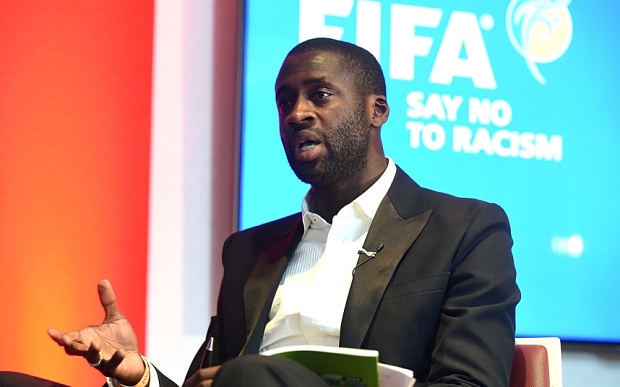
LONDON, ENGLAND: Yaya Toure speaks during the launch of FIFA Anti-Discrimination Monitoring System at Wembley Stadium in London, England. (Photo by Tom Dulat - FIFA/FIFA via Getty Images)

Yaya Toure says FIFA is not doing enough to stamp out racism and that England should have walked off the pitch in the face of monkey chants during their Euro 2020 qualifier in Bulgaria.

The 36-year-old former Barcelona and Manchester City midfielder made the comments to AFP after Qingdao Huanghai clinched promotion to the Chinese Super League at the weekend.

England’s 6-0 victory in Sofia earlier this month was marred by racist chants and Nazi salutes from a section of Bulgarian fans.

The game was halted twice during the first half but England players opted to complete the match instead of walking off the pitch.

“This is a shame, why are you playing for England?” Toure, who has been outspoken on football’s racism problem, said of the decision.

“They are always talking, ‘Blah, blah, blah’, and what? Nothing changes.”

Turning his real fire on football’s decision-makers, the four-time African player of the year said: “People from FIFA don’t care anyway because we’ve been talking about this, but it’s still continuing.

“I don’t want to say that I’m not concerned, I’m concerned,” said the former Ivory Coast international.

Raheem Sterling, the England and Manchester City forward, has been widely praised for playing a prominent role in calling out the racists at home and abroad.

But Toure, his former team-mate at City, said that was “not good enough”.

Toure, whose trophy haul includes three Premier League titles with City and a UEFA Champions League with Barcelona, believes it is time the players took more decisive action.

“They have to be serious about it, players need to make serious moves about it otherwise they (the racists) will continue to do that,” he said.

“They have to get the players out of the field.”

FIFA did not immediately reply to an AFP request for comment.

– ‘They respect nobody’ –

Toure was speaking after he played a pivotal role for Qingdao in a 2-0 win on Saturday at Shanghai Shenxin, attended by just a few hundred spectators.

Victory ensured promotion to the top-tier Chinese Super League for the team that Toure joined in July, but he is unlikely to make the move up with them next year.

“I think I’ll finish in December or January, then go, have another challenge,” he said, vowing to play on until he is 40.

“People are thinking that I’m done, but I’m not done yet,” he said.

Toure has enjoyed his spell in Chinese football and stressed that he has never experienced any form of discrimination in the country.

“It’s been a nice experience because I’ve seen people with a different mentality from Europe — the way to play football, the way they feel and their behaviour on the field,” he said.

“When I play in the stadiums, nobody boos me because I’m black, it’s a different culture, they respect.

“In Europe, they respect nobody.”

Stories Continues after ad

OP-ED: Russia’s scramble for Africa

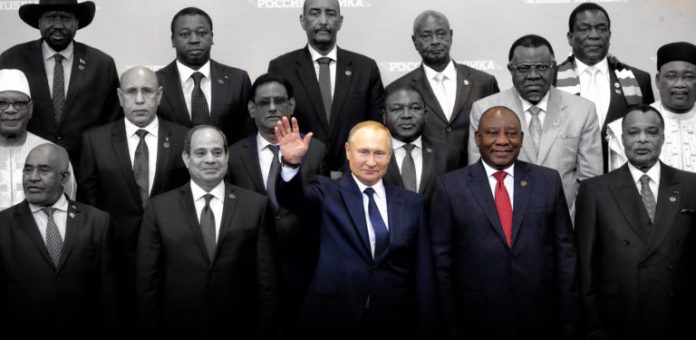
Russia's president Vladimir Putin with African leaders at Russia-Africa Summit in Sochi, Russia

Dzvinka Kachur and Mark Swilling

More than 40 African heads of state return from Sochi after a fervent courting by Russia and with the ink drying on some substantial deals. Ethiopia and Rwanda have sealed nuclear co-operation agreements to bring the number of African countries keen on nuclear development to 18. South Africa is not among them.

The Black Sea retreat that is said to have been years in the making aimed to offer African leaders a renewed sense of partnership with Russia, who played the decolonial card with a firm hand.

African sovereignty, independence and a disdain for bullish western politics was the charm Russian President Vladimir Putin laid on thick. Analysts say the Kremlin claims that it has racked up $12.5-billion in deals over the two-day Russia-Africa summit. But it remains to be seen whether they actually materialise as real investments. The symbolically laden event to bolster co-operation and trade comes as sanctions against Russia persist. Firming up a Russia-Africa trading bloc is clearly a way to escape these constraints by structuring more deals in Russian roubles to improve economic stability.

Russian economic presence on the African continent is quite small. The $20-billion trade with all African countries is almost two times smaller than African deals with France and pales in comparison with China’s almost $200-billion worth of investments in Africa. So, what is Russia’s plan for saving African countries from the West?

To start, Putin has announced the forgiveness of the Soviet Union-era debts to several countries, including Ethiopia, Mozambique and Madagascar. Wiping out debts for Mozambique comes with new agreements that allow Russia’s Rosneft access to the natural gas resources in Mozambique (that could create tensions with China) and co-operation in the military area. Many of the agreements also assume state loans from Russia. The structure of agreements hardly takes a “no strings attached” approach.

Russia is believed to have a long history of using state loans for the political benefit which has often facilitated an opportunity for corruption with its neighbouring countries. South Africa is one country that was on the brink of inking a state loan from Russia to construct a nuclear fleet. Had the almost R1-trillion deal gone through it might have collapsed the South African economy over the long run because of the way energy prices would have been driven relentlessly upwards.

Nuclear energy now costs globally between R1.70 and R2.80/kWh, compared to coal which is R1.30/kWh and renewables which are between 50c and 60c/kWh. Despite the potentially disastrous consequences of the nuclear deal, former South African president Jacob Zuma remained loyal to Russia:

“They would not come for us. They would understand, we would have an agreement to work out another arrangement. We know they [Russia] are trusted people. We know they will never sink us; they will lift us.”

In Putin, Zuma found an ally who shared contempt for western colonisation and hostile western businesses.

Russia has sought a way to take the sting out of finance agreements with business partners, setting out what it calls more favourable conditions for financing, instead of the punitive measures of western institutions. The International Agency of Sovereign Development RBK (IASD) launched earlier this year was promoted at the summit. The agency has already facilitated $2.5-billion worth of deals with Niger, Guinea and the Democratic Republic of Congo.

The non-state agency was positioned as a general partner of the summit and constitutes a collective of “consultants” with headquarters in Moscow. It is headed by Konstantin Malofeev, who was closely connected to the mercenary activities in Eastern Ukraine. Malofeev says:

“We have a network of direct contacts at the highest level with governments, institutions, corporations and investors around the world. We are supporting economic reforms in the countries which are trying to get out of economic and financial dependency of the western countries… Our goal is decolonisation, identifying infrastructural projects for investments.” Transparency is not part of this decolonial project as Malofeev has refused to disclose funding sources.

Military co-operation appears to be another central pivot for Russia which has pursued security contracts with more than 40 African countries to the tune of $3-billion in 2018.

“We will continue our course towards expanding contacts between the special services and law enforcement agencies of Russia and Africa in the field of combating terrorism, organised crime, drug trafficking, money laundering, illegal migration and piracy,” explained Putin.

The contracts foresee supplying military equipment, training military personnel, establishing service centres for Russian military equipment and more. Some deals are more than just an exchange of money for hardware and expertise though. Russia has received access to decision-making circles in Sudan’s Ministry of Defence, while Russian citizen Valeriy Zakharov was appointed national security adviser to the President of the Central African Republic (CAR).

Russia’s other leverage for earning state credit is the energy sector. Russia’s national nuclear corporation, Rosatom, is at different stages of negotiating nuclear power plant construction with more than 15 countries in Africa. The closest to implementation is the nuclear power plant on the Mediterranean coast in El Daaba, Egypt, where four third-generation VVER 1200 reactors are planned by 2028-2029.

Russia provides most of the funding, 85%, of the $21-billion nuclear power plant. In addition, Rosatom gets a 60-year servicing contract to maintain the reactors. Among other countries negotiating for nuclear plants are Nigeria, Uganda, Rwanda, Ghana and more. Most of these countries lack the capacity to distribute the amount of energy that these nuclear plants will produce.

It may still be a bit early for citizens of African countries to worry — out of the 26 reactors that were planned for the end of 2014, only five came online in 2018. However, those who do bow to pressure and agree to the construction of a nuclear power plant will soon discover that a Russian nuclear power plant is more than just an energy generator: it is more akin to a hybrid combination of a powerful embassy and a military base, complete with a sovereign guarantee to cover the loan finance.

In the months leading up to the summit, Russian officials met with almost all of their African counterparts. Each meeting would start with the story of the common history of the struggle for political and economic independence against the West. The ideological push from Russia is that western countries are out to exploit African nations, while Russia is a partner for development and an ally at the international level.

It would do well for African states to remember that Russia is a country where racism and homophobia in public discourse are rife. In September 2019, the CEO of Russian VTB bank Andrey Kostin addressed the Mozambican government saying:

I hope our black friends in Mozambique are listening to this”. It begs the question: how will Putin’s revival of European fascist ideas associated with the fascist writer Ivan Ilyin and propagated by the highly influential Izborsk Club be reconciled with what it will take to build trust-based relationships with African leaders?

The Izborsk Club includes Putin confidantes like Alexander Dugin, Sergei Glazyev, Tikhon Shevkunov and founder Alexander Prokhanov. Prokhanov blames the Jews for the Holocaust and when he heard that a delegation of Russians had met President Barack Obama he moaned that it was “as if they had all been given a black teat, and they all suck at it with lust and mammalian smacking… In the end, I was humiliated by this.”

In Prokhanov’s eyes Europe is dying:

“The white race is perishing: gay marriages, pederasts rule the cities, women can’t find men.” This is the man who has accompanied Putin on radio shows and whose ideas shape Putin’s Eurasian expansionism.

What may bind Russians and Africans together would be strident nationalism and anti-West sentiment (especially with the likes of Trump and Johnson in power); but tensions may arise when Africans become aware of the white supremacist ideas that are core to the ideology that the Putin power elite likes to propagate within the Russian cultural-polity. Ironically, there is very little to distinguish between the ideologies propagated by Trump adviser Steve Bannon and Putin thought leader Alexander Prokhanov.

Russia is an active international player that was part of the G8 prior to its illegal annexation of Ukrainian Crimea. It has veto power in the UN Security Council and is a member of BRICS. The opportunity to strengthen its sphere of influence by courting 55 African countries’ allegiance is worth the effort of the mammoth undertaking of organising this summit. After all, those African nations hold 25% of votes in the UN.

In 2014, when Russia annexed Crimea and UN Resolution 68/262 was adopted on March 27 2014 (“Territorial integrity of Ukraine”), 18 African countries voted in support of the resolution. Only two countries, Sudan and Zimbabwe, supported the Russian position in 2014. On a similar vote in 2018, the total number rose to eight countries: Burundi, Chad, Comoro, Eritrea, Sudan, South Sudan, Zimbabwe, Uganda and South Africa.

As Russia sets out to reshape global geopolitics, African leaders should not forget that the Russian economy is struggling, with GDP growth that is predicted to be a mere 1.3% in 2019, averaging 0.32% over the period 2015 to 2019. The levels of poverty in some areas in Russia are comparable to those in many African countries. Racism, homophobia, a constricted civil society and curtailed human rights are all hallmarks of the Russian Federation under Putin. Africans should be under no illusion about who their suitor really is, especially those who value their democratic institutions and practices.

Dzvinka Kachur and Mark Swilling write for the Centre for Complex Systems in Transition Stellenbosch University.

Stories Continues after ad

Proline hold Libyan club Al Nasr Benghazi in Caf Confederation Cup play-off

Proline FC

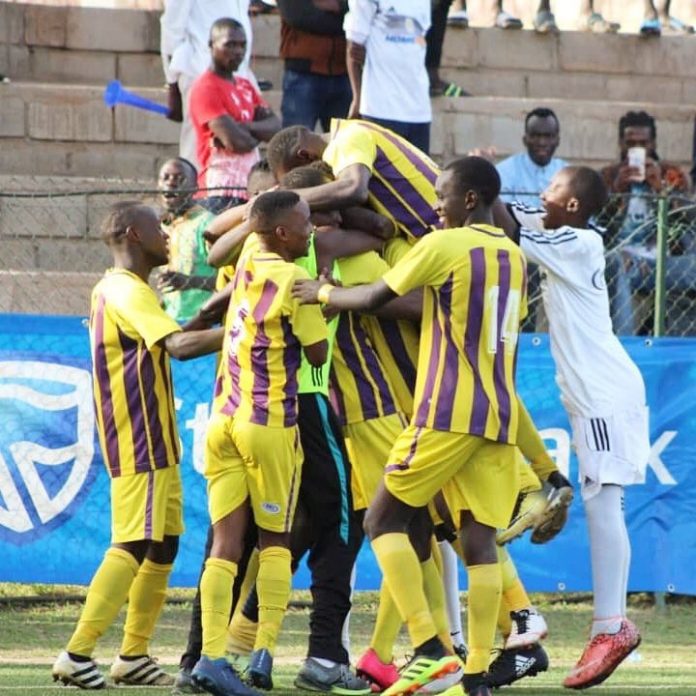
Ugandan side Proline FC came from behind twice to force a 2-2 draw with Libyan outfit Al Nasr Benghazi in the first leg of the Total CAF Confederation Cup play-off round played on Sunday night in the Egyptian city of Alexandria.

Bright Anukani scored the equalizer for the Ugandan Cup champions 12 minutes from time to give them a lifeline with two away goals heading into the return fixture in Kampala next weekend.

A scoreless or 1-1 draw in Kampala will be enough to book the side a historic place in the Confederations Cup group stages while Al Nasr must now win or pick a draw of more than three goals in East Africa to go through.

The Libyans broke the deadlock in the 13th minute through lanky forward Moataz Al Mahdi who picked the ball beautifully from 10 yards out before slamming it into the bottom right corner. The North Africans had more chances to score after starting the tie brighter, but missed precious opportunities.

They were made to pay at the stroke of halftime when Mustafa Mujuzi struck a belter of a freekick from the edge of the area catching the keeper completely off-guard.

Al Nasr, just like they did in the opening stanza, started brighter in the second half. They went 2-1 up on 68 minutes when Khalid Madji slotted home from the penalty spot after Richard Ajuna handled the ball inside the box.

Against the run of play, Anukani drew the Ugandans level ten minutes later.

Meanwhile in Nouakchott, Mauritania champions Nouadhibou were too sweet for Zimbabwe’s Sugar Boys, Triangle United, hitting them 2-0 to earn a first leg advantage. The home side scored twice within five minutes to pick the victory and take control of the two-legged tie.

Mahamane Cisse broke the deadlock in the 52th minute before skipper Abdulaye Gueye thundered the net for the second in the 57th minute, to put the homers on course for a first ever appearance at the group stage.

Results

27.10.2019 Conakry Horoya (Guinea) 4-2 Bandari (Kenya)

27.10.2019 Mwanza Young Africans (Tanzania) 1-2 Pyramids (Egypt)

27.10.2019 Aba Enyimba (Nigeria) 2-0 TS Galaxy (South Africa)

27.10.2019 Kampala KCCA (Uganda) 0-0 Paradou (Algeria)

27.10.2019 Nairobi Gor Mahia (Kenya) 1-1 Motema Pembe (DR Congo)

27.10.2019 Maputo UD Songo (Mozambique) 1-2 Bidvest Wits (South Africa)

27.10.2019 N’djamena Elect Sport (Chad) 0-1 Djoliba (Bamako)

27.10.2019 Lusaka Green Eagles (Zambia) 1-1 HUSA (Morocco)

27.10.2019 Malabo Cano Sport (Equatorial Guinea) 1-3 Zanaco (Zambia)

27.10.2019 Antananarivo Fosa Juniors (Madagascar) 2-0 RS Berkane (Morocco)

27.10.2019 Victoria Cote d’Or (Seychelles) 0-4 El Masry (Egypt)

27.10.2019 Lome ASC Kara (Togo) 2-1 Rangers (Nigeria)

27.10.2019 Nouakchott Nouadhibou (Mauritania) 2-0 Triangle (Zimbabwe)

27.10.2019 Alexandria El Nasr (Libya) 2-2 Proline (Uganda)

*27.10.2019 Kumasi Kotoko (Ghana) vs San Pedro (Cote d’Ivoire)

30.10.2019 Thies Generation Foot (Senega) vs ESAE (Benin)

*Match abandoned to due to heavy rains at the end of the first half. Game continues on Monday with the second half.

Stories Continues after ad
Ssekandi boosts efforts to construct church in Namutumba district

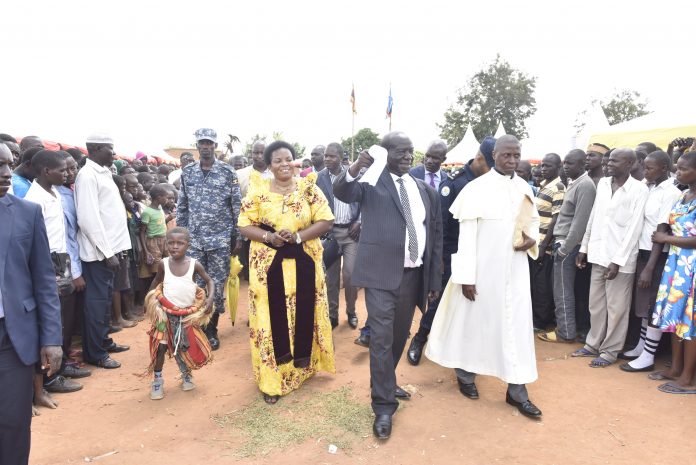
Ssekandi arrives for function

The Vice President Edward Kiwanuka Ssekandi has called upon leaders especially in the local governments to support religious organisations saying they contribute to the stable socio–economic wellbeing of the people they serve.

He was yesterday speaking at the fundraising drive for St. Peter’s Catholic Church in Nabweyi Sub county in Namutumba District told those who attended the event that Government appreciates the church contribution to the development of the country adding that the church has been a strong ally in complementing Government efforts towards service delivery.

Ssekandi who contributed five million shillings towards the construction, pledged more support to the project and urged the clergy to mobilise followers into activities that will improve household incomes which in turn, he said, will also support church activities.

He also urged Christians to be exemplary and the salt of the world as taught in the holy scriptures and also urged the community to support religious works and projects saying they are best suited to sustain such projects for the benefit of their own areas.

He said that the church and other religious entities have had remarkable and effective contribution to the development of the country in the provision of social services and pledged Government commitment in providing infrastructure and maintenance of peace, tenets he said are key in the transformation of the country.

He called upon the church and leaders at all levels to make use of available Government programmes to mobilise their communities into income generating activities and ensure that household expenditure is less than the average household earning.

The function organised by the State Minister for Lands and MP for Bukono County,  Persis Namuganza was attended by local leaders and the religious leaders from the various denominations.

Stories Continues after ad
Bank of Uganda, others host financial services expo

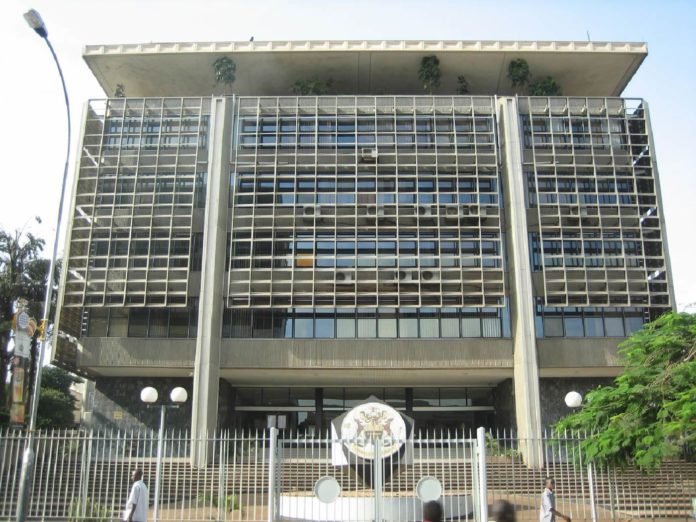
Bank of Uganda head office in Kampala

The Bank of Uganda (BoU), together with other financial sector regulators, is hosting Financial Services Expo scheduled for October 28 –November 1, 2019 at the Constitutional Square, Kampala.

The event is part of BoU’s commemoration of World Savings Day on October 31st, 2019 and is aimed at highlighting the importance of savings under the theme; “Save More, Achieve More.”

Other financial sector regulators like participating as hosts of the event are; Uganda Microfinance Regulatory Authority (UMRA), Insurance Regulatory Authority (IRA), Capital Markets Authority (CMA) and Uganda Retirement Benefits Regulatory Authority (URBRA).

Key stakeholders such as Ministry of Finance, Planning and Economic Development (MoFPED), Uganda Revenue Authority (URA), Uganda Bankers Association (UBA), Uganda Insurers Association (UIA), National Social Security Fund (NSSF), and Private Education Network, among others, are also involved. Regulated financial services providers in the various sub-sectors are have been invited to participate.

The event will provide guests the opportunity to:  Receive financial literacy education and learn how to plan for your money better under the topics of Savings, Loans Management, Investment, Retirement, Consumer Protection and Insurance; Understand ways in which you can achieve more by making sound financial decisions with your savings; Increase awareness of the various financial services, products and options that are available to suit your respective financial needs and Commemorate the World Savings Day celebrated on October 31, 2019 along with the rest of the world.

There will also be a press conference where officials from different entities will address and update journalists on financial inclusion, retirement benefits sector, investment, insurance, microfinance, taxation and deposit protection.

BoU Governor Prof. Emmanuel Tumusiime Mutebile is expected to give World Savings Day key note address.

Stories Continues after ad

Weatherman warns of more heavy rains in coming days

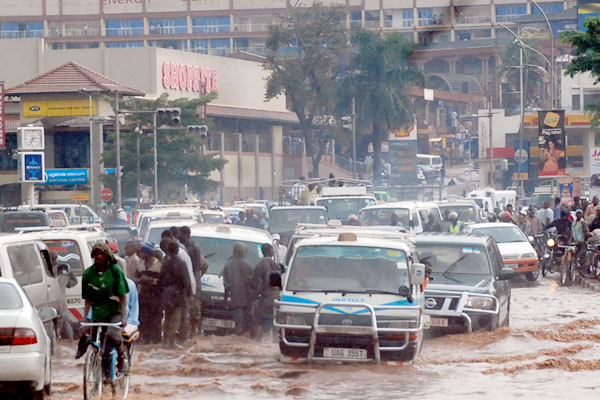
FLOODED ROADS IN KAMPALA:

The Uganda National Meteorological Authority (UNMA) has warned Ugandans to be ready for more heavy rains characterised by lightning and thunder especially for the five days ahead.

This month, there has been significant increase in rainfall over most parts of the country due to the rain belt being over our country. This is attributed to the moist wind blowing from the Indian Ocean and the Congo Forests.

According to acting Executive director of UNMA, Paul Isabirye, the wet conditions being realized are peak rains of September, October and December rainfall season 2019.

“Please note that on Tuesday and Wednesday, are expected to have more rainfall within this forecast period. The heavy rains is expected to bring about flooding in the urban and low lying areas, mudslides in the mountainous areas and lightning strikes coupled with strong winds.” he said

The most areas that are likely to be affected are in south and western regions particularly Kigezi highlands, Rwenzori mountain ranges, and in some parts of central region especially around Lake Victoria and eastern parts of the country particularly mountain Elgon areas.

Isabirye said poor visibility resulting from heavy rain condition is likely to pose danger to motorists and urges all motorists and pedestrians are encouraged to take utmost care to minimize accidents that may result from such weather condition.

“Weak bridges are likely to be washed, road users are advised to be vigilant, lake users are advised to follow UNMA marine forecast for fishing, water transport and small aircraft activities.” he said

“The public is advised to avoid taking shelter under trees to minimized exposure to lightning strikes. Continue listening to local media as updates will be provided if the conditions change significantly.” Isabirye noted.

Stories Continues after ad

PAU failed to comply with laws and to consult affected transboundary communities

Dickens Kamugisha

By Dickens Kamugisha

On October 21, 23 and 25 2019, over 15 civil society partners from Uganda and the Democratic Republic of Congo (DRC) participated in the public hearings on the Environmental and Social Impact Assessment (ESIA) report for the East African Crude Oil Pipeline (EACOP) project.

The CSO partners included Africa Institute for Energy Governance (AFIEGO), Dynamique pour la Protection de l’environnement en Ituri, World Voices Uganda (WVU), Centre for Constitutional Governance (CCG), Guild Presidents’ Forum on Oil Governance (GPFOG), Green Organisation Africa (GOA), Citizens Concern Africa (CICOA), Oil Refinery Residents Association (ORRA) and others.

The three public hearings were organised by the Petroleum Authority of Uganda (PAU) in consultation with Uganda’s National Environment Management Authority (NEMA). They took place in the districts of Kakumiro, Mubende and Rakai respectively.

The public hearings were organised to enable citizens submit their views as required under the 1998 Environmental Impact Assessment (EIA) Regulations to guide NEMA as it makes a decision on whether to issue an environmental certificate of approval or not to the EACOP project developers. Over 6,000 people participated in the three public hearings.

CSO partners observed a number of gaps and failures in the conduct of the public hearings as follows:

First, as CSOs, we appreciate that in accordance with Regulation 21 of the 1998 EIA Regulations, PAU in consultation with NEMA fulfilled its mandate by conducting public hearings in Kakumiro, Mubende and Rakai districts. It should be noted that regulation 21(2) requires NEMA to call for a mandatory public hearing where a project is controversial or may have transboundary impacts. The 1,443 km-EACOP, which will be the longest heated pipeline in the world, is transboundary in nature. The pipeline will be constructed from Uganda to Tanzania and its impacts will be felt by communities in neighbouring states such as the DRC, Tanzania, Kenya and others.

 In addition, the EACOP and its sister projects of Kingfisher and Tilenga are some of the most expensive projects to be ever implemented in Uganda. It is estimated that the above three projects will cost the country over $15 billion. This means that Uganda will accumulate a huge debt before commencing oil production. Huge debts will have far reaching consequences on citizens and the country at large. The EACOP project’s cost and location in ecosenstive areas including wetlands, forests, rivers and lakes some of which are shared with countries such as the DRC makes it controversial and of national in addition to regional importance. It is therefore good that NEMA requested PAU to organise public hearings on the EACOP ESIA report.

While we appreciate NEMA and PAU, we note with concern that PAU failed to organise all the three public hearings in ways that would allow citizens to effectively participate to influence decision making on the EACOP project. Each of the three public hearings brought together people from three or more districts. The people had to walk long distances and incur high costs to participate in the public hearings. This undermined public participation in the public hearings and could undermine good decision making by NEMA.

The above is evidenced by the fact that despite the fact that the EACOP project will affect more districts (ten in total) than the Tilenga and Kingfisher projects, fewer people participated in the EACOP project’s public hearings. While over 9,000 and over 12,000 people participated in the Tilenga and Kingfisher projects’ ESIA public hearings respectively, only over 6,000 people participated in the EACOP ESIA public hearings! This is unfortunate.

Moreover, it should be noted that in organising only three public hearings at which stakeholders from many affected districts were combined, PAU and NEMA shifted from the norm of organising a public hearing in each of the affected districts as happened in the Tilenga and Kingfisher projects. PAU failed to understand that that affected people from the different districts were impacted differently by the same project. As such, the affected people had different views and concerns to present during the public hearings. They also required specific responses from the developer and government.

Further, the undersigned CSOs observed that while regulation 22(5) of the 1998 EIA Regulations provides that the scope of any public hearing shall be commensurate with the nature and size of the project, the EACOP public hearings were more of public gatherings 3 than public hearings where people would be given appropriate time to present their views. This was especially observed during the public hearing in Kakumiro on October 21, 2019.

At this public hearing, the presiding officer denied the people who wanted to present their views ample time. Each person was given only one minute to speak yet the people were submitting views on a 3,000-page ESIA report! To make matters worse, the public hearing started late yet the people participated in their thousands. PAU and NEMA failed to consider that because of the scope and nature of the EACOP project, the EACOP ESIA public hearings would attract thousands of people. These people were denied adequate time to submit their views because they were many and they came from various districts. PAU should have organised public hearings in each affected sub-county or at least at each district like it did for the Tilenga and Kingfisher ESIA reports.

We also observed that while the 1998 EIA Regulations provide that any public hearing shall be conducted at a venue which shall be convenient and accessible to persons who are likely to be specifically affected by the project, all the three public hearings in Kakumiro, Mubende and Rakai were not at accessible venues. People from different districts had to move long distances to participate in the public hearings. For instance, people from Hoima had to cover a distance of approximately 80km to participate in the public hearing in Kakumiro. Those from Lwengo had to move distances of over 41km to participate in the public hearing in Rakai. This violated regulation 22(6) of the 1998 EIA Regulations.

It was also sad to note that the public hearings took place at a time when the developer and the lead agency are already implementing the Resettlement Action Plan (RAP) reports for the EACOP project including placing a cut-off date on the Project Affected Persons’ (PAPs) property such as land. This is contrary to regulations 19 and 20 of the 1998 EIA Regulations which require NEMA to call for public comments and work with PAU to conduct public hearings based on a complete ESIA report. Implementing the RAP reports outside of the ESIA process and/or placing a cut-off date on people’s property before NEMA issues an environmental and social impact assessment certificate of approval or payment of fair and adequate compensation is a violation of the laws of Uganda, especially Article 26 of the Constitution.

The CSOs also observed that the EACOP ESIA public hearings were organised based on an ESIA report that does not have even one complete mitigation plan to avoid or at least mitigate the dangers of oil on the environment and livelihoods. They called on NEMA to reject the EACOP ESIA report in order to avoid acting on insufficient information.

The CSOs further observed that like it happened in the previous public hearings on the Tilenga and Kingfisher projects, PAU failed to consult affected local communities from the neighboring countries of DRC and Tanzania. This is despite the fact that the water 4 abstraction activities and oil exploitation efforts on Lake Albert will affect fisheries and water access for communities in the DRC. The carbon emissions from the EACOP project will also affect communities in the DRC. Failure to consult communities in Tanzania and the DRC affects promotion of good governance of natural resources in the Great Lakes region.

In general, the EACOP ESIA public hearings were all organised in disregard of national environmental laws and regional accords such as the Uganda-DRC Ngurdoto Agreement that lays out procedures to enable harmonious exploitation of oil and gas resources in Uganda and the DRC. In addition, fundamental procedures such as respect for interested parties who apply to make presentations at the public hearings, failure to give affected people sufficient time to present their views and other failures were seen.

Recommendations

The Uganda and DRC CSO partners who participated in the EACOP ESIA public hearings make the following recommendations:

(i) NEMA should use its powers to ensure that PAU complies with the 1998 EIA Regulations especially regulations 21 and 22 that require lead agencies to ensure that every public hearing is commensurate with the scope and nature of the project. The EACOP is a transboundary project. As such, it affects people across borders and across districts.

(ii) NEMA should therefore direct PAU to organise public hearings in all the ten districts affected by the EACOP to enable the affected people to effectively participate and submit their views. This will enable NEMA to make the right decisions to safeguard our environment and livelihoods amidst oil risks.

(iii) Further, through PAU and NEMA, government should implement and comply with bilateral and international instruments that were put in place to govern the utilisation of cross-border resources. These instruments include the 2007 Ngurdoto agreement between Uganda and the DRC on sharing transboundary extractive resources. PAU and NEMA should consult cross-border communities that are affected by transboundary projects.

(iv) In addition, NEMA should use its regulatory powers to stop PAU and the developer from implementing RAPs before approval of the ESIA report. RAPs should and must always be approved as part of ESIA reports.

(v) PAU should also explain to Ugandans how the lead EACOP developer, Total E&P, suspended the EACOP activities and yet the public hearings are on-going. Who is the lead developer in absence of Total? Did Total resume work?

(vi) Finally, NEMA and the Ministry of Water and Environment should urgently consult citizens, finalise and operationalise the 2019 ESIA draft regulations with specific provisions on how public hearings should be conducted in a manner that gives every participant sufficient time to submit to his or her views. The new law should ensure that public hearings are not conducted and managed as public rallies.

The writer is Chief Executive Officer, AFIEGO

Stories Continues after ad

Ten lessons for new businesses from ocean racing teams

Martin Zwilling

By Martin Zwilling

perfect storm is an expression that describes an event where a rare combination of circumstances aggravates an environment drastically. In the entrepreneur world, I feel we are in such a situation now for new startups, with the confluence of business transformations, the explosion of new digital technologies, and the political turmoil around the world.

It’s easier and cheaper to start a company than ever before, yet it’s tougher than ever to survive. It takes a “well-oiled” multi-disciplined and motivated team to win, and yet I see and hear all too often about teams that are well-funded and smart, but don’t work well together, or are downright dysfunctional.

The challenge they face is not unlike that described in the classic sailing book “Into the Storm,” by Dennis N. T. Perkins, where a team of amateurs applied some key lessons in teamwork while surviving and winning a treacherous Sydney to Hobart Ocean Race. Here are ten principles from the book that I’ve easily extrapolated to the business startup environment:

Team unity: Make the team, not an individual, the rock star. Flat management is the business term to describe an environment where all members of the team feel they are part of the whole, that each has a key role to play, and each can express their views without jeopardy. There are no individual superstars or bosses with special perks.

Prepare, prepare, prepare: Remove all excuses for failure. Winning teams set out to ensure that every element of the system is known to all and is functioning to the best of their combined ability. Make sure no one has an excuse for failure. That means preparing for things that could go wrong, as well as driving things efficiently that go right.

Balanced optimism: Find and focus on the winning scenario. In business, startups will inevitably encounter setbacks, and need to pivot. The first step is to define “winning.” Is it more customers, more revenue, more profit, or killing competitors? Of course, all of these are important, but everyone needs to prioritize the same way during a crisis.

Relentless learning: Build a gung-ho culture of learning and innovation. The very best teams learn the most quickly from experience. That means they take action, reflect on outcomes, and gain insights that help them continuously improve. Innovation and new ideas are the norm, rather than maintain status quo, or charge straight ahead.

Calculated risk: Be willing to sail into the storm. Great business teams accept that every startup is “a big risk,” and there is no quick path to safety. Winning requires situational awareness, which means always understanding the critical success factors, and working to stay aware of current business realities around you.

Stay connected: Cut through the noise of the wind and the waves. The information blizzard in business is just as noisy as on the stormy ocean. Don’t let it be further clouded by political concerns and turf battles. Everyone needs to personalize communication, warn others of big waves, and even break protocol to help others when required.

Step into the breach: Find ways to share the helm. In adversity, any given team member can be faced with a burden too heavy for one person to carry. A good team draws on each other’s strengths, and shares the load. At the top, this is called distributive leadership, which lessens the burden on the formal leader.

Eliminate friction: Step up to the conflict, and deal with the things that slow you down. Fix the problem, not the blame. Confront differences in ability without blame, and add training, coaching, or education, and eliminate excess weight, before the storm. Humor can help alleviate anxiety and mitigate conflict, providing time to solve the crisis.

Practiced resilience: Master the art of rapid recovery. Startups need people who thrive under pressure, meaning they are resilient and have a high stress hardiness. They enjoy change and look at problems as a challenge, rather than a burden. They measure success in terms of recovery time, and strive to make it shorter.

Tenacious creativity: Never give up – there is always another move. Determination and creativity under pressure make a team unstoppable – on the ocean or in business. The “proud moments” of successful teams are the times when they come together in the face of adversity and win.

Some startup founders try to dodge the team-building challenge by single-handedly doing all the work, or establishing a monarchy where only one voice counts. Neither of these strategies can succeed, since even a small business will soon scale too big for one person to manage everything.

If you are a new entrepreneur, you need to realize that you can’t win by sailing around the edges of the perfect storm ahead. You have to hit it with an innovative plan, and you need a confident and disciplined team to get you through it. Are you ready to rock and roll?

The writer is a veteran startup mentor, executive, blogger, author, tech professional, professor, and investor. Published on Forbes, Entrepreneur, Inc, Huffington Post, etc.

Stories Continues after ad

EAC manufacturers want industrial parks as quick wins in promotion of cotton, textiles and apparels industries

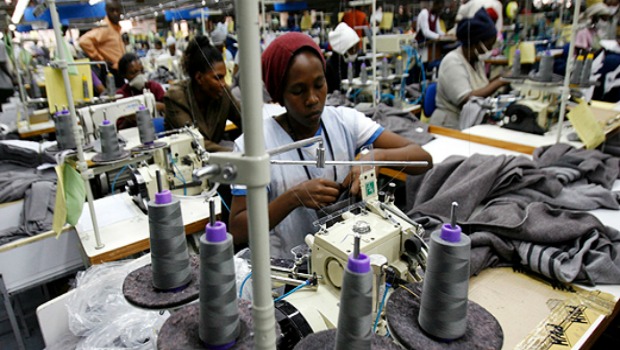
Kenyan workers prepare clothes for export at the Alltex export processing zone (EPZ) factory in Athi River, near the Kenyan capital Nairobi,

The establishment of fully serviced industrial parks with plug and play facilities to attract investments is one of the proposed actions to gain quick wins in the promotion of the Cotton, Textiles and Apparels (CTA) Manufacturing Industries in East Africa.

The first forum of owners CTA manufacturing industries held in Kigali, Rwanda days ago further proposed sustainable procurement of all institutional uniforms, beddings, draperies by state institutions from textiles and fabric industries in the region.

Another resolution of the forum was to carry out campaigns on Buy East Africa, Wear East Africa including implementation of the declaration of Fridays as “Afrika Mashariki Fashion Day” and organizing the Annual “Afrika Mashariki Fashion Week” exhibition to precede the EAC Heads of States Summit Meetings normally held on November 30, every year.

Themed, ‘Promoting Local Production and Consumption  of Cotton, Textile and Apparels (CTA) Made in the EAC Region’, the two-day forum was attended by participants from the ministries responsible for industry, trade, agriculture and EAC; private sector players, CTA industry associations, private sector associations, industry associations and development partners, among other stakeholders.

The overall objective of the Forum was to ensure that the owners of CTA industries meet discuss pertinent issues within the sector and make useful and practical recommendations to the EAC Policy Organs especially the Heads of State Summit for purposes of promoting the sector.

Opening the Forum, Rwanda’s Permanent Secretary of Trade and Industry, Michel Minega Sebera, noted that CTA has the potential to create employment, improve economic well-being and widen the tax base in the region.

Sebera called on EAC Partner States to fast track the phasing out of the second hand clothes in order to reap the benefits of the sector. He informed the meeting that in 2016, Rwanda started implementing the Summit directives and embarked on the phase out of the second hand clothes.

The PS disclosed that the phasing out of second hand clothes in Rwanda had attracted new investments in the sector and led to more than 15 new companies investing in apparels.

He further revealed that the country had also developed enabling infrastructure in the exports processing zones. He noted that the region’s efforts to promote the sector comes at a good time as the region stands to benefit with the larger market as part of the Africa continental free trade area.

In his remarks, Christophe Bazivamo, the EAC Deputy Secretary General in charge of the Productive and Social Sectors, said that the Secretariat had begun implementing the SCTIFI directives on promoting local manufactured textiles and was in the process of mobilizing the East Africans to wear clothes made in East Africa.

Bazivamo invoked patriotism and national pride in the region whenever it came to consuming products made in the EAC and called for a change of attitude, mindsets and perception with regard to locally manufactured products.

The DSG urged East Africans to consume more products made products by both citizens and government agencies as directed by the Council of Ministers by interventions such as local preferential procurement and a regional fashion exhibition to coincide with the Summit meetings dubbed Afrika Mashariki Day.

He said that there was political will at the highest level and the region needs to take advantage of this support to undertake rapid development, adding that the Heads of State Summit was keen on rapid implementation of the strategies.

He urged Partner States to put their energies together to implement the decisions through quick wins saying that the region has the potential to generate the raw material required to keep the CTA sector running at full capacity.

He called for synergy among the Partner States in developing the CTA sector, adding that lone ranger tactics would not yield much.

On how to avail quality cotton seeds, the forum agreed on Partner States launching mass campaigns to empower cotton farmers, cotton farmers associations and cooperatives besides raising awareness on the recommended seeds and modern farm practices. The forum also resolved to Designate/Establish and upgrade Centres of Excellence in seed multiplication and dissemination.

On ginning, spinning, and weaving/knitting, the forum agreed, among other things, to develop financing models in partnership with East African Development Bank for the financing of the manufacturing sector.

Stories Continues after ad

EAC to host global summit on manufacturing and industrialisation

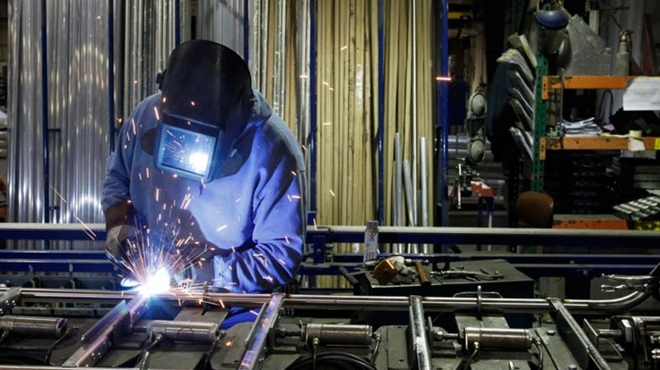
Work in factory

The East African Community (EAC) Secretariat is set to host the Global Manufacturing and Industrialization Summit (GMIS) Connect Roadshow from November 14-15, 2019 in Arusha, Tanzania.

Organisers say the objective of the GMIS is to explore in detail the implications of the Fourth Industrial Revolution (4IR) on the region’s manufacturing, industrialization and investment prospects.

The two–day roadshow will focus on showcasing the importance of the 4IR for industry development in Eastern Africa and provide examples on how its adoption can be further accelerated.

The roadshow will also identify opportunities to promote investments into the 4IR and craft policies to foster it’s absorption as well as explore opportunities for the development of, and linking to, national and regional projects that could foster industrial transformation.

The roadshow will introduce policy-makers and private sector representatives to an analysis, based on statistical indicators, on progress that countries and sectors have made in the adoption of advanced technologies and use the information for evidence-based policy-making.

Further, the roadshow will promote GMIS 2020 Hannover among important stakeholders in industrial development in East Africa, showcasing the types of partnerships and linkages to key players in the industry.

The GMIS roadshow, organised in partnership with the United Nations Industrial Development Organization (UNIDO), brings together representatives of East African industrial and manufacturing companies including SMEs and start-ups; business associations; representatives of African Governments (industry and related); academia; think tanks; training and education institutions; UN organizations and civil society organizations, including representatives of youth and women.

The GMIS roadshow is expected to create a greater awareness about the opportunities and challenges arising from the Fourth Industrial Revolution for the regional industrial sector and the associated decision makers as well as other stakeholders.

A joint initiative by the United Nations Industrial Development Organization (UNIDO) and the Government of the United Arab Emirates, the Global Manufacturing and Industrialization Summit (GMIS) is a multi-stakeholder platform that brings together partners in advanced manufacturing to harness the Fourth Industrial Revolution (4IR) for inclusive and sustainable industrial development

The GMIS Connect Roadshow in Arusha is part of GMIS Connect programme that prepares for the large GMIS 2020 Conference to be held Hannover, Messe in Germany.

Stories Continues after ad