Stanbic Bank
Stanbic Bank
15.8 C
Kampala
Stanbic Bank
Stanbic Bank
Home Blog Page 1134

Commonwealth finance ministers urge progress on taxing digital commerce to tackle debt

Commonwealth finance ministers have recognised the potential of technology to improve debt transparency while urging closer collaboration to resolve tax challenges arising from growing digital commerce.

Revenues from tax collection are important for maintaining debt at sustainable levels, yet can often be impaired by the digitalisation of trade in services, as this often results in countries being unable to determine when, how and where taxes on digital transactions should be collected.

Ministers have therefore agreed that the Commonwealth should bring its powerful collective voice to ongoing discussions at the Organisation for Economic Co-operation and Development (OECD), particularly on behalf of smaller states. International agreement on digital taxation could enable countries to benefit by taxing large tech giants, even if they do not operate within their jurisdictions.

These decisions were made by ministers gathered in Washington DC for the 2019 Commonwealth Finance Ministers Meeting under the theme ‘preventing debt crises: the role of creditors and debtors’.

Commonwealth Secretary-General Patricia Scotland said: “The Commonwealth has a distinctive contribution to make by bringing together nations with developed and developing economies to agree on collective approaches and action towards a fair and equitable global system for taxing multinational businesses in a swiftly digitalising economy

“We need a rule-based system that is inclusive, transparent and efficient so that all countries have a means of collecting revenue and are thereby able to avoid accumulating excessive debt. It goes hand in hand with accelerating the gains to be made by addressing climate change and making progress towards achieving the sustainable development goals.”

Ministers saw global trade and geopolitical tensions as having ‘intensified’, in a context where global debt has risen to an all-time high, estimated at $19 trillion. They stressed the need to make debt easier to manage for vulnerable countries, and for them to be eligible for periods of relief to stabilise growth during economic shocks.

As seen in the past, disasters can push countries into taking on emergency loans to rebuild and recover. Such debt can easily become unsustainable for most low and middle-income countries, making them vulnerable to debt distress.

The Minister of Finance of Cyprus, Harris Georgiades, who chaired the meeting, said: “Disruptive technologies are challenging the financial system by increasing competition and reshaping conventional business models, thereby fuelling the creation of a whole new kind of financial ecosystem.”

During the meeting, ministers also reviewed a suite of Commonwealth initiatives, including a disaster risk portal to offer streamlined and integrated information on available funds to respond to disasters, and a fin-tech toolkit to help banks leverage innovation in the financial sector.

The Commonwealth gave a presentation on its flagship debt management system ‘Commonwealth Meridian’ which is used by 63 countries to manage their debt which combines to a total of US$2.5 trillion.

Considerable progress is expected to have been made on the various action and initiatives discussed by the time of the next Commonwealth Finance Ministers Meeting, which will be chaired by Botswana in Washington DC in 2020.

Stories Continues after ad

CHAN 2020: Ghana, Nigeria fail to qualify for group stages

The line-up for next year’s Total African Nations Championship (CHAN) in Cameroon has been completed after completion of the qualification rounds.

Nigeria were shocked on Saturday despite a 2-0 home victory over Togo in the second leg of their regional tie. The Togolese won 4-3 on aggregate and it will be their first appearance in the biennial competition.

Ghana Black Stars also failed to secure a place at the African Nations Championship finals (Chan) following a 0-0 away draw with Burkina Faso on Sunday. A 1-0 loss in the first leg in Ghana, proved decisive as it ensured a 1-0 aggregate win for Burkina Faso.

Uganda Cranes made their fifth appearance at the 16-team tournament, having played at four CHAN champions in 2011 (Sudan), 2014 (South Africa), 2016 (Rwanda) and lately 2018 (Morocco).

The Cranes defeated Burundi 3-0 in Kampala to go through 6-0 on aggregate while Rwanda narrowly got past Ethiopia 2-1 overall to qualify after a 1-1 draw in Kigali.

Striker Patrick Kaddu and Zimbabwean Prince Dube were the top scorers throughout the qualification campaign with 4 goals each.

Djibouti and Gabon were banned as they withdrew during the 2018 African Nations Championship qualification.

Cameroon qualify automatically as 2020 hosts, Matches will be held in Yaounde, Limbe, Garoua and Bafoussam.

The date for the group stage draw will be announced by Caf in due course.

The competing national teams in this championship must be composed of only players playing in their domestic league.

Despite CHAN matches only featuring locally-based footballers, the games have full international status and count toward the monthly FIFA rankings.

Democratic Republic of Congo (DRC) have won it twice, holding it the most times while Morocco are the defending champions.

Qualified teams for Cameroon 2020:

Cameroon (hosts), Tanzania, Uganda, Rwanda, Zambia, Namibia, Togo (debut), Morocco, Zimbabwe, DR Congo, Congo, Tunisia, Burkina Faso, Guinea, Niger, Mali.

Stories Continues after ad

ISO operatives sue gov’t over salaries

Col. Kaka Bagyenda

Gombolola Internal Security Officers (GISOs) have sued the Attorney General in the Industrial Court, demanding that they be paid their salaries, arrears, and other benefits like accumulated leave allowances and gratuity.

The GISOs who number 1,384 say they are employed by government under Internal Security Organisation (ISO) for various periods including some since 1996.

The complainants aver they were duly recruited as GISOs at various times and have todate performed their due obligation under the law and as directed by their superiors.

The applicants say that upon recruitment as government workers, they are entitled to a monthly salary, annual leave and gratuity, and upon retirement, retirement benefits, and on death, death gratuity.

The applicants accuse argue that ISO has failed or refused to pay them salaries, leave allowances and gratuity in spite of the clear demands of the law.

The complaints say they were given motorcycles but ISO doesn’t give them money for repairs, which they say are costly to them, with some motorcycles being grounded.

The GISOs are also bitter that ISO has threatened to dismiss them on account of not being degree holders without paying them first.

The complainants say that failure by ISO to pay them salaries is violation of the law and the Constitution for which they seek damages.

But the Attorney General that represents government in legal suits, in defence, says there is no evidence to show that the complainants are or were employees or were at any time employed by ISO.

He says the complainants failed to observe all the internal mechanism in ISO on solving labour disputes. “Employees did not exhaust the internal mechanisms of ISO in addressing their grievances,” he says in reply.

The Attorney General wants the applicants ’case dismissed with costs, claiming further that it is time barred and abuse of court process.

Stories Continues after ad

Rajiv Ruparelia takes day one of Kabalega rally after posting the fastest time

Rajiv and wife Naiya plus Dr. Sudhir Ruparelia showcase the VW Polo rally car.

Rally driver, Rajiv Ruparelia has won the the third stage of Total Kabalega Hoima rally 2019 beating 39 competitors who took part in the race.

The TOTAL Kabalega rally kicked off with scrutineering at Total Main Street where cars are checked. Every driver was given TOTAL Quartz, the right lubricant for optimum performance in petrol engines

With his co-driver Enock Olinga, Rajiv Ruparelia driving his usual machine UBF 801H Golf VW proto, he posted Rajiv Ruparelia 23:52, Yasin Nasser 23:59, Arthur Blick 24:11, Ronald Sebuguzi 24:22, Duncan Mubiru 24:31, Omar Mayanja 24:37, Abdul Kateete 25:17, Dr Ashiraf 26:43

Manvir Baryan won stage one after he posted 3:17, Jas Mangat 3:20, Hassan Alwi 3:22, Dharam Pandya3:22, Ronald Sebuguzi 3:28, Christakis Fitidis 3:32, Kepher Walube 3:40, Ponsiano Lwakataka 3:46

In the stage two Raul emerged the winner 17:26, Alwi 17:27, Duncan 17:31, Seb 17:41, Yassin 17:41, Arthur 17:42, Omar 18:19, Rajiv 23:53 

In June, Rajiv, son of Sudhir Ruparelia of the Ruparelia Group, emerged overall winner of the Federation of Motorsport Clubs of Uganda (FMU) Autocross championship Kayunga. He joined rallying in Apri this year.

Ealier Ismail Waligo experienced engine failure in the super special stage, Ponsiano Lwakataka retired in CS2 due to Turbo issues, Rauf rammed into a Tree and bowed out of the race, Sadat Negomba lost control due to the slippery road and almost went swimming in the river and Ambrose Byona, Jas Mangat, Ronald Sebuguzi could not finish due to engine failure.

It was not the best day in office for two wheel driver championship leader Samuel Watendwa when he rolled in the first stage of the rally.

Stories Continues after ad

Bobi Wine to Museveni: ‘Your 34- year old dictatorship is the real enemy to Uganda’s progress’

Bobi Wine

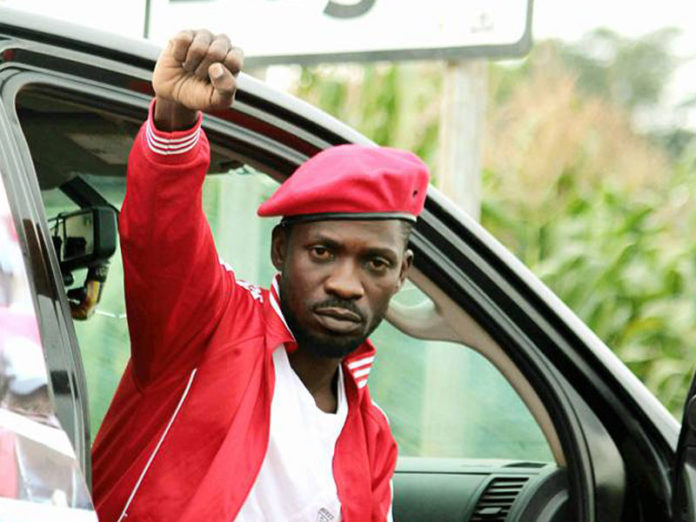
Ugandan musician who  doubles as the Kyadondo East legislator, Robert Kyagulanyi aka Bobi Wine, has said the real enemy to Uganda’s progress is ‘a 34 year old dictatorship which has nothing left to offer to the country.’

In an interview with BBC News Africa on Wednesday, President Yoweri Museveni said Bobi Wine is an enemy to Uganda’s progress who tells foreigners not to invest in Uganda and therefore he cannot enjoy the prosperity of the country through hosting music shows among other events in the country.

Responding to president Museveni’s statements, the singer said the real enemy to Uganda’s progress are the sickening levels of corruption for which President Museveni is a chief priest.

“What has since happened to President Museveni was aptly captured by late Eriya Kategaya in his book ‘Impassioned for Freedom.’ Condemning Mr. Museveni’s third term bid, Kategaya wrote; I have observed that the longer one stays in power, the more one is insulated from reality. The trappings of state apparatus tend to make one live an unrealistic existence.”

“Sadly, President Museveni has been living this ‘unrealistic existence’ for a long time now. For starters, he removed all doubt about who has been blocking our music concerts. Ridiculously, he says that I cannot stage concerts because I discredited his government to foreign investors,” he said adding that   Police have been saying that our shows are stopped because we didn’t have enough ambulances, a traffic management plan, and that all of a sudden our venue had become too small to host our fans. Now, President Museveni busts his own shadow by exposing their lies.

The real enemy to Uganda’s progress is the breakdown of democratic values, characterized by rigging elections, violation of civil rights and liberties and the blatant disregard of the law, and failed education system where millions of our nation’s children do not finish primary school; where children study under trees, and those who are lucky to finish school have no skills whatsoever.

The real enemy to Uganda’s progress is a sick healthcare system- where the few health facilities are understaffed and ill equipped. Where health-workers are poorly paid and the few drugs sold on the black market. Where the casualty ward at Mulago hospital is itself a casualty- victims of accidents sleeping in their blood on the cold floor.

“Rampant land evictions, where poor Ugandans are thrown off the only thing left in their possession by the powerful and mighty, unresolved murders of  people at the hands of the state- Kasese being only an example.”

He said Nepotism and sectarianism practiced in the public service and championed by President Museveni himself where merit no longer counts and a small clique controls every aspect of the state,  breakdown of state institutions and erosion of their independence Where a president controls the judiciary, parliament, police, IGG, etc are the enemies of the country.

Bobi wine said excessive wastage of public resources where President Museveni and his cronies bulge in abundance at the expense of an overtaxed, poor Ugandan, illegal, high-handed grabbing of Uganda’s public assets and resources are real enemies of the country.

Stories Continues after ad

Total CHAN 2020 Qualifiers: Uganda Cranes XI Vs Burundi

Cranes team

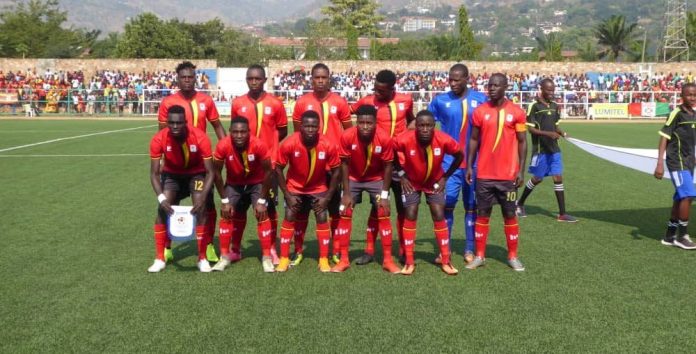
Uganda Cranes starting XI to face Burundi in the return leg of the Total CHAN 2020 Qualifier has been confirmed.

Yusuf Ssozi is the only change from the team that won 3-0 away during the first leg.

Ssozi replaces injured KCCA FC midfielder Muzamiru Mutyaba in the starting XI. The rest of the team that played in Bujumbura is maintained

Uganda Cranes will seal a fifth consecutive slot to the tournament if they hold onto that convincing lead from the first round.

The match will be broadcast live on FUFA TV,  102.1 FUFA f.m with timely updates on all the official FUFA Social media platforms.

The team against Burundi:

Charles Lukwago (GK), Willa Paul, Mustapha Kizza, Halid Lwaliwa (Capitain), John Revita, Yusuf Ssozi, Nicholas Kasozi, Allan Okello, Fahad Bayo, Mike Mutyaba, Shafiq Kagimu

Substitutes:

James Alitho, Vianney Sekajjugo, Musitafa Mujuzi, Daniel Serunkuma, Allan Kayiwa, Saidi Kyeyune, Bright Anukani

Stories Continues after ad

Trafficked Ugandan woman fighting for her life in UAE

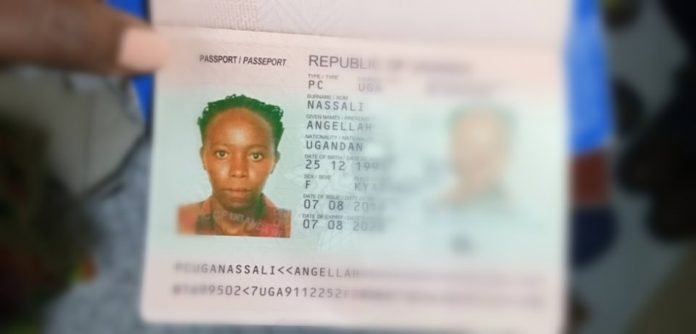
Copy of National ID for Angellah Nassali

A Ugandan lady, Angellah Nassali, is in danger after she suffered kidney damage in the United Arab Emirates (UAE) under circumstances unknown, according to her friends and relatives who she likely to die there even not brought back home as soon as possible.

We need help on retrieving our girl (Nassali Angellah) who is fighting for her life (Kidney damage) from Ajman, UAE,” says Denis Wantente, a relative.

Ms Nassali legs swollen as result of kidney damage

Ms Nassali is said to have been trafficked by a one Derrick Yowabu here in Uganda who claimed to have a company which recruits maids to Dubai which Wantete says was false/fraud and deception. He says Yowabu ‘was just a middle man (Agent) who recruits girls in a deceptive way that he knows where they are going but only to reach there, they are taken to an office for sale.’

Her arms are sick as well

Wantante says Yowabu trafficks Ugandan girls to a certain lady in Ajman called Shamse (Real names: Tsehay Baycheken Walelign an Ethiopian national) located at SBK Apartments, 2nd Floor – Room 209, opposite central post office – car parking, P. O. Box 2993. “

Shamsa (Real names, Tsehay Baycheken Walelign)

This lady (Shamsa, Tel: +9705524865862 / +970552023778, their offices called Al Waseet Labours recruitment located near a supermarket opposite Al Madina Police Station) together with her husband completely refused to let Angellah go plus many other girls. For over four months now, Angellah has been abducted and locked since 14th of July 2019 by this lady Shamsa and her visit visa expired, they eat one meal a day (water and bread) up to now the girl plus others are still locked up,” he says.

ID of alleged human trafficker Mazen Awad Taha Abuzaid

This woman Shamsa has always asked for money and the police nearby or opposite is corrupt… because many girls have been rushing for help but they end up not being helped, Wantante says.


Hashtags:#SaveAngellah #SaveOurGirls #LetsStopHumanTraficking #SaveOurMothers #UgandaProtectOurSistersRights

This report comes at the time when men Ugandan girls continue to suffer and die in the Middle East as where they were taken as domestic workers.

Mukono Municipality MP Betty Nambooze recently said she has evidence showing some Ugandan girls and boys in the Middle East have had some of their body organs like kidneys removed without their consent, with some dying in the process.

On June 26, 2019, the Ministry of  Gender, Labour  and Social Development together with the Ministry of Human Resources and Emiratization in the United Arab Emirates (UAE), signed the Memorandum of Understanding in the field of Manpower and Domestic Worker Protocol in Kampala where it announced the UAE needs 80 workers from Uagnda.

“The signed MoU between the Government of Uganda and UAE offers protection to our Ugandan migrants in a number of ways, especially through: Strengthening cooperation by providing a legal framework for the employment of Manpower from Uganda in the UAE;Establishing a mechanism to discuss and exchange views on labour related problems and to resolve any outstanding issues relating to workers and their rights; Creating mutual understanding between the Governments of the two countries to protect all workers, with special consideration to the specific vulnerabilities of female migrant workers,” Hajat Janat Mukwaya, the Gender minister said then.

Stories Continues after ad

UDB’s Communication and Stakeholder Engagement Strategy

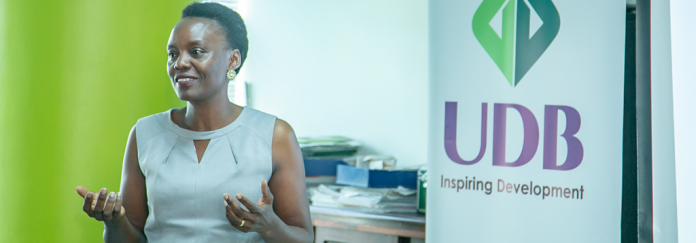
Goretti Masadde, a Marketing and Communication Consultant addressed UDB Staff on the importance of Corporate Communication.

Uganda Development Bank (UDB) launched a mid-term Communication and Stakeholder Engagement strategy. The event was held at the UDB Offices at Rwenzori Towers.

 The goal of the strategy, which will run from 2019 to 2022, is to strengthen public and stakeholder understanding of and participation in UDB’s mission of accelerating socio-economic development through sustainable financial interventions.

Participants at the workshop

Provia Nangobi, the Acting Head of Public Relations and Corporate Affairs at Uganda Registration Services Bureau (URSB) shared the registration services agency’s success story and showcased the significant impact effective Communication can have on an institution’s reputation.

UDB’s Managing Director, Patricia Ojangole pledged commitment on behalf of the Board of Directors, to prioritize Corporate Communication given its critical importance to business success.

Stories Continues after ad

What next for local subcontractors after collapse of farm-down talks between gov’t and oil companies?

On August 29, 2019, Tullow announced that its attempt to sell to Total and CNOOC, 22 percent of its stake in the Uganda’s oil wells, had been terminated. It appears now the termination of the transaction due to the elapse of the set timeline, indefinitely suspended the next phase in Uganda’s oil journey: production and exportation.

Meanwhile, anticipating that US$20 billion was going to be invested in oil production soon, nearly 1000 Ugandan business had registered in the National Oil Suppliers Database (NSD), getting ready to get some of that business. Now, many of these would be subcontractors, have started counting losses and are castigating government, for allegedly failing the deal.

A month after Tullow’s sale was terminated; the African Centre for Media Excellence interviewed 104 executives of Ugandan companies in the suppliers’ database. One third were pessimistic about the sector (ranked their confidence in the sector at less than 2 on a scale of 0-4), while another quarter of them were split between optimism and pessimism (ranked their confidence in the sector at 2/4).

An executive at E360 Group, a civil engineering firm with interest in mining and quarrying, said the company has already invested Shs110.4 billion in preparations but so far earned only Shs1 billion as revenue from the sector. There are fears that the current uncertainty in farm down talks could create losses and a slow down. “Big companies are not committing,” the executive said.

For John Magara, a partner in Globo Chemicals Uganda, the derailed farm down negotiations has left him in the state of confusion. He is not even sure his company will recover about Shs7.7 billion already sunk in preparatory activities for oil and gas sector.

Meanwhile managers at  PROESS Limited, a manpower training company say are concerned of the likelihood OF the Final Investment Decision (FID) for the construction of the oil pipeline taking too long, the joint partners-CNOOC and Total, having pulled out. “FID should be signed very fast,” they argue, blaming government for the collapsed farm down tax talks.

FID is the Final Investment Decision that the oil companies (Tullow Oil, CNOOC and Total E&P) will make, once they are sure they have the money and favourable terms needed to construct a US$3.5 billion oil pipeline from Hoima to Tanga in Tanzania, and to drill for the oil. Tullow doesn’t have the money it needs to fund its part of this next phase. In the transaction which fell through, the Irish company was trying to sell some its shares in oil wells for US$900 million to Total and CNOOC. It expected to get US$200 million cash and the remaining US$700 million would be reinvested by Total and CNOOC in the development phase. However, they don’t seem to agree with the Uganda Revenue Authority on how much to pay in taxes for this transaction and whether or not they can claim that money back, when oil production starts, since much of the money is going to be re-invested.

Government is determined to get as much taxes on this transaction as possible. It would replenish the Petroleum Fund (PF), from which government has already used more than 60 percent (Shs325b) of the money put into it since March 2015 when it was established. Most of this money has been spent on building oil well roads but some of it on funding the general national budget.

The current situation means the local sub-contractors will have to wait much longer as the major players iron out their differences. Some experts say it will now take a longer period for Uganda to produce its first oil, even though the target is 2022-23.

Officials at Tullow when contacted said they are in the process to restart tax negotiations with government. “Tullow has now initiated a new sales process to reduce its 33.33% Operated stake in the Lake Albert project,” they said even though officials in the Ministry of Energy and Mineral Development were coy about direct answers.

The company adds that technical work on the development and the upstream pipeline is well advanced and that the Joint Venture Partners had been targeting reaching FID by the end of 2019, “but following the termination of the farm-down agreement with Total and CNOOC, a further delay is likely.”
Denis Kakembo, a partner in Cristal Advocates who has been involved in tax negotiations between government and oil companies, says taxation is contentious, adding risk is very high in the oil and gas industry.

Kakembo blames government for not providing an enabling tax regime to oil companies that have already sunk in millions of dollars in capital investments. “The current tax regime is anti-farm outs,” he says, urging government to accept the money that the oil companies are offering as appropriate tax.

Uganda Revenue Authority issued Tullow with an assessment of US$167.8 million in Capital Gains Tax arising from the sale of Tullow’s interests to Total and CNOOC in EA1, EA1A, EA2 and EA3A.

Meanwhile International Monetary Fund (IMF) officials, who were in the country days ago, opined that a delay in oil sector investments, could weigh on economic growth, which is currently trending at 6 percent.

Axel Schimmelpfennig who led the IMF team said:  “Growth could remain at around 6 percent in 2019/20, if oil investments are not significantly delayed.”

The Minister of Energy Eng. Irene Muloni says plans are underway to invite Tullow, Total and CNOOC for a meeting, “so that Government gets to know the exact reasons why they are taking such decisions. Once Government is informed of the reasons of suspension, then it will engage them with an ultimate goal of having oil and gas production soon in the country.”

Eng. Muloni agrees that the expiry on August 29, 2019 of the SPAs and the announcement of commencement of suspension of various activities that were being undertaken by the international oil companies’ contractors and sub-contractors, have created anxiety among many stakeholders including the media, civil society organisations, business community and the general public.

“Government is fully aware that, the above developments affect the taking of the Final lnvestment Decision (FID) which were expected late this year and/or next year. The FID would give way to the Engineering Procurement and Construction (EPC) phase of the projects that would be characterised by the award of contracts to providers of the required goods and services for construction of the facilities. Failure to take FID affects our obligations with the developers of the Refinery who cannot proceed with the development without certainty of crude oil availability,” the minister says.

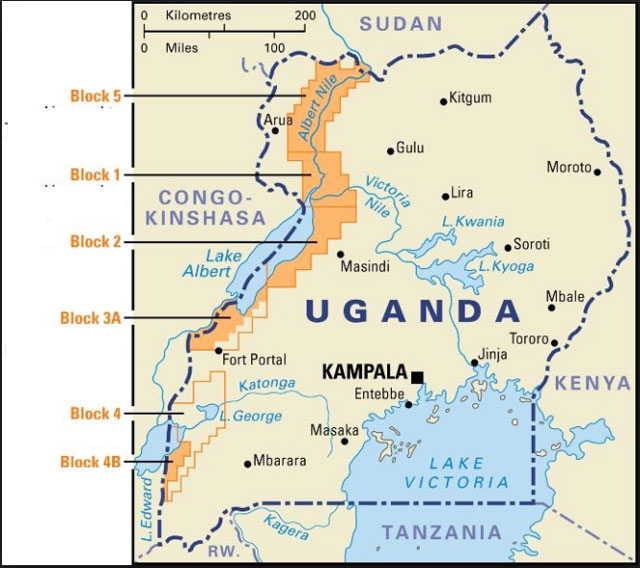
Once the Final Investment Decision is made, there will contracts and sub-contracts in relation to: the East African Crude Oil Pipeline (EACOP) that is supposed to transport crude oil from the export hub (delivery point) in Hoima in Uganda to the port of Tanga in United Republic of Tanzania); The Tilenga Project, which includes the Central Processing Facilities, the drilling pads, flowlines located in Buliisa and Nwoya Districts and The Kingfisher Development Area (KFDA) which will include the Central Processing Facilities, the drilling pads, flowlines in Kikuube and Hoima districts.

Stories Continues after ad

Failure to find a sexual partner is a disability, says World Health Organisation

PEOPLE who don’t have sex or struggle to find a sexual partner to have children with will now be considered as DISABLED, according to barmy new guidelines set to be announced.

Until now, infertility – the failure to achieve pregnancy after 12 months or more of regular unprotected sex – was not considered a disability.

But now in dramatic move the World Health Organisation will change the standard to suggest that a person who is unable to find a suitable sexual partner or is lacking a sexual relationship to have children – will now be equally classified as disabled.

WHO says the change will give every individual “the right to reproduce”.

Under the new rules, heterosexual single men and women and gay men and women who want to have children will now be given the same priority as a couple seeking IVF because of medical fertility problems.

But critics branded the new laws as “absurd nonsense” arguing that the organisation has overstepped the mark by moving into social matters rather than health.

Gareth Johnson MP, former chair of the All Parliamentary Group on Infertility, whose own children were born thanks to fertility treatment, said: “I’m in general a supporter of IVF. But I’ve never regarded infertility as a disability or a disease but rather a medical matter.

“I’m the first to say you should have more availability of IVF to infertile couples but we need to ensure this whole subject retains credibility.

“This definition runs the risk of undermining the work Nice and others have done to ensure IVF treatment is made available for infertile couples when you get definitions off the mark like this. I think it’s trying to put IVF into a box that it doesn’t fit into frankly.”

Josephine Quintavalle,from Comment on Reproductive Ethics added: “This absurd nonsense is not simply re-defining infertility but completely side-lining the biological process and significance of natural intercourse between a man and a woman.

“How long before babies are created and grown on request completely in the lab?”

But Dr David Adamson, an author of the new standards, argued it is a “big chance” for single and gay people.

He said: “The definition of infertility is now written in such a way that it includes the rights of all individuals to have a family, and that includes single men, single women, gay men, gay women.

“It puts a stake in the ground and says an individual’s got a right to reproduce whether or not they have a partner. It’s a big change.

“It fundamentally alters who should be included in this group and who should have access to healthcare. It sets an international legal standard. Countries are bound by it.”

A spokesman for the Department of Health said the NHS was under no obligation to follow World Health Organisation’s final advice.

Under the Equality Act 2010 a person is disabled if they have a physical or mental impairment that has a ‘substantial’ and ‘long-term’ negative effect on their ability to do normal daily activities.

But Libby Purves, presenter of Radio 4’s Midweek, was scathing about the new recommendation.

She said: “When a flaky new human right is suddenly tossed out by a serious UN agency it is not just silly but dangerous.

“The World Health Organisation, which has plenty else on its plate, has long defined infertility as a disability.

“It is sad but not disabled compared to someone who is blind, deaf, mentally impaired, or seriously crippled.”

Stories Continues after ad