Stanbic Bank
Stanbic Bank
19.1 C
Kampala
Stanbic Bank
Stanbic Bank
Home Blog Page 1145

Global value chains have spurred growth but momentum is flagging

Global value chains


In an era of slowing trade and growth, developing countries can achieve better outcomes for their citizens through reforms that boost their participation in global value chains. These reforms can help them expand from commodity exports to basic manufacturing, while ensuring that economic benefits are shared more widely across society, a new World Bank Group report concludes.

The World Development Report 2020: ‘Trading for Development in the Age of Global Value Chains’ marks the World Bank Group’s first trade-focused development report since the late 1980s. It finds that global value chains have powered an economic transformation ever since, allowing the poorest countries to quickly climb the development ladder. Such chains enable developing countries to specialize and grow wealthier without having to build whole industries from scratch.

“Global value chains have played an important part in growth, by enabling firms in developing countries to make significant gains in productivity, and by helping them transition from commodity exports to basic manufacturing. In the age of global value chains, all countries have much to benefit by speeding up reforms that increase commerce and boost growth,” said World Bank Group Chief Economist Pinelopi Koujianou Goldberg.

He says countries need trade to develop, and an open, predictable environment benefits everyone. “To ensure sustained social support for trade, policymakers need to ensure that the benefits of global value chains are widely shared among a broad range of groups—especially the poor and women – and that the environment is protected,” he says.

Today, global value chains account for nearly 50 per cent of trade worldwide. But their growth has plateaued since the financial crisis of 2008, the report finds. Trade frictions have created uncertainties over market access, causing firms to consider delaying investment plans. Moreover, the gains from participating in global value chains have not been distributed equally across and within countries. Environmental costs are growing, mainly from higher carbon dioxide emissions due to transportation of intermediate goods across greater distances.


Stories Continues after ad

CCEDU boss Crispin Kaheru resigns after nine years at helm

Crispy Kaheru


The Coordinator of a non-government organisation (NGO), Citizens’ Coalition for Electoral Democracy in Uganda (CCEDU), Crispin Kugiza Kaheru, has tendered in his resignation letter after serving for nine years.

According to the letter dated September 11, 2019, addressed to the chairperson of CCEDU, Dr. Miria R.K. Matembe, Kaheru’s resignation takes effect from October 11, 2019 at 5:30pm (17:30hours)

Assuming that role, at the age of 26, Kaheru, a journalist by profession,  made a personal commitment to serve in this position for a maximum of nine years. Kaheru has made great strides in ensuring that CCEDU recruits and retains enthusiastic professional staff, who are capable of delivering on the Coalition’s mandate.

“CCEDU’s staff profile has grown from two volunteers in 2009 to 15 full-time staff in 2019. CCEDU has over the years striven to build the most talented and dedicated team for the Secretariat. Besides the Secretariat, CCEDU has built a robust human resource pool in every district of Uganda,” reads in part of the letter.

Kaheru said from 16 founding member organisations in 2009, CCEDU’s institutional membership has since grown to 972 reputable organisations. In addition, CCEDU’s individual members have increased from 302 in 2009 to over 25,018 in 2019. I have had the honour of overseeing the growth of the ‘CCEDU fans base’ from 1,250 in 2009 to 4,980,201 Ugandans in 2019.

CCEDU has since carved out a niche in advocacy for electoral reforms, conducting voter mobilization campaigns and monitoring electoral processes. CCEDU has coordinated critical nationwide citizen-centered electoral reform advocacy efforts as well as superintending over non-conventional voter-mobilisation campaigns such as, Honour Your Vote, Votability and Topowa.

“I am honored to have worked with a civic group that leverages the purely voluntary spirit of hundreds of thousands of its members across the country. Members have faithfully contributed their time, intellectual and financial capital towards CCEDU’s campaigns without necessarily expecting to be financially rewarded.  This spirit of volunteerism of the membership is what has given me the strength and courage to make extraordinary sacrifices that I would ordinarily not have made,” he wrote.

CCEDU was on July 4, 2018 suspended from conducting election-related activities over allegations that the organisation has been partisan in the way it has been conducting its activities, breaching electoral observation guidelines for benefits of stake holder in the electoral process.

Stories Continues after ad

Standard Chartered annual customer service week is back

Albert Saltson


Standard Chartered Bank is once again holding its Annual Customer Service Week where it celebrates and appreciates its clients for their loyalty and business as well vice Week commenced yesterday and will run until October 11, 2019. The week is being held under the theme: “The Magic of Service” which recognizes that service is magical and can turn an unhappy customer into a t various branches, blood donation, an Exco/management Meet and Greet on various days of the week, SC Santa Moments; where the bank is randomly rewarding clients transacting at our different outlets.

There will also be voice of Customer focus Discussions, service recovery client visit, coffee with the CEO,   car wash at Speke Road Car Park , client Dance Party, a Staff Magical Breakfast which will culminate into a Super Magic Friday on 11th October 2019 and Customer Magic Hour  where the bank will recognise its digital clients

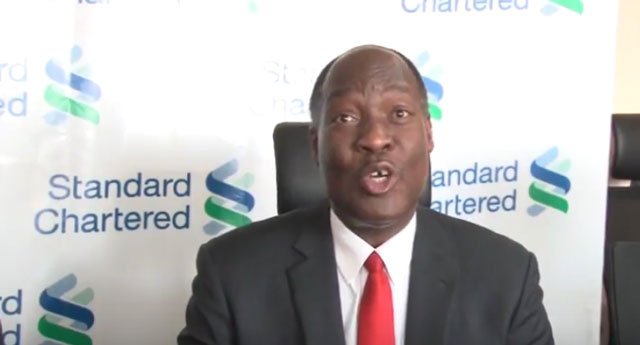
Speaking about the Customer Service Week, Albert Saltson, CEO Standard Chartered Bank Uganda said: “This customer service week is our way of our appreciation our clients as they are the reason for our existence over the past 107 years. Client obsession is at the heart of our business and therefore putting clients first and delivering first class service is very crucial to us as we strive to build long term relationships with them.”

He said that a strong service culture is the foundation for delivering our purpose to drive commerce and prosperity through our unique diversity. “We therefore started a client experience transformation agenda two years ago to further harness a client focused culture.  Our efforts have resulted in enhanced customer experience and an improved customer net promoter score in our business,” he said.

Saltson said he was confident that the various activities lined up this week will in a way help Standard Chartered Bank express gratitude to its clients though valuing and recognising the clients as part of its culture.

As we continue the Customer Charter transformation journey to a more client obsessed culture, as a Bank, we are devoted to recognizing the importance of customer service and to honoring our clients and the people who serve and support them, he said.

“What exemplifies us is our deep commitment to quality customer service, so we will continue to do our t best to continue providing the best service to our clients,” he said.


Stories Continues after ad

Commonwealth model offers hope for easing multilateral trade tensions

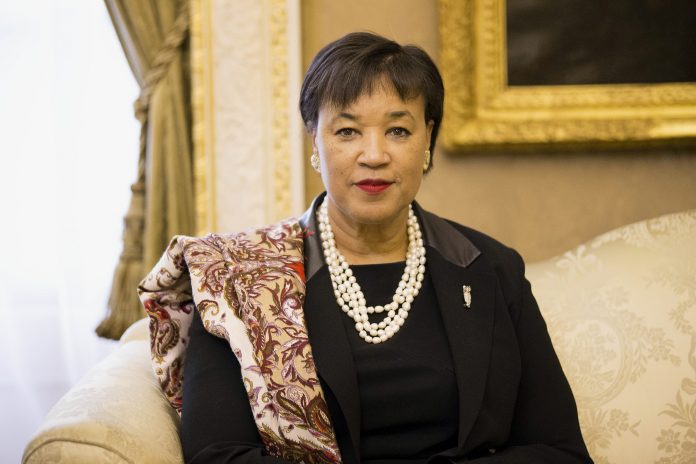
Patricia Scotland


 By Patricia Scotland


Global uncertainties and tensions are escalating and affecting trade in every region. We see rising protectionism, while multilateral cooperation – including through the World Trade Organisation – is increasingly under threat. Meanwhile, the resilience of many smaller or less developed countries is being undermined by the impact of climate change and extreme weather unprecedented in living memory, together with other natural disasters.

These factors combine to make the general outlook for economic growth and prosperity sombre. Yet through the encompassing gloom, Commonwealth connection and cooperation shine as beacons of hope guiding towards safer and saner waters.

This year, world GDP is projected to grow 2.6 per cent, down from 2.9 per cent last year, while world merchandise trade volumes are now expected to rise by only 1.2 per cent in 2019 – the weakest growth since the global financial crisis. Our citizens experience the effects of these trends in their day-to-day lives as the prices of food, fuel and basic services rise, jobs become harder to find, and there is reduced potential for businesses to grow.

Against this backdrop, this week in London the UK will chair a meeting of trade ministers from the 53 countries of the Commonwealth. Building on the distinctive nature of Commonwealth connection and cooperation, ministers will consider approaches for tackling pressures on international trade, and for making even more of the Commonwealth Advantage enjoyed among our member countries.

Most importantly, ministers will review progress towards the target agreed by Heads of Government at CHOGM 2018 for annual trade within the Commonwealth to be worth at least $2 trillion by 2030 – a goal closely linked to achieving the UN Sustainable Development Goals.

The challenges may seem daunting, but our governments know that through coordination and with the right policies in place the prizes can be brought within reach. Collective strategic action can unlock promising opportunities for all members of our diverse and geographically widespread family of 53 Commonwealth countries.

Our studies have shown that on average the nations of the Commonwealth countries tend to trade 20 per cent more with each other than with non-Commonwealth countries. This very real and valuable tendency is an important factor in Commonwealth Advantage. It is the product of historical ties, shared language, and similar legislative, governance and administrative systems based on the common law. As a result, trade costs are on average 19 per cent lower between Commonwealth country pairs than comparable non-Commonwealth counterparts, and our member states also invest on average 10 per cent more in each other than they do in non-members.

These benefits are now further bolstered by our Commonwealth Connectivity Agenda, which provides powerful mechanisms for structured dialogue, sharing of best practices, networking and collaboration on trade and investment among our member countries. Intra-Commonwealth trade in goods has increased by around $100 billion over the past three years, reaching almost $450 billion in 2018. With rapid population and per capita income growth in developing countries, especially in Asia, trade in goods and services is expected to reach the $700 billion mark by 2020. With more than 60 per cent of the combined Commonwealth population of 2.4 billion under the age of 30, these drivers of growth and prosperity are unlikely to slow for some very considerable time.

The digital economy holds further untapped opportunities, with the number of internet users globally trebling over the past decade. Yet in low-income Commonwealth countries only 18 per cent of the population currently have internet access, compared with 85 per cent in high-income countries. So the economic case for tackling the digital divide is persuasive: full access to broadband internet could add up to $1 trillion to combined Commonwealth GDP.

Certainly, with 49 of our members belonging to the WTO, the Commonwealth can play an increasingly strategic role as a champion of free trade, advocating for a transparent, inclusive, fair and open rules-based multilateral trading system. Commonwealth discussions provide space for broader wide-ranging dialogue in the spirit of goodwill and an atmosphere of trust rather than treaty. This means deadlocks are less likely to hinder pragmatic progress towards practical solutions. Our member countries gain advantage through cooperation and coordinated action, and remain free to move forward with their preferred domestic reforms unfettered by obligations, deadlines or legally binding commitments.

It is within this context that we can look forward to Commonwealth trade ministers, when they meet this week, offering powerful messages which, while rooted in reality and notwithstanding the diverse economic interests represented, proffer the prospect of progress towards hope and harmony within a broad unity of purpose. For while the global trading system may be far from perfect, it is the most potent pathway towards eradicating poverty. That is a prize not be lost. By enhancing opportunities for enterprise and investment among all our member nations, and by working together for the common good, we shall truly live up to the ambition and aspiration of being a Commonwealth.


The writer is the Commonwealth Secretary-General


Stories Continues after ad

NTV, NBS, BBS,Bukedde TV could lose licences over alleged breaching of broadcasting standards

Outgoing UCC ED Executive Director Godfrey Mutabazi.


An investigation into the alleged breach of minimum broadcasting standards by 13 broadcasters has found a number of them culpable and recommended a range of actions, including asking them to show cause why Uganda Communications Commission shouldn’t revoke their licenses.

NTV, NBS, BBS, Bukedde TV and Radio Sapientia must all show cause why the regulator shouldn’t revoke their licenses, while Salt TV, Capital FM, CBS and Radio Simba are to be cautioned.

As for Radio Two Akaboozi and Beat FM, investigators found no evidence of a breach but, like many others, they were faulted on failing to install pre-listening and delay devices and contravening the Press and Journalists Act.

Pearl FM was singled out for its programme “The Inside Story”, which the report says should be suspended, while Kingdom TV is on the spot for failing to notify UCC about changes in its programming.

The investigation, according to the report, was sparked by complaints from security agencies to the effect that a section of radio and television stations were broadcasting content that was contrary to the minimum broadcasting standards enshrined in Section 31 and Schedule 4 of the Uganda Communications Act 2013.

The UCC responded by instituting investigations in accordance with sections 5(1)(j), 27, 28, 29, 30, 31 and 32 of the Uganda Communications Act 2013. In addition, the affected 13 stations were asked to have their producers, editors and heads of programs step aside to protect the public against the risk of further breach of the law and standards, and to ensure smooth investigations.

From the report’s findings, most of the broadcasters investigated were found to have been in breach of various laws, standards and license terms and conditions. Most of the breaches related to a failure by the broadcasters to adhere to the minimum broadcasting standards and the standards for general broadcast programming in Uganda. Investigators also found widespread non-compliance with the Press and Journalists Act.

The report indicates that the Uganda Police and other security agencies reported they had received intelligence information to the effect that certain persons were mobilising members of the public to gang against security agencies and force their way towards vital government installations in order to disrupt peace and security. The security agencies were also concerned that the continuous live coverage of exchanges between rioting crowds and security personnel, including one-sided interviews, was intended to incite the public against their lawful actions

In addition to the concerns of security agencies, the Commission also received complaints from concerned members of the public who expressed fears that the manner in which some broadcasters were repeatedly showing violent clashes between the police and rowdy crowds was threatening their safety, that of their children and businesses.

Meanwhile, the Commission had also, on its own, observed a growing trend of some broadcasters disregarding the prescribed minimum broadcasting standards. The Commission had, for instance, noted the increasing number of live programs, breaking news stories and prime news bulletins being dominated by misrepresentation of information, incitement of violence; unbalanced content; sensational reporting; and giving undue prominence to certain individuals and events in a manner likely to mislead or cause alarm to the public.

The mandate of the Commission

Established by the Uganda Communications Act 2013, UCC is vested with the regulation, control, monitoring and licensing of communication services in Uganda, including broadcasting.

In addition, the Commission is mandated to receive, investigate and arbitrate complaints relating to communications services, and to take necessary action.

This mandate, the report says, is in keeping with the constitutionally enshrined right to freedom of speech and all other rights associated with broadcasters. Article 29(1)(a) of the Constitution provides that every person shall have a right to freedom of speech and expression, which shall include freedom of the press and other media. However, the report is quick to add that as with all other rights; these rights cannot be enjoyed at the expense of the law or the rights of others.

Article 43(1) of the constitution states: “In the enjoyment of the rights and freedoms prescribed in this Chapter, no person shall prejudice the fundamental or other human rights and freedoms of others or the public interest.”

The same provision, however, clarifies in Article 43(2) that public interest shall not permit political persecution, detention without trial and any limitation on rights and freedoms that is beyond what is acceptable and demonstrably justifiable in a free and democratic society.

“Accordingly, the broadcasting standards set out under the law are aimed at ensuring that in exercising their rights, broadcasters do not infringe upon the rights of others, break the law or compromise national security (public interest). This is an established norm the world over, and it was in this spirit that the Commission proceeded with the investigation following reports of breach,” the report states.

On the narrative in the media that the action taken by UCC was an encroachment on press freedom, the report clarifies that it was simply an administrative measure backed by relevant laws.

“The directive to order individual producers, editors and heads of news to step aside was never intended to stifle any particular person’s right. This was a purely administrative measure that the Commission, in exercise of its broad investigative mandate under the Uganda Communications Act, deemed necessary for purposes of protecting the public against the potential continued risk of harmful content produced, edited and presented to the public by the same individuals that were subject of the investigations,” the report says.

The report also addresses the view that the Commission’s powers do not extend to staff within the media houses under its regulatory jurisdiction.

“Contrary to arguments by a section of the public that the Commission’s regulatory mandate does not extend to personnel, Section 32 of the Uganda Communications Act 2013 empowers the Commission to ensure that the professional code of ethics contained in the Press and

Journalists Act is adhered to,” the report states.

“The same provision empowers the Commission to modify the professional code of ethics for journalists where it is deemed necessary in order to ensure that content carried on communication platforms complies with the Uganda communications Act and any other relevant law. Therefore, any matter that pertains to broadcasting falls within the Commission’s regulatory mandate, and this includes individuals.”

For the most part, the report is hinged on the minimum broadcasting standards embedded in the Uganda Communications Act 2013 (Schedule 4), standards for broadcast programming in Uganda, and the Penal Code.

According to Schedule 4, a broadcaster or video operator shall ensure that any program which is broadcast;

Is not contrary to public morality
Does not promote a culture of violence or ethnic prejudice
In the case of a news broadcast, is free from distortion of facts
Is not likely to create public insecurity or violence
Is in compliance with the existing law

Findings and recommendations

Having been found culpable for contravening minimum broadcasting standards, the report recommends that Radio Sapientia, Bukedde TV, NTV, NBS TV and BBS are given notice to show cause why the Commission should not invoke Section 41 of the Uganda Communications Act 2013. Section 41 covers suspension and revocation of a broadcaster’s license in case of serious and repeated breach.

It is also recommended that the said TV stations be required to train their news reporters, producers and editors in professional reporting, emphasising key provisions of the law and the standards.

NBS and NTV, in particular, are to be asked to demonstrate that they have adequate measures in place “to ensure that news reporters, anchors, producers and editors remain impartial and non-partisan in the course of their work.” This observation is derived from the finding that some reporters are taking sides in political debates.

Salt TV, Capital FM, CBS and Radio Simba were all said to be largely compliant, with some mistakes acknowledged and promises made to improve. They are to be cautioned.

As for Radio Two Akaboozi and Beat FM, the report says there was no evidence of a breach so it’s recommended that no action be taken against the stations.

On Pearl FM, the report states that UCC has previously warned the station about similar breaches. Investigators took exception of a show known as the “Inside story”, which they said is not well structured and the presenter “does not seem to have credible sources for the information upon which the show is based.” The report says that if the show is not redefined and adequate controls put in place, “it is likely to alarm the public and become a platform for fueling political propaganda, which can result in violence.”

The report, therefore, recommends that “Inside Story” be immediately suspended until “Pearl FM can demonstrate to the satisfaction of the Commission that it has instituted adequate measures to improve this show.”

Concerning Kingdom TV, it was established the station had no news bulletin on the said date.

“The allegations against Kingdom TV were not backed by adequate evidence to warrant further investigation,” the report says. However, the station was reminded that under the terms and conditions of its license, they ought to notify the Commission of any significant changes in their programming.

For failing to submit all the required documents, Radio Sapientia will be required to show cause why regulatory sanctions should not be taken against it in accordance with Section 41 of the Uganda Communications Act 2013.

Additional broadcasting breaches

In addition to the breaches in respect of content that was aired on 29th April 2019, the investigation also considered compliance with other relevant laws, license terms and conditions.

The violations in this case are mostly in relation to infringement of the Press and Journalists Act, particularly with regard to enrollment and certification of journalists contrary to sections 26 and 27 of the Press and Journalists Act, registration of Head of News, Head of Programs and Producer (contrary to Section 5 of the Press and Journalist Act).

Sections 30, 31, and 32 of the Uganda Communications Act 2013 require personnel running a licensed broadcast house to have qualifications required of them by the Media Council under the Press and Journalists Act.

The broadcasters were also faulted for having no sufficient safeguards in their editorial policies to address conflict of interest of staff, as well as failure to install pre-listening and delay devices as agreed with the Commission.

The report was on Monday, 7th October 2019, availed to the concerned broadcasters and other stakeholders.


Stories Continues after ad

Uganda finish ninth at 2019 IAAF World Championships

Halima Nakaayi


Uganda finished ninth overall out of the forty-three nations at the 2019 IAAF World Athletics Championships that ended on Sunday 6 October in Doha, Qatar with two gold medals.

The first gold medal came in women’s 800m race when Halimah Nakaayi clocked a time of 1:58.04, a national record. Afterwards, Joshua Cheptegei won the last event of the World Athletics Championships, taking gold in the 10,000m race with 26:48.36.

Kenya finished second overall behind the United States of America at the 2019 World Athletics Championships with a total of 11 medals; five goals, two silver and four bronze. USA topped with 29 medals in total.

Jamaica finished third with 12 medals of three gold medals, five silver and four bronze. Ethiopia finished fifth with a total of eight medals of two gold, five silver and one bronze.

A total of 1,972 athletes from 208 countries and territories competed in the championships, which were being staged in the Middle East for the first time.

9 African countries made it to the medals table amassing a total of 27 medals where Burkina Faso also won its first ever medal at the World Athletics Championships.

Ethiopia’s 5000m silver medallist Selemon Barega became one of the first athletes born this century to win a senior global medal.

The 2019 IAAF World Athletics Championships was the seventeenth edition of the biennial, global athletics competition organized by the International Association of Athletics Federations (IAAF).

There were 43 track and field events, 4 racewalking events, and 2 marathon road running events.

The 2021 edition of the championships will be held in Eugene, Oregon.

Stories Continues after ad

Crane Bank sale: Bank of Uganda, Sebalu& Lule Advocates to blame for DFCU Bank’s mess

Embattled former Executive Director in charge of Supervision at Bank of Uganda Justine Bagyenda.

DFCU Bank is in the news again after it emerged it has plans to shift its operations from branches owned by Meera Investments Limited, the same properties it had claimed ownership.

DCFU Bank’s troubles originate from the purchase of assets of Global Trust Bank Uganda in 2014 and Crane Bank Limited in 2017.

But it is the purchase of CBL assets that has messed up DFCU Bank, and analysts blame Deputy Governor of Bank of Uganda (BoU), Dr. Louis Kasekende and former director of bank supervision Justine Bagyenda who did not follow the right procedures in selling CBL assets to DFCU Bank.

A probe of BoU by parliament’s Committee on Commissions, State Authorities and State Enterprises (COSASE) which ran from late October 2018 to late February 2019, established that Bagyenda used a telephone call to tell DFCU Bank officials about the availability of assets of CBL for purchase. MPs on COSASE found this as unusual.

When BoU sold CBL to DFCU Bank it also transferred to the same bank freehold properties of CBL/Meera Investments Limited without following the law. CBL was renting the properties that were wrongfully transferred to Dfcu Bank.

In May this year, BoU would controversially extend the duration of Dfcu bank’s possession of freehold properties of Meera Investments Limited for extra 24 months after the first 34 months elapsed, having transferred CBL to Dfcu Bank on January 25, 2017 on account of undercapitalisation.

The deal to extend Dfcu bank’s free hold on Meera Investments’ properties was reached at between the BoU Governor Emmanuel Tumusiime-Mutebile, Deputy Governor Dr Louis Kasekende and director of Legal department Margaret Kasule on one side and Dfcu bosses on the other side.

The BoU officials penned that deal well-knowing that there is a case in court where Meera Investments which is part of the Ruparelia Group, wants Dfcu bank to return its properties but also pay rent on some of the properties specifically former branches of CBL.

The rushed deal to extend the contract for 24 more months could have been calculated to financially benefit top BoU officials.

In the pending Meera Investments contends that the Commissioner land registration connived with Dfcu bank to transfer the leases of the 46 properties into the latter’s names without the written prior consent of the bonafide owner of the property, which meant the deal was null and void.

Meera Investments wants court to declare that the continued presence of Dfcu bank on its properties, amounts to trespass and that they should be ordered to vacate with immediate effect but now BoU has again extended the deal to have Dfcu bank occupy the branches. Meera Investment contends that it’s the rightful owner of the 46 branches formerly trading as Crane Bank and for that matter dfcu must pay rent arrears estimated to be US $8.6 million

Meera Investments also wants court to direct the commissioner of land registration to immediately cancel out Dfcu bank as being the right full owner of the said 46 properties and reinstate them as the rightful owners.

Sebalu & Lule Advocates mislead Dfcu Bank

Meanwhile, available evidence shows that Dfcu bank was misled by Sebalu & Lule Advocates to illegally transfer title properties that belong to Meera Investment Limited and Crane Bank Limited Meera Investment Limited.

According to a leaked memorandum of May 8, 2017,  Sebalu & Lule Advocates who were in April barred by the High Court from representing the same bank against businessman tycoon Sudhir Ruparelia for being conflicted misled Dfcu bank to transfer leasehold titles from Crane Bank Limited during the controversial takeover two years ago.

In a leaked document titled, “ Transfer of former Crane Bank household properties’, “the law firm ignored the important aspects of the law including the fact that banks are not allowed to invest in business for fear of conflict of interest with their clients, apart from their main premises.

“Our opinion is that although the proposed approach of registering caveats provides Dfcu with some level of legal protection, its indisputable title to the leasehold properties can only be guaranteed through the registration of transfers executed by BoU in favour of Dfcu. Accordingly, in light of the length of time between the completion  date and when Dfcu can validly exercise the option to rescind the purchase of the leasehold properties  our recommendation is that transfers be registered immediately,” the law firm advised.

According to industry experts, the whole procedure was entangled with fraud as there was no consent from the Landlord (Meera Investment Ltd) before transferring the lease to another party.

Experts say this, “nullifies the transfer because lack of consent alone nullifies the whole procedure” as ownership belonged to Meera Investment Limited, an independent body from the defunct Crane Bank Ltd.

The best option by Sebalu & Lule Advicates was to register caveats on the said leasehold properties but that would disadvantage Dfcu bank as it could take some time.

BoU in May agreed to hand Dfcu bank more 24 months to occupy freehold properties of Meera Investments Limited.

The resolution was signed by the central bank Governor Emmanuel Tumusiime Mutebile, his deputy Dr. Louis Kasekende and legal director Margaret Kasule.

Sudhir’s lawyers Kampala Associated Advocates argued that under the Land Act, the closed bank cannot own land and that it used an expunged process and false records.

The case is still in courts of law and Dr Sudhir’s claims have so far been proven by the findings of the Auditor General and COSASE who established that the closure of CBL and six other banks breached several provisions of the Financial Institutions Act 2014 and was therefore illegal.

legal experts say it was sloppy for the Lule and Sebalu Advocates, they could have instructed an intern to give a legal opinion in regards to the subject matter at hand or rather they could have two options, land Commission cancels the said transfer or Meera Investments is compensated at the prevailing market price.

 “I think Sebalu & Lule and the Dfcu lawyers at the time were more motivated by the legal fees associated with transferring the titles and the subsequent kickbacks, to the detriment of their employer. Am sure they knew Sudhir would drag them to court and that was more business for them. At the end of the day, the lawyers will walk away rich, leaving Dfcu to suffer the costs. Already the former Dfcu Head of Legal has run away to NSSF where she is Company Secretary”. said one legal expert on condition that she isn’t disclosed.

That aside, Ruparelia Group whose Chairman is Sudhir Ruparelia has successful won cases in court prohibiting MMKAS Advocates AF Mpanga, Advocates, Sebalu and Lule Advocates from being on any side against his companies since they worked for him at different times. In particular BoU and Dfcu bank lost as court ruled those law firms cannot represent them against any company of Ruparelia Group. This of course has not gone well with BoU and Dfcu bank who thought they could gain from the knowledge of the prohibited firms in regard to Ruparelia Group of companies.

Stories Continues after ad

BoU reduces CBR to 9 percent in October

The Late BoU Governor Emmanuel Tumusiime-Mutebile

The Bank of Uganda (BoU) has reduced the Central Bank Rate (CBR) by one percentage point to nine percent in response to the expected path of macroeconomic indicators and the international economic environment.

According to the October 2019 Monetary Policy Committee (MPC) report released by the governor of BoU, Emmanuel Mutebile, the economy continues to grow but at a slowing rate and economic activity slackened in the first half of 2019 compared to the second half of 2018.

 “The outlook is uncertain, particularly as a result of the unfavorable global economy. Moreover, a combination of widening fiscal and current account deficits, coupled with public sector domestic financing needs, could exert pressure on the lending interest rates leading to further moderation of economic growth.” Mutebile said

The recently released quarterly GDP estimates by Uganda Bureau of statistics (UBOS) indicate that GDP growth slowed in the second half of Financial Year (FY) 2018/19.

The Consumer Price Index (CPI) data for September 2019, released by UBOS, indicates that inflation remained subdued. Annual headline and core inflation declined to 1.9 percent and 2.5 percent, respectively from 2.1 percent and 2.7 percent in August 2019.

The decline in inflation was in part driven by a relatively stronger shilling, moderation of domestic demand and lower food prices. Food crops inflation declined from minus 1.4 percent in August 2019 to minus 3.0 percent in September 2019. However, Energy Fuel and Utilities (EFU) inflation rose to 2.5 percent in September 2019 from 1.0 percent in August 2019.

He said the inflation outlook has been revised downwards compared to the August 2019 round of forecast. Annual core inflation is now projected to remain below the 5 percent target until the fourth quarter of 2020. The risks to the inflation outlook in the near term (12 months ahead) are assessed to be largely on the downside and inflation is forecast to converge to the target of 5 percent in the medium-term (2-3 years). Demand side pressures remain subdued. In the absence of shocks, the relative stability of the exchange rate is expected to continue.

The BoU believes that the benign inflation outlook provides room for a reduction in the policy rate to support economic growth. The economy still has spare capacity and lower interest rates will help reduce the output gap. Against this backdrop, the BoU has decided to reduce the CBR by 100 basis points to 9 percent.

The band on the CBR will remain at +/-3 percentage points and the margin on the rediscount rate and bank rate will remain at four and five percentage points on the CBR, respectively. Consequently, the rediscount rate and the bank rate have been set at 13 percent and 14 percent, respectively.

“The BoU will continue to monitor emerging price and output developments to ensure that monetary policy decisions remain consistent with price stability while being supportive of sustained noninflationary economic growth over the medium term,” he said at BoU headquarters.

Stories Continues after ad

Commonwealth team to observe Mozambique elections

The Commonwealth will send a team to observe elections in Mozambique, which will take place on 15 October.

Kalonzo Musyoka, former Vice-President of Kenya, is leading the Group, which will observe presidential, legislative and provincial assembly elections.

Secretary-General Patricia Scotland said: “These elections are crucial for the further consolidation of peace and democracy in Mozambique. I am pleased that through this group of eminent persons, the Commonwealth will once again be present to demonstrate its support to the people of Mozambique.  I am confident that the recommendations the Group will make in its final report will contribute to the strengthening of Mozambique’s democratic culture.”

The Commonwealth Observer Group will be in Mozambique from 10-20 October to consider the pre-election environment, election preparations, the vote on election day itself and the immediate post-election environment, including the results process.

As with all Commonwealth observer groups, the team will function with impartiality and independence, and conduct itself according to the standards set out in the International Declaration of Principles for Election Observation, to which the Commonwealth is a signatory.

The Secretary-General added: “The responsibility for conducting credible and peaceful elections is a collective one. It falls on all concerned, including the election management body, to political parties, civil society, community leaders, security agencies, the media and the electorate. Each stakeholder has a constitutional duty and responsibility to ensure that the process is credible and peaceful.”

Mozambique joined the Commonwealth in November 1995 as the first member country with no colonial links to Britain.  The Commonwealth last deployed a Group to observe elections in Mozambique in 2014.

The observer group is supported by a Commonwealth staff team led by Yvonne Apea Mensah, Adviser and Head of Africa in the Governance and Peace Directorate.

Full list of Observer Group members:

HE Mr Stephen Kalonzo Musyoka (Chair), Former Vice-President, Republic of Kenya

Mr Musa Mwenye, Former Solicitor General and former Attorney General, Zambia

Dr Alex Vines, Head, Africa Programme, Chatham House

Dr Nomsa Masuku, Commissioner, Electoral Commission of South Africa

Ms Emma Lee Wilson, Lecturer in conflict mediation, Department of Politics and International Studies, Cambridge University

The Commonwealth is a voluntary association of 53 independent and equal sovereign states.

The Commonwealth is home to 2.4 billion people and includes both advanced economies and developing countries.

Thirty-one of our members are small states, many of which are island nations.

Our shared values and principles are inscribed in the Commonwealth Charter.

Member countries are supported by a network of more than 80 intergovernmental, civil society, cultural and professional organisations.


Stories Continues after ad

Uganda receives the third and fourth Bombardier CRJ900 commercial aircraft

A330-800-Uganda-Airlines jet

Uganda has finally received the third and fourth Bombardier CRJ900 commercial aircraft, five months after the delivery of two aircraft.

The first 5x-KDP landed at exactly 15:05 hrs and the other landed five minutes later. The two were received by the state minister of workers and transport Gen Katumba Wamala.

The delivery of the last two follows the signing of $56 million agreement in Mirabel, Canada and witnessed by the Permanent secretary for ministry of works and transport Bageya Waiswa, Eng. Bagenda Ephraim from Uganda Airlines and MP Kafeero Ssekitoleko Robert and Allan Craig for Bombardier.

The four will be making regional commercial flights in South Sudan, Rwanda, Kenya, South Africa, Zimbabwe, Burundi, and Somalia among other African countries

In July this year, President Yoweri Museveni received the first two of the four Bombardier CRJ900 regional Aircrafts which were ordered by Uganda National Airlines Company in July 2018.

On august 27th, Uganda Airlines made its maiden flight to Jomo Kenyatta international airport (JKIA) in Nairobi, Kenya, a month after being granted Air Operator Certificate (AOC) from Uganda civil aviation authority (UCAA). The company however commenced its commercial flights on the 28th august 2019.

The current flights include; Nairobi, Juba twice daily, Mogadishu three times daily, Dar-es-Salaam and Kilimanjaro once a day, Bujumbura and Mombasa thrice a week with two monthly promotional fares of Nairobi Return US$ 278, Juba Return US$ 225, Mogadishu Return US$ 590, Dar Return US$ 286, Bujumbura Return US$ 292, Mombasa Return US$ 325, Kilimanjaro Return USD 311 inclusive of taxes. But the passengers can pay in Ugandan currency as well.

Established in May 1976, Uganda Airlines, started operations in 1977 and was liquidated in May 2001 after efforts to privatize the company failed due to massive debts it had incurred.

Its revival now means Uganda Airlines will have to compete with Africa’s best such as Ethiopian Airways, Kenya Airways, RwandAir and others on the continent, not forgetting International ones such as Emirates Airways, Qatar Airways and Turkish Airways among others that land at Entebbe.

Stories Continues after ad