Stanbic Bank
Stanbic Bank
18.8 C
Kampala
Stanbic Bank
Stanbic Bank
Home Blog Page 1146

Commercial banks’ assets rise 10.5 percent in June 2019, says BOU

Late Emmanuel Tumusiime-Mutebile

As at end June 2019, commercial banks in the country accounted for 95.2 percent of the banking sector total assets of Shs31.8 trillion as the banking industry aggregate assets increased by 10.5 percent to Shs30.3 trillion from Shs 27.4 trillion in June 2018, according to the latest financial stability report for June 2019 as released by the Bank of Uganda (BOU).

According to the report released Tuesday, loans and advances, investment in government securities, balances with Bank of Uganda (BOU), and placements with non-resident banks respectively accounted for the largest proportions of the industry total assets.

Gross loans and advances increased by 11.2 percent, which was higher than the 11.0 percent increase in the year ended June 2018. As banks sought to diversify risk exposure associated with private sector credit, they increased investment in government securities more rapidly, by 14.7 percent, up from 12.2 percent growth in the year to June 2018.

As the shilling remained stable against the major foreign currencies, banks’ deposits with non-resident banks reduced by Shs439.0 billion to Shs.2, 243.3 billion, which had increased by Shs1, 017.9 billion in the year, ended June 2018; hence minimizing the banks’ assets exposure to foreign shocks, the report says.

Meanwhile, the foreign currency denominated proportion of total assets reduced from 33.1 percent to 29.4 percent over the year ended June 2019, reducing susceptibility of the balance sheet to foreign exchange rate risk, in spite of the concurrent marginal increase in proportion of foreign currency denominated liabilities to total liabilities, from 39.9 percent to 40.2 percent.

The commercial banking industry remains highly concentrated in spite of continued growth

The five largest banks out of 24 banks that comprise the commercial banking domain, accounted for 60.4 percent of the aggregate assets as at end June 2019, up from 60.3 percent in June 2018. The individual market share of the other 19 banks ranged from 0.2 percent to 5.9 percent. “Indeed, the Herfindhal-Hirschman index (HHI) also exhibited increased concentration (Chart 25). However, the trend in the HHI for assets (and loans, as a sub-category) moved in tandem with the HHI for deposits, the main funding source, suggesting matched concentration on both the assets and liabilities side of the balance sheets,” the report says.

Credit growth, risk, and sectoral allocation

According to the report, credit continued to expand, but generally remained below its historical average growth rate of 16 percent during the last ten years. However, a pickup in exposure to foreign currency denominated loans was noted which raises potential credit risk in the event of subsequent depreciation of the shilling. Over the year ended June 2019, total loans grew by 11.2 percent to USh.13.6 trillion, up from 11.0 percent growth over the year ended June 2018.

Foreign currency loans rise 6.3 percent

The report says foreign currency loans increased by 6.3 percent to the equivalent of Shs.4,949.2 billion, over the year, up from 0.5 percent growth in the year ended June 2018. Discounting foreign exchange valuation effects, foreign currency denominated loans increased by 11.6 percent over the year, significantly reversing a 7.0 percent drop over the earlier year. On the other hand, shilling loans increased at a slower rate, 14.2 percent, as compared to the 18.6 percent increase in the year ended June 2018.

However, in terms of composition, the proportion of foreign currency denominated loans to total loans reduced from 38.1 percent (June 2018) to 36.4 percent (June 2019), consequently reducing exposure of banks’ balance sheets to credit and market risk that can potentially be propagated by foreign exchange rate risk.

Credit risk reduces

BoU reports that credit risk in the banking sector reduced, with asset quality improving further. Credit risk within the banking sector eased, as measured by the two core financial soundness indicators (FSIs) – ratio of non-performing loans to gross loans and sectoral distribution of loans to total loans – as detailed below.

In addition, banks considerably provided for non-performing loans, with the ratio of specific provisions to non-performing loans closing at 49.4 percent.

Sectoral concentration of loans eased marginally

Sectoral allocation of credit remained consistent with past trends, with no extraordinary shift in the sectoral distribution of banks’ stock of loans over the year to June 2019. The three largest sectors – building, construction & real estate; trade & commerce; and personal & household – jointly accounted for 57.5 percent of banks’ gross loans and advances, down from 58.2 percent as at end June 2018. “Given that the 10-year quarterly average share of the largest three sectors in gross loans was 58.4 percent, the sectoral distribution of credit remained largely consistent with the recently observed distribution, allaying financial stability concerns of extraordinary growth or concentration in particular sectors,” the report says.

Lending to building, mortgages, construction and real estate sector, which accounted for the largest proportion (20.1 percent) of banks’ lending, increased by 11.0 percent (USh.270.5 billion), a more rapid growth compared to 8.7 percent growth in the prior year ended June 2018; with shilling denominated loans accounting for 99.4 percent of the increase. Over the year ended June 2019, credit expansion to this sector was in line with the observed improvement in property prices.

For instance, the report says, the Residential Property Price Index (RPPI) indicates that property prices in the Greater Kampala Metropolitan Area generally increased by 2.5 percent over the year ended June 2019. In terms of currency composition, the proportion of foreign currency denominated loans to building, mortgages, construction and real estate reduced further from 50.2 percent to 45.2 percent over the year ended June 2019, partly a consequence of the macro-prudential policy intervention that set a ceiling for the loan to value ratio (LTV).

While the loans extended for land purchase account for a mere 0.6 percent of gross banks’ loans, the macro-prudential policy, of a 70 percent cap on LTV for foreign currency denominated lending for land purchase, has been effective. The proportion of foreign currency denominated loans in total loans for land purchase has reduced to 18.7 percent as at end June 2019, from 43.0 percent as at end of April 2016 – prior to the policy coming into effect.

Trade and commerce sector, which accounted for 20.1 percent of gross loans, grew at 10.7 percent, a slower pace relative to 12.5 percent growth registered in FY2017/18. Similarly, growth in personal and household loans slowed to just 7.7 percent, slower than the 13.8 percent rise in FY2017/18.

Analysis of the sectoral distribution of foreign currency lending shows that the major tradable sectors – manufacturing, trade and commerce – accounted for 43.8 percent of the industry foreign currency loans, up from 39.3 percent share as at end of June 2018; with the largest proportion of the increase in foreign currency lending associated with these sectors.

Conversely, the share of the building, mortgages, construction and real estate sector in foreign currency lending dropped from 26.5 percent to 24.9 percent over the same period. Also consistent with prudential regulation, the stock of foreign currency denominated loans to households reduced by 4.3 percent, and accounted for only 2.7 percent of the gross lending to households.

Stories Continues after ad

Newly developed lower secondary school curriculum to be implemented next year

students

The Ministry of Education and Sports has said that the implementation of the newly developed lower secondary school curriculum will start in February 2020.

Over the past 30 years, Uganda’s lower secondary curriculum has only been changed by adding content. In spite of new subjects and new content being added, important major areas remain excluded. For example earth sciences has no mention in the curriculum.

According to national curriculum development centre, the re-conceptualized curriculum will develop the learning skills needed to ensure that all graduating students can think critically and study effectively, that they possess the range of generic skills to be successful in their personal and social lives, in making a living, and rendering them employable in the widest sense.

The new curriculum is competence-based and will see a school teach 12 subjects at Senior One and Two, of which 11 will be compulsory while one will be from an elective menu (optional).

Under the new curriculum teachers will compile the learners’ achievements under the formative assessment in the four-year cycle, find an average score and submit it to the UNEB to contribute at least 20 per cent in the final national examinations grading.

Reforms will also address the social and economic needs of Uganda helping it move towards a system where the needs of all learners are met and their full potential is realised.

Stories Continues after ad

Museveni’s Shs400m angers NRM leaders

Milly Babalanda Doka and President Museveni


The Shs402 million that National Resistance Movement party  chairman Yoweri Museveni gave to his officials to take down to his party members the gospel of mobilising them to participate in the recent verification of voters register by the independent Electoral Commission has sharply divided the ruling party.

The officials from the office of national chairman Kyambogo led by President Museveni’s Personal Assistant Milly Babalanda Doka on receiving the Shs402 million from the president allegedly decided to only give each district executive committee of NRM  Shs1 million leaving out the party structures at the sub county, parish and village levels.

But Sub County NRM chairpersons from Kamuli have not let it go. The angered party leaders convened a meeting at Dawson Hotel in Kamuli town last week and expressed dissatisfaction at the manner in which they were discriminated and excluded from the program “yet we are the ones in direct contact with party members at the grassroots and people are asking us about this money.”

Led by their publicity and chairman of Nabwigulu Sub County, Charles Magaya, the party leaders want the Kyambogo ONC to account for the balance of Shs274million which they remained with after giving each of the about 128 districts only Shs1 million.

“Sir Mr president and our national party chairman, I want to report to you that these guys you gave Shs402 million did not put it to the intended use. They only ate the money in lodges and returned to Kampala. There is impact and value for that money,” says Magaya in a recorded audio that has gone viral.

“Us at the grassroots who can ably do that work [of mobilising NRM members for the verification exercise] were neither involved nor contacted,” adds another NRM chairman in the audio.

The party leaders are even more enraged by the fact that the Kampala team spent on fuel, per diem and accommodation fees to only deliver Shs1 million.

“Couldn’t that money be wired to our district chairperson or the administrative secretaries and have that work done very well. These are the people we put in office to coordinate and monitor party activities. So why does the party pay them every month if really they cannot handle an activity of one million shillings? Those who are hijacking the duties of other people are the ones killing our party,” they said.

But in the West Nile region it was even worse. Leaders from the region complained on the ONC whatsapp group that they never even received the shillings 1 million.

“I understand the president gave Shs402 million . They are giving each district 1m so the remaining Shs280 million is just theirs being spent on their own fuel, hotel and per diem.

“Sincerely where is the value for money in this exercise when we can’t reach the actual people who should have done the verification on behalf of the party. The Sub County, Parish and village Chairpersons of NRM,” wondered Hajjat Madina a national NRM mobiliser hailing from West Nile.

Our efforts to get an official comment on this story failed as the contacts for the party spokesman, Rogers Mulindwa were not going through by the time of filing.

Stories Continues after ad

EAC banks raise total assets to US$70.6b in March 2019

East African Development Bank

The banking sector in the EAC region registered strong growth as at end March 2019 where total assets for commercial banks had grown by 9.7 percent to US$70.6 billion, compared to an increase of 5.4 percent in the year to March 2018, according to the Bank of Uganda Financial Stability Report for June 2019 which quotes EAC Monetary Affairs Committee as the source of the data.

The report released on Tuesday attributes the growth in assets to improved macroeconomic performance and accommodative monetary policy in the region.

The regional banking sector was profitable on the whole, owing mostly to increased lending activity. The average return-on-assets ratio rose from 2.1 percent to 2.5 percent between March 2018 and March 2019.

In addition to boosting profit buffers, the sector remained well capitalised during this period, supported by robust Macroprudential regulation and supervision. As at end March 2019, the average core capital adequacy ratio for the region stood at 18.6 percent, which is well above the regulatory minimum requirement of 10 percent.

Credit growth improves

Credit growth improved across the region, mainly on account of eased supply-side constraints and increased aggregate demand. On average, credit to the private sector grew by 11.3 percent in the year to March 2019, compared to 6.2 percent in the previous year.

Credit risk, as measured by the ratio of non-performing loans to gross loans (NPL ratio), was moderate in the region during the period under review. Changes in the sector’s asset quality were mainly attributable to delayed government payments to suppliers and inadequate credit underwriting.

NPLs decline

The average NPL ratio for the region reduced from 10.3 percent in March 2018 to 8.6 percent in March 2019. However, Kenya’s banking system registered a significant rise in credit risk as the NPL ratio increased from 11.8 percent to 12.8 percent, despite the low interest rate environment and recovery in lending activity.

Credit risk, as measured by the ratio of non-performing loans to gross loans (NPL ratio), was moderate in the region during the period under review.

Changes in the sector’s asset quality were mainly attributable to delayed government payments to suppliers and inadequate credit underwriting. The average NPL ratio for the region reduced from 10.3 percent in March 2018 to 8.6 percent in March 2019.

However, Kenya’s banking system registered a significant rise in credit risk as the NPL ratio increased from 11.8 percent to 12.8 percent, despite the low interest rate environment and recovery in lending activity.

Stories Continues after ad

UK urges Kagame to release ailing political prisoners

Rwanda president Paul Kagame

The House of Lords in the United Kingdom, has petitioned the president of Rwanda, Paul Kagame over the continued detention of Col .Tom Byabagamba and retired Brig. Gen. Frank Rusagara.

The two were arrested in 2014 and charged with spreading rumors and tarnishing the image of the country and government. Col. Byabagamba was also leveled with charges of concealing evidence and undermining the national flag.

According to the House of Lords, the charges came after criticisms the two made of the ruling government. Despite Rusagara being a civilian, the two were jointly tried in Kanombe military High Court in Kigali on March 31, 2016.

They were convicted on all charges and sentenced to 21 and 30 years in prison. They appeal their sentences however the process didn’t begin until early this year and is still ongoing.

“We commended Rwanda’s progress over the last three decades particularly the strides it has made in creating a more inclusive society that had drawn in marginalized population. However we are troubled that Rwanda has imposed disproportionate sentences on individuals who are suffering from serious health issues in poor conditions,” the petition reads in part.

Kagame has always been accused of wit hunting his opponents who he fought with in 1994

The House of Lords said Humanitarian factor call for Byabagamba and Rusagara’s release, both men have been in detention for over five years and are reportedly in poor health. “Rusagara is suffering from an enlarged prostate and Byabagamba has two artificial discs after having major surgery on his back. Unfortunately Mr Rusagara wife passed away and he was in prison and his children have been without parents and don’t want to see their father suffer any longer,” they said.

“Releasing the two will demonstrate to United Kingdom and the entire world that Rwanda is compassionate to ill prisoners who have already served longer sentences,” they said.

The House of Lords, also known as the House of Peers and domestically usually referred to simply as the Lords, is the upper house of the Parliament of the United Kingdom.

Stories Continues after ad

Op-ed: Young people need our support – Why we must seize a tremendous opportunity

Patricia Scotland

By Patricia Scotland

Our world seems to be changing faster than ever – technologically, environmentally, socially – and in so many other ways. It is hard for any of us to keep up with the astonishing pace and scale of developments, and their impact for better or for worse on our own lives and the ways in which they affect the future of our planet.

Yet too often it seems that those with the greatest stake in the future, are least empowered to shape it: young people.

This is something the Commonwealth has for more than 50 years been working hard to change; and never more so than today.Population growth means that there are now more young people in the Commonwealth than ever before, and this offers choices and challenges for all involved in planning and making policy, and for young people themselves. The combined population of the Commonwealth is now 2.4 billion, of which more than 60 per cent are aged 29 or under, and one in three between the ages of 15 and 29.

Through social media, young people are more connected, informed, engaged and globally-aware than ever before. Even so, their potential to drive progress and  innovation is often overlooked or remains untapped, despite pioneering Commonwealth leadership over the decades on inclusiveness and intergenerational connection.

Since the 1970s, Commonwealth cooperation has supported member states with provision of education and training for youth workers, who have a central role to play in encouraging, enabling, and empowering young people. Practitioners may be of any age, and operate in many settings: youth clubs, parks, schools, prisons, hospitals, on the streets and in rural areas.

Commonwealth approaches and engagement recognise the dynamic role youth workers can play in addressing young people’s welfare and rights, and in connecting and involving them in decision-making process at all levels. In some Commonwealth countries, youth work is a distinct profession, acknowledged in policy and legislation to deliver and certify quality of practice, including through education and training. In others it is institutionalised less formally through custom and practice. In some countries there is little or no youth work activity – formal or informal.

To advance the cause of young people, and their direct participation in nation-building and the issues affecting them, the Commonwealth Secretariat supports the governments of member countries with technical assistance relating to policy and legislation in professionalising youth work. A pioneering Commonwealth contribution is the Commonwealth Diploma in Youth Development, which has been delivered in almost 30 Commonwealth member states. The new Commonwealth Degree and Diploma in Youth Work provides countries with a resource for developing human capital using a consortium business model that makes the training resources accessible at low cost for persons in low income contexts.

The Commonwealth also supports the global collectivisation of youth work professionals through the emerging Commonwealth Alliance of Youth Workers’ Associations (CAYWA), an international association of professional associations dedicated to advancing youth work across the Commonwealth. CAYWA facilitates the cross-pollination of ideas and collegial support among youth work practitioners, and is developing into a unified global influence providing support to governments and all stakeholders in youth work profession.

Expertise is offered by the Commonwealth Secretariat with the design of short courses and outcomes frameworks that support just-in-time and refresher training to augment diploma and degree qualifications. Guidance is also offered on establishing youth worker associations that can help towards building and sustaining professional standards, thereby safeguarding the quality of services offered to young people.

In 2019 a conference in Malta bringing together youth workers from throughout the Commonwealth continued to build recognition and professional standards of youth work in member countries. Among outcomes was the establishment of a week-long celebration of the extraordinary services of full-time practitioners and volunteers – recognised as youth workers – who support the personal development and empowerment of young people. Youth Work Week, with the theme ‘Youth Work in Action’, will be observed 4 -10 November 2019 in the 53 member states of the Commonwealth.

Looking forward to the 2020 Commonwealth Heads of Government Meeting (CHOGM) in Rwanda next June, Youth Work Week will bring into sharper focus the challenges young people in our member countries face, and the opportunities they are offered – including through Commonwealth connection. By recruiting and placing appropriately trained and properly supported youth workers, communities in Commonwealth countries can help young people channel their energies and talent in positive directions, especially during the transition from education into work.

Supported by positive role models and with mentors to whom they can relate, young people can be guided towards healthy and productive lives. When equipped to develop as well-rounded individuals and to contribute to the societies in which they live, young people can make immense contributions towards transforming our communities and our Commonwealth and – above all – to their own future.

The Writer is Commonwealth Secretary General

Stories Continues after ad

Mbale and Masaka municipalities to become cities in FY 2020/21 – Govt confirms

Republic Street in Mbale town

Residents of Mbale and Masaka Municipalities can now smile Ugandan Cabinet/ government has officially confirmed that the two towns will gain city status in the financial year 2021/21 alongside others like; Arua, Jinja, Mbarara, Gulu and Fort Portal.

The latest development was announced by Jennifer Namuyangu, the Minister of State for Local Government while addressing the media about this week’s Cabinet resolutions.

Minister Namuyangu said Cabinet on Monday approved the two towns as cities at State House Entebbe.

Analysts however say the two cities were included to boost political support for the ruling National Resistance Movement (NRM) as some residents from the two regions had threatened to vote for the biggest party in the country come 2021 general elections.

It should be remembered that Mbale and Masaka were initially not part of municipalities that were meant to gain city status in FY 2020/21 which raised concern from residents and politicians originating from Bugisu and Buganda regions respectively.

According to the minister, stakeholders from Mbale and Masaka proposed cities have expressed readiness for the two cities to become operational with effect from July 2020. Mbale and Masaka are one of the oldest towns in Uganda characterised by robust commerce and social activities.

Each of the seven earmarked cities, according to the minister will comprise of two divisions that will be equivalent to municipalities for easy administration and coordination.

However, last month, the Finance ministry permanent secretary and secretary to the treasury, Keith Muhakanizi said the 2020/21 budget does not cater for Masaka, Mbale and Mbarara as new cities alongside several town councils. It is not clear whether government has identified the funds that will go to the two cities.

She said Uganda’s Vision 2040 envisages an urbanized Uganda, an ambitious plan that seeks to elevate it to middle income status. There’s no doubt that the future of Uganda’s growth will continue to lie in new cities which will be Strategic and Regional.

Stories Continues after ad

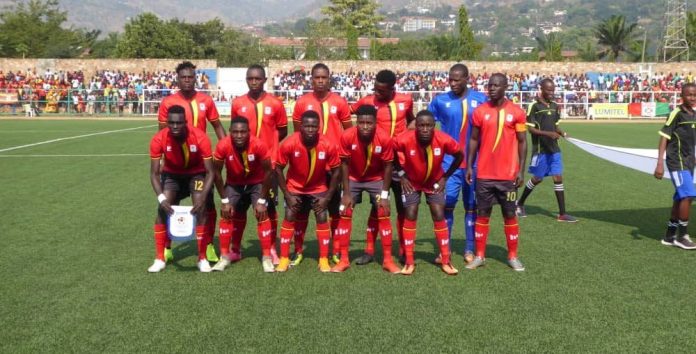
Cranes Squad for North Eastern regional tour named

Cranes team

Uganda Cranes Head Coach Johnathan McKinstry has named 21 players for the Regional Tour Match to be played in Katakwi on Saturday 9th November 2019.

The Squad consists of only locally-based players who will see Uganda Cranes take on North Eastern Select team. It will be the third time the Uganda Cranes Regional tour heads to the region.

The tour is in line with the preparations for the upcoming Uganda Cranes participation in the 2020 CHAN tournament in Cameroon and also taking the Uganda Cranes brand to the masses.

The team will train on Thursday morning at the StarTimes Stadium in Lugogo before setting off for Katakwi the following day in the Morning.

Previously the Cranes have also visited the Western Region (Mbarara), North East (Soroti), Northern (Gulu), Kitara (Masindi), West Nile (Arua), Buganda region (Masaka) and the Eastern Region (Mbale).

The squad summoned:

Goalkeepers: Charles Lukwago (KCCA FC) and James Alitho (URA FC)

Outfield players; Paul Willa (Vipers SC),  Halid Lwalilwa (Vipers SC), Mustafa Kizza (KCCA FC), Revita John (KCCA FC), Kato Samuel (KCCA FC), Paul Mbowa (URA FC), Nicolas Kasozi (KCCA FC), Shafiq Kagimu (URA FC), Hassan Senyonjo (Wakiso Giants), Muzamiru Mutyaba (KCCA FC), Allan Okello (KCCA FC), Bright Anukani (Proline FC), Joachim Ojera (URA FC), Vianne Sekajugo (Wakiso Giants), Allan Kayiwa (Vipers SC), Joel Madondo (Busoga United), Fahad Bayo (Vipers  SC) Ashraf Mandela (URA FC) and Edrisa Lubega (Proline FC)

Uganda Cranes Regional Tour

9th November 2019

North Eastern Select vs Uganda Cranes

Katakwi Ground – 4 pm

Stories Continues after ad

Targeted national policy reform to promote regional integration can increase competitiveness of East Africa’s economies – report

Trailers

East African countries are progressively improving their policy frameworks governing trade, but governments need to do more to improve the business environment as a whole, according to the second edition of the African Union Commission’s (AUC) economic report produced in collaboration with the Organisation for Economic Co-operation and Development (OECD) Development Centre.

Governments in the region are adopting a series of pro-trade reforms to reduce barriers to trade and improve the overall trade environment. In 2019, at the time of writing, most countries in the region had outperformed the sub-Saharan Africa average for trading across borders, says Africa’s Development Dynamics (AfDD) 2019 report released Tuesday.

However, while some countries like Mauritius, Rwanda and Kenya outperform others in the Ease of Doing Business rankings overall, more countries in the region require additional work to improve the overall business climate. “Complex and burdensome business procedures in many countries undermine efforts to promote business linkages, cross-border firm networks and regional value chains,” the report says.

It says regional integration is a contentious political process to manage and should be deployed tactfully to promote an environment conducive to transforming the economy’s productive structure. “Regional integration exposes businesses to outside influences, opportunities and competition. This can trigger resistance or hesitation among certain stakeholders that fear economic disruption.”

It adds that regional integration initiatives also carry enormous potential for economic and social benefits to ordinary citizens and domestic private sector operators alike. I t says: “A tactful approach with carefully selected initiatives should be deployed as opposed to a wholesale push for larger and more competitive markets.”

Regional integration can create larger markets, increase economies of scale and reduce transaction costs for the region, although this does not seem to take place yet. There is little evidence to suggest that integration in the major East African regional economic communities (RECs; i.e. the Common Market for Eastern and Southern Africa [COMESA] and the EAC) have led to increases in intra-regional trade.

Ten years after its launch, intra-regional imports in the EAC as a share of GDP were lower than prior to its launch. COMESA has fared only slightly. Lack of trade complementarity among member states, overlapping membership and a general decrease in exports’ share of GDP go some way to explain this situation. Consequently, efforts by RECs to promote East Africa’s productive transformation have been largely ineffective, partly due to a poor implementation of regional programmes.

Individual countries’ overlapping membership in RECs further complicates national trade regimes and prevents deeper integration into one group. A tripartite free trade agreement in goods, negotiated between COMESA, the EAC and the Southern African Development Community in June 2015, provided an opportunity to partially rectify this. However, the experience overall has been a disconnect between regional and national objectives for growth and, by extension, a prioritisation by member states of their own interests over those of the region. These factors combined prevent countries from fully benefiting from the regional integration process.

Promoting greater levels of trade facilitation over integration could increase the number of regional value chains (RVCs). Reducing regional transaction and trade costs is critical to supporting RVC integration since goods cross regional borders multiple times.

It is estimated that reducing time to trade by 1% increases the level of foreign value added by 0.18% after two years. Regional projects, such as the Single Customs Territory, which focus on reducing the cost and time for trading across borders, could allow RVCs to play a greater role in East Africa’s productive transformation. Through implementation of the SCT project, transportation costs on the Northern Corridor between Kigali and Mombasa were reduced from USD 5 000 per 20-foot container at the beginning of 2013 to almost USD 3 000 in 2019.

Investments in transformation capabilities are needed to unlock trade’s growth potential

Exports’ share of GDP is decreasing for East Africa, as much of the region’s growth is concentrated in non-tradeable sectors. While exports’ shares of GDP vary across countries, they tend to be above 40% for upper-middle-income countries globally. The East African average was just 14% in 2017, down from 19% in 2000. This low and declining share can partly be attributed to the fact that much of the region’s growth comes from the non-tradable construction, real estate and retail sectors.

The island countries of Madagascar, Mauritius and Seychelles all have relatively higher trade shares. Rwanda stands out for its exceptional rate of sustained export growth since 2000, averaging 17% per year, while its share of exports as a percentage of GDP increased from 6% to 18%. However, even with this level of growth, Rwanda’s share of exports in the national income remains below the average for countries with comparable income levels (around 25%).

The region constitutes of services-exporting economies

 Services accounted for 57% of exports from East Africa in 2017 and have remained above 50% for the past decade. Major export sectors for services in the region include tourism, transport, ICT and finance. Services exports have grown 6% on average for the past year, largely in line with the average growth for total exports.

While services have greatly contributed to growth in East Africa’s exports, relying solely on service-driven export growth has its downsides. Firstly, some services tend to require high-skilled labour, which calls for a long-term investment in human capital. Secondly, though services are often traded, they tend to be less tradeable than goods and raw materials. Ultimately, there is no obvious or easy way to rapidly improve productivity in services.

Exports from agriculture and mineral sectors are growing strongly. The shares of exports from agriculture and minerals have increased over time, accounting for 26% and 6%, respectively, in 2017. The positive growth in agriculture is a result of investments to improve productivity in key agricultural export commodities by countries such as Ethiopia, Kenya and Rwanda. As countries push for growth in agriculture exports, markets outside East Africa are becoming increasingly important. Mineral exports also are largely destined for markets outside the region.

The share of the region’s manufacturing export products has fallen, from 20% a decade ago to 12% in 2017. Manufacturing export performance has been particularly disappointing given the efforts that East African countries have put into growing their industrial base.

Increasing the size of manufacturing exports is a critical component for the region’s productive transformation, due to a higher productivity and large employment potential. However, at the current pace, the region will not be able to rely on manufacturing-led export growth to absorb new entrants into the labour force.

The report sheds light on the state of productive transformation in 14 East African countries: Comoros, Djibouti, Eritrea, Ethiopia, Kenya, Madagascar, Mauritius, Rwanda, Seychelles, Somalia, South Sudan, Sudan, Tanzania and Uganda.

Stories Continues after ad

Competitive firms and committed governments are the catalysts of Africa’s economic transformation, says new report

Experts have called for Intra-Africa Trade

African firms are the key to the economic transformation of the continent, but they need governments to create better conditions for them to thrive, according to the second edition of the African Union Commission’s (AUC) economic report produced in collaboration with the Organisation for Economic Co-operation and Development (OECD) Development Centre.

Without bold policy changes, most African businesses may not be ready for reaping the benefits of the African Continental Free Trade Area Africa (AfCFTA) which is projected to offer African firms the new opportunities of a 1.2 billion consumers strong continental market, says Africa’s Development Dynamics (AfDD) 2019 report.

The report released on Tuesday shows that Africa’s expanding domestic markets offer great opportunities for transforming production systems across the continent. Africa recorded 4.6 percent annual gross domestic product (GDP) growth between 2000 and 2018; with domestic demand accounting for 69 percent of it. The continent’s growth is projected at 3.6 percent in 2019 and should remain robust at 3.9 percent between 2020 and 2023. The regional demand for processed food has been growing 1.5 times faster than the global average. Large Pan-African firms and some dynamic start-ups are seizing these opportunities to grow, as highlighted in the report.

However, the report finds that Africa needs more dynamic enterprises to turn these opportunities into higher profits, more investment and new, decent jobs. This is especially true of small and medium enterprises in employment-intensive sectors:

Firms fail to tap the growth in neighbouring markets: exports of consumption goods to other African markets decreased from 0.8 percent of Africa’s GDP in 2009 to 0.5 percent in 2016. Currently, most African firms are losing out to new competitors both at home and in emerging markets. Only 18 percent of Africa’s new exporters survive beyond three years.

Productivity is not catching up. Since 2000, Africa’s average labour productivity has stagnated at around 12 percent of US levels. The Africa-to-Asia labour productivity ratio has decreased from 67 percent in 2000 to 50 percent in 2018.

“Accelerating the development of Africa’s productive sectors is critical to meeting the objectives of the African Union’s Agenda 2063. We must shake the structure of our economies to create strong, robust and inclusive growth, with new jobs and opportunities for all”, said Prof. Victor Harison, Commissioner for Economic Affairs of the AUC, while launching the report. Progress in quality job creation is too slow: in some countries, almost 91 percent of the workforce outside of the agricultural sector remains in informal and vulnerable employment.

AfDD 2019 puts forward a systemic approach to productive transformation by focusing on three sets of policies:

Develop effective clusters of firms, by providing them with business services that improve specialisation in niches, reinforce linkages between the most productive ones and the others, and address skill shortages.

Encourage the creation of regional production networks to generate economies of scale between African countries, attract new investors, develop complementarities within the value chains, and avoid a competitiveness race to the bottom.

Enhance firms’ abilities to thrive in new markets. Policies can provide extra support to exporters by removing non-tariff barriers to the continental trade, simplifying administrative procedures and custom services, and improving connective infrastructure – especially flights, roads and ports.

“The entry into force of the African Continental Free Trade Area in 2019 marks a strong commitment by African leaders towards productive transformation. But it will work if African firms are strong enough to compete in this new, enlarged market. They need bolder and smarter government policies to support them”, stated Mario Pezzini, Director of the OECD Development Centre and Special Advisor to the OECD Secretary-General on Development.

The report provides detailed analysis and recommendations for each of the five African regions.

Stories Continues after ad