Stanbic Bank
Stanbic Bank
18.9 C
Kampala
Stanbic Bank
Stanbic Bank
Home Blog Page 1147

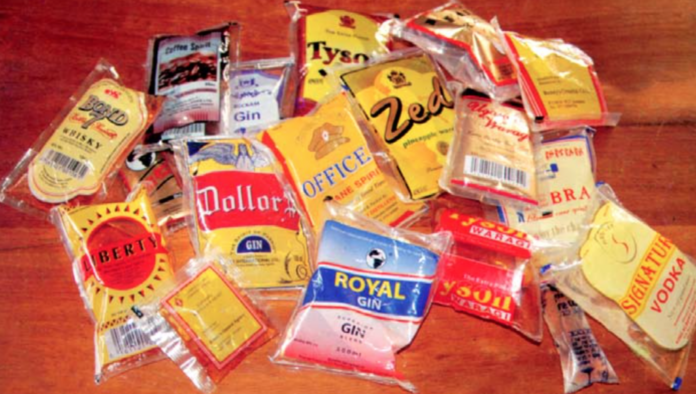
Cartons of alcohol seized in a gov’t joint operation

In a Ugandan kafunda (bar), crude waragi is served and 500 shillings will get you drunk.

The Uganda National Bureau of Standards (UNBS), in a joint operation with Uganda Revenue Authority, Ministry of Trade Industry and Cooperatives and the Uganda Police have seized over 400 liters of alcohol packed in bottles less than 200mls, worth Shs7.4 million in the Kampala City Centre.

Alcohol brands like Lords Blended Malt Whiskey, Royal Circle Whiskey, Legend Whiskey, Mr Doweel’s, Blue Skyz Vodka, Uganda Waragi, Bond 7, Beckam gin, Herdsman blended Whisky, Red Sorghum Whiskey and Twebeleremu Extra gin, packed in 180mls and 100mls bottles were impounded from Divine Traders, Mwebale enterprises and Felix enterprises among others.

Following a cabinet directive issued in 2017, banning consumption and sale of alcohol in sachet and in bottles less than 200mls, manufacturers were given up to 30th March 2019 to seize production while retailers were given up to 31st May 2019 to stop selling the sachets.

Upon expiration of the deadlines, the Minister of Trade Industry and Cooperatives, Hon. Amelia Kyambadde instituted a multi-sectoral task force to enforce the ban, which kicked off with an operation in Kampala City Center.

During the launch of the taskforce in September 2019, the Minister Amelia Kyambadde noted that excessive consumption and abuse of alcohol has detrimental effects on humans, citing effects like mental and behavioral disorders, liver and cardiovascular diseases, injuries, traffic accidents, violence, low productivity, public endangerment and death.

Enforcement of the ban is expected to spread to different parts of Uganda to ensure that alcohol packed in sachets and bottles less than 200mls is totally phased out of the Ugandan market.

Stories Continues after ad

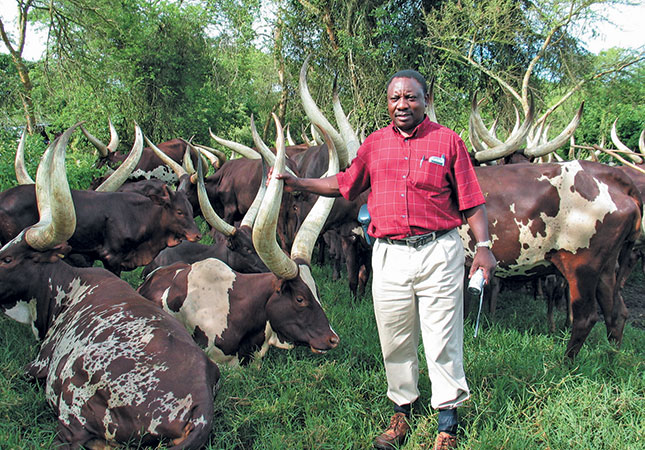
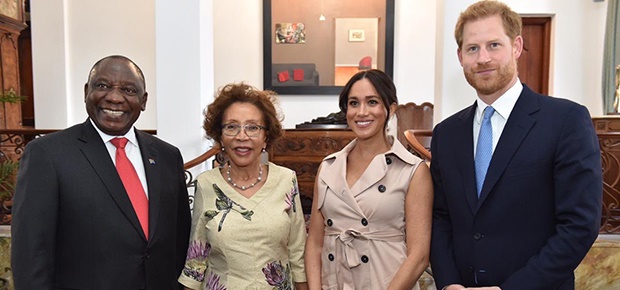
Ramaphosa praises Uganda’s Ankole cattle as Prince Harry admires them 

President Cyril-Ramaphosa-and-Ankole-cattle


The Duke and Ducjess of Sussex recently embarked on a royal tour of Africa, the two have been camped in South Africa for the past two days ended their visit by meeting with the President of South Africa His Excellency Cyril ramaphosa and  First Lady Dr Tshepo Motsepe at their home in Tshwane.

Although the royal visit was highlighted by a number of events and displays, such as Desmond Tutu’s blessing of the new baby prince Archie, one particular event that caught the eye of most Ugandans was the gifts that were exchanged between the two leaders.

The Prince thoughtfully carried with him a painting of the president himself amongst his cherished Ankole cattle and indeed, as if anticipating the African leader’s passion for the coveted indigenous breed, he too was presented with a book that the president co-authored titled ‘The Cow of the Ages’ based on none other than our very own Ankole cattle.

The two parties were blown away by the sheer magnificence of the long horned bovines and as they appraised the cows, the president gave a brief history surrounding these Majestic beasts and how he came to bring them to South Africa. Originally from Uganda, Ramaphosa first saw the cow when he visited President Yoweri Kaguta Museveni, it was then that he decided he too would own the beautiful beasts with horns that reached the heavens.

Initially the president thought he would buy the cows and transport them to his homeland but due to the importation laws that did not permit livestock from crossing the borders of South Africa, taking these bests home would prove to be quite a tedious affair. However with the help of Kenyan professionals, he could finally export his beloved cattle to South Africa by the means of ‘embryo-transfer’ from the Ugandan President’s heard.

Since then ramaphosa’s very own heard has grown to about 250 heads of cattle with two ranches in Kenya and South Africa. The Ankole cattle have not only garnered him a lot of fame and prestige but further deepened his pockets as their become highly sought after for their low cholesterol meat and in 2017 his Ankole was auctioned off at a whopping 640,000 Rands (Shs155 million).

This has not only boosted the tourism industry as foreigners from all over the globe fly in to see the highly praised Ankole cow but it has also greatly added value to preservation efforts that have been put in place to save the breed as more local farmers opt for the commercial Friesians/Holsteins over the local breeds.

Stories Continues after ad

Amendment to EAC Customs Management Act in offing

Current Emblem of East African Community

A proposal to amend the East African Community (EAC) Customs Management Act, 2014, to extend the time for removal of bulk containerized goods from the ports of discharge, is in the offing, in a move likely to reduce the cost of doing business in the region.

In the regard, the Assembly has granted EALA legislator Abdikadir Omar Aden, leave to introduce a Bill to amend section 34 (5) of the existing Customs Management Act, 2014, to realise the above objective. With it, the Assembly further adopted a motion to amend the Act, when it received support yesterday.

The Motion moved by Mr Aden, Chair of the General Purpose Committee and seconded by Dr Abdullah Makame, was moved under Article 49(1), 59(1) and Rule 26 of the Rules of Procedure of the House.

At the moment, under the existing Act, the entry of cargo is required to be made within twenty-one days from the date of discharge of the vessel failing which the goods contained in the cargo begin to attract a charge or demurrage. However, Hon Aden avers that extending the time for removal of large consignments from the port of entry would eliminate demurrage charges and hence goods more affordable and allow for longer storage period to facilitate clearance.

In the EAC, all cargo coming in to the region enters through the designated ports but mainly through the ports of Dar es Salaam in the United Republic of Tanzania and Mombasa in the Republic of Kenya.

“I am concerned that the limited time provided for entering and clearing bulk consignments is increasing the cost of doing business for East Africans engaged in the business of importing goods who are passing on the cost of the consumer of the imported goods,”Aden said. Under Article 59(1) of the Treaty, any Member may propose any motion or introduce any Bill in the Assembly.

The Rules of Procedure of the Assembly also requires that a Private Members Bill shall be introduced first by way of Motion to which the proposed draft of the Bill shall be attached.

Stories Continues after ad

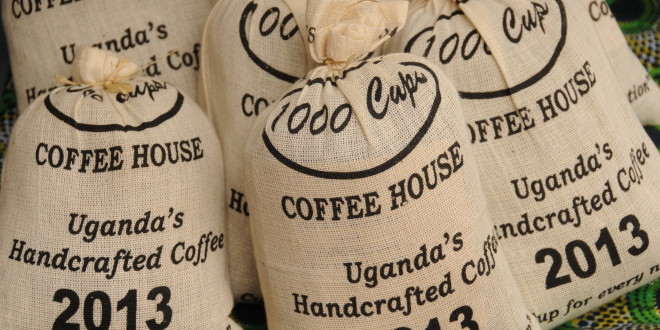
World coffee production goes up 3.7% in 2019

Uganda coffee


World production in coffee year 2018/19 is estimated to be 3.7 per cent higher at 168.87 million bags, which includes part of the new crop for producing countries with crop years commencing in April and July.

According to International Coffee Organisation (ICO), report for September 2019, production of both Arabica and Robusta increased in 2018/19, though the majority of the increase came from Robusta, which grew 6.7 to 66.04 million bags compared to coffee year 2017/18. Arabica production increased by 1.8 per cent to 102.68 million bags.

Output rose in all regions except for Mexico and Central America, where the harvest declined by 0.8 per cent to 21.47 million bags. Nearly half of the world’s coffee was produced in South America, where production is estimated 4.8 per cent higher at 80.95 million bags in coffee year 2018/19. Production grew by 4.6 per cent in Asia & Oceania to 48.46 million bags, while output in Africa rose by 1.9 per cent to 17.99 million bags.

The larger supply in coffee year 2018/19 is reflected in increased shipments. In the first eleven months of coffee year 2018/19, world coffee exports were 9.2 per cent higher than in the same period for coffee year 2017/18, amounting to 120.28 million bags.

Tanzania and Kenya also shipped more coffee during this period, with their exports rising by 47.4 per cent to 1.04 million bags and by 11 per cent to 743,203 bags, respectively. An increase of 31.1 per cent to 38.72 million bags from Brazil led the growth in shipments of Brazilian Naturals. However, shipments from Ethiopia, the second largest exporter of Brazilian Naturals, decreased by 4.8 per cent to 3.23 million bags.

Robusta shipments increased by 5.6 per cent to 42.84 million bags in the first eleven months of coffee year 2018/19.

Uganda’s exports remained stable, increasing by 0.6 per cent to 4.09 million bags in October 2018 to August 2019. Côte d’Ivoire’s shipments grew by 49.1 per cent to 1.62 million bags, which more than offsets the 8.4 per cent decrease in exports from the Lao People’s Democratic Republic, amounting to 323,291 bags.

While shipments to date for the coffee year are higher, exports in August 2019 decreased by 4 per cent to 10.45 million bags compared to August 2018. Arabica shipments decreased by 2.3 per cent to 6.54 million bags, and Robusta by 6.6 per cent to 3.9 million bags. The decrease in Arabica shipments was led by Other Milds, which fell by 15.3 per cent to 1.99 million bags in August 2019, while exports of Brazilian Naturals remained stable at 3.27 million bags. Exports of Colombian Milds, however, rose by 18.3 per cent  to 1.29 million bags.

Global coffee consumption is estimated to have risen by 2.1 per cent in coffee year 2018/19 at 164.82 million bags. Consumption in importing countries grew by 2.4 per cent to 114.51 million bags while exporting countries’ consumption rose by 1.3 per cent to 50.31 million bags, which represents 30.5 per cent of world consumption.

Coffee production in 2018/19 exceeded global consumption by 4.05 million bags, which marks the second year of surplus. The total cumulative surplus is 5.48 million bags. This surplus has contributed to the low prices this coffee year, with the composite indicator averaging 100.47 US cents/lb for October 2018 to September 2019

Additionally, exports in coffee year 2018/19 set a new record and put further pressure on prices. The total volume shipped in the first eleven months of coffee year 2018/19, 120.28 million bags, has already surpassed the total volume shipped in coffee year 2017/18.

Stories Continues after ad

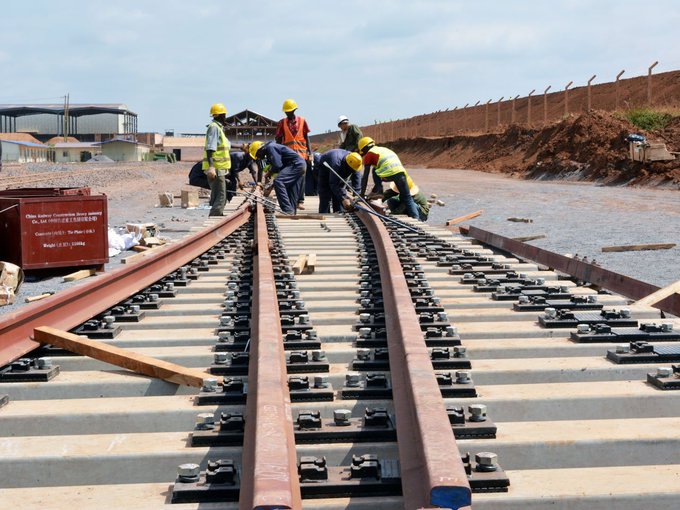
Gov’t begins demarcating SGR route

Standard Gauge Railway

The Government of Uganda has started demarcating the route on which the anticipated Standard Gauge Railway (SGR) line is set to pass.

The demarcation exercise, which is expected to mark out the entire path from Malaba to Kampala, began in the village of Bulaka in Namutumba district and will cover different areas in Bukedi and Busoga Sub-regions before heading to other districts.

Speaking during the launch of the demarcation exercise in Bulaka village, Namutumba Sub-county days ago, Eng. Canon Perez Wamburu, the SGR project coordinator, said that the exercise was meant to protect the route from encroachment in preparation for the handover of the project soon to the contractor so that construction can begin without any hindrances.

“The demarcation exercise is necessary to keep people off from the acquired land. We have noticed in the past that even after compensation, some come back and start their farming, construction, brick making and other human activities on what is now a government property.” Wamburu said.

Eng. Canon Perez Wamburu further dismissed the ongoing allegations that the SGR project had failed and said that it is wrong because the government of Uganda under President Museveni is doing everything in its capacity to make this project a reality.

He said the government has already re-submitted a loan application to the Exim Bank of China through Ministry of Finance to get resources to fund the exercise.

“We cannot tell for sure when the funds are going to be released because the bank is unpredictable, but we are pushing and hopefully soon, we will hand over the project to China Harbor Engineering Company so that they can begin their work.” the SGR project Coordinator clarified.

Recently, the project management team met district leaders from where the Standard Gauge Railway alignment traverses to update them on the status of the project.

Stories Continues after ad
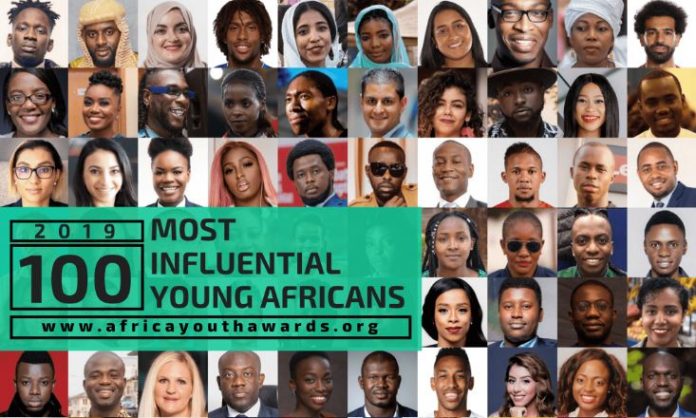
Three Ugandans among 2019 most influential young Africans

Influential Africans

Three Ugandans have been named among the 100 most influential young Africans list by Africa Youth Awards in 2019. The list which annually recognises the works of young Africans who have impacted lives across the continent, features young people from 32 African countries.

Among the Ugandans named include Singer Eddy Kenzo, news reporter Nancy Kacungira and sports journalist Usher Komugisha.

Nancy Kacungira is a presenter and reporter at BBC News who presents World Business Report on BBC World News while Usher Komugisha is one of the best female sports journalists in Africa.

Sharing insights on the publication, Prince Akpah, founding president of Africa Youth Awards, mentioned that this year’s list features a record of 52 females and 48 males from 32 countries and is an attestation of the works put forth by young people who are passionate about changing the narrative of the African continent.

Notable among the 2019 honourees are Burna Boy, African Union Youth Envoy; Aya Chebbi, Sierra Leone’s First Lady; H.E. Fatima Maada Bio, Global Teacher Prize Winner; Peter Tabichi, Davido, African Fashion Fund founder; Roberta Annan, Governor of Nandi County, H.E. Stephen Sang and Sudanese activist Alaa Salah.

Nigeria, South Africa, Kenya and Ghana lead with representations on the list with 15, 11, 9 & 8 honourees respectively.

In its 4th year, the list has previously helped to celebrate and throw the spotlight on the remarkable achievements and contributions of young people towards the development of the African continent and also serving as a motivation to millions of young people across the globe.

The list which was compiled in partnership with Avance Media, mynaijanaira.com, VIPI State Agency and Unorthodox PR & Media Group also presents an opportunity for young Africans to stay committed to their individual causes and continue to blaze trails across their various fields.

Stories Continues after ad
Iran lauds Uganda fighting terrorism 

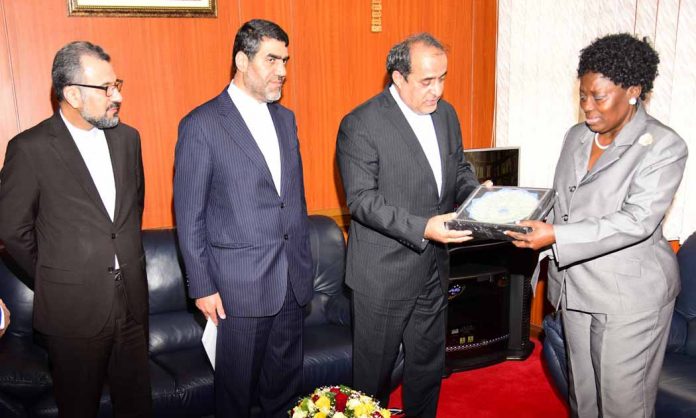
Mr. Asadollah Eshragh Jahromi_ H.E. Amb. Morteza Mortazavi and H.E. Ardeshir Noorian meeting with the Speaker Rebecca Kadaga at Parliament.


A three-man high level delegation from Iran has applauded Uganda for her fight against terrorism during a courtesy call on the Speaker of Parliament, Rebecca Kadaga.

The delegation is attending the 42nd Parliamentary Union of the Organisation of Islamic Cooperation (PUIC, OIC) Executive Meeting in Kampala and is led byArdeshir Noorian, Member of Parliament of the Islamic Republic of Iran.

“The role Uganda is playing is very important in fighting the double standards being exerted in fighting for human rights and against terrorism,” said Noorian.

Iran, Noorian added, was happy that Uganda had not yielded to any pressures by taking an independent stand on matters of terrorism.

The delegation advised that the world ought to be cautious in the fight for human rights in order to preserve humanity.

Kadaga in response said that Uganda being a peace loving country, was very disturbed with the instability in Yemen.

“We are concerned about the disturbance in Yemen and how Uganda can help in discussing with the President and the Minister of Foreign Affairs to see the way forward,” the Speaker said.

The Speaker invited the delegates to visit the Pearl of Africa and enjoy its amiable weather.

Other members of the delegation included . Morteza Mortazavi, Iran’s Ambassador to Uganda and Mr Asadollah Eshragh Jahromi, Assistant Director General for Peace and Security in Iran’s foreign affairs ministry.


Stories Continues after ad
Draw for U-23 Africa Cup of Nations held


The group stage draw for the Total U-23 Africa Cup of Nations took place at Haramlek Palace, Alexandria, Egypt revealing that host country Egypt will open the tournament in a match against Mali on Friday, 8 November at the Cairo International Stadium.

The Total U-23 Africa Cup of Nations is held every four years and showcases some of African football’s emerging talents while also acting as a qualifier for the Summer Olympic Games Tokyo 2020.

Egypt’s Pharaohs were also drawn alongside debutants Cameroon and Ghana as well as Mali in Group A and holders Nigeria were drawn in Group B with Cote d’ivoire, South Africa and Zambia.

Former Egyptian forward Emad Meteab assisted CAF Director of Competitions, Samson Adamu to conduct the draw that pitted the eight qualified teams into two groups of four teams each.

President of the CAF Organising Committee for Youth Competitions and CAF Executive Committee Member Ahmed Yahya supervised the ceremony, which was attended by Egyptian Minister of Youth and Sports, Dr Ashraf Sobhy and representatives of the qualified teams.

The tournament is scheduled to take place from 8-22 November 2019 in the Egyptian capital Cairo and will see Group A hosting their games at the Cairo Interntional Stadium and Group B at the Al Salam Stadium.

The top three teams of the Total U-23 Africa Cup of Nations will qualify to represent Africa at the Summer Olympic Games Tokyo 2020.

Group A – Egypt, Mali, Cameroon, Ghana

Group B – Nigeria, Cote d’ivoire, South Africa, Zambia

Stories Continues after ad

Tanzania to face Kenya in U20 CECAFA final

Kenya to face Tanzania in the finals


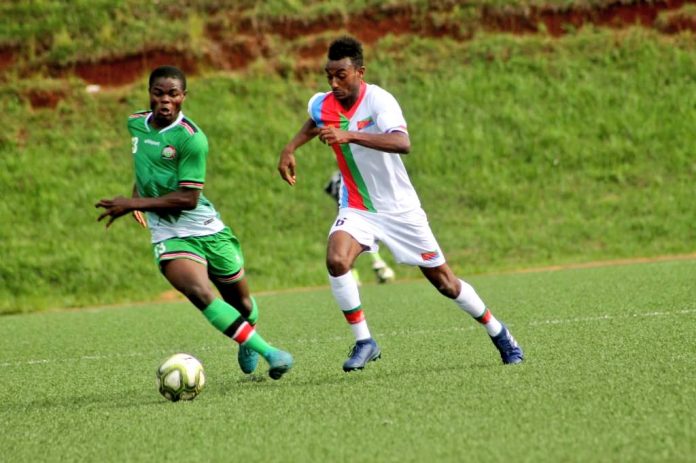
Tanzania will face Kenya in the final of the 2019 CECAFA U-20 Boys Challenge Cup on Saturday in Njeru.

This followed the completion of the two semi-final matches involving Tanzania against Sudan and Kenya against Eritrea in Gulu and Njeru respectively on Wednesday evening.

The Kenyan youngsters recorded a 1-0 win over Eritrea in the second semi-final at the FUFA Technical Centre, Njeru on Wednesday.

An own goal by Eritrean defender Yoseif Mebrahtu with five minutes from time was enough for the rising Harambee stars.

At the Pece War Memorial Stadium in Gulu, Tanzania overcame Sudan 2-1. Israel Patrick Mwenda and John Pius Kelvin scored for Tanzania in the first half.

Mohamed Abbas Namir pulled a goal back for Sudan at the start of the second but it was merely a consolation.

The two nations will meet for the second time in the ultimate stage of the regional tournament after clashing in Group B’s match where they drew 2-2.

In the third place play-off match, Sudan will lock horns with Eritrea before the ultimate game.

The final and third place play off matches will be played in Njeru on Saturday, 5th October 2019.

After the two semi-finals on Wednesday, there are so far 85 goals scored in 21 matches with only one red card.

Stories Continues after ad

Museveni hails Bethel Rock school for improving education

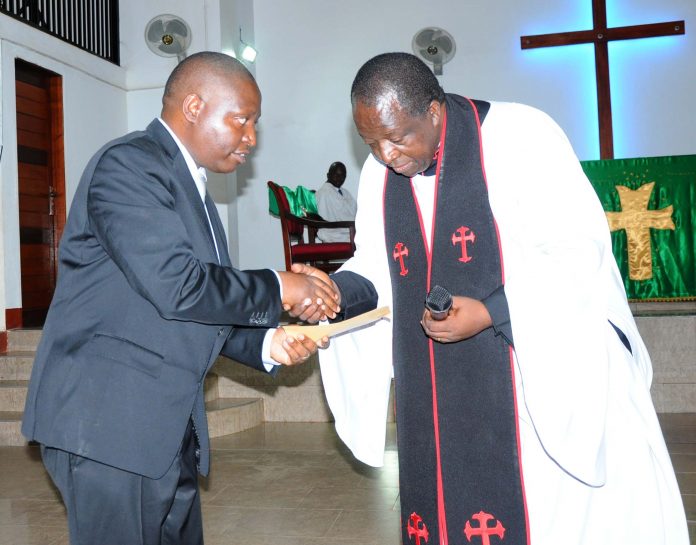
The State Minister of Finance for Planning David Bahati handing over his envelop to Vicar of church of Uganda Bugolobi Godfrey Byarugaba as his contribution to Bethel Rock Community School .This was during celebration to mark 30 years of Bethel Rock School Church of Uganda Bugolobi Kampala on September 29, 2019.


President Yoweri Museveni has hailed a church-based school in Bugolobi for promoting education and improving the lives of vulnerable children.

In a speech read for him by the State Minister for Finance in charge of planning, David Bahati, Museveni praised the Church of Resurrection Bugolobi for the great initiative of starting Bethel Rock School 30 years ago.

This was at the weekend during celebrations to mark the school’s 30 years of existence.

“This celebration is a testimony of your faithfulness to God and mankind for you have transformed and impacted lives of vulnerable children,” Museveni in his speech.

“As you are all aware, the church in Uganda has been a reliable development partner with government over the years. This is especially evident in the area of human development, provision of education and health services,” he added.

(L-R) Vicar of Church of Uganda Bugolobi Godfrey Byarugaba, head of Laity Ken Odur, President Mothers Union and pioneer teacher of Bethel Rock School Jolly Kamishani joining the State Minister of Finance for Planning David Bahati to cut the cake to mark 30 years of Bethel Rock Community School existence as pupils of Bethel Rock School and others members look on.This was at Church of Uganda Bugolobi Kampala on September 29, 2019.

The President said although there were challenges of moral decadence and under-development after the 1986 war, “The church has been very instrumental in the molding of society and moral guidance, ensuring social stability and economic empowerment.”

“In a special way, therefore, I want to thank the Church of Resurrection Bugolobi for the sacrifices and the humanitarian efforts. Your efforts have laid a strong foundation for this school to thrive over the years as can be seen today through the different achievements and milestones majorly centered on community transformation.”


Stories Continues after ad