Stanbic Bank
Stanbic Bank
17.3 C
Kampala
Stanbic Bank
Stanbic Bank
Home Blog Page 1150

From Kenya and Uganda, mobile money spreads to Asia

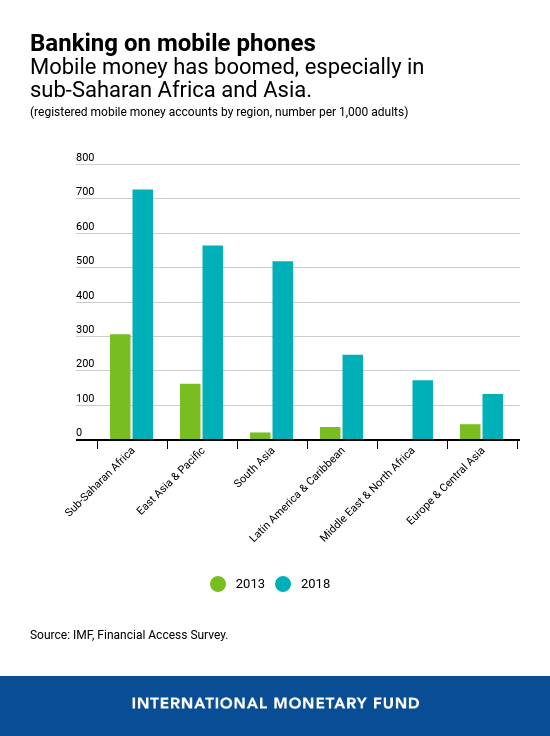
Graph showing mobile money performance


Thanks to mobile money, any person with a basic phone can now make cash transfers, pay bills, and send money to family members abroad without having a bank account. This is a game-changing innovation, particularly for the world’s poor as it is easy and cheap.

Our chart of the week from the IMF’s Financial Access Survey shows the growth in mobile money accounts across regions. While mobile money continues to grow in its epicenter in Africa, it’s also taking off in Asia. Mobile money is just one aspect of the survey, which also provides a wealth of information on the access to and use of basic financial services, including breakdowns by gender.

Asia’s mobile money uptake

Over the past five years, mobile money has gained traction in South Asia, which is experiencing an average annual growth rate of 46 percent in mobile money accounts the highest across all regions. Bangladesh, Indonesia, and Pakistan are a few examples of countries experiencing high mobile money growth in Asia.

Mobile money services grew early on in sub-Saharan Africa because some countries lacked deep banking penetration. The launch of M-PESA in Kenya in 2007 completely transformed the way the unbanked access financial services.

After a rapid expansion in Kenya, Tanzania, and Uganda, mobile money has spread to other parts of the region. In fact, sub-Saharan Africa still leads in the number of mobile money accounts and in some countries, mobile money accounts now surpass bank accounts.

Mobile money also continues to grow in some fragile states.

Factors behind rapid uptake in new frontiers

In Afghanistan, for example, where only 200 out of 1,000 adults have bank accounts but more than 80 percent of the population has access to a cellular phone, mobile money is picking up. The value of mobile money transactions grew by a factor of four in the past five years to 1.2 percent of GDP in 2018.

The ability of mobile money services to reach remote customers has contributed to this growth. Mobile network operators employ agents typically small, local retail stores to offer services even in remote areas where banks have limited reach.

In Afghanistan, there are, on average, three mobile money agents compared to one or less automated teller machine or commercial bank branch every 1,000 square kilometres. This expansion in mobile money services has helped meet a significant pent-up demand for financial services.

With mobile money becoming more pervasive, governments will need to create regulations to protect new customers against fraud and liquidity risks the inability of service providers to return funds on demand.

 

Stories Continues after ad

WHO launches digital app to improve care for older people

WHO


As the world marks International Day of Older Persons, the World Health Organization (WHO) has launched a package of tools, including a digital application to help health and social workers provide better care for older people.

The innovative interactive digital application known as WHO ICOPE Handbook App provides practical guidance to address priority conditions including mobility limitations, malnutrition, vision and hearing loss, cognitive decline, depressive symptoms and social care and support. Used in conjunction with a package of tools including a new handbook, the app will accelerate training of health and social workers to better address the diverse needs of older people.

“It is essential that services for older people are included in universal health care packages. At the same time there needs to be good coordination between the health and social services to provide optimal care when needed. The new package of tools supports healthy ageing with a person-centred and coordinated model of care” says Dr Anshu Banerjee, director of the department of Maternal, new-born, child and adolescent health and ageing at WHO

The world’s population is ageing at a fast pace. By 2050 one in five people will be over 60. The number of aged over 80 is projected to triple from 143 million in 2019 to 426 million in 2050. While every older person is different physical and mental capacity tend to decline with increasing age.

“Such innovation will enable older people to continue doing the things they value and prevent them from social isolation and care dependency,” says Dr Islene Araujo de Carvalho, group lead on ageing and integrated care at WHO. “Intervening close to where older people live, with active participation of the community and older persons themselves, is essential for a personalized care plan.”

The Integrated Care for Older People package of tools is the result of two years of extensive consultations with leading experts and stakeholders including civil society representatives.

The 2030 Agenda and the Sustainable Development Goals recognize that development will only be achievable if it is inclusive of people of all ages. Empowering older persons and enabling their full participation and social inclusion in good health are ways to reduce inequalities.


Stories Continues after ad

Bill Gates bestowed with Africa’s financial inclusion medal of honor

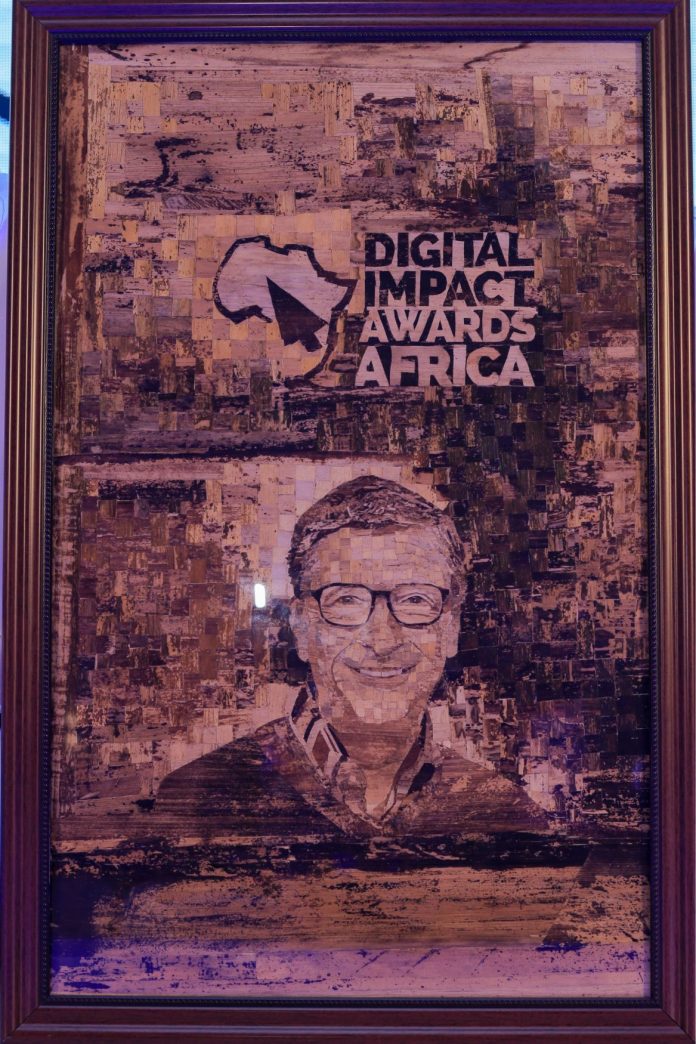
Portrait of Bill Gates


HiPipo, through its Include Everyone program is delighted to celebrate global business leader Bill Gates with a Digital Impact Awards Africa honor, the ‘Africa’s Financial Inclusion Medal of Honor.’

The Africa Financial Inclusion Medal of Honor is awarded to an individual or organization that is has made exceptional contribution to Africa’s Digital space, by specifically taking lead in ensuring that there is provision of affordable, reliable and accessible financial services across the continent.

According to GSMA 2018 report, mobile money is now available in 100 countries through over 300 services globally. The number of verified mobile money accounts is reaching a total of half a billion globally with strong growth in Sub-Saharan Africa.

This fast-growing mobile money penetration that has greatly improved financial inclusion to the poorest of the poor is thanks to the tremendous work done by development partners that have invested time and money in research and delivery of sustainable financial solutions for the poor.  Notable among such partners is the Bill & Melinda Gates Foundation.

The different researches and productions/live projects that the Bill & Melinda Gates Foundation is supporting are mammoth contributions that demonstrate how different industries can innovate and positively transform life using mobile financial services.

It is against this background that Digital Impact Awards Africa appreciates this noble contribution and thus presents the “Africa’s Financial Inclusion Medal of Honor, 2019” to Bill Gates, the Co-chairman of the Bill & Melinda Gates Foundation.

The Medal of Honor was accompanied with a Special Fiber Mosaic Art Piece

It is an original and unique piece with a patterned surface consisting of various simple patterns of quite collaborated color effects made with small pieces of banana fibre, plywood and glue.

Godfrey Kabaale Phipo crafted the best ever most durable, greatest looking, most admirable medal to celebrate Bill Gates. In his own words,

“This art piece is a patterned surface made with small pieces of banana fibre, stuck on plywood with art glue. This art piece took me 6,570 man hours to finish. It required a detailed and customized attention for any slight distraction would make me lose truck. This art piece will forever be a very special art piece to me because it has made me discover the potential I never imagined I had.”

The Digital Impact Awards Africa honor and special mosaic art piece was received by Dr. Warren D. Carew, Vice President – Payment at ModusBox on behalf of the Gate Foundation at the recently concluded 6th edition of Include Everyone Summit and #DIAA2019.

Since their inception, the Digital Impact Awards Africa (DIAA) have enjoyed increasing international recognition. Today they are among the most respected and sought-after prizes bestowed.

Their prestige, acknowledged within Africa and rest of the world, has grown over the years because the public and digital industry recognizes the DIAA as an award based on technical achievement and because care has been taken to preserve the integrity of the DIAA. Specifically, the Digital Impact Awards Africa has carefully limited reproductions of the DIAA statuettes.


Stories Continues after ad

Police nabs prime suspect in the murder of NGO staff, Nagirinya

Late Maria Nagirinya

The joint task team from the Police and Chieftaincy of Military Intelligence (CMI), has tracked down and arrested the prime suspect implicated in the double kidnap and murder of f Non-Governmental Organisation (NGO) staff, Community Integrated Development Initiatives (CIDI), Maria Nagirinya and Ronald Kitayimbwa averred to be her driver

According to police Spokesperson, Fred Enanga, particulars of the suspect cannot be availed at this stage and they worked closely with Kasolo Kopriano aka Arsenal, who was the team leader.  His arrest brings to a total number of five suspects involved in the violent criminal act.

“We are now working hard to corroborate and consolidate his information, to the facts on file. And further establish the clear motivation to the kidnap and murder.” He said in a statement

CP Enanga said they are still hunting for two other boda-boda riders; who include one who is alleged to have facilitated the process by transporting the suspects, to the scene of kidnap and it is also believed, rode up to Takajjunge in Mukono, where he allegedly supervised the murder scene, before giving a signal to the team leader, Kasolo Kopriano.

The other bodaboda on the run, reached the gate to the victim’s home but withdrew immediately.

Nagirinya was kidnapped on August 27, 2019 by two men who reportedly trailed her as she returned home. According to her family members, assailants accessed her vehicle registration number UBA 570V, Spacio, moments after her young sister had just opened her the gate.

The deceased are alleged to have been killed from the car before dumping their bodies at Nakitutulu village, Nama sub-county in Mukono district.


Stories Continues after ad

AMISOM honors Staff Officers for their contribution towards peace and stability in Somalia

UPDF soldiers being honored


The Force Commander of the African Union Mission in Somalia (AMISOM) on Sunday awarded medals and certificates to 34 Staff Officers serving at the Force’s Headquarters in Mogadishu, for their contribution in helping the mission achieve its mandate of restoring peace and stability in Somalia.

The officers were decorated at a function presided over by the Force Commander, Lt. Gen. Tigabu Yilma, who commended them for their dedication and selfless service towards the restoration of peace, security and stability in the country.

Among those honored at a colourful function held in Mogadishu were officers from the United Kingdom Mission Support Team (UK MST), Benin, Burundi, Djibouti, Egypt, Ethiopia, Ghana, Kenya, Uganda, Zambia and Zimbabwe.

“You are the mainstay of this mission. Your efforts have contributed to success on the ground” said Lt. Gen. Yilma said.

Gen. Yilma noted that the officers through their dedication had made profound impact towards the mission achieving its mandate, particularly in the fight against Al-Shabaab terrorists, and by so doing transforming the lives of the Somali people.

“As per AMISOM’s Concept of Operations, we have to clear main supply routes and secure populations centers. The two are intertwined and I am glad that with your support we have been doing that” Gen. Yilma stated.

The Staff Officers, Gen. Yilma noted, had contributed to the capture of areas under the control of Al-Shabaab militants, with four towns in Lower Shabelle region liberated this year alone. In March, AMISOM forces in joint operations with the Somali National Army captured the strategic bride town of Sabiid Anole and subsequently Bariire, El Salin and Awdheegle. Gen. Yilma expressed optimism that more areas would soon be liberated from the terrorists.

Stories Continues after ad

Mpanga’s partner Joseph Bbosa passes on

UPC’s Bossa
Late Joseph Bossa


Joseph Bbosa of Bowmans and AF Mpanga advocates has passed on

Bbosa formerly legal director at Bank of Uganda passed on in the Netherlands where his wife Justice Solome Balungi Bbosa works with the International Criminal Court. Bbosa also served as party vice president of Uganda Peoples’ Congress.

The Ugandan judiciary communicated his passing on; Justice Balungi formerly was a justice on the Supreme Court.

“We regret to announce the sudden passing of Mr Joseph Bossa, the husband to the Hon. Lady Justice Justice Solome Balungi Bossa of the International Criminal Court, which occurred in The Hague, Netherlands. The funeral arrangements will be communicated in due course”.

While at Bank of Uganda, Bbosa recruited the current director legal affairs, Margaret Kasule and at the same time sourced for Bowmans and AF Mpanga advocates and MMAKS Advocates as external legal firms representing BoU in legal matters. However, the two legal firms were later found to be conflicted in the case between BoU and businessman, Sudhir Ruparelia.

Upon retirement, he was appointed as party vice president of Uganda Peoples’ Congress (UPC) party president Olara Otunu. Bbosa and Otunu’s friendship dates back to their university time at Makerere where Bbosa served in Otunu’s guild cabinet.

He subsequently contested on the UPC ticket to represent Makindye East in parliament but was unsuccessful. He contested for UPC party presidency but lost to Jimmy Akena and hence the bickering that has continued to exist between the two factions at Uganda House.

After the two humiliating defeats, Bbosa returned to legal practice at Bowmans and AF Mpanga a law firm he had given business while at BoU and practiced under David Mpanga


Stories Continues after ad

Cliques at Bank of Uganda over Mutebile’s recruitment of Twinemanzi and Byamugisha

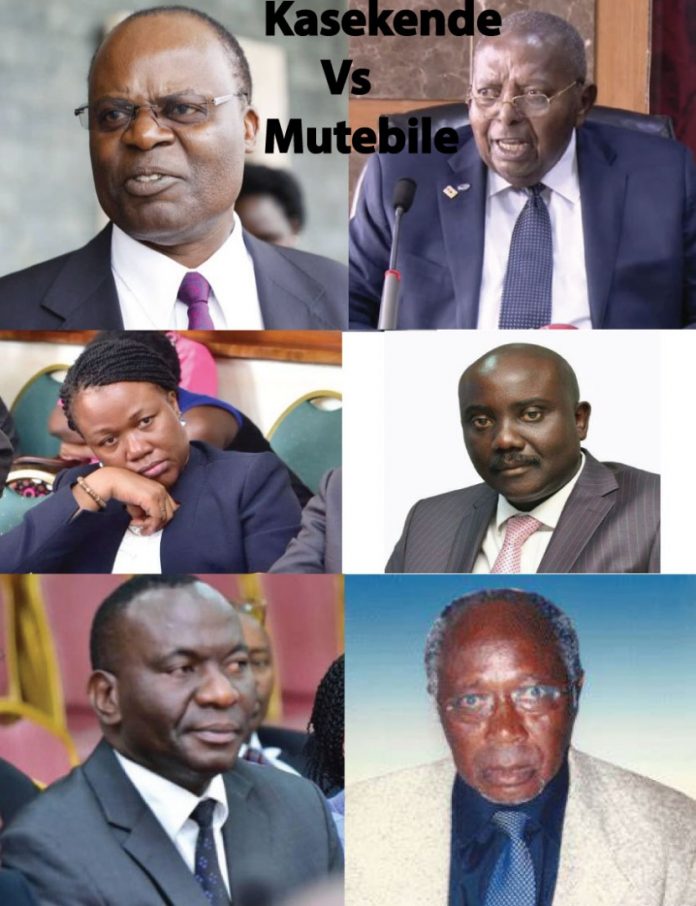
The two sides bickering BoU.


Cliques at the Bank of Uganda (BoU) continue to emerge day- in- day-out, even as the central bank tries to lay strategies for stabilization after a series of scandals that have tarnished its image.

The latest is that some top officials at the institution are against its Governor, Emmanuel Tumusiime-Mutebile over the appointment of two senior officials without their input.

It should be recalled that in February 2018 Tumusiime-Mutebile made staff changes where he fired former executive director of supervision Justine Bagyenda and replaced her with Dr. Tumubweine Twinemanzi.

A committee that was appointed by President Yoweri Museveni to investigate staff changes would later establish that Tumusiime-Mutebile made some transfers and appointed Twinemanzi without consulting other members of the BoU board, a decision they say was wrong as the governor had no powers to make changes single handedly. Worse still, most of the staff head picked by the governor did not meet the qualifications and experience required for the jobs. For instance, Dr. Tumubweine does not have any experience in commercial banking.

It is said also that without consultation, Tumusiime-Mutebile appointed Dr. Joseph Byamugisha to assist BoU in a case against Sudhir Ruparelia and Meera Investments. Byamugisha was appointed after court barred lawyers of MMKAS Advocates and AF Mpanga Advocates from representing BoU against Sudhir due to conflict of interest as the two law firms have ever worked for the businessman and his Ruparelia Group of companies.

Insiders say Deputy Governor, Dr Louis Kasekende, Director Legal department, Margaret Kasule, Dr William Kalema (board member), Ben Sekabira, the BoU Director Financial Markets Development Coordination, James Kahooza (BoU board member and former Auditor General) are up in arms accusing Tumusiime-Mutebile of tribalism. They allege Twinemanzi and Byamugisha were recruited to serve BoU because they are Bakiga like Tumusiime-Mutebile.

As such the group above is against working with Twinemanzi and Byamugisha. In fact insiders say that they are frustrating Twinemanzi to the extent that they don’t want him to be confirmed by the board that Tumusiime-Mutebile chairs with Kasekende as his deputy. The role COSASE wants both officials to be relieved of if the central bank is to be managed efficiently.

However, other sources within BoU say the Kasekende-led group is also unhappy with Byamugisha who is not ‘eating’ with them the money paid as legal fees to him. Remember that during COSASE probe MMAKS Advocates received over Shs3 billion as transaction advisors in the sale of Crane Bank Limited (CBL) to Dfcu Bank in January 2017. MPs on COSASE were shocked of this payment. It is said top BoU officials colluded with the lawyers to take home part of that money.

The committee appointed by Museveni also established that BoU has cliques, one aligned to Tumusiime-Mutebile and the other to his deputy Kasekende. That was revealed as the committee members interviewed senior staff at the institution that is supposed to be of high integrity, given the work that it does.

Recently some BoU staff in Mbale currency centre were caught by security organs as they ferried out sacks of old currency that were meant to be destroyed. BoU has since issued stringent measures in as far as accessing currency points is concerned. It has also transferred staff to deal in a bid to deal with the challenge.

The said clique has made Mutebile hard especially in board meetings where he finds himself against the rest which makes it hard for him during decision making. Eagle Online has also learnt that the Kasekende clique is unhappy that Mutebile seem to be regaining his lost authority given that recently he has asserted his authority which makes it difficult for this group. The Kasekende group is reportedly waiting for the exist of Mutebile from BoU before they push Twinemanzi and Deputy Director Barenzi Nantamba.

However, sources say after the money printing scandal that pitted Barenzi Nantamba against the embattled Director of Currency department, Charles Malinga who the Kasekende’s accusing of whistle blowing to governor, Nantamba has been recruited in their camp.


Stories Continues after ad

Study claims 33% women go on dates to eat free food

A couples enjoying food. Internet photo.


Researchers have claimed 33 per cent of women only go on dates with men so they could get a chance to eat free food. Apparently, not all ladies who dress up, get dolled up and show up to invitations plan to forge romantic relationships.

According to a study by the Society for Personality and Social Psychology, some ladies are willing to wine and dine with a man they do not like just to get a chance to eat a free meal. Mostly, ladies perch on unsuspecting men when they are strapped for cash and badly crave a well cooked meal without having to pay for it.

Researchers first focused on 820 women who were asked whether they have such habits and 23 per cent attested to being “leaches,” who prey on men. A second focus group of 327 women also proved 33 per cent of the group had a tendency of dating in exchange for free meals. Brian Collisson, Jennifer Howell, and Trista Harig then revealed most women who had this behavior presented markers for psychopathy, Machiavellianism and narcissism also referred to as dark triads.

The three traits are connected to dark behaviour including exploitation and deception. A psychopath is a person suffering from chronic mental disorder with abnormal or violent social behaviour. The icing on the cake is, such ladies often end up getting intimate with the men they went on dates with and zoom off as soon as they are done.


Stories Continues after ad

Coca-Cola Recycling Campaign: Kanyabwanga S.S. Mitooma wins after collecting 9,100 kilograms of plastic

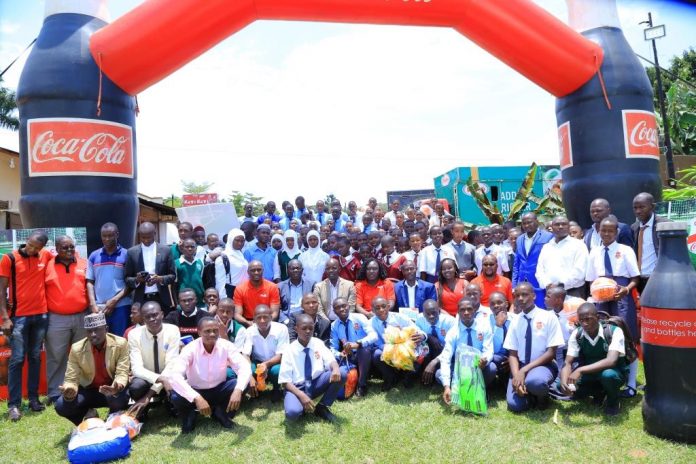
Participating schools and teachers pose with the Coca-Cola Uganda team after receiving their awards in the recycle and win promotion.


Following the successful conclusion of the 2019 COPA Coca-Cola grassroots football tournament, Coca-Cola has today awarded the schools and students that collected the most plastic as part of the Copa Coca-Cola recycle and win competition.

The 1,463 schools participated in the tournament competing for a chance to get their school pitches refurbished by Coca-Cola as well as other exciting prizes such as goal posts and nets, brand new 32-inch TV sets and mobile phones. The prizes also include cash sums for the total kilograms collected and scholarships for participating students.

Kanyabwanga Secondary School emerged Southern region and overall victor having collected 9,100 kilograms of plastic. From the East, Kitimbwa Bright Future S.S in Kayunga prevailed with 4,500kg while Buddo S.S was the best in Central region with 2,500kg of plastic collected. Teso Integrated S.S collected 1,630 kilograms to emerge Northern region winner.

Byamugisha Osward, also a teacher at Kanyabwanga S.S and Kenneth Akuguzibwe, a student from Kasese S.S, emerged overall best teacher and student in the recycling campaign and walked away with a brand new laptop and school fees respectively.

Commenting about the campaign, Sam Kangave – Manager Plastic Recycling Industries, an initiative of Coca-Cola Beverages Africa in Uganda applauded the schools, students and teachers for participating in this campaign that benefits both the current and future generation.

He further noted that The Coca-Cola Company and all its bottling partners are leading the industry to help collect and recycle a bottle for every one we sell by 2030. We are working to bring people together to help us collect and recycle plastic in Uganda and this campaign is giving the young generation lessons about the dangers of plastic while giving back to them and their schools through a sport that unites them.

Currently, we are collecting an average of 450 tonnes of plastic per month at Plastic Recycling Industries, an equivalent of about 66 per cent of the plastic we push out as Century Bottling Company and Rwenzori Bottling Company. Part of our effort going forward is to help everybody understand Recycling – how to recycle, what to recycle, where to recycle, and the impact of NOT recycling properly. But we cannot do it alone. So far we have established successful partnerships with an eco-system of plastic waste collection Women groups in Kampala, the Kampala Capital City Authority,  Masaka Collection Centre, Kabale Municipal Council, to mention but a few.

We are keen to sign up more partnerships, because the only way we can really create a World Without Waste is if we all do it together.

According to Arthur Akankwasa, the Coca-Cola Uganda Country Manager, “The recycling competition has been an eye opener for us, affirming the fact that creating knowledge and awareness about waste and its responsible management is key to sustainable behavior change. As the Coca-Cola system, we will ensure we continue with such campaigns targeting both awareness and behavior change on plastic waste collection and disposal. This will go a long way to ensure that the teens grow to be responsible members of the community.”

The winning school will be awarded with a refurbished football pitch, which will have a standardized playing ground, goal posts, nets and bleachers. The second best schools will receive goal posts, nets and balls while the third best schools will receive goal posts and nets. The winning teacher will receive a 32 inch Hisense TV set while the second and third best will receive brand new mobile phones. The winning students will receive school fees scholarships for one term.


Stories Continues after ad

Airtel awarded Uganda’s largest tax payer


Airtel Uganda has been awarded Uganda’s Largest Tax Payer and recognized for their compliance in remitting taxes to Uganda Revenue Authority (URA).

The announcement was made during the Uganda Revenue Authority Taxpayers Appreciation Awards.

Airtel Uganda paid Shs136 billion in the financial year 2018/19 winning the Excel Award for the year.

“Airtel has contributed over Shs136 billion in the financial year 2018-19 making it the biggest contributor of income tax in the last financial year,” a statement from Uganda Revenue Authority read in part.

Handing over the award, the Minister of Finance, Matia Kasaijja congratulated Airtel upon the achievement and lauded the company for their contribution towards the development of Uganda through tax.

Mr. V.G. Somasekhar, the Managing Director of Airtel Uganda, thanked Uganda Revenue Authority for recognizing their contribution to the company’s GDP and the work they are doing to remain complaint. He also thanked Uganda Communication Commission, Ministry of Information Communication and Technology and the Government of Uganda for the support rendered to Airtel.

“It is an honor for Airtel to be recognized as the largest tax payer in Uganda. We are thankful to our customers and partners who have made Airtel their network of choice,” he noted.

“We believe leadership is a responsibility one that we have happily taken on and this recognition is yet another milestone and an affirmation that Uganda has noticed. We remain committed to the leadership of the telecommunications sector and compliance is an integral aspect of that commitment,” he added.

The award comes on the heels of the company’s massive investment in innovation, network and infrastructural expansion.

After achieving 100 per cent of all sites on 4G LTE, Airtel is transforming wireless technologies that are bringing about efficiency in the way voice and data services are experienced across the country.

Under the stewardship of Ms. Doris Akol, URA has been able to grow revenue from Shs8,031.03 billion in the financial year 2013/14 to Shs14,456.11 billion in the financial year 2017/18. This translates to about 80 per cent growth, raised tax to GDP ratio from 11.7 per cent in the financial year 2013/14 to 14.35 per cent in the financial year 2017/18.


Stories Continues after ad