Stanbic Bank
Stanbic Bank
21.1 C
Kampala
Stanbic Bank
Stanbic Bank
Home Blog Page 1158

World’s travel firm Thomas Cook collapses

Some of the aircraft owned by Thomas Cook

UK’s Thomas Cook , the world’s oldest travel firm, collapsed on Monday, stranding hundreds of thousands of holidaymakers around the globe and sparking the largest peacetime repatriation effort in British history.

The firm runs hotels, resorts, airlines and cruises for 19 million people a year in 16 countries. It currently has 600,000 people abroad, forcing governments and insurance companies to coordinate a huge rescue operation.

The UK’s Civil Aviation Authority said Thomas Cook had now ceased trading and it would work with the government to bring the more than 150,000 British customers home over the next two weeks.

Stories Continues after ad

MISSIVE: Don’t use my father’s name to save Gen. Kayihura from his troubles – Amin’s son tells Museveni

Hussein-Lumumba-Amin


The son of former Ugandan president the late Idi Amin Dada has responded to President Yoweri Museveni who yesterday sent a written message to Ugandans, more so responding and castigating USA’s sanctions against former Inspector General of Police Gen. Kale Kayihura.

Among others, Museveni’s message to Ugandans touched on Amin whom he said came to power with the support of the Western Countries. “We opposed Idi Amin and their support for him and succeeded with the support of African Countries,” Museveni wrote. Amin and his regime are accused of torturing and killing Ugandans.

“With all due respect to all the different legitimate and sometimes illegitimate opinions surfacing in regards to last week’s US sanctions by the Trump administration against Gen. Kale Kayihura, what I would like to say is that Museveni using my late father’s name (Amin) to try to whitewash himself of his own filth, the blood of Ugandans stained on his hands, and his own appalling human rights record, is quite comical”. Mr. Lumumba Amin wrote.

However, Senior Presidential Press Secretary, Don Wanyama dismissed Mr. Lumumba’s missive as a diversion. Wanyama said the torture and atrocities  under Idi Amin are unspeakable and therefore, it is just a public relation stint.

“For Lumumba it is understandable for him to try and clean his father’s imagine. it doesn’t take one to study rocket science to know and see what the murderous regime of his father did. It is probably on record that almost every home in this country received a share of the torture and murder under his father’s reign”.

He further added “It is as if for the last 40 years (since 1979 when Amin left) whenever Museveni is found murdering innocent Ugandans, his excuse is that “Amin did worse”.

However, Museveni’s negative reference to Amin has attracted displeasure from one of his Hussein Lumumba Amin, who says the current president is fond of referring to his late father when political controversy rises; as if to say Amin epitomies the scale of torture and murders that have happened since Uganda got independence in October 1962.

Lumumba in his letter says all other regimes that have held power have committed atrocities in one way or another. Below is his full message to Ugandans in response to Museveni’s.

Fellow Ugandans,

I read Mr Yoweri Museveni’s statement regarding the US sanctions against his police chief the notorious Kale Kayihura. As usual Museveni mentions Amin to try to deflect via history his own responsibility in instigating and/or overseeing the brutal actions of a Kayihura whom he refers to as a “good cadre” while Ugandans think otherwise. I know that Ugandans are aware that there is a very big difference between the Museveni that we all listen to in public speeches, and then what he actually orders or approves behind the scenes in real life against not only his political opponents, but also against the people of Uganda so as to stay in power and maintain his claws on the country’s lucrative national resources like oil in Western Uganda and gold in Karamoja as he works for himself and his children instead of serving the people of Uganda as required in patriotic leadership and professional public service paid for by the Ugandan taxpayer.

A taxpayer who therefore, deserves value for money and far more returns from their investment in certain individuals who are supposed to be managing this Ugandan nation on the Ugandan peoples behalf but instead simply seem insatiable in their greed for “staying in power” by hook or crook.This has been exposed in all general elections petitions since 1996 and the evidence of bias, fraud, lawlessness and criminal acts is overwhelming. To the extent that Ugandans know in advance the final results of any Museveni dictatorship elections.

Isn’t it Museveni himself who arrogantly told Ugandans that he is not anybody’s servant? What kind of nonsense is that for someone in public service?
Basically I know that most Ugandans are used to how conmen also smooth talk their way around, including to whitewash themselves and try to dodge the real accusing substance behind real disturbing events that they are responsible for.
Meanwhile nobody has heard Museveni discuss how he intends to put an end to the brutal human rights violations as depicted in the US government accusations against Gen. Kayihura, and which all Ugandans and all observers have been complaining about incessantly. Violations that happened under Museveni who watched and did nothing for all the 13 years that Kayihura was the country’s police chief and the country was complaining.

For public servants, the number one function of their job is to always work and take decisions in public interest. That is their only mandated priority. Therefore, Museveni should have been discussing how to immediately embark on improving service delivery to the people of Uganda in any concerned area’s. In this case, the activities of the police and security agencies whom the US sanctions appear to collectively accuse of politically motivated gross human rights violations against their own fellow countrymen, women and children whom they are supposed to be serving and protecting professionally and under the rule of law, without any biases, and regardless of ones faith, tribe or political affiliation.

That is what is of fundamental long term political concern to the people of Uganda in this whole saga. Not discussions about Kayihura’s alleged properties and who should or should not want to travel where. Those are big debates for malwa joints. Not for the political leadership and fountain of honour who is supposed to be robustly building the country politically and economically under institutional good governance principles for all the peoples of his/her nation.

With all due respect to all the different legitimate and sometimes illegitimate opinions surfacing in regards to last week’s US sanctions by the Trump administration against Gen. Kale Kayihura, what I would like to say is that Museveni using my late father’s name (Amin) to try to whitewash himself of his own filth, the blood of Ugandans stained on his hands, and his own appalling human rights record, is quite comical.

It is as if for the last 40 years (since 1979 when Amin left) whenever Museveni is found murdering innocent Ugandans, his excuse is that “Amin did worse”.

Yet it is now over two million innocent Ugandans estimated to have died to date at their hands ever since Amin left Uganda. Including at least three genocides and over ten outright mass massacres on tribal, religious sectarianism or political grounds, not counting the political assassinations, serial murders, and other related persecution.
Therefore even if some media say that ‘100,000 Ugandans died under Amin”, then to this day 20 times more Ugandans have since been murdered by Museveni and all those who took over after Amin. An untold fact that calls for a serious review of the troubling body count of human skulls and other numbers that show exactly what Museveni has actually been doing with the blood of the people of Uganda ever since he embarked on his so-called struggle, as opposed to how he has publicly been praising himself since 1980.

I have not even mentioned the six million civilians murdered by Museveni in the Democratic Republic of Congo. A war for which the ordinary Ugandan now owes the mineral-rich nation $10 billion US Dollars as declared by the International Court of Justice for the greed-fuelled unfettered plunder of the neighbouring country during Museveni’s invasion of DR Congo.

But firstly, in regards to the recent US sanctions against Gen. Kale Kayihura, I think it is only natural that the people of Uganda, particularly the Muslim community, feel some relief. Many Ugandans are rightly urging that these sanctions be extended vertically and horizontally along the chain of command that Kayihura abided to.

For the people of Uganda, the sanctions mean someone has finally recognized their suffering at the hands of organized, politically motivated sectarianism and violence by the state, it’s leaders and it’s agents. All the other political victims of Gen. Kayihura’s summary arrests, torture, plus violent political bias must be feeling the exact same relief, possibly even more. But the people are not clueless as to who bares the ultimate responsibility for actions that have been going on for the last 13 years without any concern from Kayihura’s appointing authority, Mr. Yoweri Kaguta Museveni. In fact pictures abound of him decorating the same Gen. Kayihura with medals and declaring the police chief as “a good cadre” most likely for his known repressive actions against Museveni’s political opponents and persecution of religious clerics and individuals from one particular faith.

Those are the facts. And I call on all state institutions to remove any religious biases in their activities and serve all Ugandans without preferences for any particular faith because their seems to be an undercurrent of religious sectarianism and related biases even in the supposedly secular state-funded media which are the property of all Ugandans.
From 2005 the people of Uganda have made disturbing verbal and written complaints about their police chief and the violent political environment that tends to always peak before and after every presidential election where foreigners prefer to leave the country and most Ugandans prefer to lock themselves indoors before, during, and after announcement of final presidential results as battalions of soldiers called in to assist the police patrol the streets of every city primarily to quash through sheer terror, any attempts at publicly expressing political dissatisfaction at what are known in advance by the people of Uganda to be serial fraudulent presidential elections since 2006.

Meanwhile, many concerned Ugandans including myself, have always submitted proposals for credible, progressive political, economic and social reforms befitting a modern democratic society. In 2015, I personally drafted and submitted as many as 28 Constitutional amendments to help improve the 1995 Constitution and thereby help improve the political discourse for the well-being of the people of this country both politically and economically.
For the record, those meaningful 28 constitutional amendment proposals and countless others submitted by many other concerned Ugandans, were all thrown in the dustbins of Museveni’s so-called Ministry of Constitutional affairs, and a minor cosmetic amendment where they simply changed the name of the electoral commission, was the only bill passed instead as if that was most important constitutional priority facing the country. Obviously that seems to have been Museveni’s most important priority.

Serving the public interest is the only area where patriotism resides. Meanwhile, the people of Uganda have been wailing endlessly from state inflicted pains of torture, political smothering, and even the death of innocent comrades, compatriots and relatives. Notable is the fact that the people of Uganda have persisted in prayer and political activism against the violent political environment that has become the norm whenever Ugandans attempt public gatherings of a political nature that expresses political discontent at one human rights violation/political abuse after another. Who remembers young Edwin Kasasira who died by a shot to the head for protesting against selfish changes to the Constitution that were clearly not in the public interest but instead in the interest of one individual and his/her cronies staying in power by hook or crook.

Everything that the people of Uganda widely asserted at the time (including the famous “Tojikwatako”: meaning don’t touch the constitution) was ignored even on the floor of Parliament by some of the so-called people’s representatives who were widely said to have received fat bribes while the masses languish in buying poverty. And the few upright people’s representatives had to mount political resistance by literally fighting with their bare fists in parliament to stop the blatant abuse of the people’s will and power in broad daylight by corrupted political cronies of the dictatorship.

Everytime I come across images of that 2018 brawl in the Ugandan Parliament, I want to ask Ugandans to take just one minute to remind themselves why it happened, what they were fighting against, and who they were fighting for.
It seems all that is lost in all narratives of the event, and it has now been turned into some comic event that even some of the beneficiaries can be found laughing yet that fight was essentially the moment when the sacred 1995 Constitution was about to be raped in public for the second time and some members therefore tried be bravely to prevent the vicious political greed from perpetrating a crime against the sovereignty of the people.

The political repression that Ugandans continue to endure to this day was most recently evidenced in the shocking bloodsoaked events of 13th August 2018 in Arua. An egrnt that sent euofkwaves around the country and around the world following the murder of Yassin Kawuma plus the framing and torture of political opponents, namely Bobi Wine and 33 others on trumped-up charges and planted guns as evidence of those charges.
Besides this disturbing incident, we all know that the evidence of todays unfettered corruption and abuse of power is being overwhelmingly shared including on social media and even in some sections of the traditional press which has faced the threat of being silenced and journalists clobbered and arrested for doing their job. The world knows that Dr. Stella Nyanzi, a single mother and academic, is being persecuted in jail for speaking her mind politically, and calling someone “a pair of buttocks”, and now only God knows if her children will have anything to eat today, or even if they had anything yesterday as she languishes in the dungeons of Luzira maximum security prison as a political prisoner.

Following  music concert over the weekend attended by Museveni himself, musician Ronald Mayinja who sang a politically poignant song in Museveni’s face can now expect being trailed by mysterious unmarked cars and his music career being undermined. Worst case scenario is assassination which nobody can rule out today with the rampant shocking and mysterious murders happening all over the country every day. The last one being on the new Entebbe Expressway where Museveni’s own nephew seems to have died in a shootout that is said to have originated from inside the vehicle he and some married lady we’re travelling in together with some other person (or persons).

As the full depth of the US sanctions and their meaning to the regime sink in, the people of Uganda must have even started thinking that nobody out there really cared, would stand for them, would understand their obvious suffering or would answer any of their relentless strife and plea’s for help from the dark. At every new incident of violations of the people’s rights and political freedoms, public condemnations have been made one after the other, primarily by the resilient people of Uganda, and also by all sorts of local and international institutions, including foreign embassies, human rights organizations and public personalities. All well documented, but nothing changed in terms of the violent political repression, corruption and political fraud. Instead the abuse of power has heartlessly continued and there is never any real change for the better. Just eloquent cosmetic excuses.

It is therefore understandable that Kale Kayihura’s victims, the people of Uganda, feel some relief and a sense that at least what they endured is finally being internationally recognised. And no matter how insufficient, at least some justice is being served and someone somewhere has responded to their cries. There is also the sense that individual responsibility in collective abuse of power is something that every single public servant, wether a so-called big fish or small fish, have to think about seriously henceforth before planning or executing any political repression orders and any human rights abuse against the people of Uganda. A nation which has recently seen the shocking 2016 bloodbath of Kasese, and the previous historic genocides in Luweero and Acholi where countless human skulls remain a brutal reminder of what could happened to the people of Uganda at the hands of Museveni and his group of people who claim to have fought Amin. The murderers of those poor Ugandans include Obote’s political and military support (the infamous UNLA soldiers), plus the founders and members of the National Resistance Army, both organizations known to have orchestrated for twenty years since 1980, the worst ever senseless mass killings, lawlessness, military indiscipline and genocide that Uganda will ever have on recorded history. The true darkest period of this country.

The people of Uganda therefore know all too well that they will be mass murdered without hesitation by these same individuals, if the people ever attempted any major legitimate public uprising today. It’s the hidden mentality of these politicians and they are known to be willing to do it again if power starts slipping from their blood-stained hands.
However, if there is one remote but positive conclusion to take from the US sanctions against Kale Kayihura. It is that these sanctions can help foster a civil and productive political discourse to the benefit of all Ugandans regardless of faith, tribe or political affiliation. One where the true will of the people becomes paramount in Uganda, and the people’s political rights and political freedoms become genuinely protected in real life and not only in leaders evasive speeches designed to fool anyone who listens to them.

Thank You!

Signed: Mr. Hussein Lumumba Amin.
Son of Former President Al-Hajji Idi Amin Dada.

Stories Continues after ad

Diamond Platnumz becomes new Parimatch Ambassador

Powerful Parimatch

When it comes to Parimatch, you can forget about the limits. This online betting site is responsible for its services and provide customers with the most relevant and beneficial opportunities on the market.

Are you fond of football and want to catch every single moment of your favorite team performance? Done! Parimatch gives users a great chance to watch numerous games and earn money meanwhile. Are you eager to become a trustworthy sport judge without any education? Parimatch is a super powerful platform where you can get vivid experience and predict the meeting’s results.

However, even our huge efforts may turn to be insufficient. Life is full of changes, and that concerns its every sphere. That is why we go above and beyond to catch this “trend” feeling to realize what the customers’ demand is.

Parimatch likes to impress with new challenges and abilities to win. This time it is not an exception. Ladies and gentlemen, we are excited to present our new Ambassador! This is the person to lead our business to a new continent. It’s time for Africa!

Our New Brand Ambassador

Diamond Platnumz becomes new Parimatch Tanzania brand Ambassador. People know him as a dancer and a musician. Now he will show himself in a new role.

Our new Ambassador is an obvious mix of following traditions and meeting progress. It has already become a rule of thumb: unexpected combinations and partnerships can result in a magnificent victory.

From Serie A to Premier League, from Great Britain to Africa — Parimatch is to express the image of a modern sport in the best way achievable.

Are you ready to get to know what changes Parimatch will have due to the new Ambassador? All in good time. Stay patient and get prepared for the excellent news!

Stories Continues after ad

Business: Afri-Exim Bank to open branch in Uganda

Signing of a Memorandum of Understanding (MoU), between the Government of Uganda and the Africa Export-Import (Afri-Exim) Bank.

President Yoweri Museveni has witnessed the signing of a Memorandum of Understanding (MoU), between the Government of Uganda and the Africa Export-Import (Afri-Exim) Bank.

The ceremony that took place at State House, Entebbe also included the signing of an Agreement to host the Afri-Exim Branch in the country.

The Minister of Finance and Economic Planning, Matia Kasaija, signed the MoU on behalf of the Government of Uganda while the President of Afri-Exim Bank, Prof. Benedict Oramah, initialed on behalf of the bank.

The Agreement to host the Afri-Exim Branch in Uganda was initialed by State Minister for Regional Affairs, Philemon Mateke and Professor Benedict Oramah.

Africa Export-Import (Afri-Exim) Bank, which has branches in West and Southern Africa regions, is now set to open a branch in Kampala to cater for the East African region.

Speaking at the ceremony, Museveni expressed happiness that with the establishment of Afri-Exim Bank in the country, two deficits that impinge Africa – value addition and trade finance – will be addressed.

“Africa is slowly waking up. I am very happy that you chose Uganda because we are committed Pan-Africanists. When it comes to trade and social transformation, that is our ideology. We shall work very easily with them,” he said.

He thanked the bank for funding the construction of Lubowa specialized hospital and noting that the entity, when completed, will help the country save money that Ugandans have been using to seek for specialized treatment abroad in countries such as India. He added that he looked forward to working with the proprietors of the bank in the sector of coffee processing.

Former Nigeria President, Olusegun Obasanjo, thanked the Government of Uganda for having accepted to host the regional branch of the bank. He said the establishment of the regional branch of Afri-Exim was part of the five-year development plan of the bank. He assured President Museveni that coffee processing would be one of the first priorities that the bank would invest in.

Finance and Economic Planning Minister, Matia Kasaija, said the setting up of Afri-Exim Bank in Uganda would go a long way to support export and import trade through loans, establishment of credit facilities, job creation and expansion base of cash liquidity.

Prof. Oramah revealed that the bank will open business in October this year and launch its activities in November.  He reiterated that Uganda had been chosen to host the regional branch because the country fully appreciated the importance of hosting a strategic Pan-African investment.

African Export-Import Bank head office in Cairo

“I thank you for your vision in knowing that these things that look simple have profound importance.  I believe the Kampala Office will foster strong relationships between Uganda and the private sector in financial investment,” he said.

Attorney General, William Byaruhanga, Bank of Uganda Governor, Emmanuel Tumusiime Mutebile, Commissioner General of Uganda Revenue Authority (URA), Doris Akol and Afri-Exim Bank Board of Directors, attended the ceremony.

Stories Continues after ad
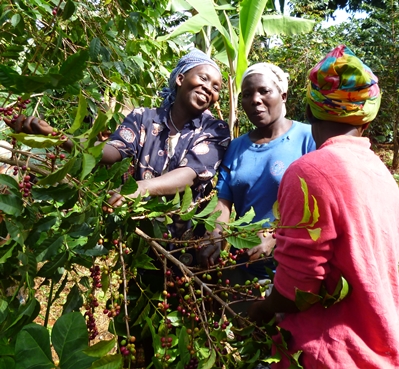
Coffee price crisis: Global stakeholders meet to agree on joint actions

Smallholder coffee farmers


CEOs, executives and global leaders of the coffee sector will converge to the International Coffee Organisation (ICO) Forum in London on Monday to sign a Declaration, with a clear Road-Map, reaffirming their commitment to work with Governments, development partners and civil society and to implement concrete solutions to address the current coffee price crisis and transformational actions to achieve a sustainable future for the coffee sector.

It is the first time that all leading coffee stakeholders, from all over the world, agree to be together with Government representatives showing a strong commitment to jointly implement solutions for a sustainable and inclusive development of the coffee sector in a spirit of shared values and determined to meet the UN Sustainable Development Goals.

The Forum is the response by Coffee industry executives and Leaders — mobilised by the International Coffee Organization (ICO) — to the strong call by the Governments of exporting and importing countries to contribute to solving the dramatic impact that the current price level (a drop in coffee prices by 30% over the last two years) of exported raw coffee has on farmers and coffee-producing economies.

At the same time consumption of coffee increases by a healthy average of 2.2% a year and over the past two decades, the global coffee sector has expanded significantly as demand for coffee has increased by 65%, with farmers increasing production by 50% over the past two decades reaching an export of US$20 million a year.

Government signatories to the International Coffee Agreement (2007), at the 122nd Session of the International Coffee Council in September 2018, adopted Resolution 465 on coffee price levels, mandating the ICO, “to promote dialogue among all stakeholders in the coffee value chain to ensure the economic sustainability of the coffee producers…“ and the ICO Executive Director to “further strengthen ties with the international roasting industry as a matter of urgency, in order to gain support for the implementation of this resolution…”

The first CEO and Global Leaders Forum of the coffee sector, marks the sixth consultative event of an unprecedented sector-wide dialogue led by the ICO, to address the impact of low prices on the livelihoods of coffee farmers as well as the long-term sustainability of the coffee sector.

The sector dialogue since October 2018, has already gathered a rich portfolio of views, solutions, best practices and programmes through consultations held in Nairobi, Kenya, at the United Nations in New York, in a development fair in Rome, Italy and at the European Commission in Brussels, involving 80 world coffee and development experts and over 2,000 participants.

Further consultation among industry representatives, development partners, governments and civil society was carried out by the ICO with the support of consultancy NewForesight with financial support from the Federal Ministry for Economic Cooperation and Development (BMZ) through Deutsche Gesellschaft für Internationale Zusammenarbeit (GIZ).

This process lead to this first CEO and Global Leaders forum and the expected signing of the London Declaration on price levels, price volatility and the long-term sustainability of the coffee sector. The Declaration is the result of a complex consensus building process which, in order to gain momentum, started with an initial group of coffee stakeholders but has now rapidly attracted interest from all the actors in the coffee sector.

The Declaration is set to become a global reference of Public-Private partnership to make coffee the most sustainable agribusiness value chain and beverage in the world for the benefit of all stakeholders – consumers, employees, suppliers, communities and shareholders.

The CEO and Global Leaders Forum, also to be broadcast live via web streaming, will provide a dynamic Davos-style format of interactive discussion with the audience across plenary and panel sessions with high-level government representatives from exporting and importing governments including Oumer Hassien, Minister of Agriculture of Ethiopia and  Pablo Anliker, Minister of Agriculture and Livestock of El Salvador as well as top government representatives of Colombia, Germany, and Honduras, and CEOs and top executives from industry leaders such as Illycaffè, Jacobs Douwe Egberts (JDE), Nestlé, Melitta, Mercon Coffee Corp, Olam, Starbucks, Sucafina, Strauss, Volcafe, among others.

It will also have representatives from largest coffee associations such as the Global Coffee Platform (GCP) and the Sustainable Coffee Challenge (SCC), and international and civil society organizations such Fairtrade, IDH, Rainforest Alliance and others.

The Forum will be moderated by Al Jazeera journalist Maryam Nemazee. Following the CGLF Forum, it is envisaged that the London Declaration will be endorsed by the 125th Session of the International Coffee Council, thus by all the governments of countries producing 98 percent of world coffee, and by the countries that import at least two-thirds of world coffee production for their processing industry and consumers.

The International Coffee Organization (ICO) to which Uganda subscribers as a coffee growing country, is a multilateral organisation supporting exporting and importing countries to improve the sustainability of the coffee sector. It provides a high level forum for all public and private stakeholders in the sector; official statistics on coffee production, trade and consumption; and support for the development and funding of technical cooperation projects and public-private partnerships.

Stories Continues after ad

Africans protesting against climate change, does the media care? 

Mr. Serwanja


 Last week the world once again turned its attention to climate change ahead of the United Nations General Assembly in New York. Millions peacefully protested on the streets of over 5000 cities across the globe against environmental degradation and green house emissions.

Africa was no exception. Kenya’s capital Nairobi was overwhelmed by the number of protesters holding placards with writings such as “Save our planet”, “There is no planet B” among others. South Africa, Uganda, Rwanda, Ethiopia and Nigeria equally had massive turn ups.

The message is loud and clear, that African leaders should pay attention to climate change. But so should the media in Africa. For long, climate change has been a phenomenon so far away from us often tagged as “a western problem” and yet reality is beginning to set in.

In many newsrooms across the continent, stories of climate change are a hard sale to the editors. It is no wonder that very few have made it to the front pages as stories on conflict, violence, corruption and politics dominate the headlines in both print and broadcast media.

In fact, the quantity and quality of climate change reportage in African media is uneven to level of threat it poses to the continent.  In its report titled ‘Least responsible, most affected, least informed’ the BBC World Service Trust made a scary conclusion that ““African citizens are at humanity’s climate change frontline, yet they are also among the least informed about human-induced global climate change, its causes and its consequences.”

Perhaps the data from the Reuters Institutes speaks louder with some figures.  Out of the 86,760 stories covered by 2 of Nigeria’s top news papers, The Guardian and Vanguard, only 79 stories were about climate change in the 6 months of the study. It is the same script but different cast for the results in South Africa for the publications in The Star and M and G newspapers. Out of 28,800 stories published, only 96 were associated with climate change.

This, therefore means that the continent’s response to climate change through behavioral change and adaptation will be limited since the media has failed on their key role of educating the public about this matter by not publishing enough about the stories.

Numbers aside, let us talk about the quality of reporting on climate change. Makerere University Associate professor Goretti Linda Nassage who has done extensive research on the media and climate change rightly noted in one of her papers that “The media in Uganda are not putting climate change into proper context to raise public awareness and influence engagement in the climate change debate”

Reality is that very few people in the general population read sci­entific reports, spe­cialist web­sites and blogs, or even follow the proceedings of the intergovernmental panel on climate change discussions every year. It therefore means that Newsrooms in Africa need to set aside a team of environmental reporters who need to break down the science to everyday living scenarios to bring the message of climate change home. If this is not done, then editor shouldn’t expect magic from a reporter on the general desk to decode the climate change messages in these conferences or reports in one day to do a great story.

Does the African media therefore have a role to play in the global action against climate change? Yes it does. So instead of just doing stories like “Thousands protest on the streets against climate change” which are often event driven, the media needs to take a deep dive into this subject by detailing how climate change is affecting us everyday and what we need to do revert its effects. If media in Africa keeps its audience in the dark, we may wake up when it is a little too late.


Solomon Serwanjja

Investigative Journalist


Stories Continues after ad
EAC declares Fridays as “Afrika Mashariki Fashion Day”

African couple in African attire


The East African Community (EAC) has declared Fridays as ‘Afrika Mashariki Fashion Day’ during which East Africans will wear attires manufactured in the region.

The 36th Extra-Ordinary Sectoral Council on Trade, Industry, Finance and Investment (SCTIFI) further declared the 1st Week of September an ‘Afrika Mashariki Fashion Week’ to be held annually as a Trade Fair and Exhibition of EAC designed textiles and garments.

The SCTIFI urged EAC Partner States that produce cotton to set up national cotton lint buffer stock mechanisms to ensure all year-round availability of locally produced cotton lint to spinning mills.

The Ministerial Session of the 36th SCTIFI which was chaired by Rwanda’s Minister for Trade and Industry, Ms. Soraya M. Hakuziyaremye, approved the Final Draft Cotton, Textile and Apparels (CTA) Strategy and the Implementation Roadmap.

In her opening remarks, Hakuziyaremye said that for the EAC region to reap maximum benefits from the African Continental Free Trade Area (AfCTA), it was imperative to enhance the region’s productive capacity. Hakuziyaremye called for urgent implementation of a number of outstanding EAC Summit decisions and directives especially in the textile, leather and automotive industries, in addition to resolving Non-Tariff Barriers.

She reminded the Ministers that AfCTA Summit had directed that the implementation of the agreement should commence by 1st July, 2020 necessitating EAC Partner States to conclude their Tariff Offers by the agreed dates.

Other Ministers present at the meeting were Hon. Jean Marie Niyokindi (Minister for Trade and Industry, Burundi), Peter Munya (Minister for Industry, Trade and Cooperatives, Kenya),  Kafabusa Michael (Minister of State for Trade and Industry, Uganda), John Dor Majok (Deputy Minister of Finance and Planning, South Sudan), and Innocent Bashungwa (Minister for Industry and Trade, Tanzania).

The Ministers called on Partner States to give priority to the implementation of the Cotton, Textiles and Apparels (CTA) Strategy by providing budgets for the activities, as relevant to specific countries, in the 2020/2021 Financial Year.

The SCTIFI directed the Standards Committee to assess and advise on feasibility of the Pre-shipment Verification of Conformity (PVoC) of all imports of textiles and ready-made garments (RMGs) into the region, as a measure to control illicit imports of worn out or used textiles and garments.

The meeting further approved the Draft Leather and Leather Products Sector Strategy and the Implementation Roadmap, and urged Partner States to give priority to the implementation of the Strategy by including the activities, as relevant to each country, in the next Financial Year’s national budgets.

The Council was informed of case studies of investment in the leather and leather products in Vietnam and Ethiopia. Due to government support, Vietnam had become the second largest footwear exporter after China exporting more than 1 billion pairs of shoes and accounting for 7.4 per cent of global supply.

Ethiopia, on the other hand, has recently emerged as a world-class player in leather footwear due to its low cost skilled labour, improvements in the quality of its raw material supply, the stable business climate, and the establishment of special economic zones. The country is attracting an increasing number of investors who use the country as a production site targeting the EU and US markets. Shoes from Ethiopia are also increasingly gaining popularity in East Africa.

On Non-Tariff Barriers (NTBs), the SCTIFI directed Partner States to eliminate all the outstanding NTBs from the EAC Time Bound Programme. The Ministers further directed the Secretariat to always schedule a one day session of Ministers with the East African Business Council and other Private Sector stakeholders before every SCTIFI to deliberate on issues of concern to the private sector including NTBs.

The recommendations of these engagements would then be escalated to the Council of Ministers and eventually the Summit. It was noted that among the causes of NTBs include: non-harmonisation of excise duty amongst Partner States; lack of a common framework for harmonisation of local content; multiple trade facilitation agencies; persistent stays of application; non-implementation of recommendations from studies and verification missions, and; non-recognition of standards quality marks.

On AfCTA, the SCTIFI agreed on a time-frame of 10 years for Category A products and 13 years for Category B products to be adopted by the EAC for tariff liberalization for the AfCTA as a customs union. Category A products refer to non-sensitive products to be liberalized first. Category B products, on the other hand, will be liberalized from the 6th year after the commencement of tariff dismantling.


Stories Continues after ad

AfDB approves $17.7m for first education project in South Sudan

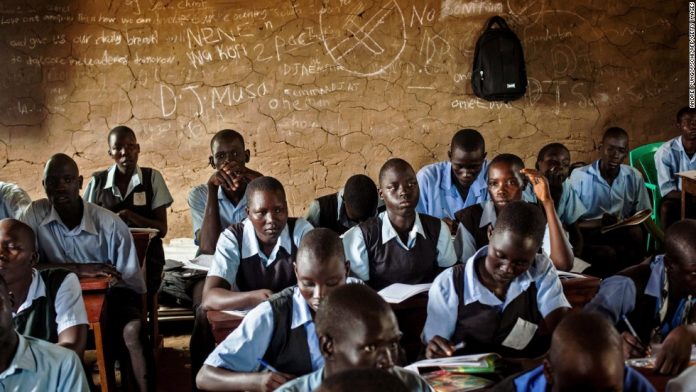
South Sudanese pupils


The African Development Bank has approved a proposal for US$17.7 million to finance the first social sector project in South Sudan since the Bank’s engagement in the country in 2012. The project will increase access to improved basic education for children in the Upper Nile, Unity, Jonglei and Eastern Equatoria states and regions.

The project will improve access to primary education for 30,000 children through the rehabilitation and expansion of 35 primary schools, enhance the capacity of 2,000 teachers and rehabilitate two national teacher training institutes and ten county education centres. It will also provide water, sanitation and hygiene facilities, as well as furniture and learning materials; and build capacity for a better delivery of education services at primary level.

The project is guided by South Sudan’s national development strategy, the general education strategic Plan; the national girls’ education strategy; and the orientation of the Bank’s country strategy paper, which was recently extended to 2021. The strategies emphasise nation-building through capacity and infrastructure development.

The conflict in South Sudan has seriously affected socioeconomic development and compromised basic services infrastructure including education in South Sudan. More than 2.2 million children in South Sudan are out of school, and about 800 primary schools are either non-functional or partially functional.  South Sudan is in need of 23,000 primary school teachers by 2021, yet more than 75% of national teacher training institutes and county education centres are either not operating or partly operating. The quality of education is poor, with the primary completion rate estimated at 14%. Therefore, the Bank’s investment in basic education for the children of South Sudan will help to create the building blocks for a productive workforce and revitalised national development.

Acknowledging the timeliness of approval of this project, country manager for South Sudan, Benedict Kanu, said that “education is not only a powerful driver of development, and one of the strongest instruments for reducing poverty and improving peace and stability, but it is also the key to ending conflicts.” Kanu added that “rebuilding education systems during and after crisis education as is envisaged by the project is crucial in conflict and fragile situations because it will help to provide security, facilitate peacebuilding, and foster resilience.” He expressed the strong hope that “the project will help to inspire urgently needed change and stability for future generations of South Sudanese.”

Since 2012, the Bank has contributed more than $160.55 million in development aid across various sectors for South Sudan. The support has focused on capacity building and infrastructure development, with an emphasis on promoting peace, stability and state building.

Stories Continues after ad

BoU board wants top official Margaret Kasule out

BoU Legal Counsel Ms Margaret Kasule whose accused of misleading on Crane Bank Limited legal status.


A section of the Bank of Uganda (BoU) Board want head of legal department, Ms Margaret Kasule relieved of her duties due to unsatisfactory performance who , a reliable source within the institution has told this website.

“Some board members are wondering how Kasule was able to get that job that needs somebody who is very sharp and knowledgeable about Ugandan laws,” a senior official said, further saying that Kasule’s self-confidence has gone down since parliament launched a probe against BoU over the closure of commercial banks.

He said Kasule is supposed to be the institution’s authority on legal issues, such as drafting legal documents as well as shielding the institution from falling into situations where it is likely to attract legal suits. However, this department and Kasule in particular has failed to deliver on that mandate, costing BoU billions of shillings in legal costs.

The department and more so its head Ms Kasule has turned to be the worst performing due to many scandals and legal battles that BoU is fighting and many are as a result of Kasule not advising BoU as a professional in the legal field.

Members of the board say Kasule has relied so much on the external lawyers to do her job and as such her input is insignificant, this website was told. “They think that external lawyers from MMKAS and AF Mpanga Advocates took advantage of Kasule’s inexperience in legal matters to con BoU of billions of shillings in legal costs and advice,” the official said.

The official added that the two law firms, according to the BoU board, have been a curse rather than a blessing and that Kasule takes the biggest portion of the blame since she failed to check the tricks of the two law firms who were more interested in reaping money from BoU than giving counsel that would have helped BoU keep off from the recent scandals and legal battles.

For instance, when Mr John Muwanga, the Auditor General wanted to launch his audit into BoU over the closure of the banks, the institution would first frustrate him that the probe would amount to sub judice since there was a related case in court. That was the ill-advice of BoU’s legal department, though it would be upheld by the Solicitor General. It would take the courage of Speaker of Parliament Rebecca Kadaga to insist that the Auditor General probes BoU as the exercise had nothing to do with the case in court where BoU/Crane Bank In Receivership had sued Sudhir Ruparelia and Meera Investments Limited  for allegedly  swindling Crane Bank Limited of Sghs397 billion.

Further, the Auditor General in his special audit report observes that some of the documentation relating to Teefe Trust Bank specifically the inventory report, loan schedules, customer deposit schedules, statement of affairs and reports supporting assets and liabilities taken over by BoU was not availed him as some were reported missing. The job a serious legal department is to ensure that such documents are kept tightly in case of a legal suit. Yet Ms Kasule and her juniors in the legal department where all ignorant about the whereabouts of several documents during COSASE probe.

Kasule during COSASE surprised MPs when she told them that former Minister of Finance, the late Jehoash Mayanja Nkangi closed bank (names withheld) by way of issuing a press release. She would be challenged by the then COSASE Chairman Abdu Katuntu who reminded her that a press release is not a government document officially used in the closure of any institution.

Use of conflicted lawyers in BoU case

The Commercial court in December 2017 disqualified Bank of Uganda (BoU) lawyers from sh397 billion case involving Sudhir Ruparelia, citing conflict of interest. In his ruling, the head of the division, Justice David Kutosi Wangutusi stated that David Mpanga of A.F. Mpanga Advocates and Timothy Masembe of MMAKS Advocates acted in violation of the Advocates (Professional Conduct) regulations in representing BoU.

There is no one else to blame for this situation it’s BoU’s legal department and Kasule that should have done a due diligence on A.F Mpanga Advocated and MMAKS Advocates. Of concern is that taxpayers continue to lose money in such arrangements dues to carelessness of BoU’s legal department.

Crane Bank In Receivership suit against Sudhir and Meera Investment

Just weeks, Commercial Court judge, Justice David Kutosi Wangutusi ruled that Crane Bank In Receivership which sued Sudhir Ruparelia and Meera Investments Limited for Shs397 billion violated the law which does not give companies such circumstances to sue. Justice Wangutusi awarded Sudhir and Meera Investments Limited costs of the suit. It was upon BoU’s legal department to know that Crane Bank in Receivership had no right to sue, as per the existing law.

Kasule’s department also failed to let her bosses at BoU to know that that even if Crane Bank In Receivership had the right to sue, it had ceased to own property and not existence.

“That notwithstanding even if Crane Bank In Receivership could sue, by the 30th June 2017 when they filed the suit they were not in a position to do so. They had ceased to own property and their liabilities and assets had all been exhausted,” said the judge in his ruling.

The sum total is that the Respondent at the time it filed this suit was not in existence its lifetime having been terminated when it was surrendered to DFCU Bank whose consideration was the DFCU assumption of the Respondent’s liabilities which assumption was paid by conveying her assets to DFCU Bank, added the judge.

Interesting it is Kasule who swore an affidavit on behalf of BoU who helped Crane Bank In Receivership to lodge a case against Sudhir and Meera Investments. That decision by Kasule made the judge to award costs of the suit to Sudhir, which BoU has to pay. But we know BoU uses taxpayers’ purse. So we shall lose that money because of BoU’s legal department’s carelessness in handling legal issues.

“I am an adult female Uganda of sound mind and the Legal Counsel of Bank of Uganda which is the statutory receiver of Crane Bank Ltd in Receivership and I swear this affidavit in that capacity,” Kasule swearing an affidavit in Shs397 billion case.

From the foregoing Justice Wangutusi said: “There is no doubt that the suit was filed by Bank of Uganda. Since section 96 of the Financial Institutions Act insulated Crane Bank under Receivership from court proceedings, execution or other legal processes the person that should pay costs should be the person who instituted the suit and that is Bank of Uganda. This is so because Crane Bank in Receivership had no capacity to foot the costs and much so the Bank of Uganda that instituted the suit was aware of this incapacity.”

The Crane Bank case is just one example, shareholders of National Bank of Commerce and a few others have considered a legal battle to have their bank restored or be compensated. BoU’s legal department still will carry the blame for not advising rightly. The weakness of the department is the reason BoU relies more on the expensive external lawyers who dupe taxpayers. The question arises as to why Kasule still remains BoU legal counsel.


Stories Continues after ad

Museveni blasts opposition for celebrating indictment of Kayihura, says his alleged investments in USA would amount to treason

Museveni with then his blue eyed boy Gen. Kale Kayihura.


President Yoweri Museveni has castigated opposition leaders who continue to jubilate over the recent decision by the US government to indict former Inspector General of Police (IGP) Gen. Kale Kayihura and members of his family.

In his latest message to Uganans, Museveni says: “It is most interesting to see how some of the elements of the Opposition are jubilating about some authorities in the USA who have recently declared that General Kale and some members of his family will not be allowed to enter the USA in case they want to travel there… I should, first of all, say that, that excitement among some elements of the Opposition shows the poor quality of their spectacles when it comes to issues of Africa and Uganda.”

He continues: “Why do they think that going to the USA or, indeed, any non-African country is so important that if you are not allowed there, it will amount to a painful punishment? I know of no Country that is more beautiful than Uganda on Earth Planet. It is actually a sacrifice for me to visit any non-African country on account of bad weather, strange foods etc.”

In his message, Museveni castigated Kayihura after learning that the General has investments in USA. “What would be disappointing is to hear that Kale had investments in the USA that his children go to see. That would be treason.  Investments in the USA when Uganda needs investments? I do not have and will never have a single investment outside Uganda; possibly, for some sentimental reasons, I could consider investing in Tanzania, Kenya, Rwanda…

He says, “It is … “inexcusable that at a time when Africa is still struggling to stand up, still with deficits in many areas, that the African elite would transfer money, again, to the West.”


Below is Museveni’s latest message to Ugandans;

Fellow Ugandans and, especially, the Bazzukulu

It says, in the Church of Uganda Prayer Book, on page 5, as follows: “They left undone what they ought to have done and they did that they ought not to have done and there is no truth in them”. In Runyakore, it says: “Bakareka ebibashemereire kukora, bakora ebibatashemereire kukora, n’amazima tigari muribo”. It is most interesting to see how some of the elements of the Opposition are jubilating about some authorities in the USA who have recently declared that General Kale and some members of his family will not be allowed to enter the USA in case they want to travel there.

Before I comment on the action of the USA Govt in the matter of Kale, I should, first of all, say that, that excitement among some elements of the Opposition shows the poor quality of their spectacles when it comes to issues of Africa and Uganda. Why do they think that going to the USA or, indeed, any non-African country is so important that if you are not allowed there, it will amount to a painful punishment? I know of no Country that is more beautiful than Uganda on Earth Planet. It is actually a sacrifice for me to visit any non-African country on account of bad weather, strange foods etc.

I, however, visit those foreign countries as my duty prescribes to create friendships for Uganda, especially for business, security co-operation etc. Even with the issue of business and security co-operation, our primary area of interest is Africa.

The other parts of the World are additional.  Africa needs those parts of the World and they need Africa. Otherwise, at a personal level, I go to foreign, non-African destinations for friendship, not for my primary obligation to family or Country.

Why do I say this? The first time I visited the USA in October 1987, on the invitation of President Reagan, I was 43 years old and my personal journey had already reached the climax as President of Uganda. In the previous 43 years, I had grown up in Africa, studied in Africa, fought in Africa, failed in Africa and succeeded in Africa. Where in Africa? In: Uganda, Tanzania, Mozambique, Zambia and Kenya.

On two occasions, I also passed through Rwanda and Burundi and visited Mobutu once in Gbadolite. Why did President Reagan invite me? He must have heard that this totally African- made product, known as General of the Resistance, Yoweri Museveni, is of some value. Indeed, we have helped one another with the Western Countries in economy, health (e.g. Aids and Ebola), security etc. In some of the situations, Uganda stood alone or nearly alone. Some examples: the Sudan under Hassan Tourabi when they backed ADF and LRA; Somalia when everybody, including the Americans, feared to go there; the Rwanda crisis; etc. etc. Actually, for most of the 43 years before I visited President Reagan, the Western Countries suspected us as “Marxists”, “Communists” etc. That, however, did not stop us from succeeding in Liberating our Country.  Some of the Western and some of the Eastern Countries, not to mention the Arab countries, supported Idi Amin and those Govts. Actually, Idi Amin came to power with the support of the Western Countries. We opposed Idi Amin and their support for him and succeeded with the support of African Countries.

By 1950, China was number 45 in the hierarchy of development in terms of the size of GDP. In the 70 years since that time, China is now the second biggest economy in the World and they are continuing to grow. However, in those 70 years, China has fought with the Western Countries in Korea (1950- 53); they have been on opposite sides in the War in Vietnam (1954- 1975); China backed us in our anti- colonial wars in Africa, while many of the Western Countries were supporting our enemies (in Mozambique, Angola, South Africa, Namibia, Rhodesia, Guinea-Bissau, Mau Mau); etc etc.

Mao Tse Tung never visited any Western Country even once in all his life.  I think he visited Moscow two times. Yet, the China he led is now one of the most successful stories of the modern World.

Therefore, to hear leaders of national Political Parties jubilating that a Ugandan is barred from entering the USA is very good news for the NRM because, as always, it will be very easy for us to show the Ugandans and Africans that “they have left undone what they ought to have done and have done what they ought not to have done and there is no truth in them”.

Regarding the Foreign Govts which are fond of using these types of approach, that is their choice. It is really none of our business.  It is their country and they are right to run it the way they want.

However, for Kale or other Ugandans who are suspected to have made mistakes, they will always be handled in Uganda.  That is why we shall never hand any Ugandan to, for instance, the Court in The Hague- the ICC. Kale is already facing whatever mistakes he is suspected to have committed in our Courts. What value addition is, then, there from external actors? In co-operation in, for instance, Defense matters, some of the Western Countries tried to tell us which soldiers should not be selected for courses in their countries and we rejected that position by stopping all training in those countries.  We built the UPDF by our own means from scratch, based on the genuine sentiments of our People as you can see whenever there is a recruitment exercise. Outsiders can contribute in a manner acceptable to us. Otherwise, we are self- sufficient in capacity building as we have always been.

What would be disappointing is to hear that Kale had investments in the USA that his children go to see. That would be treason.  Investments in the USA when Uganda needs investments? I do not have and will never have a single investment outside Uganda; possibly, for some sentimental reasons, I could consider investing in Tanzania, Kenya, Rwanda etc. – African countries.  However, for non- African Countries: “No”, “Never”. Why? It is the African slave labour during 300 years of slavery, the African resources during the colonial times and the African resources during neo- colonial times that contributed greatly to the prosperity of those countries to the detriment of Africa (How Europe under- developed Africa- Walter Rodney).

It is therefore, inexcusable that at a time when Africa is still struggling to stand up, still with deficits in many areas, that the African elite would transfer money, again, to the West. Culturally, now, the populations in the Western Countries are something akin to relatives: we all speak English or French or whatever; many of us are Christians; we share books written by different Authors; etc etc.

When Africa is strong, she will come to the aid of Europe and the USA. However, that time is not now. On my part, the only time I opened a bank account outside Uganda, was in a Bank in Gothenburg, Sweden, where I deposited the US $ 120,000 that was donated to the NRM by the Late Max Rohrer of Roko. Elizabeth Bagaya also brought US $ 100,000 from Abiola. I do not remember whether I deposited it there also.  This was in 1985.

Also Mzee Rusiita from London may have brought some contribution. Otherwise, it is sacrilege for Africans to continue to contribute to the welfare of others to Africa’s detriment.

I am sorry for this diversion.  I have not responded to the messages of the Bazzukulu and other Ugandans that they sent in response to my earlier ones, and those wishing me well on my birthday. I will do so soon. Thank you all for wishing me good luck

Stories Continues after ad