Stanbic Bank
Stanbic Bank
17.6 C
Kampala
Stanbic Bank
Stanbic Bank
Home Blog Page 1166

Cranes start preps for CHAN 2020 qualifier against Burundi

Uganda Cranes


Uganda Cranes Squad for the CHAN 2020 Qualifiers started training for the second round of the 2020 African Nations Championship (CHAN) qualifiers against Burundi.

Interim head coach Abdallah Mubiru will be hoping to get the best from his squad when all the players report for duty after the weekend.

The most notable call up of the squad is KCCA FC’s Sulaiman Mike Mutyaba who last played for the Cranes in 2014 in a world cup qualifier match against Liberia. He had retired in February 2017 but made a U-turn in 2018 when called coach Mike Mutebi needed his services.

The first leg will be played on 20th September in Bujumbura and the 2nd leg on 18th October 2019 in Kampala.

The aggregate winner over the two legs will qualify for the final tournament in 2020 that will be staged in Cameroon.

Uganda Cranes are seeking for their fifth appearance at the 16-team tournament, having played at four CHAN champions in 2011 (Sudan), 2014 (South Africa), 2016 (Rwanda) and lately 2018 (Morocco).

The competing national teams in this championship must be composed of only players playing in their domestic league. That is, a Ugandan player is only eligible to play for the Uganda Cranes if he is playing for a Ugandan club.

Democratic Republic of Congo (DRC) have won it twice, holding it the most times while Morocco are the defending champions.

The competition will be hosted between January and February 2020 in Cameroon. It is held after every two years.


The 32 Players Summoned

Goalkeepers: Lukwago Charles (KCCA FC), Mugabi Yasin (Wakiso Giants Fc), Keni Saidi (Sc Villa), Mutakubya Joel (Kyetume FC)

Defenders: Willa Paul (Vipers SC), Kapampa Eddy (Maroons FC), Mustafa Mujuzi (Proline FC), Kizza Mustafa (KCCA FC), Revita John (KCCA FC), Lwaliwa Halid (Vipers SC), Mbowa Paul (URA FC), Galiwango Arafat (Police FC), Benson Tahomera (Kyetume FC), Mandela Ashraf (URA FC).

Midfielders: Wahab Ghadafi (Onduparaka FC),  Paul Mucureezi (Mbarara City FC), Kasozi Nicolas (KCCA FC), Mutyaba Muzamir (KCCA FC), Vianney Sekajugo (Wakiso Giants FC), Sulaiman Mutyaba (KCCA FC), Kagimu Shafiq (URA FC), Kayiwa Allan (Vipers SC), Okello Allan (KCCA FC), Bright Anukani (Proline FC), Sam Kintu (Proline FC), Kyeyune Saidi (URA FC), Owor David ( SC Villa ), Ssozi Yusuf ( Police FC), Kigozi Samson Andrew (Police FC)

Strikers: Bayo Fahad (Vipers SC), Sserunkuma Daniel (Vipers SC), Lubega Edrisa (Proline FC)


Stories Continues after ad

Female teacher who regained her freedom after allegations of infecting a baby with HIV/AIDS narrates her ordeal

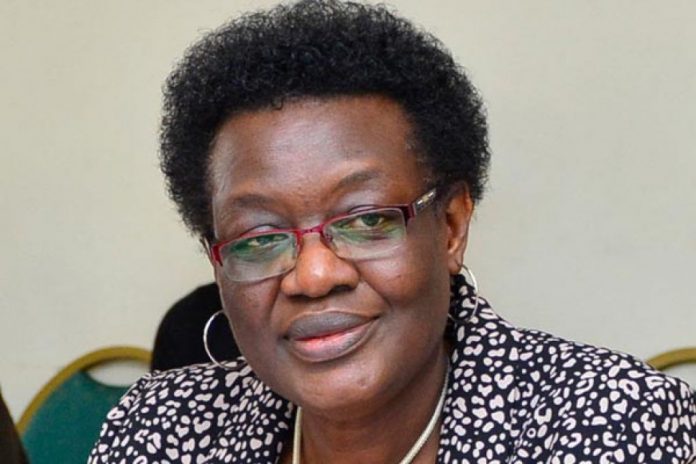
Ms Sylvia Komuhangi


The 32 year old Female secondary school teacher, Ms Sylvia Komuhangi who recently regained her freedom after spending nine months at Kitgum Central prison over allegations of infecting a baby with HIV/AIDS, has narrated her ordeal and called on parliament to revisit HIV criminal laws noting that they are vogue, unfair and encourage trumped charges.

Speaking at Fairway hotel in Kampala, the teacher who had gone for a tour at the famous Kidepo national park, said court based on her HIV positive status to convict and sentence her without scratching below the table for facts and establishing the HIV status of the toddler.

On July 4, 2019, Kitgum Chief Magistrate, Hussein Nasur Ntalo, Ms Komuhangi of offence of committing a negligent act likely to spread disease contrary to Section 171 of the Penal Code Act of the Republic of Uganda and sentenced her to two years in  Kitgum central prison.

Through her layers led by Inaccurate Owomugisha of Uganda Network on Ethics, Law and HIV/AIDS (UGANET), Komuhangi appealed against lower courts’ ruling and on 28 August, The Gulu High Court Judge, Stephen Mubiru quashed the conviction, saying that forensic tests showed that DNA traces found on the cloth that Komuhangi used to wrap the baby belonged to her but did not contain any blood.

“I could not find any connection between her piece of cloth and the blood said to have been injected into the baby because the swelling found on the baby could have been a mere rash,” he ruled.

“The conviction is quashed and the sentence is set aside, the appellant is set free unconditionally unless she is held on some other lawful reasons,” he said in his ruling.

Komuhangi is not the first convict as a result of those laws. In 2014, a 64-year-old nurse in Kampala, Rosemary Namubiru, was accused of injecting a toddler with her HIV-positive blood in the process of administering treatment.

Namubiru was put on trial amid pressure from several local and international organisations, including the Global Commission on HIV and the Law, who castigated the quality of the media reporting in the immediate aftermath of her arrest.

“The media engaged in unabashed and unverified sensationalism. Rosemary was branded a ‘killer,’ guilty of maliciously and intentionally attempting to transmit her own HIV infection to a child,” said the Commission’s statement.

“Subsequent to those allegations, the baseless rumour-mongering escalated: various news reports branded Rosemary a fiendish serial offender; a nurse who was mentally ill; a nurse without credentials…. Sadly, we’re convinced that the charge was originally laid because of the media frenzy,” added the statement.

UGANET and other human rights organisations  have however called on the constitutional Court  to fast track the hearing of a petition  No. 24 of 2016 where they challenged section 18 (e) that authorizes a medical practitioner to reveal HIV results to any other person with whom an HIV infected person is in close contact, including sexual partner, infringes on client’s rights to privacy and Section 41 on attempted transmission of HIV and Section 43 on intentional transmission of HIV should be repealed in favour of Section 171 of the Penal Code Act.

They also implored justice actors at all levels to increase rigor while handling HIV related case adding that  being HIV positive  alone should not impute malice on the side of the perpetrator.

Below is the narration.

On December 26, 2018, the 32 year old female teacher and her female colleague travelled to Kitgum a head of their tour in Kidepo National park slated for on 27 that same month. She spent several nights at Eunice Lakot, a friend’s house in Kitgum Town before the tour.

Sylvia said at round 9:00pm that same, Ms Lakot’s baby who was sleeping in its bed started yelling and this prompted her from the sitting room to go and pick with the intent of passing it to its mum who was outside however it continued crying. The mother, Eunice Lakot, examined her baby and found swellings in both armpits.

She took the baby to Kitgum hospital for diagnosis, where doctors reportedly confirmed that the swellings were caused by injections. Consequently, a medical professional tested Komuhangi for HIV, and she was found positive. The child was given Post-exposure Prophylaxis (PEP), an antiretroviral medication that prevents infection to anyone exposed to HIV during the first ninety-six hours. Subsequently, Komuhangi was arrested.

As per the program, Sylvia and her colleague, told Lakot to wake them up at 4:00am to prepare as the tourist van was to pick them in the morning. They set off to the National park where they spent almost full day.

On backing off from the national park, Sylvia said they found a meeting at Lakot’s home however they ignored it till they were angrily called into the house. “They introduced themselves to us that they are local leaders and they are there over an issue of infecting the baby with Aids.

They were taken to Kitgum central police where she spent two weeks in custody asking to be released on bond, but they could not even bond her out, saying she was a non-resident. Consequently, a medical professional tested Komuhangi for HIV, and she was found positive. Her colleague was released on police bond.

She was subsequently charged at Kitgum Magistrate’s Court with the offence of committing a “negligent act likely to spread disease contrary to Section 171 of the Penal Code Act of the Republic of Uganda and remanded. She applied for bail however her plea was no heard.

The child was given Post-exposure Prophylaxis (PEP), an antiretroviral medication that prevents infection to anyone exposed to HIV during the first ninety-six hours. Subsequently, Komuhangi was arrested.

On Thursday, July 4th 2019, Kitgum Chief Magistrate, Hussein Nasur Ntalo convicted and sentenced her to two years in prison.

On Kumuhangi’s release, Lakot, the mother of the baby, shared that the most recent results showed that her baby is HIV negative. Lakot, nevertheless, said she was not happy with the High Court’s ruling, but the baby’s maternal grandmother, Rose Oryem, said they would not challenge the court’s decision.


Stories Continues after ad
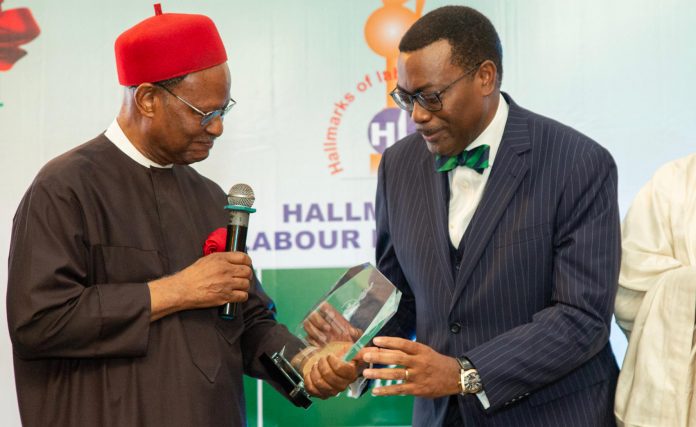
Can Kasekende survive at Bank of Uganda as Mutebile prepares nears retirement?

Former BoU Deputy Governor, Dr. Louis Kasekende.

The contract of the Bank of Uganda (BoU) Emmanuel Mutebile Tumusiime ends in early 2021 setting him into retirement while that of his deputy Dr Louis Kasekende ends early 2020.  The latter had hopes his contract would be extended to succeed his boss in 2021, but the hopes were wiped away by the series of scandals at the central bank.

Being the deputy to Tumusiime-Mutebile, Kasekende was charged with overseeing the operations in the central bank as his boss played the role of chief executive of that institution, most times, waiting for reports from Kasekende and other senior staff.

However, it should be emphasised that the primary purpose of BoU is to foster price stability and a sound financial system. Tumusiime-Mutebile and Kasekende have been credited for upholding macroeconomic stability over the years.

That notwithstanding, the bank’s operations have caused trouble to both Tumusiime-Mutebile and Kasekende whose at the centre of the scandals, he being the overall supervisor of the officers carrying out the operations such as the supervision of banks, printing and transfer of currency notes to upcountry branches, as well as destroying of old notes.

The operations such as the closure of seven commercial banks resulted into the probe of BoU by parliament. It unearthed gaps in the way how top BoU staffs were running their duties. The probe made the public to ask how some of the officials at BoU got the jobs. Government is yet to act on the recommendations of parliament as far as the closure of banks is concerned. Major changes are expected and Kasekende’s position remains threatened.

The closure banks like Teefe Trust Bank, Greenland Bank, International Credit Bank, Cooperative Bank, National Bank of Commerce, Global Trust Bank Uganda and Crane Bank Limited (CBL) exposed Kasekende and the former executive director of bank supervision Justine Bagyenda as being unprofessional and careless as they did not follow some procedures and guidelines for the closure of banks. The banks were closed for allegedly being undercapitalized.

Further the careless closure of banks by Kasekende and other top managers at BoU has become a curse to Ugandan taxpayers as former shareholders of the banks are demanding for compensation that could hit trillions of shillings. Kasekende and his juniors did not anticipate this much as they claim they were right to close the banks.

Relatedly Ugandans are still puzzled that BoU spent Shs478 billion on CBL In Receivership yet sold its assets to Dfcu Bank at Shs200 billion, paid in installments and interest free. This calculation makes Kasekende unsuitable to replace Tumusiime-Mutebile. Worse still BoU failed to account for Shs290 billion of the money injected into CBL as liquidity support.

Further Kasekende and other would allow MMAKS Advocates to act as transaction lawyers in the sale of CBL assets, the lawyers earning billions of shillings, yet the transaction process is questionable. Kasekende and Director Legal Margaret Kasule take the biggest share of the blame here.

The two above officials would still go ahead to select MMAKS Advocates as their external counsel in the case involving Ruparelia Group well knowing they had worked for Sudhir Ruparelia and some of his companies. Court dropped the lawyers from Shs397 billion BoU/Crane Bank In Receivership case. But the taxpayer lost again in terms of legal costs.

That meant that BoU had to look for other external lawyers, further making the taxpayers incur more legal costs. Worse still court recently ruled that Crane Bank In Receivership could sue, awarding Sudhir and Meera Investments Limited costs of the suit. It is the taxpayers to pay that money.

Yet the recent alleged printing of Shs90 billion not yet recovered was also blamed on Kasekende. Also the recent scandal where officials stole old notes was blamed on Kasekende as the overseer of operations in BoU.

Kasekende therefore is not likely to succeed Tumusiime-Mutebile, more so as it emerged also that he had his own clique of officers that obeyed him and disrespected his boss Tumusiime-Mutebile.

Stories Continues after ad

Lawyers pledge to give legal aid to re-arrested Kaweesi murder suspects

Simon Peter Kinobe


The president of  Uganda  Law  Society  (ULS), Simon Peter Kinobe, has said his organisation will  deploy  its  legal  team  to  legally support  the four Kaweesi murder suspects who were  re-arrested along their advocate, James  Mubiru, moments after they had just  been released on bail by the Registrar, Esther Nasambu at the International Crimes Division of the High  Court.

Yesterday, chaos ensued at the International Crimes Division of the High Court in Kololo, as plain clothed armed security operatives forcefully re-arrested the four suspects implicated in the gruesome murder of former assistant inspector general of police (AIGP) Andrew Felix Kaweesi who was gunned down on the 17 march 2017.

The re-arrested suspects include Jibril Kalyango alias Abu Aisha, Yusuf Mugerwa alias Wilson, Joshua Magezi Kyambadde alias Abdu Rahman and Siraje Nyanzi alias Jimmy Ssentamu.

Their layers however suspected that the released suspects could be re-arrested as it has been happening to at various courts and they decided to transport them in one car Toyota Noah Reg. no. UAY 077T to their destinations.  Armed men however could not allow them to leave court premises and surrounded the car that was driven by one of their layers James Mubiru who in turn no spare.

They were whisked away in a Noah vehicle registration number UAY 077T by uniformed and plain-clothed security officers who closed the main gate of the Court premises to block the suspects from leaving.

“The ULS finds it unacceptable that the re-arrest was carried out without following due process and in violation of the rights of the accused persons by unidentified persons and for unknown reasons,” he said.

Kinobe said it is unacceptable that the re-arrest was conducted in cruel, inhuman and/or degrading manner within the Court premises.

“It is also illegal for an advocate to be arrested while performing his/her lawful duty. We  strongly  demand  that  our  member  be  released  unconditionally  and  that  the  perpetrators  if  this gruesome act be immediately apprehended,” he said.

He asked public to furnish them with names of those involved in this brutal act so that we may bring them to book, “We condemn this illegal action of the security forces which has undermined the independence of the Judiciary,  the  legal  profession  and  the  rule  of  law  in  Uganda.  We also condemn the assault and intimidation of civilians with guns,” he added.

Stories Continues after ad

An Update on how many fatalities AMISOM has suffered, about 1800 killed

Paul D. Williams


By Paul D. Williams


New evidence has made possible a more accurate estimate of how many African Union Mission in Somalia (AMISOM) personnel have died since the mission deployed in March 2007. My previous report in 2015 made clear that neither of the most widely utilized armed conflict databases—the Uppsala Conflict Data Program or the Armed Conflict Event and Location Data (ACLED) project­—provided plausible numbers, and that it was unlikely that AMISOM had lost “up to 3,000” or “perhaps over 4,000” peacekeepers as some reports suggested.

This new evidence comes from my research into the mission, newly-released financial statements from the African Union (AU) from 2014 to 2018, a new dataset listing attacks on peacekeepers, and the erection of a “Memorial Wall of Our Heroes” in the AU’s Peace and Security building, which lists names of peacekeepers who died during AU-led and AU-authorized peace operations.

The costs of don’t ask, don’t tell

Four years after my initial investigation, there is still no comprehensive public record of AMISOM’s fatalities. In my book—Fighting for Peace in Somalia—I estimate that the number of AMISOM fatalities between March 2007 and mid-2017 was “probably more than 1,500,” but due to incomplete information, it was impossible to provide a definitive figure. The AU continues to leave the decision on whether or not to release information about casualties to the respective troop-contributing countries (TCCs). To date, no AMISOM TCC has publicly released a comprehensive list of their personnel killed in Somalia.

I maintain that this is not a good policy for two main reasons. First, all peacekeepers who make the ultimate sacrifice should have their service publicly recognized. Not doing so is not only immoral, but it is likely to have a negative effect on morale and could put their next of kin in a difficult position when it comes to claiming the financial compensation they are entitled to. This is presumably part of the reason why the AU recently erected the memorial wall (see below).

Second, not releasing full details about peacekeeper deaths in Somalia plays into al-Shabaab’s hands, who are often able to dominate the media terrain in the absence of an authoritative and trusted AU or AMISOM voice. Optimal strategic communications for a peace operation like AMISOM would involve the mission’s representatives becoming authoritative voices in the Somali media ecosystem which, in turn, would require AMISOM to be taken seriously on this topic. A mission that doesn’t provide the whole truth about its own dead cannot be surprised if Somalis think it lacks credibility when trying to pronounce on other issues.

New financial evidence

In March 2017, the AU released financial statements that contain detailed breakdowns of how the organization spent its money between 2014 and 2017, and in May 2019, released the report for 2018. The AU is to be commended for deciding to release this information, which represents an important step towards achieving financial transparency and accountability. These financial reports also reveal some important details about AMISOM by providing some information about the death and disability grants paid by the AU to the governments of its TCCs.

From information in the AU’s financial statements on AMISOM’s death and disability compensation payments between August 2009 and September 2012, it can be gleaned that AMISOM suffered 439 fatalities: 22 in 2009, 59 in 2010, 298 in 2011, and 60 in 2012.

The Memorandums of Understanding (MOUs) signed between the AU and the TCC governments stated that $50,000 should be paid as death compensation to the deceased soldier’s government. The compensation amount for disability would depend on the degree of injury or disabilities suffered as determined by the joint AU/TCC medical board. The money for these payments came from the European Union, which provided significant financial assistance through its African Peace Facility.

The AU financial records from August 2009 to September 2012 show that death compensation payments of $50,000 were made for these 439 fatalities. But there was also an additional $5,779,000 paid out in disability compensation, almost always in payments of $10,000 for each of the approximately 575 injured soldiers. For the 37 months from August 2009 to September 2012, therefore, the AU spent $27,729,000 on death and disability compensation. Of this total, 79 percent was spent on death compensation and 21 percent on disability compensation.

It is in light of these insights that we should assess the death and disability compensation data provided in the newly released AU financial statements for 2014 through 2018. These public reports reveal that the AU paid $74,624,000 in death and disability compensation between 2014 and 2018 (see Figure 2).

If we assume a similar proportion of death and disability compensation in these payments as were evident in those made between August 2009 and September 2012, this would mean 79 percent was spent on death compensation ($58,952,960) and 21 percent on disability compensation ($15,671,040). This would equate to approximately 1,179 payments of $50,000 for deceased personnel and 1,567 payments of $10,000 for injured personnel. In contrast, if we assumed a 50:50 split between fatality and injury payments, this would suggest 746 fatalities and 3,731 injured peacekeeper payments.

Given AMISOM’s numerous remote forward operating bases, the mission’s limited capacity for rapid casualty evacuation (partly owing to a lack of rapid response forces and appropriate helicopters), and the relatively poor state of its medical facilities, a ratio of approximately 3 killed for every 4 wounded peacekeepers is plausible (the 79:21 ratio). It is also very close to the actual killed to wounded ratio that occurred between August 2009 and September 2012. In contrast, the 50:50 spending ratio would suggest approximately 1 killed for every 5 wounded peacekeepers, which seems rather high and is considerably higher than the actual ratio that occurred between August 2009 and September 2012.

Following the money is a plausible but not foolproof way to estimate the number of casualties suffered because it is in the interest of each TCC government to claim the compensation to which it is entitled. Indeed, if they did not claim financial compensation for all their dead this would raise some deeply uncomfortable questions as to why not. It is also possible, however, that compensation payments were made to the TCC governments other than via the AU.

But before providing any estimate of AMISOM’s fatality numbers for the period 2014 to 2018, we must recall that during 2014, AMISOM was not the only AU peace support operation.[1] The AU also deployed the African-led International Support Mission in Central Africa (MISCA). MISCA deployed to the Central African Republic in late December 2013 and by the time it was transitioned into a new United Nations peacekeeping operation (MINUSCA) in September 2014, it had suffered a total of 31 fatalities.

If we apply the 79:21 breakdown for 2014, this would mean a total of 217 fatalities. Subtracting the 31 fatalities suffered by MISCA leaves an estimated 186 AMISOM fatalities. Applying the same 79:21 spending ratio to the years 2015-2018 produces the following estimate of 1,148 AMISOM fatalities; whereas assuming a 50:50 spending ratio suggests an estimate of 747 AMISOM fatalities over the same period.

The Politics of Peacekeeper Memorials

UPDF has had its soldiers killed in Somalia

The erection of the “Memorial Wall of Our Heroes” in the AU’s headquarters in 2018 was an interesting development. It lists the names and ranks (but no dates) of peacekeepers who have died on AU-mandated peace support operations (such as AMIB, AMIS, AMISOM, MISCA) and AU-authorized peace operations (such as the MNJTF and G5 Sahel Joint Force). However, shortly after its erection, the wall was covered in black drapes that concealed the names of the fallen heroes. The drapes were removed the following year when the memorial wall was officially inaugurated on May 25, 2019. As of August 2019, there were 1,108 names listed on the wall in nineteen columns.

As for AMISOM, it too has a memorial for its fallen personnel just outside its force headquarters in Mogadishu. However, it lists no names or numbers. Rather, its dedication reads: “In memory of the officers, men and women of the African Union Mission in Somalia (AMISOM), and the Somali National Security Forces (SNSF), who lost their lives in pursuit of peace and stability in Somalia.”

So what?

What does this new information mean for an attempt to provide an overall estimate of AMISOM’s fatalities? In sum, there is now a reasonably plausible set of estimates for almost the entire period of AMISOM’s deployment between March 2007 and December 2018 derived from five sources.

First, in my book, I cite an internal AMISOM briefing presentation given to bilateral partners on February 25, 2009 which stated that AMISOM had suffered 12 fatalities and 25 injured peacekeepers as of December 10, 2008. I assume this is accurate since it was provided discretely by the AU to AMISOM’s bilateral partners; the numbers are low enough that at that stage the issue was not considered especially controversial; and it reflects the fact that AMISOM engaged in relatively little fighting during 2007 and 2008.

A second relevant source is the new Peacemakers at Risk dataset produced out of the Uppsala Conflict Data Program. For 2009, this estimates 40 AMISOM peacekeepers were killed in violent attacks. My research suggests that another six AMISOM peacekeepers died in 2009 (four from illness and two from motor vehicle accidents), making a total of 46.

A third source is the financial records between August 2009 and September 2012 discussed above, which revealed 439 AMISOM fatalities. Twenty-two of those occurred between August and December 2009. This leaves 417 between January 2010 and September 2012.

Fourth, the publicly released AU financial reports provide information about compensation payments that could plausibly suggest that AMISOM suffered approximately 1,148 or 747 fatalities between 2014 and 2018 (depending on whether one assumes a 79:21 or 50:50 ratio of death and disability compensation payments).

Fifth, the SIPRI database on multilateral peace operations—which collected data on AMISOM’s fatalities between 2009 and 2014—received a figure of 261 fatalities from AMISOM officials for the 2013 calendar year.

Taken together, these sources cover most of AMISOM’s timeline, although they leave some periods unaccounted for, namely, December 11–31, 2008 and October to December 2012. However, these periods represent only 3.5 months out of the 141 months from March 2007 to December 2018, or 2.5 percent of AMISOM’s deployment time.

In sum, previous research combined with the newly released AU financial data and the Peacemakers at Risk dataset suggest that a plausible estimate of AMISOM’s fatalities between March 2007 and December 2018 could be between 1,483 and 1,884. Based on the above analysis, it is likely that the real number is closer to the higher end of this range than the lower end. Finally, there is a high likelihood that AMISOM suffered additional fatalities during the 3.5 months currently missing from the data.

Paul D. Williams is Professor in the Elliott School of International Affairs at the George Washington University. He tweets @PDWilliamsGWU.


Stories Continues after ad

Proline docked six points, fined Shs5m for not honouring SC Villa game

Proline FC


Proline FC have been docked six points and six goals by the FUFA Competitions Disciplinary Panel after forfeiting their match day three fixture against SC Villa Jogoo at StarTimes stadium, Lugogo.

In a letter from the disciplinary panel, the newly promoted league side has been found guilty of violating FUFA Competition rules and it orders that the Proline loses the match against SC Villa by forfeiture.

The panel further ruled that; “1. SC Villa get three points and three goals.

“2. Proline, being the home team, will be docked a further SIX points and six goals from the ones they will accumulate.

“3. Proline will pay a fine of Shs5 million for bringing the game of football into disrepute.

“4. Proline have an option of appealing to the Fufa Appeals committee.”

The fine of five million shillings has been ordered to be paid by September 18, 2019.

Proline had earlier written to FUFA confirming that they were not honouring the fixture because two of their players in Mustafa Mujuzi and Bright Anukani were on National team duty and that according to FIFA rules on International break, all domestic leagues must take a break.

However the Fufa rules say the minimum is three players and other league games were played that day.

For now, SC Villa has been given three points and three goals and move to seven points.

Proline becomes the second club to be docked points this season after Police didn’t show up for their game against Onduparaka on match day one while they were out of the country for military games without notifying the Uganda Premier League committee.

Proline are currently preparing for thir CAF Confederation second Round Preliminary game first leg against AS Kigali FC in Rwanda on Saturday September 14.

Stories Continues after ad

Ministers differ on taxation of NSSF members’ benefits

Gabriel Ajedra


The Minister of State for Finance, Gabriel Ajedra, has opposed a proposal in the National Social Security Fund (NSSF) Amendment Bill, 2019 seeking to exempt workers’ contributions from taxation.

The National Social Security Fund (NSSF) Amendment Bill, 2019, which seeks to provide for mandatory contributions of all workers regardless of the size of the enterprise or number of employees; and to provide for voluntary contributions to the Fund; proposes a tax on members’ retirement benefits.

Minister Ajedra, who was jointly appearing with the Minister of Gender, Labour and Social Development, Janat Mukwaya, before the committees of Gender and said the proposal does not address the issue of equity in the pensions sector.

“If NSSF is exempted, then what happens to other pension schemes? As the Ministry of Finance, that is one of the issues we do not agree with,” Ajedra said.

The two committees are currently scrutinizing the NSSF Bill.

Ajedra said that NSSF is the biggest contributor to capital markets and yet this has been affected by low taxes realized from the pensions sector.

“Uganda has no long-term capital investments. This is caused by the monopoly by NSSF. It is the only company that buys government treasury and bonds and it has no competition,” said Ajedra.

Mukwaya however, said that the proposal aims at promoting social security of Ugandans and enhance coverage of saving and retirement income.

“The Bill allows the Ministry of Finance to be responsible for investing the money. Let [Ministry of Finance] have it but they should respect policy on social security,” Mukwaya said.

Pian County MP, Remigio Achia, said that the income tax law should be amended to exempt taxation of members’ contributions of all pension schemes. “The law should not be selective. It should apply to all for purposes of equality,” Achia said.

The Chairperson of the Finance Committee, Henry Musasizi wondered what rationale would be used to tax members’ benefits. “We want to understand how this is going to be done,” said Musasizi, adding that, “We also need to hear about possibilities to have mid-term access to benefits”.

Bulamogi County MP, Kenneth Lubogo, advised government to consider making provisions allowing members to access their savings before the retirement age.

“People lose jobs and remain unemployed for long. They end up living miserably because they have to wait until they are 55 years to access their savings,” Lubogo said.

The Director of Labour at Gender Ministry, Martin Wandera, explained that the objective of social security is in respect of old age and advised that another fund be set up to cater for the unemployed.

He added that mid-term access was not considered after research was carried out and findings indicated that majority of members preferred to withdraw their funds upon retirement.

Stories Continues after ad

Morley Byekwaso named Uganda Hippos head coach

Morley Byekwaso


KCCA FC assistant manager Morley Byekwaso has been named the head coach of the national U-20 football team, known as The Hippos for the forthcoming Cecafa U20 championship.

Byekwaso will be assisted by U17 coach Hamza Lutalo and Stephen Kiggundu as the goalkeeping coach while FUFA Youth Development officer Bashir Mutyaba is the team manager (coordinator).

Morley and his staff will help guide the team in the CECAFA championships that will be hosted by Uganda starting September 21st to 5th October 2019.

The summoned players have today started their residential training at FUFA Technical Centre, Njeru.

Most of the players summoned featured in the U17 Africa Cup of Nations 2019 in Dar es Salaam, as well as players who featured in the previous campaign of the CAF U20 AFCON qualification while others play in the Uganda Premier League.


Summoned team:

Goal keepers: Komakech Jack (Football For Good Academy), Otim Dennis (Mbarara FC), Magolofa Mutwalib (Vipers SC Junior Team).

Defenders: Ssekimbegga Kevin (Express FC Junior Team), Justine Opiro (KCCA FC Soccer Academy), Kayondo Aziz Abdu (Vipers SC), Kitabalwa Robert (St Mary Kitende), Kizito Gavin Mugweri (Sports Club Villa Jogoo), Kigundu Derrick (Buddo S.S), Musa Ramathan (KCCA FC), Ssemakula Keneth (Busoga United FC).

Midfielders: Ssekajja Davis (Bright Stars FC), Mayanja Saidi (Edgars Youth Programme), Sseguya William (Kampala Junior Team), Kafumbe Joseph (KCCA FC), Kawooya Andrew (Vipers SC Junior Team), Anukani Bright (Proline FC), Kakaire Thomas (Alanya Spor-Turkey), Watambala Karim (St Mary’s Kitende), Ssenyonjo Hassan (Wakiso Giants), Zzizinga Ashiraf (Kampala Junior Team), Sserwadda Steven (KCCA FC)

Forwards: Ssebufu Frank (Buddo S.S), Mugulusi Isma (Busoga United FC), Yiga Najib (Vipers SC Junior Team), Lwanga Charles (SC Villa Jogoo), Asaba Ivan (Vipers SC Junior Team), Maseruka Sadam (BUL FC) Sadat Anaku (KCCA FC), Bogere Ivan (Proline FC).

Stories Continues after ad

Shawn Mubiru named SC Villa CEO, vows to take the club back to the top

Shawn Mubiru


Uganda Premier League side Sports Club Villa Jogoo have appointed Shawn Mubiru as the new club’s Chief Executive Officer.

He replaces David Sserebe who has been serving as the interim CEO for more than a year.

In a lengthy facebook post after his appointment, Shawn promised to take back the great club to its rightful place under his leadership not only in Uganda, but alos on the continent.

“I accept to serve a great club that I have supported since childhood. SC Villa is a club you cannot turn down when they come knocking.

“SC Villa’s rich history, and a great fan base are assets for the club. We shall work hard and smart to position them in order to create revenue for the club.

“We at a critical time as a club, and I want to pledge that I will lead a team that will do everything to ensure that we are strongly and strategically placed to take on any challenge. This includes having a good team in every sector that understands and appreciates the core values of the club, including of course, the coaching and playing staff whom I have faith in and together we will get the job done.

“While it is a challenging course for me, I am determined and excited about what is ahead for this great club. My job is to restore SC Villa to its rightful place in the game football in Uganda and on the continent.

“Football just like any trade calls for dedicating time, hard work and commitment. In order for us to be successful, discipline is key, we will need to be fair in all our dealings and that will bring honor to our badge.

“Let take this great appointment to thank the board for giving me this opportunity to reposition our great club.

“I would like to thank all SC Villa Jogoo fans wherever they are, my promise to you; we will reach you and listen to you. We are taking this great club back to the top together.

“We are going to let all of you know of our plans for the club.”

Mubiru’s appointment comes at a time when the club indicated that permanent leadership at the club will be elected in February 2020.

Stories Continues after ad

CAF Champions League: KCCA name squad to face Angola’s Petro de Luanda

KCCA team

Uganda Premier League champions KCCA FC have named the squad to travel to Luanda, Angola for the first leg of the 1/16 preliminary Caf Champions League round game against Petro de Luanda.

New signing Simon Serunkuma makes his debut CAF Champions League trip for the club while Erisa Sekisambu, Revita John and John Egbuonu Odumegwu or Keziron Kizito will have to wait until the team makes the group stages for them to feature.

Defensive midfielder Nicholas Kasozi also misses out on the travelling squad.

The contingent will be headed by Rogers Byamukama from FUFA and the team departs from Entebbe International Airport aboard Ethiopian Airlines on Thursday today am and shall have a stopover at Bole Airport, Addis Ababa before arriving in Angola.

KCCA FC will take on Atletico Petroleos de Luanda in the first leg of the first round 1/16 CAF Champions League preliminary game on Saturday 14th September 2019 at Estadio 11 de Novembro in Luanda. The second leg will be played between September 27 and 29 in Kampala.

KCCA qualified for the final preliminary round with a 4-3 aggregate over Namibia’s African Stars while Petro Launda eliminated Lesotho’s Matlama FC 3-0 on aggregate.

The Kasasiro Boys have good memories of their last match against Angolan opponents, after they knocked out CD Primeiro de Agosto in 2017.

The 16 winners of the first round advance to the group stage, while the 16 losers of the first round enter the Confederation Cup play-off round.

Traveling squad

Goal Keepers; Charles Lukwago (Captain) and Jamil Malyamungu.

Defenders; Samuel Kato, Peter Magambo, Hassan Musana, Mustafa Kizza, Fillbert Obenchan, Eric Ssenjobe

Midfielders; Muzamiru Mutyaba, Gift Ali Abubakar, Allan Okello, Herbert Achai, Simon Serunkuma, Steven Sserwadda.

Strikers; Sadat Anaku, Mike Mutyaba, Jackson Nunda.

Stories Continues after ad