Stanbic Bank
Stanbic Bank
19.9 C
Kampala
Stanbic Bank
Stanbic Bank
Home Blog Page 1168

Fighting fraud from the top

Ayanda Kotobe


 By Ayanda Kotobe


Why do we stop at traffic lights? It’s not because we are naturally attuned to seeing red as the order to stop. If that were the case, red dresses and apples wouldn’t be as popular as they are! Red catches our attention, but we stop at a red light because everyone else does.

Humans copy each other. It’s often said that if you want someone to be more comfortable with you, mimic how they sit or stand. Psychologists call this ‘mirroring’, but it doesn’t just happen during social gatherings. Seeing someone drop a bit of trash or cutting a traffic light gives us a slight nudge into thinking it’s okay. If they are doing it, maybe I can too.

Fraud is at its essence the result of mirroring. It would be convenient to consider all fraudsters as hardened criminals who’d sell their granny if the price were right. But fraud investigators often point out that such activities have simple beginnings. The Enron scandal, so devastating that it destroyed an American energy giant, had its roots in some minor manipulations to meet earnings expectations. Yet when the people involved got away with that, they scaled up and even justified their actions as legitimate – at least to themselves.

This is why fraud prevention starts at the top. There has to be no tolerance among an organisation’s leaders for fraud. When accountability and consequences are lacking, fraud will thrive. The culture of an environment, as well as its treatment of ethics and governance, will reflect management’s attitude towards fraud.

Leadership attitudes are fundamental, reinforced by internal controls to spot fraud. Illegal activities usually involve acts that siphon amounts from a business’ coffers. These can include payroll fraud, writing double cheques for payments, skimming tax money or over-ordering1. A common fraud in South Africa and elsewhere is to overvalue a purchase and split the difference with the supplier. More recent activities include credit card fraud and bank scams. The Bankers Association of Botswana warned last year that fraudsters are becoming increasingly savvy about loopholes, especially technology ones, that organisations are not fixing fast enough.

In all these examples, it only takes a few people to abuse the trust they earned. Sadly, it’s the company that suffers when their wrongdoing is uncovered, usually because it became cataclysmic…

These can be prevented by internal checks and structures to monitor governance and compliance. Companies should also create pipelines for concerned parties and whistle-blowers to relay their suspicions. The Committee of Sponsoring Organizations of the Treadway Commission (COSO) sets out the following five components for an effective fraud prevention system2: control environment, risk assessment, control activities, information & communication, and monitoring. These work together to establish sound internal controls through directed leadership, shared values and a culture that supports accountability.

Increasingly, more of these controls can be automated in modern companies, particularly where high transaction volumes take place. It’s additionally effective to consolidate suppliers to a few that you know can be trusted and are serious about their integrity. Creating reliable procurement channels with those suppliers will help employees stick to legitimate activities.

There is also no reason any more to be ignorant of a company’s finances: even if you have accountants and other fiscal gatekeepers, it is possible with modern software services to generate ad hoc reports and scrutinise patterns using visualisation dashboards. At Kenya’s major banks, employee fraud is often a greater risk than third-party fraud3. Headline-grabbing South African frauds such as seen at Fidentia and Steinhoff were perpetrated by the very accountants meant to have policed such activities.

It might sound as if the fight against fraud means reducing trust in employees. This isn’t the case. Instead, it is about narrowing those gaps where fraud might take place, so as not to normalise such activities. The tone should start at the top, from leadership and management who embrace sound controls and good governance. Consequences must be enforced and felt.

Everyone will eventually ignore a traffic light if they see enough people do this. In some countries, you can see traffic officers haplessly direct vehicles that ignore them. Are all those drivers criminals? In terms of traffic laws, yes. But did they start as criminals? No. And do they see their behaviour as bad? It’s unlikely. Not until they are caught – and if it were business fraud, by then it might be too late for their employers.

The writer is Finance Director at RS Components


Stories Continues after ad

Hanging of Killers will reduce murders  – Museveni

President Museveni


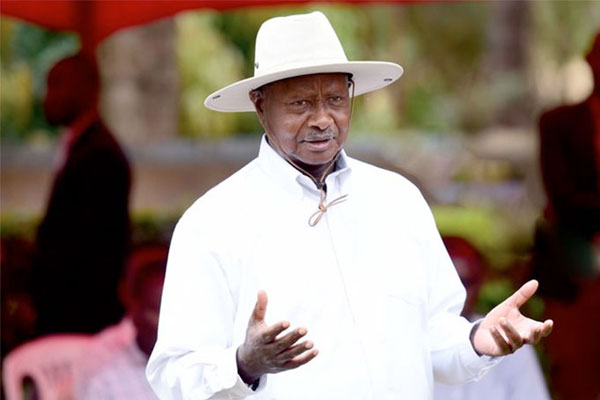
President Museveni consoled the families of Maria Nagirinya, Joshua Rushegyera and other individuals who were killed in the recent spate of murders along Entebbe express way, Mukono and Lyantonde where three family members were trampled to death.

Museveni in his latest message to the bereaved families and Ugandans at large says that murderers should be hanged.

Days ago a staff of a Non-Governmental Organisation (NGO), Community Integrated Development Initiatives (CIDI), Maria Nagirinya and her driver Ronald Kitayimbwa were reportedly kidnapped on August 28th, 2019 from the gate of her Lungujja home, murdered and their bodies dumped at Nakitutulu village, Nama sub-county in Mukono district.

According to her family members, assailants accessed her vehicle registration number UBA 570V, Spacio, moments after her young sister had just opened her the gate.

The assailants according to Sylvia Nambalira a family member who also witness the scuffle as, men grabbed Nagirinya to the back seat before speeding off, said the abductors never demanded for a ransom from any of the family members.

Alluding to police spokesperson Fred Enanga, three prime suspects have been nabbed with the help of sister security agencies of Chieftaincy of Military Intelligence (CMI) and they are currently held at CMI facility in Kireka.

Museveni also consoled the families of Joshua Rushegyera and Tumukunde Merina who were killed on 5th of September, 2019 between 22:28 and 23 hours on the Entebbe Expressway.

Preliminary findings availed by police spokesperson Fred Enanga, the deceased were going to Millennium Hotel in Zana, where they had arranged business transaction, with a car dealer, identified as Robert Suubi.

Museveni said Joshua Rushegyera was his nephew, being a son of my cousin Kyohairwe, who was married to an NRM supporter in Bushenyi by the names of Rushegyera. There have been other killings reported in the Lyantonde area.

“As I told you before, these criminals are pigs. Anybody who kills people outside war, is a pig. Moreover, many are stupid. They forget that all crime leaves clues and, eventually, the criminals will be captured.” He said in latest letter to his grand sons and daughters

He said up to the killing of Kaweesi, Kiggundu and Abiriga, the security infrastructure had lagged behind. This prompted him to present to Parliament a 10 points anti- crime plan on the 20th of June 2018 which included among other fingerprinting of guns and introducing electronic number plates.

“You may commit a crime, carelessly taking away the lives of others; however, you will also lose your own life. We need to make this clear to the Courts. It must be an eye for eye. Nothing less will be acceptable to the freedom fighters that I represent and the entirety of the electorate of Uganda that I represent.’

“As I write now, the killers of Nagirinya have all been arrested, including the red-jacketed character that was driving Nagirinya’s car after killing her. The police have already made some arrests. The punishments must also be severe, including the hanging of Killers. The NRM always believes in the Law of Moses: An eye for an eye and a tooth for a tooth.”

Stories Continues after ad
World Cup 2022: First round of African qualifiers conclude as group stage draw awaits

Qatar 2022


The first round of African qualifying for the FIFA World Cup Qatar 2022 concluded on Tuesday.

Malawi, Djibouti and Zimbabwe all won their ties by one-goal margins against Botswana, Eswatini and Somalia respectively, making for several dramatic finishes.

Gerald Phiri’s cooly-dispatched late penalty saw Malawi through in what set a new national record of three successive clean sheets in World Cup preliminaries.

Mozambique, Angola, Togo, Rwanda, Guinea-Bissau, Namibia and Sudan had an easier time of it as they all booked their spots in the next round.

Djibouti saw out a tense, goalless second leg lacking in clear-cut chances to advance thanks to their 2-1 victory in the sides’ first meeting. The visitors will participate in the second round for just the second time, having avoided defeat in an away World Cup qualifier for the first time – this after six straight defeats on the road.

Rwanda’s 10-0 aggregate victory over Seychelles was by far the most lopsided of all the ties in Round 1. Meanwhile, it was a historic evening on home soil for Guinea-Bissau. They advanced to the second round for the first time ever, steering past Sao Tome e Principe 2-1 in the return leg.

The 14 winners from the first round will join the continent’s top-ranked 26 sides, who were exempted from the initial round of qualifiers.

The 40 teams will then be split into ten groups of four for the second qualifying round.

The details for group stage draw will be communicated later by CAF. However, the matches will kick off in March 2020.

The ten winners of those groups will then be drawn against each other in home-and-away fixtures, with the five victors advancing to Qatar 2022.

The Qatar World cup will be played from 21st November to 18th December 2022.

Qualified countries for group stages from round one: Ethiopia, Tanzania, Equatorial Guinea, Liberia, Malawi, Zimbabwe, Djibouti, Mozambique, Angola, Togo, Rwanda, Guinea-Bissau, Sudan and Namibia.


Stories Continues after ad
Eight keys to business success for entrepreneur introverts

Martin Zwilling


By Martin Zwilling

It really is possible for an introvert to succeed as an entrepreneur, even though you can’t expect to start and build a business alone. You need to build business relationships with partners, team members, investors, and of course customers. In fact, all you need to do is follow the model of some famous self-proclaimed introverts, including Elon Musk, Mark Zuckerberg, and Bill Gates.

As an introvert myself, I remember worrying that I could never be comfortable giving a sales pitch, or networking to find clients. Yet I soon found that knowledge is power, and a little training and determination goes a long way toward removing the qualms. In fact, I’m now convinced that many extraverts rely too much on their “gift of gab” to hide a lack of depth. It doesn’t work in business.

Based on my recent experience as an angel investor, and advisor to new business owners, I now recommend that all entrepreneurs, especially introverts, learn and practice the discipline they need to build and nurture relationships with key constituents through the following activities:

Formalize a mentoring relationship with someone you trust. Every entrepreneur, especially an introvert, can benefit from the perspective of another business person, ideally one who has prior experience in the domain you are about to enter. Asking someone to be your mentor is not a sign of weakness, and most mentors love to help.

Turn existing connections into productive relationships. We all know some people through friends, family, and social connections. Do your homework to determine which of these might be able to help, and make a sincere effort to turn these connections into win-win business relationships. That means proactively finding common exchanges of value.

Actively expand your business networking activities. This doesn’t mean randomly attending every networking event you can find, but it does mean joining and actively participating in a couple of entrepreneur groups in your area, such as a local business incubator, Entrepreneurs’ Organization (EO), or The Indus Entrepreneurs (TiE).

Increase your visibility and expertise in your domain. These days, by starting a blog or publishing on the Internet, you don’t have to be a social butterfly to get supporters and be recognized as an influencer. By helping others, and participating in online debates and industry events, you will find that productive relationships emerge naturally with peers.

Develop and practice your business vision and story. This message, usually called your elevator pitch, should be a short and compelling description of your your startup, that can be delivered with conviction in the time it takes to ride up an elevator with a potential investor or partner. It should end by asking for the next step in the relationship.

Use personal discipline to step outside your comfort zone. Entrepreneurs can’t be innovative or successful without taking business risks, so practice the discipline of stretching your personality, as well as business norms, on a regular basis. Speak out in meetings, or say what’s on your mind, even when it makes you feel uncomfortable.

Capitalize on your strengths, and forget weaknesses. Many introverts are afraid to take the lead, knowing they have weaknesses. For example, you may be good at active listening, analyzing data, and making logical decisions. These and other strengths may actually give you a competitive edge over your more extroverted constituents.

Surround yourself with allies who have complementary skills. In business, I always say that two heads (or more) are better than one. If your strength is technology, find a partner who can complement you with marketing and financial skills. Each of these allies will also bring their own network, growing yours, and multiplying your power and growth.

As a technologist at heart, I am particularly disheartened to see so many bright but introverted engineers who never get their business off the ground, due to pride or fear in getting the help they need, or not having the professional relationships with others to overcome business hurdles.

Now is the time to take a hard look your own personality and strengths, as well as the number and quality of your current business relationships. Don’t let any easy excuses keep you from achieving your full potential.

The writer is a veteran startup mentor, executive, blogger, author, tech professional, professor, and investor. Published on Forbes, Entrepreneur, Inc, Huffington Post, among others.

Stories Continues after ad

DHL expands Africa eShop online shopping application to 34 countries across Sub Saharan Africa

Hennie Heymans, CEO of DHL Express Sub Saharan Africa2


Since its initial introduction in April of this year, the DHL Africa eShop app has seen its user base grow rapidly, and within the first three months of operation, it had already been rolled out to 20 countries across Sub-Saharan Africa (SSA). DHL Express announced this week that the innovative mobile and desktop platform is now available in 14 additional countries across the region. This increases the platform’s reach to 34 countries across SSA.

Hennie Heymans, CEO of DHL Express Sub Saharan Africa, says that user uptake on the DHL Africa eShop app has been remarkable over the last five months, not only from the number of downloads, but just as importantly, from an order perspective. This is why we’re excited to launch DHL Africa eShop in Angola, Benin, Burkina Faso, Burundi, Chad, Ethiopia, Guinea, Lesotho, Liberia, Mali, Namibia, Niger, Sudan, and Togo.

“DHL adopted a phased approach for the rollout of the platform on the continent, with the initial launch implemented in 11 countries to test the market’s reaction. Within the first seven weeks, the response from the consumer market was so impressive, that the second phase was initiated – which added 9 more countries to the list. Now we are once again able to build on that momentum, with the biggest single rollout phase so far.”

The DHL Africa eShop app offers African consumers unprecedented access to international retailers on an easy-to-use platform, with great convenience and speed. It also enables many global brands to connect with a captive African market. The DHL Africa eShop enables African customers to shop directly from over 200 US- and UK-based online retailers, with purchases delivered to their door, by DHL Express. This solution was developed in partnership with Link Commerce – a division of Mall for Africa.

He adds that while Africa’s ecommerce market is still lagging behind the rest of the globe in terms of annual turnover, it may well make significant strides to catching up in the near future. “A report by Statista reveals that e-commerce in Africa was valued at $16.5 billion in 2017. McKinsey adds to this calculation by predicting that this value could potentially reach $75 billion by 2025.”

As the global leader in express logistics, DHL is well positioned to connect African consumers with these exciting global brands. “We are committed to driving e-commerce growth on the continent for etailers as they work to expose their brands to international markets and also for consumers, who want easy access to global brands,” concludes Heymans.

DHL is celebrating the launch of the new countries with a promotion of $20 flat rate shipping for up to 5 items from over 100 US/UK selected sites to all DHL Africa eShop countries. The promotion is limited to Clothing and Accessory items only, and buyers need to use coupon code CELEBRATE when completing their order.

Attachments area

Stories Continues after ad

Piers Morgan attacks Robert Mugabe’s legacy

Piers Morgan


Former President of Zimbabwe passed away last week on September 6, 2019 aged 95. The former African strongman who became synonymous with the end of colonial rule in Zimbabwe as he ensured that minority white population that had held power was forced to relinquish it to the majority blacks in the country.

Many Africans came out to mourn the great leader despite his fall from grace when a more recent military coupe saw him forcefully removed from the office of the President after he assumed power in 1980.  “Mugabe was an icon of liberation, a pan-Africanist who dedicated his life to the emancipation and empowerment of his people. His contribution to the history of our nation and continent will never be forgotten. May his soul rest in eternal peace,” said the current President of Zimbabwe, Emmerson Mnangagwa.

However, other people had a few thoughts of their own when it came to the former educationist turned politician, “Mugabe was a vile ruthless dictator who terrorized his own people & ruined Zimbabwe. That’s his legacy. The fact he’s your hero says all we need to know about YOU.” These were the sentiments of British celebrity news host Piers Morgan, a vocal critic on many tropics ranging from celebrity gossip to sports and politics, this is not the first time Morgan has been controversial in public matters.

Only just recently he showed his distaste in Hollywood’s decision to finally cast the infamous James bond or 007 as a woman, attracting a lot of backlash from the feminist community and in 2016, he tried to justify the use of the derogatory term ‘nigga’ by whites by blaming American rappers who used it: “Don’t get angry at white girls singing ‘Niggas’, blame Kanye West for putting it in his songs”

His portrayal of Mugabe as a dictator is perhaps triggered by the agrarian reform that took place in 2000, displacing a huge number of white farmers without compensation in an effort to equally distribute resources to black-Zimbabweans although not many had the experience nor knowledge to successful take over these commercial farms.  This and another of haphazard decisions led to the struggle of the country’s economy under his 35 year reign, leaving Zimbabwe as the poorest country in Africa after the Democratic Republic of Congo.

Despite this, Zimbabweans, together with the rest of the world continue to mourn the legendary icon, attributing the emancipation and liberation of blacks in Zimbabwe, even further hailing him as revolutionary, equating his efforts to that of Nelson Mandela’s during the apartheid era of South Africa. One political analyst, David Van Wyk said: “Robert Mugabe had many faults, but he did not only make mistakes. He, like any other politician was a complex figure. Many of those who now demonize him, like Piers Morgan, hero worship monsters by names of Winston Churchill, and other imperialist figures like Cecil Rhodes.”

Mugabe passed away last week in a clinic in Singapore where he was undergoing treatment for some time. The ruling party of Zimbabwe, ZANU-PF hailed him as a ‘national hero’ despite various critics blaming the former leader for being a tyrant and leading the country with an iron fist.

Stories Continues after ad

Majority of households in Uganda access water from an improved source-survey

Eng. Silver Mugisha, NWSC Managing Director who is credited with the latest innovations.


Three out of four  Ugandans (75 per cent) access water from an improved source including 19 per cent who have access to piped water. But there are significant disparities, particularly in terms of access to piped water, between urban (42 per cent piped) and rural (11 per cent piped) areas, and poorer (8 per cent) and wealthier (45 per cent) households. Households with one or more disabled members are less likely to have access to piped water than other households (12 per cent, compared to 21 per cent).

Despite reasonably high levels of access to improved sources generally, the Sustainable Development Goals essentially call for access to piped water for all Ugandans. Given that currently 1 in 5 Ugandans access piped water, and that there is wide variation between urban and rural areas as well as wealthier and poorer households, Uganda still has some way to go to achieve this target. Additionally the most commonly cited problems in accessing clean and safe water are: the lack of water points (36 per cent), the distance to water sources (27 per cent) and dirty water (25 per cent).

A shortage of water points and distance to water points are cited as problems by almost twice as many households in rural areas than urban. These issues, together with dirty water and broken water points, are more commonly cited by those in poorer households than wealthier households. The cost of water is more often cited as a challenge in urban areas (21 per cent) than rural (8 per cent), and more often among residents of wealthier households (19 per cent) than poorer ones (5 per cent).

These findings were released by Twaweza and the Uganda Water and Sanitation NGO Network (UWASNET), in a research brief titled Leaving no one behind? Citizens’ views and experiences of water, sanitation and hygiene. The brief is based on data from Sauti za Wananchi, Africa’s first nationally representative high-frequency mobile phone survey. The findings are based on data collected from 1,845 respondents across Uganda between 24 June and 5 July, 2019.

Furthermore, 8 out of 10 Ugandans (78 per cent) harvest rainwater to complement their main source of water. This can be a sustainable, cost-effective alternative supply point for those struggling to meet their daily water needs. One out of four of the households that harvest rainwater have large storage tanks. Despite this, 1 out of 10 (12 per cent) say this water lasts for more than one week in rainy season and 1 out of 20 (6 per cent) say it lasts for more than a week in the dry season.

Many Ugandans try to ensure they are drinking clean and safe water: two out of three Ugandan households (64 per cent) report that they treat their water before drinking. This is most common among wealthier households (82 per cent), urban households (75 per cent) and those which use piped water (84 per cent). The majority of those who do treat their water boil it (56 per cent).

Overall, 40 per cent Ugandans say their access to clean and safe water has improved over the last 12 months, the same portion as say their access has stayed the same (39 per cent) and twice the number that say their access has gotten worse (20 per cent). A similar proportion of Ugandans have access to an improved water source, have access to an improved latrine (76 per cent). Access to improved latrines is higher in urban areas (98 per cent) than rural (85 per cent), and higher among wealthier households (99 per cent) than poorer households (78 per cent). In particular, access to flush toilets and ventilated latrines is concentrated among wealthier and urban households.

Although these findings are largely positive for the sector, there are areas for concern. One out of twenty households (6 per cent) have a household member who suffered from dysentery in the past month, and one out of eight households (13  per cent) have a member who suffered from typhoid in the same period. Very few households (0.5 per cent) have ever experienced cholera.

Again poorer and rural households are at a disadvantage: poorer households in particular are twice as likely to have experienced a water related disease – typhoid (15 per cent versus 8 per cent) and dysentery (9 per cent versus 4 per cent) than wealthier ones. There are links between households using improved latrines and water sources and having lower incidences of these diseases.

In households that treat their water before drinking, these cases also appear to be markedly lower while there do not appear to be substantial differences in water-borne diseases among households that share their latrine with others and those who do not.

Another important challenge comes in the time taken to collect water. On average it takes close to an hour (54 minutes) for household members to get to their water source, collect water and return. However, the variations are again significant. Four out of ten households (37 per cent) are able to collect water from their main source of drinking water in under 30 minutes. This includes one out of ten households (13 per cent) who access water within 5 minutes (mostly from pipes).

However, the same proportion (40 per cent) require an hour or more for each trip to collect water, including one out of ten (8 per cent) who require more than two hours. Among poorer households, 1 out of 8 (15 per cent) spend two hours or more collecting water. Moreover, in four out of ten households (42 per cent), the main responsibility for collecting water falls on adult women, either the female head of household or the wife to the male head of household.

Marie Nanyanzi of Sauti za Wananchi at Twaweza, said: “Although there have been significant achievements in the water sector as seen in these reports from citizens, Uganda remains a long way off from achieving the Sustainable Development Goal targets on access to water. When we consider the stark variations between households, the picture becomes gloomier. Poorer, rural households are getting a raw deal: they spend more time collecting water, access improved sources less and have less hygienic latrines. These access challenges are then compounded by the higher incidence of disease among these same types of households, meaning they will bear additional costs for healthcare as well. These data tell us that we are leaving many of our citizens behind: we need targeted and transformative interventions to ensure that all Ugandans enjoy their right to clean and safe water and sanitation.”

Yunia Musaazi Executive Director of Uganda Water and Sanitation NGO Network (UWASNET) said “This report gives us the view from the ground on water and sanitation. There is still a lot of work needed to ensure universal access to water and sanitation. We should think particularly about how we incorporate women into planning and decision- making given that they bear a larger share of the burden when water is unavailable, distant or dirty. The current budget allocation of 3 per cent for the sector is nowhere near enough. We need to increase resources and give proper priority to this sector if we are to meet our national commitments.”

Stories Continues after ad

UNBS moves to tighten verification of weighbridges

UNBS Eexcutive Director Dr Ben Manyindo


In a move to curb fraud and errors during transactions at weigh bridges, the Uganda National Bureau of Standards (UNBS) has increased focus on verification of weighbridges to ensure accuracy of the weighing equipment even in the absence of inspectors and clients or public.

During an engagement with stakeholders, whose companies use weighbridges, the UNBS Executive Director, Dr. Ben Manyindo revealed that a number of complaints have been received as a result of calibration of weighbridges; among them, inconsistences in measurements during transactions.

He however emphasized that Verification of weighbridges will curb fraud and promote fair trade.

Manyindo also revealed that UNBS trained and is still training more weighbridge mechanics and inspectors in fraud detection to ensure that they are equipped with tools required for the new verification activity.

Unlike calibration where one could readjust their weighbridge after certification by UNBS, Verification will see weighbridges undergo two different stages to be certified by UNBS; Examination to ensure they have all that is required in terms of metrological construction and Testing to ensure accuracy of the equipment.

Once the weighbridge passes the two stages, it will undergo stamping and sealing. Once the stamp is applied on the equipment, readjustment of the weighbridge is not possible and this is will help curb fraud.

A verification certificate is then issued to affirm that the weighbridge has undergone the verification activity and is certified by UNBS.

The verification stamp is designed for a specific period of time, after which the weighbridge owner has to engage UNBS for re-verification.

Weighbridge owners were cautioned against using weighbridges that are not fit for use for trade and using equipment that has been rejected by UNBS.

They were however advised to equip themselves with knowledge of the relevant regulatory and statutory instruments governing verification of weighbridges to ensure they are not caught on the wrong side of the law.

Despite the shift, calibration services are still offered by UNBS on a voluntary basis but Verification is mandatory.

The weighbridge owners raised concerns about the processes, which UNBS officials responded to, key among these is corruption.

UNBS’ Acting Deputy Executive Director in charge of compliance, Andrew Othieno reiterated that UNBS has zero tolerance to corruption and asked the stakeholders to provide evidence of corrupt officials for action to be taken against them.


Stories Continues after ad

Sanlam earmarks Shs45m for top philanthropic initiatives


Sanlam General Insurance Uganda in partnership with Rotary has launched the Sanlam Uganda Community Service Awards worth Shs45 million to be rewarded to top philanthropic initiatives that are making a difference in communities where they operate.

The money to be given to top three initiatives  is part of the Sanlam Uganda Inspire Initiative was announced today at a press conference held at the company’s head office on Clement Hill road in Kampala.

Gary Corbit, CEO of Sanlam General Insurance Uganda said that, by design, the project is intended to provide financial backing to three of the most outstanding projects that support the communities in which Sanlam operates. “The program is open to all Rotary Uganda clubs across the country to allow for clubs outside of the Central Business area in Kampala to be able to benefit,” he said.

“The top three project initiatives will receive service awards worth Shs45 million. The top initiative will receive Shs20 million and the second Shs15 million, while the second runner up will take home Shs10 million. We believe the award funds will go a long way in contributing to their project progress.”

Speaking at the launch, company Board Director Rose Lillian Lubwama said Sanlam is a corporate citizen through its Corporate Social Responsibility (CSR).

“Sanlam is devoted to conducting its business in a responsible manner, a position cascaded from the Group’s sustainability vision through corporate social investment,” she said.

“Through the Sanlam Uganda Inspire Initiative, we plan to do more in our market in and around transforming the lives of those around us through renewed and enhanced Corporate Social Investments with better outcomes than ever before. We’ll be working with partners like Rotary Uganda, the media and others who have displayed a great deal of positive social impact in their delivery of CSR,” Lubwama said.

The new awards aim to recognize and reward CSR projects in Uganda by Rotary Uganda clubs that have had a great and sustained impact on society.

Speaking at the launch, the Rotary District D9211 Governor, Francis Xavier Sentamu said that the awards are a perfect fit for the work Rotary members and clubs do.

“When Sanlam approached us with the idea, we gladly welcomed the opportunity and we are eager for the project to start,” he said, commending the Rotarians for their service in the community.

Entries for the awards are now open and will close on November 1, 2019 at 12:00 PM. As part of the selection process, Sanlam will identify, assess, select and award the top Rotary club projects as its contribution towards these clubs’ respective causes.

The top initiatives will be announced later in November 2019 and the winners will be awarded during their Club fellowships.

Stories Continues after ad

Gov’t starts consultations on regulating workplace-based learning

Mr Milton Turyasiima,the Assistant Commissioner Employment Services,speaking during the opening of the consultations.Mr Turyasiima  spoke on behalf of Mr James Ebitu,the Permanent Secretary.


Government, through the Ministry of Gender, Labour and Social Development has started week-long consultations aimed at collecting views about how to streamline workplace-based learning in the country.

Workplace-based learning includes education and training programmes which include internship, school practice, clerkship, apprenticeship as well as industrial training or Industrial attachments by young people seeking employment.

The Ministry of Gender, Labour and Social Development, through the Green Jobs Programme, will this week hold consultations with key stakeholders like District Labour Officers [DLOs], District Education Officers [DEOs], trade unions and employers organisations like the Federation of Uganda Employers (FEU).

The Consultations will be held in Gulu and Mbale districts.

While opening the consultation week in Gulu on Monday, Mr Milton Turyasiima, the Assistant Commissioner for Employment Services, who was speaking on behalf of the Permanent Secretary Mr James Ebitu, said that the Ministry of Gender is working with the Education Ministry to have certification for interns and apprentices.

“The Workplace-based Learning Policy basically means imparting skills but within the workplace. That is why we are working with the Ministry of Education. Certification is the preserve of the Ministry of Education. Soo many people are acquiring skills through informal means but after acquiring them, can they be certified so that they are compared with somebody who has acquired formal education? “Mr Turyasiima said.

During the consultations, the Ministry will get input from these key stakeholders into the Regulatory Impact Assessment (RIA) that seeks to inform the compilation of a Workplace-based Learning Policy in the country.

The draft RIA report indicates that, in today’s highly competitive labour markets, the experience gained through Workplace- based Learning opens doors to later job opportunities.

If Workplace-based learning is effectively implemented, the national annual labour productivity is expected to increase from the current $1400 per worker to $2000 per worker in 2023 while the proportion of the population with specialization in any field is expected to increase from 6% in 2017 to 10% in 2023, according to the RIA report.

The RIA report is supposed to propose solutions to reduce the unemployment levels, increase the relevancy of the education curriculum, enhance labour productivity of Ugandans and also support an improved quality of work environments and adherence to occupational health and safety standards.


Stories Continues after ad