Stanbic Bank
Stanbic Bank
17.4 C
Kampala
Stanbic Bank
Stanbic Bank
Home Blog Page 1169

Total CHAN 2020 Qualifiers: Uganda Cranes XI Vs Burundi

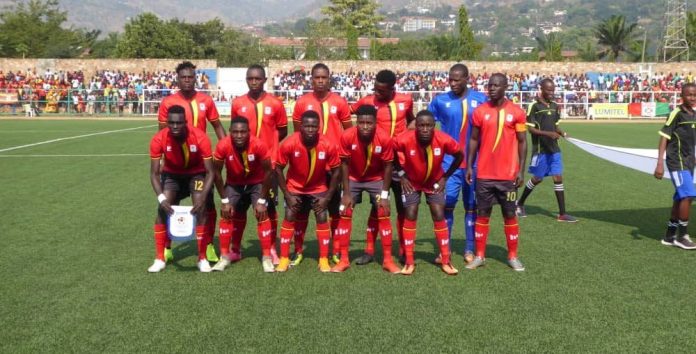
Cranes team

Uganda Cranes starting XI to face Burundi in the return leg of the Total CHAN 2020 Qualifier has been confirmed.

Yusuf Ssozi is the only change from the team that won 3-0 away during the first leg.

Ssozi replaces injured KCCA FC midfielder Muzamiru Mutyaba in the starting XI. The rest of the team that played in Bujumbura is maintained

Uganda Cranes will seal a fifth consecutive slot to the tournament if they hold onto that convincing lead from the first round.

The match will be broadcast live on FUFA TV,  102.1 FUFA f.m with timely updates on all the official FUFA Social media platforms.

The team against Burundi:

Charles Lukwago (GK), Willa Paul, Mustapha Kizza, Halid Lwaliwa (Capitain), John Revita, Yusuf Ssozi, Nicholas Kasozi, Allan Okello, Fahad Bayo, Mike Mutyaba, Shafiq Kagimu

Substitutes:

James Alitho, Vianney Sekajjugo, Musitafa Mujuzi, Daniel Serunkuma, Allan Kayiwa, Saidi Kyeyune, Bright Anukani

Stories Continues after ad

Trafficked Ugandan woman fighting for her life in UAE

Copy of National ID for Angellah Nassali

A Ugandan lady, Angellah Nassali, is in danger after she suffered kidney damage in the United Arab Emirates (UAE) under circumstances unknown, according to her friends and relatives who she likely to die there even not brought back home as soon as possible.

We need help on retrieving our girl (Nassali Angellah) who is fighting for her life (Kidney damage) from Ajman, UAE,” says Denis Wantente, a relative.

Ms Nassali legs swollen as result of kidney damage

Ms Nassali is said to have been trafficked by a one Derrick Yowabu here in Uganda who claimed to have a company which recruits maids to Dubai which Wantete says was false/fraud and deception. He says Yowabu ‘was just a middle man (Agent) who recruits girls in a deceptive way that he knows where they are going but only to reach there, they are taken to an office for sale.’

Her arms are sick as well

Wantante says Yowabu trafficks Ugandan girls to a certain lady in Ajman called Shamse (Real names: Tsehay Baycheken Walelign an Ethiopian national) located at SBK Apartments, 2nd Floor – Room 209, opposite central post office – car parking, P. O. Box 2993. “

Shamsa (Real names, Tsehay Baycheken Walelign)

This lady (Shamsa, Tel: +9705524865862 / +970552023778, their offices called Al Waseet Labours recruitment located near a supermarket opposite Al Madina Police Station) together with her husband completely refused to let Angellah go plus many other girls. For over four months now, Angellah has been abducted and locked since 14th of July 2019 by this lady Shamsa and her visit visa expired, they eat one meal a day (water and bread) up to now the girl plus others are still locked up,” he says.

ID of alleged human trafficker Mazen Awad Taha Abuzaid

This woman Shamsa has always asked for money and the police nearby or opposite is corrupt… because many girls have been rushing for help but they end up not being helped, Wantante says.


Hashtags:#SaveAngellah #SaveOurGirls #LetsStopHumanTraficking #SaveOurMothers #UgandaProtectOurSistersRights

This report comes at the time when men Ugandan girls continue to suffer and die in the Middle East as where they were taken as domestic workers.

Mukono Municipality MP Betty Nambooze recently said she has evidence showing some Ugandan girls and boys in the Middle East have had some of their body organs like kidneys removed without their consent, with some dying in the process.

On June 26, 2019, the Ministry of  Gender, Labour  and Social Development together with the Ministry of Human Resources and Emiratization in the United Arab Emirates (UAE), signed the Memorandum of Understanding in the field of Manpower and Domestic Worker Protocol in Kampala where it announced the UAE needs 80 workers from Uagnda.

“The signed MoU between the Government of Uganda and UAE offers protection to our Ugandan migrants in a number of ways, especially through: Strengthening cooperation by providing a legal framework for the employment of Manpower from Uganda in the UAE;Establishing a mechanism to discuss and exchange views on labour related problems and to resolve any outstanding issues relating to workers and their rights; Creating mutual understanding between the Governments of the two countries to protect all workers, with special consideration to the specific vulnerabilities of female migrant workers,” Hajat Janat Mukwaya, the Gender minister said then.

Stories Continues after ad

UDB’s Communication and Stakeholder Engagement Strategy

Goretti Masadde, a Marketing and Communication Consultant addressed UDB Staff on the importance of Corporate Communication.

Uganda Development Bank (UDB) launched a mid-term Communication and Stakeholder Engagement strategy. The event was held at the UDB Offices at Rwenzori Towers.

 The goal of the strategy, which will run from 2019 to 2022, is to strengthen public and stakeholder understanding of and participation in UDB’s mission of accelerating socio-economic development through sustainable financial interventions.

Participants at the workshop

Provia Nangobi, the Acting Head of Public Relations and Corporate Affairs at Uganda Registration Services Bureau (URSB) shared the registration services agency’s success story and showcased the significant impact effective Communication can have on an institution’s reputation.

UDB’s Managing Director, Patricia Ojangole pledged commitment on behalf of the Board of Directors, to prioritize Corporate Communication given its critical importance to business success.

Stories Continues after ad

What next for local subcontractors after collapse of farm-down talks between gov’t and oil companies?

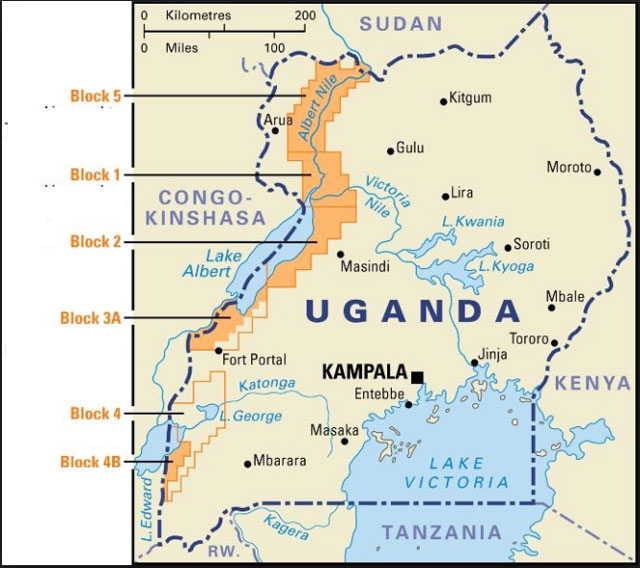
On August 29, 2019, Tullow announced that its attempt to sell to Total and CNOOC, 22 percent of its stake in the Uganda’s oil wells, had been terminated. It appears now the termination of the transaction due to the elapse of the set timeline, indefinitely suspended the next phase in Uganda’s oil journey: production and exportation.

Meanwhile, anticipating that US$20 billion was going to be invested in oil production soon, nearly 1000 Ugandan business had registered in the National Oil Suppliers Database (NSD), getting ready to get some of that business. Now, many of these would be subcontractors, have started counting losses and are castigating government, for allegedly failing the deal.

A month after Tullow’s sale was terminated; the African Centre for Media Excellence interviewed 104 executives of Ugandan companies in the suppliers’ database. One third were pessimistic about the sector (ranked their confidence in the sector at less than 2 on a scale of 0-4), while another quarter of them were split between optimism and pessimism (ranked their confidence in the sector at 2/4).

An executive at E360 Group, a civil engineering firm with interest in mining and quarrying, said the company has already invested Shs110.4 billion in preparations but so far earned only Shs1 billion as revenue from the sector. There are fears that the current uncertainty in farm down talks could create losses and a slow down. “Big companies are not committing,” the executive said.

For John Magara, a partner in Globo Chemicals Uganda, the derailed farm down negotiations has left him in the state of confusion. He is not even sure his company will recover about Shs7.7 billion already sunk in preparatory activities for oil and gas sector.

Meanwhile managers at  PROESS Limited, a manpower training company say are concerned of the likelihood OF the Final Investment Decision (FID) for the construction of the oil pipeline taking too long, the joint partners-CNOOC and Total, having pulled out. “FID should be signed very fast,” they argue, blaming government for the collapsed farm down tax talks.

FID is the Final Investment Decision that the oil companies (Tullow Oil, CNOOC and Total E&P) will make, once they are sure they have the money and favourable terms needed to construct a US$3.5 billion oil pipeline from Hoima to Tanga in Tanzania, and to drill for the oil. Tullow doesn’t have the money it needs to fund its part of this next phase. In the transaction which fell through, the Irish company was trying to sell some its shares in oil wells for US$900 million to Total and CNOOC. It expected to get US$200 million cash and the remaining US$700 million would be reinvested by Total and CNOOC in the development phase. However, they don’t seem to agree with the Uganda Revenue Authority on how much to pay in taxes for this transaction and whether or not they can claim that money back, when oil production starts, since much of the money is going to be re-invested.

Government is determined to get as much taxes on this transaction as possible. It would replenish the Petroleum Fund (PF), from which government has already used more than 60 percent (Shs325b) of the money put into it since March 2015 when it was established. Most of this money has been spent on building oil well roads but some of it on funding the general national budget.

The current situation means the local sub-contractors will have to wait much longer as the major players iron out their differences. Some experts say it will now take a longer period for Uganda to produce its first oil, even though the target is 2022-23.

Officials at Tullow when contacted said they are in the process to restart tax negotiations with government. “Tullow has now initiated a new sales process to reduce its 33.33% Operated stake in the Lake Albert project,” they said even though officials in the Ministry of Energy and Mineral Development were coy about direct answers.

The company adds that technical work on the development and the upstream pipeline is well advanced and that the Joint Venture Partners had been targeting reaching FID by the end of 2019, “but following the termination of the farm-down agreement with Total and CNOOC, a further delay is likely.”
Denis Kakembo, a partner in Cristal Advocates who has been involved in tax negotiations between government and oil companies, says taxation is contentious, adding risk is very high in the oil and gas industry.

Kakembo blames government for not providing an enabling tax regime to oil companies that have already sunk in millions of dollars in capital investments. “The current tax regime is anti-farm outs,” he says, urging government to accept the money that the oil companies are offering as appropriate tax.

Uganda Revenue Authority issued Tullow with an assessment of US$167.8 million in Capital Gains Tax arising from the sale of Tullow’s interests to Total and CNOOC in EA1, EA1A, EA2 and EA3A.

Meanwhile International Monetary Fund (IMF) officials, who were in the country days ago, opined that a delay in oil sector investments, could weigh on economic growth, which is currently trending at 6 percent.

Axel Schimmelpfennig who led the IMF team said:  “Growth could remain at around 6 percent in 2019/20, if oil investments are not significantly delayed.”

The Minister of Energy Eng. Irene Muloni says plans are underway to invite Tullow, Total and CNOOC for a meeting, “so that Government gets to know the exact reasons why they are taking such decisions. Once Government is informed of the reasons of suspension, then it will engage them with an ultimate goal of having oil and gas production soon in the country.”

Eng. Muloni agrees that the expiry on August 29, 2019 of the SPAs and the announcement of commencement of suspension of various activities that were being undertaken by the international oil companies’ contractors and sub-contractors, have created anxiety among many stakeholders including the media, civil society organisations, business community and the general public.

“Government is fully aware that, the above developments affect the taking of the Final lnvestment Decision (FID) which were expected late this year and/or next year. The FID would give way to the Engineering Procurement and Construction (EPC) phase of the projects that would be characterised by the award of contracts to providers of the required goods and services for construction of the facilities. Failure to take FID affects our obligations with the developers of the Refinery who cannot proceed with the development without certainty of crude oil availability,” the minister says.

Once the Final Investment Decision is made, there will contracts and sub-contracts in relation to: the East African Crude Oil Pipeline (EACOP) that is supposed to transport crude oil from the export hub (delivery point) in Hoima in Uganda to the port of Tanga in United Republic of Tanzania); The Tilenga Project, which includes the Central Processing Facilities, the drilling pads, flowlines located in Buliisa and Nwoya Districts and The Kingfisher Development Area (KFDA) which will include the Central Processing Facilities, the drilling pads, flowlines in Kikuube and Hoima districts.

Stories Continues after ad

Failure to find a sexual partner is a disability, says World Health Organisation

PEOPLE who don’t have sex or struggle to find a sexual partner to have children with will now be considered as DISABLED, according to barmy new guidelines set to be announced.

Until now, infertility – the failure to achieve pregnancy after 12 months or more of regular unprotected sex – was not considered a disability.

But now in dramatic move the World Health Organisation will change the standard to suggest that a person who is unable to find a suitable sexual partner or is lacking a sexual relationship to have children – will now be equally classified as disabled.

WHO says the change will give every individual “the right to reproduce”.

Under the new rules, heterosexual single men and women and gay men and women who want to have children will now be given the same priority as a couple seeking IVF because of medical fertility problems.

But critics branded the new laws as “absurd nonsense” arguing that the organisation has overstepped the mark by moving into social matters rather than health.

Gareth Johnson MP, former chair of the All Parliamentary Group on Infertility, whose own children were born thanks to fertility treatment, said: “I’m in general a supporter of IVF. But I’ve never regarded infertility as a disability or a disease but rather a medical matter.

“I’m the first to say you should have more availability of IVF to infertile couples but we need to ensure this whole subject retains credibility.

“This definition runs the risk of undermining the work Nice and others have done to ensure IVF treatment is made available for infertile couples when you get definitions off the mark like this. I think it’s trying to put IVF into a box that it doesn’t fit into frankly.”

Josephine Quintavalle,from Comment on Reproductive Ethics added: “This absurd nonsense is not simply re-defining infertility but completely side-lining the biological process and significance of natural intercourse between a man and a woman.

“How long before babies are created and grown on request completely in the lab?”

But Dr David Adamson, an author of the new standards, argued it is a “big chance” for single and gay people.

He said: “The definition of infertility is now written in such a way that it includes the rights of all individuals to have a family, and that includes single men, single women, gay men, gay women.

“It puts a stake in the ground and says an individual’s got a right to reproduce whether or not they have a partner. It’s a big change.

“It fundamentally alters who should be included in this group and who should have access to healthcare. It sets an international legal standard. Countries are bound by it.”

A spokesman for the Department of Health said the NHS was under no obligation to follow World Health Organisation’s final advice.

Under the Equality Act 2010 a person is disabled if they have a physical or mental impairment that has a ‘substantial’ and ‘long-term’ negative effect on their ability to do normal daily activities.

But Libby Purves, presenter of Radio 4’s Midweek, was scathing about the new recommendation.

She said: “When a flaky new human right is suddenly tossed out by a serious UN agency it is not just silly but dangerous.

“The World Health Organisation, which has plenty else on its plate, has long defined infertility as a disability.

“It is sad but not disabled compared to someone who is blind, deaf, mentally impaired, or seriously crippled.”

Stories Continues after ad

Buhweju artisanal miners demand licenses from government as scramble for minerals hits up

Artisanal miners from Buhweju district in western Uganda are seeking licenses to explore gold, following their eviction from the fields by the Mineral Protection Unit.

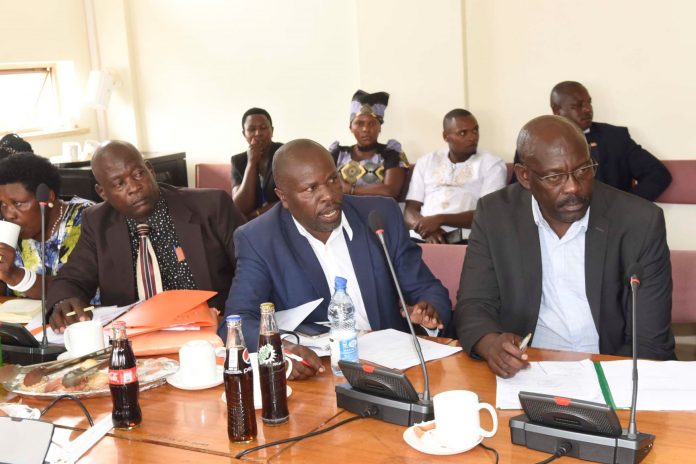
In their petition to Parliament’s Committee on Natural Resources on Friday, the miners under their umbrella body, Uganda Association of Artisanal Small-Scale Miners argued that mining is the biggest source of livelihood in Buhweju.

The Chairperson of the Association, John Bosco Bukya told the committee members that the artisanal miners are ready to start legal operations because they are organised and have been mining gold since 1918.

“Despite the fact that government has delayed to review the Mining Act, the current policy should be used to see these people licensed and doing business legally,” he said.

He also urged government to halt further alleged evictions of artisanal miners, saying that they have received information that there are planned evictions in Karamoja and Busia.

“Instead of harassing these small miners, let government assist them to get organised. As a national Association, we have tried to organise the small miners but it’s government’s role to do that,” he said.

The spokesperson of the Buhweju Artisanal Miners Association, DeusdeditBainomugisha, recounted the events leading to the evictions, saying that the miners were given only two hours to vacate their mines.

“These people have been threatening us that they were going to evict us, and true to their word, they carried out their threat. They found miners on the fields and ordered them to leave, giving them no room to take some of their properties,” he said.

Bainomugisha accused the commandant of the Mineral Protection Unit, JesicaKegomba, of intimidating miners after they petitioned President Museveni.

“She addressed people in one of the meetings and told them that she is answerable to the Inspector General of Police and the President. I can do whatever I want. I have the money and I can do anything I want. With all these events, we are worried,” he said.

Bainomugisha added that the Mineral Protection Unit is instead protecting and giving a Chinese mining company, Hebei,access to the mining fields.

The Buhweju MP Francis Mwijukye, who was the lead petitioner called for the expeditious revision of the mining Act to legalize activities of artisanal miners.

“Government should recognise that artisanal mining is not a crime but a source of livelihood. Artisanal miners are not recognised and yet they exist,” he said.

Mwijukye also asked government to investigate the Mineral Protection Unit, saying that the officers violated the rights of miners in the process of evicting them.

“The miners were forced out of their homes and gardens since the mines are within their homesteads. Since then, some children cannot attend school and the locals cannot access their gardens,” said Mwijukye.

He added that despite evicting the locals and denying them access to their source of livelihood, the officers are engaging in extortion of money from the miners.

“They are asking for money from miners who seek to access their fields. The miners are forced to pay between Shs500, 000 to Shs3 million,” he said.

The Chairperson of the Natural Resources Committee, Keefa Kiwanuka, assured the miners that the issue will be handled objectively and expeditiously.

“We shall visit Buhweju and speak to the locals on the ground and come up with an informed report,” he said.

The Committee on Natural Resources is investigating the alleged eviction of over 250 artisanal miners from Buhweju district in August 2019.

Stories Continues after ad

UPDF officer undergo conducts fitness exercises

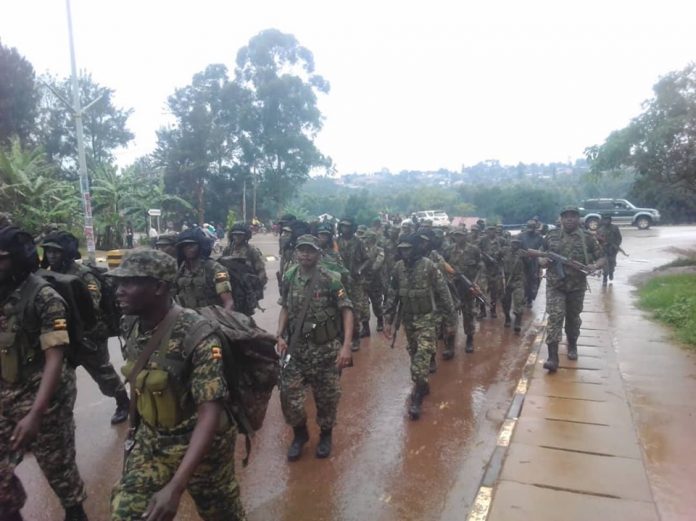
The Uganda Peoples’ Defence Forces’ (UPDF) whose major responsibility is to defend the country’s territory, had its officers of the Armoured Brigade (A/Bde) complete a two-day basic and combat fitness tests carried out in Masaka town.

The officers went through a 3 Kilometre run, push-ups and sit-ups as part of basic fitness test. The combat fitness test included a 20 Kilometre route-march while carrying and wearing all the basics of an infantry soldier in the field.

The exercise was supervised by the commander of A/Bde, Brig Gen Joseph Ssemwanga. He said the exercise was a followed that which the Commander Land Forces, Lt Gen Peter Elwelu, launched on November 2, 2019, attracting senior commanders and directors under UPDF under that section.

“This is part of the wider national exercise meant to not only improve on soldiers’ fitness and health but also asses their combat readiness,” said Brig. Ssemwanga.

The exercise coordinator who is also the Brigade’s Operations and Training Officer, Col Kantinti said all the participants satisfactorily passed the tests and exhibited high morale typical of the UPDF.

UPDF in 2015 came up with a number of measures to improve the health and fitness of its officers and militants. Fitness tests and having running files for routine medical examination are some of the measures meant to keep the troops mentally, physically and medically fit to execute their military roles.

Stories Continues after ad

Sub-Saharan Africa growth to remain at 3.2 percent in 2019-IMF

Growth in sub-Saharan Africa is projected to remain at 3.2 percent in 2019 and rise to 3.6 percent in 2020. The expected recovery, however, is at a slower pace than previously envisaged for about two-thirds of the countries in the region, partly due to a challenging external environment, according to the IMF’s October 2019 regional economic outlook.

Growth is projected to remain strong in non-resource-intensive countries, averaging about 6 percent. As a result, 24 countries, home to about 500 million people, will see their per capita income rise faster than the rest of the world. In contrast, growth is expected to move in slow gear in resource-intensive countries (2½ percent). Hence, 21 countries are projected to have per capita growth lower than the world average. Reducing risks and promoting sustained and inclusive growth across all countries in the region requires carefully calibrating the near-term policy mix, building resilience, and raising medium-term growth.

Navigating Uncertainty

Growth is forecast to be slower than previously envisaged for about two-thirds of the countries in the region. The downward revision reflects a more challenging external environment, continued output disruptions in oil-exporting countries, and weaker-than-anticipated growth in South Africa.

Growth prospects vary considerably across countries in the region in 2019 and beyond. Growth is projected to remain strong in non-resource intensive countries, averaging about 6 percent. As a result, 24 countries, home to about 500 million people, will see their per capita income rise faster than the rest of the world. In contrast, growth is expected to move in slow gear in resource-intensive countries (2½ percent). Hence, 21 countries are projected to have per capita growth lower than the world average.

Competition, Competitiveness, and Growth in Sub-Saharan Africa

Although there is considerable heterogeneity across countries, more than 70 percent of the countries in the region are in the bottom half of countries globally in terms of market competition indicators. Firm markups are about 11 percent higher in sub-Saharan African countries relative to other emerging market economies and developing countries and are more persistent. State-owned firms are also more prevalent. Empirical analysis suggests that increased competition can boost real per capita GDP growth rate by about 1 percentage point through improved export competitiveness, productivity growth, and investment.

Domestic Arrears in Sub-Saharan Africa: Causes, Symptoms, and Cures

Based on a database of domestic arrears in sub-Saharan African countries, the report  finds that domestic arrears have been pervasive in many countries, reflecting weak public financial management. Furthermore, arrears have increased in recent years (to about 3.3 percent of GDP in 2018), following the 2014 commodity price shock. However, despite the prevalence of arrears, their causes, effects, and consequences are not well understood. The report finds that domestic arrears negatively impact private sector activity and the delivery of social services while increasing banking sector vulnerabilities and undermining citizens’ trust in the government.

 Arrears also weaken the ability of fiscal policy to support growth, casting doubt on the merit of relying on arrears financing to avoid spending cuts. The chapter then discusses approaches to clear arrears (verification, prioritization, liquidation) and to prevent their accumulation, including through public financial management reforms, building buffers, and timely external supports.

Stories Continues after ad
Gov’t finally accept to engage pastors in formulation of policy to guide religious activities 

Fr Simon Lokodo


The minister of Ethics and Integrity, Fr. Simon Lokodo has bowed to pressure and called on religious organisations to participate in the formulation of the National Policy on Religious and Faith-Based Organisations (R&FBOs) in Uganda.

In 2016 government embarked on formulating the policy to guide the religious leaders following public outcries as some pastors fleeced their followers of money as well as engaging in acts seen to be against the Christian faith.

The policy was in the advanced stages of formulation and cabinet was ready to discuss it to pave the way for the enactment of the law, when pastors came out to denounce it due to lack of their input.

One of the proposals in the policy is that religious leaders must acquire formal theological training from a recognized institution before establishing a church.

The policy has been  however criticized by various pastors alleging that it came from a malicious source and thoughts intended to crash the Church.

In a prayer conference organised by the pastors last month, led by the founder and Senior Pastor of Rubaga Miracle Centre, Robert Kayanja, the Pentecostal preachers reechoed their voice, calling for their participation in the drafting of the policy. President Yoweri Museveni also attended a meeting organised by the pastors where he promised to address their concerns on the policy.

Speaking in Kampala earlier today, Father Lokodo said a highly consultative and analytical approach was adapted in the development of this policy. “Countrywide and regional consultative meetings involving key stakeholders who practice faith and religion in this country were conducted.”

Key stakeholder groups such as the Inter-Religious Council of Uganda, Born Again Faith, National Fellowship of Born Again & Pentecostal churches, Evangelical fellowship of Uganda, Miracle Centre churches, Full Gospel Churches of Uganda; Anglican Church, Catholic Church, Muslim faith, Seventh Day Adventist, Orthodox church and other independent faith groups.

“Whereas Article 29(1) (c) of the Constitution gives Ugandans freedom to practice any religion which includes right to belong &participate in the practice of any religious body or organization, government has never put in place a regulatory framework,” he said.

“As a result, members of the public are facing a lot of challenges from some faith/religious organisations. These challenges include; manipulation, exploitation of followers, loss of property, promotion of witchcraft instability in society,” he said.

He said the state has no mechanism of vetting, monitoring and identifying the unethical faith practitioners in order to protect citizens from the harmful effects of these unethical religious practices.

Stories Continues after ad

Controversy as Dfcu Bank demands Shs47b from BoU as tax evasion is sighted in transaction

dfcu bank


The Bank of Uganda in the latest report confirmed that Dfcu Bank is in preparations to leave 48 Meera Investment Limited properties some of which were being used by the defunct Crane Bank Limited (CBL) branches before it was taken over by its rival.

However, it has now emerged that Dfcu Bank wants BoU to pay them Shs47 billion as a result of the decision to exit properties and they are basing that claim on the Purchase of Assets and Assumption of Liabilities Agreement signed between the bank and BoU on January 25, 2017.

The valuation of Meera investment properties was Shs47 billion as dfcu Bank took over CBL. Yet Dfcu Bank paid BoU only Shs10 billion for the properties and has used them for almost now three years without paying rent, leading Meera Investments Limited to sue them.

The latest scenario now shows Dfcu Bank underdeclared the value of the properties as they did the valuing which BoU based on to accept Shs10 billion. Dfcu Bank should have paid more in stamp duty based on the value of the properties, which amounts to tax evasion and criminality.

Dfcu bank is demanding for the money after realising BoU is unlikely to recover the money as sighted in the agreement.

“Following court’s dismissal of HCCS No.493 of 2017 on 26th August 2019, it is unclear how long it will take BoU to recover the reversion from MIL. This state of affairs creates uncertainty for the Bank which is prejudicial to its business interests. In line with its strategic interest and risk management framework, the Board has resolved that it is in the best interest of the Bank to exercise its option to rescind the purchase of the MIL properties,” DFCU Bank in a letter dated September 12, 2019 and signed by CEO Mathias Katamba and others says.

However, the demand by Dfcu Bank per the agreement with BoU means taxpayers will incur loss of Shs37 billion.

“Following the Court’s ruling … Dfcu Bank Limited in a letter dated September 12, 2019 communicated to BOU its decision to exercise its option to rescind its interest in purchasing the 48 properties pursuant to clause 8.7 of the Agreement,” BoU says in its latest annual report, even though BoU failed to announce in the report that Dfcu Bank demands them those billions.

The BoU says that as part of the rescinding of this purchase, dfcu will return to Bank of Uganda Certificates of title for Meera Investments Limited ‘and requires Bank of Uganda to pay dfcu the new  book value of properties recorded in the assets and inventory compilation as October 20, 2016.’

Under the agreement, BoU as the receiver of CBL undertook to recover the reversionary interest relating to 48 leasehold properties acquired by DFCU Bank. The money was to be recovered in 24 months from the date of the agreement but BoU failed.

Former Dfcu Managing Director, Juma Kisaame who was in charge of the transactions.

Dfcu Bank says that after BoU realised that it could not recover the money within the 24 months as stated in the agreement, it asked for an extension of the contract timelines under certain conditions, even though DFCU says they have not reached an agreement with BoU over the same especially when BoU/Crane Bank in receivership lost a case against Sudhir and Meera Investments Limited.

On August 26, 2019, Court ruled on Miscellaneous Application No.320 of 2019 in favor of Sudhir Ruparelia and Meera Investments Limited dismissing Suit No.493 of 2017 where Crane Bank (receivership) had sued Sudhir Ruparelia and Meera Investments Limited to recover Shs397 billion allegedly swindled. Sudhir and Meera investments Limited (MIL) has argued that Crane Bank in Receivership had no right to sue them.

Court ruled that costs of the application be paid by the Bank of Uganda on the basis that Crane Bank (in receivership) is non-existent and does not have locus standi to put forth any claim against Sudhir and Meera Investments Limited.

A recent leaked document showed Dfcu Bank calling for bids from companies that want to provide consultancy services at it seeks to relocate its branches to new areas in various districts and towns across Uganda.

In August this year it emerged that the bank was misled by city Law firm Sebalu & Lule Advocates to illegally transfer title properties into its name yet the properties belong to Meera Investments Ltd even though it had leased them to Crane Bank Limited.


Stories Continues after ad