Stanbic Bank
Stanbic Bank
17.4 C
Kampala
Stanbic Bank
Stanbic Bank
Home Blog Page 1168

Private sector credit stock jumps 0.9 percent in August as trade sector absorbs most bank loans

Stanbic bank

The outstanding stock of private sector credit (PSC) in Uganda increased by 0.9 percent in August 2019 to Shs15,357.38 billion, up from Shs15,226.26 billion recorded in the previous month, according to the Finance ministry’s Performance of the Economy Report for September 2019.

The ministry in its report attributes the growth in PSC stock to the supportive monetary policy coupled with high levels of economic activity. The Bank of Uganda has set its bank rate at 9 percent for October, from 10 percent in August.

The report says loans extended to the private sector amounted to Shs 1,150.89 billion in August, with 19 percent of the approved loans going to the trade sector which accounted for the biggest share in the month.

According to the report, agriculture was one of the sectors that registered the biggest improvement in terms of shares as it accounted for 17 percent of approved loans in August 2019, up from 9 percent registered for the month before. Other sectors to receive notable shares in August include; transport and & communications, electricity and water services (17 percent), and personal and household loans (15 percent).

Gov’t expenditure attracts Shs692 billion deficits

Government operations during the September resulted into a Shs 692 billion deficit which was higher than the programmed Shs 623 billion. The ministry attributes the deficit to shortfalls in revenues and grants which were offset by the underperformance in expenditure and net lending.

“Domestic revenues during the month totalled to Shs 1,381 billion which is an 89% performance against the programme of Shs 1,560 billion since both tax and non-tax revenues registered shortfalls. All major tax categories registered short falls as direct, indirect and international taxes were below their targets by Shs 27 billion, Shs 52 billion and 66 billion respectively,” the report says.

According to the report, the poor performance in international taxes was largely due to lower imports than had been projected for the month. “Non-Tax Revenue (NTR) during the month amounted to Shs 81.68 billion registering a Shs 37 billion shortfall.”

It says expenditure and net lending in September amounted to Shs 2,143 billion which was Shs 213 billion below the program, as recurrent expenditures were above projection by Shs 52 billion as both wages and salaries and other recurrent expenditures performed above their set targets.

However the report says there was lower expenditure in both Development expenditure (Shs 82 billion) and net lending (Shs 183 billion) as both externally financed and domestically financed development projects performed below the projection for the month.

Uganda’s trade balance with the EAC

According to the report, during the month of August 2019, Uganda traded at a surplus with all EAC Partner States save for Tanzania and Kenya. Within the region, Kenya was the main destination of Uganda’s exports, followed by South Sudan.

Over the same period, Tanzania was the largest source of imports. Overall, Uganda traded at a deficit with all EAC Partner States combined, although a trade deficit of US$ 22.7 million was recorded in August 2019 compared to a surplus of US$ 61.09 million recorded a year ago.

Uganda’s exports to EAC declined by 28.2 percent to US$ 88.64 million in August 2019 from US$ 123.47 million recorded a year ago. On the contrary the import bill increased by 78.5 percent from US$ 62.38 million in August 2018 to US$ 111.33 million in August 2019.

Merchandise trade deficit narrows to US$181 million

Uganda`s merchandise trade deficit narrowed both on an annual and monthly basis following growth in export revenues and a reduction in the import bill, the report says. On a monthly basis, Uganda`s merchandise trade deficit narrowed by 16.8 percent (US$ 36.6 million) to US$ 181.43 million in August from US$ 218 million in July 2019. “Compared to August 2018, the merchandise trade deficit narrowed by 33.2% (US$ 36.57 million) from US$ 271.43 million to US$ 181.43 million in August 2019,” the report adds.

The value of merchandise exports increased both on an annual and monthly basis. Export earnings grew by 1% from US$ 318.43 million registered in July 2019 to US$ 321.67 million in August 2019. The report tags the increase to increased earnings from commodities of maize, coffee, fish and sim sim.

“Increased earnings from maize and sim sim follows an increase in the prices, whereas, the growth in earnings from fish and coffee are explained by increases in their respective volumes. Compared to the same month last year, export receipts increased by 9.4% from US$ 293.93 million to US$ 321.67 million in August 2019,” the report says.

Destination of Uganda’s exports

The report says the Middle East was Uganda’s main destination for merchandise exports in the month of August 2019, followed by EAC, then the Rest of Africa. In comparison with the preceding month, exports to EAC and the Rest of Africa increased whereas exports to other regions declined. Within the EAC, Kenya was the main destination of Uganda`s exports, whereas, United Arab Emirates was the top destination in the Middle East.

Uganda’s merchandise imports

The value of merchandise imports declined both on a monthly and annual basis. The import bill reduced by 6.2 percent to US$536.42 million in August 2019 from US$503.1 million in July, primarily driven by a decline in private sector imports (both oil and non-oil imports).

Oil private sector imports declined by 11.8 percent whereas non-oil private sector imports decreased by 6.6 percent. Compared to August 2018, the import bill decreased by 11 percent from US$ 565.36 million to US$549.85 million in August 2019. Both Government and private sector imports declined.

Origin of Uganda’s imports

Asia, EAC and Middle East were the largest sources of imports, contributing 42.5 percent, 22.1 percent and 12.8 percent respectively during the month of August 2019. Of the total Imports from Asia, 86.7 percent were from China, India, Indonesia and Japan. Kenya and Tanzania contributed 95.6 percent of the total imports from EAC region.

Trade balance by region

The country traded at a surplus with the Middle East, European Union, and Rest of Africa, whereas Uganda posted merchandise trade deficits with the regions of Asia, Rest of Europe and EAC. Uganda had the biggest surplus with the Middle East (US$ 25.09 million) and the largest deficit with Asia (US$ 194.78 million). In the month of August 2019, Uganda traded at a deficit of US$ 22.7 million with the EAC an improvement from a deficit of US$ 51.94 million reported the earlier month.


Stories Continues after ad

Six new organisational lessons from Amazon and Alibaba

Martin Zwilling


By Martin Zwilling


In my current role as a business consultant, I still find that most companies, large and small, organize themselves wholly based on what goes on inside the company, rather than looking outside – at their networks, their partners, and the niche they wish to dominate. The result is a hierarchy and a static group of silos that doesn’t adapt to market changes and competitors.

In fact, it is so tough to reinvent a legacy organization, that new businesses, such as Amazon, Apple, and Alibaba, are rapidly replacing former powerhouses, including Blockbuster, Sears, and Nokia. According to experts, as many as 50 percent of the existing S&P 500 companies will be pushed aside in the next 10 years, and the lifespan of traditional organizations is getting shorter.

Thus I was impressed with the dynamic new organizational approach outlined in a new book, “Reinventing the Organization,” by Arthur Yeung and Dave Ulrich. These authors are widely recognized, both in the U.S. and China, as thought leaders in this area, so their framework for reinventing your business organization, with some of my own insights, is definitely worth a look:

Environment: Fund a group to track market changes. Not many businesses today spend any real resources, or organizational focus, on understanding and anticipating the changing forces facing every industry and business. We all need a well-defined and systematic approach for keeping up with today’s fast changing market environment.

For example, not many of the big retail store chains, including Sears and Macys, had any tracking of how quickly online shopping was changing the environment, until Amazon and Alibaba became bigger than most brick and mortar retailers in their best years combined.

Strategy: Define an execution pathway for growth. All businesses I know will tell you they have a strategy for growth, but I often have a hard time finding any group or silo really incented and measured on growth targets. The challenge is a growth rate greater than the market and new competitors, and a process to implement growth at that rate.

While Amazon was growing at an average rate of twenty-five percent per year in each of the last five years, most of the big retailers found their business shrinking every year, and despite their best efforts, had no organizational ability or process to turn it around.

Capability: Focus on customer innovation and agility. A market-oriented organization doesn’t focus on internal budget allocations and power struggles between functions, but remains customer obsessed, external data driven, and measured on their rate of innovation and agility. They focus on anticipating customer needs before the crisis.

Individual unit leaders in this ecosystem are incented to meet regularly to share experiments, initiatives, insights, and lessons learned on the never-ending journey of capability enhancement. They share and celebrate successes, and analyze failures.

Morphology: Organize around teams and partners. It’s time to take a new look at your organizational structure. Deep hierarchies and large functional silos don’t highlight agility and constant innovation. Evidence today points to the effectiveness of short-term teams, strategic partners, and a flat organization supported by a common resource platform.

Amazon is organized into autonomous teams, each running a particular product or business and not a function like marketing, product or engineering. Amazon leaders are strong general managers, relying on external partners, rather than functional experts.

Culture: Shape priorities and behaviors to your values. Your culture is what you want to be known for by your key customers, and it must be imbedded throughout the organization. It shapes and sustains employee well-being and productivity, business results, customer reputation, and investor confidence.

Accountability: Inspire and tie focus to business results. In traditional large organizations, people lose sight of the big picture, and want to be accountable only for the internal results of their silo. Your challenge is to keep them connected and positively accountable to external results through all communications, standards, and incentives.

In all cases, organizations today have to learn to mine unstructured data for what could be, instead of structured data on what has been, and how to pivot the organization fluidly to transform the company as fast as the market changes. Reinventing your existing organization may be hard, but it’s not as painful as the long downhill journey to obscurity now being experienced by many.

The writer is a veteran startup mentor, executive, blogger, author, tech professional, professor, and investor. Published on Forbes, Entrepreneur, Inc, Huffington Post, etc.

Stories Continues after ad

2019 FUFA Drum quarterfinals draw conducted

The quarterfinal stage draw for the second edition of the FUFA Drum tournament were on Monday held at the FUFA house in Mengo, Kampala.

The remaining eight provinces have been pooled into two groups; one based in Gulu and the other in Lira and the matches will kick off on 21st November 2019.

The teams in the quarterfinals are; Cup holders Buganda, runners Up West Nile, Lango, Acholi, Busoga, Bukedi, Bugisu and Tooro.

Buganda is joined by Acholi, Bukedi and Tooro to complete group A while West Nile on the other hand, have been pitted against Lango, Busoga and Bugisu.

Acting FUFA President, Justus Mugisha indicated that the FUFA Drum has produced several success stories in just two years such as taking the game of football to every part of the country and bringing together Ugandans.

“We appreciate the reception that the people have given to the FUFA Drum. We have a good story to tell in the last two years because the tournament has given people a sense of belonging. The cultural leaders have embraced it and rallied their subjects to support the teams,” said Mugisha.

Gulu and Lira were chosen to host the quarterfinals because the residents in the two districts show passion for the football game, both still have teams competing and turn up in big numbers to watch these games.

The two leaders in each group at the end of the first round will seal a spot in the semi-finals of the 2019 FUFA Drum.

The final is expected to be played on Saturday, 30th November with the winner getting a cash prize of 30 million Ugandan shillings.

Buganda Province won the first edition having defeated West Nile in Arua last year.

Group A (Gulu): Buganda, Acholi, Tooro, Busoga

Group B (Lira): West Nile, Lango, Bukedi, Bugisu

Stories Continues after ad

Removing the padlock on children’s minds

Mr. Ibrahim


By Ibrahim Bashir


Over the last few years working as a teacher I have undergone an amazing transformation in the way I teach. The changes have been in the things I do when I am in the classroom, the ways that I motivate the children and instruct them.

Before, I spent a lot of time expecting the children to just work from their textbook, reading and answering questions. I stood at the front of the class or sometimes just did marking in the corner. But now, after more training, I have a lot of interaction in the classroom, more discussion, more questions from them and from me as we go along. Lots of time for feedback. I believe you must be ready to try new things as a teacher, in what you do and how you do it.

When I joined this school, the first thing I did was to go on a residential training course, to spend time thinking and learning about the best ways to teach. Not what to teach but how to teach. Many teachers were there, those who had been teaching for many years and for just a few. We were looking at the different ways children learn and how a good teacher can make a classroom a more powerful place to learn. It was all so new and interesting to me.

I see the change in my pupils and know for sure I am a better teacher now because of the new approaches and techniques I have learnt. I can see it in the way the children respond to me.

One of the most effective teaching techniques I have learnt through the training sessions provided is known as ‘STRIVE’. This is an acronym where each letter stands for something that will help pupils learn. ‘S’ requires pupils to sit down and be attentive, so they can absorb all of the information in the lesson. ‘T’ requires pupils to track teachers with their eyes, preventing them from losing concentration and vital information. ‘R’ requires pupils to respond whenever they are asked a question, so that the teacher can acknowledge whether the pupil has understood what is being taught. ‘I’ requires pupils to inquire whenever they have any queries or may have a question about the content. ‘V’ requires pupils to visualise success so that they can visibly see the improvements in their work. Finally, ‘E’ requires pupils’ ears to be listening at all times, as this is the pathway to the brain.

Video Classroom behaviour has really changed:

I believe that all of my pupils are better able to learn their lessons due to the teaching philosophy I was taught in my training. It sounds so simple: narrating the positive, giving children time to think before choosing someone to answer, watching the whole room. But before I didn’t know all this and now I do. Through the training, I felt as though I was a student all over again.

Every couple of weeks the Academy Manager will come and watch me teach. She has much more teaching experience than me. She watches how I do the lesson, and then after that she talks to me about how I could do better. I also have a leadership and development coach who comes to the school and do the same thing. It gives me fresh perspective. This simple thing – ongoing feedback – has made me grow, over the years, to be the best I have ever been. Teaching is a precious skill that needs focus – I feel that more and more now.

Some children here have parents who cannot read and write, so it is up to me to teach everything. I can do it, and it is wonderful to see. Many children can now help their parents on their stalls or to read some little information. It is a change, we can all see that the children are learning new things and that they are excited for school to start and for my lessons.

How you work in the classroom is not just how you teach the lessons but also how you manage the classroom to get the best out of the children. I do not beat the pupils. If you beat a child, you put a padlock on their minds. No, it’s important to have discipline in other ways that are much better for the child and the whole class. Now, I have a strong relationship with my pupils because they have no fear to try.

Overall, the training and support has boosted my confidence and ability as a teacher. I feel stronger; that people are appreciating my work and that it is making a difference. I wish for all teachers that they could have my experience; so they know how to succeed. Teaching is a skill and we have responsibility, we need to be able to teach the best way possible and we need to be supported and to be helped to do that.

As part of the UN World Teachers Day activities, teachers around the world are sharing their stories of success, despite working in challenging environments. Teacher Ibrahim shares this story of personal development in Uganda, as part of the campaign #TeachersTransformLives.


The writer is a teacher at Bridge School, Yesu Amala 


Stories Continues after ad

FDC ready to take over IPOD leadership

fdc

The main opposition party, Forum for Democratic Change (FDC), is to ready to officially take over the leadership of Inter Party Organisation for Dialogue (IPOD) after the expiry of Democratic Party’s (DP) six month tenure.

The FDC has taken over and await the official handover ceremony and handover reports from both DP party President Norbert Mao and party secretary Dr. Gerald Siranda. The DP took over IPOD on March 25, 2019.

According to the MOU, IPOD leadership rotates every after six months. The FDC therefore is currently both the chair of the IPOD Summit and IPOD Council. The Summit is composed of leaders of political parties and the Council is composed of the Secretary Generals and other four representatives. The Government and Opposition Whip are also members of the Council.

The FDC Secretary General Nandala Mafabi will in consultation with the IPOD Summit Chair Eng. Patrick Amuriat present proposals on the issues the FDC wants IPOD to consider in the next six months of our leadership

FDC has snubbed two IPOD meeting citing various reasons. On Dec 12, 2018 FDC snubbed IPOD meeting for among others, the closing of doors for JEEMA and conservative party (CP) yet they were among the founders and  in the May 2019 they declined to attend (IPOD) Summit that took place in Lira on grounds that the party is still under siege by various security agencies.

The party will aim at pushing for the ratification of decisions that were made Munyonyo where IPOD Council deliberated on the management of public rallies. They were supposed to be ratified by the Summit.

President Yoweri Museveni declined to sign on the agreed regulations before not fully constituted Summit. The president said he had given different instructions to his security chiefs and he needed to convene a meeting of the National Security Council to discuss the IPOD regulations.

To date, Museveni has not convened the National Security Council to reverse his draconian orders as a result, our rallies and meetings are still being interfered with.

The FDC considers access to the population a major issue in the political processes of our country. Removing the military and Police from our politics if achieved, will be the single most important thing IPOD has ever done. Negotiating an end to the life presidency will be another milestone. This is what the IPOD must strive to achieve.

Currently, IPOD houses for four parties which include; Democratic Party (DP), Forum for Democratic Change (FDC), Uganda People’s Congress (UPC) and National Resistance Movement (NRM).

IPOD is facilitated by the Netherlands Institute for Multiparty Democracy (NIMD) and was formed to initiate dialogue and exchange of ideas among political parties in the country with a view of improving electoral democracy.

Stories Continues after ad

Commonwealth finance ministers urge progress on taxing digital commerce to tackle debt

Commonwealth finance ministers have recognised the potential of technology to improve debt transparency while urging closer collaboration to resolve tax challenges arising from growing digital commerce.

Revenues from tax collection are important for maintaining debt at sustainable levels, yet can often be impaired by the digitalisation of trade in services, as this often results in countries being unable to determine when, how and where taxes on digital transactions should be collected.

Ministers have therefore agreed that the Commonwealth should bring its powerful collective voice to ongoing discussions at the Organisation for Economic Co-operation and Development (OECD), particularly on behalf of smaller states. International agreement on digital taxation could enable countries to benefit by taxing large tech giants, even if they do not operate within their jurisdictions.

These decisions were made by ministers gathered in Washington DC for the 2019 Commonwealth Finance Ministers Meeting under the theme ‘preventing debt crises: the role of creditors and debtors’.

Commonwealth Secretary-General Patricia Scotland said: “The Commonwealth has a distinctive contribution to make by bringing together nations with developed and developing economies to agree on collective approaches and action towards a fair and equitable global system for taxing multinational businesses in a swiftly digitalising economy

“We need a rule-based system that is inclusive, transparent and efficient so that all countries have a means of collecting revenue and are thereby able to avoid accumulating excessive debt. It goes hand in hand with accelerating the gains to be made by addressing climate change and making progress towards achieving the sustainable development goals.”

Ministers saw global trade and geopolitical tensions as having ‘intensified’, in a context where global debt has risen to an all-time high, estimated at $19 trillion. They stressed the need to make debt easier to manage for vulnerable countries, and for them to be eligible for periods of relief to stabilise growth during economic shocks.

As seen in the past, disasters can push countries into taking on emergency loans to rebuild and recover. Such debt can easily become unsustainable for most low and middle-income countries, making them vulnerable to debt distress.

The Minister of Finance of Cyprus, Harris Georgiades, who chaired the meeting, said: “Disruptive technologies are challenging the financial system by increasing competition and reshaping conventional business models, thereby fuelling the creation of a whole new kind of financial ecosystem.”

During the meeting, ministers also reviewed a suite of Commonwealth initiatives, including a disaster risk portal to offer streamlined and integrated information on available funds to respond to disasters, and a fin-tech toolkit to help banks leverage innovation in the financial sector.

The Commonwealth gave a presentation on its flagship debt management system ‘Commonwealth Meridian’ which is used by 63 countries to manage their debt which combines to a total of US$2.5 trillion.

Considerable progress is expected to have been made on the various action and initiatives discussed by the time of the next Commonwealth Finance Ministers Meeting, which will be chaired by Botswana in Washington DC in 2020.

Stories Continues after ad

CHAN 2020: Ghana, Nigeria fail to qualify for group stages

The line-up for next year’s Total African Nations Championship (CHAN) in Cameroon has been completed after completion of the qualification rounds.

Nigeria were shocked on Saturday despite a 2-0 home victory over Togo in the second leg of their regional tie. The Togolese won 4-3 on aggregate and it will be their first appearance in the biennial competition.

Ghana Black Stars also failed to secure a place at the African Nations Championship finals (Chan) following a 0-0 away draw with Burkina Faso on Sunday. A 1-0 loss in the first leg in Ghana, proved decisive as it ensured a 1-0 aggregate win for Burkina Faso.

Uganda Cranes made their fifth appearance at the 16-team tournament, having played at four CHAN champions in 2011 (Sudan), 2014 (South Africa), 2016 (Rwanda) and lately 2018 (Morocco).

The Cranes defeated Burundi 3-0 in Kampala to go through 6-0 on aggregate while Rwanda narrowly got past Ethiopia 2-1 overall to qualify after a 1-1 draw in Kigali.

Striker Patrick Kaddu and Zimbabwean Prince Dube were the top scorers throughout the qualification campaign with 4 goals each.

Djibouti and Gabon were banned as they withdrew during the 2018 African Nations Championship qualification.

Cameroon qualify automatically as 2020 hosts, Matches will be held in Yaounde, Limbe, Garoua and Bafoussam.

The date for the group stage draw will be announced by Caf in due course.

The competing national teams in this championship must be composed of only players playing in their domestic league.

Despite CHAN matches only featuring locally-based footballers, the games have full international status and count toward the monthly FIFA rankings.

Democratic Republic of Congo (DRC) have won it twice, holding it the most times while Morocco are the defending champions.

Qualified teams for Cameroon 2020:

Cameroon (hosts), Tanzania, Uganda, Rwanda, Zambia, Namibia, Togo (debut), Morocco, Zimbabwe, DR Congo, Congo, Tunisia, Burkina Faso, Guinea, Niger, Mali.

Stories Continues after ad

ISO operatives sue gov’t over salaries

Col. Kaka Bagyenda

Gombolola Internal Security Officers (GISOs) have sued the Attorney General in the Industrial Court, demanding that they be paid their salaries, arrears, and other benefits like accumulated leave allowances and gratuity.

The GISOs who number 1,384 say they are employed by government under Internal Security Organisation (ISO) for various periods including some since 1996.

The complainants aver they were duly recruited as GISOs at various times and have todate performed their due obligation under the law and as directed by their superiors.

The applicants say that upon recruitment as government workers, they are entitled to a monthly salary, annual leave and gratuity, and upon retirement, retirement benefits, and on death, death gratuity.

The applicants accuse argue that ISO has failed or refused to pay them salaries, leave allowances and gratuity in spite of the clear demands of the law.

The complaints say they were given motorcycles but ISO doesn’t give them money for repairs, which they say are costly to them, with some motorcycles being grounded.

The GISOs are also bitter that ISO has threatened to dismiss them on account of not being degree holders without paying them first.

The complainants say that failure by ISO to pay them salaries is violation of the law and the Constitution for which they seek damages.

But the Attorney General that represents government in legal suits, in defence, says there is no evidence to show that the complainants are or were employees or were at any time employed by ISO.

He says the complainants failed to observe all the internal mechanism in ISO on solving labour disputes. “Employees did not exhaust the internal mechanisms of ISO in addressing their grievances,” he says in reply.

The Attorney General wants the applicants ’case dismissed with costs, claiming further that it is time barred and abuse of court process.

Stories Continues after ad

Rajiv Ruparelia takes day one of Kabalega rally after posting the fastest time

Rajiv and wife Naiya plus Dr. Sudhir Ruparelia showcase the VW Polo rally car.

Rally driver, Rajiv Ruparelia has won the the third stage of Total Kabalega Hoima rally 2019 beating 39 competitors who took part in the race.

The TOTAL Kabalega rally kicked off with scrutineering at Total Main Street where cars are checked. Every driver was given TOTAL Quartz, the right lubricant for optimum performance in petrol engines

With his co-driver Enock Olinga, Rajiv Ruparelia driving his usual machine UBF 801H Golf VW proto, he posted Rajiv Ruparelia 23:52, Yasin Nasser 23:59, Arthur Blick 24:11, Ronald Sebuguzi 24:22, Duncan Mubiru 24:31, Omar Mayanja 24:37, Abdul Kateete 25:17, Dr Ashiraf 26:43

Manvir Baryan won stage one after he posted 3:17, Jas Mangat 3:20, Hassan Alwi 3:22, Dharam Pandya3:22, Ronald Sebuguzi 3:28, Christakis Fitidis 3:32, Kepher Walube 3:40, Ponsiano Lwakataka 3:46

In the stage two Raul emerged the winner 17:26, Alwi 17:27, Duncan 17:31, Seb 17:41, Yassin 17:41, Arthur 17:42, Omar 18:19, Rajiv 23:53 

In June, Rajiv, son of Sudhir Ruparelia of the Ruparelia Group, emerged overall winner of the Federation of Motorsport Clubs of Uganda (FMU) Autocross championship Kayunga. He joined rallying in Apri this year.

Ealier Ismail Waligo experienced engine failure in the super special stage, Ponsiano Lwakataka retired in CS2 due to Turbo issues, Rauf rammed into a Tree and bowed out of the race, Sadat Negomba lost control due to the slippery road and almost went swimming in the river and Ambrose Byona, Jas Mangat, Ronald Sebuguzi could not finish due to engine failure.

It was not the best day in office for two wheel driver championship leader Samuel Watendwa when he rolled in the first stage of the rally.

Stories Continues after ad

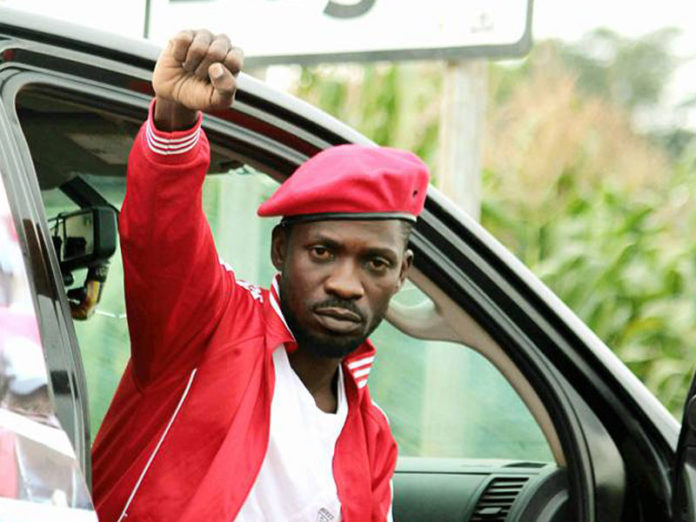
Bobi Wine to Museveni: ‘Your 34- year old dictatorship is the real enemy to Uganda’s progress’

Bobi Wine

Ugandan musician who  doubles as the Kyadondo East legislator, Robert Kyagulanyi aka Bobi Wine, has said the real enemy to Uganda’s progress is ‘a 34 year old dictatorship which has nothing left to offer to the country.’

In an interview with BBC News Africa on Wednesday, President Yoweri Museveni said Bobi Wine is an enemy to Uganda’s progress who tells foreigners not to invest in Uganda and therefore he cannot enjoy the prosperity of the country through hosting music shows among other events in the country.

Responding to president Museveni’s statements, the singer said the real enemy to Uganda’s progress are the sickening levels of corruption for which President Museveni is a chief priest.

“What has since happened to President Museveni was aptly captured by late Eriya Kategaya in his book ‘Impassioned for Freedom.’ Condemning Mr. Museveni’s third term bid, Kategaya wrote; I have observed that the longer one stays in power, the more one is insulated from reality. The trappings of state apparatus tend to make one live an unrealistic existence.”

“Sadly, President Museveni has been living this ‘unrealistic existence’ for a long time now. For starters, he removed all doubt about who has been blocking our music concerts. Ridiculously, he says that I cannot stage concerts because I discredited his government to foreign investors,” he said adding that   Police have been saying that our shows are stopped because we didn’t have enough ambulances, a traffic management plan, and that all of a sudden our venue had become too small to host our fans. Now, President Museveni busts his own shadow by exposing their lies.

The real enemy to Uganda’s progress is the breakdown of democratic values, characterized by rigging elections, violation of civil rights and liberties and the blatant disregard of the law, and failed education system where millions of our nation’s children do not finish primary school; where children study under trees, and those who are lucky to finish school have no skills whatsoever.

The real enemy to Uganda’s progress is a sick healthcare system- where the few health facilities are understaffed and ill equipped. Where health-workers are poorly paid and the few drugs sold on the black market. Where the casualty ward at Mulago hospital is itself a casualty- victims of accidents sleeping in their blood on the cold floor.

“Rampant land evictions, where poor Ugandans are thrown off the only thing left in their possession by the powerful and mighty, unresolved murders of  people at the hands of the state- Kasese being only an example.”

He said Nepotism and sectarianism practiced in the public service and championed by President Museveni himself where merit no longer counts and a small clique controls every aspect of the state,  breakdown of state institutions and erosion of their independence Where a president controls the judiciary, parliament, police, IGG, etc are the enemies of the country.

Bobi wine said excessive wastage of public resources where President Museveni and his cronies bulge in abundance at the expense of an overtaxed, poor Ugandan, illegal, high-handed grabbing of Uganda’s public assets and resources are real enemies of the country.

Stories Continues after ad