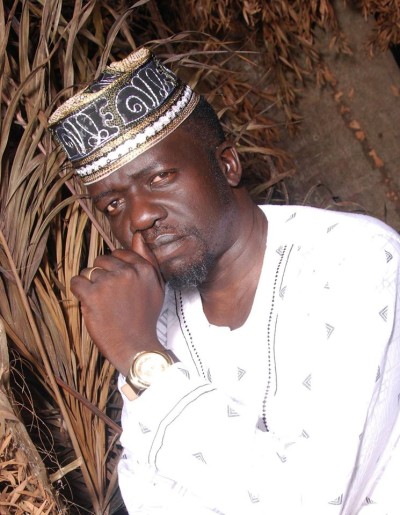
The son of former Ugandan president the late Idi Amin Dada has responded to President Yoweri Museveni who yesterday sent a written message to Ugandans, more so responding and castigating USA’s sanctions against former Inspector General of Police Gen. Kale Kayihura.
Among others, Museveni’s message to Ugandans touched on Amin whom he said came to power with the support of the Western Countries. “We opposed Idi Amin and their support for him and succeeded with the support of African Countries,” Museveni wrote. Amin and his regime are accused of torturing and killing Ugandans.
“With all due respect to all the different legitimate and sometimes illegitimate opinions surfacing in regards to last week’s US sanctions by the Trump administration against Gen. Kale Kayihura, what I would like to say is that Museveni using my late father’s name (Amin) to try to whitewash himself of his own filth, the blood of Ugandans stained on his hands, and his own appalling human rights record, is quite comical”. Mr. Lumumba Amin wrote.
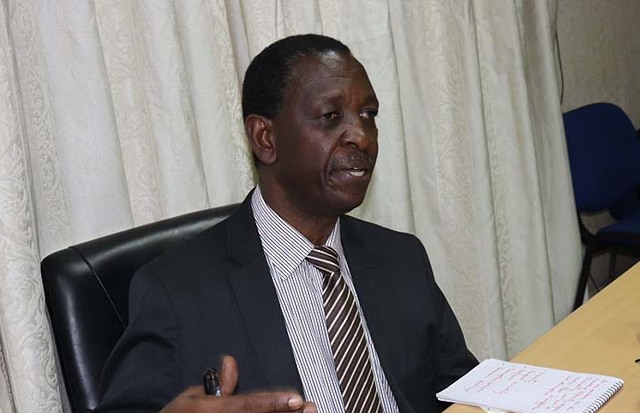
However, Senior Presidential Press Secretary, Don Wanyama dismissed Mr. Lumumba’s missive as a diversion. Wanyama said the torture and atrocities under Idi Amin are unspeakable and therefore, it is just a public relation stint.
“For Lumumba it is understandable for him to try and clean his father’s imagine. it doesn’t take one to study rocket science to know and see what the murderous regime of his father did. It is probably on record that almost every home in this country received a share of the torture and murder under his father’s reign”.
He further added “It is as if for the last 40 years (since 1979 when Amin left) whenever Museveni is found murdering innocent Ugandans, his excuse is that “Amin did worse”.
However, Museveni’s negative reference to Amin has attracted displeasure from one of his Hussein Lumumba Amin, who says the current president is fond of referring to his late father when political controversy rises; as if to say Amin epitomies the scale of torture and murders that have happened since Uganda got independence in October 1962.
Lumumba in his letter says all other regimes that have held power have committed atrocities in one way or another. Below is his full message to Ugandans in response to Museveni’s.
Fellow Ugandans,
I read Mr Yoweri Museveni’s statement regarding the US sanctions against his police chief the notorious Kale Kayihura. As usual Museveni mentions Amin to try to deflect via history his own responsibility in instigating and/or overseeing the brutal actions of a Kayihura whom he refers to as a “good cadre” while Ugandans think otherwise. I know that Ugandans are aware that there is a very big difference between the Museveni that we all listen to in public speeches, and then what he actually orders or approves behind the scenes in real life against not only his political opponents, but also against the people of Uganda so as to stay in power and maintain his claws on the country’s lucrative national resources like oil in Western Uganda and gold in Karamoja as he works for himself and his children instead of serving the people of Uganda as required in patriotic leadership and professional public service paid for by the Ugandan taxpayer.
A taxpayer who therefore, deserves value for money and far more returns from their investment in certain individuals who are supposed to be managing this Ugandan nation on the Ugandan peoples behalf but instead simply seem insatiable in their greed for “staying in power” by hook or crook.This has been exposed in all general elections petitions since 1996 and the evidence of bias, fraud, lawlessness and criminal acts is overwhelming. To the extent that Ugandans know in advance the final results of any Museveni dictatorship elections.
Isn’t it Museveni himself who arrogantly told Ugandans that he is not anybody’s servant? What kind of nonsense is that for someone in public service?
Basically I know that most Ugandans are used to how conmen also smooth talk their way around, including to whitewash themselves and try to dodge the real accusing substance behind real disturbing events that they are responsible for.
Meanwhile nobody has heard Museveni discuss how he intends to put an end to the brutal human rights violations as depicted in the US government accusations against Gen. Kayihura, and which all Ugandans and all observers have been complaining about incessantly. Violations that happened under Museveni who watched and did nothing for all the 13 years that Kayihura was the country’s police chief and the country was complaining.
For public servants, the number one function of their job is to always work and take decisions in public interest. That is their only mandated priority. Therefore, Museveni should have been discussing how to immediately embark on improving service delivery to the people of Uganda in any concerned area’s. In this case, the activities of the police and security agencies whom the US sanctions appear to collectively accuse of politically motivated gross human rights violations against their own fellow countrymen, women and children whom they are supposed to be serving and protecting professionally and under the rule of law, without any biases, and regardless of ones faith, tribe or political affiliation.
That is what is of fundamental long term political concern to the people of Uganda in this whole saga. Not discussions about Kayihura’s alleged properties and who should or should not want to travel where. Those are big debates for malwa joints. Not for the political leadership and fountain of honour who is supposed to be robustly building the country politically and economically under institutional good governance principles for all the peoples of his/her nation.
With all due respect to all the different legitimate and sometimes illegitimate opinions surfacing in regards to last week’s US sanctions by the Trump administration against Gen. Kale Kayihura, what I would like to say is that Museveni using my late father’s name (Amin) to try to whitewash himself of his own filth, the blood of Ugandans stained on his hands, and his own appalling human rights record, is quite comical.
It is as if for the last 40 years (since 1979 when Amin left) whenever Museveni is found murdering innocent Ugandans, his excuse is that “Amin did worse”.
Yet it is now over two million innocent Ugandans estimated to have died to date at their hands ever since Amin left Uganda. Including at least three genocides and over ten outright mass massacres on tribal, religious sectarianism or political grounds, not counting the political assassinations, serial murders, and other related persecution.
Therefore even if some media say that ‘100,000 Ugandans died under Amin”, then to this day 20 times more Ugandans have since been murdered by Museveni and all those who took over after Amin. An untold fact that calls for a serious review of the troubling body count of human skulls and other numbers that show exactly what Museveni has actually been doing with the blood of the people of Uganda ever since he embarked on his so-called struggle, as opposed to how he has publicly been praising himself since 1980.
I have not even mentioned the six million civilians murdered by Museveni in the Democratic Republic of Congo. A war for which the ordinary Ugandan now owes the mineral-rich nation $10 billion US Dollars as declared by the International Court of Justice for the greed-fuelled unfettered plunder of the neighbouring country during Museveni’s invasion of DR Congo.
But firstly, in regards to the recent US sanctions against Gen. Kale Kayihura, I think it is only natural that the people of Uganda, particularly the Muslim community, feel some relief. Many Ugandans are rightly urging that these sanctions be extended vertically and horizontally along the chain of command that Kayihura abided to.
For the people of Uganda, the sanctions mean someone has finally recognized their suffering at the hands of organized, politically motivated sectarianism and violence by the state, it’s leaders and it’s agents. All the other political victims of Gen. Kayihura’s summary arrests, torture, plus violent political bias must be feeling the exact same relief, possibly even more. But the people are not clueless as to who bares the ultimate responsibility for actions that have been going on for the last 13 years without any concern from Kayihura’s appointing authority, Mr. Yoweri Kaguta Museveni. In fact pictures abound of him decorating the same Gen. Kayihura with medals and declaring the police chief as “a good cadre” most likely for his known repressive actions against Museveni’s political opponents and persecution of religious clerics and individuals from one particular faith.
Those are the facts. And I call on all state institutions to remove any religious biases in their activities and serve all Ugandans without preferences for any particular faith because their seems to be an undercurrent of religious sectarianism and related biases even in the supposedly secular state-funded media which are the property of all Ugandans.
From 2005 the people of Uganda have made disturbing verbal and written complaints about their police chief and the violent political environment that tends to always peak before and after every presidential election where foreigners prefer to leave the country and most Ugandans prefer to lock themselves indoors before, during, and after announcement of final presidential results as battalions of soldiers called in to assist the police patrol the streets of every city primarily to quash through sheer terror, any attempts at publicly expressing political dissatisfaction at what are known in advance by the people of Uganda to be serial fraudulent presidential elections since 2006.
Meanwhile, many concerned Ugandans including myself, have always submitted proposals for credible, progressive political, economic and social reforms befitting a modern democratic society. In 2015, I personally drafted and submitted as many as 28 Constitutional amendments to help improve the 1995 Constitution and thereby help improve the political discourse for the well-being of the people of this country both politically and economically.
For the record, those meaningful 28 constitutional amendment proposals and countless others submitted by many other concerned Ugandans, were all thrown in the dustbins of Museveni’s so-called Ministry of Constitutional affairs, and a minor cosmetic amendment where they simply changed the name of the electoral commission, was the only bill passed instead as if that was most important constitutional priority facing the country. Obviously that seems to have been Museveni’s most important priority.
Serving the public interest is the only area where patriotism resides. Meanwhile, the people of Uganda have been wailing endlessly from state inflicted pains of torture, political smothering, and even the death of innocent comrades, compatriots and relatives. Notable is the fact that the people of Uganda have persisted in prayer and political activism against the violent political environment that has become the norm whenever Ugandans attempt public gatherings of a political nature that expresses political discontent at one human rights violation/political abuse after another. Who remembers young Edwin Kasasira who died by a shot to the head for protesting against selfish changes to the Constitution that were clearly not in the public interest but instead in the interest of one individual and his/her cronies staying in power by hook or crook.
Everything that the people of Uganda widely asserted at the time (including the famous “Tojikwatako”: meaning don’t touch the constitution) was ignored even on the floor of Parliament by some of the so-called people’s representatives who were widely said to have received fat bribes while the masses languish in buying poverty. And the few upright people’s representatives had to mount political resistance by literally fighting with their bare fists in parliament to stop the blatant abuse of the people’s will and power in broad daylight by corrupted political cronies of the dictatorship.
Everytime I come across images of that 2018 brawl in the Ugandan Parliament, I want to ask Ugandans to take just one minute to remind themselves why it happened, what they were fighting against, and who they were fighting for.
It seems all that is lost in all narratives of the event, and it has now been turned into some comic event that even some of the beneficiaries can be found laughing yet that fight was essentially the moment when the sacred 1995 Constitution was about to be raped in public for the second time and some members therefore tried be bravely to prevent the vicious political greed from perpetrating a crime against the sovereignty of the people.
The political repression that Ugandans continue to endure to this day was most recently evidenced in the shocking bloodsoaked events of 13th August 2018 in Arua. An egrnt that sent euofkwaves around the country and around the world following the murder of Yassin Kawuma plus the framing and torture of political opponents, namely Bobi Wine and 33 others on trumped-up charges and planted guns as evidence of those charges.
Besides this disturbing incident, we all know that the evidence of todays unfettered corruption and abuse of power is being overwhelmingly shared including on social media and even in some sections of the traditional press which has faced the threat of being silenced and journalists clobbered and arrested for doing their job. The world knows that Dr. Stella Nyanzi, a single mother and academic, is being persecuted in jail for speaking her mind politically, and calling someone “a pair of buttocks”, and now only God knows if her children will have anything to eat today, or even if they had anything yesterday as she languishes in the dungeons of Luzira maximum security prison as a political prisoner.
Following music concert over the weekend attended by Museveni himself, musician Ronald Mayinja who sang a politically poignant song in Museveni’s face can now expect being trailed by mysterious unmarked cars and his music career being undermined. Worst case scenario is assassination which nobody can rule out today with the rampant shocking and mysterious murders happening all over the country every day. The last one being on the new Entebbe Expressway where Museveni’s own nephew seems to have died in a shootout that is said to have originated from inside the vehicle he and some married lady we’re travelling in together with some other person (or persons).
As the full depth of the US sanctions and their meaning to the regime sink in, the people of Uganda must have even started thinking that nobody out there really cared, would stand for them, would understand their obvious suffering or would answer any of their relentless strife and plea’s for help from the dark. At every new incident of violations of the people’s rights and political freedoms, public condemnations have been made one after the other, primarily by the resilient people of Uganda, and also by all sorts of local and international institutions, including foreign embassies, human rights organizations and public personalities. All well documented, but nothing changed in terms of the violent political repression, corruption and political fraud. Instead the abuse of power has heartlessly continued and there is never any real change for the better. Just eloquent cosmetic excuses.
It is therefore understandable that Kale Kayihura’s victims, the people of Uganda, feel some relief and a sense that at least what they endured is finally being internationally recognised. And no matter how insufficient, at least some justice is being served and someone somewhere has responded to their cries. There is also the sense that individual responsibility in collective abuse of power is something that every single public servant, wether a so-called big fish or small fish, have to think about seriously henceforth before planning or executing any political repression orders and any human rights abuse against the people of Uganda. A nation which has recently seen the shocking 2016 bloodbath of Kasese, and the previous historic genocides in Luweero and Acholi where countless human skulls remain a brutal reminder of what could happened to the people of Uganda at the hands of Museveni and his group of people who claim to have fought Amin. The murderers of those poor Ugandans include Obote’s political and military support (the infamous UNLA soldiers), plus the founders and members of the National Resistance Army, both organizations known to have orchestrated for twenty years since 1980, the worst ever senseless mass killings, lawlessness, military indiscipline and genocide that Uganda will ever have on recorded history. The true darkest period of this country.
The people of Uganda therefore know all too well that they will be mass murdered without hesitation by these same individuals, if the people ever attempted any major legitimate public uprising today. It’s the hidden mentality of these politicians and they are known to be willing to do it again if power starts slipping from their blood-stained hands.
However, if there is one remote but positive conclusion to take from the US sanctions against Kale Kayihura. It is that these sanctions can help foster a civil and productive political discourse to the benefit of all Ugandans regardless of faith, tribe or political affiliation. One where the true will of the people becomes paramount in Uganda, and the people’s political rights and political freedoms become genuinely protected in real life and not only in leaders evasive speeches designed to fool anyone who listens to them.
Thank You!
Signed: Mr. Hussein Lumumba Amin.
Son of Former President Al-Hajji Idi Amin Dada.