Stanbic Bank
Stanbic Bank
20.6 C
Kampala
Stanbic Bank
Stanbic Bank
Home Blog Page 1196

Football racism: The case for a small coin in a big empty jar

Mr Muwema


BY Fred Muwema,

Managing Partner, Muwema& Co. Advocates


Fighting racism in football is like fighting pickpockets in a Church, Mosque or other place of worship. You can not come down very hard on them and fill the atmosphere of the Church or stadium with tear gas or bullets, the way the South African Security dealt with the Xenophobic attackers who wreaked havoc in that country last week. You would be accused of committing crimes against humanity if you confronted miscreants who have again taken to firing racist slurs against professional footballers of African descent like Raheem Sterling, Kurt Zouma, Tammy Abrahams, Marcus Rashford, Romelu Lukaku and Paul Pogba among others.

Never mind that all those lads are married to white women or have white girlfriends. These guys are actually European citizens or African Europeans if you wish. But that European passport or marriage does not shield them from getting insults from their in-laws or fellow citizens. This leaves me wondering whether the affluent Europeans are abandoning the European experiment on liberal values of freedom and tolerance.

That aside, the fact of the matter is that it is very difficult to control the behaviour of private individuals in matters of morality even with the strongest laws in place. Whereas traditional racism appears to be waning with increased globalization, it still exists. The incidents of racists chants at football matches in Europe represents the open type of racism which keeps the company of other discriminatory practices like nativism, xenophobia, otherness, segregation, hierarchical ranking and supremacism.

Having said that, all modern variants of racism are morally abysmal and scientifically bankrupt. We all know that the assumed heritable biological traits of superiority which drove racism upon the belief that Europeans enjoyed superiority over other races were crushed by science after 1945. However, to this day, some racist’s thoughts linger in the minds of a minority whose thoughts should not be given a platform to thrive.

Unfortunately, what we have seen of late is that there is more sensationalist reporting of this vice in football which is greatly inflating the egos of the racists. In the process, the media has profited from the increased viewership as they feed on this sensationalism. The foreign media which routinely amplifies sparks tinted with racism at football matches and packages them into hysterical headline reports must understand that a small coin in a big empty jar can make a lot of noise when you shake it. Every time you shake the jar, you increase the noise, not the value of the coin. However, in the case of football racism, every time the media shakes the jar, it increases both the noise and value of the racism. Racists in football cannot succeed without flattering publicity but paradoxically, the media all too often provides them this publicity for free and increases the presence of the vice.

One example which I believe was blown out of proportion by the media, was the reported monkey chants against Romelu Lukaku when he stood up to take a penalty at Cagliari in Italy for his Inter Milan side. I don’t think that incident which was a replay of the common nuisance we have come to expect in Italy over the years, merited the screaming headlines and viral publicity that it got. When looked at seriously, you will realise that the handful of Cagliari fans who mocked Lukaku, disparaging as their act was, did not succeed in projecting racial superiority. In fact for all their troubles, those fans did not improve their stature since they still went back home to the Italian average salary of €2,700 per month. This is very inferior to Lukaku’s wages standing at a whopping €250,000 per week. By the way, that Lukaku wage excludes bonuses and money from image rights and endorsements. I am sure that those Cagliari fans wouldn’t mind being teased with monkey noises if they could earn €2,700 per week in wages.

So was Lukaku really bothered by the empty racist’s mockery at Cagliari? I don’t think so. I want to think that he just laughed it off with a superb penalty kick against Cagliari FC, passed by the cash machine and proceeded to eat life as they say, while the jokers agonized in their beds. Unfortunately, the media when it sensationalized the incident, chose not to see the high nuisance value in the Cagliari fans theatrics which were cast in a parody of sorts. One should be forgiven if they got the impression that all hell broke loose at the match. I think the media is exceeding its respectable limits when reporting racism in football.

The managers of the European Elite football leagues must not waiver in their affirmative action and campaigns to fight racism in football. They are doing a splendid job which can certainly use some more vigour and creativity. That said, all people of goodwill must support their efforts.

The affected players who find themselves at the receiving end of racists slurs must fight back by doing what they do best – play football. This is what the legendary Nigerian football icon Jay Jay Okocha did in the face of mounting racist abuse in Germany. He dribbled and dribbled and scored against his tormentor’s teams until the racist noises and chants faded in the distance. We should know better than to allow small coins in a big empty jar to make a lot of noise for us. On a lighter note, some Manchester United players who I will not name for fear of being branded a racist should get their act together quickly this season before I yell some animal noises at them through my television.

Stories Continues after ad

Suicide the second leading cause of death among youth, one person dies every 40 seconds-WHO

Youth a past event.

The number of countries with national suicide prevention strategies has increased in the five years since the publication of WHO’s first global report on suicide, said the World Health Organization in the lead-up to World Suicide Prevention Day on 10 September. But the total number of countries with strategies, at just 38, is still far too few and governments need to commit to establishing them.

Despite progress, one person still dies every 40 seconds from suicide,” said WHO Director-General, Dr Tedros Adhanom Ghebreyesus. “Every death is a tragedy for family, friends and colleagues. Yet suicides are preventable. We call on all countries to incorporate proven suicide prevention strategies into national health and education programmes in a sustainable way.”

The global age-standardized suicide rate for 2016 was 10.5 per 100 000. Rates varied widely, however, between countries, from 5 suicide deaths per 100 000, to more than 30 per 100 000. While 79 per cent of the world’s suicides occurred in low- and middle-income countries, high-income countries had the highest rate, at 11.5 per 100 000. Nearly three times as many men as women die by suicide in high-income countries, in contrast to low- and middle-income countries, where the rate is more equal.

Suicide was the second leading cause of death among young people aged 15-29 years, after road injury. Among teenagers aged 15-19 years, suicide was the second leading cause of death among girls and the third leading cause of death in boys

The most common methods of suicide are hanging, pesticide self-poisoning, and firearms. Key interventions that have shown success in reducing suicides are restricting access to means; educating the media on responsible reporting of suicide; implementing programmes among young people to build life skills that enable them to cope with life stresses; and early identification, management and follow-up of people at risk of suicide.

The intervention that has the most imminent potential to bring down the number of suicides is restricting access to pesticides that are used for self-poisoning. The high toxicity of many pesticides means that such suicide attempts often lead to death, particularly in situations where there is no antidote or where there are no medical facilities nearby.

As indicated in the WHO publication released today, preventing suicide: a resource for pesticide registrars and regulators, there is now a growing body of international evidence indicating that regulations to prohibit the use of highly hazardous pesticides can lead to reductions in national suicide rates.

The best-studied country is Sri Lanka, where a series of bans led to a 70 per cent fall in suicides and an estimated 93 000 lives saved between 1995 and 2015. In the Republic of Korea – where the herbicide paraquat accounted for the majority of pesticide suicide deaths in the 2000s – a ban on paraquat in 2011-2012 was followed by a halving of suicide deaths from pesticide poisoning between 2011 and 2013.


Stories Continues after ad

Kikuube district in fight against illegal tobacco trade

Speaker of Parliament, Rebecca Kadaga planting a tree at Kigaaya Archdeaconry.


Residents of the newly created Kikuube district have asked Parliament to intervene and offer support in the fight against illegal tobacco trade that has been associated with insecurity.

The Mayor of Kikuube Town Council, Moses Mugisha said that tobacco companies that were banned by government have continued to trade in tobacco.

“There are traders who were banned from purchasing tobacco but have persisted. The worst thing is that they have delayed paying farmers and we are worried because our children are about to report to school,” Mugisha said.

Mugisha made these remarks at a fundraising for Kigaaya Archdeaconry. The event was attended by the Speaker of Parliament, Rebecca Kadaga.

Earlier this year, the Ministry of Trade, Industry and Cooperatives banned three companies from trading in tobacco within the region after failing to meet the tobacco buying regulations. The said companies were accused of causing confusion and posing a security threat.

Kadaga said that she had received several petitions from the MPs representing Kikuube District about the illegal tobacco trade and promised that Parliament would act on them as stipulated in the rules of procedure.

“This issue has been brought to Parliament many times; we have told the Minister of Trade to supervise and ensure that the banned companies do not continue in the trade, ” Kadaga said.Mayor Mugisha also called for increased insecurity in the region characterised by theft of cattle and household items. This, he said is associated with the rampant drug abuse by youth that goes unchecked. “

Kadaga pledged to engage the Inspector General of Police to beef up security in the district.

Stories Continues after ad

Police holding three over murder of NGO staff Maria Nagirinya

Late Maria Nagirinya

Police are holding three prime suspects implicated in kidnap and subsequent murder of Non-Governmental Organisation (NGO) staff, Community Integrated Development Initiatives (CIDI), Maria Nagirinya and Ronald  said to be her driver.

Nagirinya was kidnapped by two men who reportedly trailed her as she returned home. According to her family members, assailants accessed her vehicle registration number UBA 570V, Spacio, moments after her young sister had just opened her the gate.

The deceased are alleged to have been killed from the car before dumping their bodies at Nakitutulu village, Nama sub-county in Mukono district.

Speaking at the headquarters, police spokesperson, Fred Enanga, the suspects were arrested by Security operatives from both Police and Chieftaincy of Military Intelligence (CMI) and they are currently held at CMI facility in Kireka.

Without delving into details, Enanga revealed that the suspects include man in red jacket captured on CCTV driving Nagirinya’s vehicle and another one who reportedly transported the abductors to Nagirinya home.

The search and arrest is based on the footage was captured by various cameras along the Kinawataka road that connects to the Kampala-Jinja Highway and the suburbs of Kireka and more are expected to picked.

Stories Continues after ad

Rage in Kenya after MPs fight in church


The hashtag #ShameOnTheChurches is trending in Kenya after a Sunday service at a Catholic Church descended into chaos when two MPs started fighting.

They had both addressed the congregation in the town of Kiharu, in central Murang’a county when the argument broke out.

People on Twitter have been sharing footage of the punch-up.

It is not uncommon for politicians to use church services to push their political agendas – as many of their constituents attend church on Sundays.

Much of the politics in the East African nation is currently dominated by who will run in the 2022 elections – and the ruling Jubilee party has divided into factions over the heated issue.

The MPs involved in the fracas were both from the Jubilee party, but from opposing factions.

The fight started when Kiharu constituency MP Ndindi Nyoro refused to hand back the microphone to Maina Kamanda, a politician from the capital, Nairobi, who was overseeing the political segment of the service.

“I can’t allow people from Nairobi to come and take over my constituency as if they know this area. I am an elected leader,” Mr Nyoro, is quoted by Kenya’s Daily Nation newspaper as saying.

Scuffles broke out and the county’s police chief Josephat Kinyua had to intervene to separate them.

Mr Nyoro’s supporters then rushed to his side to stop his possible arrest and the church became disorderly – and fighting continued outside the church.

Following the mayhem, the Catholic Church in central Kenya, where the issue of whether Deputy President William Ruto should run to be the next president is most contentious, has now banned politicians from speaking during its services.


Stories Continues after ad

Museveni officiates at graduation of over 8000 skilled girls

Museveni addressing public


President Yoweri Museveni has advised girls that have been skilled in a variety of trades to use the vocational skills that they have acquired from their training to meet the needs of people, which in turn, will make them wealthy and prosperous.

The President was speaking at the graduation ceremony of 8480 female graduands who have benefitted from the Presidential Initiative on Skilling the Girl Child of the July- December 2018 intake who successful completed their training and obtained skills in bakery, hair dressing, knitting, tailoring and shoemaking. They were drawn from the areas of Kigowa, Mutundwe, Luzira, Wandegeya, Nakulabye and Katanga in Kampala District.

Despite the heavy rains that started early in the morning up to later in the afternoon, the colorful ceremony was punctuated by singing, dancing and all sorts of celebrations from the jubilant graduands and their families who thanked President Museveni for skilling them.

Musevebi, who earlier toured different exhibition stalls, said that Africans must stop taking jobs and money abroad because they have the capability to work here and became rich.

“Africans go and look for jobs outside yet we have the best weather and resources. People in dry places like Dubai are manufacturing things and making money. This is a sample. We are going to continue supporting such programmes such that we don’t take our jobs and money abroad,” he said.

He also noted that the youth must endeavor to train and acquire new skills like making cement blocks, oil from sim sim seeds and pavers from stones, among other new skills.

He reiterated his plan of forming Savings and Credit Cooperative Organizations (SACCOs) of the same skill-set in various districts in the country to enable them become prosperous.

“We will be doing this in various districts but for big districts like Kampala, we will treat the Divisions as districts. The same will also apply to big districts like Wakiso,’ he explained.

In her brief remarks, the Minister for Kampala City Authority, Hon. Betty Kamya, thanked President Museveni for reaching out to the needs of wananchi and for reducing the burden on parents who have to pay tuition for students.

The in charge of the Presidential Initiative on Skilling the Girl Child, Mrs. Lucy Nakyobe Mbonye, who is the State House Comptroller, advised the graduands to apply the skills learnt and make money as it was the objective of the project. She added that it would be a waste of money if they did not work.


Stories Continues after ad

Off-grid solar firm Azuri named as top 100 fastest growing UK companies

Nigel Preston, Vice President of Product Management at Azuri Technologies, pictured with one of Azuri’s off-grid solar systems helping to bring power to the millions without mains electricity in Africa.


The annual Sunday Times Hiscox Tech Track 100 league table ranks Britain’s fastest growing privately held companies by sales growth over the last three years. Ranked 42 in the league table, Azuri is paving the way in next-generation energy access in Africa.

Azuri’s innovative application of solar power combined with mobile payment technology and energy efficient appliances is enabling off-grid African families to experience modern digital technologies such clean LED lighting and satellite TV for the first time. More than 600 million people in sub-Saharan Africa still lack access to electricity.

Being named as one of the UK’s top-performing private companies comes hot on the heels of Azuri’s announced investment of US$26 million, led by Fortune 500 company Marubeni with additional participation from existing shareholders, including FTSE 250 company IP Group plc.

Since launching in 2012, Azuri is one of the leading providers of pay-as-you-go solar power lighting and TV systems, operating in Kenya, Tanzania, Uganda, Zambia and Nigeria. To date, the company has sold over 150,000 systems and the capital injection will enable Azuri to expand operations in current territories and beyond.

From solar home lighting to satellite TV, Azuri-designed solutions deliver world-class performance at an affordable price to off-grid customers across Africa. Azuri’s vision is to create a level playing field where all African consumers can access and benefit from the digital economy, wherever they live.

“Following several years of sustained growth, Azuri is delighted to be recognised as part of the Sunday Times Hiscox Tech Track 100. This growth reflects a rapidly expanding sector and increasing demand from African consumers for affordable clean energy and access to modern life-changing technology,” commented Simon Bransfield-Garth, CEO of Azuri Technologies.

Inclusion in the Tech Track 100 continues the award wins for Azuri during the last 12 months, including being named in the CleanTech 100, the FT1000 list of the fastest growing companies in Europe, and the Financial Innovation Awards for innovative clean tech solutions.

Azuri is one of only four Cambridge-based companies to be listed in the Tech Track 100 league table.


Stories Continues after ad

Don’t bow to oil companies: CSOs urge gov’t over oil pipeline suspension

Uganda's Energy Minister Eng. Irene Muloni.


Over 10 Civil society organisations (CSOs) working to promote good governance in the oil and gas sector in Uganda have urged government not to bow to pressure being exerted by oil companies as far as the development of the oil pipeline is concerned. The pressure is being exerted over the collapse of negotiations by Tullow Oil (U) to sell 21.57 per cent of its Lake Albert oil stake to Total and CNOOC.

The collapse followed a two and a half year disagreement between Tullow Oil and government over the assessment and payment of Capital Gains Tax (CGT) in addition to other taxes due to government from the planned farm down. Because of the failed farm down, Total E&P decided to suspend all activities on the East African Crude Oil Pipeline (EACOP) project.

CSOs meet

The CSOs made the call following a meeting organised by Africa Institute for Energy Governance (AFIEGO) on Thursday September 5, 2019 at AFIEGO’s offices in Kampala. The meeting discussed the failed farm down, tax dispute and the consequent suspension of all activities on the EACOP project.

“Uganda’s laws including the Income Tax of 1997 provide that where a company makes money off the sale of its business, then that company must pay CGT. Tullow Oil must therefore pay the tax of $167million and any other tax assessed in accordance with the laws of Uganda.

The oil companies, whose activities have led to displacement of thousands of communities and have caused a lot of suffering, should not gang up against government to pressure it to abandon its demands for the CGT. The country needs taxes to provide for her citizens,” AFIEGO’s Mr Dickens Kamugisha said while communicating the outcomes of the recent meeting .

Companies should stop hurting businesses

The CSOs further noted that it was wrong for oil companies, which excited Ugandans into accepting them by promising jobs, to abuse Ugandans’ goodwill by laying off workers and suspending tenders given to businesses in order to further pressure government.

Reports indicate that some workers have been laid and tenders to businesses have been suspended. “Ugandans should learn their lesson. Oil companies and government have been exciting them by telling them that the oil and gas sector will create 150,000 jobs.

Ugandans believed them despite assessments such as those by Assaye Risk Consults showing that Ugandans lack the necessary skills and are unlikely to be gainfully employed in the oil sector. “ Today, these companies are using Ugandans as pawns and have discarded them without a thought to pressure government.

Businesses that were also excited into borrowing money with promises that they will supply goods to the oil sector have also been discarded. This is unfortunate. Ugandans should know that the much-touted jobs in the oil sector will benefit very few and should therefore be cautious about being excited by talk of jobs by selfish companies,” Mr Yoram Banyenzaki, a youth leader belonging to the Guild Presidents’ Forum on Governance (GPFOG) said.

Gov’t must review production sharing agreements and tax laws

While the CSOs maintain that government must continue demanding that Tullow Oil pays tax, they are also blaming government for signing bad Production Sharing Agreements (PSAs) with oil companies that have continually made it hard for government to get the CGT due to it.

“When Heritage Oil sold its assets to Tullow in 2010, the company disputed the CGT of $434 million that government said it had to pay. Long court battles that were only resolved in London ensued. Later, when Tullow Oil sold two thirds of its assets to Total and CNOOC in 2012 at US $2.9 billion, another tax dispute ensued.

Tullow did not want to pay the US $407 million CGT it was assessed to pay. The company ended up agreeing to only pay US $250 million and out of pressure and corruption, government accepted. This resulted into the country losing $199 million in taxes. It’s Tullow that profited from the lost tax. Today, we see another battle between the same Tullow and government over CGT. Total has joined this battle by suspending its EACOP activities.

Government keeps telling Ugandans that they negotiated and signed the best PSAs in the world on Ugandans’ behalf. How can such good PSAs fail to save Ugandans from tax disputes? Government needs to review the PSAs that were signed.

Government also needs to reform tax laws to address the source of tax disputes. Further, government should address the challenge of corruption in the country” Mr Robert Byaruhanga, an oil and gas consultant, said.

 Use oil revenue to benefit citizens

The CSOs noted that since the discovery of oil in 2006 to date, government has collected over $1 billion in oil revenues. However, these oil revenues have been abused.

“Ugandans will recall that when government won the CGT dispute against Heritage Oil, the president ‘rewarded’ 42 government officials with UGX 6 billion for winning the case. This wasteful reward was against provisions of the Public Finance Management Act [PFMA] that provides that oil revenues must be spent on development projects, and not consumption.

Government also continually withdraws oil revenues from the Petroleum Fund prior to parliamentary approval contrary to provisions in the PFMA. 3 The business of government ‘misusing’ oil money must stop. When government abuses oil revenues, it fails to build social capital that it would now be relying on to rally citizens to support it in the ongoing disputes with oil companies,” Mr Gard Benda of World Voices Uganda said.

The CSOs also observed that oil activities are going to negatively impact climate, agricultural productivity, tourism and public health. They noted that government needs to stop abusing oil money and should invest it.

“Oil revenues should therefore be invested in public infrastructure to support citizens who are going to lose their jobs, cultural heritage, access to water, food security and good health. Government should also stop all oil activities in protected areas,” Ms Esther Abigaba of the Oil Refinery Residents Association (ORRA) said.

The CSOs’ final call was to the National Environment Management Authority (NEMA). They noted that NEMA has issued Environmental Impact Assessment (EIA) certificates for projects such as Tilenga in violation of EIA laws.

“If Ugandan government agencies violate laws, they not only put our environment at risk but lose the moral authority to demand that companies respect the laws as well. Government also needs to invest in clean energy so that it is not desperate for oil. Such desperacy is used against it by oil companies,” Kamugisha said.

Stories Continues after ad

More success as Victoria University holds 4th graduation

Dr Ham Muliira, former Minister of ICT and now Presidential Advisor Speaks at the Graduation that was held at Speke Resort-Munyonyo.


It was another milestone on Friday as Victoria University, one of the leading private institutions of higher learning in Uganda held its fourth graduation ceremony at Speke Resort Munyonyo in Kampala.

The graduation ceremony was held under the theme, ‘Developing Agents of Change’.

50 students from the Faculty of Health Sciences, Technology, Humanities and Social Sciences, and Business and Management received their testimonials to mark the successful completion of their university studies.

Victoria University Chancellor Dr Martin Jerome Aliker, Vice Associate Prof Krishna N. Sharma, University Promoter Rajiv Ruparelia presided over the graduation.

Other notable dignitaries that graced the event are Dr David Byatike Matovu the Chairman University Council and Senior Presidential Advisor on ICT Dr Ham Muliira.

Announcing the graduation ceremony last month, University Vice Chancellor Associate Professor Sharma said that the graduands were all ready to hit the job markets after gaining knowledge from classroom, exposure through internships and enough preparation by the experienced lecturers and experts.

Mr. Rajiv Ruparelia, director of the university and his wife Naiya Ruparelia arrive for the graduation.

“We have prepared them with good knowledge in the classroom, good skills, practices and good exposure through internships from best placements which fit their programs”

He adds, “We have also did a special workshop for our graduands called total graduate where we taught them such skills like how to write cv, how to dress up, how to appear in the interview, mingling with people, how to crack a deal, stress management at work and how to be spiritual, so we prepared them for all of this”

Graduands following the proceedings.

One of the graduands told this reporter that she is feeling great. It is been a long time coming. I am excited about life after school” she said, adding that there have been opportunities such as networking and so many learning experiences.

Victoria University has ensured that its students are exposed by allowing open door policy where students easily access the administration, said another student who hopes to join the banking industry as an IT specialist.

Another one said the university provides great internship opportunities that give working experiences to students.

The university will also use the same occasion to recognize the foundation students who have undergone one year course at the university.

The university supports students through the Ruparelia foundation with sponsorships of up to 70 percent.

In a bid to address the challenges of unemployment, the university has been very instrumental in creating entrepreneurs and developing talent through various initiatives like fashion, sports and games plus entertainment among others.


The university is owned by Ruparelia Group and it is accredited by the National Council for Higher Education and Uganda Nurses and Midwifery Council.

Recently the university entered into a partnership with the Chartered Institute of Logistics and Transport (CILT) to launch an Advanced Diploma in Logistics and Transport.


Stories Continues after ad
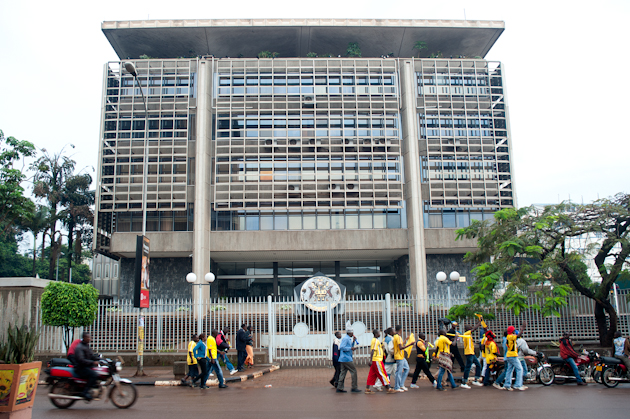
BoU top official behind old notes scandal as Mbarara currency centre workers are investigated 

Money

The Bank of Uganda departments of operations as well as currency are the reason why the central bank has had its image tainted and it will take long for the central bank to gain its credibility. But insider sources say a top executive is behind the majority of most of the scandals that have ensured that money goes into his pockets.

The official’s name appeared prominently in the closure of certain commercial banks in Uganda where the central bank failed to follow the laid down guidelines and procedures in closing the banks, with the prominent ones being Crane Bank Limited (2016), Global Trust Bank (2014) and National Bank of Commerce (2012).

The official was also tried so much to fail the audit of BoU by the Auditor General John Muwanga and tried to use legal means to sabotage the probe only for Speaker of parliament Rebecca Kadaga to insist that Muwanga had to do his work given that BoU is public entity and therefore not immune to such probe, despite having a bit of independence.

The same official and others hid documents related to the sale of Crane Bank Limited and especially those to do with the accountability of Shs478 billion the central bank claimed to have injected as liquidity support in former Crane Bank Limited while under receivership.

It was later discovered by Muwanga that Shs290 billion of that money could not be accounted for. Yet later on the same official wanted Muwanga to repeat audit of Shs478 billion. But Muwanga dashed away his request, saying that only parliament could order him to repeat the process which the official wanted to use to hoodwink the Auditor General and clear his name.

It is also claimed that the top official was instrumental in ensuring that Crane Bank Limited’s assets were transferred to DFCU Bank at Shs200 billion, paid in installments, moreover interest free. The official and others, according to insider sources at BoU shared money from this bogus transaction where some analysts have said DFCU Bank acquired assets of its rival Crane Bank Limited free of charge in 2017.

It is said the top official is also behind the ill-advised suit where BoU wants Sudhir Ruparelia and Meera Investments to pay Shs397 billion alleged to have been stolen from former Crane Bank. The official sought by using Crane Bank In Receivership as a plaintiff, BoU would be favoured by court but days ago head of commercial court, Justice David Kutosi Wangutusi dismissed the suit, saying Crane Bank In Receivership has no right to sue.

It is said a top manager at BoU has been behind the recent scandals where officials have involved themselves in theft.  For instance the issue of Shs90 billion that was printed without the authorization of BoU Governor Emmanuel Tumusiime-Mutebile, is not resolved yet as investigators are yet to release the report.

As if that one is not enough the latest is the recent arrest of BoU staff at its Mbale branch where they were trying to smuggle out old shilling notes that they were supposed to destroy before disposing them off. This habit, according to insider sources in BoU has been going on for years now and no wonder old shillings notes still circulate in the economy despite efforts by the central bank to get rid of them in partnership with commercial banks and other financial entities.

Reports also indicate that other BoU officials at Mbarara Currency Centre are also under investigations in relations to smuggling out old currency notes, with the official said to be heavily involved.

Insiders at BoU say the junior staffs are directed by the top official to carry out the illegal activity that brings back the old notes in circulation. They say staffs involved in this bad activity have bought and build themselves mansions, set up real estate businesses within the shortest time. The staffs and the top official saw old notes as an opportunity to grow personal wealth.

In fact according to a recent report on BoU, the official has a clique of staff that he works with to frustrate the good intentions of governor Tumusiime-Mutebile. Staffs who were asked by a committee appointed by President Yoweri Museveni said that such cliques are responsible for poor operations at BoU and the said senior staffs want this top manager dismissed if the institution is to stabilize and gain public trust again.

The official who heads operations at BoU is said also not to be at good terms with his junior who was hired in February after former executive director for bank supervision Justine Bagyenda was fired by Tumusiime-Mutebile for underperformance. Insiders say the official wants to take over some of the roles his junior.

Ugandans are now waiting to see what government will do to the BoU official involved. Most probably, according to analysts, after investigations they will be asked resign or sacked or prosecuted in courts of law. However, other citizens argue that government should seize the properties of the culprits to teach others a lesson. The said top official behind the scandals at BoU is extremely rich, with the wife and children running multi-billion businesses.

Stories Continues after ad