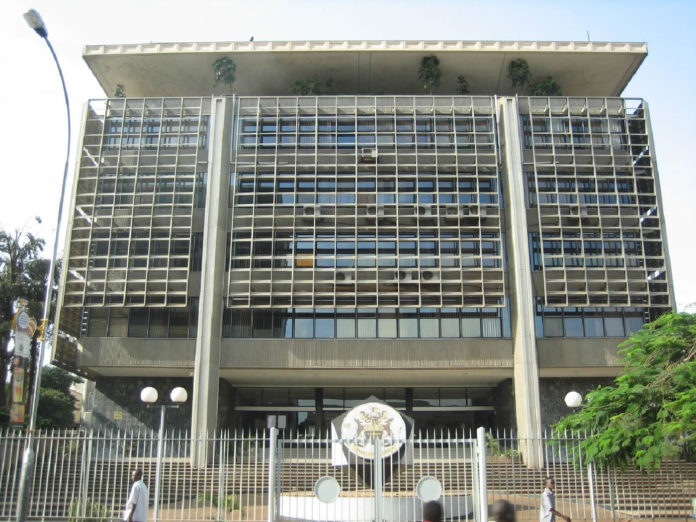
Stanbic Bank
Stanbic Bank
21.2 C
Kampala
Stanbic Bank
Stanbic Bank
Home Blog Page 1204

BoU to punish local banks over illegal charges levied on electronic payment transactions

Bank of Uganda


The Bank of Uganda (BoU) has warned local commercial banks, credit institutions and micro-finance deposit-taking institutions in the country to desist from levying of additional fees over and above the transaction charges agreed with different service providers of electronic payment cards.

BoU on August 29, sent a warning circular to all the chief executive officers of the above mentioned categories of financial institutions where it banned merchant surcharge and the fixing of minimum/maximum transaction amounts on electronic payment cards. The ban was effective September 15, 2019.

“In practice, some merchants add a surcharge to transactions and…or establish minimum or maximum transaction amounts as a condition for accepting electronic payment card methods. Bank of Uganda regards this practice of merchants surcharging and establishing minimum/maximum transaction amounts on electronic card payments as unfair and unjustifiable businesses practices that are detrimental to the growth of electronic payments in Uganda,” said Hannington Wasswa, Ag, Executive Director Supervision

Wasswa says the practices discourage usage of electronic card payment system and negatively impact the consumer’s perception of such methods of effecting payments. This undermines the national efforts by the Government of Uganda to promote non-cash payments and financial inclusion.

“Merchant surcharges at Point of Sale (POS) terminals and Automated Teller Machines (ATMs) is prohibited. Establishment of minimum/maximum transaction amount, as a condition to accept electronic card payments is prohibited,” he warned.

He says supervised financial institutions connected to card payment switches where there exists a local/domestic or in-country settlement framework must endevour to have in place a harmonized or uniform domestic charge or tariff structure across all interoperable ATMs.

He says the registry to capture information on errant merchants for breaching the directives will be established where errant banks can be reported.


Stories Continues after ad

UN employees urge organisation to look at its own carbon footprint

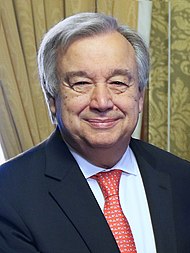
UN Secretary General Antonio Guterres

The United Nations is being urged by more than 1,000 of its employees to reduce its carbon footprint by cutting down on perks, such as business-class flights and travel allowances.

Staff members are calling on the organization to take a leaf out of its own climate change manual and make changes to address the group’s carbon footprint, according to Reuters which obtained the letter addressed to the UN’s Secretary-General Antonio Guterres.

“Our commitments need to be more ambitious and at least as concrete as those of the UN Member States and non-party stakeholders attending the UN Climate Action Summit,” the letter, by a group called the ‘Young UN,’ read.

More than 40,000 people are employed by the UN across 60 countries which, together, contribute to a staggering carbon footprint that is greater than several of its member states. In 2017, its own data showed the organization emitted 1.86 million tonnes of carbon dioxide equivalent.

The Young UN says one of the main in-house issues that need to be tackled is travel, which accounts for nearly half of the organization’s emissions. Travel allowances should be cut, says the group, as the daily fee covering food and accommodation act as a staff incentive. Employees should be rewarded for downgrading their business class seats, the group suggests.

Stories Continues after ad

Makerere seeks to improve relations with neighbouring villages

Vice Chancellor Nawangwe (centre) and Guild President Katerega (L) after launching the initiative


In a bid to redeem its good image, Uganda’s oldest university, Makerere University has launched a campaign aimed at fostering good relations with the neighboring villages that have over the years been targets of violent strikes by its students.

The initiative to establish the good relations with the neighbouring communities was launched on Thursday by the university’s Vice Chancellor, Prof. Barnabas Nawangwe alongside other officials and students’ Guild leaders.

Dubbed,’ Make Connect Initiative’, the campaign will involve planting of trees and cleaning of the dusty villages that surround the university and host many of the private hostels that offer accommodation to students that don’t stay within one of the best universities in Africa although internal administrative wrangles continue to hurt its mission of producing best human resource for the global labour market.

The initiative will run under the theme, “Celebrating Makerere’s diversity and contribution through community outreach.”

Prof. Nawangwe said, “I will participate and I am going to mobilise the administration to participate.”

The planting of trees and cleaning these areas is aimed at reconciling the residents with Makerere students who have for long destroyed their properties and businesses during the violent strikes.

The Students’ Guild President, Julius Katerega commended the initiative saying: “It is an appreciation of the roles Makerere University in social transformation and improving the livelihoods of people which all together contributes to national development.”

He said the initiative intends to create a platform for community inclusive interaction, diversity and celebration of the university’s diversity and also create awareness on the services Ugandans can tap into at the university.

He said that the initiative would also provide free career guidance and other related services to Kampala people next month.

Residents have over the years known the university’s students as being violent as they have on several occasions lost property because of the strikes in the university.

Residents in the neighbourhood have welcomed the initiative and hope to join hands with students and university leaders to clean their surroundings that are littered with all sorts of rubbish including solid materials, plastics, food leftovers, human and animal excreta, just to mention but a few.

“We welcome the initiative and I hope it can be done every year,” said Abdu Karim, who stays and operates boda boda business in Makerere Kikoni.

“We actually hate students because when they strike they target our businesses as if we work in the university. I hope the new initiave by the university to reach out to us will change our negative attitudes towards students who have for many years destroyed our properties and businesses,” said Hadija Nakimuli, a businesswoman in Wandegeya.

The four–phased  initiative started Saturday with ‘The Greening and Cleaning Campaign’ where the students, alumni, well-wishers and the staff members planted trees and cleaned neighbouring suburbs of Wandegeya, Kikoni and Kasubi.

Stories Continues after ad

More women and children survive today than ever before – UN report

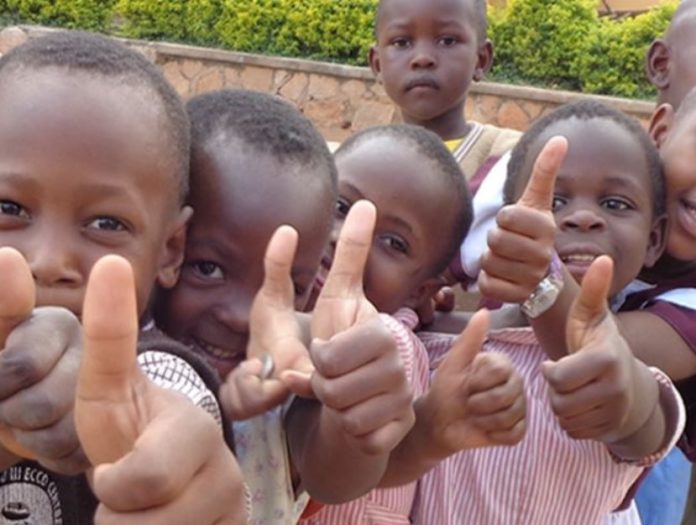
Ugandan children


More women and their children are surviving today than ever before, according to new child and maternal mortality estimates released by United Nations groups led by UNICEF and the World Health Organization (WHO).

Since 2000, child deaths have reduced by nearly half and maternal deaths by over one-third, mostly due to improved access to affordable, quality health services.

“In countries that provide everyone with safe, affordable, high-quality health services, women and babies survive and thrive,” said Dr Tedros Adhanom Ghebreyesus, Director-General of WHO. “This is the power of universal health coverage.”

Still, the new estimates reveal that 6.2 million children under 15 years died in 2018, and over 290 000 women died due to complications during pregnancy and childbirth in 2017. Of the total child deaths, 5.3 million occurred in the first 5 years, with almost half of these in the first month of life.

Women and newborns are most vulnerable during and immediately after childbirth. An estimated 2.8 million pregnant women and newborns die every year, or one every 11 seconds, mostly of preventable causes, the new estimates say.

Children face the highest risk of dying in the first month, especially if they are born too soon or too small, have complications during birth, congenital defects, or contract infections. About a third of these deaths occur within the first day and nearly three quarters in the first week alone.

“Around the world, birth is a joyous occasion. Yet, every 11 seconds, a birth is a family tragedy,” said Henrietta Fore, UNICEF Executive Director. “A skilled pair of hands to help mothers and newborns around the time of birth, along with clean water, adequate nutrition, basic medicines and vaccines, can make the difference between life and death. We must do all it takes to invest in universal health coverage to save these precious lives.”

The estimates also show vast inequalities worldwide, with women and children in sub-Saharan Africa facing a substantially higher risk of death than in all other regions.

Levels of maternal deaths are nearly 50 times higher for women in sub-Saharan Africa and their babies are 10 times more likely to die in their first month of life, compared to high-income countries.

In 2018, 1 in 13 children in sub-Saharan Africa died before their fifth birthday this is 15 times higher than the risk a child faces in Europe, where just 1 in 196 children aged less than 5 die.

Women in sub-Saharan Africa face a 1 in 37 lifetime risk of dying during pregnancy or childbirth. By comparison, the lifetime risk for a woman in Europe is 1 in 6500. Sub-Saharan Africa and Southern Asia account for around 80 per cent of global maternal and child deaths. Countries in conflict or humanitarian crisis often have weak health systems that prevent women and children from accessing essential lifesaving care.

The world has made substantial progress in reducing child and maternal mortality. Since 1990, there has been a 56 per cent reduction in deaths of children under 15 years from 14.2 million deaths to 6.2 million in 2018. Countries in Eastern and South-Eastern Asia have made the most progress, with an 80 per cent decline in under-five deaths.

And from 2000 to 2017, the maternal mortality ratio declined by 38 per cent. Southern Asia has made the greatest improvements in maternal survival with a nearly 60 per cent reduction in the maternal mortality ratio since 2000.

Belarus, Bangladesh, Cambodia, Kazakhstan, Malawi, Morocco, Mongolia, Rwanda, Timor-Leste and Zambia are some of the countries that have shown substantial progress in reducing child or maternal mortality. Success has been due to political will to improve access to quality health care by investing in the health workforce, introducing free care for pregnant women and children and supporting family planning. Many of these countries focus on primary health care and universal health coverage.

Stories Continues after ad

DPP to use anatomical dolls in the prosecution of sexual offenses involving children

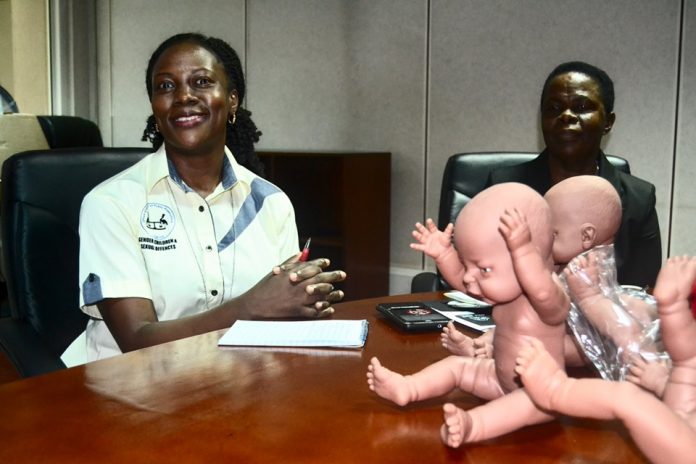
Officials with dolls

The Directorate of Public Prosecution (DPP) is set to start using anatomical dolls in the prosecution of sexual offenses involving children and vulnerable victims

The office of DPP this morning received anatomical dolls from children at Risk Action Network (CRANE), an organization that supports prosecution of cases of sexual and gender based violence involving children.

According to Jane Okuo Kajuga, a senior assistant in DPP’s office, the anatomical dolls will be used as demonstration aids to help young victims of Sexual violence to clearly show to court what happened to them and also aid the prosecutor to lead the evidence without compelling the victim to recite words that they may be uncomfortable mentioning in public. Vulnerable witnesses like the deaf, dumb may also use them.

“Sexual offences form the bulk of cases handled by the ODPP at the High Court and most witnesses are children. Research shows that young children are better able to communicate through demonstration than through language and the dolls provide children with a road map of the body.” Reads in part of the statement.

She said in a criminal trial, prosecution is required to prove a case beyond reasonable doubt. This the prosecutors do so through witnesses who are called to tell court what happened. Oftentimes, the court will require this witness to clearly state how they were abused and if they are unable to do so the case may be dismissed on grounds that the prosecution has failed to prove a case beyond reasonable doubt.

“Uganda as a country has most of its beliefs on a strong cultural setting. Most of the cultures believe or perceive the sexual act as a bad act that is not to be discussed in the open. Because of the strong cultural restrictions, some witnesses find it difficult to openly talk about sexuality. Individuals, families, tribes, communities all use different terms to refer to sexual organs,” she said.

Given that most cases of child sexual abuse lack external corroborating evidence, children’s verbal accounts of their experiences are of paramount importance to investigators and prosecutions. The use of the anatomical dolls by prosecutors is expected to improve access to justice for children and vulnerable victims of crime through improved success rate in

Stories Continues after ad

Uganda Airlines set to fly to Kigali, Harare and Johannesburg

A330-800-Uganda-Airlines jet

Uganda airlines is set to fly  to Kigali, Harare, Johannesburg, Zanzibar and Lusaka in a bid to catch up with the regional airlines .

The revelation was made by the airline’s Commercial Director, Jennifer Bamuturaki.

On august 27th, Uganda Airlines made its maiden flight to Jomo Kenyatta international airport (JKIA) in Nairobi, Kenya, a month after being granted Air Operator Certificate (AOC) from Uganda civil aviation authority (UCAA). The company however commenced its commercial flights on the 28th august 2019.

The current flights include; Nairobi, Juba twice daily, Mogadishu three times daily, Dar-es-Salaam and Kilimanjaro once a day, Bujumbura and Mombasa thrice a week with two monthly promotional fares of Nairobi Return US$ 278, Juba Return US$ 225, Mogadishu Return US$ 590, Dar Return US$ 286, Bujumbura Return US$ 292, Mombasa Return US$ 325, Kilimanjaro Return USD 311 inclusive of taxes. But the passengers can pay in Ugandan currency as well.

Speaking at monthly media engagement held at Golden tulip hotel, Bamuturaki said in October, the company will receive two more Aircraft and this will expand their route map.

“We shall be flying three times a day from Monday to Friday and twice a day every Saturday and Sunday. We shall fly to Lusaka, Johannesburg, Zanzibar and Kigali coming online.” She said. Adding that the Airline will ensure on time departures and have strict avoidance of flight delays.

“We have ensured our offices are branded with our tourist attractions. We have billboards showing Uganda as home of gorillas because neighboring countries have been advertising them for us,” she said

She clarified that one jets wasn’t grounded due to mechanical glitches, it had been parked for 90 days. Before takeoff, fully automated computers alerted captain for reboot and trouble shoot it. Flight was delayed by about 6-7 hours.

“Every electronic that is grounded for more than a month without being used needs to be serviced, this is the same happening with the Plane that had been grounded for 90 days without use and the day of it was supposed to be flown it was delayed by 7 hours,” she said

She said they are on course to introduce domestic flights, “the aerodrones and airports have been rundown over the years and are still undergoing development. We shall discuss with domestic players to have interlines so that we feed them with our passengers,” She added.

Bamuturaki said they will soon have a unit that sells holidays in different destinations. The airline will also internally handle the cargo function which is currently outsourced.

Established in May 1976, Uganda Airlines, started operations in 1977 and was liquidated in May 2001 after efforts to privatize the company failed due to massive debts it had incurred.

Its revival now means Uganda Airlines will have to compete with Africa’s best such as  Ethiopian Airways, Kenya Airways, RwandAir and others on the continent, not forgetting International ones such as Emirates Airways, Qatar Airways and Turkish Airways among others that land at Entebbe International Airport.

Stories Continues after ad

Construction of national oil roads: MPs blast UNRA for signing contracts without approval of parliament

UNRA Executive Director, Allen Kakuyo Kagina

Government is facing financial challenges in regards to the upgrade and construction of the national oil roads in western Uganda even though the Uganda National Roads Authority (UNRA) on behalf of government, signed agreements with Chinese road construction companies without the approval of parliament, a decision Mps on Committee of National Economy said must never be taken again by any government entity.

“Government agencies should desist from making commitments on behalf of Government before seeking approval of Parliament; and in future, if any government official, ministry, department or agency commits government in such a manner, they should be held personally liable and should be dealt with in accordance with the law. In future, any loan presented before Parliament with this kind of provision shall not be approved,” Mps warn.

UNRA signed contracts with China Communications Construction Company Ltd, Chongqing International Construction Corporation (CICO) and China Wu yi Co. Ltd to construct the roads but it has not been an easy ride for UNRA due to lack of funds it committed to provide, as the manager of national roads in the country.

UNRA is in need of about US$456.4 million to finance the construction of the roads. But the loan is yet to be approved by parliament which would give a go-ahead for the Exim Bank of China to ready the money as government pushes with plans to produce first commercial oil by 2020-2023, much as sector analysists say this might not be possible with the recent pulling out of joint venture partners from the East African Crude Oil Pipeline (EACOP) project.

The roads in dire need of money include; Masindi-Kasanja/Park Junction, Tangi (Packwach) Juction-Paraa-Buliisa Road (159km), Wanseko-Bugungu Roads), Hoima-Butiaba-Wanseko (111 km ) and Buhimba-Bulamagi-Igayaza-Kakumiro ((93km). The three roads need US$, 18,888,518.4, us$179,538,545.59 and US$ 138,488,356.00 respectively.

Gov’t embarked on the construction of the roads after commercial crude oil reserves were discovered in 2006, amounting to 6.5 billion barrels of oil, of which 1.4-1.7 billion barrels are estimated to be recoverable. The deposits are mainly located on the East Bank of Lake Albert and in the Nile Delta north of Lake Albert.

The roads are meant to ease transportation of materials and other items for building of oil infrastructure as well as transportation of oil products for export.

It should be recalled that the request for the money was presented to parliament by the Minister of Finance, Planning and Economic Development on May 16, 2019 and accordingly referred to the Committee of National Economy for consideration.

The total estimated project costs for the three road projects is US$ 537 million, which will be financed through borrowing of US$ 456.4 million (85%) from China Exim Bank, while Government of Uganda will provide counterpart funding of about US$ 80.5 (15%)million.

The Contract Agreements for the above three road projects between Government of Uganda represented by Uganda National Roads Authority (UNRA) and the three contractors was to the effect that the contractors were to pre-finance and execute works for a period of 12 months from the commencement date and Government of Uganda would refund the contractors for works executed.

However, according to the report of parliament’s Committee of National Economy, the construction of the road is facing a number of challenges such as lack of funds, environment, procurement and land related matters. Land acquisition process has been delayed due to lack of adequate funds, progress of works on the three road projects slowed down due to cash flow constraints.

A total of US$ 90.44 million was expected to be paid to the contractors by the end of pre-financing period in July 2019 for works executed since April 2018. However, only US$ 27.72 million was released by the finance ministry in July 2019 and it has been paid to the respective contractors. There is need for more releases to enable UNRA pay the remaining balance of US$62.72 million to be able to meet the target of 2020.

To save UNRA from embarrassment, the Committee has recommended parliament to authorise government to borrow up to US$ 456,370,000 million from the EXIM Bank of China to finance the upgrade and construction of the roads in question.

Meanwhile, MPs on parliament’s Committee of National Economy have observed that much as oil roads are critical infrastructure projects in aiding delivery of the first oil in the year 2020-2023, available information indicates that the first oil cannot be achieved as anticipated by Government.

They add: “If the status quo is maintained, government will remain with a huge debt without producing the first oil. The Committee recommends that Government should fast-track the Final Investment Decision (FID) with oil companies to ensure that the first oil is delivered per Government timelines.”

Stories Continues after ad

Weasel involved in car accident

Douglas Mayanja commonly known by his stage name ‘Weasel manizo’ has this morning been involved in a motor accident, his management team confirmed.

A statement was shared on the official Radio and Weasel social media pages by the management who said that he was involved in an accident while he was going for a scheduled morning interview.

The management further revealed that he is in good condition but undergoing medical checks to ensure his health is perfect and hence won’t be able to attend the scheduled interview.

“This Morning Our Artist Was Involved in a car accident hence missing some of the scheduled interview.

“He is in good condition & undergoing Medical Checks. Apologies for the inconveniences caused. Management.” Radio and Weasel Management posted

Stories Continues after ad

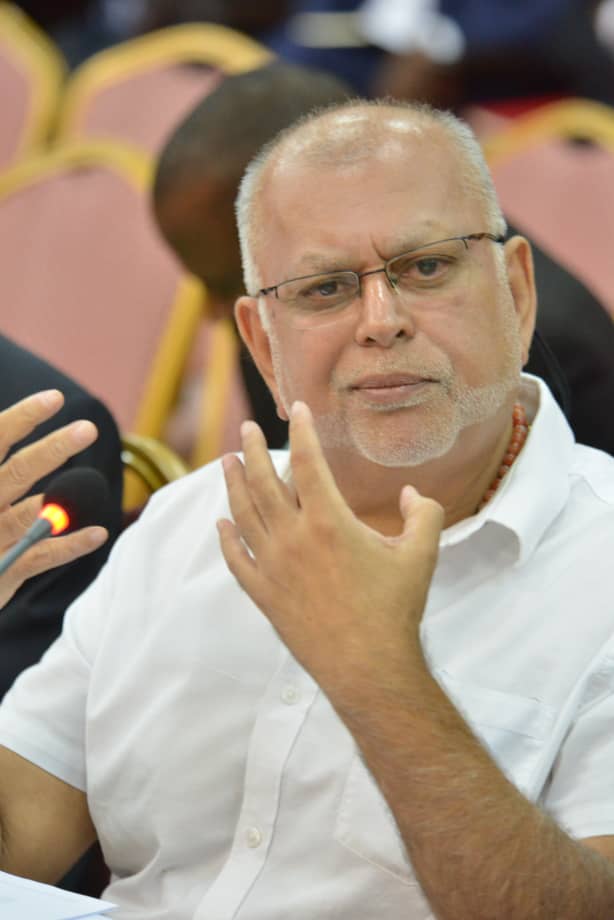
Sudhir tops Forbes table of top Ugandan entrepreneurs

Mr. Sudhir Ruparelia


Ugandan businessman, Sudhir Ruparelia has kept his position at the top in the latest Forbes list of top 10 successful entrepreneurs in Uganda.

According to the list, there are no surprises in the top 10, which list is ruled by Ugandans of Asian origin with Karim Hirji, returning in position two while Mr Alykhan Karmali of the household Mukwano Group is number 3.

Businessmen Charles Mbiire, Gordon Wavamuno, and Patrick Bitature, who is in number 10 position make the portion of the indigenous Ugandans on the list.

Mr Ruparelia has consistently remained top of the list ever since Forbes started publishing it a few years ago.

Sudhir this year has unveiled a number of assets to his name key among them, Speke Apartments, Electrical Plaza and the magnificent Kampala Kingdom Mall. The businessman invests in hospitality, real estate, education and flouriculture among others where he employees a good number of Ugandans.

The list is as:

1.      Sudhir Ruparelia

Sudhir Ruparelia has consistently been topping this powerful list for several years.

Sudhir is famed for rising his fortune from US$25,000 which he saved from his hustle in the United Kingdom before he returned to Uganda in mid-1980s as a beverages merchant and later as a foreign currency dealer.

The city businessman has from scratch, built his empire that includes; hotels and other investments in the hospitality industry, real estate, floriculture education and the media, insurance and forex and until recently banking before his Crane Bank was controversially transferred to DFCU bank by the Central Bank.

2.     Karim Hijri

Regarded as the main force behind the presence of Dembe Group of Companies, Karim Hijri has attained an impressive feat as Uganda’s second wealthiest person. As the Dembe Group of Companies continually thrives through its subsidiaries such as Imperial Group of Hotels, Karim Hijri is declared to be worth US$750 million.

3.     Alykhan Kharmali

Until his death recently, the founder of Mukwano Industries, Alykhan Kharmali has been among the richest Ugandans for several decades.

According to Forbes Magazine he is one of the business architects of Uganda’s resurgence in 1990s with his popular household flagship.

Mukwano family has interests in banking, manufacturing, agriculture and real estate.

3.     Mohammed Hamid

Having emerged into Uganda’s class of richest personalities at a youthful age, Mohammed Hamid is considered a fortunate business colleague with huge investments in areas such as transportation, real estate, and manufacturing.

As the owner and originator of the Aya Group, which forms part of Uganda’s thriving companies, Mohammed Hamid’s net worth swirls around US$400 million.

5.     Charles Mbire

Since many of the richest Ugandans are of foreign descent, Charles Mbire claims a notable position as the wealthiest native Ugandan.

With his entire worth valued at US$350 million, Mbire is well known for his diverse business investments which span across transportation, agribusiness, pharmaceuticals, telecommunications, real estate, energy, and finance.

6.     Sikander Lalani

Other than his investment dealings which largely centre on the manufacturing sector, Lalani is the vital force behind the existence of Roofing Groups. Having established himself as an entrepreneur for a very long time, Sikander Lalani has acquired a sum of US$300 million as net worth.

7.     Aaron M. Mukooza

With regard to his large investments which heavily span across the media together with the banking sector, Mukooza has amassed some net worth valued at US$200 million.

8.     Gordon Wavamuno

As the best part of his wealth is believed to have stemmed from his automotive business, Gordon Wavamunno is immensely linked with the ownership of Spear House together with Spear Motors –his automotive company. Meanwhile, according to Forbes, he has the sum of $100 million as his overall worth.

9.     Mukesh Shukla

Shukla is reported to have acquired US$100 million as net worth mainly from his ownership of Shumuk Group of Companies –a successful company concerned with cooking utensils.

10. Patrick Bitature

Bitature is a wealthy personage who acquires the largest portion of his money through a giant telecom company, Simba Telcom, which he presides over.

As Simba Telcom Ltd is regarded as Uganda’s biggest seller/merchant of MTN airtime, Bitature’s wealth has surged perpetually. This year, he bounced back as the Chairman of the giant utility company, Umeme. His interest in hotel and hospitality has seen him immensely invest in hotel business with the opening of Naguru—Protea Hotel, and Marriott Protea Hotel in Kampala.

His current net worth is estimated to be US$100 million.

Stories Continues after ad

Digital Currencies: The rise of stablecoins

Stablecoins


By Tobias Adrian and Tommaso Mancini-Griffoli


A battle is raging for your wallet. New entrants want to occupy the space once used by paper bills or your debit card.

The adoption of new, digital payment methods could bring significant benefits to customers and society: improved efficiency, greater competition, broader financial inclusion, and more innovation. But it could invite risks to financial stability and integrity, monetary policy effectiveness, and competition standards, as outlined in a recent IMF staff paper, the first of a new series of Fintech Notes.

Stablecoin adoption

Adoption of new forms of money will depend on their attractiveness as a store of value and a means of payment. New entrants like stablecoins, however, are significantly different from the popular incumbents: cash or bank deposits.

While many stablecoins continue to be claims on the issuing institution or its underlying assets, and many also offer redemption guarantees at face value (a coin bought for 10 euros can be exchanged back for a 10-euro note, like a bank account), government-backing is absent. Trust must be generated privately by backing coin issuance with safe and liquid assets. And the settlement technology is usually decentralized, based on the blockchain model.

Times are changing. USD Coin recently launched in 85 countries, Facebook announced Libra, and centralized variants of the stablecoin business model are becoming widespread. So why are stablecoins taking off?

The strength of stablecoins is their attractiveness as a means of payment. Low costs, global reach, and speed are all huge potential benefits. Moreover, stablecoins could allow seamless payments of blockchain-based assets, and can be embedded into digital applications thanks to their open architecture, as opposed to the proprietary legacy systems of banks.

But the strongest attraction comes from the networks that promise to make transacting as easy as using social media. Payments are more than the mere act of transferring money. They are a fundamentally social experience linking people. Stablecoins offer the potential for better integration into our digital lives and are designed by firms that thrive on user-centric design. Large technology firms with enormous global user bases offer a ready-made network over which new payment services can quickly spread.

Risks of stablecoins

Risks abound, however—so policymakers must create an environment that maximizes benefits and minimizes risks. Policymakers will need to innovate and collaborate across countries, but also across functions. Here are six observations for them to consider.

First, banks may lose their place as intermediaries if they lose deposits to stablecoin providers. But banks are not sitting ducks. They will surely try to compete by offering their own innovations (and higher interest rates). Also, stablecoin providers could recycle their funds into the banking system, or decide to engage in lending by extending deposits themselves. In short, banks are unlikely to disappear.

Second, new monopolies could arise. Tech giants could use their networks to shut out competitors and monetize information, using proprietary access to data on customer transactions. New standards are needed for data protection, portability, control, and ownership. And services need to be interoperable to facilitate entry.

Third, weaker currencies could face threats. In countries with high inflation and weak institutions, local currencies might be shunned in favor of stablecoins in foreign currency. This would be a new form of “dollarization” and might undermine monetary policy, financial development, and economic growth. As countries are forced to improve their monetary and fiscal policies, they will have to decide whether to restrict foreign-currency stablecoins.

Fourth, stablecoins could promote illicit activities. Providers must show how they will prevent the use of their networks for activities like money laundering and terrorist financing by enforcing international standards. New technologies offer opportunities to improve monitoring, however supervisors will need to adapt to the more fragmented and geographically diverse value chain of stablecoins.

Fifth, stablecoins could provoke the loss of “seigniorage,” where central banks capture profits from the difference between a currency’s face value and its manufacturing cost. Issuers could siphon off profits if their stablecoins do not carry interest but if the hard currency backing them earns a return. One way to address this issue is to promote competition so issuers of coins would eventually pay interest.

Sixth, policymakers must reinforce consumer protection and financial stability. Customer funds must be safe and protected from bank runs. This calls for legal clarity on what kind of financial instruments stablecoins represent. One approach would be to regulate stablecoins like money market funds that guarantee fixed nominal returns, requiring providers to maintain sufficient liquidity and capital.

Stablecoins thus present as many conundrums as they do potential benefits—and policymakers would be wise to envision far-sighted regulatory regimes that will meet the challenge. The policies adopted today will mold the world of tomorrow. We explore one such avenue in our next blog.

This blog is the first in a 2-part series on IMFBlog covering digital currencies.


Stories Continues after ad