|
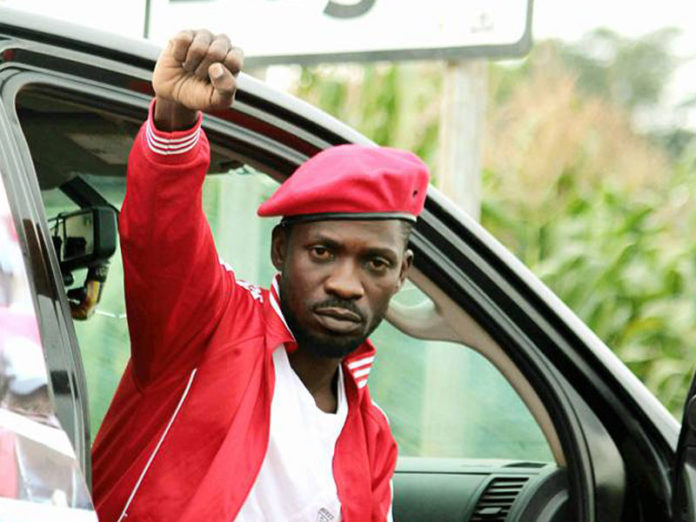
Several Members of Parliament subscribing to the ruling National Resistance Movement party commonly referred as ‘Rebel MPs’ have been named by Kyadondo East legislator Robert Kyagulanyi aka Bobi Wine as regional coordinators in their respective areas. for re stance, Manjiya Constituency MP John Baptist Nambeshehas been announced as the Bugisu region chief coordinator for the People Power pressure movement . Busiro East MP, Medard Ssegona will lead the Kampala team while Asuman Basalirwa, The Bugiri Municipality will lead the Busoga team. The unveiling of a complete list of a team that is going to coordinate People Power activities ahead of the 2021 General elections was at Kyagulanyi’s home in Magere this morning. The Spokesperson of the People Power movement Joel Senyonyi while addressing the team said that they were not supposed to be at Magere but all venues they approached refused to host them due to fear . Below is the full list 2. Bukedi; 3. Busoga; 4. Sebei; 5. WestNile; 6. Acholi; 7. Karamoja; 8. Lango; 9. Teso; 10. Tooro; 11. Ankole; 12. Bunyoro; 13. Rwenzori; 14. Kampala Metropolitan; 15. Greater Luweero; 16. Greater Mubende; 17. Greater Mpigi; 18. Greater Mukono; 19. Greater Masaka; 20. Youth Wing; 21. Institutions; 22. Women Wing; 23. PWDs 24. Arts & Entertainment; 25. Informal Sector; 16. Diaspora; |
NRM rebel MPs named regional People Power chief coordinators
NSSF increases 2019 KAVC international sponsorship to Shs180m
The National Social Security Fund (NSSF) has increased its sponsorship towards this year’s NSSF Kampala Amateur Volleyball Club (KAVC) International Volleyball Tournament from Shs130 million to Shs180 million.
The sponsorship deal was unveiled on Tuesday at the Copper Chimney Restaurant in Lugogo by the NSSF deputy managing director, Patrick Ayota and KAVC President Milly Kure.
“This financial support will go towards competition venues, competition equipment, technical equipment, cash prizes and accolades for outstanding players, Referees and officiating expenses, and a publicity drive.’’ Deputy Managing Director Patrick Ayota said.
KAVC President Milly Kure thanked the Fund for the NSSF KAVC 2019 sponsorship boost and urged all volleyball fans to go and watch the tournament.
“We appreciate how far NSSF has brought the tournament and individual players for the last 11 years. Some of those players include Ronald Kitusi and Emma Kato playing for Kirehe club in Rwanda, Sharon Amito playing for UTB-Rwanda, Daudi Okello in Turkey. This has reinstated hope in the younger players and rekindled the essence of Volleyball in Uganda,: she said.
The 2019 NSSF KAVC International also marks 11 years since NSSF entered into a partnership with Kampala Amateur Volleyball Club (KAVC) to promote the development of the game of volleyball, which has been a success so far.
The tournament provides a strong platform for individual players to showcase their talent and many of our players have competently utilized this opportunity and have been able to join professional clubs abroad.
This year, the winners will walk away with Shs10 million, the runners up Shs5.5 million and the third-place team bagging ShS3.7 million for both the men and women’s categories.
The 23rd edition of the tournament is slated to take place from 2nd to 4th August 2019 at the Lugogo Indoor Stadium and Hockey Arena.
Over 30 teams from South Sudan, Congo, Rwanda, and Burundi are expected to participate, and for the first time a team from Ethiopia, will take part.
Uganda’s KAVC and Ndejje University are the champions for the men and women categories respectively.
UNBS closes over 160 sachet-filling machines in four districts
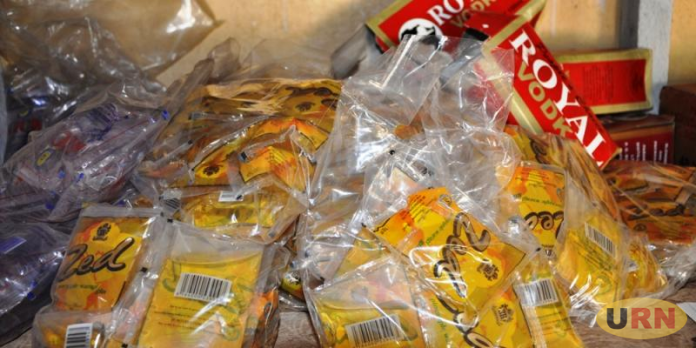
As a measure to enforce the government ban on alcohol sold in sachets, the Uganda National Bureau of Standards (UNBS) has closed over 167 sachet-filling machines belonging to at least 37 alcohol-manufacturing companies. The operation was conducted in Kampala, Wakiso, Mukono, Jinja and Mityana. UNBS staff also seized and confined packaging materials used in production of sachets.
The Minster of Trade Industry and Cooperatives, Amelia Kyambadde issued a directive banning the sale of alcohol in sachets effective 1st June 2019 and instituted a multi-agency task force including UNBS, Ministry of Health, Uganda Police, National Environment Management Authority to enforce the ban.
The ban was instituted as a consumer protection measure to guard against excessive alcohol consumption especially among the youth. Before the ban, alcohol sold in sachets was readily available and affordable to the majority of the youth.
UNBS Executive Director, Dr. Ben Manyindo, said: “We are aware that by time we sealed off the machines some of the alcohol in sachets had already found its way on the market. Our market surveillance team will soon carry out raids on wholesale and retail outlets that could still be selling sachets. We are committed to enforcing standards to protect the health and safety of consumers.” He urged consumers to report cases of alcohol sold in sachets on the UNBS toll free line 0800 133 133.
Consumer Tips on how to identify quality alcohol:
It should be clear and shall not become cloudy on being diluted with water;
It should be free from sediments or suspended matter of any type even at sub-zero temperature;
It should have the characteristic taste associated with the gin;
The packaging should be the name, physical location and address of manufacturer/importer/bottler, alcohol content in percent by volume, batch number or identification code, country of origin; and any statutory warnings.
Police in Lira arrest four men with fake dollars and pounds
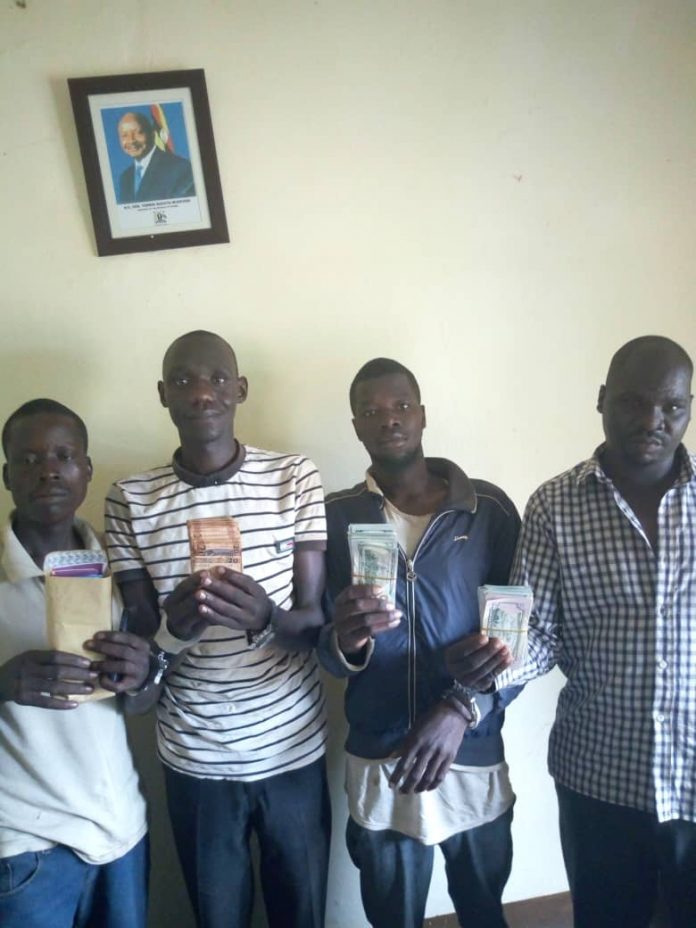
Police at Lira Central Police Station in Lira District are holding four suspects who were arrested while in possession of counterfeit currency notes of United States Dollars and South Sudanese Pounds. The suspects have been identified as Ambrose Okot, Sam Odongo, Martin Otia and Andrew Aleny, residents of Lira.
According to the North Kyoga Region Public Relations Officer ASP. David Mudongo Ongom, on receiving intelligence, a covert operation on the suspects was instituted on July 19, 2019 that first led to the arrest of Okot and Odong along Lira town Main street. And upon interrogation their accomplices Otia and Aleny were as well pursued and apprehended at Ambalal Primary School in Adyel division, Lira Municipality. A search was conducted and they were found with counterfeit notes.
Ongom said the fraudsters are part of a racket of gangs who have organised themselves with intention to defraud members of the public. ‘As the police, through community policing we do appreciate the members of the public for the vigilance exhibited against the vice that has always helped us to succeed during this kind of operation,” he said.
He said upon the conclusion of the inquiry, the suspects shall be paraded in courts of law for prosecution.
UN honours 22 Ugandan police officers for contribution to professionalisation of South Sudan counterparts
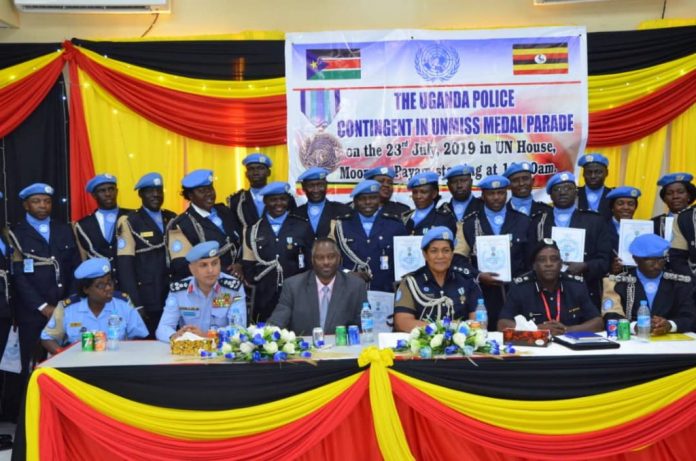
The United Nations Mission in South Sudan (UNMISS) leadership has honored 22 Individual police Officers (IPOs) from Uganda for their invaluable contribution to the professional growth of South Sudan National Police Force (SSNPF) officers.
UNMISS has a mandate to protect civilians, train, mentor and the overall reforms and restructuring interventions such as observance of human rights, rule of law among others.
The UNMISS Police Commissioner, Unaisi Lutu Vuniwaqua, who represented the Special Representative of the Secretary General (SRSG) awarded the medalists with special United Nations medals as a token of appreciation for their sacrifice, hard work, and perseverance towards building the capacity of SSNPF.
She also commended the Uganda Police Force (UPF) for deploying to the mission capable IPOs with 36% women.
The Commissioner said that since the IPOs deployment on October 01, 2018, the officers have been making great contributions torwards the implementation of UNMISS mandate.
She applauded AIGP Grace Turyagumanawe, the UPF director for peace support operations for finding time to visit the troops, adding that it gives a lot of motivation to the officers on a mission.
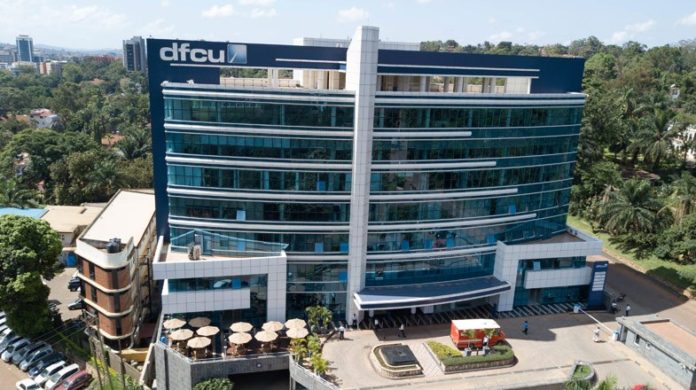
Ploy to involve Museveni in Dfcu bank hacking won’t solve internal issues
It has emerged that Dfcu bank plans to approach President Yoweri Museveni on the recent hacking scandal where billions of shillings disappeared from the bank and the case is reported to police authorities.
Sources say Dfcu bank top board members also want Museveni to intervene by way of stopping the media from reporting about the issue and several others. However, the said meeting with the president is yet to take place and is being organised under the guise of briefing him on economy performance. It is said one of the two board members will lead the team.
The media has of late been reporting about the hacking of billions of money in Dfcu bank. The matter is also being investigated by police to establish and arrest people behind it.The media is only doing its job of informing the public and has no ill motives.
It appears Dfcu bank managers only appreciate positive stories about the company but a story that is negative, however true it is, is taken as sabotage. Many media houses including this website have written good or positive stories about Dfcu bank, which shows there is no intentional malice against the bank.
The media have published negative stories about other banks in Uganda but those banks have never come up to complain because they were true. Some banks for example were reported in the media for holding on to pensioners’ money, giving loans to dead people, among other stories but they have never come out to blame the media. The Bank of Uganda (BoU) which regulates the local banking sector has not been spared either.
The media’s aim to contribute to transparency and accountability in the banking industry. Investors need banks that are transparent and accountable to the public. Shareholders also want to deal with managers who are transparent in their operations and transactions.
In such circumstance it is wrong for Dfcu bank or nay other bank to try to prevent the media from doing their noble job. However, it is important to note that the media has also been careful not to publish some articles that could harm the banking industry, yet some bankers are responsible for the chaos in their own institutions.
It is on record that Dfcu bank does not like media houses that have reported about not good incidents in that institution for example the controversial acquisition of Crane Bank Limited (CBL) and Global Trust Bank Uganda (GTBU). The report of parliament’s Committee on Commissions, State Authorities and State Enterprises (COSASE) is clear on this matter that had the BoU management blamed as well.
It is also on record that DFCU Bank has tried to influence security agencies to reprimand journalists that write the so-called negative stories about the bank. Journalists have received telephone calls from individuals who claim to be doing it on behalf of the bank.
The continuous claim that the negative stories about the bank could hurt the Ugandan economy is misleading. Dfcu bank is loved and managers there only have to put things right. For instance they should ensure that their systems are secure to beat hackers and others.
When the media reports on any organisation in the way that the institutions thinks it is negative, the media is interested in proving solutions to the problem so that the bad incidents don’t repeat again. That is why Dfcu bank should solve problems internally rather thinking of reporting the media to Museveni, whose government has guaranteed press freedom to the greatest extent.
Sluggish global growth calls for supportive policies
By Gita Gopinath
In our July update of the World Economic Outlook we are revising downward our projection for global growth to 3.2 percent in 2019 and 3.5 percent in 2020. While this is a modest revision of 0.1 percentage points for both years relative to our projections in April, it comes on top of previous significant downward revisions. The revision for 2019 reflects negative surprises for growth in emerging market and developing economies that offset positive surprises in some advanced economies.
Growth is projected to improve between 2019 and 2020. However, close to 70 percent of the increase relies on an improvement in the growth performance in stressed emerging market and developing economies and is therefore subject to high uncertainty.
Global growth is sluggish and precarious, but it does not have to be this way because some of this is self-inflicted. Dynamism in the global economy is being weighed down by prolonged policy uncertainty as trade tensions remain heightened despite the recent US-China trade truce, technology tensions have erupted threatening global technology supply chains, and the prospects of a no-deal Brexit have increased.
The negative consequences of policy uncertainty are visible in the diverging trends between the manufacturing and services sector, and the significant weakness in global trade. Manufacturing purchasing manager indices continue to decline alongside worsening business sentiment as businesses hold off on investment in the face of high uncertainty. Global trade growth, which moves closely with investment, has slowed significantly to 0.5 percent (year-on-year) in the first quarter of 2019, which is its slowest pace since 2012. On the other hand, the services sector is holding up and consumer sentiment is strong, as unemployment rates touch record lows and wage incomes rise in several countries.
Among advanced economies—the United States, Japan, the United Kingdom, and the euro area—grew faster than expected in the first quarter of 2019. However, some of the factors behind this—such as stronger inventory build-ups—are transitory and the growth momentum going forward is expected to be weaker, especially for countries reliant on external demand. Owing to first quarter upward revisions, especially for the United States, we are raising our projection for advanced economies slightly, by 0.1 percentage points, to 1.9 percent for 2019. Going forward, growth is projected to slow to 1.7 percent, as the effects of fiscal stimulus taper off in the United States and weak productivity growth and aging demographics dampen long-run prospects for advanced economies.
In emerging market and developing economies, growth is being revised down by 0.3 percentage points in 2019 to 4.1 percent and by 0.1 percentage points for 2020 to 4.7 percent. The downward revisions for 2019 are almost across the board for the major economies, though for varied reasons. In China, the slight revision downwards reflects, in part, the higher tariffs imposed by the United States in May, while the more significant revisions in India and Brazil reflect weaker-than-expected domestic demand.
For commodity exporters, supply disruptions, such as in Russia and Chile, and sanctions on Iran, have led to downward revisions despite a near-term strengthening in oil prices. The projected recovery in growth between 2019 and 2020 in emerging market and developing economies relies on improved growth outcomes in stressed economies such as Argentina, Turkey, Iran, and Venezuela, and therefore is subject to significant uncertainty.
Financial conditions in the United States and the euro area have further eased, as the US Federal Reserve and the European Central Bank adopted a more accommodative monetary policy stance. Emerging market and developing economies have benefited from monetary easing in major economies but have also faced volatile risk sentiment tied to trade tensions. On net, financial conditions are about the same for this group as in April. Low-income developing countries that previously received mainly stable foreign direct investment flows now receive significant volatile portfolio flows, as the search for yield in a low interest rate environment reaches frontier markets.
Increased downside risks
A major downside risk to the outlook remains an escalation of trade and technology tensions that can significantly disrupt global supply chains. The combined effect of tariffs imposed last year and potential tariffs envisaged in May between the United States and China could reduce the level of global GDP in 2020 by 0.5 percent. Further, a surprise and durable worsening of financial sentiment can expose financial vulnerabilities built up over years of low interest rates, while disinflationary pressures can lead to difficulties in debt servicing for borrowers. Other significant risks include a surprise slowdown in China, the lack of a recovery in the euro area, a no-deal Brexit, and escalation of geopolitical tensions.
With global growth subdued and downside risks dominating the outlook, the global economy remains at a delicate juncture. It is therefore essential that tariffs are not used to target bilateral trade balances or as a general-purpose tool to tackle international disagreements. To help resolve conflicts, the rules-based multilateral trading system should be strengthened and modernized to encompass areas such as digital services, subsidies, and technology transfer.
Policies to support growth
Monetary policy should remain accommodative especially where inflation is softening below target. But it needs to be accompanied by sound trade policies that would lift the outlook and reduce downside risks. With persistently low interest rates, macroprudential tools should be deployed to ensure that financial risks do not build up.
Fiscal policy should balance growth, equity, and sustainability concerns, including protecting society’s most vulnerable. Countries with fiscal space should invest in physical and social infrastructure to raise potential growth. In the event of a severe downturn, a synchronized move toward more accommodative fiscal policies should complement monetary easing, subject to country specific circumstances.
Lastly, the need for greater global cooperation is ever urgent. In addition to resolving trade and technology tensions, countries need to work together to address major issues such as climate change, international taxation, corruption, cybersecurity, and the opportunities and challenges of newly emerging digital payment technologies.
The writer is IMF’s Chief Economist
Reigning Miss World, Vanessa Ponce jets into the country ahead of the Miss Uganda grand finale
The Reigning Miss World,Vanessa Ponce de Leon has jetted into the country ahead of the Miss Uganda grand finale slated for Friday this week.
According to the chief executive officer of Miss Uganda, Brenda Nanyonjo, the visit will include, going to State House, the Pearl of Africa Tour, engagement in ‘Beauty with a Purpose’ projects and conclude at the crowning finale of Miss Uganda 2019.
Nanyonjo said Uganda is one of the countries in the world listed among the friendliest places to visit, “So we look forward to welcoming the queen and the Miss World team to the Pearl of Africa.”
“We for the first time invited Miss World to come to be part of our activities which will be topped with the crowning of Miss Uganda,” she said.
Silvia Vanessa Ponce de León Sánchez known as Vanessa Ponce is the first Mexican model and beauty queen who was crowned Miss World 2018 besting 117 other hopefuls from around the globe.
In the 2018 miss world contest, Quiin Abenakyo, Uganda’s newly crowned model and beauty pageant titleholder who was crowned Miss Uganda 2018. She represented Uganda at Miss World 2018 in China and was crowned Miss World Africa 2018.
She is expected to be part of the consolidated team that will traverse the country with miss world.
EAC Secretariat urges partner states to increase risk and crisis communication measures to keep out Ebola
|
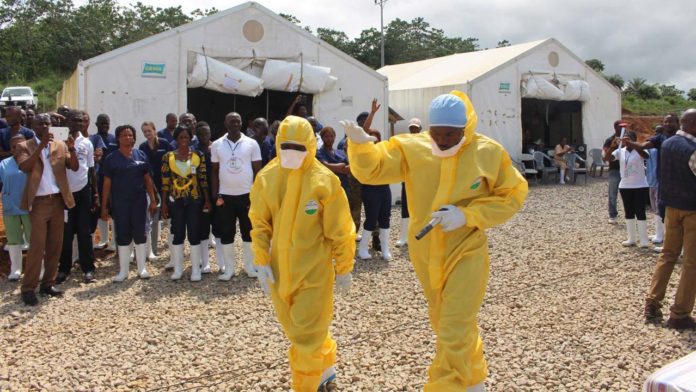
The EAC Secretariat has urged Partner States to increase risk and crisis communication following the confirmation of a fatal Ebola case in Democratic Republic of Congo (DRC) and further increases the risk for the East African Community (EAC) region of the outbreak crossing the borders. The first three cases of Ebola in the EAC region were diagnosed in Uganda in June 2019 and triggered strong response measures by the Ugandan government. Trade is vibrant between DRC and the EAC region and can exacerbate the spread of the Ebola Virus Disease (EVD) due to the high mobility of people and goods. Dr Michael Katende, acting Head of Health at the EAC Secretariat urged the Partner States to strongly engage the communities in the border regions and traders and trade associations in risk and crisis communication measures. “This is particularly important, as most of the border line is porous and difficult to control” says Katende, “informal and formal traders need to know the risk and be able to take informed decisions to minimize it and to actively take precautions.” EAC Partner States have put in place precautionary measures to stop the spread of EVD into the EAC region. This includes vaccinating frontline health workers, screening all travelers at points of entry including airports and training the first responders in case of an outbreak. However, these measures might not be sufficient. Dr Michael Katende, acting Head of Health at the EAC Secretariat was especially concerned about EVD spreading into South Sudan with its still rather weak health system. The EAC Secretariat calls upon the Partner States to increase risk and crisis communication by involving community, religious and other leaders and the media in public awareness raising. At the same time, the Secretariat calls upon traders and trade associations and those travelling across the border with DRC to take extra precaution, as the EVD threat is real
|
Ugandans miss on roster of boys and girls teams that will represent Africa in the Jr. NBA Global Championship
The NBA today announced the 10 boys and 10 girls who will represent the African continent in the second Jr. NBA Global Championship, a youth basketball tournament for the top 13- and 14-year-old boys and girls teams from around the world that will be held Aug. 6-11 at ESPN Wide World of Sports Complex at Walt Disney World near Orlando, Florida. But no single Ugandan boy or girl appears on any of the list for boys and girls respectively.
The 20 youth players representing eight African countries were selected from Jr. NBA programs and clinics held across the continent. Bahati Mgunda (Tanzania) and Samba Fall (Senegal) were selected to coach the girls and boys teams, respectively.
Africa Girls Team
- Shaza Ayman (Egypt)
- Badmus Mistura Bisola (Nigeria)
- Fatou Cisse (Senegal)
- Jana Ehab (Egypt)
- Merit Atebe Innocent (Nigeria)
- Sandrine Kamgain (Cameroon)
- Ndeye Ndiaye (Senegal)
- Aisha Nhantumbo (Mozambique)
- Leslie Catherine Njukoua (Cameroon)
- Kadidia Traore (Mali)
Africa Boys Team
- Hassan Amer (Egypt)
- Badara Aliou Diakite (Mali)
- Khadim Rassoul Diongue (Senegal)
- Seydina Limamoulaye Faye (Senegal)
- Mohamed Fofana (Guinea)
- Dieu Merci Bolisomi Ilonga (DRC)
- Ngeleka Kabeya (DRC)
- Said Nkene F. Michel (Cameroon)
- Marouf Moumine (Cameroon)
- Emmanuel Owonibi (Nigeria)
In the inaugural event last year, the Africa & Middle East boys team won the international division to advance to the global championship game where they lost to the U.S. Central boys team and finished as the tournament runner-up. Marouf Moumine (Cameroon), who will be returning with the Africa boys team, was recognized with the Determination Award at last year’s event and is now a member of The NBA Academy Africa in Saly, Senegal. He joins Said Nkene F. Michel (Cameroon) as the only other male player returning from last year’s team. Sandrine Kagmain (Cameroon) and Kadidia Traore (Mali) will make their second appearance in the Jr. NBA Global Championship after participating on the Africa & Middle East girls team in the inaugural event.
The Jr. NBA Global Championship will feature boys and girls divisions, separated into U.S. and international brackets that begin with round-robin play and continue with single-elimination competition. The winners of the U.S. and international brackets will play in the global championship games on Aug. 11. During the weeklong event, all 32 teams will participate in activities designed to reinforce the Jr. NBA’s core values and provide the players with development opportunities and memorable experiences off the court, including life skills sessions, Disney park visits and a community service project.