Stanbic Bank
Stanbic Bank
28.3 C
Kampala
Stanbic Bank
Stanbic Bank
Home Blog Page 2378

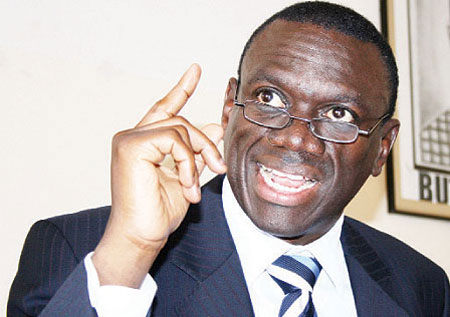
THE 1999 KIZZA BESIGYE DOSSIER VERBATIM

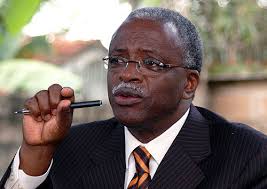
The first ‘friend’ to openly challenge Museveni’s Presidency was Colonel (rtd) Dr. Warren Kizza Besigye.

The first ‘friend’ to openly challenge Museveni’s Presidency was Colonel (rtd) Dr. Warren Kizza Besigye, a bush was veteran who treated the NRA fighters including Museveni. 

President Yoweri Museveni has ruled Uganda for close to 30 years now, making him the longest-serving Head of State of post-independent Uganda.

During this period from 1986 to date he has worked with friend and foe, his bush war colleagues and those he incorporated in the broad-based government and, at some point his ‘friends’ have sought to explain their political positions, that have sought to challenge his presidency and vision through letters, some of which became public, in one way or the other. Eagle Online brings some of the contested issues the president’s comrade has brought forward.

Below is the dossier Besigye wrote;

I have taken keen interest and participated in the political activities on the Ugandan scene since the late 1970s. This was during a period of intense jostling to topple and later succeed the Idi Amin regime. I am, therefore, fully aware of the euphoria, excitement and hope with which Ugandans received the Uganda National Liberation Front/Army (UNLF/A). Ugandans supported the UNLF’s stated approach of “politics of consensus” through the common front. It was hoped that the new approach to politics would be maintained and Uganda rebuilt from the ruins left by the Amin regime. Unfortunately, instead of nurturing the structures, and regulations which bound the front together, we witnessed a primitive power struggle that resulted in ripping the front apart to the chagrin of the population.

Some of us young people were immediately thrown into serious confusion. We had not belonged to any political party before, and we did not approve of the record and character of the existing parties – UPC and DP. Spontaneously, many people started talking of belonging to a Third Force. This force represented those persons who wished to make a fresh start at political organization, with unity and consensus politics as the centre pin. With a few months left to the 1980 elections, the Third Force crystallized into a new political organization– the Uganda Patriotic Movement (UPM). The population, to a large extent, expressed their appreciation of the ideas and opportunity presented by the young organization, but was pessimistic regarding its electoral success.

Pessimism was justified, because the new organisation simply had no time and resources to organize effectively nationally; and UPC was already positioning itself very loudly and arrogantly to rig the elections and seemed to have what was essential for them to do so successfully. After the sham 1980 elections, when Paulo Muwanga, a leader of UPC (and chairman of the Military Commission) took over all powers of the Electoral Commission and declared his own election results, there was widespread despondency and tension. While the “minority” DP Members of Parliament took up the opposition benches in Parliament, the rank and file of the party rapidly united behind the new forces of resistance to struggle against the dictatorial rule. The Popular Resistance Army (PRA and later, NRA) led by Yoweri Museveni which started with about 30 fighters, was overwhelmed by people seeking to join its ranks. The NRM was born as a political organization in June 1981.

It was created by a protocol that effected the merger of Uganda Freedom Fighters UFF (led by the late Prof Y.K. Lule and Museveni’s PRA). The armed wing of the organization became the National Resistance Army (NRA). The NRM political programme was initially based on seven points which were later increased to become the well-known Ten-Point Programme. The basic consideration in drawing up the programme was that it should form the basis of a broad national political and social force. A national coalition was considered to be of critical importance in establishing peace, security, and optimally moving the country forward. The political programme was, therefore, referred to as a minimum programme around which different political forces in Uganda could unite for rehabilitation and recovery of the country.


To achieve unity, it was envisaged that the minimum programme would be implemented by a broad-based government. After the bush war, discussions were undertaken with the various political forces to establish a broad-based government that would reflect a national consensus. The NRM set up a committee led by Eriya Kategeya (then chairman of the NRM Political and Diplomatic committee) for the purpose of engaging the various groups in these discussions. This exercise was, however, never taken to its logical conclusion. It would appear that once the leaders of the political parties were given “good” posts in the NRM government, their enthusiasm for the discussions waned, and the process eventually fizzled out. In spite of the lack of a proper modus operandi, the initial NRM government (executive branch) was impressively broad-based. Consensus politics conducted through elections based on individual merit and formation of broad-based government became the hallmark of the NRM.

Broad base undermined

However, the popular concept of the broad-based government, which had also received support of most political groups, was progressively undermined. It ought to be remembered that due to the support and cooperation of other political groups, no legal restrictions were imposed –on political parties until August 11, 1992 when the NRC made a resolution on political party activities in the interim period. In my opinion, there were three factors responsible for undermining and later destroying the NRM cardinal principle of broad-basedness, especially in appointment to the Executive: The NRM had set itself to serve for a period of four years as an interim government, then return power to the people. However, it was not very clear how this would happen at the end of the four years.

Some politicians in NRM government who came from other political parties set out to use their advantaged positions to, on the one hand, undermine the NRM and on the other, strengthen themselves in preparation for the post-NRM political period. Consequently, they fell out with the NRM leadership, and a number of them were arrested and charged with treason. Historical NRM politicians who thought that they were not “appropriately” placed in government, blamed this on the large number of the “non-NRM” people in high up places, and set out to campaign against the situation. They created a distinction between government leaders as “NRM”, and “broad-based”. If you were referred to as “broad-based”, it was another way of saying that you were undeserving of your post, or that you were possibly an enemy agent (“5th Columnist”).

After some years of NRM rule, some in the leadership began to feel that there was sufficient grassroots support for the NRM, such that one could “off-load” the “broad–based” elements in government at no political cost. These factors were at the centre of an unprincipled power-struggle which was mostly covert and hence could not be resolved democratically. It continued to play itself out outside the formal Movement organs, with the results of weakening and eventually losing the concept of consensus politics and broad-basedness. By the time of the Constituent Assembly elections were held in 1994, the NRM’s all encompassing, and broad-based concept remained only in name. For instance, while the CA electoral law clearly stated that candidates would stand on “individual merit”, the NRM Secretariat set up special commercial committees at districts whose task was to recommend “NRM candidates” for support. Not only did the logistical and administrative machinery of NRM move against the candidates supporting or suspected to be favouring early return to multi-party politics, it even moved against liberal candidates advocating for the initial NRM broad–based concept.

That is why many people were surprised and confused when some senior NRM leaders declared that “we have won!” after the CA results were announced. Who had won? It was clear that there were two systems; one described in the law, and another being practised. Moreover, the conduct of the CA, again exhibited the contradictions between the principles of NRM (and the law), and the practice. I was quite alarmed when I read a document titled ‘Minutes Of A Meeting Between H.E The President with CA Group Held On 25.8.94 At Kisozi.’ The copy had been availed to me by my colleague Lt Col Serwanga Lwanga (RIP) who attended the meeting. Present at the meeting were recorded as: H.E. the President (Chair), Eriya Kategaya, Bidandi Ssali, Steven Chebrot, Agard Didi, George Kanyeihamba. Miria Matembe, Mathias Ngobi, Mr Sebalu, Lt Noble Mayombo, Jotham Tumwesigye, Aziz Kasujja, Beatrice Lagada, Faith Mwonda and Margaret Zziwa. The introduction of the meeting reads in part as follows: The National Political Commissar introduced this committee as a Constituent Assembly Movement Group which wants to agree on a common position.

The arbitrary hand-picked group went ahead to take positions on major areas of the draft constitution, which we members of CA, (considered as “NRM supporters”), were supposed to support in the CA. It is interesting to note that among the 16 hand-picked members of the group, only six were directly elected to represent constituencies in the CA. The others were presidential nominees and representatives of special interest groups. One member was not even a CA delegate. We strongly resisted this approach, and after intense pushing and shoving, this group was replaced by the “Movement Caucus” under the chairmanship of the National Political Commissar, Kategaya.

Changing Movement

The Movement caucus acted very much like an organ of a ruling party. All ministers (except Paul Ssemogerere who later resigned from government) were members. The hand-picked group, and the Movement caucus after it, both undermined the principles of the Movement and the law. The Constituent Assembly was negatively influenced by executive appointments. In the middle of the CA proceedings, a cabinet reshuffle saw Speciosa Kazibwe elevated to the vice presidency, Kintu Musoke to premier and several other delegates appointed to ministerial posts. Many others were appointed to be directors of parastatal companies. It is my opinion that after these actions, some CA delegates took positions believed to attract the favourable attention of the executive. Most CA delegates also intended to participate in the elections that would immediately follow the CA.

This had two negative effects:

Being aware of the previous role of the NRM Secretariat in elections, some CA delegates would be compromised to act in such a way as to win the support of the secretariat in the forthcoming elections. Some CA delegates saw themselves as the first beneficiaries of the government structure and arrangements that were being constitutionalised. So, they took positions which would favour them, and not the common good. As a result, the CA progressively became polarized, and its objectivity was diminished, especially when dealing with political systems. For example, at the commencement of the CA, every delegate made an opening statement highlighting major views on the draft constitution. Analysis of these statements shows that few delegates supported the immediate introduction of multiparty system while the majority supported the continuation of the “Movement system” for a transitional period of varying length.

The positions expressed were very much in line with the views gathered by the Constitutional Commission. The commission noted in its report (paragraph 0.46) that a consensus on the issue could not be attained. This was demonstrated by the statistical analysis of views gathered from RC 1 to RC V, plus individual and group memoranda. It will be seen that nationally, at RC 1, “Movement” supporters were 63.2% and this percentage decreased progressively as they went to higher RCs until RCV (District Councils) where Movement supporters were only 38.9% and multiparty supporters were 52.8%. Among the individual memoranda, 43.9% supported a multiparty system, while 42.1% supported Movement. Among the group memoranda, 45.1% supported multiparty, while 41.4% supported Movement. It is important to note that these views were gathered at a time when there was no impending election, and therefore, no campaigning.

Accordingly, the Constitutional Commission proposed the following, as the only limitation on political party activities (in Article 98 of Draft Constitution): “For the period when the Movement is in existence, political parties shall not endorse, sponsor, offer platform to or in anyway campaign for or against any candidate for public office.” The CA under the influences outlined earlier ended up with restrictions contained in the highly contentious article 269 of the Constitution. The character of the Movement gradually changed, and the process of change was not determined democratically. Instead, it was continuously manipulated. Established Movement organs were continuously undetermined, and others completely ignored. For example, the National Executive Committee (NEC) of NRM was the organ supposed to be coordinating change in the NRM, yet NEC had not met for more than three years prior to the promulgation of the 1995 constitution – in spite of a requirement for it to meet at last once every three months. Instead, covert and arbitrarily constituted groups came in, like district election committees, special CA groups, Movement political High Command, Movement caucus, Maj Kakooza Mutale’s group, etc. The Movement created by the CA and completed by Parliament (through the Movement Act 1997) was different from the one of 1986-1995.

The Movement Act 1997 created a political organization with structures outside the governmental structure. For the first time, the Movement was a political organization distinct from government, the only remaining link being that it was funded by the government. Unfortunately, instead of describing the Movement as a political organization, the CA chose to call it a political system – distinct from “Multiparty Political System”, and other systems that may be thought of later. This was, in my opinion, a grave error. We even ignored advice given to us through a letter by President Yoweri Museveni (chairman NRM and Commander in Chief NRA) to the CA-NRM caucus delegates, dated June 21, 1995. In the letter, the chairman says, “the NRM is not a state but a political organization that tries to welcome all Ugandans. It therefore cannot coerce all Ugandans to be loyal to it. Loyalty to NRM is voluntary.”


The reality of the Movement today is that it is a political organization in much the same way as any political party is. Having no membership cards does not make it less so. In fact, in the letter referred to above, President Museveni further explains: “then some people may ask the question. If NRM could be already to compete for political office with opposing political forces in future, why not do it now? Do not support doing it now because it is not in the best [interest] of governance and fortunately now the people still agree with us. It is only when the majority of the people change that we have to adjust our position. It would be something imposed on us by circumstances.” So the NRM/Movement system is a convenient and, for the time, popular means to political power.

Manipulation

The characteristics which made the NRM government popular, such as the broad- based strategy, principle of individual merit, and the 10-Point Programme have been seriously eroded. This is evidenced by the bitter antagonism and animosity which exists between Movement supporters in many parts of the country, e.g. Kabale, Ntungamo, Kasese and Iganga. After more than 13 years of NRM rule, armed rebellion rages on in northern Uganda, and has also become entrenched in the western part of the country. All in all, when I reflect on the Movement philosophy and governance, I can conclude that the Movement has been manipulated by those seeking to gain or retain political power, in the same way that political parties in Uganda were manipulated. Evidently, the results of this manipulation are also the same, to wit: Factionalism, loss of faith in the system, corruption, insecurity and abuse of human rights, economic distortions and eventually decline. So, whether it’s political parties or Movement, the real problem is dishonest, opportunistic and undemocratic leadership operating in a weak institutional framework and a weak civil society which cannot control them.

I have shown that over the years the “Movement System” has been defined in the law in a certain way, but the leaders have chosen to act in a difficult way. This is dishonest and opportunistic leadership. I have also shown how changes have been made to the Movement agenda, and other important decisions have been made outside the Movement structures. This too is undemocratic leadership. In my opinion, the way forward in developing a stable political situation is to do the following: Urgently revisit the legal framework with a view to making an equitable law and regulation for all political organizations. The Movement should be treated as a political organization. Implementing this would need amendments to the Constitution, including amendment of articles 69 and 74. This requires the approval of the people through a referendum and the forthcoming referendum could be used for this purpose. In any case, laws are a reflection of the political will, so if there is political will to correct a situation, finding a way is easy.

The primary guarantor of democracy, human rights and the rule of law must be the civil society. Its capacity should, therefore, be quickly developed. Focus on a programme that could quickly raise the standards of living of our people to a decent level. This is an essential antecedent for our society to build a viable democracy. Of course, the approach to raising the standards of living is highly debatable. I have personal views that I hope to share with the public at another time. I pray to the almighty God to guide us so that we do not tumble again.

KIZZA BESIGYE

Stories Continues after ad

Judith Heard in accident fracas

Judith Heard
Judith Heard
Judith Heard

Local celebrity Judith Heard is in a tight fix; who isn’t when you knock down and seriously injure a boda boda cyclist and then try to drive off?

Last Thursday as she reportedly returned from an all-night booze binge Ms Heard, driving her state-of-the-art Audi Reg No UAP 433S knocked down Francis Mukasa, who was riding his motorcycle Reg No UEG 927 Y along Jinja Road, near the traffic lights.

Eye witnesses said a ‘drunk’ Ms Heard tried to drive on but was encircled by other boda boda riders until she was forced to pull over and try to settle the matter.

Mukasa was later taken to Mulago Hospital where his legs were amputated on arrival.

But as the matter was being pursued, Mukasa asked for Ushs20 million as compensation and treatment charges but Ms Heard requested to pay Ushs5 million, which his family and friends rejected, opting for the law to take its course.

Police has since preferred hit-and-run charges against Ms Heard under case file number TSD:02/04/06/2015.


Stories Continues after ad

Ragga Dee jumps on Mbabazi’s campaign team

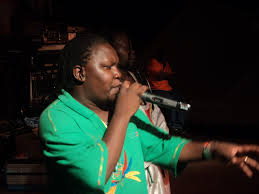
Ragga Dee is said to have composed two songs for Mbabazi.

editorial@eagle.co.ug

Amama Mbabazi’s bid to contest for the presidency in the 2016 general elections comes with so many opportunities and one of the many, is having artistes to drum up support through music.

And for this case, we all know that music has recently been used to deliver candidates’ messages to the masses and the latest from Makindye based artist Daniel Kyeyune Kazibwe aka Ragga Dee is that he has already composed two songs for Mbabazi.

Word has it that the former Prime Minister is on a musician registering drive and according to reports, Mbabazi is looking for musicians to help him on his campaign trail.
These will be paid handsomely if they compose songs that push his agenda to the masses.
Ragga Dee being the music ‘Jaja’ (grandfather) has recorded the songs already and now that Mbabazi has declared his bid for State House, Dee’s songs are likely to hit the airwaves anytime soon.


Stories Continues after ad

Mbabazi writes to Museveni over his presidential bid

Mbabazi writes to his former boss for his State House bid

MEMBER OF PARLIAMENT KINKIZI WEST CONSTITUENCY

Our reference. . . .01 5/006-001 1 3 June 2015

His Excellency Gen (Rtd) Yoweri Museveni National Chainnan, National Resistance Movement and President, of the Republic of [Uganda

Your Excellency,

I thank the National Resistance Movement (NRM) under your leadership for the opportunity given me to serve our great nation. We have worked together from the formation of NRM, and before that, from the earlier period of the liberation movement, on policy and implementation of the armed struggle and, later on, government programmes.

I am reasonably satisfied that the fundamental objectives NRM initially set out to achieve have been realized. These are: peace and security, a united country, improved economic security, positive economic growth, increased provision of education; the strengthening and/or building of institutions on which democratic governance can be anchored, and the respect of the international community, to name a few. I am very proud of whatever part I have played in bringing about the aforementioned achievements.

While we have done many great things, we now need to look not at the quantity but the quality of the product. When we look at all our accomplishments, it is clear we still face many more challenges. These are in brief: to transform the economy, to fight corruption, to tackle the scourge of unemployment and to create jobs for all, to provide universal and superior quality healthcare, to address the quality of education and the skills gap, and to strengthen and respect public institutions and the rule of law among others. Uganda is at a crossroads; stuck between old and new and very different economic development stages. Our future leaders need to understand this. What the Front for National Salvation (FRONASA) began, and NRA achieved, was a revolution. This was akin to building the foundation of one’s house. But now we must build upon our achievements, constructing the pillars and columns that will elevate our nation to new heights and form the basis upon which a stronger, more enduring and equitable social order can be laid. NRM must adapt and Uganda must progress. It is time to evolve.

This is what elections are about: the future; the path our great and proud nation will embark on. And yet, today’s leadership is afraid of the unknowable quality of the future. It is apprehensive of the fast-shifting landscape upon which present Uganda unfolds. The leadership clings to the sails of a wearied boat that is familiar, not observing that it is no longer properly equipped to stay the post liberation course, or that too great a number of its crew are now fortune-hunters and not genuine workmen. A number of those in the leadership reject various facets of 21st century modernity that have become essential to efficiency and advancement in other parts of the world.

The undeniable reality is this: a new age is upon us and it demands three things. The first is an awareness of its existence and the accompanying implications therein. The second: a willingness to engage with it as a present reality and not some far-off time in the future. The time is now for fairness; fairness in the salaries we offer teachers, doctors, nurses, and other medical workers; fairness in the salaries and allowances offered to policemen and soldiers – the men and women who sacrifice their lives to protect us; fairness for those in public service and all those Ugandans whose labour powers our economy.

The third and final demand of this new age is the competency to put in place the answers to the questions it will necessarily pose.

Whatever age we are in, however, the basic tenets of good governance remain the same. Good governance is based on the rule of law and not the whims of an individual. Good governance is grounded in equity and inclusiveness and demands the participation of citizens in decision-making. Good governance means a separation of powers where there is autonomy between the Executive, Legislative and Judicial branches of government. Good governance occurs when the Ugandan people can expect accountability, transparency and finally, effectiveness and efficiency. The time has come for Uganda to go forward in pursuit of a radical system change based on the principles of good governance. We cannot tarry for this is the most critical endeavour of our time.

As in the past, Uganda, and her people, still need peace and security. But they now have additional concerns. As they see how scientific and technological advancements continue to shape many parts of the world for the better in areas such as health, education, business and even governance, they are desirous of a leap into 21’t century modernity. Today’s Ugandans are exposed to and better aware of the possibilities available to them now that the preservation of life and limb is no longer their only primary concern.

Mr. Chairman, as I earlier stated, much has been achieved. Given this fact, let us not risk undoing our past gains.

The coming election is not simply about a change of leader, but about changing systems in Uganda for this generation and generations to come. We simply must join those nations where a change of guard happens regularly and through the ballot. It is time for a peaceful transition; and so I hope that all Ugandans will use the opportunity next year to cast their vote for a healthier and more democratic Uganda: where the rule of law is observed and where the identity, dignity, solidarity and productivity of her people are returned to her.

As you know Mr. Chairman and as I indicated earlier, I have had, in the past, the honour and privilege to work with you and other colleagues in the party, the government and the country and with so many young, passionate and engaged people. The change Uganda must have requires someone with the requisite ideas, energy and drive; and the experience I have acquired has given me the wherewithal needed to successfully steer this change. In light of this, I will be seeking to run for Party Chairman of the NRM and as the Flag-bearer for the National Resistance Movement for President of Uganda in the 2016 general election.

I remain loyal to my party the National Resistance Movement. Yet, my greatest devotion and allegiance is fixed upon my country Uganda and its people.

Sincerely, Amama M babazi, SC,MP.

Stories Continues after ad

UPC urges members to participate in 2016 elections

Mr Basalirwa speaking at UPC press conference today.

amayemba@eagle.co.ug

Kampala-Uganda Peoples’ Congress has called upon all its members to fully participate in the forthcoming 2016 general elections.

Speaking to journalists at the highly-guarded UPC offices at Uganda House, senior party official David Basalirwa said all party members need to participate in the elections so as to make the party strong.

“We want to see mainly UPC at the election centers,” Mr Basalirwa said adding: “we call upon all the youths and elders to take part in the 2016 elections.”

Sections of the opposition and some political activists have called for the boycott of the 2016, with claims that they cannot be free and fair under the current Electoral Commission, and subsequently called for its disbandment.

Meanwhile, asked about the heavy police presence at Uganda House, Mr. Basaliirwa first said: ‘the police was doing its duty of protecting citizens and their property’.

He however, later acknowledged that the police was called in to monitor the situation because “there was a bit of confusion.”

UPC is currently divided into two factions with some members supporting Mr Jimmy Akena, while some back Olara Otunnu. Last week Otunnu and Mr. Joseph Bossa were manhandled by youths allegedly loyal to Akena.

Meanwhile Michael Orach Osinde, a member of the party’s Conflict Resolution Committee says Otunnu is to blame for all the confusion in the party.

Mr. Osinde says the party Electoral Commission was mandated to release results in 48 hours, but was surprised when Otunnu set up a committee to review the election results.

“Cabinet did not approve it,” he said adding: “he (Ottunu) appointed members that supported Bossa, it would be unfair to Akena.”


Stories Continues after ad

Kayunga UPE teachers complain over poor welfare

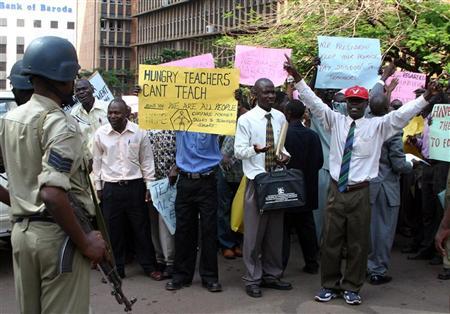
Ugandan teachers hold banners and shout slogans during a demonstration in Kampala June 15, 2005 in a protest against the government's failure to pay them a strike recently.


Ugandan teachers hold banners and shout slogans during a demonstration in Kampala June 15, 2005 in a protest against the government's failure to pay them a strike recently.
Ugandan teachers hold banners and shout slogans during a a strike recently.

editorial@eagle.co.ug

Kayunga-Universal Primary Education in Kayunga district is facing severe challenges with problems ranging from having few teachers, poor welfare and pupils studying from under trees.

During a visit to two UPE schools in Galilaaya sub county, Eagle online established that the teacher – pupil ratio is still low and needs to be addressed.

“Our staff ceiling is 10 members but surprisingly we are only seven including me the head teacher,” said Mr. David Lutaaya, the head teacher of Galilaaya Church of Uganda Primary School adding: “My office has sent in requests to the District  Education Officers to send us more teachers but we have not been helped.’’

Mr.Lutaaya also pointed out the geographical location of his school is a major hindrance to attain the required number of teachers since most of them don’t want to be posted to such rural places.

“I don’t think they want to come to the village; they will do anything in their power to stop a possible transfer to such a place.” he said.

ceilingAt Kasokwe Primary School located in Kasokwe village, the staff ceiling is reportedly nine but the available manpower is of only five teachers handling a population of over 553 students.

“Being a small group with a big work load, we do not perform to the expectations of many as the syllabus is not even complete by the time students sit for Primary Living Examination (PLE),” said Ms Irene Namugenyi, the deputy head teacher.

A few pupils also expressed concern over having few teachers, with one Rose Nabankema, a primary four pupil saying: “We have few teachers and so we miss out on studying some subjects like Luganda and Christian Religious Education; we hope the government will send us more teachers.”

At the same school, a group of pupils is holding lessons under a tree because of the few and small classrooms.

“Because we study outside, we get disturbed mostly when it rains as our books get wet.” Derrick Kyobe, a primary five pupil. He also said those who study in classes are no better.

“I am also not happy for our friends who study in the classrooms as most of them sit on the floor, there are no desks,” he disclosed.

The issue of feeding also raises concern in these schools as most of the students study on empty stomachs, something Mr.Lutaaya blames on the parents.

“When I came here, I started a policy where each student had to carry five kilograms of maize flour to cater for their daily porridge but the parents have refused because they are mean and illiterate,” he said.

He also revealed that his pupils take sugarless porridge at lunch time “because it cannot be afforded”.

However, the story is quite different at Kasokwe Primary School, where some go hungry the whole day.

“We eat nothing at school completely, so if you don’t carry something from home or come with money, you go hungry until when the classes end,” Jacob Buule, a primary seven pupil said.

And here too, Ms Namugenyi, the deputy head teacher blamed the parents for failing to provide for their children.

“It’s the parents I blame; they don’t want to contribute anything for their children’s lunch and they think the school has to provide everything,” she said.

upload 2 teacherHowever, it is not all about lack of food as she also complained about the poor state of the teachers’ quarters.

“Where we sleep is not different from a kraal, the roof is leaking and we have broken doors; we are worried anytime the building collapse and we are even tired of complaining to the district officials,” Ms Namugenyi says resignedly.

She said several district officials and Non Governmental Organisations (NGOs) have promised to help them to no avail.

”They only stop at visiting but they never come back, I think we now have to help ourselves because it’s clear they forgot us,” Ms Namugenyi adds.

Reached for comment on the various challenges raised by the schools, the District Education Officer Mrs. Alice Doyo, declined.

The District Inspector of Schools Mr. Moses Olok’s known phone number was off by the time we contacted him for a comment.

In a bid to align with the Millennium Development Goal (MDG) of providing basic primary education, in 1997 the government of Uganda introduced free primary education under the UPE programme.

Since then enrolment for primary education tripled from about 2.7 million in 1996 to 8.2 million in 2009. The Net Enrolment Ratio (NER), which is a key MDG indicator and measures the share of children in school-going age bracket who are actually in school, has hovered above 90% in recent years, close to the 100% needed to meet the MDG.

Also, according to reports, by 2010 Uganda had registered a tremendous 87.4 percentage increase in the literacy rate ‘of 15-24 year old men and woman through UPE’.

However the programme has faced numerous challenges, with some Ugandans questioning or castigating the quality of education being offered by the UPE schools.


Stories Continues after ad

First carbon credit sell in Africa sealed

The first-ever carbon credits trading in Africa has been concretised by Investisseurs & Partenaires (I&P) and Volta cars Rental Services (VRS)
concretised by Investisseurs & Partenaires (I&P) and Volta cars Rental Services (VRS)
The first-ever carbon credits trading in Africa has been concretised by Investisseurs & Partenaires (I&P) and Volta cars Rental Services (VRS)

The first-ever carbon credits trading in Africa has been concretised by Investisseurs & Partenaires (I&P) and Volta cars Rental Services (VRS).

I&P is the leading carbon finance group, dedicated to (partnering with) small and medium size enterprises in Sub-Saharan Africa, while VRS is a car leasing company operating in West Africa.

“We develop a strong environmental strategy; CO2 emissions are at the heart of our concerns and we are pleased to offer our customers the option to offset their carbon footprint. Today’s transaction is pioneering and a unique choice, which distinguishes us on the West African market. We hope it will become standard in our sector.”VRS will aggregate the offset demand of customers taking part in the “carbon neutral” program each quarter and for the whole fleet concerned. The carbon credit purchases will be made with same periodicity,” Thomas Crand, a co-founder of VRS said at the launch.

According to a release, the transaction, secured by ecosur afrique, will enable VRS customers to offset the CO2 emissions of vehicles leased in Ghana, Côte d’Ivoire and Senegal.

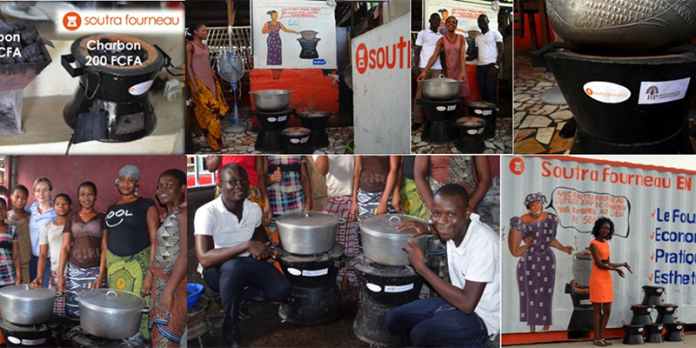
The carbon credits, or emission reductions, which are at base of the offset transaction, are generated from the dissemination of energy efficient cooks stoves in Côte d’Ivoire. The cook stoves are distributed as part of the “Soutra Fourneau” programme financed and operated by ecosur afrique.

“They allow to reduce charcoal consumption of small entrepreneurial users such as restaurants or canteens. The use of charcoal and firewood for cooking purposes remains a major source of CO2 emissions and deforestation in West Africa. Beyond the environmental aspect, the benefits are numerous: redistribution of purchasing power to consumers, decrease of noxious fumes, reduction of meal preparation time by half,” the release by Africa Press Organisation, satates in part..

Fabrice Le Sache, the CEO of ecosur afrique, noted that the future of carbon credit markets lies in Africa.

“The exchange of carbon credits involves traditionally their transfer from developing countries to industrialized countries. We are convinced that the future of the market lies in part in the development of the South / South transactions, particularly within Africa. We have been working for several years on our carbon credit offer in order to create sufficient liquidity allowing the emergence of such a market. With over 40 projects in 17 countries, we now have the largest portfolio of African carbon credits in terms of volume and diversity. We must now increase and expand the demand; Similar CO2 offset transactions are under negotiation with African hotel chains, carriers and agribusinesses,” Le Sache said.

According to Jean-Michel Severino, CEO of Investisseurs & Partenaires, his company is committed to pioneering entrepreneurial ideas.

“I&P shows, once again, its commitment to pioneering entrepreneurial ideas, both to strengthen the business model of its holdings, to offer them distinctive solutions in their market and to assist them in environmental and social performance, a pre-condition of economic sustainability,” Severino said.

The investment partners will lay emphasis on, among others, companies which deal with logistics, transport and distribution of fresh products.

Stories Continues after ad

Billionaire Trump for US Presidency

Billionaire Donald Trump

Billionaire Donald Trump, the real estate mogul and TV reality star launched his US presidential campaign Tuesday, with his speech inclined to job creation and currency manipulation by China.

Trump, who has in the past four presidential electoral cycles promised to contest for the Oval office but did not, has now broken with tradition, is the 12th individual to announce he will be standing for the US President’s job, and if he makes it to the top 10 candidates in polls, he will participate in the Fox News presidential debate.

In 1987, 1999, 2004 and 2011Trump said he would run for president but never did but now observers point to his seriousness this time round, even citing that the businessman has already hired key staff to man offices in New Hampshire, Iowa and South Carolina.

“I am officially running for President of the United States, and we are going to make our country great again,” Trump told the crowd at the Trump Towers, his 68 storey building in . His slogan is “Make America Great Again.”

Trump usually attacks rivals and this time was no exception; the TV star of the ‘Apprentice’ series attacked the other 2016 presidential aspirants, with a jab at 2012 Republican candidate Mitt Romney, while reflecting on his wealth: “I have a Gucci store that’s worth more than Romney.”

Earlier this year he said: “The last thing we need is another Bush,” in reference to Republican presidential aspirant Jeb Bush, a son and brother to George Herbert Walker Bush Sr and George Bush Jr, respectively.

The elder Bush served as the 41st President of the United States between 1989 and 1993, while his son was the 43th US President, serving from 2001 to 2009.

So, if Jeb Bush wins the Grand Old Party (GOP) nominations and later the US presidency, he will become the third member of the Bush family to occupy the White House.

Meanwhile, not bothered with such a profile, Trump considers himself as the “most successful person ever to run for the US presidency, by far,” flaunting his wealth and disclosing his net worth at US$9 billion.

Other contenders in the race include Democrats Hillary Rodham Clinton, one time Senator of New York and former Secretary of State, Senator Bernie Sanders, Martin O’Malley, former Maryland Governor and Lincoln Chafee, a former Rhode Island Governor.

The Republicans include: former Florida Governor Jeb Bush, Senators Ted Cruz, Rand Paul, Marco Rubio and Lindsey Graham. Others are former Senator Rick Santorum; former Governors George Pataki of New York and Mike Huckabee of Arkansas; former presidential candidate Rick Perry, retired Neurosurgeon Ben Carson and Ms Carly Fiorina, a former business executive.

Stories Continues after ad

Africa’s children need to be secure

Africa's Children
Children
Africa's Children
Africa’s Children

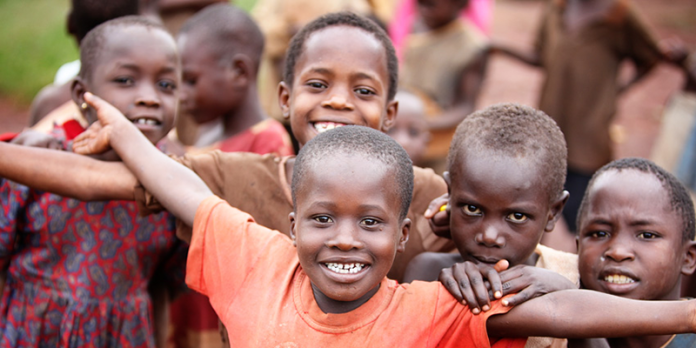
On June 16 the world commemorated the Day of the African Child. In Uganda, one of the radio stations, Monitor’s KfM 93.3 hosted four refugee children, two from South Sudan and two from Burundi.

These four children, two boys and two girls, gave a chilling account of what as refugees they endure on a daily basis, and what they talked about reflects what hundreds of thousands of their colleagues across Africa experience.

The recent events in both Burundi and South Sudan need no introduction; they are common knowledge for most people in the East African region.

The stalemate in Burundi caused by the unwavering efforts of Pierre Nkurunziza to hold onto the presidency of his country and the raging supremacy battles in South Sudan between President Salva Kiir Mayardit and his nemesis, former Vice President Riek Machar Teng, have led to untold suffering of people in both countries, mostly the young children and women.

It is pertinent to note that in any conflict situation, it is these two categories that suffer most, with the women and young girls facing gross atrocities such as rape, defilement or even outright death at the hands of the marauding belligerent groups.

But even the boys are not that safe: early this month it was reported that troops from Chad and Equatorial Guinea, on peacekeeping duty in the restive Central Africa Republic, had ‘feasted’ on young boys. It was also reported that French peacekeepers in the same troubled country had had oral sex with hungry refugee boys, luring them with food rations in exchange.

Unfortunately, months later nothing has come out of the investigations ordered by the French government, with prevarication rotating around ‘lack of evidence’. And this is where part of the problem lies; how can you get evidence when you even do not look out for the victims to give an account of the despicable acts committed against them? Or, why do you have to wait until their parents run to the media for you to resuscitate the so-called investigations? No one seems to care about these vulnerable people; we just continue living as if there is nothing wrong!

The above-mentioned revelations of sexual indecency against refugee children appear like isolated cases, but the reverse is true; cruel acts against these hapless refugees are rampant and must stop.

Indeed, Africa’s children must be secure and it is our duty to ensure their future.

Stories Continues after ad

DHL boss tips Africa on SMEs potential

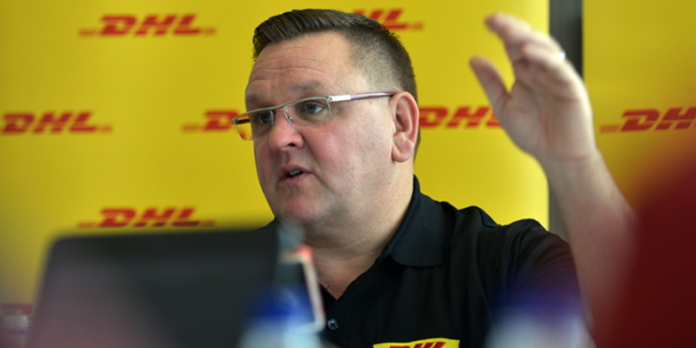
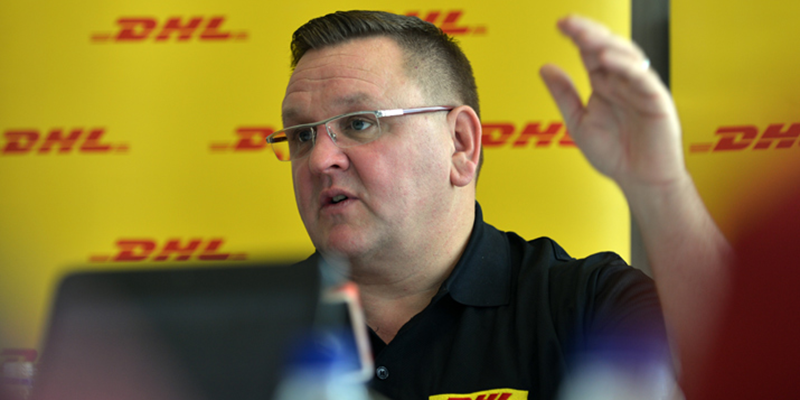
DHL Expres Sub-Saharan Africa MD Charles Brewer at a press conference

The Managing Director of DHL Express Sub-Saharan Africa Charles Brewer, has said that Small and Medium (SMEs) in Africa are the basis for strong and sustained economic growth on the continent.

Speaking at the just-concluded World Economic Forum (WEF) on Africa, Mr Brewer also called for synergies by governments, business leaders and the communities in a bid to ease doing business on in Africa.
Held in Cape Town, South Africa under theme: Then and Now: Reimagining Africa’s Future, the Summit brought together business leaders from all over the world and, according to Mr Brewer,
Africa is the last frontier for growth and economic development.
“The region offers plenty of untapped opportunities, which pave the way for SMEs to fill the gaps not presently being catered for by larger corporations. Manufacturing, on a large scale, is still somewhat embryonic in Africa and as such, there is a definite opportunity for SMEs that operate in the manufacturing industry,” Mr Brewer was quoted saying, adding that, “the biggest game changer for Africa going forward will be its ability to boost connectivity and intra-Africa trade.”
According to participants in panel discussion 1 on the Future of Trade at the WEF summit, only 12% of African countries’ total trade is with each other, while the continent only accounts for 3% of value addition in global trade.
 
 “Africa needs to remove the obstacles which hinder the ease of doing business and continually investigate new trade agreements in the region, as these have the potential to boost the level of trade significantly. Africa has already benefited from several trade partnerships such as the East Africa Community (EAC) and ECOWAS and the imminent launch of the Tripartite Free Trade Area. These are significant developments for Africa – and it is crucial that these collaborative relationships continue and more importantly, that they be implemented consistently,” Mr Brewer said at the WEF on Africa.
 
“Attending a forum such as WEF definitely enriches your knowledge, but what I find most valuable, is that a lot of the discussions challenge your beliefs and value sets. As an example, the sessions about gender equality in the workplace, digitization across Africa and being a socially responsible organization that delivers shared and inclusive value have really reignited my focus areas. These have always been a top priority for DHL, but it is always great to hear how other organisations are managing these issues and to learn from them.” DHL’s Brewer said.
A multi-billion dollar investment, DHL, a leading global logistics firm set up in Africa in 1978 and the company boasts of a presence in 220 countries including in Uganda, with 325.000 employees across the globe. In 2014, the company generated revenue worth 56 billion Euros. DHL also deals with, among others,   e-Commerce, technology, life science and healthcare, and energy.
Stories Continues after ad