Stanbic Bank
Stanbic Bank
22.6 C
Kampala
Stanbic Bank
Stanbic Bank
Home Blog Page 1217

Makerere VC bows down to social media pressure, lifts suspension of student

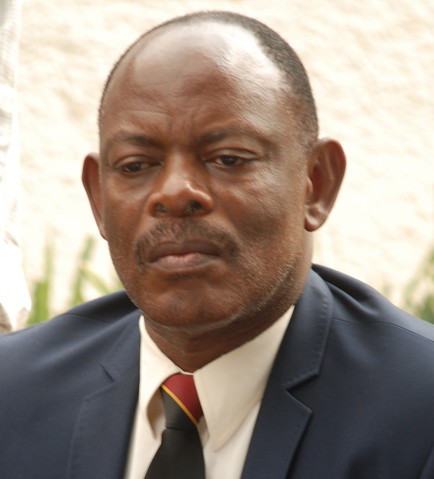
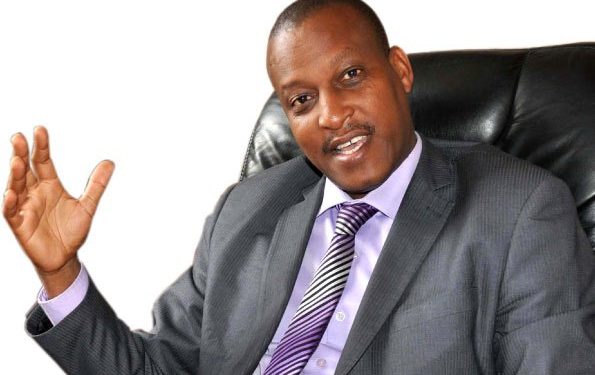
Wrote Suspension Letter: Makerere University VC Prof. Barnabas Nawangwe

Makerere University Vice Chancellor, Prof. Barnabas Nawangwe has bowed down to social media pressure and allowed Derrick Obed, a second year student to return to university to continue with his studies.

Obed who was pursuing a Bachelor’s of Arts in Education had been suspended for close to a year and there had been worries within the university that the celebrated poet might be forced to switch to another university.

Obed’s stay at the university was terminated when he joined fellow students who were opposing the 15 per cent cumulative tuition policy. He then fell into hot soup when he tried to confront the vice Chancellor at the university netball competition last year.

 He was arrested and detained at Wandegeya police station for a week before he was released on bail. Later he was suspended and has been out of university up to yesterday Sept 3, 2019 when Nawangwe issued a letter allowing him to return.

Obed says he has been negatively affected by the suspension but he is happy to return to university.

“I want to concentrate on my studies, graduate and leave, said a humbled Obed in a brief  interview with this reporter.

Stories Continues after ad

Xenophobic attacks:  Multinational companies MTN, Shoprite make huge losses as world condemns South Africa  

Xenophobic attacks

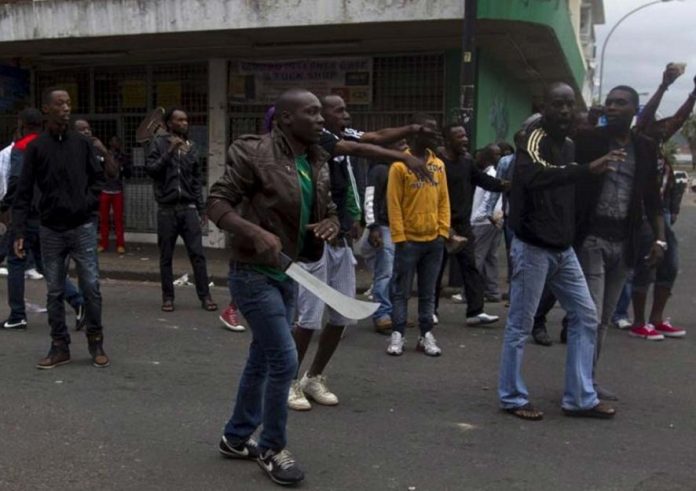
South African domiciled multinational companies MTN and SHOPRITE are counting losses in Nigeria and Zambia after the nationals in the two countries set their outlets and installations ablaze in revenge for the attack and killing of foreigners in South Africa by black citizens in xenophobic attacks that have shaken Africa and the world at large.

With little to no involvement coming from the government and its respective security bodies; Nigerians and several African states have decided to take matters into their own hands by burning and looting MTN and Shoprite branches in several countries as well as  blocking South African drivers from crossing their borders.

This was sparked by footage coming in from South Africa that shows a state that is in dire need of an emergency as shops, homes and vehicles belonging to foreigners were broken into, looted and destroyed. More recent images of live humans engulfed in fueled infernos and others hacked to death have sparked outrage from the rest of Africa with the African Union and a number of celebrities and public figures coming out to condemn the Government of South Africa and the heinous acts of its citizens.

“This goes against everything I stand for, but at what point do we take action? I understand that years of Oppression has confused South Africans to the point where they see the people who came to their defense during their Oppression as their Enemies and then worship their oppressors.” said one Damini Ogulu aka BurnaBoy, a Nigerian artist garnering a number of accolades on the international stage through his afro-music.

He also reminded South Africans of a time when Nigeria gave Nelson Mandela refuge in 1963/64 during the apartheid era when he escaped the death penalty. He was joined by a host of other public figures such as Trevor Noah and Julius Malema who condemned the acts of racism; urging for a united Africa.

This has brought the South African government under international scrutiny as many political heads like the former Deputy Minister of Police Bongani Michael Mkongi and even the President, Cyril Ramaphosa are pinned for using racially discriminatory language during their campaigns. The president who initially called for “the clampdown of foreigners” within South Africa during his presidential race has also now come out to chastise and rebuke South Africans for the ongoing xenophobic attacks.

“I condemn the violence that has been spreading around a number of our provinces in the strongest terms. I’m convening the ministers in the security cluster today to make sure that we keep a close eye on these acts of wanton violence and find ways of stopping them.” said Ramaphosa despite the government’s indifference towards the foreigners plight in the past, “The people of our country want to live in harmony; whatever concerns or grievances we may have, we need to handle them in a democratic way. There can be no justification for any South African to attack people from other countries.”

Despite this, neighboring countries continue to issue travel warnings to their citizens and millions call for the boycott of the World Economic Forum in South Africa . In further retaliation, South African brands such as MTN and Shoprite continue to face backlash from Africans as their offices and branch stores are set ablaze and destroyed in Zambia, Nigeria and other neighboring countries.

Political figure, Gen. David Sejusa aka Tinyefunza blames poverty and ignorance for the prevalent xenophobia in today’s South Africa and blamed the people in power for misleading their people and attacking the wrong enemy: “For a people that have been oppressed, dehumanized over centuries, these historical facts and values must not be assumed rather, must be consciously and deliberately taught and be part of national curricula and part of political discourse of the African Governments!”

Other organizations that have come out to condemn these xenophobic attacks also include the West African terrorist organization that gave an ultimatum to the South African government via You Tube threatening to kill South Africans in Nigeria.

Stories Continues after ad

UNBS faults 50% of electricity meters as fuel pumps on Ugandan market release less fuel to clients

Umeme Yaka meter


Standards agency, Uganda National Bureau of Standards (UNBS) has said it last year discovered that 35 percent of electricity meters supplied on the Ugandan market were inaccurate and susceptible to cheating manufacturers while 15 per cent were meant to cheat domestic consumers.

According to Dr. Ben Manyindo, the ED of UNBS, 144,471 meters were verified last year against the target of 100,000 meters.

“Last year, we verified 144,471 meters against a target of 100,000 meters. 15 per cent of meters used by domestic consumers tested were to be inaccurate and susceptible to cheating customers while 35 per cent of meters used by industrialists and in large commercial set ups were found to be inaccurate and susceptible to cheating industrialists and manufacturers,” he said while addressing journalists at the Uganda Media Centre on Wednesday.

He said the meters were disabled and that corrective actions were recommended before they could be installed on the electricity distribution network.

12 per cent of fuel dispensing pumps cheat Ugandans

Manyindo further said that UNBS verified 15, 743 fuel-dispensing pumps where it was discovered that 12 per cent were under delivering fuel to customers thus cheating consumers while 8 per cent of the pumps were delivering more fuel thus cheating fuel retailers. “The culpable fuel station were penalised in accordance with existing regulations,” he said.

98 percent of fuel tankers have inaccurate measurements

In FY 2018/19, Manyindo said, UNBS verified 2,151 road tankers against a target of 3,000 where 98 per cent of road tankers coming into Uganda were found to be registering inaccurate measurements and that if they had not been apprehended they would have cheated oil depots to the tune of Shs9.6 billion due to manipulated five charts and dipsticks, which would cause business losses. “Without UNBS intervention, UNBS intervention oil deport owners would have lost Shs9.6 billion due to inaccuracies,” he said.

35 per cent of weighing equipment cheat Ugandans of money

He said UNBS verified 156,514 weighing equipment were verified against a target of 155,646. “About 35 per cent of total verified weighing equipment were cheating consumers. Without our interventions, customers would have lost Shs11.3 billion in inaccurate measurements,” he said.

32 per cent of weighbridges inaccurate

He said last year UNBS verified 79 weighbridges to ensure that they are measuring accurately of which 32 per cent weighbridges were found to be inaccurate.


Stories Continues after ad

Jobs losses as total suspends planned $3.5 billion Uganda-Tanzania Oil Pipeline

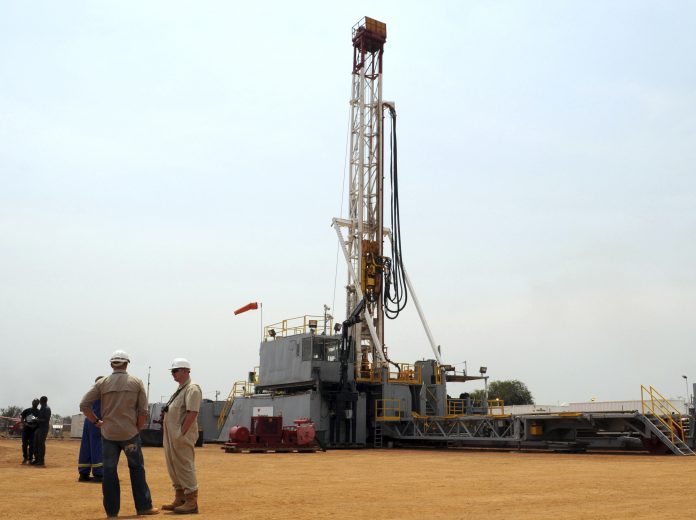
Workers are seen at an oil exploration site in Bulisa district approximately 244km (152 miles) North-West of Kampala January 20, 2012. Uganda said on January 27, 2012 the proposed sale of stakes by UK-based explorer Tullow Oil in its fields in the east African country to France's Total and China's CNOOC had been delayed by disagreements over protective clauses. Picture taken January 20, 2012. REUTERS/Stringer (UGANDA - Tags: POLITICS BUSINESS COMMODITIES EMPLOYMENT) - RTR2X2Y2


Total SA has suspended its planned $3.5 billion crude export pipeline from Uganda to Tanzania after the collapse of negotiations to buy a stake in Tullow Oil Plc’s oil fields in Uganda, dashing away  the hopes of Ugandans who were waiting to get jobs from the project.

The French oil major has terminated all activities related to the 1,445-kilometer (898-mile) conduit from its crude fields in Uganda to Tanga in Tanzania because shared ownership in the project was to be determined upon the completion of the Tullow deal, an official familiar with the project at Total’s Ugandan office said.

Last week, Tullow Oil was forced to abandon plans to sell a stake in its Ugandan project to Total and China’s Cnooc Limited. and restart the process from scratch after tax negotiations failed. The termination of the agreement was a blow to Tullow, which had sought partners to help it develop about 1.5 billion barrels of recoverable oil in its Ugandan fields.

After Tullow discovered oil in landlocked Uganda in 2006, the country made ambitious plans to construct a 216,000-barrel-a-day pipeline and a refinery. Its anticipated time line for delivering first oil from the project was adjusted multiple times. A recent government estimate stated that it would come online in 2022. A final investment decision on the project was targeted for the end of this year.

The project’s partners and Uganda’s government will have to come up with a “sensible new target” to give it the green light, Tullow Chief Executive Officer Paul McDade said after the company announced it planned to scrap the stake sale.

Total E&P Uganda, which was leading the pipeline project, dismissed employees who were set to undertake works on it, the official said. The explorer was involved in initial land acquisition in both countries, the official said.

Cnooc Uganda Ltd., which is jointly developing the country’s crude finds, suspended at least 12 employees following delays on the project, a company official familiar with the matter said by phone without providing further details.


Stories Continues after ad

Big tech gaining trust over governments; Established brands crossing over into financial services


By Herbert Poenisch


Up until recently, there were doubts as to whether technology companies could garner the necessary trust to succeed in the financial sector. But the world is changing rapidly. Trust in large technology firms and their products is growing. These are primarily social networks, but they are branching out increasingly into finance, as highlighted by the Bank for International Settlements in its 2019 annual report.

Governments are struggling to get their messages across to the population at large, while accusing media and social networks of spreading fake news. Central banks are the pillars of finance, yet their independence is being undermined. Financial products provided by big tech firms, such as payment services, are gaining popularity.

This is a global phenomenon, covering regions from the US to Russia and China. In emerging market economies, high mobile penetration is facilitating the proliferation of these new financial services. Young people are fertile ground for advancing technology; they are more familiar with their mobile phones and applications than with their governments. This is particularly the case for those who are disengaged from politics, or discouraged from taking part by out-of-touch governments. The internet, not the government, provides for their daily lives.

What matters to this new generation is having unlimited access to people and money on an electronic platform. By offering this, big tech companies are able to bypass elections to win the trust of a large part of the population. People vote with their gadgets by signing up to their products. As a result, these basically unregulated entities can gain brand recognition as well as a vast customer base. Providing online shopping and instant payment platforms allows them to handle people’s money.

The logical next step is to create their own currencies, such as Facebook’s Libra. This would be the first time an established brand with a large customer base acts as a private central bank offering cross-border financial services, outside the framework of financial institutions. Facebook plans to operate a centralised ledger in the beginning, another characteristic of a central bank.

As historian Yuval Noah Harari writes, religion and its institutions were the first formal structures to earn the public’s trust. Today’s guardians of trust are nation states and their institutions, but big tech is taking over in strides to satisfy our everyday needs, to communicate, find information, shop and make payments.

Trust is shifting from government to technology. While governments increasingly hide behind national borders, technology allows ordinary people to become global citizens. People tend to seek simple, quick and cost-efficient payment methods. Global providers such as Visa have enabled the financially savvy to enjoy such a service. Big tech companies are going a step further by capturing the masses, those without steady incomes and bank accounts.

Governments are envious of the power these businesses wield with access, big data and linkages. They will either try to regulate them, or attempt to claw back power by issuing their own central bank digital currencies and providing payment services. Central banks still enjoy the public’s trust, but know little about consumer habits.

Herbert Poenisch is former Senior Economist of the Bank for International Settlements.

Stories Continues after ad

Democratisation of Innovation and what it means for Africa

Sabine Dall’Omo
 

By Sabine Dall’Omo


The term ‘Democratisation of Technology’ has become synonymous with the digital age. In a nutshell, it means that access to advanced technology is no longer the domain of a privileged few, but that more and more people are benefitting from access to smart technologies which is rapidly levelling the playing field of global innovation.

One of the deciding factors in who has access to this technology, is the distribution of energy. In order to ensure the equality of technology we first need to solve the problem of unreliable energy.

The concept that energy must come from one central source is inefficient and outdated. By decentralising energy and allowing people to generate and use energy as needed, you’re allowing people to take charge of their own prosperity. In a continent like Africa, with the incredible opportunity for solar and wind generated energy, keeping energy centralised severely hampers the potential for economic growth.

Microgrids are an effective way to quickly and effectively diversify a centralised energy grid. By employing microgrids you not only take the strain off the central grid and lower your carbon footprint, you also create economic opportunities where people can sell off excess energy produced.

The Brooklyn Microgrid (https://sie.ag/2kkyIJ5) project is an excellent example of how clean energy can be turned into thriving micro-economies. In this case, LO3 Energy, a company based in New York US, working alongside Siemens (www.Siemens.com) have installed a solar-powered microgrid. In addition to generating clean energy for its own use, the company also installed a blockchain enabled transactive energy platform. This means any unused energy can be sold, generating a new revenue stream.

The same system could be put in place in certain parts of Africa. A shop or building even in remote parts of the country, for example, could install a microgrid and sell off excess energy to surrounding businesses. You could take it one step further and create a transparent energy retail environment where a resident in another part of the country, could choose to top-up their electricity directly from a microgrid supplier based elsewhere.

By diversifying energy through microgrid technology, we can very quickly create new income streams in disadvantaged areas while at the same time growing and stabilising access to energy. This, in turn, will kickstart real democratisation of energy.

Our Siemens office in Midrand is equipped with a microgrid and now uses 50% less power off the central grid. The office has gone more than a year with uninterrupted power and has saved about 2 460 tons of CO2 since the system was opened (174 000 kWh per month).

Enabling democratisation of technology

Through energy comes wider access to communication and the ability to participate in global conversations through online connectivity. This in turn nurtures creativity, innovation and economic growth.

Traditionally, the journey from ‘idea’ to ‘successful product or business’ is a complicated process involving business cases, pitches for funding to build a prototype, raising capital investment for production and testing, wading through patent approvals and trademark law. While many of these steps are still crucial once you have a working prototype, the democratisation of technology makes it easier for inventors and entrepreneurs to develop their ideas. SME’s are vital economic drivers and making it easier for them to compete will benefit the economy as a whole.

Digital twinning is one example that streamlines the production process. A digital twin is a virtual representation of a physical product or process, used to understand and predict the physical counterpart’s performance characteristics. Digital twins are used throughout the product lifecycle to simulate, predict, and optimise the product and production system before investing in physical prototypes and assets.

This means innovators can test their products in the virtual world and refine it before ever needing to raise money for testing. Real-life testing is still vital with most products, but with digital twinning you can get your product as close to perfect in the virtual world in order to save time and costs when it comes to the final real-life test phase. In many ways this agility levels the playing field giving small, developing companies (and countries) the same opportunities as their bigger and more established counterparts.

Siemens also offers this technology free to universities. Students have access to a free version of the same easy-to-use software suite used by professionals. In addition to free software, we provide tutorials, webinars, online courses and certification to help them develop their skills.

Breaking down barriers

Through access to technology anyone, anywhere, has the opportunity to create a thriving business or economy. Across Africa it can play a large role in the empowerment of women and youth development.

One example is our Siemens Fabric campaign, which was set on the global stage, but all the fabric produced for the initiative was made by a small female-owned business situated in Alexandra, Gauteng. Legae Larona Sewing Cooperative in Alex now forms part of the Siemens Enterprise Development programme.

This is where you start seeing the results of the democratisation of technology – when an innovator from a small community in a developing nation has the same access to opportunity as those operating from high-tech offices in the first world. It’s not yet a perfect system, but through the clever use of technology we can exponentially increase access to opportunity.

The writer is CEO of Siemens Southern and Eastern Africa


Stories Continues after ad

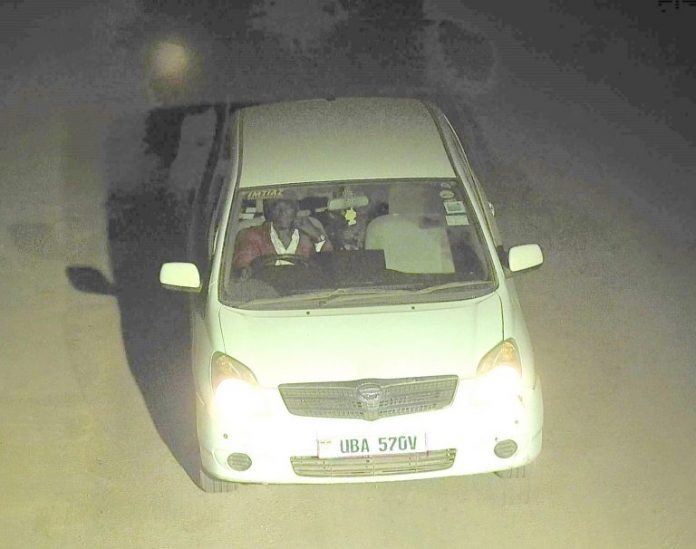
Police releases CCTV footage of Nagirinya killers

Uganda police has released photos captured on CCTV camera showing how Ms Mariam Nagirinya and her driver Ronald Kitayimbwa were driven to around before being killed.

According to the police statement, the mages have been retrieved from an Automatic Number Plate Recognition (ANPR) camera and one can clearly see from these pictures that the assailant is wearing a white shirt, a reddish coat and a cap on his head. He is of a dark skin complexion.

“The Uganda Police Force and sister security agencies have retrieved CCTV images showing incidents that occurred prior to and after the kidnapping of Ms Nagirinya Mariam and her driver Mr. Kitayimbwa Ronald on 28th August 2019”.

The Statement further reads “This is therefore to appeal to members of the public, and to any other person(s) who have useful information, leading to the arrest of this suspect in the pictures to contact the nearest Police station or call telephone numbers: 0714667793/ 0714668079/0714668105or toll free 0800909990/ 800121222”.

Stories Continues after ad

Xenophobia: Protesters set bonfire on Airport Road as Abuja Shoprite fails to open 

Businesses in Johannesburg, including car showrooms, have been burned.


Youths protesting the xenophobic attacks on Nigerians in South Africa on Wednesday made a bonfire on the Nnamdi Azikiwe International Airport Road, Lugbe, Abuja, a few metres from a South African franchise, Shoprite Mall.

Billowing smoke from the bonfire paralysed vehicular traffic on the Expressway as security agents mounted guard over the shopping mall which failed to open for fear of being attacked.

Men of the Nigeria Security and Civil Defence Corps and armed policemen were seen providing security in the area.

Similarly, a branch of Shoprite at Jabi, Abuja, was under heavy police protection to deter would-be protesters or looters.

READ ALSO: Sue South Africa for xenophobic victims’s compensation, Falana tells FG

Speaking on a radio programme, the Federal Capital Territory Commissioner of Police, Bala Ciroma, said he had deployed police personnel across the city to maintain law and order.

Meanwhile, the Ministry of Foreign Affairs has advised Nigerians in South Africa against going to volatile and high-risk areas until the tense situation was brought under control.

It commended the arrest of 70 suspects in connection with the attacks and looting of shops belonging to some Nigerians by the SA authorities.

The MFA spokesman, Ferdinand Nwonye, in a statement assured Nigerians in South Africa of the protection of the Federal Government.

Nigeria police beef up security at SA-owned shops

Meanwhile Nigerian police have beefed up security outside South African-owned businesses in the capital, Abuja, the BBC’s Ishaq Khalid reports.

They are expecting protests following the violence in South Africa, where some foreign-owned businesses have been targeted.

Shops of the South African telecoms giant MTN are among the possible targets for protests, our correspondent says.

The Reuters news agency is reporting that MTN has decided to close all its outlets until further notice.

“The safety and security of our customers, staff and partners is our primary concern,” Reuters quotes an MTN Nigeria statement as saying.

On Tuesday, witnesses told the BBC that a branch of the South African supermarket Shoprite was vandalised in the Lagos neighbourhood of Lekki.

Stories Continues after ad

EC’s exercise for demarcation and reorganisation of polling stations underway ahead of 2021 general elections

Jotham Taremwa, EC Spokesperson

Uganda Electoral Commission (EC) is undertaking the process for demarcation and reorganization of polling stations in preparation for the 2021 general elections. The exercise runs from September 2-14, 2019.

The ongoing exercise is part of the strategic plan and the road map for 2020/2021 general elections.  The chairperson of Commission, Justice Simon Byabakama confirmed last year that a total of Shs868 billion was required to conduct the 2021 elections that will take place between January 10 -February 8, 2021.

According to guidelines released from the commission, the reorganization of Polling Stations is based on the Parishes or Wards where Electoral areas must at least have one Polling Station and each Polling Station shall have a close to the optimum number of 900 voters accordance with Section 12 (1) (d) of the Electoral Commission Act, (Cap 140), mandates electoral commission to establish and operate Polling Stations, for purposes of elections.

As per the guidelines, polling stations located in contestable areas adjacent to bars and  in people’s homes, should be re-located and re-named where possible and can be done concurrently with splitting and merging of the polling stations.

Where no Polling Station exists in a newly created Parish/Ward, at least one Polling Station must be recommended by the Stakeholders in that area with due regard to the convenience of its location.

There will be splitting of Polling Stations with significantly more than the optimum number of voters into two or more Polling Stations, excluding Kampala and Wakiso because they may have an optimum number of 1200.­­

Locations of Polling Stations may need to change due to recent developments since the 2016 General Elections. These developments may be new roads, internal displacement and resettlements, new power stations or where physical development has taken place.

Stories Continues after ad

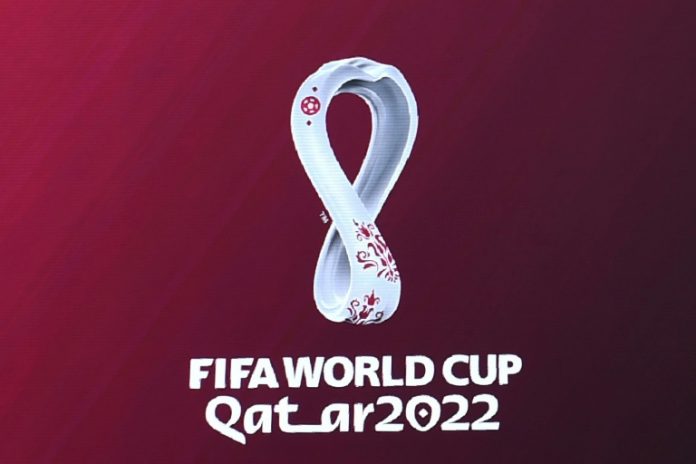
Qatar unveils 2022 World Cup logo

2022 world cup logo


Qatar unveiled the logo for the 2022 World Cup which will be hosted by the Gulf emirate, displaying it in public spaces in Doha and cities around the world on Tuesday.

The design is a stylised Arabic white unisex shawl with maroon patterning, which is displayed in a figure-of-eight symbolising infinity while creating a heart shape above the words “FIFA WORLD CUP Qatar 2022”.

It was projected onto the vast facade of the country’s National Archives in the capital’s southern Msheireb district to fanfare that included a procession of soldiers on horseback watched by a crowd of hundreds.

The building was illuminated with the emblem at exactly 20:22 local time (1722 GMT) — the same as the year of the tournament.

“The logo is very elegant and showing local culture with the (burgundy) colour of the Qatari flag,” Algerian hospitality worker Mourad Bencheikh, 36, told AFP as visitors crowded to photograph the new branding.

The emblem was also displayed in Madrid, Buenos Aires and Beirut along with several other major cities.

“This one is unique for Qatar,” said Sri Lankan quantity surveyor Mohammed Fairoos, 30, as he and a group of friends took a selfie in front of the National Archives projection.

The Qatari organisers said the logo “was inspired by traditional woollen shawls worn during the winter months”.

The 2022 event will be held in November and December to avoid the scorching Gulf summer.

“Like football, the shawls’ popularity is a unifying force, woven into the everyday fabric of people’s lives,” added the Supreme Committee in a statement.

Preparations for the global soccer spectacle in Qatar have accelerated in recent months.

In May, the 40,000 seat al-Janoub stadium — the first purpose-built ground to be launched for the tournament — was inaugurated with an almost capacity domestic cup final.

The arena, designed by late British-Iraqi architect Zaha Hadid and located in a coastal town south of Doha, is estimated to have cost around $575 million.

Of the eight stadiums Qatar is building or refurbishing for 2022, Khalifa International was already open and will host this year’s World Athletics Championships.

The Championships will be a major test of Qatar’s readiness to host a global sporting event. Tens of thousands of spectators are expected to descend on the desert nation ahead of the tournament which begins on September 27.

A major road overhaul is also underway across Doha to expand capacity at key junctions and traffic hotspots.

Parts of an ambitious metro rail project opened to the public in May. The rest of the three-line network expected to be launched in 2020 — well ahead of the tournament.

The network will connect nearly all of Qatar’s stadiums, transport hubs and tourist attractions, when it is completed.

FIFA faced a number of negative headlines in recent months including a decision in May to shelve plans for 48 nations to participate in the 2022 contest.

FIFA boss Gianni Infantino had pushed to extend the tournament.

In June, former European football president Michel Platini was questioned by French anti-corruption investigators for several hours in relation to the 2010 award of hosting rights to Qatar.

Stories Continues after ad