Stanbic Bank
Stanbic Bank
20.4 C
Kampala
Stanbic Bank
Stanbic Bank
Home Blog Page 1216

4G Capital ramps up sustainable SME lending in East Africa

Wayne Hennessy-Barrett CEO 4G Capital


After a number of years of steady growth, 4G Capital, a Kenya-based fintech which mixes customer oversight and training with unsecured SME loans to achieve a 94 percent average repayment rate, will have lent more in the 2019 financial year than the cumulative total since it was founded in 2013.

By the end of 2018, 4G Capital had disbursed 345,000 loans since inception at a total of US$44 million. Within this year alone the firm expects to have lent an additional 420,000 loans worth US$46 million, bringing the six-year total to US$90 million.


Wayne Hennessy-Barrett, CEO and founder, attributes the success to “organic growth” by investing in partnerships and expanding the firm’s physical presence across East Africa.

“We’ve concentrated on the organic growth of the company, almost quadrupling the number of teams across Kenya and Uganda from 28 to 96 as well as increasing our customer acquisition through multinational distributors operating in the region,” he says.

“By focusing on customer success and protection – and as a consequence, portfolio quality – we’re continuing to enjoy repeat rates of 80 percent.”

 Customer interaction

After Kenya’s fintech boom was catalyzed by the introduction of mobile money MPesa in 2007, East Africa’s most diverse economy is now home to over 150 fintech companies; many offering digital credit services.

While permissive regulation helped foster the growth, credit default and debt distress has risen over the past few years as fintechs receive little market scrutiny and many forego due diligence when disbursing loans to customers.

Kenya’s Credit Reference Bureau (CRB) has blacklisted 2.7m people for being unable to repay loans as little as US$2.

Hennessy-Barrett calls this type of credit “blind lending” as it is usually facilitated through an app or online platform, without personal interaction.

Yet the former major in the British army turned start-up leader, believes even fintechs can use customer relationships as a bridge to success and to secure industry-topping repayment rates.

His model stands in stark contrast to many of its peers as one which links the success of 4G Capital’s customers to its own success.


Aside from investing heavily in customer relationships through the ‘boots on the ground’ approach, with a presence in 92 markets throughout Kenya aimed at encouraging repayment through financial literacy training, the lender is also introducing an insurance product.

They believe that insurance, which is characterised by low penetration rates and high premiums across Kenya and much of the continent, will help their customers keep their finances above board in times of distress.

“We have a busy R&D department which constantly drafts and models new products, delivered

either by ourselves or with partners,” says Hennessy-Barrett.

“We know many of our customer struggle with healthcare costs when they arise. If we can introduce them to an affordable and agile method to access contingency funds under specific circumstances, this will help their overall financial wellbeing.”

Products which benefit customers are also accompanied by know-your-customer

practices and data analytics.

Some concern is voiced by the CEO over a “credit bubble” in the Kenyan marketplace, where

SME financiers have become overexposed to their clients, who are increasingly defaulting on debt due to poor lending practices. The situation is being worsened by the exponential growth of betting companies in East Africa over the past few years.

In contrast, 4G Capital opts to never refinance loans, choosing instead to focus on the sustainable business development of its customers.

4G Capital uses algorithms and artificial intelligence to turn raw data into “smart data”; data which has been screened and optimised, in order to understand the suitability of their customers for lending applicability and size.


“We have identified a finite number of relevant factors which correlate with historic market behaviour, and from this we are able to accurately predict the parameter of loan size, duration and price-point for the different business types we serve,” says Hennessy-

Barrett.

Market growth

After growing the business across Kenya, 4G Capital is beginning operations in Uganda and has set its sights on a total of 1m customers by 2020.

This year alone the company expects to grow its customer base by 200%, fuelled by the promise of its latest market entrance. 4G Capital is currently adding nearly 10,000 MSMEs to its platform every month.

Hennessy-Barrett says that “while Uganda is different from Kenya in a number of ways, the fundamentals of the MSME space can translate across many borders.” The third-largest market in the East African Community (EAC) after Tanzania and Kenya, Uganda is an obvious choice for a business looking to expand in the region.

With few barriers to market entry, a vibrant mobile money culture and pro-business government despite the lack of political freedoms, the capital Kampala is no great conceptual leap from the markets in Nairobi and beyond.

However, in relation to Kenya, the market is relatively underserved which gives 4G Capital the chance to consolidate quickly in its SME lending space.

“There is an enormous appetite for what we bring to the party,” says Hennessy-Barrett.

“Both as direct lenders and in partnership with suppliers and multinationals.”

However, with five-year ambitions to become the “go-to provider of digital SME financial services” in “Africa’s biggest markets” it’s clear that 4G Capital will need to find solutions to operate in countries which have low levels of mobile money penetration.

Nigeria for instance, Africa’s biggest market, is yet to experience the mobile money revolution after the innovation was blocked by the banking industry and its influence on legislation.

Payments and loans throughout most of 4G Capital’s operations are processed via a mobile money platform.

M-Pesa has been transformative in allowing small enterprises without bank accounts to instantly send and receive money, to and from everyone from fintechs to gambling companies across the entirety of Kenya, regardless of rural isolation.

To support MSMEs in markets with low mobile money penetration, 4G Capital has also built bankto-bank transfer functionality and is in conversation with major payments companies to provide even further optionality for MSMEs, says Hennessy-Barrett.

Despite early profitability, the CEO reveals that 4G Capital is now looking to accelerate its growth by raising institutional debt and equity.

Their model, using customer analytics and care to guarantee repayment, is likely to have a big impact in the market the company seeks to enter.

“I guess we’re hard-headed and pragmatic about the problems we’re trying to solve, and that manifests in a more mature approach to the market than might be typical in the fintech world,” says Hennessy-Barrett.

“We don’t believe in any silver bullet that can create an instant ‘home run’. Successful operations are built through cumulative successes, starting with the customer and our unit economics.”

 

Stories Continues after ad

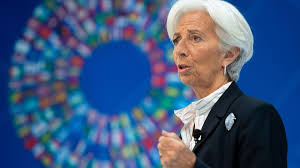
IMF governors remove age limit for the position of managing director

Christine Lagarde will step down as IMF MD next week


The Executive Board of the International Monetary Fund (IMF) have made changes in regards to the age for any individual to serve as the managing director of the International Monetary Fund (IMF).

“The Board of Governors has approved the proposal by the Executive Board to remove the age limit for the position of IMF Managing Director. Approval of the proposal required a simple majority of the votes cast, with a minimum participation requirement of a majority of Governors holding two-thirds of the total voting power,” says the latest statement. Voting ran from August 21 to September 4.

Since 1951, the IMF’s By-Laws had prohibited the appointment of a candidate aged 65 or over as Managing Director, and had also prohibited the Managing Director from serving past his/her 70th birthday. The amendment to the By-Laws adopted by the Board of Governors, which is effective immediately, brings the Managing Director’s terms of appointment into line with those of members of the IMF Executive Board, which the Managing Director chairs, and those of the President of the World Bank Group, who are not subject to an age limit.

“The IMF Executive Board is engaged in the selection of a successor to outgoing Managing Director Christine Lagarde, who will step down on September 12. Nominations to the position close on September 6, 2019, and we intend to complete the selection process by October 4.”

The Board of Governors is the highest decision-making body of the IMF and consists of one governor and one alternate governor appointed by each member country. The governor is usually the minister of finance or the governor of the central bank. Most powers of the IMF are vested in the Board of Governors. The Board of Governors may delegate to the Executive Board all except certain reserved powers. The Board of Governors normally meets once a year.

The Executive Board functions in continuous session and is responsible for conducting the business of the IMF. It is composed of 24 Directors, who are elected by member countries or by groups of countries. The Managing Director serves as its Chairman. The Board usually meets several times each week. It carries out its work largely on the basis of papers prepared by IMF management and staff.

Each member country of the IMF is assigned a quota and voting shares, based broadly on its relative position in the world economy.


Attachments area

Stories Continues after ad

I am ashamed to be South African right now

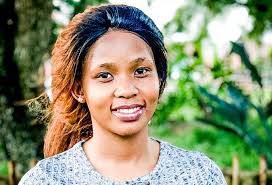
Boipelo Manyowa

By Boipelo Manyowa


My name is Boipelo Manyowa, I am black, I am 28, I am an African, but I am ashamed to stand as a South African.

I think I am a pebble in the sea,  that is how small I am and probably how small my opinions matter in the ocean.

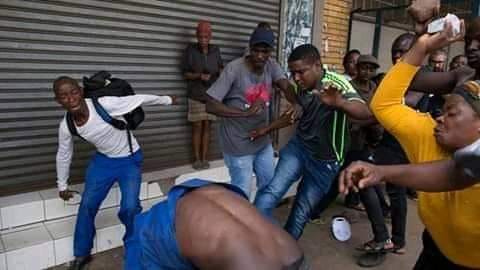
But I cannot as a human being, an African, a mother and a wife remain silent. In the last few days local criminals have run riot, attacking fellow black Africans in the name of fighting crime. Their method of dealing with crime has been to commit crime. (I will touch on this later)

The most unfortunate thing about all this is that, they have targeted the most vulnerable members of our community (yes, foreigners are a part of our community as long as they call our country home).

People who have travelled great lengths just to provide for their families are being targeted, beaten, stoned, burnt alive and their properties destroyed.

This is wrong on all levels.

A 100 years ago some of these borders did not even exist. European gangsters colonized our land and told us we are different. They divided us and shared our land among themselves as if it were slices of Pizza.

Years after defeating these racists, we now enforce their borders and their definitions of our forced differences louder than they do. Ironically, Chinese run several businesses with appalling working conditions for blacks. Eastern Europeans run criminal enterprises left right and center. These people are never called foreigners nor are they ever defined as different from us.

It hurts me because everywhere I have travelled first a young student, then as a budding businesswoman and later as a companion to my husband, I have been treated with so much love and respect.

From the warm streets of Lilongwe, to the clean ones in Rwanda and the mesmerizing ones in Nairobi, I have been loved and respected. I have lived in these places with an unshaking sense of peace and security, something I can only crave for my fellow Africans in South Africa right now.

My husband is 29-year-old Zimbabwean gentleman whom I have known since 2003 and loved for years. He is my pen pal who became my everything. He is a very complicated man of many talents and weaknesses in equal measure.

When he first came to South Africa, he was fleeing persecution by his government for his work. He is a journalist with an adrenaline addiction. He arrived in Pretoria with a dream, a dream that made me give up everything to be a part of.

Together we have seen all but one of the continents in this world. My family have grown to adore him, and he has made Zimbabwe a home for me, and a place I will be buried after my death.

More importantly my husband is responsible for over 20 children here in South Africa (and he will be upset I let this secret out). These children are South African and all but two are orphans. He does not make a lot of money (journalists are poor) but the little he makes he uses it to change lives.

Perhaps I should mention that my husband is no longer based in South Africa and only returns to perform critical business and rarely. The orphaned children in who look up to him have not been abandoned or left alone.

From the shores of the far east, he makes sure they are fed and clothed. He does not see these children as South African children but just children. He is not alone, and not an exception to the rule but much rather a norm.

I have had the absolute pleasure of living in Zimbabwe for a considerable amount of time too. I love the people there, their amazing culture and the serene beauty of the landscapes. My stay, as indeed my contact with many Zimbabweans has not always been pleasant.

South African stoning a foreigner

I have been insulted, heckled, attacked, lied about, harassed, bullied among many other despicable things by strangers who do not know me but long made up their minds that I deserve to be hated. It’s not a lie that my nationality played some part in this too.

Comments asking for “that South African b*tch to be raped and killed together with Maynard Manyowa (my husband)” are something I deal with daily but have never gotten used to, though I refuse to let it affect me (I generally never allow other human beings to control my state of mind let alone emotions).

As you can see, I have had several unpleasant encounters with Zimbabweans, but I don’t recall being made to feel any less Zimbabwean (Yes, I am a Zimbabwean).

Despite all the abuse I have faced, I have never had Zimbabwean people attempt to set my business alight in Harare, or my car or my house.

To add to that, I have learnt over time, that the cruel and abusive hounds that dislike me and abuse me are just about a dime dozen. I can never allow a few rogue elements in a country of 18 million people (local and abroad) to define my relations with everyone else.

Zimbabweans, like Malawians, Zambians, Kenyans, Tanzanians, Sudanese, Congolese and Burkinabe people are among the warmest, hardworking and honest individuals I have ever met. As my experience has taught me with Zimbabweans (I interacted with them a lot) and Malawians (my husband works for and with Malawians), there are always bad apples out there.

I am saying this because am hoping my own brothers and sisters committing these acts know that crime has no nationality. I have been the victim of crime 4 times, and not once were my assailants foreign.

I grew up in the North West before moving to Pretoria. It’s simply not true that its only foreigners who commit crime. This evil scapegoating is wrong and really makes me hang my head in shame.

I also do not understand how people fight murder by killing people, stoning cars, or firing randomly at passing trucks. Is that not criminal itself?

I mean ever since all this began, the only people I have seen committing arson, robbery, malicious damage to property, attempted murder and assault are South Africans. The people they claim to be criminals, many of them poor, vulnerable women and children are only running for dear life. So, who is the real criminal there?

I am yet to see any drug lords busted in this crime spree. I am yet to see any real criminals arrested. All I see and have seen is desperate vendors, barbers, car guards, and cleaners being targeted.

A lot of what is happening right now makes me sick to the stomach. It also makes me hurt in deep places. Some of this just makes me angry too.

I am one of those people who just does not want to bear testimony to things I did not see so I won’t speak about the role other countries played in South Africa’s independence. I will speak as a human being with basic sense of compassion for others, as a black African who has called 9 African countries home.

Even as I write this, my heart is heavy, because, in places Hong Kong, far far away, where blacks are as rare as hen’s teeth, my husband and I have been allowed to settle, establish business, and exist on this planet without being made to feel like some kind of other.

What you are doing fellow South Africans is wrong. Whichever way you will want to justify it. You are the criminals and not the other way around, and I am ashamed that people look at me and think I too think like you – in such an evil, depraved and cruel manner.

Again, I think I am a pebble in the sea, that is how small I am and probably how small my opinions matter in the ocean. But you all need to reflect.

And as i look at this identity card, this document, that defines me as a South African, i am overwhelmed because my sense of patriotism is strong but i am ashamed of how my fellow citizens have tarnished what it means to be South African

Boipelo Manyowa is a Hong Kong based South African and the Executive Director of documentary journalism company MaynManFilms, investigative journalism website Khuluma Afrika among others. She writes in her own capacity

Stories Continues after ad

Robert Mugabe, the African legend goes to rest

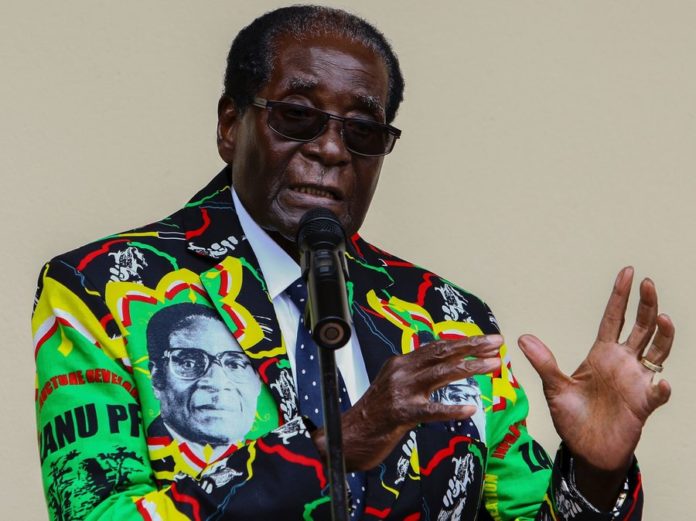
President Robert Mugabe

Robert Mugabe, the Zimbabwean independence icon turned authoritarian leader, has died aged 95.

Mr Mugabe had been receiving treatment in a hospital in Singapore since April. He was ousted in a military coup in 2017 after 37 years in power.

The former president was praised for broadening access to health and education for the black majority.

But later years were marked by violent repression of his political opponents and Zimbabwe’s economic ruin.

His successor, Emmerson Mnangagwa, expressed his “utmost sadness”, calling Mr Mugabe “an icon of liberation”.

Mr Mnangagwa had been Mr Mugabe’s deputy before replacing him.

Who was Robert Mugabe?

He was born on 21 February 1924 in what was then Rhodesia – a British colony, run by its white minority.

After criticising the government of Rhodesia in 1964 he was imprisoned for more than a decade without trial.

In 1973, while still in prison, he was chosen as president of the Zimbabwe African National Union (Zanu), of which he was a founding member.

Once released, he headed to Mozambique, from where he directed guerrilla raids into Rhodesia but he was also seen as a skilled negotiator.

Political agreements to end the crisis resulted in the new independent Republic of Zimbabwe.

With his high profile in the independence movement, Mr Mugabe secured an overwhelming victory in the republic’s first election in 1980.

But over his decades in power, international perceptions soured, with an increasing number of critics portraying Mr Mugabe as a dictator.


Shackled to one man

By Andrew Harding, BBC Africa correspondent

He died far from home, bitter, lonely, and humiliated – an epic life, with the shabbiest of endings.

Robert Mugabe embodied Africa’s struggle against colonialism – in all its fury and its failings.

He was a courageous politician, imprisoned for daring to defy white-minority rule.

The country he finally led to independence was one of the continent’s most promising, and for years Zimbabwe more or less flourished. But when the economy faltered, Mr Mugabe lost his nerve. He implemented a catastrophic land reform programme. Zimbabwe quickly slid into hyperinflation, isolation, and political chaos.

The security forces kept Mr Mugabe and his party, Zanu-PF, in power – mostly through terror. But eventually even the army turned against him, and pushed him out.

Few nations have ever been so bound, so shackled, to one man. For decades, Mugabe was Zimbabwe: a ruthless, bitter, sometimes charming man – who helped ruin the land he loved.


In 2000, he seized land from white owners, and in 2008, used violent militias to silence his political opponents during an election.

He famously declared that only God could remove him from office.

He was forced into sharing power in 2009 amid economic collapse, installing rival Morgan Tsvangirai as prime minister.

But in 2017, amid concerns that he was grooming his wife Grace as his successor, the army – his long-time ally – turned against the president and forced him to step down.

What has the reaction been?

Deputy Information Minister Energy Mutodi, of Mr Mugabe’s Zanu-PF party, told the BBC the party was “very much saddened” by his death.

“As a government, we are very much with the family members of the Mugabe family,” he said.

“He was a principled man: he could not change easily over his beliefs. He’s a man who believed himself, he’s a man who believed in what he did and he is a man who was very assertive in whatever he said. This was a good man.”

Not everyone agreed, however.

Zimbabwean Senator David Coltart, once labelled “an enemy of the state” by Mr Mugabe, said his legacy had been marred by his adherence to violence as a political tool.

“He was always committed to violence, going all the way back to the 1960s… he was no Martin Luther King,” he told the BBC World Service. “He never changed in that regard.”

But he acknowledged that there was another side to Robert Mugabe, who had “had a great passion for education… [and] mellowed in his later years”.

“There’s a lot of affection towards him, because we must never forget that he was the person primarily responsible for ending oppressive white minority rule,” the senator said.

South Africa’s President Cyril Ramaphosa called Mr Mugabe a “champion of Africa’s cause against colonialism”.

He said that “Zimbabwe’s sustained and valiant struggle against colonialism inspired our own struggle against apartheid and built in us the hope that one day South Africa too would be free”.

Kenya’s President Uhuru Kenyatta said Mr Mugabe had “played a major role in shaping the interests of the African continent”.

He was “a man of courage who was never afraid to fight for what he believed in even when it was not popular”, Mr Kenyatta said.

Veronica Madgen and her husband ran one of the largest farms in Zimbabwe before it was invaded by Mr Mugabe’s supporters, forcing the family to come to the UK.

Speaking to the BBC, she recalled: “The tractors [were] being burnt, the motorcycles [were] being burnt, stones [were being] thrown through the window… It was very difficult to actually come to terms with what was happening.

“I was sad for him and his family, because for the first 20 years he governed that country, he was a good leader, until that threat of losing that election got hold of him and he turned.”

Mr Mugabe is likely to be remembered for his early achievements, the BBC’s Shingai Nyoka reports from the capital, Harare.

In his later years, people called him all sorts of names, but now is probably the time when Zimbabweans will think back to his 37 years in power, she says.

There’s a local saying that whoever dies becomes a hero, and we’re likely to see that now, our correspondent adds.

Stories Continues after ad

Rwandan princess, bodyguard shot dead along Entebbe Expressway

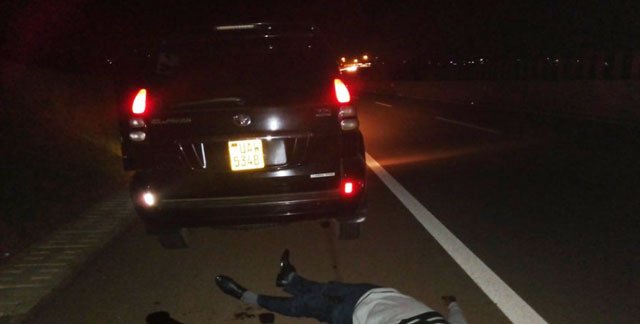
Scene of crime


A Rwandan national and her bodyguard were on Thursday night shot dead along the Entebbe Express Highway, further causing shock in the Ugandan public who continue to witness rampant murders in the country.

Princess Kamikazi and her bodyguard, Joshua Ruhegyera Ntereho were assassinated by unknown assailants while in their car registration Number UAW 534B.

According to eyewitnesses, the assassination of the two individiduals happened at around 11pm yesterday. Blood of the victims still stains the tarmac as of Friday Morning.

The Police arrived on scene moments after Kamikazi and Ruhegyera were killed.

Investigations on the murder have already started and police had no information to give at the time. An AK-47 riffle, being held by Ruhegyera was found on the scene of the crime.

A CCTV camera is perched near the scene of the crime and the Police hopes to identify the assailants and also determine where they went after committing the heinous crime.

The Murder of Kamikazi and Ruhegyera happens hours after the Minister of internal Affairs, Gen.Jeje Odongo admitted that government has not done much for the on-going cases of murder in the country.

The Minister, speaking to parliament yesterday briefed the MPs on the Steps security agencies are taking to address the growing crime rate even though he accused the opposition leaders in Uganda of what he called exacerbating the security situation in the country.

The latest murder of the two people comes only a few days when unidentified assailants kidnapped and killed 28-year-old Maria Nagirinya, and Ronald Kitayimbwa,35, a boda boda rider.


Stories Continues after ad

Producer Washington key witness in Mowzey Radio murder case

Washington

The trail of Godfrey Wamala aka Troy, the prime suspect in the murder of slain music icon Moses Nakintijje aka Mowzey Radio has kicked off before High Court Judge Jane Francis Abodo.

Troy, a former employee at the Da Bar, a hangout place in Entebbe, was arrested in February 2018 from his friend’s home in Kyengera where he was hiding.

Appearing before high court judge, prosecution lined up four witness among who were producer David Ebangit aka Washington who was with the late singer Moses Radio on the day he was killed and Pamela Musimire, a lady who was managing one of the construction site of the singer.

During court session, Washington was asked if he knows the person (Troy) who standing in the docket, he said yes, he is the gentleman who took my brother’s life Mowzey Radio. I know him by face and name he is called Troy. Washington also told court that I knew Sekibogo Moses for more than 10 years.

Prosecution avers that between January 27 and February 1, Troy hit Mowzey Radio during a bar brawl in which the latter sustained injuries on brain leading to his death at Case Hospital.

In 2018 Washington said on the fateful day, he found Radio at his home in Makindye. He wanted to go to Entebbe because he was constructing a house there and asked Washington to escort him.

Together with another person yet to be identified, they got into the car at around 3pm and drove to Entebbe. We were three in the car. On the site, Radio got a phone call from a one Pamela, who asked him to find her at Da Bar.

They walked to Da Bar between 5-6pm and according to Washington, Pamela was at the bar with a group of her friends. They apparently sat on one side while Washington sat on the other side.

He says that he started getting a bad feeling about what was happening and asked Radio to go but the deceased insisted that they stay. At that time, according to Washington, he briefly walked out to rest in the car before returning.

He then reportedly asked Pamela to tell Radio that they should leave, she then said Mowzey was about to get done. Washington says he insisted and went inside Da Bar, only to realise that they had changed their location.

“I sat with him for about 5 minutes. They brought a bottle of whisky and I saw him paying the money. He got the whisky and started pouring in different glasses. He then got agitated and poured whisky on the manager, the one who was talking ill about him.

“They didn’t react because they continued laughing but I noticed the manager wasn’t happy. When I asked Radio what he had done, he said that ‘they know what they were doing’. In about 5 minutes, the manager got very angry and threw the table away. The bar manager then came for Radio and they were separated by this tall guy, Troy, and Hassan. I told Pamela to pick Radio out because they were together.”

“On the way out, towards the door of the club, this tall guy, Troy, came shouting ‘you have disrespected the owner of the bar’. He lifted Radio up and threw him down, heard him hit his head down. I heard his head crack,”

They picked up Radio and drove him to Emmanuel Hospital and there was a bit of delay.

“We then requested for an ambulance to Nsambya.  From Nsambya Hospital, we were referred to Case hospital because they told us that the ICU was full.”­­

“Mowzey Radio didn’t fight at all. This man Troy grabbed him and threw him down. The picture circulating is of the person who killed Radio. I can’t forget the face of the man who killed my brother. I asked Pamela to get Mowzey out of the bar four times. She didn’t do enough to protect Mowzey because she is the one who invited us.”

Stories Continues after ad

Uganda safest place to invest your money – Museveni tells investors

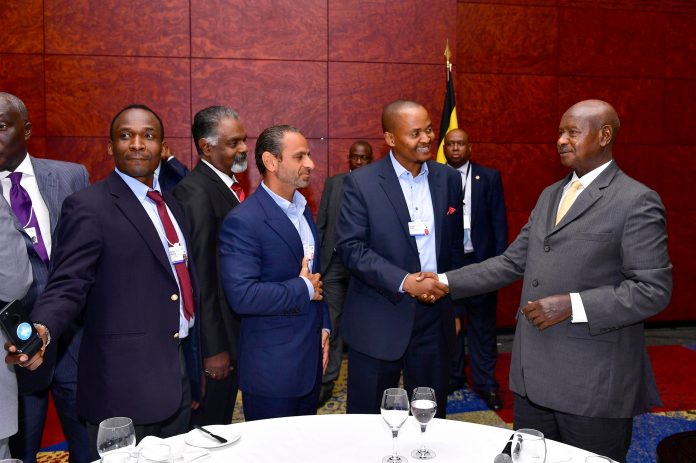
President Museveni interacting with some of the investors


Uganda is the safest place for any investor to inject their money and offers immense business opportunities, President Yoweri Museveni has said.

“If there is a place where you can easily make money, it is Uganda.  The place is secure.  That is why we host 1.4 million refugees from the neighbouring countries,” he said.

The President made the remarks at a dinner he jointly hosted with the First Lady, Janet, for the business community at Westin Hotel in Cape Town.

Mr Museveni was in South Africa to take part in the World Economic Forum on Africa, which is running under the theme “Shaping Inclusive Growth and Shared Futures in the Fourth Industrial Revolution”.

At the dinner, Museveni highlighted three major aspects of doing business; production of goods and services, market for those goods and services and infrastructure to facilitate to link the producer to the market.

He informed the investors that he had put in place enabling infrastructure to facilitate production of goods and services, adding that it had greatly lowered the cost of doing business.

The President said Uganda’s population  was an added advantage that  would enable market, he said the country has an array of available and affordable raw materials and now surplus electricity, functional Internet services and other amenities like piped water.

He urged the investors to seek opportunities in agro-processing, infrastructure, mineral extraction and tourism among other openings.

Addressing the gathering, the First Lady and Minister for Education and Sports, Janet Museveni, said the country is focusing on skilling the youth to enable them compete favorably in the job market.

Stories Continues after ad

UPL confirms adjustments in three league fixtures

Uganda Premier League logo


The Uganda Premier League has confirmed adjustments in the league fixtures involving KCCA FC and Vipers SC due to involvement of their players on national duty for the Uganda Cranes.

Uganda Cranes will be travelling today for the International friendly match with Kenya, to be played on Sunday 8th September 2019.

In accordance with article 19 (26) of FUFA Competitions Rules (If a club has three (3) or more players in the national team, the fixtures involving such a club may be called off three (3) days before and three (3) days after the national team engagement if it is to be played in Uganda and may be called off three (3) days before departure and three (3) days after return from an engagement outside Uganda.

The UPL Secretariat adjusted the league Fixtures for Clubs that have more than three players summoned for the national duty.

Maroons FC Vs KCCA FC that was to be played on Friday 06th September 2019 has postponed and a new date shall be communicated later.

Vipers SC Vs BUL FC that was to be played on Saturday 07th September 2019 has been postponed and a new date shall be communicated later.

Onduparaka FC Vs Vipers SC that was to be played on Wednesday 11th September 2019 has also been postponed and a new date shall be communicated later.


Stories Continues after ad

Fanning Africa’s glowing embers of angel investment opportunities

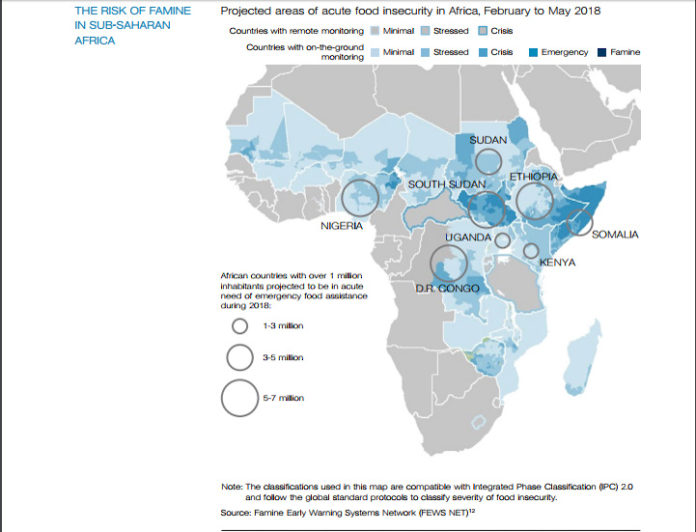
Map of Africa showing hunger areas.

By David van Dijk and Melissa Ruggles


‘Angel investing is on the rise across Africa.’ This is a commonly heard phrase for those of us active in the early stage investment space on the continent now. And this phrase is often quickly followed by another: ‘yet, there is still a need for more angel investors and investments…’.  Both phrases indeed capture the ever-developing angel investment context in Africa and it’s important to highlight the opportunities for everyone active in the ecosystem as we approach our – VC4A and ABAN’s – 6th edition of the Africa Early Stage Investor Summit (#AESIS2019) . In this brief thought piece, we aim to join in on the reflection.

Rewriting the African narrative

As ABAN President, Tomi Davies, points out in his article ‘Momentum for the African Angel ’, 2018 was a milestone year in terms of angel investments. Thanks to angel investors as well as early stage venture capital funds, African startups raised more than USD $725 million across more than 450 deals. And according to GSMA’s Maxime Bayen, 51 African startups have raised USD $1 million or more so far in 2019, amounting to a total of $453 million. As avid investors with personal interests in seeing the success of promising African startups that offer solutions to revolutionize peoples’ lives, we warmly celebrate these achievements. The so-called ‘African narrative’ is definitely being rewritten.

At the same time, we recognize and wish to raise attention to the incredible potential for even greater venture growth and investment. Mr. Davies enumerated the many transformative factors that shed light on the opportunities staring us down. The takeaway of his analysis is this: Never before has the pipeline of African innovation been so investible, thanks to increasing urbanization, digital penetration, a growing labor force, and much more.

Today, there are approximately 50 active Africa-focused angel investor groups – ABAN, LAN, Dazzle Angels, Jozi Angels, and Cairo Angels to name a few, with new ones arising in Benin, The Gambia, Ethiopia and Mali. Next to pre-seed, seed and series A funding, what can angels offer? Angels can help solve early stage African venture challenges by mentoring the rising entrepreneurs and by connecting them to our business networks, so they can continue to build up their ventures. Angel support that targets women-led ventures is especially vital considering the traditional stumbling blocks they must overcome to achieve success.

Another thing that existing angel investors can do is to spread the word and lend support to other aspiring angel investors who wish to invest in African businesses. Meghan McCormick in her aptly named article, ‘Africa Needs More Angel Investors, highlights the fact that high net-worth individuals (HNIs) do not invest in African startups is simply because they are not familiar with asset classes adjacent to tech, a space where many African startups fall (naturally, many also fall within tech). Angels therefore have a dual role to play – both entrepreneur-facing and towards fellow investors – if we want to see the continent take off even further.

Capitalizing on the (controversial) Jumia opportunity

2019 will go down as the year where the first African tech-focused company, Jumia, launched on the NYSE. It was, and remains, a controversial topic  to say the least. But what has happened since is something we can all appreciate. Investors’ eyes have turned increasingly more to the African continent. What is happening there? Who are the players? Which companies should we be paying attention to? How can we invest in, and be a part of, the next big success story?

Building on this attention and responding to these questions is what we, as pivotal players in the African startup ecosystem, need to do. These are some of the very key reasons we, at VC4A and ABAN hold the Investor Summit each year. It is an exclusive setting where eager African investors and ecosystem stakeholders come together to share tips and tricks, and to discover Africa’s most interesting Series A investment opportunities through the VC4A Venture Showcase.

Your chance to meet the top-10 of Africa’s Series A-ready ventures is just around the corner

For those of you investors looking for vetted Series A-ready companies to add to  your portfolio, VC4A’s Venture Showcase will have what you’re looking for. Founders from 10 innovative, high-growth scale-ups will present their ventures to Summit attendees on 14 November. They will each give a three-minute pitch and investors can further personally engage with the entrepreneurs in 30-minute deep dive sessions, that will be held in a private room at the Summit venue.

VC4A’s Venture Showcase is a great example of true industry collaboration. The vetting process is fully done by partnering external investors, where angel groups are referring their portfolio companies ready for the next round. Partner VCs then assess the opportunities and ultimately decide who will be on stage at the Summit.

“In 2019, the investor participation has been just outstanding, with 40 major VCs and multiple angel groups involved in the process,” says Alina Vinogradova, VC4A’s Head of Programs and Partnerships. “We believe initiatives like this help to build trust and foster collaboration between industry stakeholders, and importantly, create both co-investment opportunities and exit opportunities for our partners.”

Why not consider joining us in November at #AESIS2019 ? Only together can we fan the embers of angel investment opportunities and business development across the continent.

Stories Continues after ad

Rema is reportedly pregnant; it is what forced her out of Kenzo’s home

Rema Namakula

Local musician, Rema Namakula who recently fled the BET award winner,
Eddy Kenzo’s home for the new catch, is reportedly pregnant and that
it is what forced her to leave the father of her daughter.

Rema recently introduced Dr. Hamza Ssebunya and the two lovebirds are
currently living at their rented home in Namugongo.  This was revealed
by Rema’s close associate who said, the singer had been dating Dr.
Hamza Ssebunya, a for quite a good time however their relationship was
cut shot after Kenzo emerged on the entertainment scene.
The Doctor is however said to have reconnected with the ‘siri muyembe’
singer after her love fell shot with Kenzo who is regarded as a ‘play
boy’ is said to have abandoned his seguku home and started sleeping at
his music studio in Makindye after noticing that Rema is always in
deep relationship  with Hamza.
Last week, Rema revealed her new husband, Ssebunya and they are slated
to wed on November 1, 2019. Dr. Sebunya is a gynecologist at Mulago
National Referral Hospital and is reported to be the same doctor who
worked on her during her pregnancy.
It is reported that the doctor has been funding many of her activities
and donating her gifts. He is also said to have an upper hand in the
apartments that the singer is reportedly building in Namugongo.
Rema has always accused Kenzo of shunning his duty of living as a
family man and spending most of his time abroad and at his music
studio. He is also accused of spending time with other girls.
According to reports, Rema’s friend dubbed Eva almost smashed Lydia
Jazmine for posing with Kenzo in Makindye, a picture which depicted
that she is Kenzo’s new catch.

Stories Continues after ad