Stanbic Bank
Stanbic Bank
26.7 C
Kampala
Stanbic Bank
Stanbic Bank
Home Blog Page 1237

A letter to you the Taxpayer: Thank you for paying taxes

Doris Akol


By Doris Akol

Dear Taxpayers,

We recently concluded financial year 2018/2019 and this note is to say thank you for your compliance and continued support in meeting your tax obligations.  Over the past year, through your compliance and our combined efforts, we mobilized and collected Shs16, 958.11 billion and saw revenue grow by 15 per cent in comparison to last financial year. This translates to an increase of Shs 2,298.35 billion shillings that has been added to the national treasury over the last year. I am confident that many will be proud of what the immense possibilities that our expanding revenue basket offer for our country’s continued upward growth trajectory.

At Uganda Revenue Authority (URA), we are proud that we have lifted our country’s tax to GDP ratio progressively from 12.8 per cent in 2014/15 to 15.1 per cent in the just concluded financial year. We are firmly on course to realizing the NDPII target of 16 per cent by financial year 2019/2020. We have also impacted both the continental and global tax agenda with our indelible mark of innovation and thought leadership in tax administration.

We appreciate the cooperation and productive networks we have built with our key strategic partners that have enabled us progressively widen our reach and impact. We appreciate the enthusiasm with which our taxpayer and tax education programs in the schools, universities, business communities and in all the regions have been attended. This motivates us to continue focusing energies and resources on providing information and support to not only improve compliance but also to grow and strengthen a taxpaying culture among existing and future taxpayers. We also applaud the banks and other tax payment channel providers that worked extra hours to enable our mutual clients comply within statutory deadlines.

In this financial year 2019/20, we will collectively mobilize and contribute Shs 20,344.13 billion to the national coffers. While the task ahead of us is monumental, it is not insurmountable because the economic fabric to generate this revenue exists. In addition to continually focusing on our current compliance improvement initiatives for individual income tax, rental income tax, local excise duty and VAT, our further focus will be in utilization of business intelligence, various system interfaces, forensic and science based interventions and third party information sources to identify eligible but hitherto non-compliant taxpayers. In a bid to support compliance but also improve on our service offering, going beyond revenue collection, we will also continue to offer tailor-made tax education resources, appropriate to various taxpayer segments, with specific emphasis on financial literacy and tax advisory. On the international trade front, our efforts will continue to be focused on deploying technological applications to secure our borders while facilitating trade at the lowest cost and minimal time.

The revenue mobilization effort and contribution to national treasury by those who are engaged in profitable economic activity is key in supporting government’s expenditure programs and priorities. Therefore, it is incumbent upon all of us to be compliant with our tax obligations for this to happen. I urge you to continue playing your part diligently by complying with your taxes on time and in the right amount. We thank you for your business and we are available on our various channels and platforms to both support and when necessary, enforce your compliance, as we continue to Develop Uganda Together!

The writer is the Commissioner General of URA


Stories Continues after ad

MTN Uganda donates Shs347m for procurement of blood equipment

Wim Vanhelleputte


The telecom service provider, MTN Uganda has availed Shs347 million  to procure one automated plasma extractor for Nakasero Blood Bank and three blood storage fridges for Arua, Mbarara and Mbale.

The Shs347 cheque was received by the Permanent Secretary Ministry of Health, Dr. Diana Kanzira Atwine and Director of Uganda Blood Transfusion Services, Dr. Dorothy Kyeyune at the ministry’s headquarters in Kampala.

Speaking during the event, Dr. Atwine appreciated MTN for working together with the government for the good of the people of Uganda.

She called upon other private sector players to join the struggle for better health by putting even more efforts towards initiatives that promote Disease Prevention at National and Community level. “Let us contribute to our better health care together. Thank you MTN Uganda for this corporate social responsibility towards availability of blood to save lives,” she said.

She said the blood component extractor would be used for processing of blood plasma to extract components of red and white blood cells and platelets for the Nakasero blood bank will also be procured under this project.

The Chief Executive Officer of MTN Uganda, Wim Vanhelleputte said the company is committed to supporting the government of Uganda towards meeting the Global Sustainability Development Goal of Good health and well-being through the delivery of health services to the people of Uganda through reduction of child mortality and improvements in maternal health.

“We are proud of this partnership with the Uganda Blood Transfusion Services and the Ministry of Health in ensuring that Ugandans have access to enough blood and blood components across the country,” he said.


Stories Continues after ad

Bank of Uganda Governor Tumusiime-Mutebile urges banks to cut lending rates to boost businesses

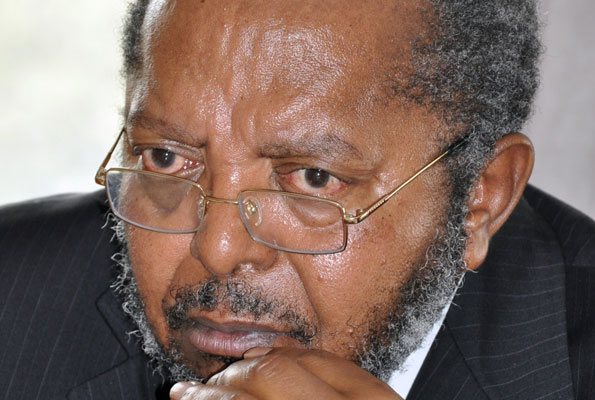
BoU Governor Emmanuel Tumusiime-Mutebile.


The Bank of Uganda (BoU) Governor  Emmanuel Tumusiime-Mutebile has urged commercial banks and other financial institutions in the country to lower their prime lending rates to enable businesses borrow for investment so as to boost their output.

“A previous edition of the World Bank’s Economic Update on Uganda argued that the high cost and limited access to credit was a binding constraint on Uganda’s economy. This implies that if only banks and other financial institutions could lower their lending rates and expand the volume of their lending, substantial numbers of businesses in the economy would be able to borrow money for investment in order to boost their output while servicing their debt and increasing their incomes,” Tumusiime-Mutebile said.

He was on Tuesday addressing delegates at the Uganda Bankers’ Association (UBA) Annual Conference at Kampala Serena Hotel. “De-risking Financing & Investment in Agriculture to promote decent youth employment and inclusive growth”. In April 2019, lending rates averaged 19.79 percent while the latest CBR stands at 10 percent, which commercial banks can’t follow due to high cost of funds.

He continued that while he remains uncomfortable with the high lending rates which he believes that they should be reduced sustainably over time, “I dare say that access to credit is not the ultimate binding constraint on economic growth. We must think holistically about the challenges holding back the power of finance to transform our economy.”

He said proper diagnostics must reveal the problems that constrain agricultural finance before stakeholders can devise durable solutions. “We must examine the borrowing capacities of the businesses in our real sector,” he said.

Financial institutions, he said, are challenged to rethink their views of bankable projects so as to design solutions for potential borrowers at their level. “On the other hand, formal sector creditworthy businesses, which have been the main clients of commercial banks, comprise a small share of the economy. Informal business and micro-enterprises abound and their capacity to utilize credit effectively is constrained, including by inadequate business and technical skills, the high costs of inputs, and unpredictable market conditions,” he said.

The governor said some financial institutions have started tackling these problems through business incubation programs. Moreover, through automation and adoption of new technologies for delivering financial services, it is possible for banks to reduce their operating costs, and pass on the savings to borrowers through reduced lending rates, he said. “I am also optimistic that banks will exploit the potential of bancassurance to exploit synergies with insurance to design products for the riskier borrowers,” he said.

He applauded UBA for embracing the role that can be played by the financial sector in transforming people into a non-agrarian workforce and urban-dwelling populace. But he said that it will take a comprehensive approach by all sectors to bring about the transformation.

Indeed, he said, the fruits of higher labour productivity in nonagriculture sectors, and higher living standards in urban areas enjoin the government to develop the manufacturing and service sectors in order to absorb the youths who are migrating from rural areas. Research conducted by the International Growth Centre has shown that it is possible for Uganda to industrialise through prioritization of high productivity services or non-traditional “industries without smokestacks” such as agro-processing, ICT, transport and tourism, which can absorb the youths seeking jobs.

He said government must focus on boosting export-oriented manufacturing and growth of the tradable services. This will help to meet the rapidly growing urban demand for food thereby linking urban and rural growth by creating market for rural production, and even reducing the import bill. Such demand-driven agricultural development would foster innovation and advancement in production, processing, and packaging, across all the stages of the chain in catering to the demands of urban consumers of processed products including packaged foods.

Government , he said needs to join hands with finance and all sectors by facilitating urban-rural linkages, to embed local firms within the supply chains of international retailers, such as the international supermarkets in our cities and towns, and promote export readiness of local firms if we are to be the bread basket of the region. Potential areas of further investment for government and the financial sector include roads, cold storage, transport, support for farmer organisations, agricultural extension, and out grower schemes.

He said it was also necessary to address information asymmetries, for example, by matchmaking international firms and local suppliers. Only through boosting agricultural development through inclusive rural-urban links will we effectively harness the agriculture sector as a dominant source of employment.

“I applaud the UBA for rising to this challenge and call upon Government to join the bankers in the modernization of agriculture for job-creation and inclusive economic growth. On our part, the Bank of Uganda will continue to work with Government and commercial banks in promoting affordable agricultural finance through the Agricultural Credit Facility, which we encourage all eligible borrowers to take advantage of,” he said.

“Reliance on cash is a barrier to access to credit because farmers are unable to produce records of their transactions. Digitization is a key solution to improve financial access to credit by small farmers,” Mastercard Foundation Sub Saharan President, Raghav Prasad said while speaking to guests at the event.

While addressing delegates, Finance Minister Matia Kasaijja, emphasised the need for innovation and mechanisation across the agriculture value chain. He admitted that government has not done enough in supporting the sector through the all important aspect of research.

He said technology adaptation to the agricultural level, promoting good land use and increasing access to agricultural finance with specific option to women in agriculture were key to improving agriculture.

The minister said over the years, government has consistently increased the budget of agriculture. When we work on roads, electricity, water and ICT, we are supporting agriculture. The budget has increased from Shs480 billion to Shs1 trillion in this financial year.

The aspiration of Uganda bankers is that the outcomes of the conference increase private sector credit to agriculture from 12 percent to at least 20 percent over the next 4-5 years.

According to Patrick Mweheirwe, the Uganda MD who also doubles as UBA chairman, government is responding positively to investment in risk concerns that were raised at last year’s conference.

With 20 percent of nonperforming loans resulting from agriculture lending, the conversation to fund the sector must happen now if the sector which contributes 25 percent to Uganda’s GDP and employs 68 percent of the people is to become more attractive and sustainable.

Stories Continues after ad

20m children miss out on lifesaving measles, diphtheria and tetanus vaccines in 2018: new data from WHO and UNICEF

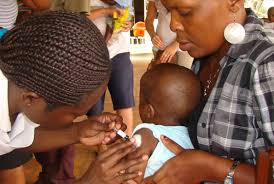
Baby being immunized


20 million children worldwide – more than 1 in 10 – missed out on lifesaving vaccines such as measles, diphtheria and tetanus in 2018, according to new data from WHO and UNICEF.
Globally, since 2010, vaccination coverage with three doses of diphtheria, tetanus and pertussis (DTP3) and one dose of the measles vaccine has stalled at around 86 percent. While high, this is not sufficient. 95 percent coverage is needed – globally, across countries, and communities – to protect against outbreaks of vaccine-preventable diseases.

“Vaccines are one of our most important tools for preventing outbreaks and keeping the world safe,” said Dr Tedros Adhanom Ghebreyesus, Director-General of the World Health Organization.“While most children today are being vaccinated, far too many are left behind. Unacceptably, it’s often those who are most at risk– the poorest, the most marginalized, those touched by conflict or forced from their homes – who are persistently missed.”

Most unvaccinated children live in the poorest countries, and are disproportionately in fragile or conflict-affected states. Almost half are in just 16 countries – Afghanistan, the Central African Republic, Chad, Democratic Republic of the Congo (DRC), Ethiopia, Haiti, Iraq, Mali, Niger, Nigeria, Pakistan, Somalia, South Sudan, Sudan, Syria and Yemen.

If these children do get sick, they are at risk of the severest health consequences, and least likely to access lifesaving treatment and care.

Measles outbreaks reveal entrenched gaps in coverage, often over many years

Stark disparities in vaccine access persist across and within countries of all income levels. This has resulted in devastating measles outbreaks in many parts of the world – including countries that have high overall vaccination rates.

In 2018, almost 350,000 measles cases were reported globally, more than doubling from 2017.

“Measles is a real time indicator of where we have more work to do to fight preventable diseases,” said Henrietta Fore, UNICEF’s Executive Director. “Because measles is so contagious, an outbreak points to communities that are missing out on vaccines due to access, costs or, in some places, complacency. We have to exhaust every effort to immunize every child.”

Ukraine leads a varied list of countries with the highest reported incidence rate of measles in 2018. While the country has now managed to vaccinate over 90 percent of its infants, coverage had been low for several years, leaving a large number of older children and adults at risk.

Several other countries with high incidence and high coverage have significant groups of people who have missed the measles vaccine in the past. This shows how low coverage over time or discrete communities of unvaccinated people can spark deadly outbreaks.

Human papillomavirus (HPV) vaccine coverage data available for the first time

For the first time, there is also data on the coverage of human papillomavirus (HPV) vaccine, which protects girls against cervical cancer later in life. As of 2018, 90 countries – home to 1 in 3 girls worldwide – had introduced the HPV vaccine into their national programmes. Just 13 of these are lower-income countries. This leaves those most at risk of the devastating impacts of cervical cancer still least likely to have access to the vaccine.

Together with partners like Gavi, the Vaccine Alliance and the Measles & Rubella Initiative, WHO and UNICEF are supporting countries to strengthen their immunization systems and outbreak response, including by vaccinating all children with routine immunization, conducting emergency campaigns, and training and equipping health workers as an essential part of quality primary healthcare.

About the data

Since 2000, WHO and UNICEF jointly produce national immunization coverage estimates for Member States on an annual basis. In addition to producing the immunization coverage estimates for 2018, the WHO and UNICEF estimation process revises the entire historical series of immunization data with the latest available information. The 2018 revision covers 39 years of coverage estimates, from 1980 to 2018. DTP3 coverage is used as an indicator to assess the proportion of children vaccinated and is calculated for children under one year of age. The estimated number of vaccinated children are calculated using population data provided by the 2019 World Population Prospects (WPP) from the UN.


Stories Continues after ad

Court of Arbitration for Sport to give final decision on Caf Champions League final replay

Wydad-and-Esperance-game


Tunisia’s Esperance and Morocco’s Wydad Casablanca both lodged appeals at the Court of Arbitration for Sport (Cas) over the decision to replay the second leg of the African Champions League final.

The Sport’s highest court will rule on 31 July on how to resolve the chaotic African Champions League final which was abandoned in May due to the conditions of game and safety which were not met.

It followed Wydad’s decision to leave the pitch after an equaliser they scored was disallowed. Wydad wanted the video assistant referee to check if the goal should stand but the system was not working, with Esperance declared champions.

Later that week, Esperance were ordered by Caf to return the Champions League medals and trophy so that the game can be replayed.

However the 1-1 draw from the first leg in Morocco stands.

A statement from the Court of Arbitration for Sport on 15 July read;

“The Court of Arbitration for Sport (CAS) has registered the appeals filed by Wydad Athletic Club (Morocco) on 14 June 2019 and by Espérance Sportive de Tunis (Tunisia) on 17 June 2019 against the decision issued by the Executive Committee of the African Football Confederation (CAF) on 5 June 2019 in which they were ordered to replay the second leg of the CAF Champions League Final 2018/2019 on neutral ground (the “Challenged Decision”).

“In its appeal, Wydad Athletic Club mainly requests that the Challenged Decision be set aside and, consequently, to be declared winner of the 2018/2019 CAF Champions League and to receive the prize money allocated to the winner.

“Espérance Sportive de Tunis, in its appeal, seeks as main prayers for relief that the challenged decision be considered as null and void and, consequently, to be declared winner of the 2018/2019 CAF Champions League, to keep the trophy and medals awarded on 31 May 2019 and to order CAF to pay the prize money attributed to the winner.

“The clubs and the CAF have prepared and agreed upon a procedural timetable for the CAS arbitration, with a final decision to be issued, at the latest, on 31 July 2019.

“CAS will not provide any further information in relation to this procedure, except to issue a media release announcing the final decision.”

Attachments area

Stories Continues after ad

Gov’t plans US$263m vehicle plant for regional market

Artistic Impression of the Kiira Vehicle Plant.

The government of Uganda will invest US $40 million (about Shs148 billion) in the first phase of a US$263-million (about Shs973.1 billion)  vehicle-assembly plant with the view of starting production by mid-2021 to tap rising demand in the East African Community region, reports news agency Bloomberg.

Construction of the facility started in February, Isaac Paul Musasizi, the Chief Executive officer of state-owned Kiira Motors Corporation told Bloomberg in Kampala days ago.  Annual output is initially envisaged at 5,000 vehicles and will reach 150,000 units with the assembly of buses, trucks, pick-ups and sports utility vehicles, he said.

Kiira Motors has so far produced two car prototypes and a solar-powered bus.

“We shall start making our vehicles, but also have room for others to assemble,” Musasizi said.

The regional EAC offers a lucrative opportunity because at least 85 per cent of its vehicle imports are used models, he said. The combined market for passenger and commercial vehicles in its five member nations — Uganda, Kenya, Tanzania, Rwanda and Burundi — could double in the next 13 years to almost 630,000 annually, according to a study by Uganda’s Ministry of Science, Technology and Innovation, which holds a 96 per cent stake in Kiira Motors while Makerere University holds the remaining four per cent.

Kenya and Rwanda are already investing in vehicle-assembly industries to exploit opportunities in the region that has some of the continent’s fastest growing economies.

Kiira Motors plans to produce sedans on a small scale and is in talks with prospective partners for provision of technology, to take an equity stake or undertake joint ventures, the CEO said.

“We are talking to the big fish in the automotive industry,” he said. “We have reached out to players across the globe.”

Stories Continues after ad

Namisindwa MPs drag district service commission to State House Anti-Corruption Unit, CID over mess in recruitment of workers

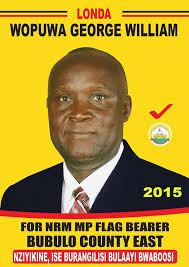
ACCUSED; Wopuwa

Members of Parliament from Namisindwa district want the results from the recent recruitment exercise in the district nullified on allegation of corruption by the district service commission.

Apollo Masika, the Bubulo East MP, says they have written to several government agencies State House Anti-Corruption Unit, Inspectorate of Government, the Public Service Commission, Local Government Ministry and Criminal Investigations Directorate to investigate the recent recruitment.

The Namisindwa Woman Member of Parliament, Canon Grace Namukhula Watuwa, says the entire process was marred with several anomalies. In March the district advertised about 300 jobs.

There has been a widespread complaints of corruption and bribery leveled against members of the district service commission. The legislators have written to the Chief Administrative Officer (CAO), Emmanuel Ofwono, questioning the recruitment process, saying it wasn’t transparency.

Days ago, a mother identified as Annet Nelima collapsed in the CAO’s office after learning that her daughter, Lorna Sulwa hadn’t been shortlisted for the job she applied for even after paying members of the District Service Commission. Ms Sulwa had been volunteering at the district.

Several residents in the district want the LC5 Chairman George William Wopuwa and other officials like Apollo Wapicho, Rose Nekesa and members of the district service commission to resign before investigations can begin.

It is alleged millions of money extorted from Jobseekers in Namisindwa district through the conifers of Wopuwa and Chairperson Service commission respectively. It is alleged the money was raised and sent to Mr Mayeku Lv councillor Namabya subcounty and Mityero who is production officer at the district.

Moses Masaba Kituyi, a resident of the district says the leaders are threatening him and others not to talk about corruption at the district.

“Corrupt officials are calling to tell us to stop this fight with no regard for the real-life consequences.

Thousands of us have come together in the last few days, almost a week plus now to expose the truth about the high level of corruption in Namisindwa. But we’re facing an uphill battle. We’re up against people who don’t want us to speak the truth. And with every day that passes we’re one step closer to winning.Beyond recognition, our jobs are disappearing and our schools and hospitals being plunged into crisis.But we aren’t the kind of people who give up when the going gets tough. With so much on the line we can’t afford to be,” says Kituyi.

Namisindwa District is bordered by Bududa District to the north, Kenya to the east and south, Tororo District to the south-west, and Manafwa District to the west. The district headquarters at Bupoto are located approximately 40 kilometres by road, south-east of Mbale, the largest city of in the sub-region.

Namisindwa District became operational on 1 July 2017.  Prior to that the new district was “East Bubulo County” in Manafwa District. The rationale for creating the new district was to bring services closer to the people and create jobs and reduce youth unemployment.

As of August 2015, the district had 80 schools. The district terrain in described as “hilly”, and prone to soil erosion during the rainy season. The gravel roads need frequent maintenance.  The Bumbobi–Bubulo–Lwakhakha Road traverses the district in a general northwest to southeast direction.

Stories Continues after ad

Ex-South African football star shot dead in his car

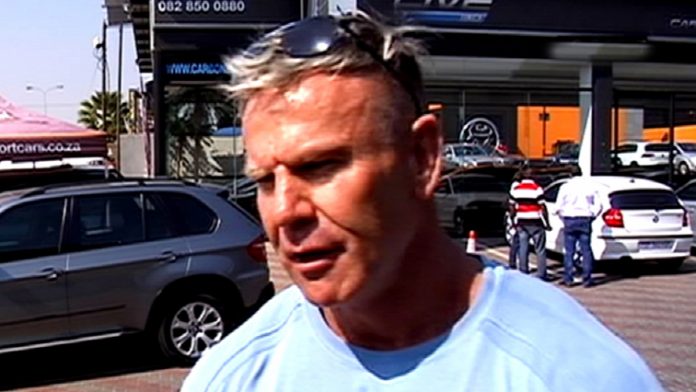
Late Marc Batchelor

A former South African football star has been shot dead while driving in Johannesburg.

Marc Batchelor, former Kaizer Chiefs and Orlando Pirates player, was gunned down in his car on Monday evening, police confirmed.

He was fatally shot when two gunmen on motorbikes opened fire on his vehicle in Olivedale, according to reports.

The motive for the attack is not yet known and a murder investigation has been launched, South African news broadcaster eNCA reported.

Images circulated on social media showed a bullet-riddled window on what was reported to be Mr Batchelor’s vehicle.

Police spokesman Lungelo Dlamini told Soccer Laduma: “Yes, he was shot this evening by two men on a motorbike.”

 “He died in his vehicle and nothing was taken. The motive is yet to be established, but we are investigating.”

No arrests have been made so far.

Stories Continues after ad

List of Digital Impact Awards Africa nominees released

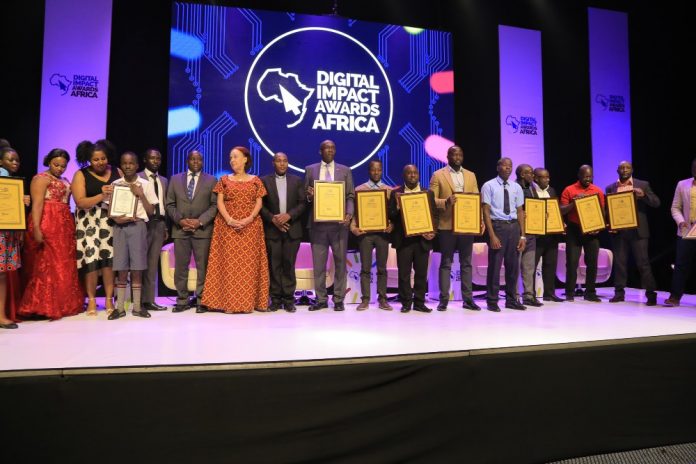
HiPipo; the organisers of the Annual Digital Impact Awards Africa have released the nominees for the Sixth Digital Impact Awards Africa (#DIAA2019), with corporates like the National Social Security Fund, National Water and Sewerage Corporation, UMEME, MTN and other companies among the nominees .  Digital Impact Awards Africa is Africa’s most important gathering of C-Level executives, and senior digital and IT executives.

The release of the nominations marks the end of a comprehensive entry submission and validation process that ran from June 6, 2019. #DIAA2019 grand finale is scheduled for September 20,  2019 at the Kampala Serena Hotel. The awards gala will be the climax of the Include Everyone – Digital and Financial Inclusion Summit that will happen on the same day. This summit will explore the strategic trends and technologies that are shaping the future of Digital, IT and business.

Under the theme #IncludeEveryone, Digital Impact Awards Africa is a platform that promotes Digital Inclusion, Financial Inclusion and Cybersecurity. Precisely; the Awards seek to recognize, celebrate and appreciate different individuals and organizations that are spearheading the use of digital mediums to better serve their communities.

While releasing the #DIAA2019 nominations, Innocent Kawooya, the CEO of HiPipo applauded the different individuals and organizations that took time and submitted entries befitting nomination in Africa’s most important digital and financial inclusion platform.

“Between June 6th and 10th July, we received several entry submissions from about 113 organizations and individuals. The advisory panel then scrutinized each submission to ensure conformity and adherence to the nomination criteria. Those that ticked all the boxes were shortlisted while those that were below par didn’t make the list,” Innocent Kawooya noted.

He added; “There are 16 Uganda and 6 Continental Categories. This year the Commendation for Trade Digitization category has nominees and just like other categories it will have Jury/Research Panel assessment and public survey/vote to determine eventual winner. Congratulations are in order for all #DIAA2019 nominees.”

HiPipo looks forward to host all the nominees and other players come 20th September 2019 at Kampala Serena Hotel. Contact the #DIAA2019 team to book your attendance package Standard ($1,595) for awards attendance Or Corporate ($3,450), Corporate Branded ($5,200) that will give you access to Include Everyone – Digital and Financial Inclusion Summit and Panel discussions with Digital Leaders.

FULL LIST OF NOMINEES

Africa

  1. Africa Best Digital Enabler (Internet, Devices)
  2. Airtel
  3. Huawei
  4. MTN
  5. Orange
  6. Tecno
  7. Vodacom
  8. Africa Best Mobile App (FinTech and Telecom)
  9. Craft Silicon – Elma Platform
  10. FNB Banking App
  11. M-PESA
  12. Standard Chartered Mobile
  13. Vodacom – Retail App Omnichannel
  14. Africa Best FinTech Innovator
  15. BitPesa: Digital Foreign Exchange and Payment Platform
  16. Clickatell: WhatsApp Chat Banking
  17. Craft Silicon: Virtual Banking, Mobile Lending, E-Voucher, Agency Banking
  18. Jumo: Mobile Lending and Credit Scoring
  19. NALA: Smarter Mobile Money Channel
  20. Tala: Mobile Lending and Credit Scoring
  21. Teller: WhatsApp Chat Banking
  22. Africa Best Digital Financial Services Platform
  23. Ericsson (EWP)
  24. Huawei Mobile Money
  25. Mahindra Comviva – Mobiquity Money
  26. Tagattitude
  27. Telepin
  28. Africa Best Digital Financial Services Integrator/Aggregator
  29. Cellulant
  30. Craft Silicon
  31. Eclectics International
  32. Kopo Kopo
  33. Tangazoletu
  34. Yo Uganda
  35. Africa Best Content App
  36. DStv Now
  37. Kwese iFlix
  38. Netflix
  39. StarTimes ON

Uganda

  1. Best Digital Banking (Online, Mobile, Social Banking)
  2. a)Barclays Bank
  3. b)Centenary Bank
  4. c)DFCU Bank
  5. d)Pride Mobile
  6. e)Stanbic Bank
  7. f)Standard Chartered Bank
  8. g)United Bank of Africa
  9. Best Saving, Lending/Credit Product
  10. Airtel Wewole
  11. CenteMobile Loans
  12. Fenix International – Readypay Solar
  13. Finance Trust – Mobile Loans
  14. Mazima Retirement Plan
  15. M-Kopa For Energy
  16. MTN MoKash
  17. Best Mobile Payments
  18. Beyonic
  19. MTN MoMopay
  20. Payway
  21. PESAPAL
  22. Pebuu
  23. Best Cards Payments
  24. Centenary Bank
  25. DFCU Bank
  26. Stanbic Bank
  27. Standard Chartered Bank
  28. United Bank of Africa
  29. Best Community Banking.
  30. Centenary Bank
  31. FINCA
  32. Post Bank Uganda
  33. Pride Microfinance Limited
  34. Finance Trust Bank
  35. BRAC Uganda Bank
  36. Best Digital Customer Experience (Financial Services, Telecom, IT)
  37. Airtel
  38. Centenary Bank
  39. MTN Uganda
  40. Stanbic Bank
  41. Standard Chartered Bank
  42. Best Digital Customer Experience (Utilities and Government Services)
  43. KCCA
  44. NSSF
  45. NWSC
  46. UMEME
  47. URA
  48. Best Brand on Social Media (Financial Services, Telecom, IT)
  49. Africell
  50. Airtel Uganda
  51. Centenary Bank
  52. DFCU Bank
  53. MTN Uganda
  54. Stanbic Bank
  55. Best Brand on Social Media (Consumer Goods)
  56. Bell Lager
  57. Movit
  58. Pepsi
  59. Riham
  60. Club Pilsner
  61. Jumia
  62. Best Digital Powered Campaign
  63. Bell Jamz Listeners Party
  64. Jumia Black Friday
  65. Stanbic Blue Weekends
  66. Tukonectinge With Pepsi
  67. Ug Mix Maestro
  68. Best E-Service/E-Commerce
  69. Jumia
  70. NWSC
  71. Spare-Wo
  72. UMEME
  73. URA
  74. Best Digital Embrace by Non-Consumer Facing Brand
  75. CAA Uganda
  76. FUFA
  77. IRA Uganda
  78. UEGCL
  79. UNRA
  80. Commendation for Trade Digitization
  81. RECTs Extension to DR Congo
  82. Uganda Electronic Single Window
  83. Uganda Trade Information Portal
  84. Disruptive Innovation
  85. Citimasta App: Traffic Update and Route Planner
  86. MTN MoMoCard: Virtual Card to Shop or Make Payments
  87. SafeBoda Pairing: Get the Nearest Rider
  88. Standard Chartered Bank: Straight2bank Liquidity Management
  89. YO TV: Online Television Without Commitments
  90. StarTimes ON: Online Video Anytime, Anywhere with Any Device
  91. Best Digital Awareness Initiative (Financial Literacy, Technologies, Entrepreneurship)
  92. Airtel My Hustle
  93. Blu Flamingo Digital Africa: Blu Advisory
  94. Community Banking Using the Pride Mobile Banking App
  95. CryptoSavannah Blockchain Literacy
  96. DFCU Battle for Cash
  97. NSSF Friends with Benefits Season 3
  98. Stanbic National Schools Championship
  99. Digital Brand of The Year
  100. Airtel Uganda
  101. Centenary Bank
  102. DFCU Bank
  103. MTN Uganda
  104. Stanbic Bank
  105. Standard Chartered Bank
Stories Continues after ad

Dfcu bank managements accepts fraud took place

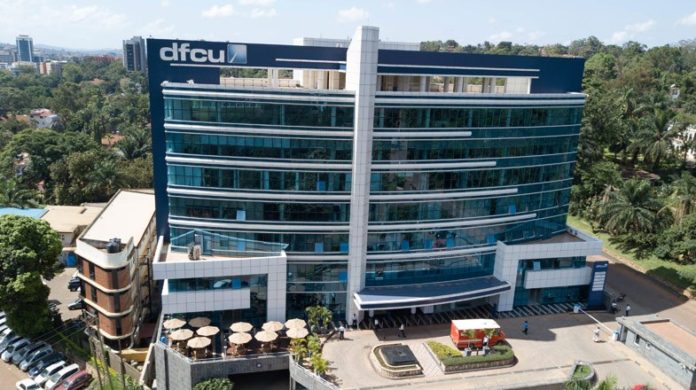
Dfcu Bank headquarters in Kampala.

Dfcu bank in its official statement on Monday accepted it detected signs of fraud in its system in May where billions of shillings were withdrawn by hackers who had internal collaborators.

The bank in a statement said investigations were on-going and urged its clients and depositors to stay put.

According to a police bond that Eagle Online has seen, one of the suspects is identified as Braise Ombuze and was charged with the offense of Electronic Fraud and Theft under a reference Vide CID HQTRS GEF 604/2019.

Braise had been detained at CID head offices in Kibuli Kampala.

The police bond dated June 29 instructs Mr. Braise to appear at Kibuli on July 1, at 10 am for reporting.

“And continue to attend until otherwise directed by court further to answer to the said charge,” the police bond reads in part.

The suspect was bailed out by two sureties, Ambrose Belisya and a one Esther.

Braise is among six suspects who breached DFCU’s system and accessed customers’ information.

$2.6M depositors’ money has since been stolen.

We learnt that the masterminds breached some accounts in Kampala late last month and accessed the cash.

Earlier reports suggested the crime was executed by four junior staff and two outsiders.

Days ago Eagle Online reported that a case was opened at Kibuli CID head offices.

However, detectives handling the matter declined to divulge details to the media insisting there is no case nor suspects in their custody.

Sources had previously said that the hackers first accessed shs700 million through ATMs.

The hackers cracked the bank’s system and started using “old unauthorized ATM cards” allegedly belonging to a number of pseudo customers “created by these hackers.


Stories Continues after ad