Stanbic Bank
Stanbic Bank
19 C
Kampala
Stanbic Bank
Stanbic Bank
Home Blog Page 1238

Ebonies girl Becky Jjuuko faces arrest after her nudes leak to social media

Becky Juuko


The Ebonies girl, Sulayina Nangendo, aka Princess Becky Jjuuko is currently facing trouble and could be arrested soon by the police after her nude pictures and video leaked and are making rounds on social media.

The actress in Uganda’s best known drama group and East Africa’s leading drama and Television group, recorded a porn video for her new catch, however it ended up in her boyfriend’s hands who allegedly shared it on social media.

Becky who has featured in a series of TV drama dubbed as Oh My God (OMG) that airs every Thursday on Bukedde, a local television, London Tantala to mention but few,  has not been popular to many, her nudes has raised suspicions that she might have leaked them herself to earn popularity.

According to information obtained by this website, the dancer has been suspended from all group activities till the management looks into her issues.

According to Kampala metropolitan police spokesperson, Patrick Onyango, they are hunting for Becky to explain the issue at hand.

“We are working with the Anti-Pornographic Committee. When they finish their investigations against the nude photos and video they will tell us what to do with Princess Becky Jjuuko. But at the moment I advise her to come to police and make a statement,” said Onyango.

Her nudes’ follows juicy Martha Kay’s well posed pictures and massage video that trended on various social media platforms in June. Till now, the well connected social media comedian and photographer is still handing.

Becky joins a list of Bukedde TV news anchor whose sex tape leaked in 2015, singer Desire Luzinda, herbalist Sylvia Namutebi aka Maama Fiina, Judith Heard and Martha Kay among others.


Stories Continues after ad

U15 squad to start preparations for CECAFA tourney named

Some players were picked from recent Odilo tournament in Njeru


Thirty three players have been summoned to start training ahead of the U15 Cecafa tournament that will be played from August 16- to September 1, 2019 in Asmara, Eritrea.

This is the first time an U15’s football nations tournament will be played in the CECAFA region and Uganda were placed in group B alongside Rwanda, Ethiopia and South Sudan.

Three of the players were selected from the just concluded Odilo FUFA Football Schools Championships in Njeru. They are Mungufeni Calvary, Fideli Moses from Oasis Annex Primary School-Arua) and Leonard Kasanya of Rays of Grace.

Other players have come from secondary schools and academies of Football For Good and Kampala Junior Team (KJT).

The inaugural tournament is to help the region prepare for the Under 17 AFCON qualifiers that start early next year.

Magera Jackson of KCCA FC will be the head coach and assisted by Lutalo Hamuzah.  Mubarak Kiberu is Goalkeeping coach, Nakabago Emmanuel will be Team Doctor, Mutyaba Bashir Team Coordinator and Bumpenjje Frank is the Kitsman.

The event will be sponsored by the FIFA Forward Programme initiative.

The Squad

Goalkeepers: Mukisa Daniel (Kawempe Muslim SS), Taremwa Elisa (Light Africa SS), Gubya Rickson Peter (Juventus-Namasuba), Chandia Walter (Maroons FC Junior Team)

Defenders: Ssonko Ssembatya Hafidhu (Kampala Junior Team), Waswanga Shafik (Football For Good Academy), Yiga Steven (St. Mary’s Kitende), Menya Ivan (Jinja SS), KAlisa Shugai (Kawempe Muslim SS), Abdul Issa (Football For Good Academy), Peter Gava ( Buddo SS), Mawanda Gabriel Twaib ( NASA Top Hart-USA), Mulema Vincent (Bishops SS-Mukono).

Midfielders: Basil Tuma Tenywa (Eton College, Windsor, United Kingdom), Makanga Khalid (Kawempe Muslim SS), Kigozi Najib (St. Mary’s Kitende), Mutyaba Travis (Kawempe Royal College), Ssekibengo Godfrey (St Henry’s College-Kitovu), Muliika Patrick (Kako SS), Ouke Patrick (Sparta 09), Mungufeni Calvary (Oasis Annex Primary School-Arua, Asiki Chrispus (Jinja SS), Bogere Yusuf (St Mary’s Kitende), Akampa Chriswill (Standard High School-Zzana), Ssekisambu Regan (Kawempe Royal College), Mubiru Hassan (Royal Giant SS-Mityana), Kasanya Leonard (Rays of Grace), Mutebi Samuel (Crested SS), Jagenda Shaban (St Mary’s Heritage-Nabweru)

Forwards: Ogwalo Devis (Buddo SS), Nsereko Abdu (Super Heroes), Kyeyune Abbas (Kampala Junior Team), Fideli Moses (Oasis Annex Primary School-Arua).

Groups

Group A: Eritrea, Kenya, Burundi, Somalia

Group B: Uganda, Rwanda, Ethiopia, South Sudan

Group C: Tanzania, Sudan and Djibouti

Fixtures for Uganda U15

Saturday 17/8/2019: Uganda Vs Ethiopia

Tuesday 20/8/2019: South Sudan Vs Uganda

Saturday 24/9/2019: Uganda Vs Rwanda


Stories Continues after ad

Blow to Bemanya as Court rules audit of troubled UTL must be carried out

Finance PS and Secretary to the Treasury, Keith Muhakanizi and Investment and Privatisation State Minister Evlyen Anite have clashed over the audit.

The High Court has ordered that Uganda Telecommunication Limited (UTL) must be audited in 30 days in the ruling delivered on August 9, by Justice Musa Ssekaana, dashing away hopes of the troubled company’s Official Administrator, Bemanya Twebaza, who had resisted the audit. Bemanya is also the Executive Director of Uganda Registration Services Bureau (URSB).

The ruling comes after the Uganda Broadcasting Corporation (UBS) sued Bemanya, praying that the Audited General be appointed to audit the company swimming in debts worth billions.

Justice Ssekaana in his ruling held that: “An audit be carried out Uganda Telecom Limited-in administration by the Auditor General with a period…30 days from the date of this order.”

The judge also ordered that the audit report be presented or given to all creditors of the company.

Bemanya was represented by his lawyers Nuhu Wandembere while Counsel Christine Mpumire represented UBC.

The judge’s ruling should make the State Minister for Investment and Privatisation, Evelyne Anite happy as she has been calling for the audit of the company after President Yoweri Museveni directed that the audit be dome to establish what is happening within the company.

In a letter dated July 16, 2019 to Anite, Museveni said he had “heard of some allegations”.
“This is to direct you to institute an audit in the activities that are going on in Uganda Telecommunication Limited,” read part of Museveni’s letter, a copy of which was seen Eagle Online.

The audit as instructed by Museveni had taken shape but a suit by UBC forced Keith Muhakanizi, the Ministry of Finance/Secretary to the Treasury to halt the audit on account of sub judice rule, a decision that was quashed by Anite and now court has granted her wish.

In a recent letter, Anite said Muhakanizi and Finance Minister Kasaija should have taken note of Museveni’s directive on the audit of UTL and facilitated its implementation, instead of derailing the process.

“The audit into Uganda Telecom Limited was to me through my office sanctioned by H.E the President…I have clear and unequivocal instructions from HE The President to carry out an audit of UTL. In the absence of a contrary directive from him, I am not in position to act contrary to his directive and you and Hon. Matia Kasaija would be well advised to-do likewise,” Anite stated.

Museveni has always said UTL provides is of strategic importance to government as far as investment in the company is concerned.

For more than two years, UTL has been placed under administration and there is no sign that the company will change for the better.
In early 2017, UTL was in debts of more than Shs700 billion when the Libyans, who held 69 per cent shares, left.
At that time, government had to liquidate the company or save its collapse by putting it under provisional administration to allow a search process for competent investors to take it over.

In May 2017, UTL went under Administration Deed and government appointed Bemanya, as the provisional administrator.
One of his tasks was to find an investor to buy UTL within six months. Others were to clear liabilities to all creditors.

However, the company did not attract a new investor and Bemanya’s provisional administration was extended twice by the Finance Ministry.

In May 2018, Museveni ordered that all government ministries, departments and agencies (MDAs) sign up UTL as their sole provider for internet services as part of efforts to make the company more attractive to a prospective investor. Anite was at the forefront of that effort.
Also the National Backbone Infrastructure (NBI) would be given to UTL by the National Information and Technology Authority (NITA) to ensure fiber network connectivity across the country.

A Shs200b debt UTL owed to government was also written off and turned into shares under Uganda Development Corporation (UDC).
In April last year, Cabinet extended UTL’s operational licence for 20 more years. This also included a directive that Uganda Communications Commission (UCC) expands the UTL reach to cover the whole country.
UTL remains indebted to the tune of Shs536b, according to a bi-annual progress report for November 22, 2018 to May 22 this year that the administrator sent to the Commercial Court, all creditors and shareholders indicated.

Bemanya versus Anite
There has also been a protracted fight between Bemanya and the Ministry of Finance.
Early this year, the ministry failed to have UTL audited on two occasions and Bemanya be sacked. The first was when Finance minister Matia Kasaija requested the Auditor General, John Muwanga, to audit UTL.
In April, Mr Muwanga wrote back to the ministry, saying he could not audit the company because “it is being supervised by court.”
The second attempt was by Anite, who asked Bemanya to allow the ministry audits the company.

Bemanya declined, saying such an exercise can only be conducted after the lapse of the Administration Deed in November.
After a week of confrontation through letters between Ms Anite and Attorney General, William Byaruhanga, and his deputy Mwesigwa Rukutana, Museveni weeks ago ordered Justice and Constitutional Affairs minister Kahinda Otafiire to ensure UTL issues are presented before Cabinet before any further action is taken. The President insisted efforts to revamp UTL through getting another investor must be explored first and Cabinet must take a decision on that.

The following day, Otafiire wrote to Bemanya to expedite the process of finding an investor before the company is liquidated.
“As the administrator of the company, you are requested to expedite the process of sourcing a strategic investor. You are required to continuously update me on the progress to enable me report to Cabinet accordingly,” Otafiire stated.
There are also other limitations that undermine the successful search for an investor for UTL as listed in the 2017 audit report of PricewaterhouseCoopers Uganda.

Anite in one of her communications months ago said some individuals were oraginsing to take over UTL properties.

It noted that there was need for a restructuring plan that would include conversion of the Shs224 billion debt UTL owes to Ucom, a company owned by the Libyans, into equity.
The firm also recommended that the Uganda Posts and Telecommunications Corporation pension liability of Shs206 billion be taken over by government and converting the combined debt of Shs134 billion owed to government entities such as Uganda Revenue Authority, National Social Security Fund and UCC into equity.
The auditors argued that this would reduce the debt to Shs145 billion. However, this has not been done.

The relationship between UTL and UCC is also on the rocks.
In an April 29 letter, Godfrey Mutabazi, UCC executive director, wrote to Bemanya, saying it may not renew the UTL licence in June 2020 because the latter had not met the application process requirements under the law.

He also said that UTL owes UCC Shs49.8 billion in pre-administration debt and Shs10.2 billion as part of the administration. Mutabazi also accused the company of failing to comply with the Uganda Communications Act 2013 which requires an installation of an Intelligence Network Monitoring System (INMS) to enable state agencies monitor telephone calls for security purposes.

He further faulted UTL for underutilising assigned mobile and fixed phone numbers, not complying with the directive on implementing Location Based Services (LBS), not submitting any of its networks and end-user device/terminals to UCC for approval; poor quality of service, using networks that no longer have manufacturer’s support services and failure to seek UCC approval prior to using short codes used by other network services.

Stories Continues after ad

How the Premier League top six fared in the transfer window

MANCHESTER, ENGLAND - AUGUST 04: (EXCLUSIVE COVERAGE) Harry Maguire of Manchester United walks around the Aon Training Complex after signing for the club at Aon Training Complex on August 04, 2019 in Manchester, England. (Photo by Manchester United/Manchester United via Getty Images)


Premier League clubs splashed out well over £1 billion ($1.2 billion) in the transfer market arms race ahead of the start of the new season on Friday.

The vast majority of that sum was again spent by ‘top six’ powerhouses Manchester City, Liverpool, Tottenham, Chelsea, Arsenal and Manchester United, but some have strengthened wisely, while others still look under prepared for the new season.

Here, AFP Sport looks at how each fared in the transfer window:

Manchester City (2018/19: 1st)

Last season’s domestic treble winners have strengthened an enviably deep squad with the signing of Rodri for a club-record £63 million ($77 million) as the long-term successor to Fernandinho in defensive midfield.

The full-back positions have also been reinforced, with Joao Cancelo competing with Kyle Walker at right-back, while Angelino has been bought back from PSV Eindhoven to offer cover at left-back for Oleksandr Zinchenko and the injury-prone Benjamin Mendy.

However, City have failed to replace former captain Vincent Kompany after he left to take charge of Anderlecht.

Kompany’s leadership will be missed and City could be vulnerable in central defence.

Liverpool (2018/19: 2nd)

The European champions have stepped away from the bidding wars this summer, making just three low-key signings in teenagers Sepp van den Berg and Harvey Elliott and reserve goalkeeper Adrian, none of whom are expected to have much impact on the first team this season.

“You should never do transfers because other clubs are doing transfers. That makes no sense, it’s not about that,” said Liverpool manager Jurgen Klopp. “If you sit back for a second and have a look at the squad, do we need more players?”

The Reds are banking on the stability of retaining the side that posted a club-record 97 points last season and won a sixth European Cup.

However, the decision not to build from a position of strength will be questioned if Liverpool’s long wait for a league title stretches beyond 30 years come May.

Chelsea (2018/19: 3rd)

The Blues’ ban on registering new players means the focus of preparation for Frank Lampard’s first season in charge has been on returning loanees such as Mason Mount and Tammy Abraham, who could finally be given their chance to shine for the Chelsea first team.

Lampard’s job has not been made any easier by the loss of the club’s best player Eden Hazard to Real Madrid and David Luiz’s deadline-day move to Arsenal.

Christian Pulisic, who was signed in the winter transfer window before being loaned back to Borussia Dortmund, will add attacking zest and Mateo Kovacic’s loan deal from Real Madrid has been made permanent.

Tottenham (2018/19: 4th)

Tottenham chairman Daniel Levy again left it late but the signings of Giovani Lo Celso and Ryan Sessegnon on Thursday, allied to the arrival of Tanguy Ndombele for a club-record fee earlier in the transfer window, has finally reinforced a Spurs squad that had gone 18 months without a new recruit.

Spurs, though, still do not appear to have the depth to rival City or Liverpool for the title.

Right-back Kieran Trippier has not been replaced since joining Atletico Madrid and a failed attempt to land Paulo Dybala from Juventus means there remains little back-up to Harry Kane up front.

Arsenal (2018/19: 5th)

Against expectations, with budgets tightened by a lack of Champions League football, Arsenal have strengthened across all areas with the additions of Nicolas Pepe, Dani Ceballos, Kieran Tierney and Luiz.

Pepe’s club-record £72 million move from Lille adds even more firepower to a frontline already containing Pierre-Emerick Aubameyang and Alexandre Lacazette. Ceballos, loaned from Real Madrid, will add guile and goals from midfield.

However, it is at the back where Arsenal were desperately in need of improvements.

Captain Laurent Koscielny’s acrimonious departure to Bordeaux further weakened a defence that conceded 51 goals in the Premier League last season, but Luiz will add experience, while Tierney will prove a substantial upgrade at left-back.

Manchester United (2018/19: 6th)

A change of approach at Old Trafford to target young, British talent has not come cheap, with around £145 million spent on Harry Maguire, Aaron Wan-Bissaka and Daniel James.

Maguire’s arrival made the English international the world’s most expensive defender at an eye-watering £80 million, but that fee was a necessary splurge to shore up a leaky defence in need of leadership.

However, questions remain over whether enough has been done to improve a side that finished as close to the relegation zone on points as to champions City last season.

Striker Romelu Lukaku has departed for Inter Milan and not been replaced, while moves for a number of midfield targets such as Sporting Lisbon’s Bruno Fernandes have not borne fruit.


Stories Continues after ad

Mathias Katamba rumoured to be on his way to Centenary Bank as MD

Mathias Katamba, Dfcu bank MD


Just over six months after replacing Juma Kisaame as the Chief Executive Officer (CEO) of Dfcu bank, sources say Mathias Katamba is now poised to join Centenary Bank as Managing Director, replacing Fabian Kasi.

Katamba officially joined Dfcu bank on January 2, 2019, following the departure of Kisaame whose leadership would see the bank involved in the scandalous acquisition of its rivals, Crane Bank Limited (GTBU) and Global Trust Bank Uganda (GTBU) in 2017 and 2014 respectively, after the Bank of Uganda BoU controversially closed and offered them for sale.

Katamba joined Dfcu bank from Housing Finance Bank but sources within Dfcu bank say he has not had a good working relationship with the top managers he found there. Among them is Chief of Business and Executive Director, William Sekabembe who had declined to join KCB Uganda as MD on anticipation that he would replace Kisaame. It is also said Katamba’s working relationship with Dfcu bank Chairman Jimmy Mugerwa is not good either.

In May this year, it was rumoured that Sekabembe was contemplating leaving Dfcu bank after he was denied chance to become its top chief executive as earlier promised by the Board of Directors.

While announcing the appointment of Katamba in January Dfcu Chairman Elly Karuhanga said then that: “We look forward to his (Katamba) taking the helm at Dfcu and believe he is well placed to continue the progress of the bank, building on the successes of his predecessor to the benefit of all stakeholders, contributing to the very important business sector in which Dfcu operates and to the growth of the Uganda economy as a whole.”

Katamba has 15 years’ experience in the Finance & Banking sector, 12 of which have been at C-Suite level. With vast expertise in Strategic Management & Investor relations, Retail Banking and strong business acumen, Mathias holds an M.Sc. in Financial Management from the University of London, has also attended the John F. Kennedy School of Education at Harvard University and the Advanced Leadership Program at the University of Pennsylvania.

Dfcu is also in the limelight and is being investigated by police for internal hacking which some sources allege was internal money laundering among the top executives.


Stories Continues after ad

Getting funds to workers on front line is critical to ending the Ebola outbreak

David Malpass
 

By David Malpass


In the last few weeks, the latest Ebola crisis has reached a tipping point. The World Health Organization (WHO) declared a Public Health Emergency of International Concern on July 17, and the World Bank has committed an additional $300 million in resources to the frontlines in the fight against the outbreak.

The current epidemic of this deadly virus, which began in the Democratic Republic of the Congo (DRC) one year ago this week, is the 10th grim outbreak the country has faced in the last four decades. More than 1,600 people have died over the last 12 months.

Five years ago, more than 11,000 people died during another West Africa outbreak. The numbers alone are staggering, with each death representing lives cut short and families mourning loved ones.

In this latest emergency, the World Bank has been working with the government and the people of DRC, international partners, and non-governmental organizations to tackle the problem.

A central challenge is getting financing to the heroic health workers from the DRC, UN, WHO, and other organizations working on the front lines to contain and eradicate the disease.

They are working in fragile and conflict-affected conditions where there is often a distrust of government and a lack of social cohesion and security. Our additional $300 million in aid is financed largely through IDA, our fund for the poorest countries, to help DRC respond to the crisis and return to a more durable development path.

It expands the $80 million already disbursed from IDA’s contingency crisis mechanisms. The funds help support the most immediate requirements: establishing Ebola treatment centers; supporting frontline health workers with hazard pay; setting up handwashing stations to help curtail transmission; and financing mobile laboratories, case-tracking teams to trace the disease, and decontamination teams to ensure that outbreak areas can be made safe again.

But this outbreak risks escalating and remains a dangerous threat to the people of eastern DRC, and beyond.

I see four areas of urgent action that can, if done right, fight this epidemic effectively.

First, we need to direct money and support where it is needed most: to the health workers and frontline responders.

We are working to ensure that World Bank funding quickly makes it to the front lines, and we urge other funders to join us and help close funding gaps.

Second, we must go beyond health. One of the lessons from the 2014 Ebola outbreak is that fighting a pandemic is not only about building more hospitals or hiring more doctors and nurses.

It is about supporting communities by improving education, fostering behavior change, broadening social services, and creating jobs. A significant portion of the World Bank’s new funding will, therefore, expand access to social services with the goal of creating 50,000 jobs over the next year through cash-for-work programs.

This funding has the triple benefit of bringing critical income to distressed households, improving local infrastructure, and building trust in communities.

Third, resources should get the most value-for-money, including financial accountability. We are supporting the government of the DRC and international partners to ensure that the basic financial systems are in place to assess needs and marshal resources efficiently and effectively.

Lastly, we need to redouble our efforts to address the underlying sources of fragility and poverty.

Disease outbreaks may always occur, but they are exacerbated by conditions such as weak institutions and economies; poverty; lack of resources; or an inadequate response.

We are focused on containing this outbreak and expediting the road to recovery, and we are also working on tackling the enduring development challenges that made parts of the DRC vulnerable to outbreaks in the first place.

The World Bank will continue working with WHO and other organizations to direct resources to the people battling this epidemic and to the communities that need the most support. We remain on the ground in DRC, are committed as a long-term partner, and will keep working in other countries where an Ebola outbreak may strike.

The prospects for so many depend on bringing this latest outbreak to a timely end, and it will take an organized, well-financed, multinational effort to succeed.


The writer is the President of the World Bank Group.


Stories Continues after ad

Kadaga calls for removal of visas across Africa

Speaker of Parliament Rebecca Kadaga.


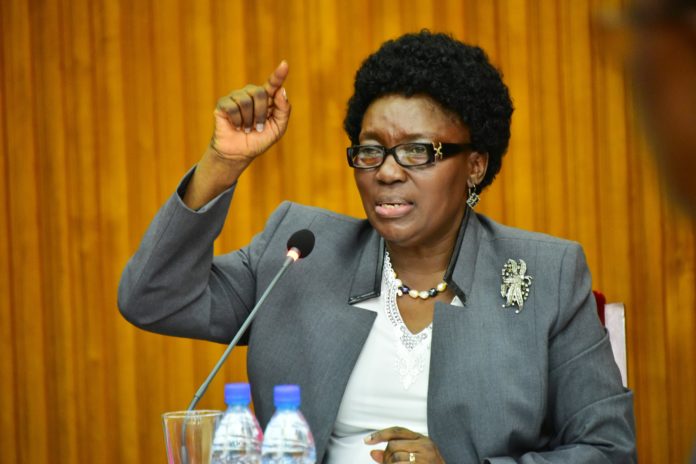
The Speaker of Parliament, Rebecca Kadaga, has called on African countries to abolish the issuance of visas to enable free movement of people across the continent.

The free movement of persons, according to Kadaga, will facilitate Africans to ply their trade across the continent which is a prospective market.

Reacting to the resolutions reached at the closure of the 10th Conference of Speakers of African Parliaments and Senates at the Pan-African Parliament in Midrand, South Africa on Wednesday, 7 August 2019, Kadaga emphasized that Africans needed visa free restrictions as opposed to having a standard African passport to facilitate the free movement of people within the continent.

“What we want is a removal of the visa instead of the issuance of the African passport. I am a senior person in my country and I do not even have the African passport and also do not know any person with it,” Kadaga said.

The Speaker added that free movement of people would improve continental trade resulting into equitable development on the continent. She called on the African Heads of State to urgently address the issue of visas.

Kadaga also questioned the existence of multiple regional economic blocs on the continent and said they are hampering the work of legislators who are trying to open Africa to its people.

“I am actually surprised that even the African Union, which is the executive body of this continent, is trying to create the Horn of Africa as another regional bloc and yet many of these countries are already part of the existing blocs,” she said.

She also noted that countries are expected to pay subscription to the numerous regional blocs they may belong to thus becoming a burden to the national purse of the respective countries.

The Pan-African Parliament (PAP) is one of the organs of the African Union (AU) as set out by the Treaty Establishing the African Economic Community (Abuja Treaty).The Parliament is intended as a platform for people from all African states to be involved in discussions and decision-making on the problems and challenges facing the continent.


Stories Continues after ad

Esperance declared African champions after legal battle

Esperance champions


Tunisia’s Esperance were declared winners of the African Champions League by CAF on Wednesday following a long legal battle after Wydad Casablanca stormed off in protest during the second leg of the final in May.

Wydad “is considered to have lost the game”, African football’s governing body said in a statement.

The Moroccan side walked off an hour into the return leg in Tunis after a VAR malfunction meant a disallowed equaliser could not be reviewed.

“The decision means Esperance are champions,” a CAF source told AFP under the condition of anonymity.

Wydad were issued a fine of $20,000 for abandoning the match and another $15,000 for the use of flares by supporters.

Esperance, who retained their title won in 2018, were fined $50,000 over the use of smoke bombs and projectiles. They were ordered to play two matches behind closed doors — a punishment suspended for 12 months.

Esperance president Mohamed Meddeb was also fined $20,000 for unsporting behaviour towards CAF chief Ahmad Ahmad.

CAF had called for the second leg to be replayed at a neutral venue, but that decision was overruled last week by the Court of Arbitration for Sport (CAS).

Esperance, who led 2-1 overall at the time, were initially handed the title, but CAF later backtracked after ruling that “playing and security conditions were not met”. Both clubs subsequently lodged appeals with CAS.

“Justice has been done,” Esperance secretary general Farouk Kattou told AFP. “It’s a fully deserved title. It’s taken two months but finally we have it.”

The fiasco prompted CAF to reduce both the Champions League and Confederation Cup finals from two legs to one match at a neutral venue from next season.


Stories Continues after ad

Finance Minister Kasaija takes responsibility over mess in Custodian Board

Finance Minister: Matia Kasaija.


Finance Minister Matia Kasaija has taken the blame for the mess that saw departed Asians properties that were fully compensated for by government end up in hands of individuals and companies.

Kasaija who is also the Chairman of the Departed Asians Properties Custodian Board (DAPCB) was on Thursday appearing before select task force of the parliamentary Committee on Commission, Statutory Authorities and State Enterprises (COSASE).

He said he takes full responsibility for the mess but also admitted it was wrong for him to occupy two public offices at ago, even though he said he was appointed by President Museveni.

“I will seek guidance from the Attorney General William Byaruhanga on this matter and report back to this committee,” Kasaija said.

The committee members also asked Kasaija to explain why Byaruhanga is always absent in the custodian board meetings.

The probe started after the Board chaired by Kasaija claimed that unspecified amount of money was paid to undisclosed claimants for properties which were sold by the Board prior to receiving repossession claims by original owners.

The MPs have asked the Board to publish a list of the beneficiaries to confirm whether they did not pay ghost claimants.

While appearing before COSASE days ago, the executive secretary of the Departed Asians Property Custodian Board (DAPCB), George William Bizibu, admitted the accountability queries when questioned by MPs. During the interface with the MPs, Bizibu who has been at the helm of the DAPCB for about two years said the board does not have information on the current ownership of several plots despite the records indicating that they were compensated by the government.

However, the MPs accused Bizibu of trying to cover up senior government officials accused of grabbing the Asian’s properties.

The composition of the board has become a matter of public scrutiny.

The Board members include Kasaija, Lands Minister Betty Amongi, Attorney General William Byaruhanga, State Minister for Local Government Jenifer Namuyangu, State Minister for Industry and Cooperatives, Michael Werikhe, Gen Salim Saleh who is a “co-opted member”.

Section 5 (1) of the Assets of the Departed Asians Act requires the board to sit at least once every month.

However, it has emerged that failure by the board members to meet has over the years encouraged fraud at DAPCB where hundreds of properties have been stolen. An Auditor General’s report has raised accountability queries at the Custodian Board such as theft of public funds through fictitious compensations of up to Shs1.7 billion, double allocation of properties, forged land titles, sale of assets without proper valuation, missing documents among other illegalities.

The February 2011-March 2016 report of the Auditor General, John Muwanga, revealed that the Board chaired by the Finance Minister failed to maintain proper books of account and annual financial statements were not prepared. In the result, it took Auditor General 15 years to audit the Custodian Board activities.

In the process, billions of shillings in taxpayers’ money was misappropriated. The Auditor General’s report for instance, shows that Shs50.2m cash was not banked and lacked accountability documents at the time of the audit. Another Shs15.2m was receipted as cash received but could not be traced in the bank statement. Also, about Shs500m was spent directly from the collection account without the authority of the Board.

“It was also noted that Shs292.3 million was withdrawn from the bank without explanation as to the nature and purpose of the payments… these actions are not in accordance with best practices in financial management… [inquiry into the use of these funds should be instituted],” the AG report reads in part.

Meanwhile on Thursday also discovered that troubled Bizibu has not been formally appointed to that job.

The legislators plan to have Kasajia explain why Bizibu, who has had trouble explaining audit queries that have ruined operations DAPCB is working without a formal appointment. “Mr Bizibu is in office illegally,” MPs said.


Stories Continues after ad

Travelport reveals global trends in flight bookings ahead of Hajj 2019

Hajj Flight


Advanced flight bookings to airports around the holy city of Mecca ahead of this year’s Hajj have increased from Asia, Europe and Oceania, according to research by Travelport, a leading technology company serving the global travel industry. Bookings from North America are flat on last year and travel from South America and Africa is slightly down on 2018 numbers.

Every year, in excess of one million people from all over the world fly into western Saudi Arabia to perform Hajj, making it one of the largest annual spikes in global air traffic. To manage numbers from overseas, Saudi Arabia sets quotas for countries based on their Muslim population. Local governments and licensed private travel companies then begin allocating places for citizens.

As part of its study, Travelport analyzed bookings made through all global distribution systems (GDS) to King Abdulaziz International Airport, Ta’if Regional Airport and Prince Mohammed Bin Abdulaziz International Airport, as of Tuesday 21 July 2019, arriving from Tuesday 9 July 2019 to Thursday 8 August 2019. The company then ran comparable data for last year’s Hajj, so trends could be identified.

Damian Hickey, Global Vice President and Global Head of Air Travel Partners at Travelport, said: “There are many things that influence the decision to travel, especially when it comes to something as personal as performing the Hajj. For some, economic conditions and increased allocations from the government in Saudi Arabia could make this year the ideal time for this once-in-a-lifetime opportunity. Others may be looking at their situation and thinking that it might be better to wait; this diversity of push and pull factors was certainly evident in the travel trends that we’ve seen around the globe.”


Africa

According to Travelport’s analysis of available data*, flight bookings made via GDS to airports around Mecca from Africa were down by 17 per cent this year. This was largely due to a decrease in the number of bookings made in Egypt (-17 per cent). However, the North African country did still record the greatest number of flight bookings through a GDS out of any country globally (49,477).

Morocco experienced the greatest growth in Africa this year by volume, with an increase of 1,078 bookings (+34 per cent) following a letter from monarch, King Mohammed VI, urging the nation’s pilgrims to positively represent the country at Hajj this year. [2]


In percentage terms, the fastest-growing market was Cameroon with an over 12-fold increase in bookings (up by 503; +1143 per cent).

Notable increases were also seen in Niger (bookings up 870; +110 per cent), South Africa (bookings up 674; +33 per cent) Nigeria (bookings up 520; +21 per cent), Uganda (bookings up 222; +383 per cent), Gambia (bookings up 159; +289 per cent), Kenya (bookings up 151; +33 per cent), and Gabon (bookings up 149; +784 per cent).

Overall, bookings made in Africa represented 20 per cent of total bookings globally.


Asia

Asia recorded the greatest growth in flight bookings made through GDS to airports around Mecca this year in terms of volume, with bookings up by 11,284 (+5 per cent).

On a country level, the greatest growth came from Bangladesh, with bookings up by 13,906 (+171 per cent). The South Asian country is one of five countries (Bangladesh, Indonesia, Pakistan, Malaysia and Tunisia) benefiting from the Mecca Route initiative, a new service offering immigration pre-clearance for pilgrims at their points of embarkation.

The United Arab Emirates recorded the second highest rise, up 3,981 (+17 per cent); followed by Qatar, up 3,278 (+217 per cent), a country where pilgrims can now register for their Hajj using dedicated ‘electronic gates’.

Hickey added: “In recent years we have seen an increase in efforts to introduce policies and technologies that make the Hajj, which has often been compared to hosting an Olympics Games each year, a more convenient experience for the global Islamic community. Our analysis suggests that these initiatives may well be having a tangible impact, which is encouraging from a technological standpoint.”


The greatest number of flight bookings made through GDS in Asia were made in India (44,611).

Overall, bookings made in Asia represented 64% of total bookings globally.


Europe

Europe was shown in the analysis to have recorded the second greatest growth in flight booking volume through GDS to airports around Mecca this year, with bookings up by 1,966 (+6 per cent).

The greatest growth and greatest volume of bookings were registered in the United Kingdom, which was up by 2,237 (+13 per cent) to 19,798, though this does represent a slowdown in the 47 per cent growth seen in 2018.  The second and third greatest increases in the region were all recorded off low bases fromBosnia and Herzegovina, up 562 (+173 per cent), and Sweden, up 310 (+168 per cent).

Unlike Muslim-majority nations, countries with a minority Muslim population in the West are not subject to the same Hajj quota of 1,000 pilgrims per million of population.

Overall bookings made in Europe represented 10 per cent of total bookings globally.


The Americas

Advanced flight bookings from North America made through GDS to airports around Mecca were flat this year (bookings up by 221; +1 per cent). The country that saw the greatest surge was Canada, with bookings up by 1,362 (+39 per cent). The largest number of bookings were once again made in the United States (15,854).

South America saw a drop in flight bookings through GDS this year, with volume down 27 per cent, albeit off a low base. The country with the most bookings was Brazil (52 bookings). An estimated 200 Brazilians are expected to travel to perform Hajj this year.

Overall, bookings made in the Americas represented 6 per cent of total bookings globally.


Oceania

Flight bookings made through GDS to airports around Mecca from Oceana were up 1,705 (+204 per cent) this year. The rise can be attributed to a jump in bookings from Australia, up 238 per cent to 2,344, from 1,650 in the previous year, while at least 200 pilgrims have been invited to participate in Hajj from New Zealand.

Overall, bookings made in Oceana represented less than 1 per cent of total bookings globally.


Stories Continues after ad