Stanbic Bank
Stanbic Bank
19 C
Kampala
Stanbic Bank
Stanbic Bank
Home Blog Page 1239

MTN Group raises dividend as H1 service revenue grows 9.7%

MTN


African mobile operator MTN reported service revenue up 9.7 percent at constant currency rates to ZAR 67.9 billion in the first half of 2019, whileEarnings before interest, tax, depreciation and amortization (EBITDA) expanded by 10.2 percent to ZAR 31.2 billion. MTN said it had strong subscriber growth of 7.7 million during the period to reach a total of 240 million subscribers at the end of June.

Total revenue rose 15.5 percent on a reported basis to ZAR 72.5 billion. Operating profit jumped to ZAR 15.3 billion from ZAR 10.8 billion a year ago, while net profit was stable at ZAR 4.4 billion. Headline earnings per share fell to 195 cents from 215 cents per share a year ago, hurt by a number of charges for currency effects and financial transactions.

MTN said the net debt to EBITDA ratio was stable at 2.3x, and capex intensity dropped further to 16.9 percent. The group proposed an interim dividend of ZAR 1.95 per share, up from ZAR 1.75 a year ago.

Organic service revenue growth was led by a 12.2 per cent increase at MTN Nigeria and 18.7 per cent growth at MTN Ghana, while South Africa grew by 3.3 per cent. In South Africa, the group contended with a weak macroeconomic environment as well as the introduction of new end-user requirements and the repricing of out-of-bundle data rates. In Nigeria, economic activity was muted in the time of presidential elections and prior to the formation of the cabinet. In Iran, the rial weakened sharply after the re-imposition of US sanctions.

Following data price reductions in South Africa and Nigeria, MTN said it expects price elasticity in the second half of the year to improve data revenue growth. In the first half, data revenue rose 19.8 per cent on an organic basis. Further growth will be partially offset by lower wholesale revenue at MTN South Africa following the end of the national wholesale deal with Telkom on 28 June.

Further growth will come from the expansion of mobile money and financial services. Mobile money will launch in South Africa in the second half of the year, services will be expanded in Nigeria ahead of obtaining the full banking licence there, and a remittance service from Europe to Africa will be started. In addition, the Ayoba messaging app will expand to Nigeria, South Africa, Uganda and Liberia in the second half of the year and integrate further with its payments business, and the streaming music service will also expand to more countries.

The number of active data users grew by 3.5 million to 82 million in June, and 30-day active Mobile Money users grew by 2.4 million to 30 million. The group’s continued focus on the customer experience has seen it record brand NPS leadership across more than 50 per cent of the portfolio, with twelve markets now leading, MTN said.


Stories Continues after ad

Muhammad Shaban rejoins Vipers SC

Shaban and Lawrence Mulindwa
 

Vipers Sports Club have confirmed the signing of striker Muhammad Shaban who has been a free agent after being released by Moroccan Premier League side Raja Club Athletic Casablanca.

Shaban scored 18 goals in the 2017/18 season for KCCA FC before moving to the North Africa club.

He returns to his old stomping ground of Kitende where he made a name in his break-through years before moving to Onduparaka FC.

Shaban was given a two year deal by the Venoms and it is believed to be between UGX130M and UGX140M in sign of fees.

The 21-year-old Cranes international joined Raja Club Athletic Casablanca in 2018 where he made 7 appearances and scored one goal for the senior side.

Muhammad Shaban said, “I am thrilled to be joining Vipers SC. I’m looking forward to playing in the Uganda Premier League again. I’m keen to get started and make my contribution to the team’s efforts to win more trophies.” the 2016 Ugandan Footballer of the year was quoted by the club website.

Coach Edward Golola said, “Shaban is a very talented and good player. Our season last year showed us that we need options and quality to add depth to the squad upfront and Shaban is a proven marksman. I’m delighted that he accepted to join us.”

The hard-working striker, who was top scorer at the 2017 COSAFA U-20 Championship, was also part of the Cranes team at the 2017 Africa Cup of Nations (AFCON) and the 2018 Africa Nations Championship (CHAN).


Stories Continues after ad

Business: Addis Ababa leads Africa in hotel room rates

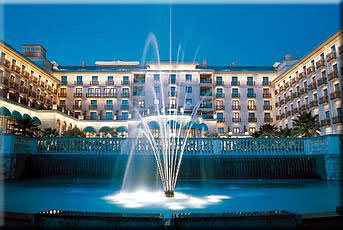
Sheraton Hotel Addis Ababa


Addis Ababa, Ethiopia, posted Africa’s highest average daily rate (ADR), according to the most recent 12-month data from https://STR.com/. The market will play host to the Africa Hotel Investment Forum (AHIF) on 23-25 September at the Sheraton Addis.

From July 2018 through June 2019, Addis Ababa registered an absolute ADR of US$163.79 when measured in constant currency, which removes the effects of inflation. That figure was a 1.1 percent increase year over year. The next closest STR-defined markets in Africa were Accra Area, Ghana (US$160.34) and Lagos Area, Nigeria (US$132.51).

“Addis Ababa continues to maintain high ADR levels when compared internationally,” said Thomas Emanuel, a director for STR. “The city has multiple demand drivers, such as a growing economy, successful airline and its status as the diplomatic capital for Africa. Air connections and ease of access compared with other cities also factor in the equation for strong demand, which provides hoteliers with the confidence to maintain rate levels.

“With healthy performance comes interest in investment. The market’s pipeline is strong with 22 hotels and 4,820 rooms in active development. We will continue to monitor these new openings to see how the market reacts once these additional rooms open.”

Emanuel will present the latest hotel performance and development insights on the Tuesday (24 September) of AHIF.

“Hosting high-profile international meetings like AHIF is one factor that has helped Addis to maintain its position as the city with the most expensive hotel accommodation in Africa,” said Matthew Weihs, Managing Director, Bench Events(AHIF organiser). “Our delegates will be looking carefully to see if the addition of a lot more high-quality accommodation and meeting space will depress room rates or help Addis become even more attractive as a destination.”

Addis Ababa’s occupancy over the same 12-month time period was 58.4 per cent, up 6.5 per cent year over year. Cairo & Giza was the continent’s occupancy leader at 74.5 per cent. Cape Town Centre, South Africa (65.0 per cent), ranked second in the metric followed by Accra Area (59.7 per cent).

Stories Continues after ad

MPs clash in parliament over Uganda’s population explosion

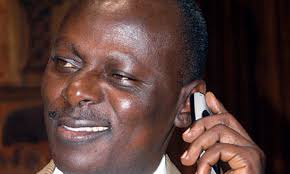
Maj. David Guma Gumisiriza


The Members of Parliament (MPs) on Wednesday clashed during a plenary over Uganda’s fast population growth rate, with Aruu County MP Odonga Otto, urging fellow legislators in the August House to lead by example by not producing many children.

MP Otto said that some of the Ugandan youth are disadvantaged because of joblessness to the extent that some are marrying while still staying in their parents’ households.

Odonga’s submission was countered by Deputy Attorney General Mwesigwa Rukutana and MP of …who said MPs are not reckless and that they know how to apply family planning methods. He asked whether Otto was in order to insinuate that MPs produce children they cannot cater for.

Ibanda North legislator, Maj. Guma Gumisiriza on the other hand commended the fertility of Ugandan women and only prayed that there should be rationalized planning, especially to address challenges of the country’s youth who continue to graduate to world of joblessness.

 He said the fertility of Ugandan women was a blessing rather than a curse to the country, urging his fellow MPs to draws an example from China that boosts of its big population numbers. 

The Speaker of Parliament Rebecca Kadaga who chaired the 20th Sitting of the 4th Session was concerned that many households in the country are failing to feed, treat and educate their children, urging the responsible ministries to come up with a comprehensive statement on what the government was doing for the youth.

Kadaga however disagreed with MP Otto who claimed that government was doing nothing for the youth. She said government had initiated projects for the youth.

Members were concerned that many Ugandan graduates are involved in boda boda riding, urging that government should boost the skills development programme if the youth were to join the job market as well as creating their own jobs. They advocated for trainings in tailoring, wood work, technical drawing catering, home economics, brick-laying and others. 

The leader of Opposition in Parliament Betty Aol Acan said that institutions like National Leadership Institute Kyankwanzi could be used to make Ugandan youth skillful and productive. 

She said that the ministry responsible for the youth should carry out a comprehensive study that could help develop a comprehensive plan for the biggest segment of Uganda’s population.


Stories Continues after ad

UPDF could help boost judicial system if allowed to play bigger role

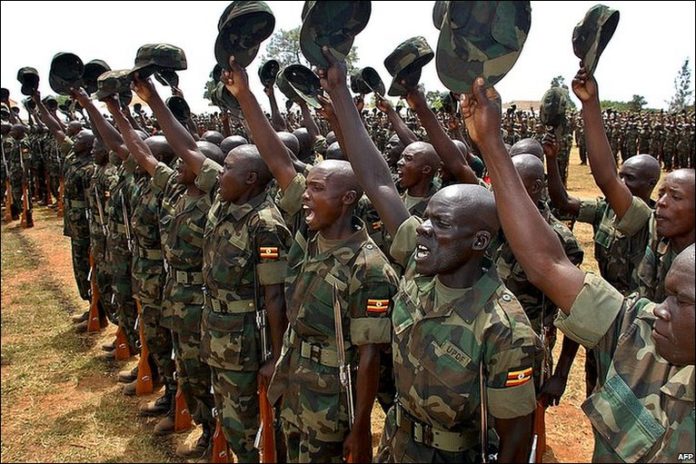
UPDF soldiers


The Uganda People’s Defence Forces (UPDF) despite a few challenges, continues to play a significant role in the development of Uganda not only by way of defending the country’s borders but also through various social-economic interventions that are evident in sectors such as health, engineering, emergence rescues, agriculture, engineering and commerce.

The UPDF has also played an important legal role by prosecuting its own officers and civilians involved in armed robbery, terrorism and related acts. I see no wrong therefore that the military should help handle some civil cases since the institution has qualified legal personnel.

It is amasing that using little resources, the UPDF General Military Court Martial handles its work better than the conventional courts in Uganda. The military court is cognizant of time in case dispensation but also issues of corruption cannot be mentioned here. We have had judicial officers in conventional courts arrested for taking bribes to defeat justice, the same has not happened in the General Court Martial system.

That is why I urge policy makers to allocate UPDF a bigger role in the national judicial system so that they help poor Ugandans get justice in the shortest time possible, moreover at a cheaper cost. The process in normal courts is so tedious and unfair to the poor Ugandans who form the majority of the country’s population, now estimated to be about 40 million people. Yet those who run the conventional judicial system in the country are doing less to address the challenges that the poor face in courts, despite the pledges the judiciary makes every year to speed up court processes.

There is evidence that simple cases which should have been resolved within a month or two have taken over 10 years, just because some judicial officers in connivance with lawyers representing both parties want to continue benefiting financially from those cases at the disadvantage of poor Ugandans. This could also explain why a backlog of cases still exists within the conventional courts, despite the usual complaints that the courts are understaffed and its officials underpaid.

It does not surprise Ugandans for instance, that the Chief Justice, Bart Katureebe has of recent set up a six- member taskforce to investigate allegations of corruption in the judiciary following public outcry as well as media reports on the vice. The team headed by Ms Immaculate Busingye, the Inspector of Courts is already in the field and is expected to make a report within 60 days.

“The team will then receive the media recordings with the view of identifying the corrupt staff who will then be invited to have an interface with the investigating team of the court that will make a report to Katureebe on the way forward by September 30, 2019,” said Katureebe after assigning the team.

Much as in this investigation Katureebe seems to target those involved in receiving bribes from the public, it is a fact that corruption in courts is a coordinated arrangement carried out right from court clerks, registrars and the judges in connivance with advocates whose clients are on the wrong side of the law. As such, poor Ugandans are unable to win cases, yet they have no extra money to ask for a review of the same cases they have lost, even though there is a provision for appeal.

For instance, there is an old lady in Mbale town called Alice Kimono Kimaswa,85, who has been suffering in Mbale High Court over 10 years, trying to rescue her property from the hands of a false prophet Michael Mukhono who is earning rent from it as she goes hungry. In fact he as well stays on it with his family.

Mrs. Alice Kimaswa’s case was on November 11, 2012 handled by Judge V.T. Zuhurikize who ruled by way of a consent decree but the old lady says the decree was later doctored to benefit the cheating false prophet Mukhono aka ‘Musayi’ whose is now on the run due to various land related cases and the security agencies in the region seem not to care about his whereabouts despite the fact that both police and Mbale High Court need him for crimes he has committed.

Despite the old lady Alice Kimaswa possessing all the documents including a land title and new lease to show prove of ownership, Mbale High Court and security agencies have refused to do the right thing to order that the pastor leaves the old lady’s property. There are allegations that the pastor bribes them. A senior judge from Bugisu region is aware of this case much as his jurisdiction is in Western Uganda.

Interestingly, before he fled, false prophet Mukhono had failed to fulfil the terms of the consent decree since 2012, as ordered by judge Zuhurikize, which should have made him to leave the place but Mbale High Court due to disrespect of poor Ugandans has failed to enforce to set aside the decree and let the old lady occupy her premises.

Interestingly also it is evident that Mbale High Court has been allowing Magellan Olubwe of Olubwe &Co. Advocates to represent false prophet Mukhono and other clients, well knowing that his firm is not legible to do so and that was proved when the Ministry of Justice and Constitutional Affairs last year published his name and firm. Olubwe& Co Advocates also operate their offices on the same property that false prophet Mukhono wants to grab from the old lady.

The old lady Alice Kimaswa also lodged her case with Lady Justice Catherine Bamugemereire’s land commission but they have not responded to her. She thought the commission could help her given that the court process has made almost sell all her land and animals to cater for legal fees and other costs.

Point from the above is that the army is unlikely to deal with fraudsters and make such rulings that favour the rich against the poor. The military courts could be of use in such cases, thus if the law was amended to accommodate them.

UPDF is both a conventional and revolutionary army whose role cuts across all sectors. We have heard the soldiers treat patients in hospitals whenever doctors and other health professionals strike. This means the military can play a bigger role in the judiciary as well if its legal role can be expanded to handle civil cases.


Stories Continues after ad

UNBS develops indigenous chicken feet standards

UNBS Eexcutive Director Dr Ben Manyindo

Uganda National Bureau of Standards (UNBS) has called upon the public to comment on the suitability of the indigenous chicken feet standard DUS 2135:2019 Chicken feet specification for implementation.

UNBS under Technical Committee 2 Food and Agriculture, Sub Committee 12 Meat, poultry, eggs and processed products developed a draft of the indigenous chicken feet standard, prompted by increased demand for chicken feet for human consumption in Uganda.

The Draft Uganda Standard DUS 2135:2019 Chicken feet – specification, specifies the requirements, test and sampling methods for Chicken feet including paws fit for food industries and human consumption.

It defines chicken feet as a part of the chicken leg that is cut at the joints between the femur and the tibia, consumed by humans after an outer scaly layer of the skin is removed, and that it may include the paw.

The draft standard requires the chicken feet to be obtained from healthy poultry slaughtered in licensed premises and subjected to ante-mortem and post-mortem inspection according to the procedure prescribed in US CAC/RCP 58, To be clean, safe and suitable for the intended purpose, prepared and handled in a sanitary manner and where no contamination or exposure to infectious material during handling

It also requires one to be prepared under hygienic conditions and shall be wholesome not have been subjected to any bacterial activation or fermentation, Be free from any parasitic infestation and from scars of healed-up wounds and Chicken feet pad retained and without damage, and more.

Stories Continues after ad

Lady Rugby Cranes depart to South Africa for 2021 world cup qualifiers

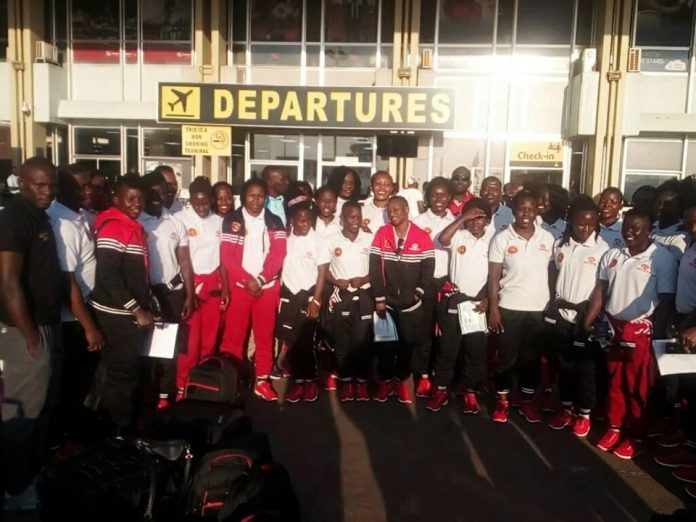
The team at Entebbe Airport departing


The Uganda Lady Rugby Cranes have departed to South Africa for the Rugby Africa Women’s Cup 2019 which also double as the 2021 world cup qualifiers to be played from August 9-17.

The Lady Cranes will face hosts South Africa on Friday in the opening match before facing Kenya and Madagascar on a round-robin basis.

Uganda earned one of the four spots in the South Africa showpiece, the first-ever World Cup qualifiers in Africa, on the basis of the level and frequency of play of the female players.

The Rugby Africa Women’s Cup will bring together four nations; South Africa, Kenya, Uganda and Madagascar.

The overall winner will qualify directly for the 2021 World Cup in New zealand while the runners up will play a match against a selected team from South America and join the global repechage tournament if victorious.

Squad; Props: Faith Namugga Nakato, Irene Nzige, Evelyn Aweku, Christine Nakayiza.

Hookers: Yvonne Najjuma, Peace Mirembe.

Locks: Charity Atimango, Helen Gizamba, Teddy Iwutung.

Loosies: Beatrice Atim Lamunu, Winnie Atyang (C), Mary Gloria Ayot, Loy Mbabazi.

Half backs: Harriet Kayojo, Claire Anena, Rosenburg Kayonyozi, Christine Nakamya.

Centres: Asha Nakityo Nambulime, Peace Lekuru.

Wings: Julie Nandawula, Joan Andika, Emmanuella Oroma, Agnes Nakuya, Saamiya Ayikuro, Tino Esther, Mary Koita.

Uganda Women’s fixtures

9 August 2019

South Africa vs Uganda – 4pm

13 August 2019

Kenya vs Uganda – 2pm

17 August 2019

Madagascar vs Uganda – 2pm


Stories Continues after ad
Ex- Mbabazi aide eats big at ISO

Private Emilly Katabazi


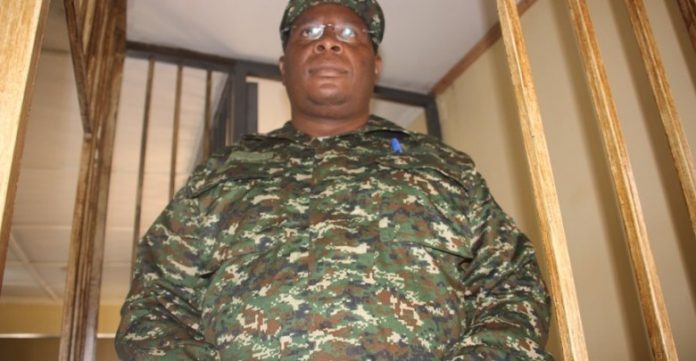
Former Prime Minister Amama Mbabazi blue eyed boy Private Emilly Katabazi has been reappointed back to Internal Security Organisation.

Private Katabazi has been appointed as the Deputy Director Mass Media at ISO, Katabazi is known for his loyal support to Mbabazi and harassing of journalists.

In a move seen as rehabilitation after his woes with the army over his conduct, Private Emilly Katabaazi accused of over absconding from duty and making public statements without authorization from the army. Prosecution alleged that Katabazi between May 21, and 27 2015, while deployed at the ISO headquarters, Nakasero, without authority left the said place where his duties required him to be and went to diverse places in Jinja, Mbale, Soroti, Lira, Gulu, Arua and Yumbe district.

It is further alleges that in the same period, while in those various places, Katabazi without proper authorization from the UPDF appropriate authorities, made public speeches, thereby contravening rule 2 (1) of code of conduct for the defence forces.

However, Eagle Online has learnt that after battling the case in the court marital, Katabazi was subsequently sent on the nine months military course which he completed after 2016.

Katabazi subsequently met President Yoweri Museveni and apologized for the wrong doing before the president  in July redeployed him back to ISO as Deputy Director Mass Media. Katabazi and event organiser Balamu Barugahara met President Museveni last month last month at State House Entebbe. The two had taken investors to meet the president.


Stories Continues after ad

Funding for oil-pipeline available, says Stanbic  

Crude oil pipeline


Uganda will be able to get the money it needs to construct a planned US$3.5-billion Uganda–Tanzania Crude Oil Pipeline (UTCOP) also known as the East African Crude Oil Pipeline (EACOP), with funders ready to commit the money as soon as a final investment decision is made, according to Stanbic Bank Uganda.

The project has attracted “a lot of interest” and raising capital “is not a problem,” Stanbic CEO Patrick Mweheire said Tuesday in Kampala.

The 1,445km export pipeline, which is crucial to plans by Total, Cnooc and Tullow Oil to tap the country’s first oil, has faced opposition from lobby groups who have voiced concern over its potential environmental impact as it is planned to run from Lake Albert-Kabaale in Uganda to Tanga port in Tanzania .

Uganda, with discoveries of six-billion barrels of oil resources, is targeting the start of production in 2022-23, while the 216 000 bbl/d pipeline would begin operations the following year. The government has said that a final investment decision (FID) to develop the finds and build the pipe could unlock as much as US$20-billion of investment.

Standard Bank Group said in June it was reviewing a request by environmental lobbyists to halt funding the proposed pipeline. The lives of as many as 14, 500 people or 400 households along its route could be affected, according to the request, which was signed by organizations including UK-based Global Witness.

Stanbic and Japan’s Sumitomo Mitsui Banking are the lead arrangers for financing of the 900-mile conduit, seeking to raise $2.5-billion in debt funding. Total, Cnooc and Tullow will also provide funds, as will the government.

“There are a lot of people sitting on the sidelines; funding for the pipeline can be raised,” Mweheire said. “We are all working collectively for FID.”

An investment decision on the pipeline, which would run from Hoima in Uganda’s oil region to the Tanzanian port of Tanga, is targeted later this year.


Stories Continues after ad

New rules for the 2019/20 Premier League season explained

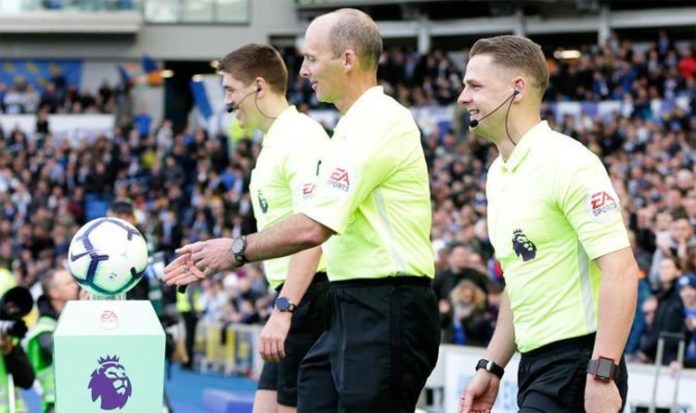
PL referees

With the 2019/20 Premier League season kicking off on Friday, we take a look at the new rules that have been introduced.

Video Assistant Referee (VAR) – Premier League clubs voted to introduce VAR from the start of 2019/20 last November with goals, penalties, red cards and cases of mistaken identity taken on by the technology.

Each referee will be supported by a team of VAR assistants at Stockley Park, the Premier League match officials’ base, who will advise them on those situations, but they will also be able to review decisions through a television screen on the touchline.

Referees will also be able to make players return to the pitch even if they have already blown the half-time or full-time whistle, if they use the VAR review monitor to overturn a decision made before the half had ended.

To aid communication within stadiums, graphics will also be displayed to explain when a decision is being reviewed – and as appropriate and where possible, the Premier League has announced video clips will be shown on screens to explain the reasons behind a decision being made too.

Handball – If a player deliberately touches the ball they are penalised, but a foul will also be given if they create a chance or score a goal from an accidental handball. Any incident where a player’s arms have been raised above shoulder-height is also likely to be given, or if they have made their body ‘unnaturally’ bigger.

However, if the ball hits a player’s hand or arm from close-range, their arm is close to the body or used to support their body while falling will usually not be punished.

Substitutions – Players must leave the pitch by the nearest point on the touchline unless the referee allows them to leave on the half-way line for safety or injury reasons.

Goal kicks – The ball is in play from the moment it is kicked and moves. Opposition players still in the area because they have not had time to leave are permitted, and can intercept the goal kick.

Yellows and reds – If the attacking team wishes and the referee has not started to issue the card, they can take a quick free-kick at this point so long as it creates a goalscoring opportunity. The referee will then issue the card when the ball next goes out of play.

However, if the referee was about to send off the player who has given away the foul for denying a clear goalscoring opportunity, they will only receive a yellow card if the attacking team takes the quick free-kick.

Dropped balls – If a dropped ball is given inside either penalty area, it is dropped for the defending team’s goalkeeper when play restarts.

For dropped balls outside the penalty area, the ball is dropped for a player on whichever team last touched the ball. All other players must remain at least 4.5 yards away from the ball until play restarts.

Match ball: For the 2019/20 campaign, the Premier League will be using the new Nike Merlin 2019. Marking 20 years of partnership, the ball is the first that is solely produced for the Premier League, facilitating the league’s trademark fast pace.

It also features a bold pink and black design, which Nike says ‘is inspired by the dynamism of the league and its vibrant fan culture’.

Stories Continues after ad