Stanbic Bank
Stanbic Bank
18.4 C
Kampala
Stanbic Bank
Stanbic Bank
Home Blog Page 1243

Partners to host 17th edition of Basketball without Borders Africa in Senegal


The National Basketball Association (NBA), the International Basketball Federation (FIBA) and the Senegalese Basketball Federation have announced that Basketball Without Borders (BWB) Africa 2019 will take place  July 28 –31 in Senegal.  The 17th edition of BWB Africa will be held at The NBA Academy Africa in Saly and at the Dakar Arena in Dakar.

BWB Africa 2019 will bring together the top male and female players ages 17 and under from throughout Africa to learn directly from current and former NBA and FIBA players, coaches and legends and to compete against the best young players from the continent.  BWB Africa will also include NBA Cares and Jr. NBA outreach efforts in partnership with local community organizations.

“Bringing the 17th edition of the Basketball Without Borders Africa camp to Senegal speaks to our commitment to expanding our footprint across the continent,” said NBA Africa Managing Director and Basketball Africa League President, Amadou Gallo Fall.  “With grassroots basketball development remaining at the core of our strategy to grow the game across Africa, BWB remains our flagship development and community outreach initiative where Africa’s most talented youth have an opportunity to develop as players and learn important life skills they will carry with them for the rest of their lives.”

“FIBA and the NBA have teamed up for several years to organize activities to boost the development of youth basketball in Africa. Those initiatives are very important for the continent,” said FIBA Africa Executive Director, Alphonse Bilé.  “I hope that some of the participants in this BWB camp will one day play in the new jointly created Basketball Africa League and benefit from this fantastic opportunity to showcase their talents in this continental league.”

“We are excited to host this year’s Basketball Without Borders Africa camp and welcome FIBA and the NBA back to Senegal,” said Senegal Basketball Federation President, Babacar Ndiaye.  “We look forward to the great week of basketball and to showcasing our city and the state-of-the-art Dakar Arena.”

BWB Africa has previously been held in South Africa (2003-2009; 2011-2015; 2017-2018), Senegal (2010) and Angola (2016).  More than 1,100 players from more than 30 African countries have participated in the NBA and FIBA’s global basketball development and community outreach program, with 10 former BWB Africa campers drafted into the NBA, including 2019 NBA Champion Pascal Siakam (Toronto Raptors; Cameroon; BWB Africa 2012), two-time NBA All-Star Joel Embiid (Philadelphia 76ers; Cameroon; BWB Africa 2011), Luc Mbah a Moute (formerly of the LA Clippers; Cameroon, BWB Africa 2003) and Gorgui Dieng (Minnesota Timberwolves; Senegal; BWB Africa 2009).

NIKE, a global partner of BWB since 2002, will outfit the campers and coaches with NIKE apparel and footwear.

The NBA and FIBA have staged 59 BWB camps in 38 cities in 30 countries on six continents.  BWB has hosted more than 3,500 participants from 129 countries and territories.  More than 290 current and former NBA and WNBA players have joined more than 240 NBA team personnel from all 30 NBA teams, with 68 former BWB campers drafted into the NBA or signed as free agents.

In February, the NBA and FIBA announced their plan to launch the Basketball Africa League, a new professional league featuring 12 club teams from across Africa scheduled to begin play next year.

The NBA has a long history in Africa and opened its African headquarters in Johannesburg, South Africa in 2010.  Opening-night rosters for the 2018-19 season featured 13 African-born players, and there are more than 80 current and former NBA players from Africa or with direct family ties to the continent, including Naismith Memorial Basketball Hall of Famers Hakeem Olajuwon (Nigeria) and Dikembe Mutombo (Democratic Republic of the Congo).

This year, the NBA plans to reach more than 2.5 million boys and girls ages 16 and under through Jr. NBA programs in 21 African countries.  Since The NBA Academy Africa opened in May 2017, 25 elite male prospects ages 14-20 have received scholarships and training after scouting programs conducted with local federations across the continent.  Four NBA Academy Africa graduates have gone on to commit to NCAA Division 1 schools.

The NBA has held three sold-out Africa Games, in Johannesburg in 2015 and 2017 and in Pretoria in 2018, in support of charities including UNICEF, the Nelson Mandela Foundation and SOS Children’s Villages South Africa (SOSCVSA).  Through NBA Cares, the NBA has created 89 places for children and families to live, learn and play in nine African countries.

Follow BWB using the hashtag #BWBAfrica on Facebook and Twitter.


Stories Continues after ad

A Global Picture of Public Wealth

Government assets and liabilities
 

By Jason HarrisAbdelhak Senhadji, and Alexander F. Tieman

Our new data on government assets shows that when governments know what they own, they can make better use of the assets for the well-being of all their citizens.  We make these data free and publicly available for all to use because we believe transparency can help create better public policy.

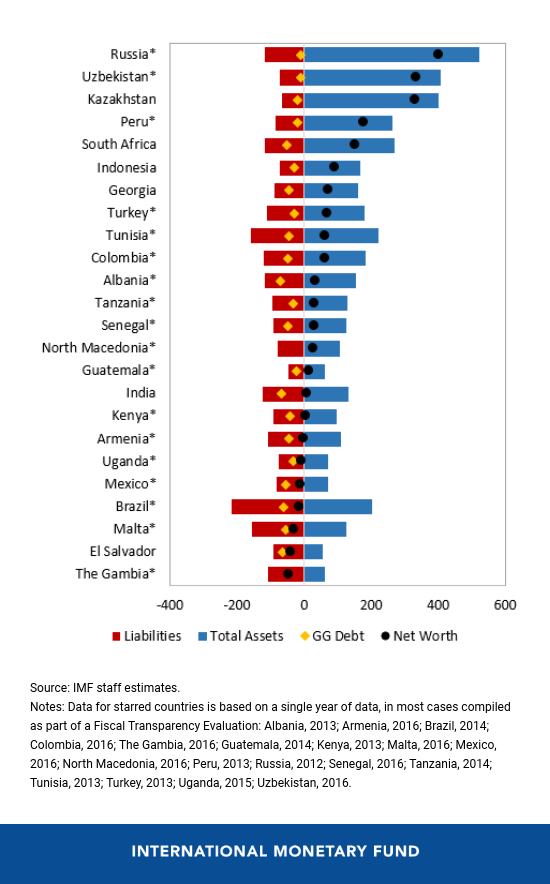
The chart shows that advanced economies have larger balance sheets compared to emerging markets and low-income developing countries. This reflects the size of their public sectors, which generally provide more infrastructure and services. But advanced economies also have larger liabilities and, on average, lower net worth.

We wrote about countries’ assets back in October in the Fiscal Monitor and in our blog about what countries own and owe, and now we have the full data set.

New countries, new numbers

The database covers 38 countries’ public assets and liabilities and includes low-income, emerging market, and advanced economies. It expands coverage from the October Fiscal Monitor by adding seven countries: Mexico, Malta, North Macedonia, Senegal, Armenia, Uzbekistan, and Lithuania. The countries in the database now cover almost 63 per cent of global GDP. For 17 countries we have time series data at the public sector level.

We provide granular data on what assets countries hold, like land, buildings, cash, and equity, as well as the liabilities, such as debt, loans, and pensions. We provide the data by level of government and include both financial and nonfinancial corporations.

The total public sector assets in the countries covered are worth $103 trillion, or 216 per cent of GDP. These assets consist of public infrastructure such as bridges and roads, financial assets such as bank deposits, as well as natural resource reserves in the ground.

Total liabilities stand at $93 trillion. This comprises some US $44 trillion of general government debt, but also includes $22 trillion of current pension obligations and the debt of state-owned enterprises.

Net worth—assets minus liabilities—comes to $10 trillion or 21 per cent of GDP for this group of countries.

The goal of knowing more about what you own and owe is to better assess fiscal risks and evaluate government policies.

The Fiscal Monitor shows that having large assets does not necessarily reduce how vulnerable a country is to large debts; this will depend on the nature of the assets. The Fiscal Monitorincludes a fiscal stress test for the United States, analysis of public investment plans financed by a domestic revenue mobilization effort in Indonesia, and the crossholdings within the public sector in Japan, to name a few.

These data on public sector balance sheets also help governments actively manage their balance sheets. Better management of government assets could earn 3 percent of GDP in extra revenues each year—that is more than the interest payments advanced countries pay to cover their debt. There are a range of examples of countries doing just this: the United Kingdom spent several years compiling data and is currently undertaking a balance sheet review. Australia and New Zealand have also looked at the balance sheet effects of policies for years.

More recently, the IMF has used the public sector balance sheet approach in consultations with member countries, for instance in some of the Nordic countries. And investors and financial market experts have shown an interest in both the data and the tools, like fiscal stress tests, that use these data.

We have made it free and available to all to also encourage more research.  Academics and research institutions can use it to better understand the state of a government’s finances and their evolution over time; to compare developments across similar countries; to explore key questions around balance sheets and macroeconomic links; and to enable a more meaningful debate around returns on public assets.


Stories Continues after ad

Public divided over shooting of Kampala businessman by askari

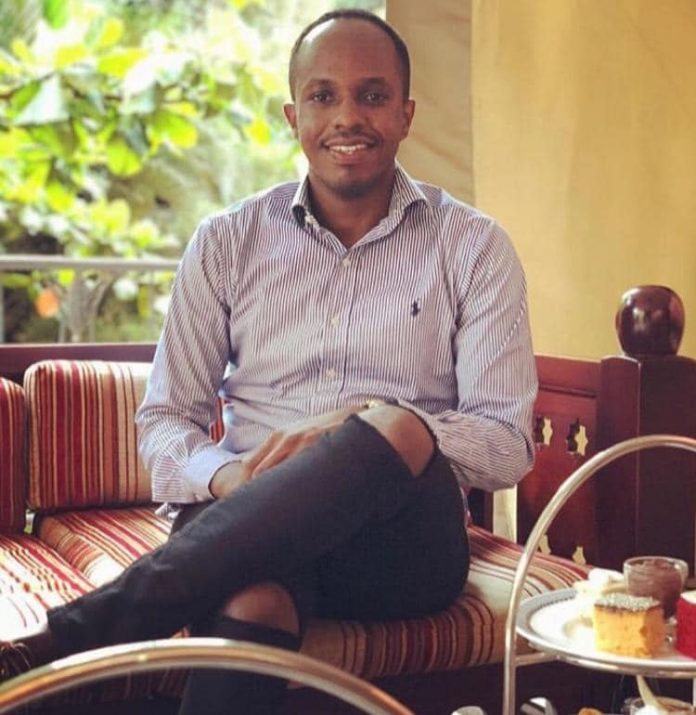
Mr. Arnold Mugisha
 

Ugandans in the public sphere as well as on social media platforms like Facebook, Whatsapp and Twitter continue to be divided over the private security guard who on Tuesday shot dead a young entrepreneur at Quality Shopping Village in Naalya, Kampala.

Some of the eye witnesses that happened to be at the scene of crime said Aine Arnold Mugisha, one of the propitiators of Hickory Bar and Restaurant in Kololo was shot dead after intentionally crushing the leg of the guard, Aweza Babu at the supermarket’s car parking lot.

It is said the late Mugisha disrespected the security man after the latter informed him that his car had scratched another person’s car and that he needed to wait for the owner to resolve the issue. It is said Mugisha was impatient to wait and went on to ignite the car engine, crushing Babu’s leg.

It is said the deceased came to do shopping with his colleagues, they entered an argument with Moses Angoria after they left they set a shopping trolley rolling into another person’s car in parking.

Witness recounted that the deceased was so arrogant to the extent that Mugisha claimed the askari couldn’t do anything except taking the nearby trolley back inside the supermarket.

This prompted the guard to pull out his gun and released the bullet that went through passenger windscreen, shuttering Mugisha’s face. He reportedly breathed his last as they tried to take him to Independent Hospital in Ntinda.

The guard was in rescued from the angry mob that almost took him life after the gruesome killing of Mugisha. He is currently receiving treatment at Mulago hospital as Mugisha’s family await for postmortem report from city mortuary.

His death has resulted into mixed reactions from within the public:

“Why everyone blaming the Askari’s over this guy’s death! Is failing to understand that security guards are human beings too like any of us. They deserve respect, and they also lose the nuts like the fellow who pushed the trolley too with disrespect. It’s very absurd that a very young life has been lost. It should have been avoided. But on the contrary, some people have pushed others to the wall,” says Suzanne Edith Suzanna on her Facebook Page.

If the source who said this guy crushed Askari’s leg is indeed right, then its really bad. Security guards or Askari’s as u all wish to call them, are human beings who deserve respect, she adds.

“I know of people who treat guards like street dogs because they assume they have made it in life.

It was a simple issue, take the trolley away, wait for the Askari to leave and reverse well other than run over a poor Askari’s leg because u think u have all it takes for u to get away with it,” she says.

Keith Agaba says: “We dont kill but if at he managed to be humble from the start nothing like this was to happen.”

Danny M. Ssematimba:  “One moment in time I did post about giving respect to everyone Guards inclusive. I wish Aine Mugisha respected the Naalya Quality Supermarket Guard, his life wouldn’t have perished!! RIP brother.”

Wanda Jonathan Fortunate says, “Me I feel nothing for such ninjas they think they have arrived now they dead and we will move on.”

Joanna Jojo Jasper says wrote, “Oppressed majority over arrogant citizens.”

Recently on of the well connected man caused chaos in the bar and pouring alcohol on people not until his father called in to save revelers from commotion.


Stories Continues after ad

EU gives Shs334.3m relief to victims of floods and landslides in Uganda

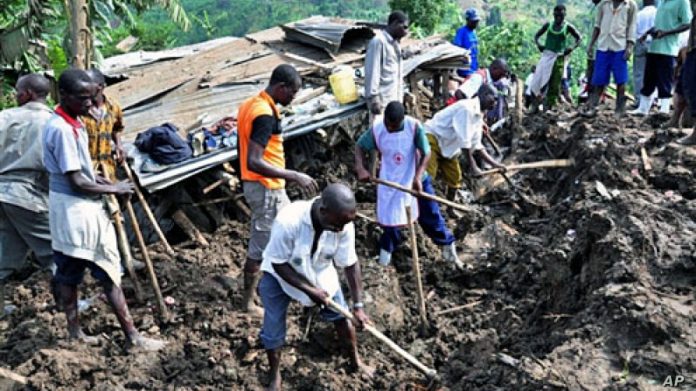
Residents search for missing relatives.


In response to the devastating floods and landslides that hit the Mount Elgon region in eastern Uganda, the European Union (EU) has provided €80,000 (Shs 334.3 million) in humanitarian funding to assist the families in need of aid. The EU funding will support the Uganda Red Cross Society (URCS) to deliver urgently needed assistance for families in the affected districts of Bududa, Sironko, Mbale and Butaleja.

The aid provided includes tents to families without a shelter, basic essential items such as blankets and mosquito nets, healthcare services, access to safe water and awareness raising on preventing waterborne diseases. The Uganda Red Cross will also offer psychosocial support to the families in need, many of whom had to leave their homes.

As many as 2,840 people will directly benefit from this assistance. Over 125 000 people in the communities at large will indirectly benefit from the hygiene promotion activities aimed at preventing diseases. This funding is part of the EU’s overall contribution to the Disaster Relief Emergency Fund (DREF) of the International Federation of Red Cross and Red Crescent Societies (IFRC).

The flash floods and landslides were caused by torrential rainfall that poured in the Mount Elgon region at the beginning of June, killing 6 people, injuring 27 and directly affecting over 2 800 people. These people lost their homes, essential belongings, and cropland. Their means of earning a living was also disrupted. The mudslides and floodwaters destroyed safe water and hygiene sources, exposing communities to the risk of waterborne diseases.

There is currently a cholera outbreak in Bududa, with one registered cholera-related death and twenty-eight suspected or confirmed cases in health facilities. Background The European Union and its Member States are the world’s leading donor of humanitarian aid. Relief assistance is an expression of European solidarity with people in need all around the world. It aims to save lives, prevent and alleviate human suffering, and safeguard the integrity and human dignity of populations affected by natural disasters and man-made crises.

Through the European Commission’s Civil Protection and Humanitarian Aid Operations department, the European Union helps millions of victims of conflict and disasters every year. With headquarters in Brussels and a global network of field offices, the EU provides assistance to the most vulnerable people on the basis of humanitarian needs.

The EU is signatory to a €3 million humanitarian delegation agreement with the International Federation of Red Cross and Red Crescent Societies (IFRC) to support the Federation’s Disaster Relief Emergency Fund (DREF). Funds from the DREF are mainly allocated to “small-scale” disasters – those that do not give rise to a formal international appeal.

The Disaster Relief Emergency Fund was established in 1985 and is supported by contributions from donors. Each time a National Red Cross or Red Crescent Society needs immediate financial support to respond to a disaster, it can request funds from the DREF. For small-scale disasters, the IFRC allocates grants from the Fund, which can then be replenished by the donors. The delegation agreement between the IFRC and ECHO enables the latter to replenish the DREF for agreed operations (that fit in with its humanitarian mandate) up to a total of €3 million.


Stories Continues after ad

We are still investigating our own robber ASP Bright Amutuhaire-Police 

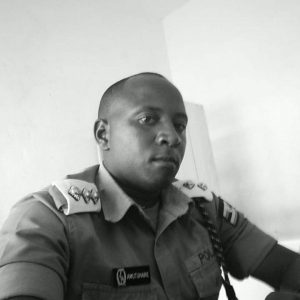
ASP Bright Amutuhaire


Uganda Police authorities are investigating circumstances under which one of their own, attached to Kajjansi Police Station was arrested on July 7, 2019 for an illegal traffic stop, with intention to extort money from a fish dealer, Fred Enanga, the force’s spokesperson said Tuesday in a press statement.

The officer, ASP Bright Amutuhaire, together with an accomplice, Richard  Musinguzi, while driving motor vehicle, Toyota Mark II, registration number, UAW 714B, intercepted Tom Kisuka in his car reg. no. UBD 328J, at Abaita Ababiri, along Entebbe road at around 10.00pm, with an intention of extorting money from him.

“We want to commend the LDU Commander, Entebbe and the police response teams, which arrested the suspects while at the scene, for their swift response,” Enanga said.

He added: “It is however, not true that there was a gun fire exchange during the arrest of the suspects, because they were unarmed.  Although, there was no violence, it is believed the officer used his uniform and authority to intimidate the victim, with the intention of extorting money from him. The officer is being charged with discreditable conduct and together with the civilian for demanding by menaces.”

He said the task team was looking into allegations of previous misconduct and illegal transactions against the officer, and if proved, he will definitely be held accountable for his actions.  “In this vey instance, it is alleged they took advantage of the loopholes in the victims dealings in the fish business.

We urge any other members who could have been victimized by the officer to register their complaints with the Regional CID officer, Kampala Metropolitan South, Headquarters at Katwe,” he said.

Enanga lauded the public and the media for taking keen interest in the way police officers use their authority. “We want to thank all stakeholders and in particular the media and members of the public for taking keen interest, on how officers use their authority.  Exposing such officers is critical to ridding the force of bad officers,” he said, adding, “The public should however, know that the majority of our officers are doing a great job of keeping communities safe, upholding the law as well as resisting the temptation of abusing their positions.  We commend them for their good work.”

“We do further want to reassure them, that management is doing its very best, to ensure all ranks are cleared of all forms of corrupt practices and that all officers involved in any illegal activity, are brought to justice,” he said.


Stories Continues after ad

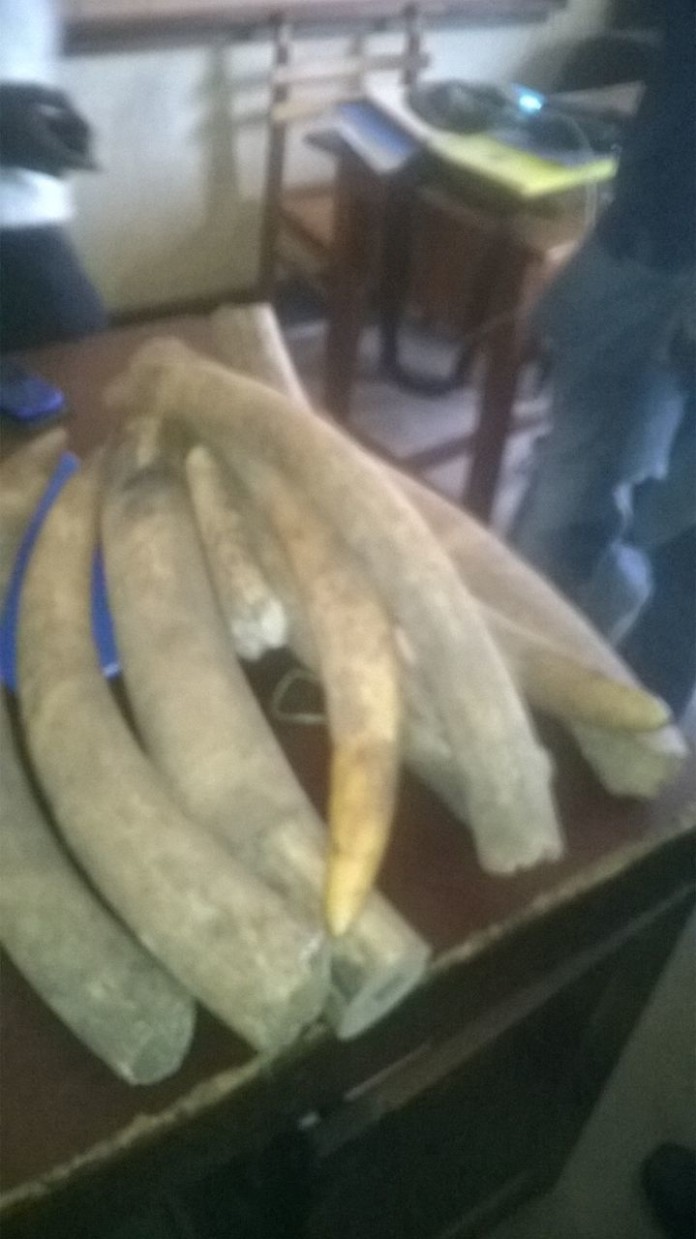
Museveni assents to Uganda Wildlife Act 2017, poachers to pay fine of Shs20b

people arrested with contraband ivory will be fined Shs20 billion.


President Yoweri Museveni has assented to Uganda Wildlife Act 2017 that was passed by parliament early this year. When caught poachers involved in killing endangered species will face life imprisonment or pay fine of Shs20 billion or both.

The law entails wildlife User Rights: hunting, farming, ranching, trading, and educational and research and general extraction use rights. This program is based on the principle that economic benefits from wildlife can lead to better custodianship of wildlife resources.

The law reforms revenue sharing program into conditional grants to communities.

The law provides for the conservation and sustainable management of wild life, strengthen wild life conservation and management, and streamline roles and responsibilities for institutions in wildlife conservation and management.

The law provides for compensation where a person is killed, suffers bodily injury or suffers damage to his or her crops or livestock by the wild animals listed under the Fourth Schedule of the law. The listed wild animals include elephants, lions, leopards, crocodiles, buffaloes, hyenas, hippopotamus, gorillas and chimpanzees.

The new law comes with significant reforms transforming wildlife conservation in Uganda. The act provides for Community participation in wildlife management strengthened through Community Wildlife Committees for each Protected Area.

It also provides for Promotion commercialization of wildlife on private land through sustainable utilisation.

According to Uganda Wildlife Authority (UWA), Wildlife management was once the responsibility of government however concerns grew about how wildlife management would be achieved without support from district authorities, communities and the private sector and there was the need to involve other stakeholders through the act.


Stories Continues after ad

Money laundering: Works engineer, Wobulenzi Town Council officer charged over Shs6.2b  

The Anti-Corruption court in Kololo has charged an engineer of the Uganda Roads Authority (UNRA) and a Community Development Officer of Luwero Town Council for amassing wealth that is not commensurate with their monthly earnings.

Umar Katongole, a Principal Engineer with the Ministry of Works and Hawah Ssengendo, a Senior Community Development Officer with Wobulenzi Town Council in Luweero district were Tuesday afternoon arraigned before Anti- Corruption Grade One Magistrate, Moses Nabende and charged with illicit enrichment contrary to section 31(1) (b) and section 31(2) of the Anti-Corruption Act 2009.

The two officials were arrested yesterday by the inspectorate of government.

The two officials were also charged with money laundering contrary to section 3(a), 116 and 136(1) (a) of the Anti-Money Laundering Act as amended in 2017.

The officials were however not allowed to take plea as the magistrate’s court does not have powers to try cases involving such huge sums of money.

According to state prosecutor, investigations into the matter are ongoing. The magistrate has adjourned the matter up to July 24.

Charges

Prosecution alleges that in 2015, being a station engineer for UNRA, Katongole was found in possession and control of property including plots of land and other untitled land in various parts of Kampala including Makindye, Mengo, Kabowa and Kyadondo whose total value was established to be at shs6.2 billion which was disproportionate to his income.

According to the state, the total amount of money earned as income by Katongole for four years was only shs300 million.

Prosecution also alleges that for purposes of disguising the illicit origin of these properties, the ownership of the shs6.2 billion was transferred to the names of Darkins Uganda Limited.

The state also avers that Katongole and Ssengendo between April 2011 and August 2015 deposited shs2.8 billion on an account number in Tropical bank as one of the ways to conceal the illicit wealth that had been amassed.

It is also alleged that the duo on June 27, 2015, they withdrew shs380 million from a bank account they jointly owned and deposited it onto another account that Ssengendo owns in Tropical Bank.

Ssengendo is also accused of depositing shs466 million onto her account in a bid to conceal that it had been got through illicit ways.

The duo was arrested by the office of Inspector General of Government early this week.

The charge sheet shows Ssengendo earns about Shs5 million monthly totaling to shs300 million in five years which raise eyebrows on how he had acquired shs6.2 billion wealth.

The suspects are expected to defend themselves against six counts on which they will be charged as highlighted by the document.

count 1v –  money laundering, contrary to Sections 3(a), 116 and 136 (1) (a) of the Anti Money Laundering Act (as amended in 2017):  Katongole Umar and Sengendo Hawa alias Kawa S. Bitone between 4th April 2011 to 6th August 2015 at Tropical Bank Ltd. main branch in Kampala district deposited a total sum of Shs.2,849,545,000/= (Uganda Shillings two billion, eight hundred forty nine million, five hundred forty five thousand) on account No.0010102561 for purpose of concealing or disguising the illicit origin of funds, knowing or having reasons to believe that the said funds were proceeds of crime.

COUNT V – MONEY LAUNDERING, contrary to Sections 3(b), 116 and 136 (1) (a) of the Anti Money Laundering Act (as amended in 2017):  Sengendo Hawa alias Kawa S. Bitone on the 27th of June 2015 at Tropical Bank Ltd. Main Branch in Kampala for purposes of disguising or concealing the origin of funds in the sum of Shs.380,000,000/= (Three Hundred Eighty Million) which Umar Katongole withdrew from Account No. No.0010102561 that he jointly operated with her banked it onto account No. 0100017148 that she is solely operating  at Tropical Bank, Main Branch, knowing or having reasons to believe that the said funds were proceeds of crime.

COUNT VI –  MONEY LAUNDERING, contrary to Sections 3(a), 116 and 136 (1) (a) of the Anti-Money Laundering Act (as amended in 2017):   Sengendo Hawa alias Kawa S. Bitone on 13th July 2015 at Tropical Bank Ltd. main branch in Kampala district deposited a total sum of Shs.466,000,000/= (Uganda Shillings four hundred sixty six Million) on account No.0100017148 for purpose of concealing or disguising the illicit origin of funds, knowing or having reasons to believe that the said funds are proceeds of crime.

Stories Continues after ad

Printronix announces partnership with Tri-Continental to distribute printers in Central, East and West Africa

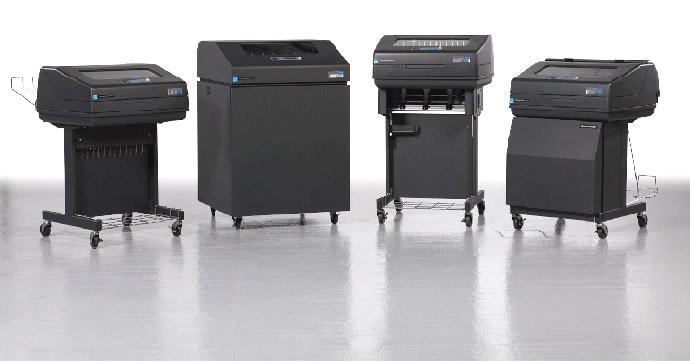
TallyGenicom line matrix printers


Printronix, pioneer of line matrix technology, has recently signed a distribution agreement with Tri-Continental Ltd.

Under the agreement, Tri-Continental, one of the largest and most prominent IT distributors in the African market, will distribute Printronix and TallyGenicom line matrix printers as well as its desktop serial dot matrix models, the S809 and S828. Through this partnership, Tri-Continental and Printronix will broaden their reseller base and strengthen their presence and market penetration in this important region.

Based in West London, Tri-Continental has expanded its operation to span 36 countries in Central, East and West Africa, and has been IBM’s strongest performing channel partner there for almost 30 years. The company has a strong reputation for providing the right solutions for its customers and adding value to the supply chain. It has been working with global brands such as IBM, NetApp, Epson and Canon.

Joseph Musisi, Tri-Continental Director and General Manager, says he is confident that the expanding range of reliable quality printers from Printronix is ideal for Africa’s many applications, its demanding environments and multiple vertical markets. “Printronix is well known for its reliable quality printers. The devices are globally recognised for their unrivalled performance in mission critical applications where downtime is not an option and cost effectiveness is a priority.  Printronix is a trusted supplier with a long list of high profile global customers, many of whom have a presence in Africa. We can add new local customers to that list, as well as expand the usage of Printronix printers across all the countries where we are present,” explains Musisi.

With over 40 years of success to build on, Printronix offers a wide range of printing solutions and applications for various industries, as well as ongoing support, sales training, and service to its channel partners. Regional Sales Manager for Sub-Sahara and South Africa at Printronix, Lareen Kohler says: “Tri-Continental is firmly positioned as a leading Pan-African distributor of world-class technology products, and, as an additional partner in the region, it will help us expand our channel base and reach end customers in Africa that we are not currently engaged with. This is an important market for Printronix so Tri-Continental is an ideal choice to contribute to our business growth plans for the region.”

Rosemarie Zito, Printronix Vice-President of EMEA Sales & Marketing, adds: “Printronix is looking forward to working with Tri-Continental. Its team has a great track record for building reseller channels throughout Africa, which will greatly support our solutions. Printronix is the OEM supplier of former IBM 6400 and 6500 line printers and, as such, we are partnering with Tri-Continental as it has such extensive knowledge of the corporate IBM customers in the region. We are sure that Tri-Continental will help us better serve them and upgrade legacy line and serial dot matrix printers. In addition, we believe Tri-Continental is complementary to our existing distribution channel in the region.”

Reliable line matrix and serial dot matrix printers

The Printronix P8000 and TallyGenicom 6800 line matrix series with Pedestal, Zero Tear and Enclosed Cabinet models, and the S809/S828 serial dot matrix printers, deliver flexible design, adaptable functionality and manageable savings. Line and serial dot matrix printers are designed for users in manufacturing, distribution and logistics, government, banking and food & beverage. They can be used to print invoices, shipment and transportation documentation, bank and customer statements and product labels. Users can expect maximum uptime, low cost of ownership, and maximum reliability in demanding environments.


Stories Continues after ad

Uganda to celebrate second National Day of Physical Activity

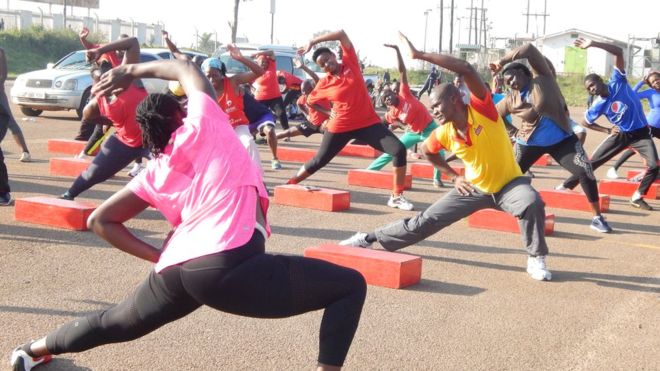
Fitness class


The Ministry of Health is set to mark the second National Day of Physical Activity (NDPA) which is part of government’s efforts to prevent and control non-communicable diseases (NCDs) among Ugandans.

NDPA was launched last year and it is anticipated to be celebrated in all the following years. This year’s celebrations will be held on July 14, at Kololo Independence Grounds under the theme: ‘My health, my responsibility.’

Speaking in Kampala, the Minister of Health, Dr. Jane Ruth Aceng, said the day is aimed at informing the population about the importance of physical activity, its relevance in prevention Non-Communicable Diseases (NCDs) and premature mortality from lifestyle diseases.

“The prevalence of NCDs is anticipated to increase if individuals do NOT change to an active lifestyle. Despite global commitments by all World health organisation (WHO) member states to reduce physical inactivity by 10 per cent by 2025.” She said

Physical inactivity is reported as the fourth leading risk factor for death globally; causing 6 per cent of deaths worldwide. It is estimated that one in every four adults globally is not physically active enough.

WHO recommends 250 minutes of moderate intensity or 75 minutes of vigorous physical activity per week or 30 minutes of moderate activity daily among adults? Children and adolescents require a minimum of one hour per day of physical exercises.

The recommended time can be met through work, travel or leisure related physical activities. It is important that individuals engage in physical activity that they enjoy for example dancing, jogging, gardening, cycling, and sports such as football, netball, athletics, and baseball.

Results from Uganda NCD survey of 2914 indicates that Ugandans are becoming physically inactive. High physical inactivity was note in urban areas where eight percent adults were considered inactive considered to 3.5 per cent among rural population.

As Uganda commemorates the second National Physical Activity day, she reminded the population about the importance of physical activity and urging Ugandans to adopt healthier life style and consuming diet foods.

She said her ministry is developing the National Physical Activity guidelines and supporting the promotion of physical education in schools as part of the efforts to increase physical activity among the population.


Stories Continues after ad

2019 Afcon quarter-final fixtures out

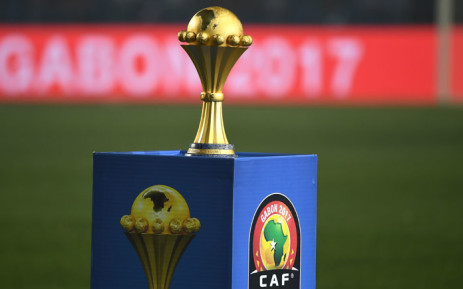
AFCON trophy


After completion of the Round of 16 matches, the 2019 Africa Cup of Nations quarter-finals line-up in Egypt is complete.

There will be a new winner at the Africa Cup of Nations Egypt 2019 after defending champions Cameroon were sent packing by Nigeria Super Eagles who beat them 3-2 in a five-goal thriller.

South Africa’s Bafana Bafana beat hosts Egypt 1-0 to reach the quarterfinals. Thembikosi Lorch scored what proved to be the game’s lone goal five minutes from time to produce one of the Africa Cup of Nations all time surprises.

Sadio Mane’s lone goal inspired the Teranga Lions of Senegal into the quarter-final defeating the Uganda Cranes.

Benin accomplished one of their best achievement in their footballing history after eliminating favorites Morocco with a 4-1 win in post-match penalties.

Wilfried Zaha’s strike for Ivory Coast in the 76th minute was enough to seal victory in a West African duel dominated by Mali.

Madagascar beat two time Afcon champions DR Congo 4-2 on penalties to storm the quarterfinals of the continental showpiece in their first appearance after a 2-2 draw in normal time.

Algeria’s Les Fennecs put up a flawless performance to thrash Guinea 3-0 in a round of 16 match to set up a quarter-final stellar tie with Ivory Coast.

Tunisia’s Carthage Eagles flew over Ghana’s Black Stars to progress to the quarter finals with a 5-4 post-match penalties victory after a one-all draw in normal time.

The 74,100-capacity Cairo International Stadium will host the final on Friday, 19 July 2019.


Quarter-final fixtures

Wednesday, July 10

Benin v Senegal – 30 June stadium, 7pm

Nigeria v South Africa – Cairo International Stadium, 10pm


Thursday, July 11

Algeria v Ivory Coast – Suez Stadium, 7pm

Madagascar v Tunisia – Al Salam Stadium, Cairo, 10pm


Stories Continues after ad