Ugandans will watch the Africa Cup of Nations (AFCON) that kicks off on Friday, 21 June 2019 live from Egypt for free following a directive from Parliament.
Uganda cranes will play against DR Congo in their first game scheduled for Saturday, 22 June 2019.
Legislators, demanded that government provides Euros 350,000 to the Uganda Broadcasting Corporation (UBC) to purchase rights to broadcast the Africa Cup of Nations (AFCON).
“We understand that this was not in the budget of the national broadcaster; but that is surely a small price for the government of Uganda to pay,” said Jinja east MP Moses Balyeku.
He further noted that the games will only be aired on pay television which many Ugandans cannot afford.
Balyeku fronted the proposal noting that Ugandans have a right to watch the games free of charge because the national team, the Uganda Cranes, would be participating.
The Speaker of Parliament, Rebecca Kadaga, reiterated a letter from the national broadcaster requesting for funds to pay for the rights to air the games, saying that they were desperate to broadcast the games live due to their big viewership.
“We have been pushing our national team to perform well so that they can qualify for the AFCON games, something that is a big achievement. We should let the locals watch their children play,” she said.
In response, the State Finance Minister for Planning, David Bahati, said that the government will support UBC to broadcast live. However, he regretted that UBC had not approached his ministry on the need.
He added, “I encourage the Ministers of Sports and Information Communication Technology (ICT) to forward the request to us so that we can handle it expeditiously.”
The Minister of ICT was directed by Parliament to process a request to fund the games and update the House on the progress.
The Minister of Health, Dr Jane Ruth Aceng, has said government is committed to continuing with Viral Hepatitis B and C systematic mass screening policy focused on most at risk populations like the prisoners, commercial sex workers, refugee camps and communities hosting refugees in a bid to fight the virus.
Minister Aceng said during the first ever African Hepatitis Summit that is aimed at rallying partners and countries to eliminate Viral Hepatitis in Africa.
Under the theme for the summit is, ‘Eliminating Viral Hepatitis in Africa; Implementing the Viral Hepatitis Strategy’ brought together participants from over 25 countries, will provide an opportunity for countries to develop and work towards implementing action plans, sharing best practices and lessons learnt from each other in the fight against the epidemic.
Dr. Aceng, said government of Uganda adopted the World Health Assembly (WHA) resolutions of 2010 and 2014 on viral hepatitis that recognize the disease as a public health problem.
“Ministry of Health established a Hepatitis Technical Working Group, which developed a strategic action plan for the elimination of Hepatitis B, a Vaccination plan to vaccinate adolescents and adults and statutory instruments declaring Hepatitis B as a public health threat in Uganda. Another instrument in the plan makes vaccination of health workers against Hepatitis B mandatory,” she said.
In Uganda, according to the Uganda Population-based HIV Impact Assessment survey, (UPHIA, 2016), it is estimated that the prevalence of Viral Hepatitis B is at 4.1 per cent in the population aged 15-64 years. The disease prevalence, however, varies from region to region with the highest prevalence in the North at 4.6 per cent and the lowest in Southwest at 0.8 per cent.
While the actual prevalence of Viral Hepatitis C in Uganda is unknown, the data from the National Blood Bank indicates that the prevalence of Hepatitis C among blood donors in Uganda is approximately 1.5 per cent.
To mitigate Hepatitis B prevalence, Uganda has embarked on producing the first line drugs recommended for treating Hepatitis B. This makes it one of the first countries in Africa to produce the medicines. This is being done by Cipla Quality Chemical Industries Ltd, a WHO-approved pharmaceutical manufacturer.
In addition, the government will strengthen and sustain injection, blood and surgical safety and universal precaution among health care workers.
Awareness creation on viral hepatitis will also be hastened by working with community groups and Civil Society Organizations (CSO) to increase opportunities to educate the population about viral hepatitis.
In Africa, dying of viral hepatitis is becoming a bigger threat than dying of AIDS, Malaria or Tuberculosis. It is estimated that every year, 200,000 people die from the complications of viral hepatitis B and C mostly liver cancer in Africa.
This is against a background that, 60 million people in this region were living with chronic hepatitis B infection as early as the year 2015, of which, 4.8 million are children under five years old. In addition, an estimated 10 million people are infected with hepatitis C, almost certainly due to unsafe injection practices.
The World Health Organization (WHO) Country Representative in Uganda, Dr Yonas Tegegn Woldemariam said that the WHO Regional Office for Africa established the Framework for Action for the Prevention, Care and Treatment of Viral Hepatitis in the African Region (2016–2020). “This was designed to guide the Member States on the implementation of the Global Health Sector Strategy on Viral Hepatitis which calls for the elimination of hepatitis by 2030,” he said.
Dr Yonas further notified the delegates that WHO would provide measures against which to track the progress of the framework, “we designed a scorecard which will be presented at this summit. It provides vital information about the status of the regional hepatitis response while measuring progress against the WHO Framework for Action.
In order to reduce hepatitis Infections, the Government of Uganda also plans to screen all pregnant women for Viral Hepatitis B & C as well as introduce the Hepatitis B birth dose. This will help eliminate mother-to-child transmission of Hepatitis B and C infections.
The Federation of Uganda Football Associations (FUFA) have signed a partnership deal with Uganda Tourism Board (UTB) to the tune of Shs200 million.
The year-long renewable partnership was officially unveiled to the public with the signing of the Memorandum of Understanding (MOU) between the two sided at the FUFA House on 20th June 2019 in Kampala.
FUFA was represented by the First Vice President Justus Mugisha, FUFA second Vice President Darius Mugoye, FUFA Marketing and Communications Committee chairman Rogers Byamukama, FUFA Deputy CEO Humphrey Mandu while UTB was led by their Chief Executive officer Lilly Ajarova and UTB Board member Eddie Kirya.
“This is a very important day in football. Once again, FUFA is unveiling a partner to the swelling of sponsors and partners. This is the confidence that football has built. On behalf of the federation, I am extremely happy about this partnership. This is not merely a partnership but a marriage that will last for eternity,” Rogers Byamukama said.
Uganda Cranes and the FUFA Drum (Inter-Provinces) tournament will be the main actors in this new partnership.
Lilly Ajarova, the CEO Uganda Tourism Board said, “Uganda Tourism Board (UTB) is excited is to here today. This has not been a one day process. There have been discussions before. In line with our recently launched strategic plan of sustainable increase for the volume of domestic and international tourism as well as building brand equity and value, UTB is glad to associate with FUFA.”
“This is business unusual and a double bottom-line opportunity. We want to create a positive opportunity for the youth in Uganda through football as we also develop sports tourism. Uganda Cranes’ back to back participation in the Africa Cup of Nations has also been a great development and a unique opportunity to develop Uganda’s international tourism,” she added.
UTB joins Airtel Uganda, Nile Breweries Limited, BIDCO Uganda Limited, Bet Lion, Uganda Breweries Limited, Stanbic Bank and StarTimes on the list of FUFA sponsors.
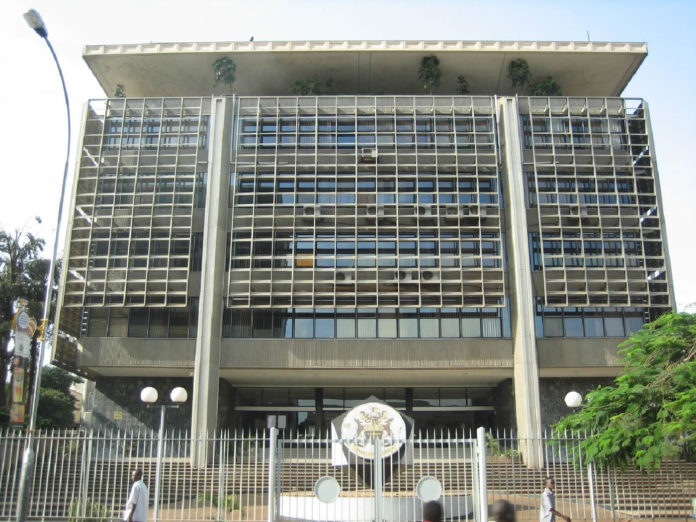
Three more government officials have been arrested by CID and other agencies investigating the alleged printing of Shs90 billion even though the governor of Bank of Uganda (BoU) insists no extra money was printed.
The latest arrests come as investigators led by the Uganda police detectives continue to hunt for individuals involved in causing the saga that saw private goods and parcels carried on a chartered plane used by BoU to deliver its consignment in April.
The chartered plane landed at Entebbe International Airport on April 27 and was cleared by Uganda Revenue Authority (URA) customs department in the presence of BoU officials, BoU security, aviation security, police and other security agencies. However, it was reported that instead of the expected 20 pallets, the consignment had 25 pallets.
Yesterday the investigators arrested three Bank of Uganda (BoU) officials for of abuse of office and neglect of duty. The officials are Caroline Nankabirwa, from procurement department, Simon Peter Zaribugire from currency department and Milton Opio, director security.
Investigators from the Uganda police say investigation into the Bank of Uganda continue and will soon issue a new statement on the latest developments concerning the currency consignment saga in which a chartered plane delivered five crates alongside 20 pallets of BoU consignment.
“Our officers in partnership with other agencies are still doing the investigations and I promise we will soon issue a statement to clear rumours in the media,” an officer who is part of the team said on condition of anonymity as he is not allowed to talk to the media.
The officer said the investigations spearheaded by CID Director Grace Akullo have expanded countrywide to BoU regional currency centres of Kabale, Mbale and Fort Portal, after leads brought those centres into picture.
The detective explained that heads of BoU currency centres in the three regions are being interrogated on whether they had prior knowledge on the five extra pallets that were transported on the chartered plane, which had on board, newly printed Uganda Shilling notes.
The source said the CID team is also probing how and why the directors were transferred to regional currency centres from the head office in Kampala, prior to the arrival of the BoU consignment.
Available information indicates that the Central Bank sent its officials to pick printed cash overseas and alerted Uganda Revenue Authority (URA) about a consignment that required fast clearance.
Sources indicated that the head of Mbale currency centre who was abruptly called to witness the offloading of BoU consignment became suspicious of the extra pallets and briefed BoU Governor Prof. Emmanuel Tumusiime-Mutebile.
But Tumusiime-Mutebile on Tuesday reiterated that there was no extra consignment containing printed money besides that which was officially sanctioned by the bank.
‘I simply said that it was an anomaly in the sense that the plane came along with 20 pallets and additionally five crates (that were not ours). The 20 pallets were consigned,” Mutebile said while reading the latest monetary policy statement, urging media to ignore rumours citing that there was extra money printed.
Mutebile’s comments come after government spokesperson Ofwono Opondo disowned an investigation by police in relation to the unfolding currency scandal at Bank of Uganda.
Police spokesperson Fred Enanga told journalists yesterday that investigators were investigating allegations that additional money was printed and smuggled into the country. The figure that has been thrown about is Shs 90 billion.
But government through Ofwono Opondo, the executive director of Uganda Media Centre said they were not aware of any investigation regarding this money.
“I disagree with Fred Enanga’s statement about investigations in relation to the extra cargo of Shs 90 billion,” said Ofwono.
Opondo said government now wants Enanga to put the record straight.
“We are asking police to correct the statement [that there is an investigation over Shs 90 billion].”
Ofwono said government is investigating the extra boxes on the plane that contained equipment for testing blood.
Today parliament’s Committee on Commissions, State Authorities and State Enterprises (COSASE) quizzed top officials of the Civil Aviation Authority on the saga, with officials saying they had no role to play in the delivery of the currency consignment to BoU.
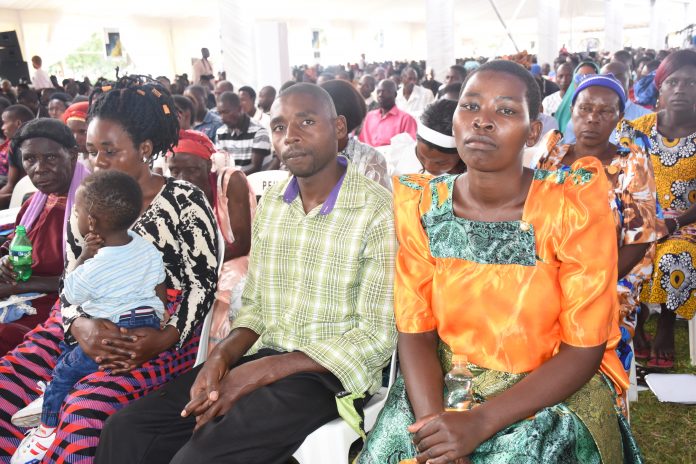
Residents attending the Public Hearing of Kingfisher Environmental report at Rwemisanga Rwemisanga Primary School on Wednesday.
About 6,000 stakeholders have on Wednesday thronged Rwemisanga Primary School, Rwemisanga Parish, and Kyangwali Subcounty in Kikuube District to participate in the first Environmental Social Impact Assessment (ESIA) public hearing for the Kingfisher Development (KFDA) Project operated by China National Offshore Oil Corporation (CNOOC) Uganda Ltd.
The Public hearing, a third of its kind to be organised by Petroleum Authority of Uganda (PAU) in partnership with National Environmental Management Authority (NEMA), was intended to give a platform in which all relevant stakeholders and developers are brought together to express opinions, and offer suggestions on the proposed Project to influence the decision-making process during review of the ESIA.
Speaking at the public hearing, Ms.Peninah Aheebwa, the Director Technical Support Services at the PAU who represented the Executive Director said the public hearing and the ESIA report are organised in accordance with the National Environment Act and Regulations.
“Our role is to ensure that International Oil Companies (IOCs) adhere to the country’s legal and regulatory framework and international best practice. This includes ensuring that all the Oil and Gas projects are implemented in a manner that does not degrade the Environment and cultural heritage of the people of Uganda, but improves their wellbeing. I therefore call upon all of you to express your opinions openly and objectively,” she said
Mr. Robert Kasande, the Permanent Secretary of the Ministry of Energy and Mineral Development who represented the Minister, said the Public Hearing for the Kingfisher Development Project ESIA Report was an important step towards first oil.
“This Public Hearing brings us closer to what everyone is waiting for. One of the precursors to the Final Investment Decision (FID) being taken, is proper documentation of both the positive and negative Environment and Social impacts of the projects, and the mitigation measures. FID will usher in the Engineering, Procurement and Construction phase where many benefits for the country will be realized,” said Kasande.
The KFDA ESIA was conducted by Golder Associates from UK and Eco and Partner consult from Uganda on behalf of CNOOC Uganda Limited that was awarded a production license by the Government of Uganda in 2012. The ESIA presents a description of the project facilities and the potential positive and negative impacts and mitigation measures during the construction, operation and decommissioning phases.
Mr. Cui Yujun, the Vice President of CNOOC Uganda Ltd presented the ESIA Report on behalf of the company that is the lead developer of the Kingfisher Development Project. A copy of the ESIA and its summary can be accessed on the websites of the PAU and NEMA.
Speaking at the same event, the Executive Director of NEMA, Dr.Tom Okurut said the resolutions from the public hearing will affect the final decision on the award of the Environmental Impact Assessment certificate for the Kingfisher development project, which is necessary before oil production commences.
“Your views will determine whether CNOOC is awarded the certificate or not. Our role is to ensure that this oil is produced in a manner that uplifts the Environment and does not become hazardous to our lives but instead makes it better,” he said.
Mr. Andrew Byakutaga, the Prime Minister of Bunyoro Kitara Kingdom asked CNOOC to respect the norms, cultures and wellbeing of the natives as they implement the project and do it in a way that uplifts the dignity and cultural heritage of the people in the area.
“Our cultural heritage like the tombs, historical sites, tourism spots, birds, animals must be protected. These have defined as the people of Bunyoro for hundreds of years. As much as we want this oil, we also want to preserve our Environment and culture,” he said.
Other stakeholders implored the project developers to ensure fair and adequate compensation for their land and to ensure that the host communities benefit from the jobs and opportunities to provide goods and services.
The Kingfisher Project components that will be located in Kikuube and Hoima Districts include: The development of 4 Well pads: holding 31 wells (20 production wells and 11 water injection wells, aCentral Processing Facility (CPF), flowlines to transport well fluids from production wells to the Central Processing Facility, a 46 km Feeder Pipeline to transport crude oil from CPF at KFDA to the delivery point in Kabaale, Hoima District and associated Supporting Infrastructure: camps, materials laydown yard, jetty, airstrip, and infield access roads among others.
The project developers are CNOOC Uganda Limited (operator), Total E&P Uganda and Tullow Uganda Operations Pty Limited.
The public hearing was presided over by Professor Grace Bantebya Kyomuhendo from the School of Gender Studies at Makerere University. Members of Parliament on the Natural Resources Committee led by MP Keefa Kiwanuka were also present.
The next public hearing will be held on Friday June 21, 2019 in Kaabale Parish, Buseruka sub-county, Hoima district to give the same opportunity in the area to discuss the report.
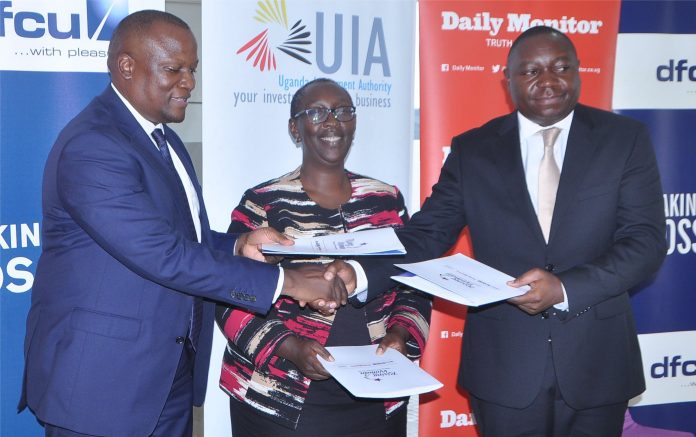
Officials at the launch of the second edition of the initiative
Over 5000 female entrepreneurs in Uganda will benefit from the second edition of Rising Women Initiative organised by Monitor publications limited, DFCU Bank and Uganda investment authority (UIA).
The initiative started last year under the theme ‘taking your business a head’ is meant to recognise, celebrate and promote a culture of mentorship among women in business in Uganda.
It targets Ugandan business women, small scale investors, and entrepreneurs, members of Uganda entrepreneurs association limited, Uganda small scale industries association and Uganda manufacturers association.
Speaking at launch, the chief executive officer Mathias Katamba regarded the initiative as a fundamental step on the path to creating a financial enabling environment for female entrepreneurs.
“As a financial institution that believes in building thriving communities, DFCU embarked on a journey to creating an enabling environment for small and medium women owned enterprises started in 2007, with the introduction of the women in business program. Our primary motivation is the fact that despite women making up to over 52 per cent of the population of Uganda, it is not reflected in the ratio of women who have access to financial services.”
He announced the call for business proposals through the bank’s website which will begin the contention for the to 10 business idea. “Like we did last year, we will reward the top three business submission with monetary funding and an all-expense paid learning tour to Nairobi.”
Johnson Omolo, the general manager of NTV Uganda said as a media house, they have a critical role to play in society by providing a platform through which ideas that are geared to improving he lives of people in different spheres.
“It is our responsibility to pass on information to those who need it be it our customers or not. We call upon all women to look out for the inspirational and impactful stories of fellow successful women entrepreneurs in the full women magazine,” he said.
The acting director of Uganda investment authority (UIA), Lawrence Byensi said the body’s alliance with DFCU Bank and Nation Media Group will widen efforts as an agency devoted to driving national economic growth and development in partnership with the private sector.
He encouraged them to write proposals from which the top three winners will walk away with Shs15 million, Shs10 million and Shs5 million respectively.
Uganda Road Fund finances construction of national roads in Uganda
Fifteen out of 21 countries in the Common market for Eastern and Southern Africa (COMESA) have established dedicated Road Funds and Road Development Agencies to undertake maintenance, and development of roads for both the regional and national road networks.
These are: Burundi, Djibouti, Egypt, Eritrea, Ethiopia, Kenya, Libya, Madagascar, Malawi, Rwanda, Sudan, Swaziland, Uganda, Zambia and Zimbabwe.
For most of these countries, funding for road maintenance has been derived from fuel levy while funding for new construction and rehabilitation has been through borrowing from development banks and support from cooperating partners.
Experts attending the ongoing 11th COMESA Joint Technical Committee meeting on infrastructure, in Nairobi, Kenya, which brought together experts in transport, ICT and energy, have now called on the remaining countries to establish such funds.
The experts meeting was attended by permanent secretaries, directors and other technical staff from Member States governments and specialized agencies.
The meeting observed that roads command a bigger market share for surface transport. Hence, COMESA countries have undertaken road sector management reforms to address financing of routine maintenance, rehabilitation and construction of new roads by establishing road funds administration.
The expert’s report and recommendations will be tabled before the joint meeting of ministers of infrastructure responsible for transport, ICT and energy on Thursday 20 June 2019 in Nairobi.
Meanwhile, COMESA Secretariat has so far conducted awareness workshops on the Tripartite Transport and Transit Facilitation (TTTF) Programme in six Member States. This is part of a 710,000 Euros provided by the European Union to support the awareness activities.
As a result, the countries have started submitting requests for technical support to start implementing the TTTF programme. The programme was designed to assist Member States domesticate and implement the agreed harmonized regional road transport regulations, standards and systems in a coordinated and synchronized manner.
The overall strategic objective is to facilitate the development of a more competitive, integrated and liberalized regional road transport market in the Eastern and Southern African region.
A sub-programme for COMESA specific activities was formulated which focused on operationalization the COMESA Carrier License, support enhancement of the One Stop Border Posts and its performance, supporting establishment of Corridor Management Institutions and road safety Management among others.
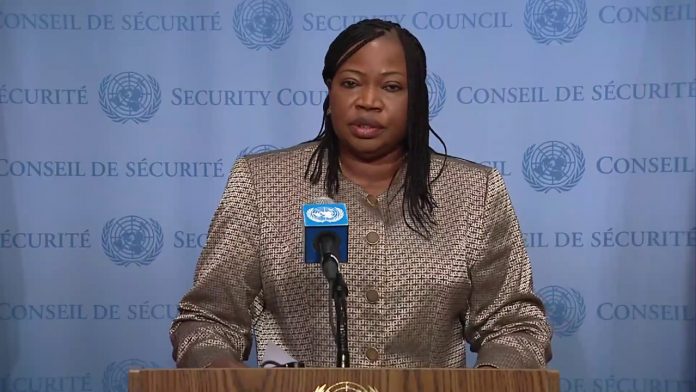
‘Now is the time to act’ for victims of violence in Sudan, ICC prosecutor urges Security Council
The UN Security Council must “seize this moment” presented by the current turmoil in Sudan, to provide justice at long last for the victims of violence in Darfur, and those who have suffered at the hands of the brutal military crackdown earlier this month.
That is according to the Prosecutor of the International Criminal Court (ICC), Fatou Bensouda, who said she had a “clear message to convey: now is the time to act. Now is the time for the people of Sudan to choose law, over impunity, and ensure that the ICC suspects in the Darfur situation, finally face justice in a court of law.”
She said the Council now had a “unique opportunity to decisively and effectively” address the wrongs committed by the security forces aligned with former President Omar al-Bashir in the Darfur regionbetween 2003-2008, when around 300,000 were killed and 2.7 million civilians driven from their homes, according to UN figures.
She called for the immediate cessation of violence against civilians in the capital Khartoum and elsewhere, since the 3 June wave of attacks against protesters calling for a return to civilian rule, in opposition to the ruling Transitional Military Council (TMC).
All arrest warrants for the five suspects charged with the grave crimes within the ICC’s remit – genocide, war crimes and crimes against humanity – remain outstanding, she told members. Both deposed president Bashir, and two others, are now said to be in custody she said and are legally obliged to be transferred by the TMC. Only if they could show willing to prosecute them for the same crimes, could they remain in Sudan, she said.
ictims must have their day in court
“I am ready to engage in dialogue with the authorities in Sudan to ensure that the Darfur suspects face independent and impartial justice, either in a courtroom in The Hague, or in Sudan”, said the Prosecutor. “Continued impunity is not an option. The victims of the Darfur situation deserve to finally have their day in court.”
“My expectation is that Sudan, with the support of this Council, will engage in dialogue with my Office to discuss the feasibility of a mission by my Office to Sudan in the very near future to resolve these issues.”
She said in the face of a resurgence of further alleged grave crimes by former ‘Janjaweed’ militia fighters who are now part of the TMC-sanctioned Rapid Support Forces (RSF), who led many of the alleged atrocities in Darfur over a decade ago, it was “simply intolerable” that reported attacks today were continuing.
Attacks against civilian populations in Darfur have continued during the reporting period and appear to be increasing in severity. The approximately 1.64 million internally displaced persons in Darfur remain especially vulnerable and sexual and gender-based violence continues to restrict the freedom of movement of women and girls, in IDP camps and areas of return”, she told the Council
Ms. Bensouda noted with concern “the reports that the RSF have allegedly seized facilities and assets previously held by the Africa Union-United Nations Hybrid Operation in Darfur. In this context, I support the AU Peace and Security Council’s resolve to extend UNAMID’s mandate for a period of 12 months…as well as its rejection of the TMC’s call for UNAMID to hand over assets to the RSF, and its request that these assets are handed to civilian authorities.”
She said she would not hesitate to investigate any further crimes within the ICC mandate in Darfur “and where appropriate, prosecute”.
“With this Council’s support, and the cooperation of the authorities in Sudan”, she concluded, “there is an opportunity, now, to make real progress in the pursuit of accountability and justice for the victims in the Darfur situation. The current reported violence against civilians in Darfur must stop and all the ICC Darfur suspects must stand trial. We must not squander this opportunity.”
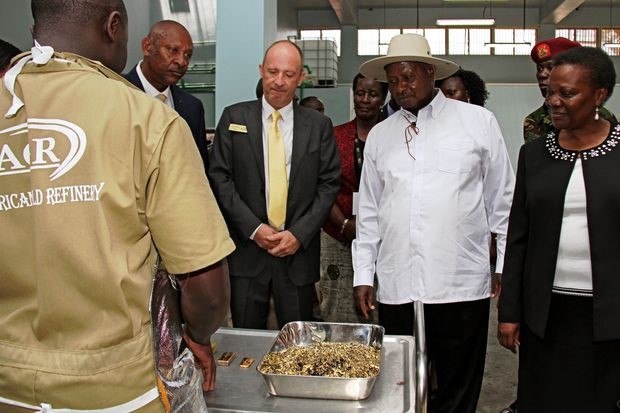
President Yoweri Museveni, in white, with Alain Goetz and gold flakes at AGR in 2017
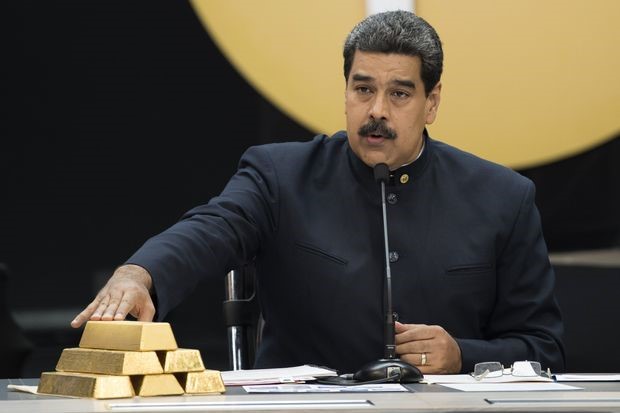
The government of Venezuelan President Nicolás Maduro is selling off his country’s gold reserves. Some of it has passed through a secretive operation in East Africa, a gambit that evades U.S. sanctions.
On two early-March flights, at least 7.4 tons of gold with a market value over US$300 million moved from Venezuela to a refinery in Uganda, say officials in Venezuela and Uganda, a foreign diplomat and Venezuelan opposition lawmakers, who have concluded Mr. Maduro’s government exported the ingots.
The gold arrived on a Russian charter jetliner in two shipments at the international airport in Entebbe, says Ugandan national-police spokesman Fred Enanga. The accompanying paperwork identified the ingots, some with stamped labels partially scratched off, as Venezuelan central-bank property, says a senior Ugandan police officer who saw the bars and documents. Flight records show the trips originated in Caracas, Venezuela.
The shipments expose one link in a global underground economy many suspect is helping Mr. Maduro cling to power by bypassing the U.S.-dominated international finance system. Washington has recognized opposition leader Juan Guaidó as Venezuela’s legitimate president, slapped financial and other sanctions on Venezuelan officials and institutions, and threatened penalties for others doing business with the regime.
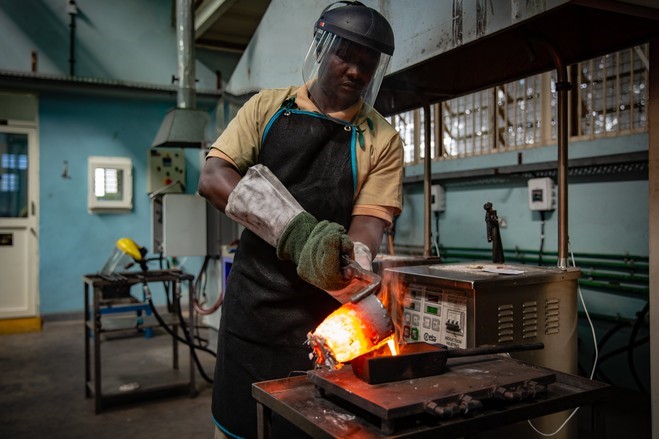
Refining gold at AGR
The standoff between the two leaders is reverberating beyond Venezuela, with some 50 countries joining the U.S. in backing Mr. Guaidó while others side with Mr. Maduro. What was once Latin America’s richest economy is starving, its oil sales have dwindled and citizens are suffering through dayslong power outages and shortages of basic goods.
Gold sales, U.S. and other officials say, are one of the government’s final financial lifelines.
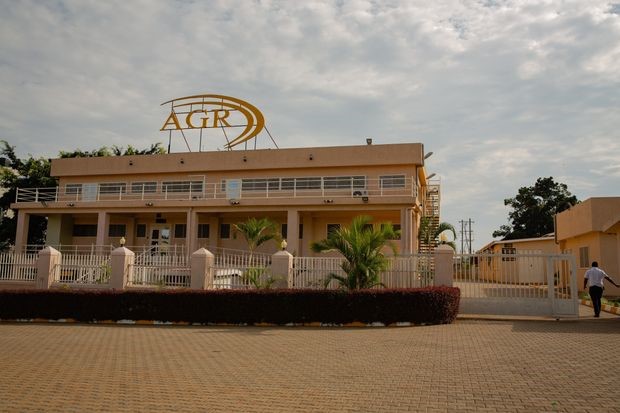
The gold that arrived in Entebbe passed through African Gold Refinery Ltd., or AGR, in a compound about 500 yards from the old runway before being exported to the Middle East, Ugandan police say.
The refinery started operations in 2015. Some of the gold it processed was allegedly smuggled from conflict-torn eastern Congo and other African nations, according to officials with Ugandan police, the country’s Financial Intelligence Authority and regional smugglers.
Gold from AGR has made its way into supply chains at U.S. companies including General Motors Co. , General Electric Co. and StarbucksCorp. , the firms’ filings for 2018 with the Securities and Exchange Commission show, despite U.S. measures to discourage use of so-called conflict minerals from Congo.
GM prohibits suppliers from using forced or involuntary labor or engage in corrupt business practices, a spokesman says. GE declined to comment. Starbucks didn’t respond to requests for comment.
Gilded Age
Uganda doesn’t mine much gold of its own, but the heavy metal has become its leading export.
Sources: Uganda Bureau of Statistics (production); Bank of Uganda (exports)
AGR General Manager Cherry Anne Dacdac says the company hasn’t processed smuggled or conflict gold and declines to comment on the March shipments. She says all AGR’s business is legal and that in a March 26 management meeting it agreed it won’t accept transactions related to Venezuela.
AGR has processed and exported more than 38 tons of gold since it started operations, Ms. Dacdac says. The scale of its operation helped drive gold in 2018 to overtake coffee as the leading export from Uganda, which mines little of it.
The refinery appears to act with support from Ugandan President Yoweri Museveni, court and other documents reviewed by the Journal suggest. A spokesman for Mr. Museveni says the president “backs the plant just as he does all other investors” in his quest to transform Uganda’s economy.
The Maduro government’s prior gold sales have been an open point of contention. Between late 2017 and Feb. 1, 2019, the central bank sold at least 73.3 tons of gold, with a market value of around $3 billion, to companies in the United Arab Emirates and Turkey, the National Assembly’s finance commission announced in February.
What should Washington do to prevent gold smuggling?
The White House on Nov. 1 announced sanctions intended to stop Venezuelan gold sales. Since then, several dozen more tons have been removed from the central bank and secretly exported, say opposition lawmakers and a person familiar with the bank’s reserves. The bank for weeks was left without power and water.
“It’s a fire sale,” says one of the lawmakers, Ángel Alvarado, who is on the finance commission. “The regime is scraping the barrel, selling off anything of value to keep itself afloat.”
A U.S. Treasury Department official says: “Treasury is committed to holding accountable those operating corruptly in Venezuela’s gold sector.”
Spokesmen for Venezuela’s central bank and Information Ministry didn’t respond to requests for comment. The Maduro government has said little publicly about its gold sales and routinely dismisses sanctions and accusations of wrongdoing as part of an international campaign to besmirch Caracas.
Mr. Goetz’s gold
AGR was founded in 2014 by Alain Goetz, 54, a Belgian businessman who has worked more than three decades in the African gold trade.
Gold is almost impossible to trace to its origin once refined. The United Nations says gold is the primary mineral financing militias and parts of the military in eastern Congo, funding a conflict that has killed millions.
Even before the Venezuelan shipments, AGR had drawn the scrutiny of Ugandan authorities for processing gold allegedly smuggled from conflict zones in Congo, as well as from South Sudan and Zimbabwe, much of which later leaves the country as Ugandan gold, according to Ugandan police, the country’s Financial Intelligence Authority, regional smugglers and Congolese mining officials.
Sydney Asubo, executive director of the Financial Intelligence Authority, Uganda’s government body in charge of combating money laundering, says the agency reported the smuggling activities to authorities and requested prosecution. No charges have been filed, he says, pending the conclusion of an investigation of AGR by Uganda’s Inspectorate of Government over suspicions of tax evasion, smuggling and money laundering. Ali Munira, a spokeswoman for the Inspectorate, which is charged with investigating corruption and other abuses, confirms there is an investigation but declined to comment on details.
Mr. Goetz and AGR’s Ms. Dacdac say they have complied with Ugandan and other laws. Mr. Goetz denies there are probes. Ms. Dacdac says she isn’t aware of any investigations by the Financial Intelligence Authority or Inspectorate.
America’s 2010 Dodd-Frank Act included provisions to discourage companies from using raw materials that finance the Congolese conflict by tracing what they buy. The act doesn’t make buying these materials illegal. AGR appeared in supply chains of 237 publicly traded U.S. companies in their filings for 2018. Maduro with gold
Mr. Goetz says he has sold AGR and retains control of Goetz Gold LLC, a Dubai trading company. Goetz Gold still handles the gold coming from AGR, he says. AGR’s Ms. Dacdac didn’t respond to requests to comment on whether Goetz Gold handles the company’s gold. Uganda’s company registry shows Mr. Goetz’s AGR shares were transferred in February 2018 to Seychelles-based AGR International Ltd. Ms. Dacdac says that company is owned by individuals and companies originating from the Middle East.
Secretive shipment
On March 2, the red-tailed body of a Boeing 777 owned by a Russian charter company, Nordwind Airlines, touched down at Entebbe at 6:35 a.m. after taking off more than 13 hours earlier from Caracas, plane-tracking website Flightradar24 shows. Nordwind didn’t respond to requests for comment.
Police and private security gathered on the tarmac to receive the cargo from the jetliner, which carried no passengers, says a person who witnessed its arrival.
Airport handlers removed heavy parcels wrapped in brown cardboard, which didn’t pass through the airport’s regular customs procedures, says Mr. Enanga, the Ugandan police spokesman. Less than an hour after landing, the packages under a private-security escort reached the AGR compound just across the airport access road, he says.
Inside the cardboard were 3.8 tons of Venezuelan gold. Another 3.6 tons on the same airliner from Caracas arrived at the refinery two days later, Mr. Enanga says. By the time the police’s minerals unit, tipped off over the unusually large consignments, raided AGR on March 7, the first lot was gone, exported to the Middle East with its final destination listed as Turkey, he says.
The senior Ugandan police officer and Mr. Goetz say the gold was sent to Goetz Gold in Dubai. AGR’s Ms. Dacdac didn’t respond to requests for comment on whether the company exported the gold to Goetz Gold. Mr. Goetz says Goetz Gold didn’t send it to Turkey.
Ugandan police seized the other 3.6 tons, ingots stamped with labels identifying them as Venezuelan central-bank property, says the senior officer who saw them. Some labels appeared scratched, as if someone had tried to disguise their origin, the officer says. Paperwork with the bars showed they were from the 1940s.
Mr. Goetz and AGR’s Ms. Dacdac say police never raided the refinery and never seized any gold. Ms. Dacdac says: “AGR presented all the necessary documentations as proof that the particular transactions have been declared and captured by the Uganda Revenue Authority.”
Precious Cargo
Venezuelan President Nicolás Maduro’s government is selling off his country’s gold reserves, some of which passed in March through a refinery near Uganda’s main airport, according to officials in Venezuela and Uganda.
It wasn’t the first time authorities identified Venezuelan gold handled by Mr. Goetz. Last year, Venezuela’s central bank was selling gold to three trading firms in Turkey and the United Arab Emirates, according to the February announcement by the Venezuelan parliament’s finance commission, including to Goetz Gold, which bought 21.9 tons.
Mr. Goetz says some of that particular Venezuelan gold passed through Goetz Gold but that it came from a company outside Venezuela and didn’t break U.S. sanctions because contracts were signed before Nov. 1.
After U.S. sanctions, the central bank’s buyers were drying up. In late January, as another Nordwind 777 sat at Caracas airport, Venezuelan opposition lawmaker José Guerra, a former economist at the central bank, alleged in parliament that the plane was there to fly out 20 tons of the bank’s gold.
The U.S. publicly pressured the bank’s buyers in Turkey and the U.A.E. “My advice to bankers, brokers, traders, facilitators, and other businesses,” a tweet from national security adviser John Bolton’s account warned on Jan. 30: “Don’t deal in gold, oil, or other Venezuelan commodities being stolen from the Venezuelan people by the Maduro mafia.”
Two days later, Abu Dhabi-based Noor Capital, which had previously bought 27.4 tons of Venezuelan gold, according to the Venezuelan parliament’s finance commission, announced it was stopping such purchases. Flightradar24 shows the Boeing 777 returned to Moscow.
Noor Capital declined to comment beyond a Feb. 1 statement confirming it had bought 3 tons of gold from Venezuela’s central bank on Jan. 21 and denying engaging in illegal actions.
Two months later in Uganda, as police say that the seized Entebbe gold shipment sat in custody, relief came from President Museveni. In a letter dated March 26, a copy of which the Journal reviewed, Uganda’s attorney general, William Byaruhanga, ordered the police minerals-protection unit to release the gold and withdraw officers from AGR.
Police complied, says Mr. Enanga, the police spokesman. AGR, roughly 500 yards from the old Entebbe runway
The order to release the gold, Mr. Byaruhanga wrote in the letter, came from President Museveni, whom he said he had met the day before at State House in Entebbe. “AGR is instructed henceforth,” the letter said, to “cease and desist from any further importation of gold from Venezuela, until further notice,” citing U.S. sanctions.
Pressure on Uganda and AGR was rising from U.S. diplomats who had gotten wind of the shipments, says a person familiar with the pressure.
The spokesman for Mr. Museveni says the president directed the attorney general to release the seized gold after investigators cleared the imports. Mr. Byaruhanga didn’t respond to requests for comment. AGR’s Ms. Dacdac says the company didn’t seek Mr. Museveni’s intervention.
From there, the Venezuelan gold’s trace fades. Some time in March, two tons of gold were put up for sale in Turkey at a steep discount to market prices, say people familiar with the matter. The origin was listed as Uganda, but customs documents showed it came from Venezuela’s central-bank vault, one of them says.
Unable to find a buyer, a second attempt was made to sell the gold at a steeper discount, one of the people says, adding that it isn’t clear if anyone bought it. Mr. Goetz says Goetz Gold didn’t offer the Venezuelan gold for sale in Turkey.
There is a twist in the Venezuelan gold’s tale, says the person familiar with the central bank’s reserves: The bars almost certainly came from America in the 1940s, the person says, in payment to Venezuela for oil supplied during World War II.
By Sally Chen, Dimitris Drakopoulos, and Rohit Goel
China is embarking on the next stage of its integration into global financial markets. It is a stage that is likely to see a fresh flood of overseas investment, improved liquidity, better governance, and a broader range of instruments.
The catalyst: inclusion of Chinese stocks and bonds in a larger number of global financial-market indexes. As Chinese securities are added, investment managers who seek to match or surpass the returns of the indexes will adjust their portfolios to include Chinese stocks and bonds. And increasingly it is these benchmark-driven asset managers who are propelling portfolio flows.
In the past five years alone, foreign ownership of Chinese government bonds has quadrupled to almost 8 percent. Ownership of onshore equities has also increased but remains low compared with other emerging markets. This trend of rising foreign ownership is likely to accelerate further.
How much? To get an idea, let’s look at the decision, announced in April, to include two types of Chinese bonds in the Bloomberg Barclays Global Aggregate Index—local currency-denominated bonds issued by the central government and by state-owned policy banks such as China Development Bank. Assets tracking the Bloomberg Barclays index could total $2 trillion to $2.5 trillion, according to analysts. Assuming an expected weighting of 6 percent, China can expect to see an additional $150 billion of inflows by 2020.
That’s just the beginning. Add the widely expected inclusion of Chinese bonds and equities into FTSE and JP Morgan indexes, and China can expect to see benchmark-driven portfolio inflows of as much as $450 billion, or 3 percent to 4 percent of GDP, in the next two to three years. These preliminary estimates may be conservative, for a number of reasons:
More securities may become eligible for index inclusion. Currently, only government and policy bank bonds, which account for about 40 percent of the $12 trillion Chinese market, are included in a major global bond index. Should local government and corporate bonds also become eligible, China’s weight in these indexes could increase further. Similarly, China’s onshore A-shares (equities that are locally incorporated and listed and are traded in local currency) constitute a significant proportion of China’s equity market capitalization, but only 20 percent of these will be included in the MSCI equity index by November 2019. In comparison, benchmark indexes already include most shares of companies in other major Asian economies.
China’s public debt is projected to rise. Weights in the global bond indexes are based on debt outstanding. That means China’s weight will rise if its index-eligible public debt grows faster than that of other index constituents. Based on the IMF’s latest projections, China’s debt share among index eligible countries may increase significantly in coming years.
High risk-adjusted yields make Chinese bonds an attractive investment. Some foreign investors will like China’s local currency bond market for its large size, A+ credit rating, high yield relative to similarly rated sovereigns, and low correlation with other bond markets. For those reasons, investors might hold more than the benchmark target weights. Furthermore, managers of central bank reserves and sovereign wealth funds have invested relatively little in Chinese assets and are also likely to benefit from the improved liquidity and accessibility of Chinese bond markets.
What does this mean for China?
Greater foreign investor participation may subject Chinese markets to greater scrutiny and stricter governance standards. It should also lead to improved market liquidity and a potentially broader range of instruments, including those for hedging foreign exchange risks, which would benefit both local and foreign investors.
As discussed in the latest Global Financial Stability Report, benchmark driven investors are increasingly important drivers of portfolio flows. Portfolio flows to China increased sharply following the country’s inclusion in the MSCI equity indexes in 2018. Aggregate portfolio inflows rose to $159 billion in 2018 from $50 billion in 2016. Overseas purchases of A-shares through the Stock Connect program, which links the Hong Kong and mainland Chinese markets, were especially strong in 2018.
Bond flows from asset managers, on the other hand, were relatively subdued ahead of China’s inclusion in the Bloomberg index in April. However, they have picked up recently. Furthermore, the number of investors registered and participating in the Bond Connect program has also increased sharply in the last 12 months, suggesting that flows might increase in the medium term.
What does this mean for other emerging markets?
The news for other emerging markets may not be as good. Investors may reduce purchases of other emerging-market assets as they re-balance their portfolios to reflect China’s inclusion. As a result, emerging market government issuers could see an average reduction of allocations by $1 billion to $3 billion each. These effects could be larger for some countries, where benchmark-driven holdings constitute a significant amount of their foreign debt. More broadly, as benchmark-driven investors tend to be more sensitive to changes in global financial conditions than other investors, their greater role in international finance may mean that external shocks propagate to medium-sized emerging and frontier market economies faster than in the past.
But the reality may be more complex. Benchmark-driven investors who actively manage their portfolios can substantially deviate from the benchmark weights in an effort to outperform the index.
That said, it is clear that the inclusion of China will likely alter the risk-return characteristics of the main indexes for emerging-market local currency debt; because Chinese bonds have a better than average rating and lower yields, the average index will also have a relatively higher rating and lower yield. All things considered, we can expect a further increase in the importance of China in the emerging market universe.