Stanbic Bank
Stanbic Bank
16.7 C
Kampala
Stanbic Bank
Stanbic Bank
Home Blog Page 1261

Spanish footballers arrested for match-fixing

Several Spanish footballers, suspected of being part of an organization dedicated to the faking of matches of first and second division, were arrested Tuesday by the police, say several Spanish media.

Asked about it by AFP, the police confirmed that an operation was underway but without giving details.

According to several media including the daily newspaper El Pais, several footballers including a former player of Real Madrid, suspected of being the head of the organization, other players or former top division players and the president of Huesca, 19th of the last Liga, were arrested as part of this operation.

All these people, suspected of rigging these matches to profit from betting, are accused of belonging to a criminal organization, corruption and money laundering, according to media reports.

“The police action follows complaints about possible match-fixing in a May 2018 match from La Liga to the Spanish authorities,” said a La Liga spokesman.

La Liga has reported a further eight possible match-fixing cases to police.

“During the 2018/19 season La Liga has filed eight complaints with the general commissioner of the judicial police for alleged acts related to match-fixing in lower divisions of Spanish football and friendlies played in Spain,” said a La Liga statement.

“We have also sent alerts to the general directorate of gaming on 18 football matches for possible identification and sanction of players from lower divisions who could have bet on their competition.”

The statement added: “We thank the police for the extraordinary work done to dismantle what appears to be an organised criminal group dedicated to obtaining economic benefits through the predetermination of football matches.

“This police operation demonstrates the effectiveness of integrity protection systems implemented by La Liga to protect the cleanliness of all competitions in Spanish football.

“La Liga continues to fight to eradicate any scourge against fair play in Spanish football.”

Stories Continues after ad
2019 CEACAFA Kagame Cup tournament dates confirmed

CECAFA trophy

The Council of Eastern and Central Africa Associations (CECAFA) has confirmed the dates for the 2019 CECAFA Kagame Interclub Cup tournament.

The annual regional club showpiece is set be staged in Kigali and Rubavu, in Rwanda, from July 7th to 21st.

KCCA FC will represent Uganda at this year’s tournament after winning the 2018/19 StarTimes Uganda Premier League.

Vipers SC represented Uganda last year in Kenya and reached the quarter finals of the Kagame Cup where they were eliminated by Kenya’s Gor Mahia.

The last time a Ugandan team won the championship was back in 2005, Police FC under Sam Timbe by defeating Moro United 2-1 in the final.

The CECAFA Club Cup is a football club tournament organised by CECAFA. It has been known as the Kagame Interclub Cup since 2002, when Rwandan President Paul Kagame began sponsoring the competition.

Azam FC from Tanzania are the defending champions while Simba from Tanzania are the record holders of the competition winning it six times.

Star players of some teams will miss out due to the tournament taking place at the same time with the 2019 Africa Cup of Nations in where Kenya, Uganda, Tanzania, and Burundi will take part.

2019 Cecafa Club Championships teams:

Azam FC (defending champions), Simba (Tanzania), KCCA FC (Uganda), Gor Mahia (Kenya), Eagles (Burundi), Rayon Sport, APR, Mukura Victor (Rwanda), AS Vita and Motema Pembe (DRC), Zesco United (Zambia), plus teams from Somalia, Eritrea, Djibouti Ethiopia, Sudan, South Sudan.

Stories Continues after ad

Court issues warrant of arrest for Gen. Kyaligonza and his body guards

The Mukono Chief Magistrate court has issued a warrant of arrest against Uganda’s ambassador to Burundi, Maj Gen (rtd) Matayo Kyaligonza and his bodyguards over assault of police traffic officer, Sgt Namaganda Esther.

Magistrate Juliet Hatanga, ordered that Kyaligonza, his two bodyguards; RA/221607 L/CPL Bushindiki Peter and RA/230927 Okurut John Robert be arrested and taken to court on June 10 to plead to the charges after they repeatedly defied court summons.

Prosecution avers that on February 24, 2019 Sgt Namaganda faced it rough when she stopped Gen Kyaligonza’s vehicles that were wrongfully making a U-turn in the middle of the road at Seeta junction.

According to justice Hatanga the three inflicted a grievance harm to officer’s body an act that is contrary to section 236 of the Penal Code Act, they should however appear before Court for proceeding.

Kyaligonza’s lawyers David Balondemu, Evans Ochieng and Caleb Alaka claimed that their client is being tried in two courts (Mukono court and the General Court Martial) at the same time and can’t attend all the concurrent proceedings, but court dismissed their submissions.

In press conference earlier called by the ambassador in question, he challenged Sgt Namaganda to table evidence indicating that he assaulted her and he vowed to drag to court any person who accuses him of assaulting Sgt Namaganda Esther.

Stories Continues after ad

Oil exploration: Uganda to borrow Euro 20m for geological mapping in Karamoja

Map of Karamoja

Cabinet has approved the proposal to borrow Euro 20,622,435 from the Corporate Internationalization Fund of Spain, for the implementation of Airborne Geophysical Survey and Geological mapping of Karamoja.

Speaking at media centre, government spokesperson Ofwono Opondo, said the project is expected to benefit the country by enabling Government complete the airborne geophysical map and establish the mineral resources of the country especially in Karamoja region.

Ofwono, said the project is under Department of Geological Survey and Mines (DGSM) that is tasked with the collection, analysis and dissemination of geoscientific data and, as such, is playing a critical role in the SMMRP.

“The geophysical data themselves are extremely useful in characterization of ore environments and exploration targets, and are in high demand by the exploration community to assess the mineral potential of a country or area and, ultimately, to attract mineral investment,” said Opondo.

He said government agencies such as universities will benefit from access to minerals data to facilitate research, improved technologies of artisanal and small scale miners and is expected to improve livelihoods for mining communities as a result of better returns from mining activities.

Airborne geophysical coverage for Uganda was first conducted in 1959 and the magnetic data from these surveys were recompiled as part of the African Magnetic Mapping Project and the data was released in1992.

However, in 2004, the Ministry of Energy and Mineral Development embarked on the five-year Sustainable Management of Mineral Resources Project (SMMRP) conversely, the new airborne geophysical programme commenced with data acquisition in December 2006.

Stories Continues after ad

Shame as MPs kick out BoU officials for lack of documents on Shs478b spent on Crane Bank

COSASE MPs

Parliament’s Committee on Commissions, Statutory Authorities and State Enterprises (COSASE) on Tuesday sent away Bank of Uganda (BoU) officials from parliament because of failure to prepare documents for Shs478 billion the central bank claims it put in Crane Bank Limited (CBL) while in receivership between October 20, 2016 and January 25, 2017.

On October 20, 2016, BoU closed CBL on account of being undercapitalised and acted as the receiver of the same bank before selling it to its rival DFCU Bank on January 25, 2017 at a paltry Shs200 billion, paid in installments.

An auditor of Shs478 billion carried out by the Auditor General John Muwanga established that about Shs320 billion could not be accounted for by BoU officials much as they claimed to have transferred the money to CBL accounts. BoU say the money was put in CBL as liquidity support.

However, during the probe under former COSASE Chairman Abdu Katuntu, Benedict Sekabira said that at the time CBL was closed it only needed Shs150 billion to keep operating, yet BoU officials could claim to have spent Shs478 in CBL without supporting documents.

Now COSASE under new Chairman Mubarak Munyagwa wants to know whether the money was extended to CBL as a loan and who auhtorised it. The committee also wants to know who received the money.

Munyagwa was bitter that BoU officials would could come to parliament without required documents indicating how Shs478 billion was spent. They also did not come with the accountant, pushing Munyagwa to claim that BoU might not having an official employed as accountant as per the regulations.

During the first probe BoU officials said argued that CBL shareholders would pay the Shs478 billion, a proposal quashed by Mps on the account that the central bank acted as a lender and a borrower and therefore could not pass the debt to third parties who were not involved in the transaction.

Stories Continues after ad

EU, Centenary Bank join efforts to bring refugees and host communities into financial system

Nakivale-refugee-settlement-signpost.

The European Union delegation in Uganda through the European Investment Bank (EIB) have partnered with Centenary Rural Development Bank to offer first training in Africa where refugee communities and host communities will access EIB financing.

The partnership has seen Centenary Bank and EIB supporting financial inclusion across Uganda, with UNHCR and European Union backing business skills scheme. Economic opportunities for thousands of refugees living across Uganda and Ugandans living in communities that host refugees will be strengthened following a two-week nationwide financial inclusion initiative that culminated in Kampala earlier today.

Under the partnership more than 1000 people have received intensive training in key business and financial skills over the last two weeks. Developed in coordination with Ugandan authorities and international partners the scheme will improve financial and business skills in communities in the north, west and south of Uganda that host the largest number of refugees as well as the capital Kampala.

“Enabling all Ugandans and people living in Uganda to access financial services is crucial for economic prosperity in this country. Reaching out to refugee communities is already improving business skills and financial literacy and ensuring better use of mobile banking technologies that reflects Centenary Bank’s commitment to financial inclusion. We value the contribution of all Ugandan and international partners involved with this unique initiative.” said Mr. Fabian Kasi, Managing Director of Centenary Bank.

“The European Investment Bank is committed to strengthening private sector investment across Africa. Uganda is leading efforts to accelerate financial inclusion amongst rural, remote and refugee communities. As the EU Bank, the EIB is pleased to strengthen our close cooperation with Centenary Bank to ensure that entrepreneurial activity can be supported across the country, including those who have been forced to flee their homes.” said Catherine Collin, European Investment Bank regional representative for East Africa.

Ensuring financial inclusion of refugee communities across Uganda

Entrepreneurs in nine districts across the country participated in workshops supported by the Office of the Prime Minister, United Nations High Commission for Refugees and the European Union. The engagement targeted both refugee and Ugandans active seeking to expand economic activity across a range of sectors. The involvement of different stakeholders ensured that registered refugees, women and established entrepreneurs could benefit from targeted training based on relevant case studies.

“Uganda has shown leadership and compassion welcoming people displaced from neighbouring countries. The European Union welcomes the pro-active engagement of Ugandan, European and international partners to strengthen financial inclusion and private sector activities in communities welcoming refugees.” said Ms. Anna Merrifield, Chargée d’affaires of the European Union Delegation to Uganda.

Dedicated training sessions here held in Isingiro, Kamwenge, Hoima, Masindi, Adjumani, Arua, Koboko, Yumbe and Kampala.

The Ugandan programme will to help entrepreneurs to expand business activity, reduce unemployment in rural communities and improve access to loans by both refugees and host communities.

Uganda hosts more than 1.3 million refugees and asylum-seekers, representing the third largest number of refugees in the world. The Ugandan initiative with Centenary Bank represents the first time that business skill training has focused on refugee communities.

Expanding business training to refugee communities

The Ugandan refugee financial inclusion programme follows dedicated training by the European Investment Bank and local partners to improve financial and business skills in the region. An estimated 10,000 bank staff and 20,000 entrepreneurs across East Africa have benefited from the training over the last five years.

The training programme, provided under the EIB Technical Assistance programme for banks and financial institutions in East Africa, has been led in Uganda by AFC Agriculture and Finance Consultants.

Key initiative to strengthen financial inclusion across Africa

The Ugandan scheme is part of the European Investment Bank’s ongoing support to strengthen private sector investment and entrepreneurship across Africa through new financing and training to improve both financial sector best practice and business skills.

Since 2007 the European Investment Bank has made available EUR 1 billion for private sector investment in East Africa through credit lines in both local and international currency in partnership with 40 banks and financial institutions active in Uganda, Kenya, Tanzania and Rwanda. This has supporting new investment by entrepreneurs and companies active in trade, agri-business, fishing, food processing, manufacturing/ industry, construction, transport, tourism, and services.

The EIB has included EUR 193 million of new financing programmes available through 11 Ugandan financial institutions. This includes more than EUR 28 million of financing for small and medium sized companies and microfinance beneficiaries in Uganda through Centenary Bank.

In the last decade the EIB has provided more than EUR 6 billion for private sector investment across Africa through lending programmes managed by local banks and financial institutions.

In 2014, the EIB set up the Eastern African Banks Capacity Building project and contracted project implementation in Uganda to AFC Agriculture and Finance Consultants.

EIB is the long-term lending institution of the European Union owned by its Member States. It makes long-term finance available for sound investment in order to contribute towards EU policy goals.

Stories Continues after ad

Uganda to host 4th African Tea Convention and Exhibition

Tea

Uganda is set to host the 4th African Tea Convention & Exhibition starting from June 26 – 28 June 2019.

This is a global event for the tea industry organized by the East African Tea Trade Association (EATTA) based in Mombasa, Kenya assisted by the Uganda Tea Association (UTA).

The conference will host specialized forums focusing on the four crucial aspects affecting the tea farmer –e.g. the environment, production and processing, human rights and other tea production challenges and consumer changing tests.

The convention and Exhibition that will be opened by his Excellency, the President Yoweri Museveni, shall also feature an exhibition of the latest trends and tea products from all over the world and provide a one-on-one interaction of the global tea industry experts.

The event provides a great opportunity for its stakeholders to interact with world tea leaders and technology experts, industry experts, agriculture input suppliers, practitioners, researchers and scholars, financiers and investors, logistic and warehousing experts, tea buyers, tea packers and retailers, shippers and freight agents, supply chain corporates, commodity traders, tea brokers, tea value adders and blenders.

Other inputs suppliers among other stakeholders from over 30 tea producing and consuming countries across the globe will attend; They will come from Kenya, Rwanda, Japan, USA, Germany, Denmark, Pakistan, India, Malawi, Spain, Sri Lanka South Africa, Argentina, Uzbeskistan and United Kingdom among other countries.

“The African Tea Convention and Exhibition is the largest tea industry trade show and conference in Africa. Thousands of stakeholders attend it to discover latest trends of tea products from all over the world, to exhibit and see new technology in the tea industry like machinery and in some instances make firm orders of the same, to network with colleagues and friends, and gain tea and tea industry education from leading industry experts.” Said Edward Mudibo, Managing Director of EATTA.

The convention has been successfully held since 2011. The 1st African Tea convention was held in Mombasa Kenya and the 2nd one was held in Kigali Rwanda in 2013, then the third one held in Nairobi, Kenya. More than 50 tea companies have participated in the exhibitions. It normally attracts more than 500 delegates. It is the best platform for tea companies to find agents, find new customers, understand the market and promote new products and brands.

“Tea is the most consumed beverage in the world and Uganda is one of the largest tea producing countries in Africa being 2nd to Kenya. With over 20 tea producing companies in Uganda alone, this convention promises to be the biggest ever and will be a very important resource for anyone or company intending to go into the tea business.” Said George W. Ssekitoleko, Executive Secretary of UTA.

There will be over 20 industry experts from the globe speaking at the event.

EATTA founded in 1957 is hosted in Mombasa Kenya. It is the apex body representing the tea industry in Africa. EATTA is made of members from Kenya, Uganda, Malawi, Tanzania, Rwanda, Burundi, DR Congo, Madagascar, Ethiopia & Mozambique. The membership comprises Tea Producers, Buyers/Exporters, Brokers, warehousemen and packers, is a voluntary organization promoting the best interests of the Tea Trade in Africa.

EATTA runs the Mombasa Tea Auction at the Tea Trade Centre. This is the largest black CTC auction centre in the world with 32% of the tea exported to the world passing through Mombasa.

Stories Continues after ad

Edgar Lemerigar named coach of Lady Cranes 15s team

Edgar Lemerigar

Tactician Edgar Lemerigar has been appointed as head coach of Uganda’s Lady Cranes 15s team that is in preparations for a hectic international fixture.

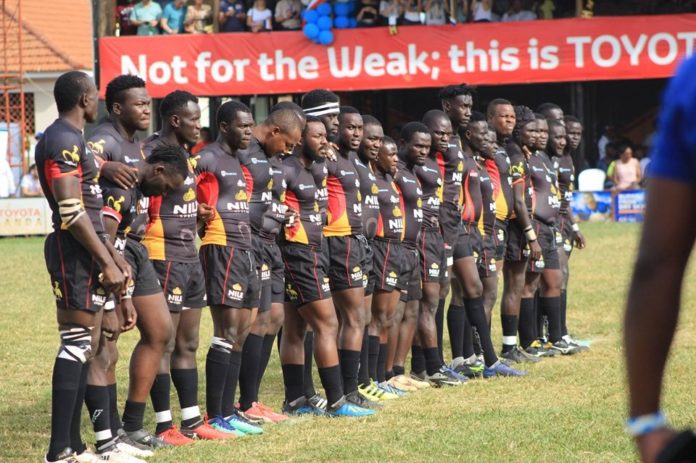
Edgar Lemerigar is the coach of Kyadondo based Toyota Buffaloes and has spent some time with Uganda 7s side alongside Coach Tolbert Onyango, and will now be prepping the lady Cranes as coach.

“I have always been a coach for these ladies. We have been dormant but it is good we now have activity,” Lemerigar is quoted by blog.kratosbrand.com

“We are preparing for a number of international fixtures, and then with the league going on, we are expecting a number of players to join the squad.” He added

Lemerigar will be working with Leon Rwitare as his assistant and will be working with 18 backs and 20 forwards.

Lemerigar, as head coach of the Lady Cranes will be readying the ladies for the Elgon Cup, whose first leg happens in Kisumu on 22nd June with the second leg happening in Uganda on 13th July, and the Rugby World Cup qualifiers in August in South Africa.

The ladies train every Monday and Wednesday at 6pm, with the weekend session happening on Sunday at 9am.

Uganda Lady Cranes XV’s Upcoming International Fixtures 2019

June 22.2019: Uganda Vs Kenya – Elgon Cup (Kisumu, Kenya)

July 13.2019: Uganda Vs Kenya – Elgon Cup (Uganda)

August 9.2019: Uganda Vs South Africa – World Cup qualifiers (South Africa)

August 13.2019: Uganda Vs Kenya – World Cup qualifiers (South Africa)

August 17.2019: Uganda Vs Madagascar – World Cup qualifiers (South Africa)

Stories Continues after ad

Revenue collections hit target in April-report

Tax Revenue collections during the month amounted to Shs1, 253 billion reflecting 100.1 percent performance. This was mainly due to the performance of direct domestic taxes which were above target by 16.2 percent arising from withholding tax and corporate tax, according to performance of the economy report for April 2019.

According to the report, non-tax revenue collections also registered a surplus of Shs5.4 billion against the target of Shs36.1 billion. “Cumulatively, from July 2018 to April 2019, domestic revenues amounted to Shs 13,481.4 billion registering a surplus of Shs 365.5 billion against its target over the same period, says the report.

Meanwhile, fiscal detail revenue and grants amounted to about Shs1 trillion in April 2019. This performance was below the target by Shs 116.4 billion (8 percent) entirely on account of performance of grants whose disbursement was only 24.1 percent of the programmed Shs 162.2 billion.

The report says government expenditure during the month totaled to about Shs2.3 billion representing an 88.1 percent performance against the programmed target. This low expenditure was entirely on account of low spending on externally financed projects due to continued low absorption capacity by implementing agencies. Domestic development spending during the month was Shs746 billion. An equivalent of 188.9 percent when compared to the programmed spending for the month. Of this, Shs 231 billion was used to purchase the two Bombardier aircrafts for Uganda Airlines and Shs 215 billion for the construction roads and bridges under UNRA.

Similarly, recurrent expenditure was 13.9 percent higher than the planned target of Shs 962.9 billion. “This was mainly due to higher wages and salaries of Shs 372.4 billion paid during the month against the programmed Shs 353.5 billion and other recurrent expenditure of Shs 607.7 billion against its programmed target of Shs 470.7 billion,” the report says.

Stories Continues after ad

AfCFTA : The largest free trade deal in nearly a quarter-century seeks to make Africa a single market

The African Heads of States and Governments pose during African Union (AU) Summit for the agreement to establish the African Continental Free Trade Area in Kigali, Rwanda, on March 21, 2018. / AFP PHOTO / STR (Photo credit should read STR/AFP/Getty Images)

The U.S. ditched the Trans-Pacific Partnership, while across the Atlantic, the U.K. is trying to extract itself from the European Union and its single market.

But while free trade is under threat in much of the world, African countries are heading in the other direction: the continent is on track to create the largest free trade agreement by population that the world has seen since the 1995 creation of the World Trade Organization. That organization has 164 member countries.

On May 30, the African Continental Free Trade Area (AfCFTA) will become a reality. All but three of Africa’s 55 countries have signed up, creating a free trade area that covers more than a billion people and a collective GDP of over $2 trillion, and includes most of Africa’s largest economies, including South Africa and Egypt. If hold-outs Benin, Eritrea and Nigeria—Africa’s largest economy—join in, that’s a total of 1.2 billion people and $2.3 trillion in GDP.

By way of comparison, NAFTA and the EU-Japan free trade agreement each cover a collective GDP of around $22 trillion. But even when added together, they don’t cover as many people as the AfCFTA will if every African nation joins.

Here’s what you need to know about the deal that could transform Africa’s business landscape.

WHAT’S THE GOAL?

Trade within Africa is in a dire state. A mere 17% of African countries’ exports go to other African countries—compare that with intra-regional trade levels of 59% in Asia and 69% in Europe. That means Africa doesn’t feature much in the way of cross-border value chains.

Why? There’s currently a mess of fragmented tariffs and trade regulations. As Africa’s richest man, the Nigerian billionaire Aliko Dangote, recently complained, a Dangote Industries cement factory that’s a mere 25 miles from the border with Benin finds it difficult to sell its wares into that country, because of Benin’s decision to import Chinese cement instead.

Once the AfCFTA comes into effect, the signatories will need to drop 90% of their tariffs for imports from other African states. According to the United Nations, this could boost intra-African trade by 52.3%. And once countries drop their remaining tariffs, which they will be allowed to maintain for a decade in order to protect key industries, the U.N. says intra-African trade will double.

“When you look at the African economies right now, their basic problem is fragmentation. They’re very small economies in relation to the rest of the world. Investors find it very difficult to come up with large-scale investments in those small markets,” said Albert Muchanga, the African Union’s trade commissioner. “We’re moving away from fragmentation, to attract long-term and large-scale investment.”

Another good reason to boost intra-African trade is that it should create more jobs in more diverse industries, from services to manufacturing. Trade with outside countries tends to rely on sending commodities such as metals and timber to overseas factories—meaning fewer jobs at home, plus over-exposure to commodity prices.

The African Continental Free Trade Area has been a flagship project of the African Union’s “Agenda 2063” development drive for five years now, but it got a major push forward under the AU chairmanship of Rwandan President Paul Kagame last year. Kagame got almost every African country to sign the deal in March 2018. Just over a year later, the 22nd of those countries—Gambia—ratified the deal, meaning the agreement can now enter into force.

PROBLEMS SOLVED?

Setting up a free trade area does not magically make trade happen. Indeed, there are many obstacles to overcome before that dream becomes reality in Africa.

Problem number one: infrastructure. The physical remnants of Africa’s colonial past continues to hold back trade.

“[Colonial infrastructure] was organized to take the commodities from inland and channel them to the ports, or on to the colonial country for processing. You have very little infrastructure that is meant to do the interconnection across countries and regions,” said Abdoul Salam Bello, a World Bank advisor and Atlantic Council visiting fellow.

According to the African Development Bank, the continent needs $130 billion to $170 billion in infrastructure financing per year, and there’s a shortfall of $68 billion to $108 billion. “This is a challenge, but also an opportunity,” said Bello, who said the creation of a common market could improve the availability of long-term financing in Africa.

Countries will need to fix their corporate laws so businesses can operate across borders with minimal fuss. Then there’s the skills issue, which will come to the fore as companies try to build international value chains and countries industrialize to make this possible. In Ethiopia, for example, the government is pushing to boost manufacturing’s share of the economy from 5% to 20% by 2025, and this has meant working with industry to train the necessary workforce.

“Some other countries don’t have this strategic shift of the economy toward industrialization,” said Bello. “It speaks to research and development. You need scientists; you need engineers.”

WHAT ABOUT NIGERIA?

Nigeria remains the biggest absence in the new trade area—and a large one, too, as Nigeria accounts for a sixth of Africa’s GDP. It originally pulled out of talks because, per President Muhammadu Buhari, the agreement could “undermine local manufacturers and entrepreneurs, or… lead to Nigeria becoming a dumping ground for finished goods.”

The fear here was that cheap overseas goods could flow into Nigeria via other African countries. Nigerian manufacturers backed Buhari’s protectionist stance.

However, South Africa—Africa’s second-biggest economy—then signed up to the free trade deal, and Buhari changed tack. He told reporters in December that he would sign it soon, and would have already done so if it weren’t for the fact that he is “a slow reader.”

Buhari still hasn’t signed, though. According to Bello, the Nigerian private sector is still concerned about protecting local manufacturing. Muchanga said the Nigerian Chamber of Commerce was “on board,” but he didn’t know when the country would sign the agreement.

Opportunities

The main point of the AfCFTA is to benefit Africa and Africans, but that doesn’t mean it doesn’t create opportunities for outsiders.

“Some companies hardly go to Africa because they find the market too small for them,” said Bello. With the new free trade area, that could change—a big U.S. firm could for example set up shop in a major country such as South Africa or Ethiopia, knowing it could use that as a base to expand into other African countries as well.

Over time, if all goes to plan, the AfCFTA will also lead to new trade agreements with countries outside Africa—but this time with Africa maintaining a united front, much as the European Union does today.

That would mean setting up a full-blown customs union—something Muchanga said will happen “when the member states have agreed” it should—and perhaps even a common currency; an idea that is already gathering steam at a regional level in West Africa and East Africa.

“The purpose is not to create a copy-and-paste of the European common market,” said Bello. “It has to take on board African issues and context. But that doesn’t mean we have to reinvent the wheel.”

Stories Continues after ad