Stanbic Bank
Stanbic Bank
17.3 C
Kampala
Stanbic Bank
Stanbic Bank
Home Blog Page 1289

Gov’t prepares to mark two international days

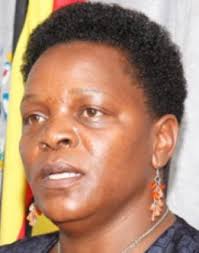
Minister Florence Nakiwala Kiyingi

Government has said it is in preparations to mark this year’s Occupational Safety and Health at Work Day, and the International Labour Day.

“All preparations are in high gear at both national and district level, and we look forward to hosting you all as we celebrate the workers,” said Florence Nakiwala Kiyingi, the minister of state for youth and children as she addressed journalists on Friday at the Uganda Media Centre in Kampala.

The national celebrations of Occupational Safety and Health will be held on April 29, 2019 at Kampala Capital City Authority grounds at Lugogo in Nakawa Division.

The World Day for Safety and Health at Work is commemorated as an awareness-raising campaign intended to focus attention on emerging occupational safety and health trends; magnitude of work-related injuries, diseases and fatalities and on how to make our workplaces safe and healthy. This year’s national theme is “Safety, health and the future of work: Combating vulnerability of the Youth”.

The theme, according to minister Nakiwala, is embedded in this year’s campaign which highlights the critical importance of addressing the challenges the young workers face.

This year’s campaign is also aimed at accelerating action to achieve Sustainable Development Goal (SDG target No. 8.8) of safe and secure working environments for all workers by 2030.

The theme also calls for strategies aimed at improving safety and health at work through promotion of decent youth employment and building a culture that fronts Occupational Safety and Health (OSH).

Meanwhile, all roads will lead to Patongo Akwee Primary School Playground in Patongo Town Council in Agago District where the national ceremony for the International Labour Day will be held on May 1, 2019.

The Day is commemorated to honour the contribution workers make towards development across the globe. The day is also used to create national and international awareness on the importance of promoting and protecting the rights of workers. Each year’s celebrations are designed to fit a selected theme and this year’s theme is “promoting employment through enhanced public infrastructure development”.

“The theme draws from the fact that public investment in infrastructure like rail, roads, power dams and power transmission, oil refinery, apart from creating jobs on their own, will eventually continue to bring down the cost of doing business, which will in turn attract private investment and create more jobs for the people of Uganda. It’s undisputable that infrastructure development has a multiplier effect on investment and job creation,” the minister said.

The International Labour Day 2019 theme relates to the challenges that the Country has been experiencing in provision of decent employment opportunities and job creation.

“I wish all the workers of Uganda happy and peaceful celebrations of the Occupational Safety and Health at Work Day, and the International Labour Day,” the minister said.

The National Housing Survey 2016/17 indicates that 21 percent (about 7.77 million) of the entire population are youth. The National Labour Force Survey report 2016/17 estimates that 57.3 percent (5.7 million) of a total labour force are youth. Pertaining to safety and health performance, ILO records indicate that working youth suffer up to a 40 percent higher rate of non-fatal occupational injuries than adult workers older than 25 years.

Stories Continues after ad

Sudhir Ruparelia’s business empire continues to thrive in Uganda

The Ruparelia Group which runs a multitude of companies in Uganda continues to flourish in Uganda even after the closure of Crane Bank Limited in 2016.
The Group does business in real estate, hospitality, horticulture, labour export and education among others.

In real estate business include; Speke Apartments on Wampewo Avenue, Kingdom Kampala Mall in Naksasero, Bukoto Heights Apartment and Tagore Apartments.
In hospitality, the Group boasts of Munyonyo Country Resort, Speke Hotel, Kabira Country Club, among others.

The Newly Constructed Kingdom Kampala Mall


In education the Group runs the elite Kampala Parents School, Kampala International School Uganda (KISU) and Victoria University, all located within the boundaries of Kampala Capital City Authority. Recently Kampala Parents School offered a scholarship to Fresh Kid, a sensational young musician while Victoria University has also earmarked scholarships for best performers in Miss Curvey contest.


In horticulture, the Group’s companies-
Rosebud Limited and Premier Roses Ltd. Are major exporters of natural flower products to Europe and elsewhere. The two companies in October 2017 received Free Zone licenses from Uganda Free Zones Authority to grow more flowers in Namulanda Parish, Ssisa Sub-county, Wakiso District. The companies have also targeted Masaka and Kulkungu districts for flower growing.


The growth of the companies means more jobs for Ugandans since the companies curently employs some of them on top of paying taxes to government, notwithstanding giving back to community throush the corporate social responsibility programme.


Stories Continues after ad

EAC, partners launch advanced training for police officers on criminal investigations

Participants at the training

The East African Community (EAC), in partnership with the Intergovernmental Authority on Development (IGAD) and the Indian Ocean Commission have over the last three years been implementing the ESA-IO Maritime Security Strategy with a Euro 37.5 million seed funding from the European Union.

Among the interventions envisaged is the enhancement of the Capacity of the Criminal Investigations Authorities of the participating states to effectively and efficiently investigate crimes at sea in a manner that provides a successful legal finish. The EAC was entrusted with this result area and commenced training of investigators on General investigations, Forensic Investigations and Criminal Analysis. Six intermediate trainings, targeting 50 officers per cluster were held between January and June 2018.

The advanced trainings for the same officers in each of the clusters commenced with the training of 50 officers on Criminal Analysis that commenced on 23rd April 2019 in Mauritius. The trainings will take place within a two week period ending May 5th 2019. The trainings are being held at the Mauritius Prisons Training School in Port Louis. INTERPOL, within the context of the MoU between EAC and it (INTERPOL) concluded in 2012, is providing the technical expertise.

The trainings were formally launched by the Attorney General and Minister for Justice, Human Rights and Constitutional Reforms of Mauritius Hon Maneesh Gobin. In his speech the Minister underscored the need for collective action by regional states in combating transnational organized crime. He noted that with the increase in the movement of people, money and goods, the level of sophistication of crime that rides on economic and social integration has increased.

He called for the intensification of both horizontal and vertical information sharing among and within agencies and across states. He re-emphasized the need to strengthen commonality of purpose and where possible expansion of the training program to encompass more states particularly the French Speaking island states whose legal systems are different yet whose security is inextricably tied to other regional states (both littoral and inland).

The opening session was also graced by the Deputy Head of the EU Delegation in Mauritius Michael Gobalek, the Deputy Commissioner of Police Muktar Din Taujoo, and the Commissioner of Prisons, Premananda Apadoo.

Participants for the trainings are drawn from Burundi, Kenya, Rwanda, Somalia, Seychelles, Mauritius, South Sudan, Tanzania, and Uganda.

Stories Continues after ad

Seven strategies for brand leadership through influencers

Martin Zwilling

By Martin Zwilling

These days, the influencers at the top of your business make your brand, rather than a brand making influencers of your leaders. Consider Jeff Bezos at the top of Amazon, or Howard Schultz at the top of Starbucks. They were influencers before they were a brand. You too can become an influencer through social media, videos and blogs, and people will follow you on what to buy, what causes to support, and who to vote for.

In this age of total visibility and instant communication via Twitter, Facebook, and smartphones, people assume that if they don’t know who you are, they can’t be influenced by you, and perhaps you don’t even exist. At the very least, big brands like IBM and McDonalds still take decades to achieve influence, whereas people have become influencers with only a few months of work.

The actions required to become an influencer today are all related to traditional leadership, but key elements need to be given a much higher priority in this age of the Internet and pervasive video. Based on my own experience in business over the years, and current coaching efforts, I recommend a focus on the following strategies and attributes:

Make your customer the center of everything you do. I still see too many aspiring business leaders highlighting their technology, product features, and price, more than customer value and usability. They and their brand have a long road to becoming a key influencer in their arena. Customers need to believe that you have their interests at heart.

Highlight your credibility by visibility and relationships. In the past, credibility came from a position title and the size of your business. Now customers judge you by your visibility to them at public forums, your writing, videos, and what other public figures say. Steve Jobs was always visible at industry forums, product pitches, and interviews.

Take an active role in a higher cause or social reform. Leaders who are clearly committed to giving back, or improving the environment, become influencers because the rest of us feel the urge to reciprocate. Tony Hsieh, founder of Zappos, is recognized as an influencer in online retail, doubling sales annually, by giving away shoes to the needy.

Demonstrate a willingness to take a stand and defend it. Influencers who started as bloggers demonstrated their view of parenting (“mommy bloggers”), cosmetics, or clothes, through constant interactions with interested potential customers, videos, and sometimes controversial perspectives. No business leader can be all things to all people.

Appeal to people’s interest in exclusivity and uniqueness. Mark Zuckerberg became a major influencer of social networking by first allowing only students from Harvard on his platform, and highlighting the uniqueness of Facebook. Your influence level goes up when your offering is available for a limited time, or highly personalized to each customer.

Be open, authentic, and willing to engage your followers. Influencers build trust by being transparent with their team and their customers on tough questions and issues. People want to connect with and learn from people like them – not from edicts, anonymous brand marketing material, and white papers that allow no interaction.

Pick a niche and target audience to demonstrate commitment. Jeff Bezos revolutionized selling online, by proving his unique one-click customer-first focus and starting only with selling books to a specialized audience. After becoming a recognized influencer in that domain, he was able to quickly expand his business leadership.

Influencers are able to capitalize on the new less expensive form of marketing, called “pull” marketing, that draws customers to your solutions, rather than the more traditional “push” marketing, which tries to push customers to products based on features, value, and cost. “Word-of-mouth” is another form of influencer marketing, pulling in friends and new customers.

Staying invisible and counting on your innovations and traditional marketing to make your company a respected brand is a recipe for failure today. Certainly the steps I recommend here for becoming an influencer and leader involve risk, and take focused effort. If you haven’t done it yet, it’s time to change with the times and join the new wave of leaders and influencers out there.

The writer is a veteran startup mentor, executive, blogger, author, tech professional, professor, and investor. Published on Forbes, Entrepreneur, Inc, Huffington Post.

Stories Continues after ad

Koboko RDC, five others perish in road accident

Rweckage of the accident

The Resident District Commissioner for Koboko Isaac Kawooya and five others yet to be named have perished in a road accident at Mpambire Masaka road.

His vehicle a Toyota Premio registration number UAZ 417D is said to have collided with a trailer registration number T513 DNK/T881 DNG, at around 6am.

Late Isaac Kawooya

Kawooya and his wife had travelled from Koboko to Mbarara to witness the installation of Mbarara District Khadi, Sheikh Abdulla Mukwaya who replaced the late Sheikh Ahammed Kwikiriza who died in a car accident on the eve of Iddi Day in 2017.

Stories Continues after ad

New guidelines to enhance food insecurity and malnutrition analysis launched

New global guidelines published on Thursday by the Integrated Food Security Phase Classification (IPC) initiative will further hone food security and nutrition analysis processes for better and more actionable information during humanitarian crises.

After thorough consultations, food security and nutrition experts from 15 organizations have released a third version of the IPC Technical Manual.

In addition to the IPC’s Acute Food Insecurity scale, it incorporates two new scales, measuring chronic food insecurity and acute malnutrition. It also includes a new classification of the IPC Acute Food Insecurity scale’s Phase 5, called ‘Famine Likely’.

Additionally, the updated manual introduces new data requirements to analyze areas with limited or no humanitarian access. The collection of high-quality food security and nutrition data in these locations has faced major challenges including security, legal and logistical constraints, often preventing humanitarian actors from reaching populations during emergencies.

To address these challenges, the IPC Technical Manual Version 3.0 introduces additional data collection modalities that target key access points to obtain evidence for IPC analysis. These access points include locations where populations have newly arrived after displacement, nearby locations, displacement camps, health centres and distribution points among others.

“This is a major development, especially for humanitarian crises in conflict contexts with little or no humanitarian access, because the IPC Technical Manual Version 3.0 will improve our ability to reach conclusions in these contexts to better inform decision-makers.” said José Lopez, the IPC Global Programme Manager.

The earlier versions were the basis for the declaration of Famine in Somalia in 2011 and in South Sudan in 2017, and informed humanitarian response decisions. The IPC Technical Manual Version 3.0, which includes protocols for the most severe crisis contexts, also sets a new global benchmark for Famine declarations with the introduction of the ‘Famine Likely’ classification.

This applies in locations where there is insufficient evidence for Famine classification due to circumstances on the ground, but where available information indicates that Famine is likely occurring or will occur. This will boost the IPC’s ability to warn about potential Famine in contexts where limited data previously was a barrier.

For the first time, the IPC Technical Manual Version 3.0 also includes a wide range of IPC scales: Acute Food Insecurity, Acute Malnutrition, and Chronic Food Insecurity. This creates a better understanding of the linkages between the three conditions, providing decision-makers with invaluable information for the strategic design of response actions to comprehensively address food insecurity and malnutrition.

“This Manual also reconciles the link between emergency and development analyses, by helping decision-makers identify food insecurity drivers through the use of Acute and Chronic Food Insecurity scales. This provides information for both effective humanitarian assistance and medium and long-term development action,” said Emily Farr, the Chair of the IPC Global Steering Committee.

The IPC Technical Manual Version 3.0 further reinforces the IPC principles of transparency and neutrality of the analysis by providing clearer guidance and tools on the analytical process, including technical consensus building and quality assurance. Emphasis is also placed on strategic communications to ensure the right information is conveyed to the right people at the right time.

Stories Continues after ad

Real Madrid confident of signing Pogba and Hazard this summer

Real Madrid

Real Madrid are confident of signing Paul Pogba and Eden Hazard this summer, according to Sky sports News in England.

The Spanish side are expected to overhaul their squad at the end of the season having missed out on the Champions League and La Liga titles, and the Premier League duo are high on their wish-list.

Pogba has received heavy criticism for his performances during Manchester United’s recent run of poor form, and is expected to leave if they miss out on qualification for the Champions League.

Hazard’s contract expires at the end of next season, and he has shown no inclination to renew the deal, meaning Chelsea will allow him to join Real if they match his £100m asking price.

Pogba came close to joining the La Liga side when he was leaving Juventus three years ago, but eventually joined United for £89m instead.

While on international duty last month, the 26-year-old admitted playing for Real under the management of his countryman Zinedine Zidane would be a “dream for anyone”.

PSG are also understood to be interested in signing the France international midfielder.

Hazard, 28, has also been open about his desire to play for Real during his career, describing it as “my dream since I was a kid”.

In addition, Belgian journalist Kristof Terreur told Sky Sports that Hazard sees Zidane as an inspiration, and that the Frenchman’s return as Real manager meant Hazard’s move to the Bernabeu was “falling into place”.

Real have had a hugely disappointing season, with Zidane’s return making him their third manager this season after the sackings of Julen Lopetegui and Santiago Solari.

After winning three consecutive Champions League titles during Zidane’s first reign, they exited the competition at the last-16 stage this season after a 4-1 home defeat to Ajax.

They will end the season with no trophies for the first time in four years, and Zidane has pledged to make “changes” to the squad this summer.

Gary Neville: Pogba doesn’t want to be there

Former United captain Gary Neville told Sky Sports that Pogba wants to leave Old Trafford this summer: “I don’t think he wants to be here, that’s his problem. His agent [Mino Raiola] is into him. He’s done brilliant for Ole [Gunnar Solskjaer], by the way, scored 11 goals and made seven assists or so.

“I thought a few months ago that everything was brilliant, but I said that I believed the issues would resurface. We know his agent, we know the influence he has, and he’s had his head turned by other clubs.” – story via Sky Sports in UK.

Stories Continues after ad

UWA gives Shs4.4b to communities surrounding Bwindi Mgahinga forest

Minister Kamuntu during the handover.

Uganda Wildlife Authority (UWA) has handed over cheques worth Shs4.4 billion under the revenue sharing scheme to communities surrounding Bwindi Mgahinga Conservation Area.

The cheques were handed over by the Minister of Tourism, Wildlife and Antiquities Prof. Ephraim Kamuntu to the district leaders of Kisoro, Kanungu and Rubanda at the Bwindi Conservation Area head office in Buhoma.

“Government appreciates the contribution of communities neighboring protected areas in the conservation of wildlife in Uganda.” He said Prof. Kamuntu.

“We are giving this money in recognition of the important role that communities play in our conservation efforts; we believe that we cannot effectively conserve wildlife without the support of the communities. I want to use this opportunity to thank you all for rallying behind UWA in conserving the two gorilla parks. It is my humble appeal to you that you continue with this support to conservation and ensure that all forms of illegal wildlife activities, are eliminated” he said.

Prof. Kamuntu further gave assurances that Uganda is safe for visitors and warned that anyone who tries to endanger tourists who come to Uganda will be dealt with according to the law.

He said the money disbursed under the revenue sharing scheme keeps on increasing because of the ever increasing number of tourists who visit the parks to track gorillas and urged them to work closely with the park management by ensuring that wrong elements do not infiltrate to parks so that visitor numbers keep on increasing.

“As government, we are committed to improving the infrastructure and facilities for tourism in all tourism destinations. I am glad that UWA, with the support of the Ministry of Tourism, Wildlife and Antiquities has been able to build this magnificent Visitor Information Centre which I have officially commissioned this morning”

The UWA Executive Director Sam Mwandha called for adequate monitoring of the fund for it to be put to good use. “With adequate monitoring, it is our hope that the funds will be put to good use and be spent in accordance with the approved projects so that the benefit the intended people” he said.

He said UWA will continue to improve tourism facilities in all conservation areas in order to offer visitors the best experience.

Stories Continues after ad

Total profits slump for three months of 2018, pledges to launch more projects in Uganda

French oil and gas firm Total which has operations in Uganda said its net profit for the first three months of 2018 went down 4 percent to US$2.8 billion compared with a year ago due to volatile oil prices and debt costs, despite record oil and gas output.

Total stayed its investments, and cost savings target for the year unchanged, and said production growth should exceed 9 percent during the year, due to the ramp-up of projects started in 2018, and the start-ups of others in Angola, Brazil, Britain and Norway.

The firm said it would take advantage of the low cost environment to launch further projects in Brazil, Uganda and Russia.

Total shares were a touch down 0.4 in early session trading, with the stock up nearly 10 percent so far in 2019.

“A decent start to the year,” wrote analysts at RBC Capital Markets on Total’s results, as they kept an “outperform” rating on the stock.

Total’s adjusted net profit, which was down for the first time since the fourth quarter of 2016, was hit by lower oil prices, with the Brent price averaging $63 per barrel in the January to March period, down 6 percent year-on-year.

It said the adjusted net profit was nevertheless slightly above average analysts’ forecast of US$2.7 billion, while Total also raised its dividend.

Natural gas prices slumped in Europe by 11 percent, and in Asia by 30 percent, Total said.

The company said an increase in the net cost of its net debt compared with last year, mainly due to the rise in U.S. dollar interest rates, had also weighed on its profits.

Its refining margin was also volatile during the quarter, the company said.

“Total’s balance sheet is strong, with gearing below 20 percent, in line with the objective,” said chairman and chief executive of the company Patrick Pouyanne.

Figures show that total’s cash flow after organic investments rose 18 percent year-on-year to $3.2 billion thanks to strong operational performance and spending discipline. Its so-called organic pre-dividend cash breakeven was less than $25 per barrel.

Oil and gas output reached a record level in the quarter at 2.95 million barrels of oil equivalent per day (Mboe/d), up 9 percent year-on-year.

Total increased its first interim dividend for 2019 by 3.1 percent to 0.66 euros ($0.7350) per share, and it also bought back shares during the quarter.

The French group said it would maintain discipline on spending in 2019 and it kept its net investment target at US$15 to US$16 billion, and cost savings at $4.7 billion.

Since the start of the second quarter, the Brent oil price has traded at around $70 per barrel with disruptions in Venezuela, uncertainty in Libya and compliance with OPEC production quotas providing some support to the price.

Nevertheless, Total said the environment remained challenging.

“The environment remains volatile, however, with uncertainty around the evolution of non-OPEC supply and the impact of global economic growth on demand,” said Total.

Stories Continues after ad

Oil prices to be lower in 2019 on slower-than-expected global growth, rising non-OPEC supply

The World Bank has revealed that Crude oil prices are expected to average $66 a barrel in 2019 and $65 a barrel in 2020, a downward revision from the October forecast due to the weaker-than-expected global growth outlook and greater-than-anticipated.

World Bank ,says Metal prices are expected to continue a recovery in 2019 that follows a sharp drop in the second half of 2018, the World Bank said in its April Commodity Markets Outlook. The recovery has been spurred by stabilization of activity in China after weakness around the turn of the year, as well as various supply shortfalls.

“It has become clear that the commodity price cycle has come to an end, which is causing strains for exporters but may offer opportunities for importers,” said Ceyla Pazarbasioglu, World Bank Equitable Growth, Finance & Institutions Vice President. “Exporters may have to adapt to slower gains in commodity revenues with economic diversification, while importers could take advantage of lower commodity prices for increased investment.”

Agriculture prices are projected to fall 2.6 percent this year but rebound in 2020 due to lower crop production and higher costs for energy and fertilizers. An escalation of trade tensions would likely push prices lower, but higher-than-expected energy costs could lift prices more than expected.

“The outlook for commodity prices is sensitive to policy-related risks, especially for oil,” said Ayhan Kose, Director of the World Bank’s Prospects Group. “The outlook for oil could be swayed by a range of policy outcomes, including whether the Organization of the Petroleum Exporting Countries (OPEC) and partners extend production cuts, the impact of the removal of waivers to the U.S. sanctions on Iran, and looming changes in marine fuel emissions regulations.”

After a drop in late 2018, oil prices have risen steadily since the start of the year, as OPEC and partners have cut production, and output has declined in Venezuela and Iran. U.S. shale production is expected to remain robust after surging in 2018. Energy prices overall –which also include natural gas and coal ‒ are expected to average 5.4 percent lower in 2019 than in 2018.

A special focus section shows that when countries intervene to dampen the effect of food price fluctuations on their citizens, the collective intervention of many countries can produce the opposite of the intended effect and amplify movements in world prices to the detriment of the most vulnerable populations.

Stories Continues after ad