Stanbic Bank
Stanbic Bank
17.2 C
Kampala
Stanbic Bank
Stanbic Bank
Home Blog Page 1294

It’s a tie as Supreme Court decide on age limit removal appeal

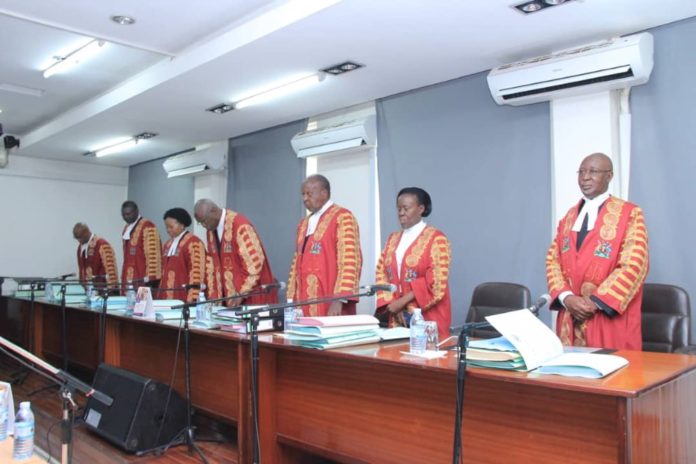
Supreme Court

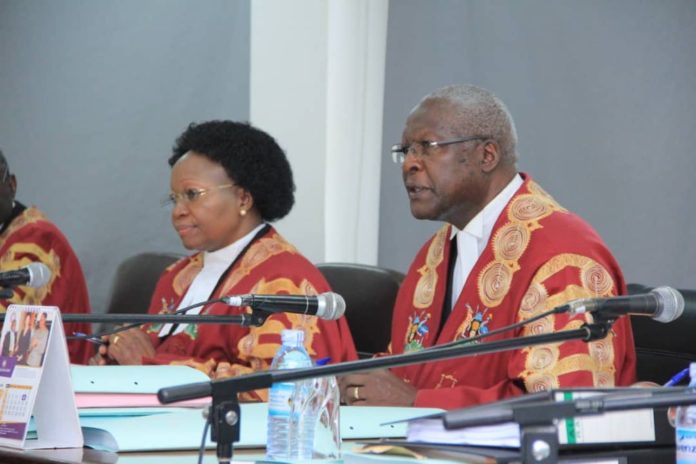
The ongoing Supreme Court ruling on the removal of the upper age limit for anyone contesting as president of Uganda now stands even, with two judges agreeing with the Constitution Court which okayed the amendment in July 2018 while the two have nullified it.

In the first session, Justice Stella Arach-Amoko said: “On the issue of amending article 102(b), I am in agreement with my learned friends that amending article 102(b) does not destroy the basic features of the constitution since the people still have the power to choose who they want to rule them,” said Justice Stella Arach-Amoko.

While concluding her ruling she said: “I will, therefore, dismiss the consolidated appeal and the parties shall bear their cost.”

Article 102 (b) of the Constitution does not form the basic structure doctrine. The article is, not among the entrenched provisions of the Constitution, she said.

On the other Justice Eldard Mwanguhya while giving the different merits of the petition said: ‘Prayer for nullification is allowed, I order that each party meets its own costs.’

However, Mwanguhya upheld the Constitutional Court’s decision to decline to summon and cross examine Speaker Kadaga, saying since there was sufficient material on record to deduce an informed decision.

He ruled that the actions by Police to restrict MPs’ consultation was unconstitutional, and also quashes the extension of the terms of Parliament and Local Councils including an amendment proposed by MP Nathan Nandala Mafabi to introduce presidential term limits.

Mwangusya on suspension of MPs; he said, the rules of procedure clearly show procedure to challenge the suspension. The members should have taken the procedures because the court cannot intervene.

In the second session that resumed at 2pm, Justice Rubby Opio Aweri dismissed the appeal on removal age limit

He disagreed with the petitioners on Shs 29 million for consultation to MPs, saying it was appropriated by parliament. The petitioners claimed it was sort of a bribe and unconstitutional.

Justice Ru Aweri: also ruled like Justice Arach that Article 102 did not fall under the basic structure of our constitution so it could be amended by parliament.

He said opposition MPs behaved inappropriately during the age limit removal debate leading to violence. “I rule that those MPs who were assaulted like Hon. Nambooze should sue government…,” he said.

He dismissed the appeal while agreeing with the Attorney General on all grounds and says the Constitutional Court rightly applied the principle of severance.

In her ruling, Hon. Lady Justice Prof. Lillian Tibatemwa Ekirikubinza contends that the age limit only applies at the time of elections and not when one is already in office.

Reading her judgment, she said the power to amend is not the same as the power to rewrite the constitution. The power to replace is with the people and not with the people’s representatives

She also said amending article 102b and didn’t violet the basic structure of Uganda’s Constitution…

She said: “The order of business at a particular sitting of Parliament will have to be done by the Business Committee of Parliament acting as a whole and not any of its Members acting unilaterally.”

Justice Paul Mugamba is meanwhile reading his judgement, with two more remaining to do so including Chief Justice Bart Katureebe.

Stories Continues after ad

Ruparelia Foundation to offer over 1,000 scholarships to Victoria University students

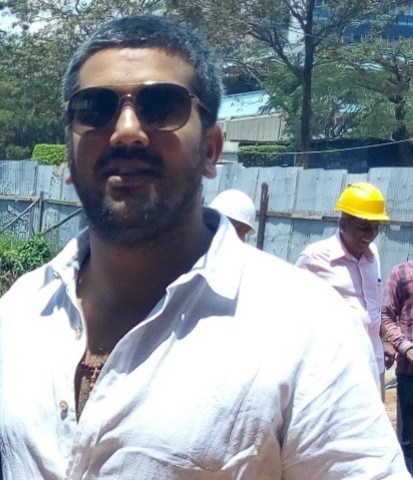
Mr. Rajiv Ruparelia, the promoter of Victoria University.

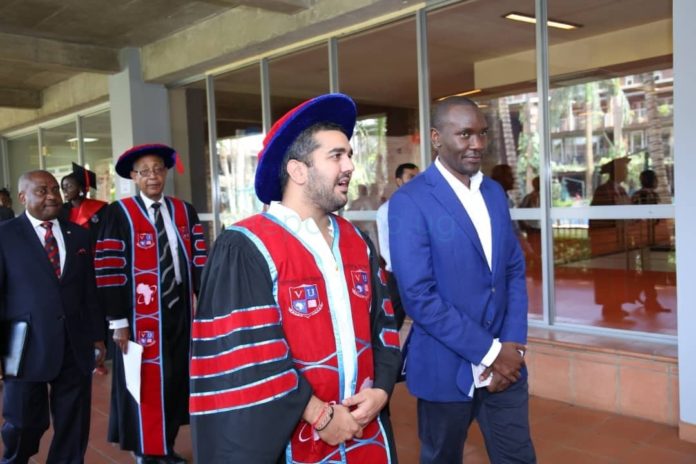
The Ruparelia Foundation will in the 2019/2020 Academic year offer 1,100 scholarships to students joining Victoria University Kampala.

In a letter to the Ministry of State for Youth and Children Affairs, copied to Victoria University Council, Vice-Chancellor, Students’ Guild President and Admission office, the Ruparelia foundation will offer all qualified youths joining universities a special package of scholarship under the “Rajiv Ruparelia Youth Scholarship.”

The scholarships are to cater for the students who are offering the following courses; Faculty of Health Sciences (200 scholarships), Faculty of Business Management (150), Faculty of science and Technology (200), Faculty of Humanities and Social Sciences (250) and lastly, Department of Petroleum and Energy Studies (300).

The scholarships will cover 70% of the tuition and the minimum requirement for the degree programme is two (2) principal passes and one (1) principal pass for Diplomas.

About Victoria University

The university is centrally located in the heart of Kampala City and on the main public transportation routes coupled with ample parking space.

Victoria University is part of Ruparelia Group of Companies, which has a strong presence in the education sector in Uganda and has under its portfolio, Kampala International School Uganda, Kampala Parents School and Delhi Public School International.

The university was opened in August 2010 and has the capacity, the facilities and determination to revitalize higher education in Uganda and in the region.

Stories Continues after ad

World Bank gives Shs555m grant to support host communities and refugees in Uganda

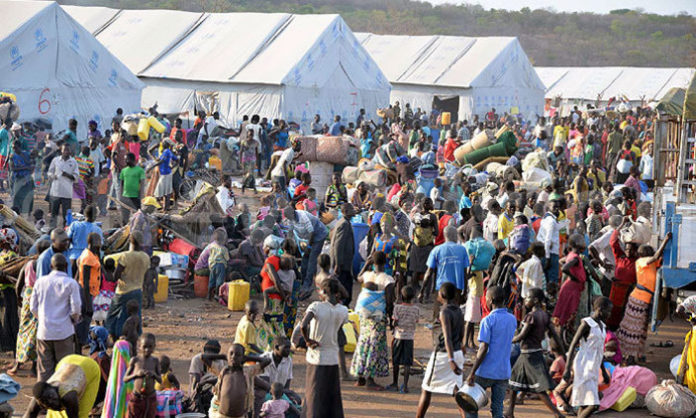
Refugees

The World Bank’s Board of Executive Directors approved today a grant of US $150 million (about Shs555 million) additional financing from the International Development Association (IDA) to boost an ongoing project to improve access to basic social services, expand economic opportunities, and enhance environmental management targeting both refugees and communities that host them. The $150 million-project is financed through the IDA 18 Refugee Sub Window.

Uganda is currently the largest refugee-hosting country in Africa and the third largest worldwide. Approximately 1.2 million refugees and asylum seekers are living in Uganda due to ongoing conflicts and instability in some parts of the region.

The Additional Financing builds on an initial US$50 million-project approved by the World Bank Board on May 31, 2016 and which became effective on June 29, 2017. The Development Response to Displacement Impacts Project (DRDIP) covers 11 districts that host the largest number of refugees and therefore bearing a disproportionate amount of strain on existing community social services and infrastructure.

The project is implemented by the Office of the Prime Minister. It supports investments in basic social service infrastructure, integrated natural resources management and income generating activities including alternative livelihoods like value-addition to agriculture produce, and fish farming. The project also seeks to strengthen transparency and accountability while addressing social risk management and gender-based violence.

“Government of Uganda welcomes this support from the World Bank to boost our efforts in responding to the needs of refugees and communities hosting them. It is a strong demonstration of solidarity with us, which we appreciate. As we all know, no one chooses to be a refugee, and therefore, responding to the needs of refugees and the generous communities that host them requires our collective support, “said Dr Ruhakana Rugunda, Prime Minister, Republic of Uganda whose office oversees and coordinates the refugee response in the country.

The Development Response to Displacement Impacts Project is part of a regional operation – also being implemented in Ethiopia, Kenya and Djibouti. The World Bank has significantly scaled up support in Uganda through its Forced Displacement Program. In addition to the DRDIP and the Additional Financing operation, two other projects have already been approved by the World Bank’s Board.

“Uganda’s progressive approach to refugees provides some of the best prospects for self-reliance. This Grant shows that the international community – and the World Bank – greatly appreciates Uganda’s generosity towards refugees. We look forward to working very closely with other development and humanitarian partners to support the Government and the people of Uganda in these efforts,” said Tony Thompson, Country Manager, World Bank, Uganda.

Uganda is the largest refugee-hosting country in Africa and third largest worldwide

Stories Continues after ad

First two judges of Supreme Court differ on presidential age removal

Two judges of the Supreme Court of the seven justices meant to deliver the individual ruling on consolidated Constitution petition on Amendment Bill, 2017, removing the upper age limit of 75 years which barred anybody above to run for president in Uganda, have so far given different rulings as regards the Constitutional Court ruling which in July last year stated that it doesn’t violate the constitution in any way as claimed by petitioners.

“On the issue of amending article 102(b), I am in agreement with my learned friends that amending article 102(b) does not destroy the basic features of the constitution since the people still have the power to choose who they want to rule them,” said Justice Stella Arach-Amoko.

While concluding her ruling she said: “I will, therefore, dismiss the consolidated appeal and the parties shall bear their cost.”

Article 102 (b) of the Constitution does not form the basic structure doctrine. The article is, not among the entrenched provisions of the Constitution, she said.

Justice Arach-Amoko also dismissed petitioner Male Mabirizi Kiwanuka’s preliminary objections regarding claims he was unfairly treated by being asked not to sit at the bar with practicing counsel.

She further ruled said: It is a notorious fact that Mr Mabirizi is not a practicing advocate and has not been called to the bar, therefore he couldn’t have sat with advocates.”

She also ruled that Parliament acted within its powers by amending article 102(b) saying it does not violate the basic structure doctrine and is within the mandate conferred upon it by the Constitution & as representatives of the people.

However, she agreed with the consolidated petition which said that the extension of the term of the current Parliament and Local Councils is null and void from the onset, saying a Private Member’s Bill cannot introduce charges on the Consolidated Fund, by way of the referendum it imposes.

She said that it violated article 93 of the Constitution which restricts Private Member’s Bill on introducing Bills or amendment Bills that will impose charges on the Consolidated Fund otherwise than by reduction.

She also said Speaker Rebecca Kadaga had authority to amend the order paper to allow MP Raphael Magyezi’s private members bill that thought the removal of the presidential age limit. She said the speaker is in charge of the House and its order of business

Justice Arach-Amoko could also not agree with petitioners, saying the MPs ejected from the House during debate on upper age limit removal were so ejected on the basis of their own lack of decorum. She added that whereas the security services were justified in removing the MPs from Parliament, the force used was not justified.

On the other Justice while looking giving the different merits of the petition said: ‘Prayer for nullification is allowed, I order that each party meets its own costs.’

Justice Mwanguhya upheld the Constitutional Court’s decision to decline to summon and cross examine Speaker Kadaga, saying since there was sufficient material on record to deduce an informed decision.

He ruled that the actions by Police to restrict MPs’ consultation was unconstitutional, and also quashes the extension of the terms of Parliament and Local Councils including an amendment proposed by MP Nathan Nandala Mafabi to introduce presidential term limits.

Mwangusya on suspension of MPs; he said, the rules of procedure clearly show procedure to challenge the suspension. The members should have taken the procedures because the court cannot intervene.

If all majority of the judges on the bench in Supreme Court uphold the Constitutional Court ruling, it means President Yoweri Museveni who has already been endorsed by his NRM party members as the party’s sole candidate, will be able to run for the position in 2021 when the country goes for polls.

Museveni will be above the current constitutional 75-year age-limit for one to run for presidency in 2021. The timing and vibes around the amendment(s) could be interpreted as attempts to remove any legal hurdles that would deter Mr Museveni (as an individual who will be above 75 years) from running for presidency in 2021.

Stories Continues after ad

Besigye arrested as police switches off Mubende FM

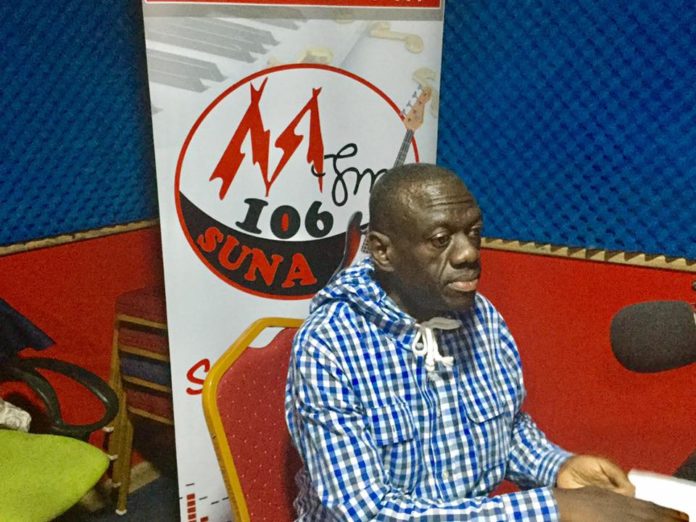
Dr. Besigye in studios before police dragged him out as they switched the radio station afterword.

Former presidential candidate, Dr Kiiza Besigye, has been arrested after police broke into 106 Mubende FM Radio studios as he argued about the current political tensions and impunity in Uganda police force.

This happened barely a week after Jinja Resident District Commissioner (RDC), Erick Joseph Sakwa ordered for the switching off of 88.6 Kiira FM that was hosting Dr. Besigye, forum for democratic change (FDC) party president Patrick Amuriat and other party members.

Rtd colonel stealthily reached at Mubende for his usual radio campaign of mobilizing against the current leadership of President Yoweri Museveni. The talk-show that is hosted by Yusuf Kato kicked off by introducing the programme and his guest, Dr. Kizza Besigye.

Shortly after introducing himself, Police surrounded Pride Building which houses the radio station and ordered for stoppage of transmitting the talk-show. Police however, tried to access studios by destroying the Biometric keyless door system.

In the process, they banged the doors and later accessed control room and switched off the transmitter after 11 minutes of the show.

Dr. Besigye interfaced with the police officers asking them why they have continued with the impunity of switching of radio stations that try to him as he mobilizes ahead of the 2021 elections. He is currently detained at Mubende central police station.

This is among the many radio station closed over Besigye, two weeks back Security personnel switched off Hope Radio in Kabale municipality over hosting FDC party leaders.

In July 2015, Jinja Municipality West MP who also doubles as NRM chairman for the district, Moses Balyeku ordered staff at his Baba FM to switch off the radio station which had started to transmit a live talk show where Besigye had gone to feature as a guest.

In November 2009, Besigye was blocked from appearing on Nenah FM in Karamoja to address the public. In May 2007, the Kitgum-based Kitti FM was switched off air 30 minutes after Besigye had started speaking on the radio’s talk-show. The radio’s generator was switched off, reportedly on the orders of the then area RDC.

Attachments area

Stories Continues after ad

Spanish club to have friendly match in Tanzania

SC-Villa FC

Sevilla FC will take part in a post-season game on 23rd May in Tanzania against a local club. The Nervionenses will play the winners of the two most popular teams in Tanzania, Simba SC and Young Africans SC.

The match is part of La Liga World powered by SportPesa, a strand of the La Liga World Challenge project which seeks to expand the Spanish brand throughout the world.

“As a global competition, La Liga must be close to its fans. It’s a great opportunity for everyone that our Tanzanian fans can see a great club in Sevilla FC up close,” declared Óscar Mayo, Director of La Liga’s International Development, after sealing the deal that will see Sevilla play in Africa.

“We are working with some of the most prestigious footballing institutions in the world so we considered it necessary to bring an experience of this magnitude to Tanzania, allowing us all to enjoy one of Europe’s most emblematic clubs in Sevilla FC.” stated Tarimba Abbas, Sport Pesa’s Administrative Director.

“Thanks to this agreement with La Liga, the best league in the world, we can show the quality we have in our country and help the level of local football here grow,” he added.

Sevilla FC will be the second European club to visit Tanzania after Everton did so in 2017. The Spanish club confirmed the latest development on their website.

Sevilla will return to Africa less than a year after their last time, when they played the Spanish Supercup final in Tangiers.

They also played in Morocco four years ago, playing a post-season match against Hassania Union Sport d’Agadir.

Stories Continues after ad

WHO releases first guideline on digital health interventions

African muscular athlete listening to music. Male model listening to music from his mobile phone on armband.

WHO yesterday released new recommendations on 10 ways that countries can use digital health technology, accessible via mobile phones, tablets and computers, to improve people’s health and essential services.

“Harnessing the power of digital technologies is essential for achieving universal health coverage,” says WHO Director-General Dr Tedros Adhanom Ghebreyesus. “Ultimately, digital technologies are not ends in themselves; they are vital tools to promote health, keep the world safe, and serve the vulnerable.”

Over the past two years, WHO systematically reviewed evidence on digital technologies and consulted with experts from around the world to produce recommendations on some key ways such tools may be used for maximum impact on health systems and people’s health.

One digital intervention already having positive effects in some areas is sending reminders to pregnant women to attend antenatal care appointments and having children return for vaccinations. Other digital approaches reviewed include decision-support tools to guide health workers as they provide care; and enabling individuals and health workers to communicate and consult on health issues from across different locations.

“The use of digital technologies offers new opportunities to improve people’s health,” says Dr Soumya Swaminathan, Chief Scientist at WHO. “But the evidence also highlights challenges in the impact of some interventions.”

She adds: “If digital technologies are to be sustained and integrated into health systems, they must be able to demonstrate long-term improvements over the traditional ways of delivering health services.”

For example, the guideline points to the potential to improve stock management. Digital technologies enable health workers to communicate more efficiently on the status of commodity stocks and gaps. However, notification alone is not enough to improve commodity management; health systems also must respond and take action in a timely manner for replenishing needed commodities.

“Digital interventions, depend heavily on the context and ensuring appropriate design,” warns Dr Garrett Mehl, WHO scientist in digital innovations and research. “This includes structural issues in the settings where they are being used, available infrastructure, the health needs they are trying to address, and the ease of use of the technology itself.”

Digital health interventions are not sufficient on their own

The guideline demonstrates that health systems need to respond to the increased visibility and availability of information. People also must be assured that their own data is safe and that they are not being put at risk because they have accessed information on sensitive health topics, such as sexual and reproductive health issues.

Health workers need adequate training to boost their motivation to transition to this new way of working and need to use the technology easily. The guideline stresses the importance of providing supportive environments for training, dealing with unstable infrastructure, as well as policies to protect privacy of individuals, and governance and coordination to ensure these tools are not fragmented across the health system.

The guideline encourages policy-makers and implementers to review and adapt to these conditions if they want digital tools to drive tangible changes and provides guidance on taking privacy considerations on access to patient data.

“Digital health is not a silver bullet,” says Bernardo Mariano, WHO’s Chief Information Officer. “WHO is working to make sure it’s used as effectively as possible. This means ensuring that it adds value to the health workers and individuals using these technologies, takes into account the infrastructural limitations, and that there is proper coordination.”

The guideline also makes recommendations about telemedicine, which allows people living in remote locations to obtain health services by using mobile phones, web portals, or other digital tools. WHO points out that this is a valuable complement to face-to-face-interactions, but it cannot replace them entirely. It is also important that consultations are conducted by qualified health workers and that the privacy of individuals’ health information is maintained.

The guideline emphasizes the importance of reaching vulnerable populations, and ensuring that digital health does not endanger them in any way.

WHO’s work on digital health

This guideline represents the first of many explorations into the use of digital technologies and has only covered a fraction of the many aspects of digital health.

In 2018, governments unanimously adopted a World Health Assembly resolution calling on WHO to develop a global strategy on digital health to support national efforts to achieve universal health coverage. That strategy is scheduled to be considered at the World Health Assembly in 2020.

Although WHO is expanding its focus on digital health, the Organization has been working in this area for years, for example, through the development of the eHealth Strategy Toolkit in 2012, published in collaboration with International Telecommunications Union (ITU).

To support governments in monitoring and coordination of digital investments in their country, WHO has developed the Digital Health Atlas, an online global repository where implementers can register their digital health activities. WHO has also established innovative partnerships with the ITU, such as the BeHe@lthy, BeMobile initiative for the prevention and control of noncommunicable diseases, as well as efforts for building digital health capacity through the WHO Regional Office for Africa.

Over the years, WHO has released a number of resources to strengthen digital health research and implementation, including the mHealth Assessment and Planning for Scale (MAPS) toolkit, a handbook for Monitoring and Evaluation of Digital Health, and mechanisms to harness digital health to end TB.

On 6 March 2019, Dr Tedros announced the creation of the Department of Digital Health to enhance WHO’s role in assessing digital technologies and support Member States in prioritizing, integrating and regulating them.

Stories Continues after ad

Alan García: Peru’s former president kills himself ahead of arrest

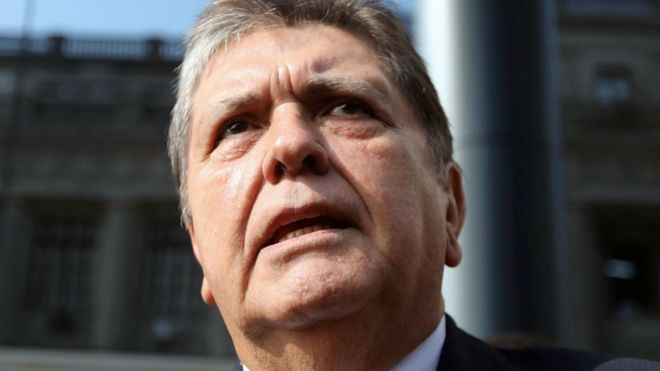
Alan García

Former Peruvian President Alan García has died after shooting himself as police arrived at his home to arrest him over bribery allegations.

Mr García was rushed to hospital in the capital, Lima. His death was confirmed by current President Martín Vizcarra.
A crowd of supporters gathered outside the hospital building, and were held back by a line of police officers.
Mr García was accused of taking bribes from Brazilian construction company Odebrecht – claims he denied.

Mr García served as president from 1985 to 1990 and again from 2006 to 2011.
What happened at his home?
Officers had been sent to arrest him at his home in the affluent Miraflores neighbourhood in connection with the allegations.

Interior Minister Carlos Morán told reporters that when police arrived, Mr García asked to make a phone call and went into a room and closed the door.
Minutes later, a shot rang out, Mr Morán said. Police forced the door open and found Mr García sitting on a chair with a bullet wound to his head.

Ricardo Pinedo, Mr García’s secretary, said the former president had four or five weapons in his home, gifts he had received from the military, and that he had used one of these to shoot himself.
He underwent emergency surgery in the Casimiro Ulloa hospital in Lima.
Health Minister Zulema Tomás said Mr García had to be resuscitated three times after suffering cardiac arrests before finally succumbing to his injuries.

In a post on Twitter, Mr Vizcarra said he was “shocked” by the former president’s death and sent his condolences to his family.
Omar Quesada, the general secretary of Mr García’s American Popular Revolutionary Alliance (APRA) party, told reporters: “Alan García has died, long live APRA.”
What was Mr García accused of?
Investigators say he took bribes from Odebrecht during his second term in office, linked to a metro line building project in the capital.
Odebrecht has admitted paying almost $30m (£23m) in bribes in Peru since 2004.
But Mr García maintained he was the victim of political persecution, writing in a tweet on Tuesday that there was “no clue or evidence” against him.
In November last year he unsuccessfully applied for political asylum in Uruguay.

Alan García – ‘Latin America’s Kennedy’
 Born on 23 May 1949 in Lima
 Studied law and sociology
 Elected to Peru’s Chamber of Deputies for the Aprista Party of Peru (APRA)
 Became Peru’s youngest ever president in 1985 at the age of 36
 A gifted orator, he was described by some as “Latin America’s Kennedy”
 Served two terms as president, first from 1985-1990, then from 2006-2011

What is the Odebrecht scandal?
Odebrecht is a Brazilian construction giant behind major infrastructure projects around the world, including venues for the 2016 Olympics and 2014 World Cup in its home country.
But under the glare of anti-corruption investigators the company admitted paying bribes in more than half of the countries in Latin America, as well as in Angola and Mozambique in Africa.
Investigators say Odebrecht bribed officials or electoral candidates in exchange for lucrative building contracts.
BBC South America business correspondent Daniel Gallas says the scandal shows no sign of abating almost four years since it was uncovered.
No other company in Latin America has had such an ability to sustain so many high-level connections across so many different parties and countries for such a long period of time, he says.
 Brazil’s Odebrecht corruption scandal explained
How is Peru affected?
Four of Peru’s most recent presidents are all being investigated for alleged corruption, with a fifth – Alberto Fujimori – serving a prison sentence for corruption and human rights abuses.
Ex-leader Pedro Pablo Kuczynski was taken to hospital with high blood pressure on Wednesday just days after his own arrest in connection with Odebrecht charges. Reports said he was in intensive care.

The current leader of the opposition, Keiko Fujimori, is also in pre-trial detention on charges of taking $1.2m (£940,000) in bribes from Odebrecht.
In October, an opinion poll by Datum showed 94 per cent of Peruvians believed the level of corruption in their country was either high or very high.

The scandal embroiling Peru’s presidents
 Pedro Pablo Kuczynski, in office 2016-2018, resigned over a vote-buying scandal and detained last week
 Ollanta Humala, in office 2011-2016, accused of taking bribes from Odebrecht to bankroll his election campaign, in pre-trial detention in Peru
 Alan García, in office 2006-2011, suspected of taking kickbacks from Odebrecht, sought asylum in Uruguay’s Lima embassy but had his request denied
 Alejandro Toledo, in office 2001-2006, accused of taking millions of dollars in bribes from Odebrecht, currently a fugitive in the US

Stories Continues after ad

Sudhir’s son Rajiv Ruparelia joins rallying after receiving specialised training

RIP: Rajiv Ruparelia.

Rajiv Ruparelia, the son of businessman Sudhir Ruparelia has joined rallying having received specialised training at South African Rallystar Motorsport Academy.

“In contrast with some students, where one is slightly hesitant to issue an unconditional recommendation-based on talent and application thereof, I have no hesitation …stating that Rajiv has been the best experience I have ever had or shall I say I enjoyed, from an inexperienced Rally driver. Hard to believe but I have established his inexperience to be true,” said Rajiv’s instructor Leon Botha.

Botha says Rajiv has experience in other fields like Quads, motocross bikes and buggies as well as tarmac driving. “Despite this is was pleasantly surprised at the ability and car control in a power rally car,” he says.

Botha says he has approved Rajiv’s participation in the sport of rallying with a navigator with the required ability and preferably early on Rajiv’s career.

“Rallystar welcomes him (Rajiv) into a sport that I believe he has been born for,” Botha says.

Stories Continues after ad

Allegations against our MD are baseless-NWSC

Eng. Mugisha is credited with turning around NWSC.

KAMPALA – Allegations of impropriety against the National Water & Sewerage Corporation (NWSC) and it’s Managing Director Eng. Silver Mugisha have been dismissed as unfounded and “intended to achieve political blackmail”.

According to officials familiar with the issues as raised in a document circulating on social media and WhatsApp platforms, some of the allegations are on the other hand, being spearheaded by agents of a bitter bidder, who lost a multi-billion water works procurement deal, awarded to Sogea Satom.

The French firm is currently implementing the project for the waste treatment plant and transmission in Katosi-Mukono, estimated at Euro 150 million.
The document sent to the head of the Anti-Corruption at State House Col. Edith Nakalema, alleges that the  IGG’s office has failed to handle the investigation.

Eng. Mugisha speaks:
Asked about this allegation, Eng. Mugisha said: “The fact is, the IGG has in the last five years investigated National Water including myself – six times. In all these investigations, the IGG has found no substance.” 

The document also alleges that Eng. Mugisha, has through the Bamugisha Community Welfare Limited (BCWL), been misusing resources of the corporation to fund positive community initiatives.

BCWL is a non-profit company, limited by guarantee, that implements incentives aimed at improving welfare of especially rural communities. The private company is run by Eng. Mugisha’s wife, Ms. Annet Katusiime Mugisha. 

According to returns filed at Uganda Registration Services Bureau (URSB), the company started running in 2014, and according to records, it has audited accounts up to December 2018.

“As you can see from the record, there has never been any transfer of funds from NWSC to this organisation,” a senior official at URSB commented.

Eng. Mugisha said on Wednesday, April 17, that he was surprised by the allegations as contained in the document, because the private company apart from being fully compliant with the URSB returns process is also “declared to the IGG in accordance with the Leadership Code”.

The document makes allegations about the procurement process at NWSC as being influenced by the MD, but according to the records at the Public Procurement and Disposal of Public Assets Authority (PPDA), the big procurement at NWSC are subjected to an annual audit, and have up to the latest 2018 report, found compliant. 

“The MD comes into the process at the tail end – contract signing; and is not part of the process either at initiation, evaluation or award,” an official at NWSC said.

The document also makes allegations against one of the contractors of NWSC Ms Vambeco Limited, which has, in the last five years, only executed one project, the Kapeeka Water Project, that had since been successfully completed. 

AG finds project okay:
The Auditor General Mr. John Muwanga has since conducted a value for money audit into the project and gave it a clean bill of health. 

It is thought that agents of a rival bidder, particularly in the Euro 150 million Mukono Water treatment plant and transmission project in Katosi are bitter that the contract was awarded to Sogea Satom, which emerged the best evaluated  bidder, for quoting the lowest price. 

The bitter bidders took the matter through the administrative appeal both at NWSC and the PPDA and lost. The matter was later referred to the Procurement Appeals Tribunal which too ruled in favour of Sogea Satom, according to the records. The bitter bidders then decided to go to court which too ruled against them.

“Their agents now want to sort out the issue using social media and have targeted the MD for blackmail,” an official remarked. 

Ms. Annet Katusiime Mugisha who is being dragged into the allegations.

The document addressed to Col. Nakalema also accused NWSC of carrying out irregular recruitment of staff, harassment of a senior manager by the MD, and that Eng. Mugisha has been meeting Opposition political figures from his office.

According to records, NWSC uses a hoist of methods to recruit staff  – including open sourcing/advertising, selective sourcing/head hunting and the Graduate Training Programme, among others – all provided for in the Human Resources Manual.

Eng. Mugisha told Eagle Online that recruitment in the corporation is carried out with a purpose of identifying the right competences, being fair and achieving regional balance. No one single method can deliver on this criteria.

The NWSC MD said the allegations that he has constantly harassed a senior manager Mr. Richard Muhangi, are unfounded, the matter having been discussed and resolved by the NWSC Board chairman Dr. Christopher Ebal in January this year.

On allegations of the MD meeting Opposition political figures at his office, it is understood that the corporation reports to one of the accountability committees of Parliament which is led by Opposition MPs, in accordance with Parliament’s Rules of Procedure.

On this, Eng. Mugisha said: “NWSC is a public entity that is answerable to the different arms of government including Parliament. These different arms of government especially Parliament is made of both ruling party MPs and Opposition MPs, who are all free to visit and seek information  from the corporation.”

He said in an interview on Wednesday, April 17 that there’s no substance in all the allegations, adding: “NWSC systems are working well and are open to public audit.” 

Stories Continues after ad