Stanbic Bank
Stanbic Bank
18.3 C
Kampala
Stanbic Bank
Stanbic Bank
Home Blog Page 1295

2019 Caf Champions League final to be replayed

Wydad-and-Esperance-game

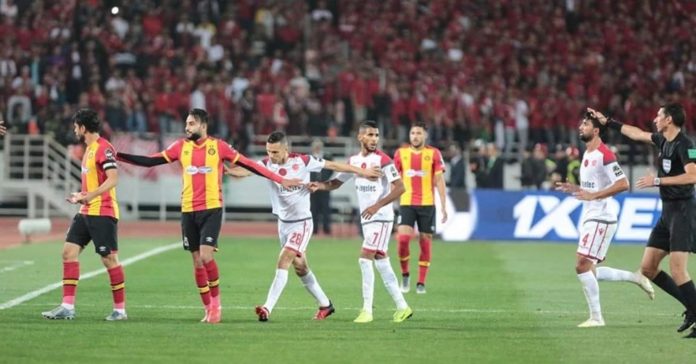
Tunisian side Esperance have been ordered to return the African Champions League trophy and to replay the second leg of the final.

The hosts Esperance led 1-0 in the second leg but Moroccan opponents Wydad Casablanca protested and left the pitch after an equaliser they scored was disallowed.

Wydad wanted the video assistant referee to check if the goal should stand but the system was not working.

An official statement from Caf read: “The CAF Executive Committee meeting decided on June 5th, 2019, in Paris, unanimously, that:

“The conditions of game and safety were not met during the 2nd leg of the CAF Champions League final held on May 31, 2019, preventing the match from coming to an end;

“Consequently, the 2nd leg match must be replayed on another ground outside Tunisian territory;

“All the CAF regulations relating to this competition are maintained for the said 2nd leg match;

“The date and venue of this meeting will be determined later by the CAF Executive Committee;

“Consequently, Espérance de Tunis will have to render to the CAF Secretariat trophy and medals awarded on May 31, 2019, upon official notification of this decision;

“All other aspects of disciplinary, organization and refereeing will be submitted to the relevant committees for processing and decisions.”

The 1-1 draw from the first leg in Morocco will stand.

The replay will be on a neural ground after the Africa Cup of Nations in Egypt, which ends on 19 July.

Stories Continues after ad

Speaker Kadaga rejects plot by Muyangwa, Kasozi to open fresh BoU probe

Speaker of Parliament Rebecca Kadaga

A dubious plot by the Kawempe South MP Mubarak Muyangwa and the Makindye East MP Ibrahim Kasozi to open a fresh inquiry into Bank of Uganda’s controversial closure of commercial banks has hit a dead end with the Speaker set to block any new inquiry

Eagle Online understands that the two legislators have been quietly lobbying their colleagues and other influential MPs to support their contentious proposal to re-open the probe in the central bank’s operations but they have been unsuccessful.

A senior MP opposed to the move argued that the new leadership of the Committee on Commissions, Statutory Authorities and State Enterprises (Cosase) views BoU as a cash cow which can be milked for positive coverage ahead of the 2021 elections while also presenting an opportunity for them to line their pockets.

“We all know their intentions. The previous committee did a comprehensive investigation into BoU and there is no need for another investigation. That would be wanton wastage of tax payers money and if such a proposal is brought to the flow, we will not accept it,” said an MP who preferred not be named.

A senior Bank of Uganda official also indicated that the central bank is opposed to any fresh inquiry-putting both Munyagwa and Kasozi on notice that they risk being taken to court should they attempt to open fresh investigations.

Efforts to resume investigations were further dealt a blow when a one Michael Busingye petitioned the Speaker warning that a fresh inquiry is not necessary as it would further put to waste state resources.

“As Parliament is principally under your jurisdiction and as these exercises cost tax payers money and must be performed lawfully, this is to request you to prevail, on the said committee not to expend state resources on a re-examination which is outside their mandate,” reads petition which was received by the Speaker’s Chambers last week.

According to the Auditor General John Muwanga, out of Shs478 billion, Shs320 remains unaccounted for by BoU. This issue came up as MPs probed BoU on the irregular closure seven banks between the years 1993 and October 2016.

In his special audit report of Shs478 billion, Muwanga said Shs157.9 billion was recovered from Dfcu and CBL non-performing assets, leaving an outstanding balance of 320.8 billion.

During the COSASE probe, it was established that CBL needed Shs157 billion to remain operating normally much as BoU officials injected in Shs478 billion before selling the bank to its rival DFCU Bank at Shs200 billion, paid in installments.

Commenting on the above transaction, the MPs said BoU ‘lent’ Dfcu part of CBL’s loan book worth Shs570 billion. In the original agreement Dfcu Bank was supposed to take over all the loan book but BoU could later on transfer only Shs200 billion of CBL loan book to its rival interest-free yet the interest would be recovered by BoU from CBL shareholders who were not party to the agreement.

The above is part of the controversy that the detectives want to investigate given that BoU did not carry out valuation of the assets and liabilities of CBL but relied on the interim inventory report of December 12, 2016 and due diligence undertaken by DFCU Bank to transfer CBL’s loan book assets of Shs200 billion.
COSASE INVESTIGATION 05.06.19
Important to remember is that the total book value of the three banks totaling to about Shs135 billion was sold at 93 percent discount to Shs8.9 billion. The total value included secured loans worth Shs34.5 billion. BoU failed to give a convincing answers as to why this figure was added together with unsecured loans and others as they sold them to mysterious company Nile River Acquisition Company (NRAC).

The MPs also established that M/s JN Kirkland and Associates who were hired to implement exit strategy for the three banks by BoU ended up as a local agent for NRAC, with rights to run an account in Citi Bank in which all recoveries of the Shs8.9 billion portfolio are deposited.

NRAC was not registered in Uganda as a local or foreign company which is a violation of sections 369 and 370 (1) of the Companies Act. M/s Octavian which registered NRAC in Mauritius was also never registered in Uganda.

Yet the then Director Commercial Banking in BoU Ben Sekabira who was the agent of the liquidator/receiver pf the three defunct banks was also up to August 12, 2009 the agent of NRAC which created conflict of interest. The investigators are interested in Sekabira activities as well of those of former executive director of bank supervision Justine Bagyenda who allowed M/s Octavian to be the only bidders for the assets of the three defunct banks, some of whose former shareholders have since died.
However, Eagle Online has established that the ploy to commence fresh investigations were being spearheaded by Kasozi who is alleged to be under the influence of city lawyer, David Mpanga and Deputy Governor, Louis Kasekende.

Stories Continues after ad

Museveni to deliver the state of the nation address tomorrow

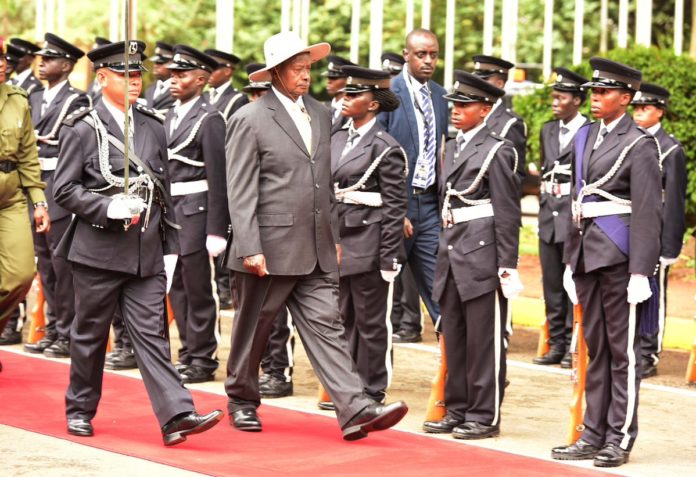
President Museveni inspecting a guard of honour upon arriving at Kampala Serena Conference Centre for 2018 State of the Nation Address.

Government has confirmed that President Yoweri Museveni will tomorrow June 6, deliver the state of the nation address ahead of the next financial.

His address is normally followed by the reading of national budget by the Minister of Finance Planning and Economic Development, Matia Kasaijja, and it will take place at Serena Conference Centre on Thursday next week. The 2019/2020 budget which was recently passed by parliament is Shs40.5 trillion.

Article 101 (1) of the Constitution of the Republic of Uganda provides that the president shall, at the beginning of each session of parliament, deliver to parliament an address on the state of the nation.

The president is expected to inform the nation about the achievements of his government in various sectors such as transport where government has tarmacked roads radiating from Kampala connecting other parts in the country. Last year Museveni said 58 per cent of the roads, had been done or are being done by the government of Uganda money.

Some of the achievements that are likely to surface in the state of the nation address are recently acquired planes, the commissioned Jinja Nile Bridge, the 183 Isimba Hydro Power project that increased Uganda’s total generation capacity from 951 to 1,734 megawatts of power, and Karuma hydro power that is yet to be commissioned.

Given that the president commissioned a number of factories say fruits factory in Soroti among other factories in Jinja, Buikwe, he is expected to address that country about job creation as part of his strategy to usher the country into middle status income and governments move to solve issues of unemployment among the youth.

Last year, the president said the country’s economy is growing reasonably well, that the four sectors are growing well. ‘Industry grew at 6.2 per cent per annum, services at 7.3 per cent, ICT at 7.9 per cent and agriculture at 3.2 per cent. As you can see, it is only agriculture that is still growing slowly.” He said

Museveni will also address the nation about security concerns and the mechanisms such as CCTV Cameras put in place to help police in fighting gruesome killings of people in county. He is also expected to talk about escalation border tensions between Uganda and Rwanda. Rwanda early this year closed its border to Ugandan goods on allegations that the pearl of Africa supports Rwandan dissidents.

Stories Continues after ad

Ugandans make early entry into the 2019 Safari Rally

Safari Rally

Ugandans Leon Ssenyange, Ronald Ssebuguzi, Kephar Walubi and Anthony Mugambwa have entered the Mitsubishi Evolution X as they debut in the Kenya Safari Rally due to take place next month.

The 2019 Safari Rally will run as a World Rally Championship (WRC) candidate event as well as an Africa Rally Championship (ARC) round.

The event will take place from July 5th to 7th rally while the entries will close on June 19th.

Twenty one (21) drivers including three foreigners from UK and Zambians have so far registered for the three-day event which is in its 67th edition.

The Moi International Sports Centre, Kasarani, will play host to the first competitive stage of the event.

A specially created Super Special Stage of 4.3 kilometres within the vicinity of the stadium and the start ramp will be the curtain raiser for the Safari Rally.

Designed specifically for the spectators, expected in the thousands, the special stage will showcase the excitement that comes with an event of this magnitude.

Cars will thereafter proceed to the super special Gatamaiyo stage then head to Naivasha for service and the first overnight parc ferme at the Naivasha Sopa Resort.

The second and third days will see the crew tackle Naivasha and Gilgil areas to conclude a 881km rally.

The Safari Rally is a rally race held in East Africa. It was first held from 27 May to 1 June 1953 as the East African Coronation Safari in Kenya, Uganda and Tanganyika as a celebration of the coronation of Queen Elizabeth II.

In 1960 it was renamed the East African Safari Rally and kept that name until 1974, when it became the Safari Rally. It is one of the most prestigious and celebrated rallies of its time, as well as one of the toughest.

Stories Continues after ad

AMISOM honors officers for distinguished service

Lt. Gen. Tigabu Yilma Wondimhunegn, the Force Commander of the African Union Mission in Somalia (AMISOM), pins a medal on an AMISOM military officer during a medal award ceremony held on Mogadishu, Somalia on 04 June 2019. AMISOM awarded service medals to military officers in recognition of their contribution to restore peace and stabilty in Somalia. AMISOM Photo / Raymond Baguma

Military staff officers serving in the African Union Mission in Somalia (AMISOM) have been awarded medals for their outstanding contribution to the restoration of peace and security in Somalia.

The 58 officers, working at the Mission’s Force Headquarters, were honored at a ceremony held in Mogadishu on Tuesday, presided over by the AMISOM Force Commander, Lt. Gen. Tigabu Yilma Wondimhunegn.

Lt. Gen. Tigabu commended the officers for their commitment and service to Somalia.

“Because of you, the people of Somalia and the Somali government are able to enjoy peace and security, not only in Mogadishu but in other parts of the country,” he said.

Lt. Gen. Tigabu, who was joined by the AMISOM Deputy Force Commander in charge of Operations and Plans, Gen. Nakibus Lakara, noted that AMISOM troops were in the process of securing population centres and main supply routes (MSRs) to prevent Al-Shabaab militants from targeting the local population.

Protection of population centres and MSRs are some of the key priorities of AMISOM, as it continues to implement the Somali Transition Plan.

The two strategic objectives being implemented by AMISOM troops and the Somali National Army (SNA) are in line with the UN Security Council Resolution 2431 of 2018; the Somali Transition Plan (STP) and the AMISOM Concept of Operations (CONOPs).

AMISOM officers who serve more than six months at the Force Headquarters as staff officers are normally awarded African Union medals in appreciation of their work.

At the same event, the Force Commander received a trophy won by the Force Headquarters team in a volleyball tournament organised by AMISOM as part of Africa Day celebrations.

Stories Continues after ad

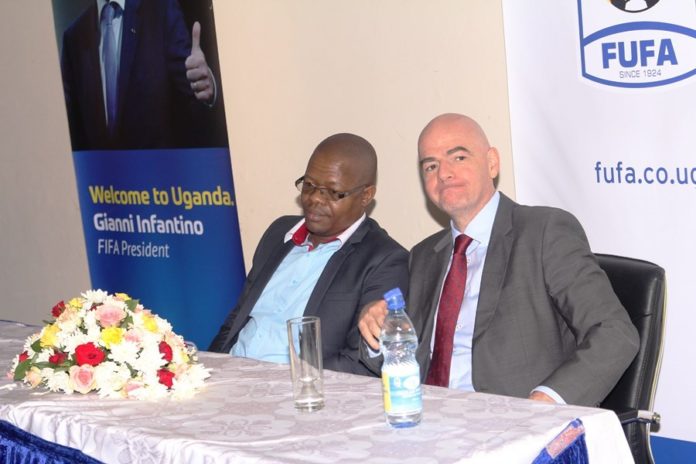
Gianni Infantino re-elected as FIFA President until 2023

Magogo with Infantino

Gianni Infantino has been re-elected as the president of football’s world governing body FIFA for the next four years.

The 49-year old Swiss-Italian was re-elected without opposition at the 69th Fifa’s annual congress in Paris. He succeeded Sepp Blatter in 2016, who was in charge for 17 years until he was banned amid a corruption scandal in 2015.

The ninth president in the history of the organisation was first elected at an Extraordinary Congress in February 2016 and now starts his first full four-year term of office after running unopposed and being elected by acclamation by FIFA’s 211 member associations.

“In just over three years, this organisation went from being toxic, almost criminal, to being what it should be: an institution that develops football,” said Infantino when addressing the Congress. “This new FIFA has a mission and a plan for it, which is why the next four years have, in fact, already started: we have laid solid building blocks for the future.”

FIFA’s supreme legislative body approved the Activity Report and financial statements for 2018, as well as the detailed budget for 2020, which includes USD 810 million allocated to investments in football.

Infantino claimed 11 areas of progress during his tenure, from financial health, women’s development, the fight against racism and a scandal-free 2026 World Cup bidding process. However, he said the implementation of the Video Assistant Referee (VAR) system had been his major triumph.

He also used the opportunity to promote the new-look 24-team Club World Cup, which starts in two years’ time but is under threat of a boycott from Europe’s top clubs due to concerns over fixture congestion.

The 70th FIFA Congress will be held in Addis Ababa, Ethiopia, in May 2020.

Stories Continues after ad

Dozens of bodies pulled from River Nile after Sudan crackdown

Sudan army

Forty bodies have been pulled from the River Nile in the Sudanese capital Khartoum following a violent crackdown on pro-democracy protests, opposition activists said on Wednesday.

Doctors linked to the opposition said the bodies were among 100 people believed killed since security forces attacked a protest camp on Monday.

Reports said a feared paramilitary group was attacking civilians.

Sudan’s ruling Transitional Military Council (TMC) vowed to investigate.

Residents in Khartoum told the BBC they were living in fear as members of the Rapid Support Forces (RSF) roamed the streets. The paramilitary unit – formerly known as the Janjaweed militia – gained notoriety in the Darfur conflict in western Sudan in 2003.

“Forty bodies of our noble martyrs were recovered from the river Nile yesterday,” the Central Committee of Sudanese Doctors said in a Facebook post.

An official from the group told the BBC that they had witnessed and verified the bodies in hospitals and that the death toll now stood at 100.

A former security officer quoted by Channel 4’s Sudanese journalist Yousra Elbagir said that some of those thrown into the Nile had been beaten or shot to death and others hacked to death with machetes.

“It was a massacre,” the unnamed source said.

Demonstrators had been occupying the square in front of the military headquarters since 6 April, days before President Omar al-Bashir was overthrown after 30 years in power.

Their representatives had been negotiating with the TMC and agreed a three-year transition that would culminate in elections. But on Monday, forces swept in and opened fire on unarmed protesters in the square.

On Tuesday TMC leader General Abdel Fattah al-Burhan announced that negotiations with protesters were over, all previous agreements were cancelled, and elections would be held within nine months. Demonstrators had demanded a longer period to guarantee fair elections and to dismantle the political network associated with the former government.

International condemnation of the crackdown was swift and on Wednesday Gen Burhan made another televised speech in which he said the TMC was willing to resume negotiations.

“We regret the events,” he said, without elaborating.

A TMC spokesman later said an investigation into the deaths of protesters had been launched.

Sudan’s military has faced international condemnation for its attack, but there were clear signs this was likely to happen. The country has been driven backwards by a military elite intent on holding on to power.

The TMC has scrapped agreements reached with the opposition Forces of Freedom and Change (FFC), saying this will speed up the transition to democratic elections. That plan is likely a fiction.

The military also enjoys another advantage. In an age of international division, the notion of an “international community” pressuring the regime is fantasy. Sudan’s crisis has exposed the reality of international politics – that force can have its way, without consequence, if the killers and torturers represent a valuable asset to other powers.

It is impossible to say whether the FFC can come back as a street-driven force. What will not change – in fact what has been deepened – is the alienation of people from their rulers.

Protesters had called for the Islamic festival of Eid al-Fitr, marked on Tuesday and Wednesday this week, to be celebrated in the streets, as a gesture of defiance against the military.

However, much of Khartoum is under lockdown. Witnesses said protesters had retreated to residential areas where they were building barricades and burning tyres. – BBC reports

Stories Continues after ad

Heroes’ day: Museveni to decorate 100 people with medals

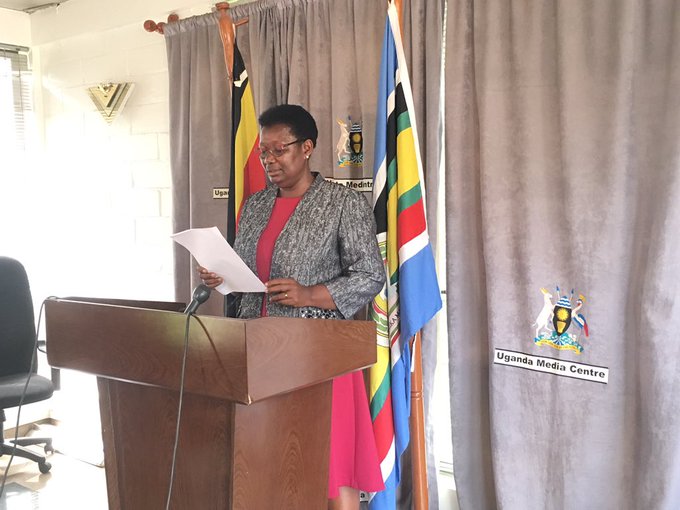
Minister Esther Mbayo

The Minister for presidency, Esther Mbayo has revealed that President Yoweri Kaguta Museveni, will award 100 medals to different people in various categories in recognition for their distinguished work toward the ‘liberation’ of Uganda.

Heroes’ Day anniversary is an annual event to pay tribute to people who exemplified and defended the highest values of patriotism and sacrifice for the wellbeing of the Uganda and its citizens. It is normally celebrated on June 9.

This year’s celebrations will be held at Kasanje Town Council in Wakiso district under the theme; celebrating the courageous heroes that brought the peace and prosperity we are enjoying.

“We owe a great debt to the sons and daughters of this country and all the other heroes who fought for Uganda to be free. The tree of our liberty was watered by their blood. It is a debt we can neither repay, nor ever forget.” She said

She said what is critical about Kasanje and Mpigi areas is that they suffered brutal arrests and death of the citizens especially after the botched attack on the Lubiri barracks by the UFM forces in early 1982.

“Kasanje was a fighting corridor against a fascist regime of UPC in 1980s and was at first dominated by UFM led by the late Dr. Andrew Kayiira before they joined hands with another fighting group FEDEMU of the late George Nkwanga. These two later merged with the NRA en-route to liberating Uganda in 1986” she noted

Adding “In Mpigi, hundreds of lives were lost to the whims of these state agents of the ruling UPC government as they assisted the army in hunting down anti-government rebels. Mpigi of the time encompassed today’s districts of Mpigi, Wakiso, Butambala and Gomba” she said

Among others, heroic values to be celebrated include proven integrity, patriotism and sacrifice, acts of bravery, setting a good example, truthfulness, and love for others.

“This can only be realized if we sustain the impressive economic growth, entrench our democratic values and jealously maintain peace and stability we are currently enjoying.” She said

Stories Continues after ad

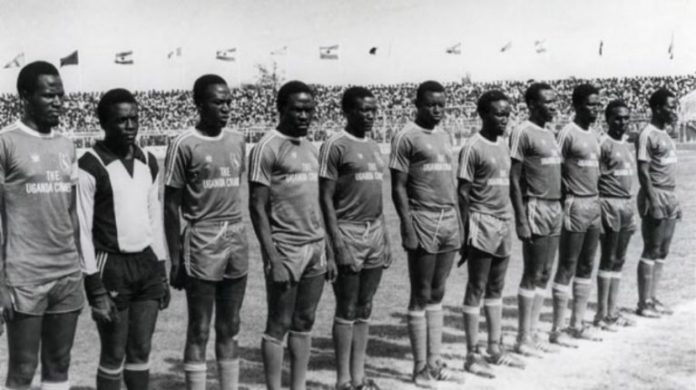
History of the Africa Cup of Nations

AFCON History

It’s less than a month to biggest football showpiece in Africa, the 2019 Africa Cup of Nations and we take a look at the history of the competition.

The Africa Cup of Nations (AFCON) is the main international association football competition in Africa which is sanctioned by the Confederation of African Football (CAF) and was first held in 1957.

Since 1968, it has been held every two years. The winners take part in the FIFA Confederations Cup.

The origin of the African Nations Cup dates from June 1956, when the creation of the Confederation of African Football was proposed during the third FIFA congress in Lisbon.

There were immediate plans for a continental tournament to be held and, in February 1957, the first African Cup of Nations was held in Khartoum, Sudan.

There was no qualification for this tournament, the field being made up of the four founding nations of CAF (Egypt, Sudan, Ethiopia, and South Africa). South Africa’s insistence on selecting only white players for their squad due to its apartheid policy led to its disqualification, and as a consequence Ethiopia were handed a bye straight to the final.

Hence, only two matches were played, with Egypt being crowned as the first continental champion after defeating hosts Sudan in the semi-final and Ethiopia in the final.

Two years later Egypt hosted the second AFCON in Cairo with the participation of the same three teams. Host and defending champions Egypt again won, after defeating Sudan.

The field grew to include nine teams for the third AFCON in 1962 in Addis Ababa, and for the first time there was a qualification round to determine which four teams would play for the title.

Host Ethiopia and reigning champion Egypt received automatic berths, and were joined in the final four by Nigeria and Tunisia. Egypt made its third consecutive final appearance, but it was Ethiopia that emerged as victors, after first beating Tunisia and then downing Egypt in extra time.

The 20th edition of the Africa Cup of Nations, in 1996 expanded for the first time to sixteen teams. However, Nigeria withdrew from the tournament at the final moment under pressure from then-dictator Sani Abacha, reducing the field to fifteen.

In July 2017, CAF confirmed that the Africa Cup of Nations will be expanded from 16 teams to 24 starting with the 2019 edition.

Three different trophies have been awarded during the tournament’s history, with Ghana and Cameroon winning the first two versions to keep after each of them won a tournament three times. The current trophy was first awarded in 2002 and with Egypt winning it indefinitely after winning their unprecedented third consecutive title in 2010.

Egypt set a new record in the 2010 tournament that was hosted by Angola by winning their third consecutive title in an unprecedented achievement on the African level after defeating Ghana 1–0 in the final, retaining the gold-plated cup indefinitely and extending their record to 7 continental titles (including when Egypt was known as UAR between 1958 and 1961.

Egypt became the first African nation to win three consecutive cups and joined Mexico, Argentina, and Iran who also won their continent cup 3 times in a row.

On 31 January 2010, Egypt set a new African record, not being defeated for 19 consecutive Cup of Nations matches, since a 2–1 loss against Algeria in Tunisia in 2004, and a record 9 consecutive win streak.

In May 2010, it was announced that the tournament would be moved to odd-numbered years from 2013 in order to prevent the tournament from taking place in the same year as the World Cup. It also meant there were two tournaments within twelve months in January 2012 (co-hosted by Gabon and Equatorial Guinea) and January 2013 (hosted by South Africa)

Stories Continues after ad

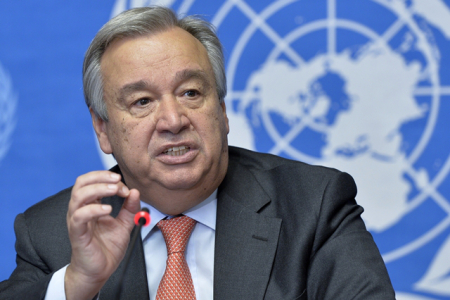
UN chief says excessive force used against pro-democracy protesters in Sudan

WARNED AGAINST ATTACKS: Antonio Guterres, United Nations Secretary General. UN Photo/ Jean-Marc FerrŽ

United Nations (UN) Secretary-General, Antonio Guterres has strongly condemned the violence and excessive use of force to disperse the protestors at the sit-in site in Sudan.

Mr. Guterres reminded the Transitional Military Council of its responsibility for the safety and security of the citizens of Sudan, and urged all parties to act with utmost restraint, including their responsibility to uphold the human rights of all citizens, including the right to freedom of assembly and of expression.

He also called for unimpeded access to deliver essential care at the sit-in site outside army headquarters in the capital Khartoum, and in hospitals where the wounded are treated and urged the Sudanese authorities to facilitate an independent investigation into the deaths and to hold those responsible accountable.

“I urges the parties to pursue peaceful dialogue and to stay the course in the negotiations over the transfer of power to a civilian-led transitional authority, as required by the African Union (AU)”, he said.

UN chief’s expressed commitment to working with the AU in support of the process, saying that the UN stands ready to support the Sudanese stakeholders in their efforts to build lasting peace.

For her part, High Commissioner for Human Rights Michelle Bachelet called the peaceful demonstrations in Sudan an inspiration as the protesters worked to engage with the Transitional Military Council. “I utterly deplore the apparent use of excessive force in the protest camps” she said.

Ms. Bachelet noted that reports stating that live ammunition was used by security forces next to, and even inside, medical facilities are extremely alarming.

“I urge the security forces to immediately halt such attacks, and to ensure safe, unimpeded access to medical care for all”, she asserted.

Ms. Bachelet stressed that those exercising their rights to freedom of peaceful assembly and expression must be protected, not targeted or detained, calling it a fundamental tenet of international human rights law.

“The use of excessive force must be promptly and independently investigated and those responsible brought to justice she spelled out, adding that the human rights violations that have marked Sudan’s history, and sparked the sustained protests over the past six months, must not be allowed to continue. This is a real setback”, she concluded.

When the three-decade autocratic rule of President Omar al-Bashir ended in a military takeover in April, hope sprung anew in the African nation. However, as talks faltered between the ruling Transitional Military Council and protesters’ leaders over the timetable for civilian rule, violence ensued.

Stories Continues after ad