Stanbic Bank
Stanbic Bank
23.9 C
Kampala
Stanbic Bank
Stanbic Bank
Home Blog Page 1296

Washington’s tariff rise: China holds ‘moral high ground’

Iris Pang

By Iris Pang

Beijing’s response to Washington’s tariff increase has, to date, been relatively mild. It raised retaliatory tariffs to 25% on a package of US$60 billion of imports from the US. This is considerably less than the US tariff rise to 25 per cent on $200 billion of imports from China last Friday.

The retaliatory measures will take effect from 1 June, corresponding roughly to the date from which the first US tariffs of last Friday’s increase become effective. The US applied tariffs on products shipped from China from last Friday, and mostly affects goods shipped by sea. This means the first goods to be affected by the tariffs will arrive in around three weeks, given average shipping time to the US.

In the light of this gentle response and recent meetings in Washington, it seems that China aims to keep the door open for further negotiations on a trade deal and contain further escalation. But the US has threatened to raise additional tariffs if China were to retaliate, meaning the risk of circumstances being aggravated is far from elapsed.

If the US were to expand its tariff measures, Beijing is expected to continue to retaliate in a similar mild fashion. This is because it is difficult for China to respond with equal measures, since the country imports a great deal less from the US than the US does from China. But this is not the only reason. With its mild response, China maintains the moral high ground in the conflict.

If the US retaliates by imposing 25 per cent tariffs on all remaining Chinese goods ($339.5 billion, using 2018 data of US imports from China) China might react more aggressively. As a first step, China could stop businesses from investing in the US. The hot topic of whether China will stop buying US Treasuries depends on whether the US escalates the trade war, but China would probably prefer this be the last option.

As mentioned by Chinese Premier Li Keqiang on 10 May, the government is prepared to cut taxes and fees to further support the economy. These fiscal measures will be combined with more targeted monetary easing. The increase in liquidity will put downward pressure on interbank interest rates.

Renminbi depreciation is not the answer to boost exports. If export orders fall as a result of tariffs, a small depreciation of the currency will not help. In fact, if the renminbi depreciates further in a short period of time, it will fuel concerns of capital flight. The central bank wants to prevent this from happening, mainly through stabilising the daily fixing of the exchange rate. This ought to signal to both onshore and offshore markets that the renminbi is stable.

The renminbi is likely to have stabilised further by the time President’s Xi Jinping and Donald Trump meet at the G20 summit in June. We maintain our 6.75 renminbi-to-dollar forecast for the end of the second quarter, though there may still be instances of increased volatility in the pair in the run up to the G20 meeting next month.

Iris Pang is Economist, Greater China at ING Wholesale Banking. This is an abridged version of an article that first appeared on ING THINK.

Stories Continues after ad

Infighting at Justice Ministry cited in the sexual harassment allegations

Mr. Christopher Gashirabake on the right who is being accused of sexual harassment. On the left is Mr Atoke, the Solicitor General.

The Deputy Solicitor General Christopher Gashirabake has been in the spotlight for negative news but sources at Ministry of Justice and Constitutional Affairs say the man being accused of sexual by Senior State Attorney Samantha Mwesigye, instead knowledgeable sources told this website that some of his colleagues in the ministry are against him being appointed Justice of the Court of Appeal/Constitutional.

Ms Mwesigye has been in the media in the recent days telling her story of how Gashirabake has sexually harassed her for over 10 years without any help from authorities despite lodging complaints on several occasions.

However, sources say Gashirabake who also doubles as director of legal services in the Ministry also wonders why Ms Mwesigye has been working under him for all that time if he had been harassing her with sex advances.

But Solicitor General Francis Atoke in the media statement yesterday said he recently constituted a sexual harassment committee which looked into Ms Mwesigye’s complaints against Gashirabake though he didn’t mention the last resolution on the matter.
Eagle Online has reliably learnt that Ms Mwesigye is being used to dragged Gashirabake in the mad so that he isn’t considered for the job at the Constitutional Court and that her actions of rushing to several offices including writing an email to Prime Minister Dr. Ruhakana Rugunda asking him to interdict Mr Gashirabake.

Gashirabake, according to Atoke, is expected to give his response to the committee, which Atoke said is in possession of email and Whatsapp messages exchanged between Ms Mwesigye and Gashirabake.

The Minister of Justice Gen. Kahinda Otafiire has commented on the matter but is also suspect of Ms Mwesigye’s accusations, though he says he is waiting to hear Gashirabake’s side of the story.

Other sources say that Gashirabake and a certain chief government legal advisor at the same ministry are not on good working terms, the reason some colleagues suggest the current sexual harassment accusations have come up in the media against the Deputy Solicitor General who has been short-listed among 24 others by the Judicial Service Commission for the position Justice of the Court of Appeal/Constitutional Court. The IGG Justice Irene Mulyagonja is also short listed.
Sources say this very senior legal advisor never liked Gashibarake to assume office of the Deputy Solicitor General but the same time, top officials at the ministry are wondering why the said officer is using Ms Mwesigye to fight Gashirabake who is on his way out.

Stories Continues after ad

Catholic Church partners with NEMA to fight Kaveera

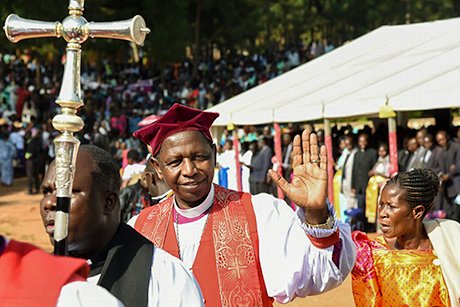
NEMA boss, Dr Okurut and bishops during the presser.

The Catholic Church has in partnership with the National Environmental Management Authority (NEMA) moved to make the Uganda Martyrs Day Celebratins at Namugongo Shrine an environmental friendly activity, by asking pilgrims to stop using “Kaveera” (polythene bags) during this year’s fete.

The development, partly inspired by Pope Francis’ call to protect “Mother Nature”, in his encyclical “Laudato Si”, was over the weekend announced the Chairman of the Uganda Episcopal Conference Bishop Joseph Antony Zziwa, of Kiyinda-Mityana Diocese.

“Having noted the threat posed by “Kaveera” to human and animal health, and integrity of creation as a whole, and concerned about the magnitude of “Kaveera” dropped in around Namugongo every year during the Uganda Martyrs Day celebration, we therefore join NEMA in making the Uganda Martyrs Day Celebrations environmentally friendly by making the shrine free of “Kaveera”,” he said.

Bishop Zziwa said that while “Kaveera” may be cheap, convenient and popular, it is non-biodegradable, which makes it very dangerous. 

“It takes over 400 years for it to decompose totally. Unfortunately, no one will live long enough to witness natural decomposition of the “Kaveera” they dumped today,” the Bishop said, adding that “Kaveera” has potential to destroy farm land and undermine agriculture which is the backbone of Uganda’s economy and the livelihoods of majority Ugandans. 

 The World Health Organization (WHO) announced on 4th – 6th April 2015 in Geneva, their research confirmative findings to the effect that the increase in non-communicable diseases (e.g. cancer, asthma, diabetes, obesity,) can no longer be attributable to genetic disorders, but partly a result of pollution overload in the environment mainly by chemicals from substances such as plastics. 

“As the Catholic Church, we acknowledge the serious obligation to care for all creation, and acknowledge a link that exists between promotion of human dignity and the right to a clean environment, clean air and clean water free of disease causing pollution,” he said. 

 “We are particularly inspired and encouraged by the deep reflections and appeals made by His Holiness Pope Francis in his Encyclical “Laudato Si” (Praise You Lord) in which he reiterates the duty humanity owes towards the environment. The Pope appeals to our conscience as believers and people of good will to protect mother earth and planet from destruction,” the Bishop said.

Bishop Zziwa told journalists that the decision has been taken to protect Mother Nature and humanity from the harmful effects of polythene bags. He advised pilgrims to avoud  food wrapped or packed in “Kaveera” because it has been scientifically proved to be harmful, and advised them to use paper bags and other biodegradable bags for carrying their belongings to the shrine.

He said the programme to discourage use of kaveera and protecting the environment will be extended to all other Catholic Shrines and institutions, as part of the Church’s contribution to posterity.

He said the Uganda Episcopal Conference is pleased to work with  the National Environment Management Authority (NEMA) to educate the public about the dangers posed by the Kaveera as part of empowering the public with information to make their own decisions.

According to NEMA, and the other partners in the project,  green dustbins will be deployed at the major entrances and exit into Namugongo to collect polythene bags which will accidentally find their way to the shrine.

Dr. Tom Okurut, the Executive Director of National Environment Management Authority (NEMA) says the joint campaign with the Catholic Church is being carried out in partnership with  VIVO Energy (Shell) and Next Media Services (NBS TV) on the occasion of the celebration of Uganda Martyrs Day on June 3rd.

Dr Okurut says the Uganda Martyrs Shrine at Namugongo is a sacred international tourism destination which must be protected from environmental pollution. He said the campaign provides an opportunity for educating and recruiting pilgrims as ambassadors for the protection of the environment.

According to Dr Okurut, NEMA is counting on the ripple effect of pilgrims carrying back the message of the abolition of the use of the Kaveera to galvanize implementation of laws outlawing the use of polythene ene bags below 30 microns in the country. He says the campaign is running under the theme: “Tuve KuKaveera”.

Below is Bishop Zziwa’s full statement

Press Statement

on the “Free Kavera Uganda Martyrs Shrine, Numugongo”

People of Goodwill

Fellow Citizens

Ladies and Gentlemen,

Today the Uganda Episcopal Conference launches a joint campaign against “Kaveera” in and around the premises of the Uganda Martyrs Shrine, Namugongo. This initiative has been undertaken by the Uganda Episcopal Conference in conjunction with National Environment Management Authority (NEMA) with its partners; Vivo Energy, Shell Uganda, NBS and Next Media Services. 

As citizens and partners in the development of Uganda, we are inspired in this initiative by the current global campaigns against environmental degradation. We are also guided by the several protocols to which the Government of Uganda is signatory and by the Constitution and laws of Uganda that govern our interaction with the environment. We are particularly inspired and encouraged by the deep reflections and appeals made by His Holiness Pope Francis in his Encyclical “Laudato Si” (Praise You Lord) in which he reiterates the duty humanity owes towards the environment. The Pope appeals to our conscience as believers and people of good will to protect mother earth and planet from destruction.

Having noted the threat posed by “Kaveera” to human and animal health, and integrity of creation as a whole, and concerned about the magnitude of “Kaveera” dropped in around Namugongo every year during the Uganda Martyrs Day celebration, we therefore join NEMA in making the Uganda Martyrs Day Celebrations environmentally friendly by making the shrine free of “Kaveera”. 

“Kaveera”, as many of you know, may be cheap, convenient and popular but is non-biodegradable. It takes over 400 years for it to decompose totally. Unfortunately, no one will live long enough to witness natural decomposition of the “Kaveera” they dumped today. “Kaveera” has potential to destroy farm land and undermine agriculture which is the backbone of Uganda’s economy and the livelihoods of majority Ugandans. 

With regard to human health, the World Health Organization (WHO) announced on 4th – 6th April 2015 in Geneva, their research confirmative findings to the effect that the increase in non-communicable diseases (e.g. cancer, asthma, diabetes, obesity,) can no longer be attributable to genetic disorders, but partly a result of pollution overload in the environment mainly by chemicals from substances such as plastics. 

As the Catholic Church, we acknowledge the serious obligation to care for all creation, and acknowledge a link that exists between promotion of human dignity and the right to a clean environment, clean air and clean water free of disease causing pollution. 

As such, the Uganda Episcopal Conference declares that starting this year, the Uganda Martyrs Day celebrations held annually on June 3 at the Catholic Shrine in Namugongo, will no longer welcome “Kaveera”. In subsequent years, this initiative will be extended to other Catholic Shrines. Pilgrims are encouraged to carry items in reusable cloth, papyrus (Kikapu) or paper bags. Green bins will, however, be provided for disposal of “Kaveera” for those who might have forgotten and come with them for any other reason. 

On the occasion of celebrating Uganda Martyrs day, the Uganda Episcopal Conference calls upon every person of goodwill to think of the many ways in which they can participate in maintaining serenity and integrity of creation. As for the faithful, we call on you to make this call part of your witnessing to the Gospel as well as the responsibility given to man in Genesis Chapter 1 verse 28. We encourage the clergy to disseminate this information through the various media available to them, including announcements during Holy Mass.

We wish you all fruitful celebrations of the Feast of the Uganda Martyrs. 

‘For God and my Country’.

Given this day of 10th May, 2019 at the Uganda Catholic Secretariat, Nsambya-Kampala.

On behalf of the Catholic Bishops of Uganda,

+Joseph Antony Zziwa,

Bishop of Kiyinda-Mityana Diocese, and Chairman of Uganda Episcopal Conference.

Stories Continues after ad

Mutebile assures public on PostBank smooth operations after indictment of top bosses

BoU Governor Emmanuel Tumusiime-Mutebile.

The governor Bank of Uganda (BoU), Prof Emmanuel Tumusiime- Mutebile, has assured customers of Postbank (U) Ltd. and the general public that the mini-lender is safe, strong and resilient with continuing uninterrupted at all its branches countrywide.

Mutebile’s assurance follows an investigation into the top bosses of the bank by the Directorate of Criminal Investigations and Crime Intelligence Department (CIID) and the Office of the Auditor General. They were days ago subsequent arraigned in Court on grounds of abuse of office.

Mutebile said an interim team of senior managers, headed by the Acting Managing Director, Mr. Edwin Keronga, and Acting Executive Director, Mr. Benon Rukundo, and supported by a number of Acting Heads of Department, were appointed to run the affairs of Postbank (U) Limited.

The Bank of Uganda will update the public of any further developments through its formal communications channels” he said.

On April 5, State House team Anti Corruption team, led by Lt Col. Edith Nakalema and police CID detectives and officials from the Auditor General’s office stormed post bank offices and spent nine hours pressing the bank’s top officials over corruption allegations.

Their visit culminated into the arrest of the Managing Director of the bank, Mr Stephen Mukweli, Mr David Mwesige (the head of Information Technology), Ms Safina Wabuna (the executive director for Information and Communication Technology), Mr Augustine Kisitu, (the head of Business Technology) and Mr Emmanuel Mwaka, the finance manager.

Others who were picked included Alex Kayaayo (Executive Director for Credit and Business Growth), Fred Samuel Wasike (Head of Business Growth) and Gilbert Nuwamanya (Sales Manager).

They were produced before Chief Magistrate Pamela Lamunu Ocaya at Anti-Corruption court and leveled with charges of fraud. They denied all charges leveled against them.

According to prosecution, in April 2017 Mukweli and Wabuna altered the sum of contract for conducting ICT test from Shs20.2m to Shs37m contrary to procurement procedures which resulted into overpayment of Shs16.75 million to Aptech Computer Education causing a financial loss to Post Bank.

Mr Mukweli accused of abusing his authority when he signed a contract for supply of e-suit banking system to Compulynx Uganda Limited for more than Shs5.7 billion instead of Shs4.2 billion that had been approved by the contracts Committee.

It is further alleged that on October 29, 2017, at Post Bank Ms Wabuna, Mr Mwesige and Mr Kisitu requisitioned, approved and confirmed availability of additional funding of Shs1.6 billion without the approval of the contracts Committee.

Mukweli, Wabuna, Mwesige and Mwesigwa also allegedly requisitioned, processed, approved and paid Shs2.88 billion to Compulynx Uganda Limited for supply of e-suit Banking System in disregard of the payment structure stipulated in the procurement contract.

On December 19 and 21, 2018, Mukweli, Mwesige and Mwaka effected payment of Shs848.5 million to the same company for supply of the same equipment contrary to the payment structure stipulated in the procurement contract.

Stories Continues after ad

Former Buganda Lukiiko Speaker, Hajj Musa Kaddu Sserunkuuma passes on

The former Speaker of Buganda Lukiiko, Hajj Musa Kaddu Sserunkuuma has passed on, the Kingdom has confirmed.

Hajj Musa Kaddu Sserunkuuma was appointed Speaker after the demise of Sulaiman Lubega Kaddunabbi during Katikiro Eng. JB Walusimbi reign in 2012 and 2013.

The mysterious cause of his death has not been revealed, however, this website has learnt the deceased has been sick for sometime. Mr. Sserunkuuma was a son to former Lukiiko Speaker, the late Ali Kulumba.

During his time, Sserunkuuma was deputized by late Dr. Higiro Ssemajege (died in 2013).

In 2013, Owek Hajj Musa Kaddu Sserunkuuma launched his book titled ‘Wali Luddawa’ translating into where were you which details circumstances surrounding Uganda’s attainment of independence.

Stories Continues after ad

Arts and culture: Uganda takes part in Cannes Film Festival

Delegates at event

Ugandan delegates join the rest of the world for Pavillon Afrique at the prestigious Cannes Film Festival in France. In its first year at Cannes, Pavillon Afriques is set to become the busiest, unique, networking and business hub at the festival this year, running from May 14-25, 2019.

Uganda is joining a line-up that includes participants from African countries including Nigeria, Kenya, Tanzania, South Africa, Ethiopia, Rwanda, Niger, Togo, Ghana, Burkina Faso, Gabon, Djibouti, and its diaspora from countries such as Jamaica, USA, Brazil, Guyana, Guadeloupe, Martinique.

Ugandan film heavyweights like Director, Writer and Actress Nishi Kalema, Director and Writer Malcolm Bigyemano, Writer, Director and Actress Kemiyondo Coutinho, Director, Isaiah 60 Productions Natasha Karugire, Producer, Director and CEO, Tadoba Pictures Isaac Simba, Screenwriter, Director and writer Sharpe Ssewali, and many more industry experts will be at the pavilion.

According to Godfrey Mutabazi, the Executive Director of Uganda Communications Commission, “With this project, Uganda is creating a unique venue for its local Film trade and promotion that outlines the diversity and plurality of Uganda at the International level in television content. Our ambition is to become a centre for filming in Africa, through this exclusive business platform where film industry stakeholders meet, discuss, trade, make deals and take advantage of the unique atmosphere of the Festival de Cannes.”

Pavillon Afrique will be the first tent within the Film Market section of the Cannes Film Festival dedicated exclusively to the business of Film in the African continent and among its diaspora. It is appropriately situated within the heart of the Marché du Film, which is the world’s biggest gathering of film industry professionals who come to sell films, find partners and expand their professional network.

With the theme ‘Connecting the Past, Present and Future’; Pavillon packs a full schedule with a mix of private and public sector roundtables, discussions on film financing and content distribution, a series of country produced destination seminars, celebrity-hosted panels, leadership workshops, film screenings and more, the program is set to be the most fascinating hub out of Cannes in 2019.

It will feature a dynamic line-up of some of the biggest names in film and entertainment from across the globe including entrepreneur and educator Stedman Graham, Tech Entrepreneur John Gosier, Ghanaian Entrepreneur Roberta Annan, USA former VP IBM USA, Marilyn Johnson, Rich Tanksley, Chief Operating Officer at DataCa.sh. and Owner, Pulse Nigeria, prolific writer Tsitsi Dangarembga, Founder of AFRIFF (African International Film Festival) Chioma Ude, Joyce Fissoo, CEO, Tanzania Film Board, Nollywood icons Joke Silva and Rita Dominic, Kumawood Director Shirley Frimpong-Manso, Nollywood director Kunle Afolayan, and many more.

Also participating in some of the sessions will be top executives of international festivals and events Sundance, European Film Market, Rotterdam Film Festival and the support of Uganda Communications Commission, Uganda Tourism Board and top broadcaster Canal plus.

Confirmed activities include screenings, seminars, workshop, round tables, country 5forums, an auction, art exhibition, haute cuisine, mini-concerts and so much more. Networking and promotional activities will include product presentations, receptions, cocktail parties, brunches, B2B, B2G and G2G meetings.

Stories Continues after ad

For a Better Future, Sudan Must Confront Its Past

El Safi

By Ezzaddean El Safi

I was born in Nyala, the capital of Southern Darfur state in Sudan. I still remember how divided our community was, with Arab and African tribes clashing over the two most important resources for animal breeders and subsistence farmers: access to water and land.

In 2003, that conflict erupted into violence, as Sudanese government forces, government-backed militias, and Darfuri rebel groups clashed. Since then, hundreds of villages have been destroyed and the land taken over by government-allied tribes, leaving Darfurians without the food and water they need to survive.

In recent weeks, Sudan has been in the news again. A popular protest movement has forced out President Omar al-Bashir, and the military has taken control. The protestors have not left the streets and are demanding the dismantling of the single-party state, the regime’s armed bodies and opening up the economy to Sudanese from outside the ruling circle.

But it remains unclear how much of a say, if any, civilians will have in what comes next. The decision by the African Union to extend the deadline for the handover of power from the military council and the growing influence of Saudi Arabia, the United Arab Emirates, and Egypt are all real causes for concern.

In this time of uncertainty, it is imperative that people not rush to forget the tragedy and pain of the past. With massive economic and political challenges, there is understandable pressure to sweep the past under the carpet and move on. But the answer to the question of what kind of country post-Bashir Sudan will become depends on how it deals with its past.

I understand the desire to forgot and move on. During my ten years working in Darfur, I saw horrible things, including the killing of 55 young men from my clan who all died in one day of the tribal conflict in August 2013, only two years before I joined the Open Society Foundations in Tunis.

I do not like to remember those events, but they have shaped me, and have shaped the Sudanese. When I saw what was happening, I was compelled to action and began working in emergency response, conflict prevention and peace building interventions led by UN entities and international organizations. I witnessed how the National Intelligence and Security Service got their orders directly from President Omar al-Bashir, assassinated, tortured and detained people without charge for years. These tragedies have influenced the lives of many Sudanese, whether through the loss of loved ones or leaving the country in search of a more peaceful, and stable, life.

Violence was not Bashir’s only legacy. Bashir and his family were the spearhead of political and institutional corruption. They had a complete monopoly on essential commodities such as wheat flour, cooking gas, and oil in Sudan. A Wikileaks cable from 2009 speculated that Bashir had stashed $9 billion in foreign bank accounts. He accumulated all this wealth at a time when 76 percent of Sudanese people lived under the poverty line according to a World Bank 2016 report.

Over the past three decades, the ruling party abused its power to fuel wars; to commit genocide, war crimes, and crimes against humanity; and to divide Sudan’s citizens by region, religion, and ethnicity.

This heavy inheritance of disorder requires a clear vision to move toward that is inclusive and based on its multicultural, multiethnic, multireligious and multilingual approaches. We need to enforce transitional justice and open up legal investigations into all crimes committed against civilians, and fair trials for the perpetrators to ensure that there is no impunity. In parallel, we need to rebuild political and economic institutions to ensure an equitable share of power and a fair distribution of wealth. Doing this is the best way to remember the injustices of the past and break with Bashir’s legacy.

People in the Sudanese diaspora, like myself, have a role to play. With at least 5 million Sudanese living abroad, we are not only an important source of financial support, but of knowledge.

I and others recently created an association for international professionals to develop local governance and development strategies. We plan to conduct a comprehensive assessment to map out the local needs and priorities, and share the final report. Different groups have taken on other pressing tasks. Another group of international advocates volunteered to report on all money and assets stolen by the former regime worldwide. For us, it is a way of remembering where we are from and the circumstances that forced us to leave.

When I think back on my childhood, I long for a Sudan that has moved beyond the tribal divisions that defined it. A representative government that addresses injustice is the best way to achieve that. If we can do that, Sudan can become truly post-Bashir. If not, he will still be with us for years to come.

The writer is a program manager for the Open Society Middle East and North Africa Program.

Stories Continues after ad

Manchester City could be banned from the Champions League for a season

Uefa investigators want Manchester City to be banned from the Champions League for a season if they are found guilty of breaking financial rules.

However, according to one well-placed source, a final decision is yet to be made by chief investigator Yves Leterme.

The former Belgian prime minister, chairman of the investigatory panel of Uefa’s independent financial control board, is set to make a recommendation this week.

With no vote in such cases, the final say lies with him but several of his colleagues are understood to have firmly expressed the view at a recent meeting that a season-long ban would be a suitable punishment if City are found guilty.

Leterme and his team have been looking at evidence first uncovered in a series of leaks published by the German newspaper Der Spiegel last year.

The reports alleged that Manchester City had broken Financial Fair Play regulations by inflating the value of a multimillion-pound sponsorship deal. City were fined £49m in 2014 for a previous breach of regulations.

The Premier League champions denied any wrongdoing, and Uefa said it could not comment on an ongoing investigation, but according to the New York Times, investigators now want rules upheld and City punished with a ban.

Uefa’s adjudicatory chamber would have to decide whether it agreed with any recommendation from Leterme – expected in the next 48 hours – although it is unlikely to apply to next season’s competition because City could appeal, and even take their case to the Court of Arbitration for Sport.

But it would still be a major blow for a club desperate to win Europe’s most prestigious club competition for the first time, and who could also soon face a transfer ban, with the FA, Premier League and Fifa also currently investigating City over their signing of youth players.

Earlier this season, a statement from Manchester City said: “The accusation of financial irregularities is entirely false.

“Manchester City welcomes the opening of a formal Uefa investigation as an opportunity to bring to an end the speculation resulting from the illegal hacking and out of context publication of City emails.

“The club’s published accounts are full and complete and a matter of legal and regulatory record.”

Financial Fair Play was introduced by Uefa to prevent clubs in its competitions from spending beyond their means and stamp out what its then president Michel Platini called “financial doping” within football.

Under the rules, financial losses are limited and clubs are also obliged to meet all their transfer and employee payment commitments at all times.

Clubs need to balance football-related expenditure – transfers and wages – with television and ticket income, plus revenues raised by their commercial departments. Money spent on stadiums, training facilities, youth development or community projects is exempt.

The Club Financial Control Body (CFCB), set up by Uefa, has the ultimate sanction of banning clubs from Uefa competitions, with other potential punishments including warnings, fines, withholding prize money, transfer bans, points deductions, a ban on registration of new players and a restriction on the number of players who can be registered for Uefa competitions.

In 2014, Qatar-owned Paris St-Germain received a similar financial punishment to the one City received.

PSG were deemed to have breached FFP rules when the CFCB decided their back-dated £167m sponsorship contract with the Qatar Tourism Authority, which wiped out their losses, had an unfair value.

That meant the French side exceeded allowed financial losses by a wide margin when, under FFP rules, clubs were limited to losses of £37m over the previous two years.

They received a fine, a spending cap and were only allowed to register 21 players for the Champions League for a season.

PSG also remain under investigation for their 2017-18 finances when they signed Neymar from Barcelona for a world record £222m euros (£200m) and Kylian Mbappe from Monaco, initially on loan, for 180m euros (£165.7m). – BBC Sports News

Stories Continues after ad

Man sentenced to death for farting in Mosque during Ramadan

Handcuffs

A Pakistani judge has sentenced a man to be executed after he was expelled 17 times from 6 different mosques for excessive farting during the period of the Ramadan reports the Islamabad Herald this week, according to world news daily report.

The Ramadan is the most important religious festival for Muslims and the judge declared that he had indisposed people of the faith and even caused 53 people at one time to leave the mosque during a prayer, a “blasphemous act” which should be punished “according to Allah’s will.”

The judge was lenient, have admitted many experts in the region, as he gave the convicted man the choice of being beheaded or stoned to death.

“The law is clear, he should be stoned to death, beheading is a very light sentence and saves him from any suffering,” protested the government prosecutor.

A rare medical condition

Muhammad Al-Wahabi, 33, suffers from chronic flatulence, “a rare medical condition” he argued in his self-defense, as no lawyer would take his case.

“No lawyer is crazy enough to bet his career on this issue. If his client his condemned, as in this case, the lawyer would face prosecution and possibly the same faith as his client” admits legal expert Andrew Jones, a Middle Eastern law expert.

Al-Wahabi did not contest the judgment and even said the judgment was fair and that he hoped Allah would be gracious enough to pardon his blasphemous actions.

Al-Wahabi also admitted that he put a tampon in his rectum several times in a desperate attempt to mask the noise and odor.

“A disgraceful and insidious act” the judge declared, visibly disgusted.

“Muslims are not allowed to insert any objects inside their anus, not even a finger, it is forbidden by the Koran,” said the judge.

“As a judge, I must set an example for other Muslims. This is clearly unacceptable under Shariah law,” he concluded.

Al-Wahabi admitted to the judge he had failed his God, his religion, and his people and was terribly sorry for what he had done, and asked for his two wives and seven children’s mercy in court and thanked the judge for his verdict. – story via world news daily report.

Stories Continues after ad

Uganda lineup friendly with Ivory Coast in Afcon build-up

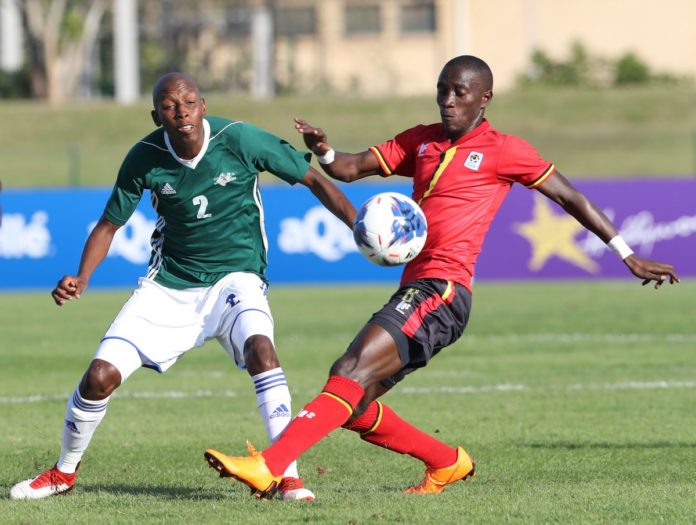
Ivory coast-vs-Uganda

Cranes Head coach Sebastien Desabre confirmed that an international friendly has been lined up for Uganda Cranes to play Ivory Coast on Saturday, 15th June 2019.

“We shall play two friendly matches against an unnamed opponent on 9th June 2019 and then with Ivory Coast on 15th June 2019 before flying to Cairo,” the Frenchman said during a media Q&A session.

Both teams will use the match to prepare for the upcoming 2019 Total Africa Cup of Nations (Afcon) that starts on 21st June in Egypt.

The two teams last met in January 2017 when Ivory Coast defeated Uganda Cranes 3-0 in Abu Dhabi, in a game which was also a buildup to the 2017 Afcon.

Uganda are in Group A alongside the hosts Egypt, Democratic Republic of Congo and Zimbabwe while Ivory Coast are in Group D alongside Morocco, Namibia and South Africa.

Meanwhile, Desabre will name the list of 26 players on 21st May 2019 (including foreign-based players) for the Abudabhi camp from which 23 players will make the final Squad to Egypt for the AFCON Finals.

The team is already in a residential camp which will take a fortnight in which period two practice games will also be played on Thursday 23rd May against the COSAFA bound Cranes and the second one on the 25th May 2019 with a team yet to be known at Mandela National Stadium, Namboole.

International Friendly

Saturday, 15th June 2019

Ivory Coast vs Uganda

Stories Continues after ad