Stanbic Bank
Stanbic Bank
24.1 C
Kampala
Stanbic Bank
Stanbic Bank
Home Blog Page 1297

Eight positive lessons from Facebook on building momentum

Martin Zwilling

Many new business owners I know have learned the hard way that you can never be everything for everyone. As a startup, you need to use your limited resources to excel at a few core things for your best customers, in order to stand out and get the momentum going. Focus on a few key principles is the key to success, and it takes discipline and determination to make this happen.

I found some good lessons in this regard in a classic book, ā€œBecoming Facebook,ā€ by Mike Hoefflinger, the former Head of Global Business Marketing at Facebook. He talks in detail about ten of the key challenges that Facebook faced in their growth, to move from a tiny social media upstart to one of the most successful companies in the world.

Based on my experience advising new businesses, all of the principles that he outlines, including the following subset which I generalize here, should be taken to heart by every entrepreneur:

Give customers fewer things that matter more. Your customers’ biggest need is not for more things. Your best strategy is to find more customers that fit the things you do best, rather than building more things. Too many choices confuse all customers, and make your job in marketing, distribution, and support much more difficult. Less is more.

Pick a single metric that is the focus for all growth. Today’s world is full of metrics leading to business growth, including customer logins, revenue per customer, retention, and average solution price. Facebook’s winning strategy was a laser focus on increasing active user counts and time spent online. Revenue and competitive position followed.

Speed is a key feature in every customer experience. Customers today have adapted to a fast-moving world, and they expect every business to keep up. They have no understanding or patience for extra steps and delays caused by bureaucratic processes, disengaged employees, complex networks, or software usability problems.

Strive to cross the chasm from early adopters to mainstream. Many new companies become bogged down with the more vocal early adopters, who have an appetite for more function and new players. The mainstream majority want simplicity and base function, and we they get it they will come in droves, and be very reluctant to jump ship. Get there.

Disrupt your own success before someone else does. In this age of technology, the advent of a better alternative is inevitable. To retain the initiative – especially when you’re winning – shape the disruption through your own moves instead of falling victim to those of others. Waiting for the crises of customers often means an impossible recovery effort.

Maximize employee engagement by fitting roles to strengths. Employee engagement starts with looking beyond experience, to talent, determination, results, and a fit to your company values and culture. On an ongoing basis, engagement requires a focus on motivation, match to strengths and interests, and active career planning.

Take care of business, but always play the long game. For many companies, the long game is choosing the right strategic partners and acquisitions. For others, including Facebook, it is penetrating China despite political constraints, and India, where only thirty percent of the population is on the Internet. But never take your eye off today’s customer.

Getting acquired or going public should be a result, not an intent. A focus on looking good as an acquisition or IPO candidate has undermined many startups. Zuckerberg had so much confidence and determination to stay independent that he turned down an early $1 billion offer from Yahoo. Now Facebook’s market cap is nearly 500 times that number.

Facebook may seem like an overnight success, but in reality it faced the same challenges as any new business, including existing well-known social media competitors like MySpace and Friendster. Facebook competed against the model of free customer use paid by advertisers of Google, and the sophisticated data delivery infrastructures of YouTube and Netflix.

I’m convinced that the lessons outlined here can help you become the next Facebook or YouTube in your business domain. How many do you already practice today?

The writer is a veteran startup mentor, executive, blogger, author, tech professional, professor, and investor. Published on Forbes, Entrepreneur, Inc, Huffington Post.


Stories Continues after ad

AfDB approves strategy for Central Africa – ā€œcrucial for the economic integration of the regionā€

Moono Mupotola,AfDB’s Director of Regional Development and Regional Integration.

The African Development Bank has approved the Central Africa Regional Integration Strategy Paper 2019 – 2025, adopting the Bank’s multinational operations in Central Africa over the indicated period.

The Central Africa Regional Integration Strategy Paper (RISP) for 2019 – 2025 builds on the lessons learned from the implementation of previous regional development initiatives. It also lists the Bank’s plans to accelerate intra-regional trade, inclusive economic growth and structural transformation of the Central African region. It will guide the Bank’s regional operations in seven member countries of the Economic Community of Central African States (ECCAS), namely Cameroon, Chad, Congo, Equatorial Guinea, Gabon, Democratic Republic of Congo (DRC), and the Central African Republic – a combined population of some 130 million people.

The cooperation, integration and economic development goals of the 2019 – 2025 Central Africa regional strategy will be achieved from the basis of two pillars: the first strengthens regional infrastructure (focusing on electricity networks, transport and ICT), while the second supports reforms for intra-regional trade development and cross-border investments and builds the institutional capacity of regional organizations, especially ECCAS and the Economic and Monetary Community of Central Africa (CEMAC).

Geographically, the Central African zone represents the nexus of Africa, sharing borders with every other region of the continent. Civil harmony and the economic, social and political progress of the region are underpinned by the broader promise of continental cooperation and economic integration.

In 2018, the GDP growth rate in Central Africa doubled to 2.2 % from 1.1% in 2017, but remained below the sub-Saharan average of 3.5%. The region’s growth was driven primarily by global commodity prices, principally oil. Other countries within the ECCAS region continued to grapple with the vicious circle of instability and fragility, weak human and institutional capacity, and infrastructure deficits in the transport, energy and ICT sectors.

ā€œCentral Africa has significant oil resources, deposits of precious metals and minerals, huge transboundary water resources, and the continent’s greatest hydropower potential. Implementation of the Central Africa integration strategy will encourage regional and national authorities to ensure that cross-border programs and initiatives are embedded into public resource planning and administration,ā€ said Ousmane Dore, Director-General of the Bank’s Central Africa Regional Development and Business Delivery Office.

Implementation of the Central Africa RISP will require investments amounting to US$ 4.421 billion, corresponding to 30 regional operations over the seven-year period. About 88% of the planned funding would be devoted to strengthening regional infrastructure. The infrastructure and institutional capacity-building components of the plan will also support the resilience of the countries in the region. Specific operations will also strengthen resilience to food insecurity, enable the socio-economic reintegration of vulnerable groups, and conserve ecosystems in the Congo Basin.

ā€œThe African Development Bank’s ongoing support for Central Africa is crucial for the successful economic integration of the countries in the region. The new Regional Integration Strategy Paper continues this tradition of supportive interventions in critical economic sectors. Ultimately, it will be a huge boost to intra-regional trade and a much needed structural transformation of the policy and business environment,ā€ said Moono Mupotola, the Bank’s Director of Regional Development and Regional Integration.

The RISP is in conformity with the Bank’s new Regional Integration Strategy Framework (RISF) which was approved in March 2018, and the Ten-Year Strategy of the African Development Bank Group (2013-2022). It also aligns with the regional priorities from ECCAS and CEMAC and the Bank’s High 5 priorities.

Stories Continues after ad

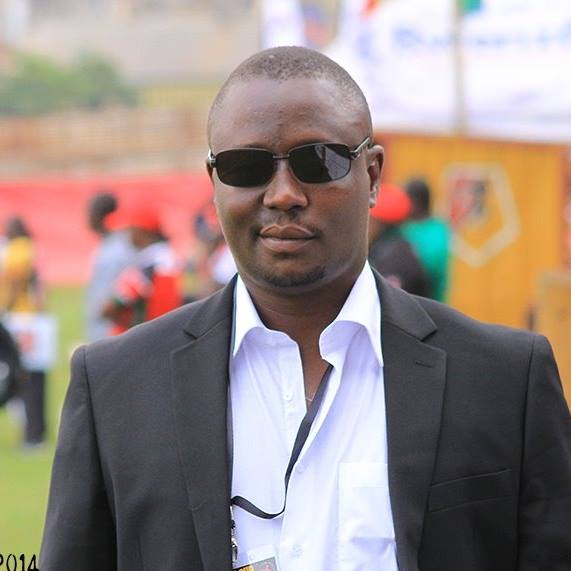
Meet Uganda Rugby Union new President Godwin Kayangwe Arinaitwe

New Uganda Rugby Union Presidebt Godwin Kayangwe Arinaitwe.

Mr. Godwin Kayangwe Arinaitwe is the new President of Uganda Rugby Union (URU) who says sport is a powerful tool in shaping culture well beyond the borders of the field. He considers rugby a sport that best embodies civility, respect, inclusivity, and toughness. He hopes the country will see more rugby played under his leadership.

Kayangwe who holds a Bachelors in Business Computing from Makerere University says he was introduced to rugby in 1993 at Kings College Budo, transitioning through school rugby to club rugby at Black Pirates Rugby Club. Having retired from active playing in 2003 due to work and educational commitments, he got back in September, 2009 and went into management of his former club, later going on to manage franchise rugby and the National Team.

An Old boy of Ntare School and King’s College Budo, Kayangwe joined the URU Executive Committee (EXCOM) as member in 2013, and rose up to the rank of General Secretary in 2015. He says he has learnt to appreciate that rugby as a cultural influence is powerful and a religion in many aspects.

Much as rugby is sometimes a game of the privileged, who has the passion for the game notes it is an all-inclusive sport as well.

Kayangwe says rugby is a sport that has the right amount of competitive aggression and civility and that to make a true testament of the above values in rugby, his four-year term as President of the URU shall focus on the following priority areas in order to develop the sport and continue to achieve milestones gained in and out country in high performance rugby by:

Boosting sport in schools and tertiary institutions. ā€œWe will secure the best possible future for sport in this country by improving the sporting opportunities for young people in schools, tertiary institutions and universities,ā€ he says, adding that him and his staff will create a competitive school sports event to raise the profile of competitive sport in schools that should be climaxed with new national competition open to every school, tertiary institution and universities involved.

Sustainable growth, hope and belief

He wants to encourage a culture of school sports competition by setting up and publishing competitive school sport league tables and emphasising the importance of sport in secondary schools. Encourage holiday programs through competitions covering contact rugby and tag rugby for the totos (children). Creating support and infrastructure for sporting excellence. ā€œWe will ensure that the funding and governance of the sport are geared for continued excellence,ā€ he says.

He says he will aim at securing more funding for sport by merchandising attractive rugby properties to corporate sponsors where they can get value for money. Branding the sport is key in attracting several revenue streams. ā€œWe all know the finance issue has to be addressed with utmost priority to get all programs running as desired,ā€ he says.

Further he says he work to secure funding for grassroots sports facilities and provision for rugby GIR development, growth of women’s rugby- create a development fund that stakeholders can utilise on subject to occasional audit procedures

But also he will create a leading organisational structure for sport by bringing together sporting authorities in the country like Ministry of Education and Sports, National Council of Sports, and District Municipalities and District local Government under one roof, while retaining their separate roles, and setting up a cross departmental ministerial working group on sport.

He says he will enable rugby fans to get involved in owning their clubs by reforming the sport governance arrangements to allow co-operative ownership models to be established by supporters. 3. Improving grass roots and community rugby. We will support community sport to help more people to get involved in sports at the grass roots level.

He says his helm at URU will support volunteer sports organisers by sweeping away the unnecessary bureaucracy that is deterring volunteers, and work with National Coaches and surrounding community school coaches, World rugby and Rugby Africa coaching system.

He says he will also develop a strong inter university league. ā€œA stronger and more potent university league cutting across the country is key for gradually developing proper rugby structure,ā€ he says, adding that under his leadership, more local sports fields and facilities will be created by engaging local municipalities to plan for sports facilities so that local people can create or protect space for sports facilities, and giving members rights to take over or buy existing facilities.

URU under his leadership will fund communities to use sport to promote better health by devolving public health budgets down to community level, enabling sport and exercise to be used as a means to promote better physical activity and health.

And ensure that championship competitions are held at regional levels and these competitions are used as a gateway for upcountry clubs to get promotion into the premiership competitions 4. Supporting the upcoming high-level sporting events. ā€œWe will work to secure the best major upcoming sporting events and ensure they deliver lasting benefits for the country as a whole.ā€

He has also pledged to: ā€œDeliver safe and successful World rugby and Rugby Africa international tournament, and ensure that Uganda qualifies for Olympics and HSBC World Rugby series.ā€

Additionally, he is to embark on URU’s bids to host rugby Africa tournaments and ensure the successful hosting of the U20 Barthes Cup that has already been awarded to Uganda, April 2019

He intends to support more high performance rugby tournaments by working with the government and affiliated bodies. He will Support the governance structures at club and secretariat levels, and ensure that proper strategies are used to develop the sport at all levels. This will be by empowering clubs to hold annual AGMs where office bearers are elected at club level and matters pertaining proper governance of the clubs are discussed.

But also he says he will improve the governance at secretariat level with professionalism and ensure that information is properly communicated to clubs and affiliated bodies in a professional manner. We need an effective secretariat as empower a technical team for player selection in all competitions on performance base, where players are chosen from all competitions based on their availability and capabilities.

Kayangwe’s rugby- related activities in Uganda

Despite having a rich professional background, Kayangwe has over the years worked for the betterment rugby in the country for instance as outlined;

• Founder Uganda Rugby Fan Zone -An association that brings the fans of Uganda Rugby together to support and develop the game of rugby. Leveraging Client relationship Management with Uganda Rugby Union Sponsors

• Team Manager Pirates Rugby Football club and Rwenzori franchise in the Bamburi Super Series 2009-2011

• Uganda Rugby Cranes (National Team Manager 2011- 2013)

• Uganda Rugby Union (URU) Executive Member in charge of Sponsorship and Marketing 2013-2014

• Hon Secretary Uganda Rugby Union 2015- 2019- where he was in charge of the day to day operations of rugby in the country that are managed by the secretariat, implementing the strategic plan developed by the URU Executive Committee, coordinating all committees including Uganda Women’s Rugby, Uganda Schools Rugby, Technical committee, Uganda Medical society, Uganda Referees Association, as well as chairing the appeals committee and all EXCOM meetings.

Stories Continues after ad

Ugandans to ink Easter deals as Azizi developments exhibit properties in Kampala this week

The hustle for some Ugandans to own a plush property in Dubai has been simplified by Azizi Developments, one of the leading private developers in the UAE and an investment arm of Azizi Group.

Azizi is organising a property sales show beginning April 17th at Sheraton Kampala Hotel to showcase its extensive portfolio of residential and commercial developments.

According to the company’s portfolio, visitors to the Azizi Developments stand to benefit on exclusive offers on units.

Several deals across the spectrum of developments on residential and commercial properties in central and strategic locations await interested Ugandans.

While all sales are backed by exceptional starting prices and attractive payment plans, the company is also offering its innovative short-term rental home concept that presents unmatched value for investors at select residential projects.

Ugandans who choose to invest in Dubai and own properties will pay 10 per cent and own properties, have a post-Handover Payment Plan and an up to 15 per cent return on investment.

Other benefits also include; Easy Finance of up to 70 percent, low interest rate (4 percent per annum) and property Transactions regulated by the Dubai government in addition to free property management.

The company has recently held property sales shows. Some advisors from Azizi will be at Sheraton to guide interested Ugandans.

Established in 2007, the company’s diverse experience in the property market has enabled it to expand to include a portfolio worth over AED45 billion (US $12.5 billion) in the Emirate of Dubai.

Azizi Developments has partnered with the Crown Prince of Dubai Sheikh Hamdan bin Mohammed bin Rashid Al Maktoum for the master development of Multi Billion, luxurious project “Azizi Riviera” in Medyan.

Azizi Developments achieved top private developer award for consecutive two years (2016 & 2017).

In an interview with international media recently, Azizi Developments CEO, Mr Farhad Azizi, said,

ā€œThough there is much talk in the market about oversupply, we at Azizi Developments do not subscribe to that notion as our daily sales volume ranges between AED 20 million – AED 25 million. Even on Fridays, we are selling properties worth AED 10 million – AED 15 million. Without the existent demand, we would not be achieving such great sales numbers or launching new projects.ā€

Those who attend Wednesday and Thursday’s show will get a chance to know about unseen units across Azizi Riviera, an affordable premium escape from the city in Meydan, One that also features Les Jardins, an aesthetically-designed lush green park. The first phase of homes in the development will be handed over in December 2019.

In addition to being part of a mega retail, equestrian, golfing, and waterfront lifestyle, Azizi Riviera is in proximity to Dubai’s key business hubs and other leading attractions, including the future Meydan One Mall and the Meydan Racecourse, home of the Dubai World Cup — the world’s richest horse race.

With Azizi Developments’ UAE National offer on select properties, customers can also benefit from an exclusive monthly payment plan that covers 50 per cent up until the handover, with no down payments to be made.

Among the highlights are Azizi Developments’ projects in Al Furjan, which are progressing swiftly with handovers taking place in 2019. Located centrally between Sheikh Zayed Road and Mohammed bin Zayed Road, Al Furjan offers rich lifestyle amenities and entails unprecedented investment opportunities — with all projects set for a timely launch — in the high-growth corridor of Dubai near the Expo 2020 site. With the completion of the new metro line, Route 2020, Al Furjan will also enjoy superb connectivity.

Azizi Developments aims to sell the last few remaining Al Furjan units at Cityscape Abu Dhabi with a starting price of AED 787,000 for 1-bedroom apartments and an attractive payment plan comprising 10 per cent on booking, 75 per cent on handover, and 15 percent post-handover.

Another remarkable investment opportunity is Mina by Azizi on Palm Jumeirah, offering investors the chance to be part of a private beach community with homes that enjoy spectacular views of the Arabian Gulf.

With a beachfront lifestyle and the opportunity to design their own luxurious properties using the shell and core system, Mina by Azizi is among the most sought-after residences on the iconic Palm Jumeirah. 69 per cent of the plot of this opulent development, which is due to be handed over in the third quarter of 2019, is set aside for swimming pools, kids play areas, a health club, gardens, and terraces. A limited-time payment plan of 25 per cent on booking and 75 per cent on handover will be offered exclusively for Cityscape Abu Dhabi.

Azizi Developments is also offering Azizi Riviera home buyers the opportunity to live rent free by purchasing a package of both a studio and a 1-bedroom.

Stories Continues after ad

Age limit judgment to be delivered on this week

Panel of Constitutional Court judges.

Supreme Court has set April 18 as the date when it will deliver its ruling in the in the controversial and consolidated Age Limit appeals Kololo after it scrutinized submissions made by the applicants and attorney general.

The appeals were filed by a group of three parties including the Uganda Law Society, lawyer Male Mabirizi and six opposition legislators led by Winnie Kiiza who challenged the decision before the Supreme Court that maintained the removal of both the upper and lower presidential cap.

On July 26, 2019, four of the five judges of Constitutional Court led by Deputy Chief Justice Alphonse Owiny-Dollo, Chebrion Barishaki, Elizabeth Musoke and Remy Kasule endorsed the expunging of both lower and upper presidential age limit.

Before a panel of seven judges led by chief justice Bart Katureebe, applicants faulted Constitutional Court for failure to summon some of the witnesses like the Speaker of Parliament Rebecca Kadaga, Raphael Magyezi the mover of the bill and the commander of Special Forces Command (SFC) that stormed parliament, evicted suspended MPs.

They contended that, the bill was smuggled in the house and the process of enacting it was marred by violence, arrests and police’s disruption of opposition MPs consultative meetings. Opposition legislator’s consultative meetings were always disrupted by the police that was led by the former Inspector General of Police (IGP) Gen. Kale Kayihura.

Other judges on the panel include; Paul Mugamba, Stella Amoko Arach, Ruby Apio Aweri, Jotham Tumwesigye, Eldad Mwanguhya and Lillian Tibatemwa Ekirikubinza.

Stories Continues after ad

Woods returns to world’s top 10 for the first time in five years after Masters Win

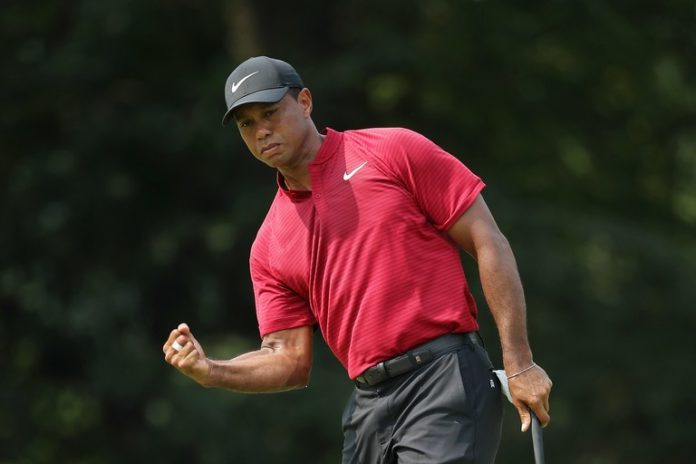
Tiger Woods

Tiger Woods continued his stunning rise up the world rankings on Monday by officially returning to the top 10 for the first time since 2014 after his dramatic fifth Masters win.

The 43-year-old climbed six spots to sixth after a one-shot victory at Augusta National which crowned one of the greatest comeback stories in sport with a first major title since the 2008 US Open.

Woods’ next target may be a return to the top of the rankings, where he spent a record 683 weeks between 1997 and 2014, including 281 consecutively.

He was ranked outside the top 1,000 in November 2017 when he embarked on his comeback from a fourth back surgery, but now has the top five of Dustin Johnson, Justin Rose, Brooks Koepka, Rory McIlroy and Justin Thomas in his sights.

Johnson reclaimed the world number one ranking from Rose just a week after losing it to the Englishman, thanks to his tied-second finish behind Woods as Rose missed the Masters cut for the first time in his career.

Koepka jumped back above McIlroy to third despite narrowly missing out on a fourth major title in just seven attempts.

Xander Schauffele, the other runner-up in Georgia, moved up one place to ninth.

World top 20

1. Dustin Johnson (USA) 10.01 average pts (+1)

2. Justin Rose (ENG) 9.20 (-1)

3. Brooks Koepka (USA) 8.96 (+1)

4. Rory McIlroy (NIR) 8.32 (-1)

5. Justin Thomas (USA) 8.04

6. Tiger Woods (USA) 7.74 (+6)

7. Francesco Molinari (ITA) 7.43

8. Bryson DeChambeau (USA) 7.24 (-2)

9. Xander Schauffele (USA) 6.56 (+1)

10. Rickie Fowler (USA) 6.00 (-1)

11. Jon Rahm (ESP) 5.98 (-3)

12. Paul Casey (ENG) 5.40 (-1)

13. Jason Day (AUS) 5.23 (+1)

14. Tony Finau (USA) 5.15 (+1)

15. Tommy Fleetwood (ENG) 5.02 (-2)

16. Matt Kuchar (USA) 4.8

17. Bubba Watson (USA) 4.60

18. Patrick Cantlay (USA) 4.36 (+3)

19. Patrick Reed (USA) 4.35 (-1)

20. Webb Simpson (USA) 4.22 (+3)

Stories Continues after ad

Uganda Rugby Union elects new Executive Committee

New URU EX Committee

The Uganda Rugby Union (URU) has elected Godwin Kayangwe Arinaitwe as the Union president for the next four years.

Godwin edged Ivan Semuwembwa on 44 to 9 votes in the elections that took place during the Union’s annual general meeting at Noble View Hotel in Ntinda on Sunday evening.

He replaces Andrew Owor who has been the Union’s president since 2013.

Oscar Olaro was elected as the Vice President Technical, defeating Moses Umah and Leonard Were with 28 votes to 3 and 22 respectively.

Peter Magona will deputize Kayangwe as Vice Presidents in the commercial affairs.

In the other posts, Peter Odong was elected as the Secretary, Simon Mutama as the Treasurer, Age Grade Rep – Dorothy Nekesa, Women’s Rep – Regina Luyolo and Up Country Rep – Vian Matsiko.

The four year tenure for the new committee takes immediate effect and will end in 2023.

Uganda Rugby Union Executive Committee Elect (2019 – 2023)

President – Godwin Kayangwe

VP Tech – Oscar Olaro

VP commercial – Peter Magona

Hon. Secretary – Peter Odong

Hon. Treasurer – Simon Mutama

Age Grade Rep – Dorothy Nekesa

Women’s Rep – Regina Luyolo

Up Country Rep – Vian Matsiko

Stories Continues after ad

Ethiopia lose 2020 CHAN hosting rights

CAF

The Confederation of Africa football (CAF) has stripped Ethiopia the hosting rights of 2020 Chan tournament.

The Executive board member of CAF took the decision after the country did not meet the required standards set up by Africa’s football governing body.

The Ethiopia Football Federation (EFF) admitted it doubts it will be ready to host the 2020 Africa Nations Championship (CHAN).

The EFF president Esayas Jira said preparations are behind schedule.

“The stadiums are not ready and next year being a (parliamentary) election year also makes it tricky for us to host this event,” Jira told BBC Sport.

“I’m worried as President of the EFF because although we are still willing to host, I doubt we can be ready.”

Jira was voted into office last June after Caf had awarded the hosting rights to Ethiopia for the tournament that is only open to locally-based players.

He added that a Caf inspection team visited Ethiopia over a month ago but are yet to release their findings.

A new host is expected to be announced soon by CAF.

Meanwhile, Uganda will play against South Sudan in the first round of the qualifiers, will play the first leg between July 26th, and 28th and the second leg to be played between August 2nd, and 4th in Kampala.

The aggregate victor over the two legs will have to face the winner between Rwanda and Somalia in the second round of the qualifiers to book a place in the Chan 2020 group stages.

Uganda Cranes are seeking for their fourth straight appearance at the 16-team tournament.

Unlike the African Cup of Nations, the competing national teams must be composed of only players playing in their domestic league. That is, a Ugandan player is only eligible to play for the Uganda Cranes if he is playing for a Ugandan club.

Stories Continues after ad

UNBS accredited by South African system to provide international certification

UNBS Eexcutive Director Dr Ben Manyindo

The Uganda National Bureau of Standards (UNBS) has been accredited by the South African National Accreditation System (SANAS) to provide International Organisation for Standardisation (ISO) Management Systems Certification.

The accreditation comes at a time when a growing number of Ugandan companies are seeking ISO management systems certification to benefit from the nascent oil and gas sector.

According to ISO, a management system is ā€œthe way in which an organization manages the inter-related parts of its business in order to achieve its objectives including, among others, product or service quality, operational efficiency, environmental performance, health and safety in the workplace.ā€

The SANAS accreditation means that UNBS is now internationally recognised to provide certification services to organisations for Food Safety Management Systems (ISO 22000) and Quality Management Systems (ISO 9001).

UNBS joins acclaimed multinational service providers of ISO management systems certification that comply with international requirements.

The UNBS Executive Director, Dr. Ben Manyindo said: ā€œThe accreditation means that UNBS has been accepted and recognised at international level to offer ISO management systems certification in a competent, consistent and impartial manner.ā€

ā€œThis accreditation will give Ugandan companies an opportunity to certify their organisational systems and processes at an affordable cost to demonstrate that their services meet international standards and therefore capable of meeting customer expectations,ā€ Dr. Manyindo said.

ā€œThe certificates issued by UNBS are now recognised worldwide thereby facilitating international trade. It gives us a competitive advantage in a market dominated by large foreign multinationals. We intend to use this accreditation to expand our market share of ISO certification,ā€ Dr. Manyindo added.

This accreditation adds to the UNBS chemistry and microbiology laboratories which are internationally accredited by SANAS.

SANAS is a signatory to the International Accreditation Forum (IAF) which gives it world-wide recognition as a competent body for carrying out independent evaluation of certification bodies against recognised standards. International accreditation agreements provide a mechanism that allows accredited certificates to be accepted around the world which reduces the risk of products and services being rejected in international markets.

Stories Continues after ad

Gen. Moses Ali launches UCC sponsored ICT school lab

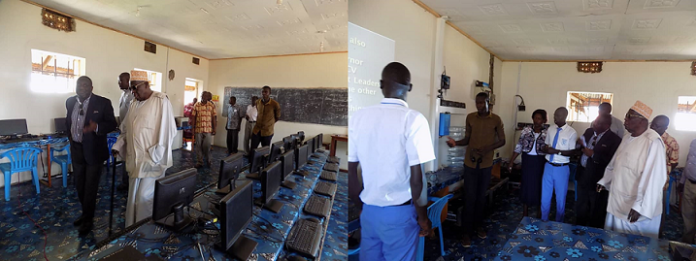
Gen. Moses Ali during the launch.

The first Deputy Prime Minister Gen. Moses Ali on Saturday launched a state-of-the-art solar-powered ICT computer laboratory comprising of 21 computers and accessories at Bezza Al Hijji senior secondary school, Adjumani. The school also benefited from the same programme with the support of 20 computers in 2013.

Launching the facility Gen. Ali commended UCC for the sponsorship that was realised under the Rural Communications Development Fund (RCDF). ā€œThe launch of the lab is particularly important because it marks a transformation in the way schools will deliver education in ICT. We can now expect improvements in the quality of ICT education and better ICT educational content,ā€ he said.

He said the NRM Government has provided an enabling environment where a child anywhere in the country is expected to get quality education whether living in the rural area or the big cities. A child of an ordinary peasant should have the opportunity to become a doctor, a scientist or an engineer.

The Government of Uganda has prioritised ICT as a critical enabler of socio-economic transformation and development. This is well articulated in the National Development Plan 2010/2015, the Vision 2040, and the National Resistance Movement (NRM) Manifesto. Thanks to the president of Uganda, His Excellency Yoweri Kaguta Museveni whose government has put in place an enabling environment for this economic transformation.

ā€œThe government, is ensuring that as the country prepares to embrace the 4th Industrial Digital Revolution, our children who come from rural areas are not forgotten. It is our duty to ensure that as the rest of the world moves forward, they are not left behind,ā€ he said.

Technological skills are necessary to participate in the global economy, and the use of Information Communications Technology (ICT) in education can also improve the quality of teaching and learning. At an administrative level, ICT can make education systems more efficient by helping teachers and administrators streamline routine tasks and improve assessment and data collection which in return will improve the culture of learning.

Teachers at Bezza Secondary School are also expected to benefit significantly from this computer laboratory and that is our aim as government. Through this laboratory, pupils at this school will no longer have to struggle to search for information as they will now have all the information that they need by searching the Internet and that is an excellent step in the right direction. Information and Communication Technology for education is seen as an enabler for teaching and learning.

He said the use of technology is at the centre of this revolution, creating room for new forms of delivery of educational content and the accompanying teaching aids. ā€œCombined with technologies that continue to develop at breakneck speed, the result is a world that has the want, and the means, to learn at scale. The global challenge for education is not just about providing access, but also ensuring progress,ā€ he said.

It is no secret that a good education has the power to change a life. What is new is the demand for that change. It is always fulfilling to acquire a new skill especially computer skills which have become an essential tool as the world is rapidly transforming into a digital era.

Since 2003, the Government of Uganda, through the Rural Communications Development Fund, has implemented several ICT projects for rural areas. The government, through the communications regulator, the Uganda Communications Commission (UCC), established RCDF. Several other projects other than the school ICT laboratories have been implemented such as Internet cafes, ICT training centres, postal service expansion and GSM towers throughout the country.

West Nile region has been a major beneficiary of the universal access projects. RCDF established several internet cafes and ICT training centres. It also connected the region to the rest of the country and the world through supporting the building of GSM base towers. These GSM sites expansion project had access points in the form of public pay phones and phone charging facilities. Suffice to say; we have registered significant achievements:

According to officials, while a lot more needs to be done, we should use these ICT facilities and equipment to create our niche; to seek information, to present ourselves to the world through content creation, to market our cultures, to market our tourism potential and to improve efficiency in service delivery.

The government has also further put in place appropriate measures to protect the country and people on the challenges affecting the ICT sector such as cybercrime, online child trafficking and pornography by establishing laws as well as the Computer Emergency Response Team (CERT), which will help us use ICT responsibly.

ā€œI welcome you to the launch of this School ICT Laboratory and thank UCC for the excellent job well done and look forward to continued development of the ICT sector services, especially in the rural areas which are in line with NRM’s manifesto of transforming Uganda to middle-income status by 2025,ā€ Said Ali.

The Government, through the UCC/RCDF programme, has supplied computers to over 1,000 secondary schools since the inception of the RCDF programme in 2003.

Internet penetration, adoption and usage for socio-economic transformation has increased notably in business, education, health and agriculture, which has improved the standards of living of the community.

The ICT sector is one of the fastest growing in Uganda and elsewhere in Africa. It employs over one million people. The growth of services such as mobile money, the sale of airtime and community ICT centres have contributed tremendously to job creation.

The number of users of telephony services (fixed & mobile) is over 20 million, which is close to 68 percent penetration.

In the broadcasting sub-sector, Uganda has achieved 100 percent radio signal coverage with over 200 operational FM stations. Every district in Uganda has more than two radio stations broadcasting in local languages.

On ICT infrastructure development, both the government and the private sector have continued to invest heavily in its deployment. The provision of quality services is mostly dependent on the availability of the ICT infrastructure.

Stories Continues after ad