Stanbic Bank
Stanbic Bank
20 C
Kampala
Stanbic Bank
Stanbic Bank
Home Blog Page 1299

Sudan coup leader Awad Ibn Auf steps down

Lt-Gen Burhan could be seen talking to demonstrators on Friday.

The head of Sudan’s military council has stood down a day after leading a coup that toppled long-time leader Omar al-Bashir amid a wave of protests.

Defence Minister Awad Ibn Auf announced his decision on state TV, naming as his successor Lt-Gen Abdel Fattah Abdelrahman Burhan.

The army has said it will stay in power for two years, followed by elections.

But protest leaders say they will not leave the streets until the military hands over to a civilian government.

Mr Bashir’s downfall followed months of unrest that began in December over rising prices.Mr Ibn Auf was head of military intelligence during the Darfur conflict in the 2000s. The US imposed sanctions on him in 2007.

The new man in charge is also a top military figure, but the Associated Press news agency reports that his record is cleaner than other Sudanese generals. He is also said to have met with protesters to hear their views

Mr Bashir has been indicted by the International Criminal Court (ICC) on charges of war crimes and crimes against humanity over the Darfur conflict.

However, the military council has said it will not extradite Mr Bashir, who denies the charges, although he may be put on trial in Sudan.

How did the latest drama unfold?
Despite Mr Bashir’s removal on Thursday, demonstrators had refused to disperse, camping out outside army headquarters in the capital, Khartoum, in defiance of a curfew.

In its first response, the military council came out and denied it was seeking power, telling the protesters that they would decide the country’s future, while the army maintained public order.

A few hours later, Mr Ibn Auf announced he was resigning and would be replaced by Lt-Gen Burhan.

Country profile
“In order to ensure the cohesion of the security system, and the armed forces in particular, from cracks and strife, and relying on God, let us begin this path of change,” he said.

Protesters celebrated his abrupt departure but the Sudan Professionals Association, which has been spearheading the demonstrations, later announced that the sit-in would continue.

“We call on the armed forces to ensure the immediate transfer of power to a transitional civilian government,” they said on Facebook.

They further called for the abolition of “arbitrary decisions by leaders that do not represent the people” and the detention of “all symbols of the former regime who were involved in crimes against the people”.

“Until these demands are fully met, we must continue with our sit-in at the General Command of the Armed Forces,” the SPA said.

Meanwhile, police said at least 16 people had been killed by stray bullets at the protests on Thursday and Friday.

Awad Ibn Ouf has stepped down to be replaced by a general the senior military hope will be more acceptable to the protesters. The momentum is with civil society.

The regime has floundered since this phase of protests began. The old ways of coercion haven’t worked and they face a civil society that is well organised and disciplined. This is a further retreat. It is unlikely to be the last.

And there’s the economic crisis brought about by misrule, corruption and loss of oil revenues. Even the regime’s friends in the Middle East and Asia will think twice about rescue packages if it looks like a new version of the old venality and brutality. That’s an important pressure.

This is an exciting moment. Just think about the role of women in all of this, of social media and civil society. It’s happening in Sudan but the significance of these forces working peacefully for change is universal. Yes it’s very precarious, but also full of possibility.

Stories Continues after ad

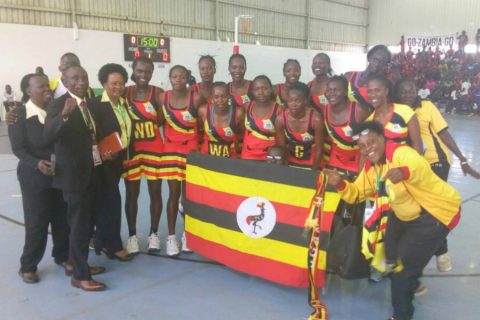
She Cranes name provisional squad for 2019 Netball World Cup

Uganda-she-Cranes

The Uganda netball federation (UNF) has today released the final list of twenty players to be selected for the 2019 Vitality World Netball Cup due in Liverpool, England in July 12th-21st 2019.

The twenty selected came from the first thirty seven players that were summoned before for the previous non-residential training, meaning that seventeen of the latter numbers have dropped.

The Uganda Netball Federation Vice President in charge of Administration, William Bwambale released the twenty names at Kati Kati Restaurant, Lugogo on Friday April 12th 2019 in the morning.

He said that the team will be under the guidance of head coach Vincent Kiwanuka, Nelson Bogere assistant coach, Wilberforce Mutete Physical trainer, Beatrice Zaweedi team coordinator and Norman Steven the team Doctor. Others are; Imelda Nyogesa, Robert Kisitu and Rashid Mubiru.

Bwambale confirmed that the non-residential training will start next week on Monday April 15th 2019 at Lugogo Indoor Stadium and residential on June 1st 2019.

The final list of 12 players will then be named a fortnight to the tournament.

Uganda She Cranes are among the sixteen countries and are in group D alongside hosts England, Samoa and Scotland.

The 2019 Netball World Cup will be the fifteenth staging of the premier competition in international netball, contested every four years. Australia are the defending champions.

Team Squad:

Peace Proscovia (Australia), Mary Nuba (England), Oyella Stella, Martha Soigi, Nanyonga Racheal, Meeme Ruth, Kizza Betty, Joan Nampugu and Namuwaya Muhayimuna (NIC), Eyaru Irene , Lunkuse Norah , Atino Susan, Irene Akello, Fauzia Nakibuule and Shaffie Nalwajja (KCCA), Nanyonga Sylvia , Achan Jesca, Lilian Ajio and Stella Nanfuka (Prison) also Namutebi Hindu (Police).

Stories Continues after ad

The potential implications of the Bank of Uganda probe for Uganda’s financial sector

Gayathry Venugopal

By Gayathry Venugopal

Alleged irregularities and illegalities committed by Bank of Uganda (BoU) in its closure and sale of seven commercial banks and the subsequent, ongoing Parliamentary probe has not only raised questions on the central bank’s activity, but on Uganda’s financial sector as a whole.

Over the past 25 years, seven commercial banks were closed by BoU due to non-performance. These were Teefe Bank, International Credit Bank, Greenland Bank, Cooperative Bank, Global Trust Bank Ltd, National Bank of Commerce and Crane Bank Limited.

Detailed allegations surrounding irregular and illegal activity surfaced in broader public discourse following a report from the Auditor-General, John Muwanga, which highlighted poor conduct and mismanagement of the liquidation processes of failed banks. Deficient recordkeeping was such an example of this poor conduct. BoU was unable to provide records related to the liquidation processes, except for those kept by external organisations hired by BoU to handle the liquidation.

The report, through examining the steps taken by BoU to liquidate the commercial banks, alleges corruption due to the lack of evidence to support officials’ claims that appropriate processes were adequately followed. In addition, evidence of fraud and collusion by BoU officials, transaction advisors, and buyers was highlighted.

The report outlined, among other examples, that the International Credit Bank, Greenland Bank, Cooperative Bank, Global Trust Bank and National Bank of Commerce were sold out at a discount of 80 per cent. The Auditor-General also noted that it is most likely that the motivations behind these actions were personal gain, rather than to stabilise and benefit the financial sector.

The allegations and the ongoing investigation by the Parliamentary Committee on Commissions, Statutory Authorities and State Enterprises (COSASE) raises concerns over the state of monetary policy management and the robustness of Ugandan banks.

Transparency and fairness in decision-making within BoU has been and will continue to be under greater scrutiny, for example, the reluctance of the central bank to publish minutes of its monetary policy committee meetings (as is the case in some other countries) has been raised in the investigation and in media discourse.

As more details of BoU’s mismanagement problems emerge through the parliamentary probe, questions over the impact of mismanagement on core policy functions have been raised, including on determining and managing interest rates and exchange rates, monitoring of cash in circulation and controlling inflation.

The full impact of the allegations and the ongoing probe remains too early to be seen. It should be noted that the financial sector is vulnerable to negative sentiments and perceptions. As such, further revelations as the investigation progresses could have a substantial and detrimental impact to the financial sector, and Uganda’s economy as a whole.

Further damage to public confidence could send shocks in the financial market as well as affect the exchange rate. It could also affect foreign direct investment (FDI) inflows to the country – a concern that has been expressed by some donor states including Norway and the Netherlands, who requested that Uganda protect banks, specifically DFCU, from negative publicity out of fears that it will affect investor confidence.

The full impact will be dependent on the extent of BoU’s conduct and mismanagement problems which, if discovered to be more extensive than previously thought, could even perhaps result in capital flight.

The uncertainty surrounding the banking sector is likely to generate negative implications. However, if the probe is conducted effectively and those responsible are held accountable with reforms put in place, it could lead to longer-term benefits to Uganda’s financial sector, including more transparent management and decision-making, improved public confidence in Uganda’s financial sector and ultimately greater stability and predictability.

Gayathry Venugopal is a Macroeconomics Research Analyst at the Economic Policy Research Centre (EPRC)

Stories Continues after ad

Sudhir’s family gives Fresh kid scholarship at Kampala Parents School

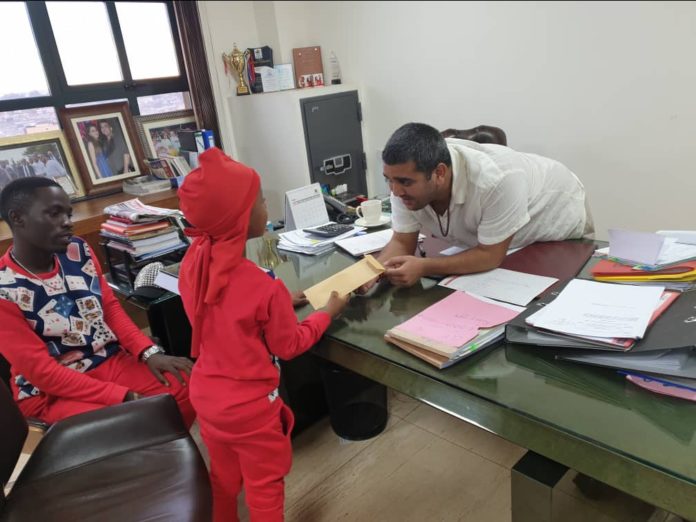
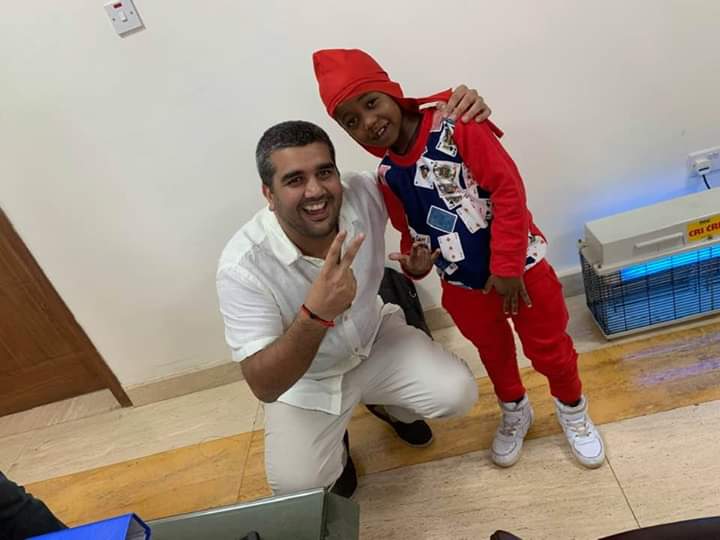
City tycoon Sudhir Ruparelia’s family has given seven year old musician Patrick Senyonjo aka Fresh Kid scholarship at Kampala Parents School.
According to Rajiv Ruparelia, the Managing Director Crane Management Services, the award of the scholarship to the young musician is in line with Ruparelia Foundation and boost the young man’s education path.

ā€œI was moved by his ambition being only seven years old. I would love to see him become a guide and inspiration to many young people out there hence, Ruparelia Foundation is presenting this young man with a full scholarship from the Ruparelia Foundation to go to Kampala Parents School,ā€ Rajiv said.

Fresh Kid’s promising career almost ground to a halt when State Minister for Youth & Children Affairs Florence Nakiwala Kiyingi ordered him to stop singing and return to school.

The boy decided to reply the minister in a way he knew best – a song titled Bambi in which he pleaded with her to let him continue singing because he was the bread winner of his family.

The song led to a meeting with the minister where she allowed him to juggle his career with education.

The minister also promised to pay his school fees up to P.7 and upgrade him from his rural St. Agnes Primary School Kawanda, but then the bombshell came. Her choice of school was St. Savio Kisubi, a boarding school, which Fresh Kid rejected.

Now with Kampala Parents, a day school, Fresh Kid has a chance to pursue his music career and study in one of the best schools in the country, something that his underprivileged background wouldn’t have allowed him, if his talent hadn’t opened the doors.

Stories Continues after ad

Scandal as junior workers accuse IGG of irregular recruitment, mistreatment and bribery

IGG Justice Irene Mulyagonja

Junior workers at the Office Inspectorate of Government have written to the State House Anti-Corruption Unit, crying of corruption, impunity and maladministration taking place at the office that is supposed to fight corruption in public offices, saying that the institution requires a new leadership at the helm.

A group of disgruntled staff at IGG on March 3, 2019 wrote to the Head of the Anti-Corruption Unit Lt Col. Edith Nakalema, calling on her office to intervene and save the situation at the IGG’s office. ā€œWe write in good faith, and pray that your good office shall take action on that matter,ā€ the letter reads in part.
They accuse the Secretary to the Inspectorate Rose N. Nakafeero together with members of the board and the management team for handpicking and interviewing people and that are yet to issue new appointments to new inspectorate officers without following the normal recruitment procedure set by the Internal Human Resource Policy of 2017 or the Public Service Standing Orders 2010.

The claim some officials at the IGG’s office are receiving bribery of Shs350 million for people whose cases are not registered with the inspectorate. They want President Museveni to disband the management team lead by Mariam F. Wangadya.

in response to the allegations, Justice Mulyagonja said what her staff ought to understand is the fact that the budget allocation to the institution isn’t sufficient to have all salaries increased.On other allegations, Mulyagonja dismissed them as untrue.
“Actually it is members of who staff and their main concern that we don’t listen to them is untrue. However, they do not know the environment we are operating in because everything rotates on the budget allocation given to us. For other issues in their letter are baseless only intended to grab attention” Justice Mulyagonja told Eagle Online in a telephone interview.

The junior staff accuse top managers at the Inspectorate for taking long to confirm their colleagues who were posted to upcountry as Regional Inspectorate Officers or Principal Inspectorate Officers in various regional offices such as Fort Portal, Gulu, Lira, Arua, Moyo, Tororo and Hoima.Ā  The officers, according to the petitioners were posted about three years ago on the promise that they would be confirmed in six months but this has not happened.

ā€œAfter one year of serving in this positions, the officers requested to be confirmed, however, they were told that the institution had maxed out the wage bill, so confirmations could not be made,ā€ the petitioners say in their letter, adding that bosses at the IGG office have further angered their colleagues by insisting that since they were mere ā€œcaretakersā€ they cannot be confirmed in those positions. The petitioners argue that the answer is not convincing since the officers are being paid Acting allowances and have stayed in those positions for more than 12 months.

They quote the Public Service Standing Orders 2010 (A-c) part 9, which says: An appointment on acting basis is expected to last not more than six months, and is subject to direction by the Appointing Authority. Any period of acting appointment beyond six months will be null and void and the officer holding such an appointment shall automatically revert to his or her substantive post, unless the Appointing Authority extends the appointment of another period of six months, but shall not exceed 12 months in total.Ā  This arrangement will only apply when a statutory office is temporarily vacated.ā€

The petitioners say their colleagues, some of whom are acting as Deputy Regional Inspectorate Officers. ā€œWhat the officers really want is either to be confirmed in those positions immediately or reverted to their old substantive positions,ā€ the letter reads.
They claim bribery cases have made the office of the IGG not to perform as expected.

Stories Continues after ad

CAF postpones Confederation Cup game in Sudan due to security situation

Caf-confederations

The second leg of the 2019 Caf Confederation Cup tie between Al-Hilal and Etoile du Sahel has been postponed due to the current political situation in Sudan.

A statement from the Caf read; ā€œDue to the current security situation in Sudan, the Total CAF Confederation Cup second leg between El Hilal (Sudan) and Etoile du Sahel (Tunisia) has been postponed indefinitely.

ā€œThe match was due to take place on Sunday, 14 April 2019, at the El Hilal Stadium in Omdurman.

ā€œThe new date, kick-off time and venue of the match will be decided by CAF and communicated to all parties in due time.

ā€œEtoile won the first leg 3-1 played on 7 April 2019 in Sousse.ā€

Ugandan goalkeeper Salim Jamal Magoola plays for the Sudanese Club El Hilal FC.

The Al-Hilal Stadium City in Omdurman, which is meant to host the quarter-final tie has been a fortress for Al Hilal as they have only been beaten once in that venue in their last 10 Confederation Cup games.

Sudan was plunged into a security crisis following the removal of Omar al-Bashir from power by the military forces.

Protesters have been calling for a regime change in Sudan since December, and Omar Al-Bashir who has been in power for over 30 years is reported to have finally stepped down on Thursday.

The country has been rocked by protests for almost five months demanding for Bashir’s resignation.

The country’s Defence minister announced a three-month state of emergency and closure of the country’s border crossings until further notice.

Stories Continues after ad

Barclays Bank staffer arrested for stealing Shs135m from client’s account

Barclays Bank

The latest development at Barclays Bank is that the police in Katwe is holding the cashier Naigaga Nansamba for the alleged stealing of Shs135 million from a client’s account.

Ms Nansamba aged between 20-30 years is a cashier at Barclays bank, Ndeeba Branch.

According to Kampala Metropolitan Police spokesperson Patrick Onyango, Nansamba was picked up on Tuesday on allegations of tampering with a client’s account in that bank.

ā€œIt is alleged that she tempered with a client’s account and stole money. They (client) came and reported a case. We began our investigations, which proceeded very well,ā€ Onyango said.
He said that the initial complaint was that the accused had stolen just Shs 38 million, but a forensic audit involving police detectives and bank management, showed that over Shs 135 million had illegally been withdrawn from the client’s account.

ā€œAt the moment we are not going to talk about whose account was tampered with,ā€ he said.

Onyango said Nansamba’s file is almost complete and will be forwarded to the Directorate of Public Prosecutions (DPP) next week for perusal and legal advice.

The theft incident at Barclays Bank comes five days after Kampala Central Police Station (CPS) released two Diamond Trust Bank (DTB) staffers who had been arrested on allegations of stealing Shs700 million from several clients’ deposits.

Daniel Kirumira Kalinda and Christine Namazzi were released following a court order issued by the Buganda Road Court principal Grade One magistrate, Robert Mukanza ordering their unconditional release from police custody or else they be produced before court.

Onyango said Kalinda was arrested for defrauding the clients of DTB through transfers to Namazzi account. Kirumira was allegedly withdrew cash from different accounts and sending the money to Namazzi’s account.

Stories Continues after ad

Caf sacks General Secretary ahead of Afcon draw

Amr_Fahmy

The Confederation of African Football (Caf) has dismissed Egyptian Amr Fahmy from his role as the body’s General Secretary.

Caf’s Executive Committee made its decision in Cairo on Thursday ahead of the draw for the 2019 Africa Cup of Nations, according to BBC Sport Africa.

The reason for the dismissal is still unclear as Caf has yet to comment.

Fahmy was appointed in November 2017 as he followed in the footsteps of his father and grandfather.

Fahmy’s grandfather Mourad served as general secretary of African football’s governing body from 1961-1982.

Mourad was replaced by his son Mustapha, who held the post until 2010 before being appointed as the director of competitions at Fifa.

Morocco’s Mouad Hajji, who was appointed as Caf’s general coordinator role earlier this year, is being tipped to replace Fahmy.

On Friday, the 24 finalists at this year’s Nations Cup will discover who they will play when the tournament gets underway in June.

The draw will take place at 8pm Ugandan time.

Stories Continues after ad

Meet Dr. Lawrence Muganga, award-winning author and recipient of US$1.3m book deal

Dr. Lawrence Muganga

Dr. Lawrence Muganga is award-winning writer and author, researcher, educator, public policy practitioner, strategy advisor, development management Specialist and authentic learning enthusiast based in Edmonton, Alberta Canada. Dr. Muganga earned his MA in Economic Policy Management from Makerere University and a Ph.D. in Educational Administration and Leadership from the University of Alberta, Canada. Dr. Muganga holds a Higher Education Teaching Certification from Harvard University, Derek Bok Center for Teaching and Learning.

Dr. Muganga has extensively researched and written about a cutting-edge educational paradigm known as Authentic Learning, which, in short, means an education that prepares students for the real world by equipping them with real-life skills to face now and the future.

He very often advises schools, governments, multi-national agencies, international aid organizations, education managers and administrators, curriculum development experts, educators, learning facilitators, trainers and independent citizens searching for solutions to better the education system to deliver meaningful learning. Lawrence’s advice is grounded in the urgent need to equip students with skills required to address the 21st century challenges and preparing them for a future about which nothing is certain but constant and rapid change with jobs perhaps unknown to us today.

He is a results-driven visionary with a stellar record of success providing sound policy advice, independent and well-thought-out analysis, clear and easy to read research products, developing and operationalizing strategies, programs and projects that engage and unite diverse visions, missions and organizations.

He is skilled at identifying and explaining complex policy & strategy issues, researching contentious issues, creating compelling research products that support easy decision making and realization of vision, conducting independent analysis, providing cutting edge policy advice, and building high-performing teams enthusiastic about achieving organization goals and objectives.

He has held positions in Canada, Ethiopia, and Rwanda focused on researching, planning, developing, implementing, and assessing policies that contribute towards human capital development and improving the quality of life for populations.

He is a recognized and award-winning professional within the areas of public policy and program management, he has established a network of contacts with local, national and international constituent groups including universities, think tanks, research and policy institutes, governments, multi-national development agencies, non-profit organizations, and industry-leading corporations.

He has recently written and published a must-read book that seeks to remedy the ills that have befallen the modern school system. In the book You Can’t Make ā€œFish Climb Treesā€, he advocates for a cutting-edge educational paradigm known as Authentic Learning, which, in short, means realistic learning in a real-life context. It means breaking down the walls of the school and taking education into the community. It means producing a tangible product that society can use. It means teaching students the soft skills, such as communication, collaboration, problem-solving, and creativity that will enable their success in the real world.

Simply put, Muganga is very authentic, aspirational, analytical, collaborative, and success-oriented and strongly believes in the futures that starts now.

His new book You Can’t Make ā€œFish Climb Treesā€, clinched a $1.3 million book deal with an international organization. Whose contract prevents the organization from being named.

Stories Continues after ad

African Eurobonds: an evolving and now US$100 billion asset class

Gregory Smith

By Gregory Smith, PhD

The landscape for African sovereign debt has changed rapidly since the global financial crisis. As lower global interest rates accelerated the search for yield, African governments borrowed from a wider range of sources. 21 African countries have issued hard currency sovereign eurobonds, while taking on other bilateral, commercial and syndicated loans.

There are positives about the opportunities the growing asset class brings for the issuing sovereigns and investors. But there are also concerns about the increasing debt levels and a spike of repayment risk in 2024.

A $100bn African sovereign eurobond space
With record issuance of $27.1bn in 2018, and $7.6bn issued in quarter one 2019 (from Egypt, Ghana and Benin) the asset class has grown rapidly. Total outstanding African sovereign eurobonds reached $102bn in March 2019 (denominated in EUR and USD). South Africa, Kenya, Angola, Egypt (for a second time) and Nigeria could also issue later in 2019, but the total is unlikely to match 2018 issuance.

A trend of issuance has been longer-dated paper. Angola, Egypt, Ghana, Ivory Coast, Kenya, Nigeria, Senegal and South Africa each issued 30-year paper in 2018. Beyond the Mediterranean coast and South Africa, this was rare prior to 2018 and follows a trend started by Nigeria when it issued a 30-year eurobond in November 2017.

21 African countries have outstanding eurobonds
There was issuance from South Africa and the Mediterranean coast in the 1990s, and the Seychelles issued in 2006, but the African eurobond story begins in earnest in 2007 when Ghana, Gabon and Republic of Congo issued eurobonds. There was a pause in 2008 and 2009, but in 2010 issuance picked-up and the asset class reached 10 countries. By end-2014, 17 countries had issued eurobonds following record issuance that year. In 2015 Angola and Cameroon issued sovereign eurobonds for the first time, as did Mozambique in 2016. With Benin’s debut eurobond this year there are currently 21 countries who have outstanding sovereign eurobonds.

The heavyweight issuers have been Egypt and South Africa, followed by Nigeria (also the three largest economies on the continent). The middle-weights, each with multiple eurobonds, are Ivory Coast, Ghana, Angola, Kenya, Morocco, Senegal, Zambia, Tunisia, Gabon and Namibia. Some of the middle-weight’s eurobonds are equal to a substantial proportion of their economies. In Senegal, Ivory Coast, Ghana, Gabon and Zambia their outstanding eurobonds exceed 10% of 2019 GDP. Benin, Cameroon, Mozambique, Ethiopia, Rwanda, Republic of Congo, Tanzania and the Seychelles are currently dipping their toes in the eurobond market with a single outstanding issuance.

A more active approach to debt management
An important shift by African debt managers since 2017 has been to more active debt management. Sovereigns are coming to the markets not only to finance their budgets and investment plans, but also for liquidity management. Bond proceeds have been used to tender and buy-back existing debt and this has helped reduce spikes in debt service costs and reduce repayment risks. Ghana, Senegal, Ivory Coast and South Africa have each worked to smooth their debt maturity profiles in this manner. Ghana, Gabon, Egypt, South Africa and Nigeria each also paid back eurobonds as they matured in 2017 and 2018.

However, challenges remain and there is currently a large spike ($12bn) in African eurobonds maturing in 2024, with the majority coming due from the smaller oil-importing economies. If global markets are not in good shape in 2024, rolling-over the maturing debt will be challenge for many of the frontier markets. The 2018 sell-off of frontier eurobonds under-scored the volatile nature of global debt markets and that the window for issuance can shut when market sentiment deteriorates.

Active debt management is most effective where it takes the entire debt stock into account. Several eurobond issuers have sizeable foreign ownership of their local currency debt. In these countries there is a need to take a comprehensive look at debt maturities, looking beyond the eurobonds, to other external debt, and crucially at years where there are spikes in the amount of foreign-owned domestic debt amortizing.

Foreign ownership of local currency debt
Advice ten years ago to African governments was simply ā€˜deepen your domestic markets’, but now and as debt risks increase a more nuanced approach is needed. In Ghana, Egypt, Madagascar, Zambia and South Africa foreign ownership of treasury bills and bonds is substantial (over 15%). Egypt and Ghana provide interesting examples for other African countries.
In Egypt foreign purchases of government securities total $15.8bn (40% of outstanding government securities). Only $2.44bn of the foreign ownership is in bonds and the remaining $13.4bn in Treasury bills (17.1% of the stock). This interest dropped in the second half of 2018 as market sentiment soured having peaked at 23.7% in 2018, but interest returned in January and February 2019 as investors end-2018 ā€˜risk-off’ sentiment shifted back to ā€˜risk-on’.

In Ghana foreign ownership of government securities is largely in bonds, with just 5% of Treasury Bills owned by non-residents. Foreign investors own 51% of outstanding local currency bonds with maturities of between two and 15-years. Foreign investors hold close to 70% of 10-year bonds and 87% of 15-year bonds. A limited secondary market typically means a longer-term stake in the fast-growing Ghanaian economy.

Efforts are needed to safeguard debt sustainability.
The African eurobond issuers are growing robustly (average growth is forecast at 4.5% in 2019 by the IMF), but the uptake of debt has outpaced the growth of the economies. Average public debt across the issuers has grown from 38% GDP in 2010 (following broad debt relief) to 62% GDP in 2019. While many of the 21 eurobond issuing countries are borrowing like middle-income countries but are not yet collecting revenue like one. The average revenue-to-GDP ratio dropped from 23% in 2010 to 22% in 2019. Hence debt service-to-revenue ratios remain a key concern.
Investment is needed to further develop infrastructure, raise the quality of schooling and health care, and equip the rapidly growing cities with the sewers, safe water supply and public transport they need. While domestic savings are insufficient, financial capital is needed from abroad. Hence there is a case for attracting FDI and borrowing from global debt markets. But care must be taken to ensure debt sustainability, as a debt crisis would reverse some of the recent economic gains and reduce future investment flows.

Gregory Smith PhD, is Director, Fixed Income Strategy, at Renaissance Capital, a leading emerging markets investment bank.

Stories Continues after ad