Stanbic Bank
Stanbic Bank
19.2 C
Kampala
Stanbic Bank
Stanbic Bank
Home Blog Page 1327

Museveni launches new framework for civil education in Uganda

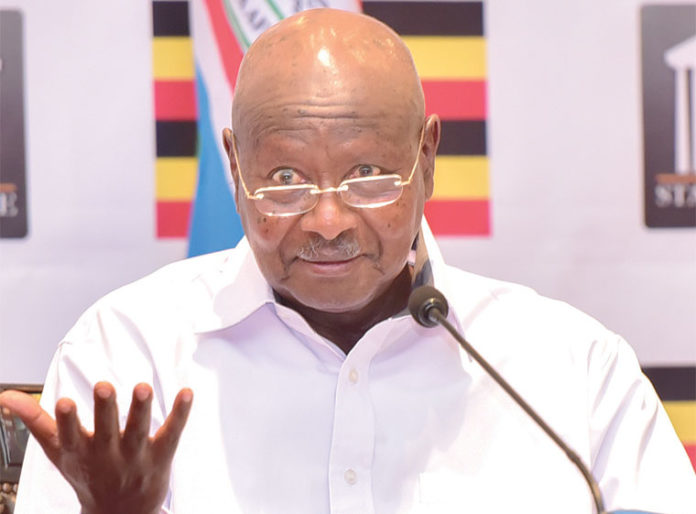
President Museveni

President Yoweri Museveni on Tuesday launched the National Initiative for Civic Education in Uganda (NICE-UG). The launch took place on the margins of the on-going ‘Africa Now’ Conference at the Munyonyo Commonwealth Resort, Kampala.

NICE-UG comes as the first structured collaboration between the Government of Uganda (GoU), the United Nations (UN) and Non-Government actors to promote efficient and effective delivery of relevant, value-based, functional and inclusive national civic education to a rapidly expanding and predominantly youthful population of Uganda.

The Initiative responds to the lack of an inclusive and sustained coordination mechanism for civic education in the country. As such, the Initiative’s key mandate will be to coordinate and harmonize provision of civic education by state and citizen-led frameworks. NICE-UG is a Presidential Initiative in the initial five-year phase.

Therefore, His Excellency the President has appointed a leadership team of eminent personalities with diverse expertise and experience as Executive Board of Directors for the Initiative. The Chairman, Board of Directors is Mr. Joseph Biribonwa, a former Deputy Chairperson of the Electoral Commission (EC). The Alternate Vice Chairpersons are: Ms. Barbara Katende of Makerere University Kampala, and Mr. Med Kaggwa, the current Chairman of the Uganda Human Rights Commission (UHRC).

The substantive Secretary is Mr. Crispin Kaheru, the Coordinator of Citizens’ Coalition for Electoral Democracy in Uganda (CCEDU). The Patron for the Initiative is Her Excellency Rosa Malango, Resident Coordinator of the UN System in Uganda.

In addition, there will be an Advisory Board comprising representatives from Government, Civil Society, Cultural Institutions and the Private Sector. The interim structure of NICE-UG includes a Programme Implementation Committee (PIC) comprising of: Civil society organizations (CSOs); arts industry; cultural institutions; business community; faith-based organizations; academia; media; government ministries, departments and agencies; political parties; as well as the civic and voter education Constitutional mandate holders, Uganda Human Rights Commission (UHRC) and Electoral Commission (EC).

NICE-UG will advance principled partnership and collaboration with relevant local and international frameworks in order to benefit from unique experiences and capabilities. The Initiative sets out to innovatively harness the role of formal and informal institutions in civic education.

Stories Continues after ad

FUFA Drum 2019: Group stage draws held

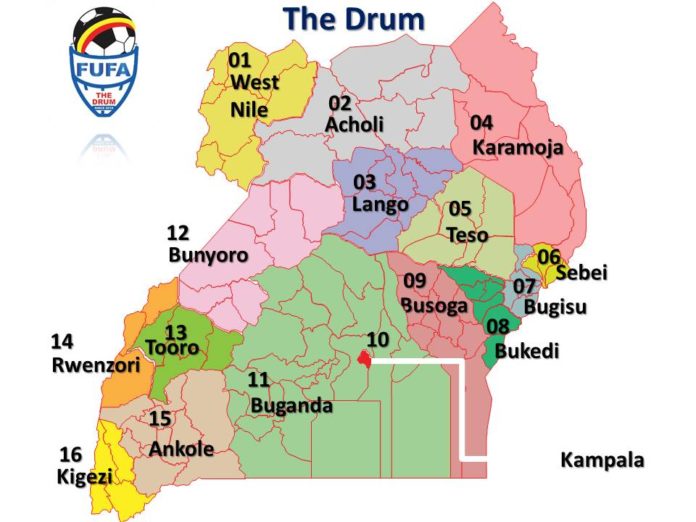
FUFA-Drum provinces

The group stage draws for the 2nd edition of the FUFA Drum tournament have been held at Jevine Hotel in Rubaga.

Sixteen provinces will take part in the tournament that was won by Buganda Province in Arua during the 1st edition.

Busoga, Bugisu, Buganda, Bunyoro, West Nile, Bukedi, Sebei, Tooro, Kigezi, Ankole, Lango, Karamoja, Teso, Acholi, Kampala and Rwenzori are the provinces that will take part.

The objective for the competition is for searching talent across the country. The league will not only be the best way of tapping more talent but also for clubs to have a better hunting ground of players for their teams.

The first matches of the group stages competition will from 30th to 31st of March 2019.

All games will be played at 4pm.

The top two teams in each group will qualify for the knockout stages which will also be played on a home and away basis like it was in the first edition until the final.

Groups:

A: Busoga, Kampala, Tooro, Rwenzori

B: Buganda, Ankole, Lango, Sebeiraw

C: West Nile, Acholi, Bunyoro, Karamoja

D: Bukedi, Bugishu, Teso, Kigezi

Match-Day one fixtures:

Saturday, 30th March 2019

Busoga vs Tooro

Kampala vs Rwenzori

Buganda vs Lango

Ankole vs Sebei

Sunday, 31st March 2019

West Nile vs Bunyoro

Acholi vs Karamoja

Bukedi vs Teso

Bugisu vs Kigezi

Stories Continues after ad

Punters to use IDs in sports betting

people betting. With the introduction of use of National ID, it will phase out the underage.

The National Gaming Board (NGB) has proposed sweeping changes in the local gaming industry, one of them will have punters present personal identification documents before being allowed in betting halls.

According to a document that Eagle Online has in possession, the requirement for the identification is meant to protect the young people or minors from the bad effects of betting.

NGM now commands operators to register all punters accessing their premises or online. The punters will provide their names, national identification number, registered telephone number, nationality and passport number for foreigners and refugee cards for refugees.

NGB says is the process of developing regulations for identifications and registration of all punters to protect the minors, to ensure the identification of problem gamblers but also ensure accountability and facilitation of taxation operators.

The Parliament of Uganda early last year passed 25 years as the betting activities age for Ugandans and other groups. This practically made it illegal for youths under 25 to engage in betting and gambling, that included working in the betting companies.

The constitution of Uganda 1995 does not define a minor, however several references are made to age from which understanding of who a minor is can be deprived. The constitution provides that a man and a woman are entitled to marry if they are each of the age of eighteen and above.

It provides that children are entitled to be protected from social or economic exploitation and shall not be employed in or required to perform work that is likely to be hazardous or to interfere with their education or to be harmful to their health or physical, mental, spiritual, moral or social development. For purposes of this, children shall be under the age of 16.

The constitution also provides that every citizen of Uganda of eighteen years of age or above has a right to vote.

For above few references, it is clear that a minor is someone who is below the age of 18 and for purposes of employment 16.

Perusal of the Hansard establishes that the intent of parliament was to protect parents whose students were gambling at university. They then resolved to have a minor defined as someone below 25 years.

It is clear that the intent was to create a prohibition which is something that could have been done without having to define who a minor was. The prohibition was to prevent persons under 25 years from gambling and working in a gambling house.

However with the advent of the internet and with most applicants including betting advertisements it is not clear how legislating it this stringently can deter anyone from gambling.

The 25-year was arrived at to stop students at the university but did not cater for persons who are out of school and have been for so much longer which is the group of persons who mostly resort to gambling as other formal prospects of employment are closed out to them.

18 years is the gambling age according to the Lotteries and Gaming Act in compliance with the constitutional provisions.

NGB Uganda under section 4 of the Lotteries and Gaming Act, 2016 is mandated to issue licenses for Lotteries, Casinos, Gaming and Betting in Uganda. The mandate includes Licensing, Supervision, Enforcement and dispute resolution.

The Board has powers to conduct investigation, examination, inspection and issue guidelines, directives or instructions for the proper management of the industry.

Gambling in Uganda includes: lotteries, casinos, slot machines, bingo, sports betting and pool betting.

Stories Continues after ad

Ugandan referee named by CAF for U-17 Afcon duty

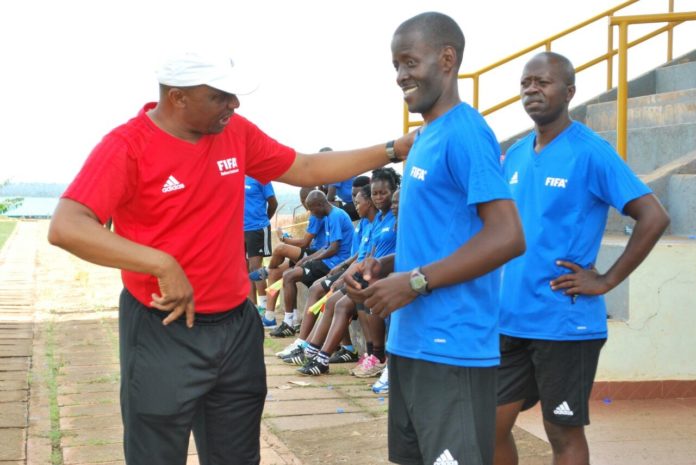
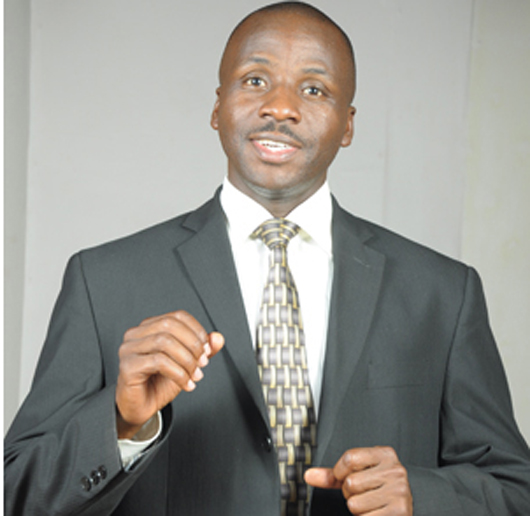
Mashood Ssali during a training course with a FIFA official.

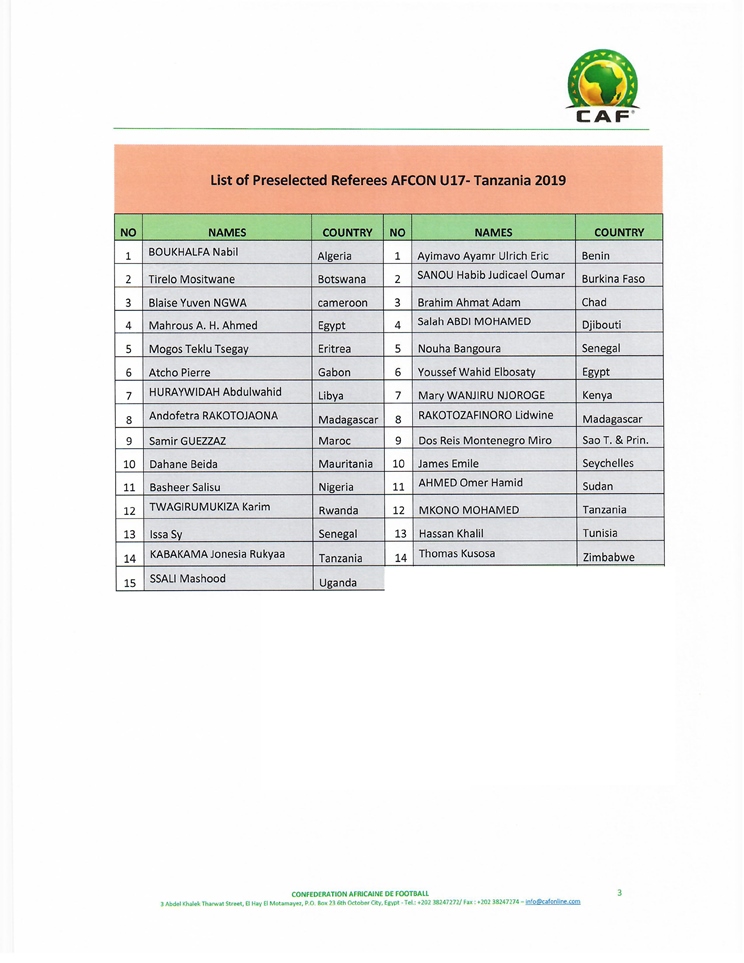
Twenty nine referees and assistant referees have been selected by CAF to undergo a preparatory course to fine-tune their readiness for the upcoming Total U-17 Africa Cup of Nations 2019 in Tanzania.

The selected match officials, made up of 15 referees and 14 assistant referees from 25 member associations, will go through medical screening, theoretical and physical drills in their quest to make the list for the final tournament.

Ugandan FIFA referee Mashood Ssali is among those selected for the exercise that will see the excelled referees officiate at the final tournament scheduled for 14-28 April 2019 in Tanzania.

Ssali Mashood attended the CAF Elite B referee’s course in September 2018 in Kigali, Rwanda.

Ssali and other selected officials will undergo a training course in Casablanca, Morocco from 31st March to 4th April 2019, to fine-tune for the tournament.

A trailblazing decision will also for the first time see women referees handling games of the opposite sex on the continent, debuting at the continental show-piece.

The landmark conclusion was the highlight of the CAF Referees Committee meeting held on 26 February 2019 at the CAF Headquarters in Cairo, and had in attendance CAF President Ahmad Ahmad.

Invitation_Preparation_U17_E.pdf

The historic decision is a testament to CAF’s commitment to developing the women’s football. It will also give women match officials a bigger platform to expose their talents and also gain experience at the competitive level considering the limited matches and competitions, which often affects their progress and development.

In line with that, the trailblazers consist of Tanzanian referee Jonesia Rukyaa Kabakama, and assistant referees’ Mary Wanjiru Njoroge (Kenya) and Lidwine Rakotozafinoro (Madagascar) are among the preselected 29-match officials.

For the final tournament, host Tanzania, Nigeria, Angola and Uganda are in Group A, whilst Guinea, Cameroon, Morocco and Senegal constitute Group B. The semi-finalists will qualify to represent the continent at the FIFA U-17 World Cup.

Stories Continues after ad

Ugandans must push for compliance to prevent negative oil impacts on biodiversity and communities

Dickens Kamugisha

By Dickens Kamugisha

Between February 25 and 28, 2019, I was part of the Africa Institute for Energy Governance (AFIEGO) team that visited some of the people who were displaced by the Kabaale-Hoima oil refinery project. The people resettled in districts such as Kiryandongo, Masindi, Kakumiro, Kagadi, Buliisa and others.

During the same period, we also organised a meeting with over 100 refinery-affected people at the Kyakaboga resettlement camp. The resettlement camp was set up by government for the refinery-affected people who were relocated. It was painful to see old men and women crying because of the misery, desperation, poverty and isolation they are living in.

Before the displacement by government, families used to live a humble life but they had pride

and dignity. Their land was fertile and supported them to get sufficient food. They also had 15 water sources in the refinery area which enabled access to clean water. The people were also able to generate income to send their children to school and lived with hope for a better future.

Then the displacement to allow oil activities happened! The refinery-affected people’s lives changed forever. Government displaced them in a hurry to commence oil production to the extent that it could not wait to conduct a participatory and acceptable Environmental and Social Impact Assessment (ESIA) to ascertain impacts and put in place a framework for mitigation. This failure explains why the refinery-affected people are suffering today.

MESSY, INHUMANE OIL RESETTLEMENT CAMP

During our field trip to Kyakaboga, parents, especially women, narrated how their children were failing to stay in school because they were spending most of the time looking for water, food and other basic needs. Others are sickly due to poor hygiene and diet. It should be noted that to date, the entire resettlement camp of over 70 households that were relocated does not have a nearby clinic. It also does not have any viable means of transport. The resettlement also lacks water and other necessities.

More so, the 46 pit latrines constructed by government are close to the main houses and kitchens. Families that government refused to build for houses struggled and built their own homes but they do not own toilets. The entire camp is a messy.

Sadam Tekakwo, the Kyakaboga resettlement LC 1 chairman says, “Life in this Kyakaboga camp is miserable. The place is smelling because of many toilets being near houses. Our children are also sickly due to congestion, lack of food, poor hygiene and lack of water. I want government to come and pay me compensation and I leave this place”.

CASH COMPENSATION FAMILIES NOT ANY BETTER

The refinery-affected families we visited in Kibaale, Kakumiro, Kagadi, Kiryandongo and other districts are also suffering. These families opted for cash compensation from government.

We visited the family of Mr Tom Mpabaisi, his wife Esther Abigaba and their nine children which received cash and relocated to Kiryandongo district.

Mpabaisi first rejected the unfair compensation government gave him. For instance, his five-roomed permanent house was valued at Shs2.4 million! However, the negative impacts of the cut-off date of June 2, 2012 placed on his land by government forced him to accept unfair compensation in 2017.

He was paid the compensation based on unfair,obsolete and outdated compensation rates of 2010/2011. As a result of poor compensation, Mpabaisi and his family ended up in Kiryandongo, which is over 250km from Kabaale-Hoima.

Mpabaisi had hoped to buy land and resettle near Kabaale-Hoima. However, the compensation money he was given could not enable him to get land in Kabaale-Hoima as he had wished.

Today, he has spent over Shs20 million on constructing a new house. Yet government paid him only Shs2.4 million for a similar permanent house that he had on his land in Kabaale.

His house is unfinished with no doors, windows and others but he and his family, including a baby, are staying in it. “Life is very difficult. We used to have fertile soils in Kabaale-Hoima but the land I bought here in Kiryandongo is infertile because I received little compensation. It cannot support growing of crops for our food and income. We are starving!

Only those with money can buy matooke [green bananas] from Kigumba town. My

2-year old son you see here is sickly because of poor feeding. My old sons have certificates in electrical courses but they have failed to get jobs. Our life is miserable,” Mpabaisi said during our visit.

WOMEN’S LIVES CRUSHED

In Kakumiro where we visited Ms Stella Kahaingwe and her two granddaughters, there were also tales of suffering. Kahaingwe was also forced to relocate to Kibaale, which is now Kakumiro district. She had wanted to buy land near her community in Hoima but due to the unfair compensation paid to her by the government, the only place she could afford to buy land was in the remote areas of Kibaale.

We reached her home at 11 am and found her with her two young granddaughters. The young girls had been home for over three weeks because they had failed to pay Shs11,000 and Shs18,000 respectively to attend school. “Dickens, it is sad that I cannot help my girls to go back to school. I am weak but I have to feed these children. I no longer have enough energy to grow food for the home and sell to pay school fees. My youngest son is also here at home because I have failed to pay fees at his secondary school. I need help,” Kahaingwe said.

Kahaingwe was abandoned by her husband in 2013 when he received compensation. AFIEGO engaged the Ugandan Human Rights Commission (UHRC) to ensure that her sons became signatories to the bank account that received the compensation money. This is how she managed to save some of the money paid to her husband to buy land in Kakumiro.

CHILDREN’S FUTURE BLEAK

The refinery-affected adults are not the only ones suffering. Children are too.

During a meeting with community members and teachers at Nyahaira Primary School in Kyakaboga, it was saddening to here that in 2018, there were 11 girls in P.6 but only one girl progressed to P.7 at the school. While no one knows the whereabouts of the rest of the girls, the teachers suspect that the conditions in the resettlement camp are hostile for the elder girls to stay in school.

Parents are too poor to provide critical basic needs such as sanitary pads to their girls. Girls are also responsible to fetching water where they spend four to five hours in lines at the only water source in the camp.

In addition, all the households at Kyakaboga have been facing a food crisis for months and girls have to stay at home to support their mothers to feed their families.

Parents also have no money to pay between Shs5,000 to Shs25,000 required to cater for the nursery school teachers, buy school uniforms and other basic needs.

The writer is CEO, AFIEGO

Stories Continues after ad

Lethal plague hits Uganda-Congo border, WHO says

Minister of Health Jane Ruth Aceng.

A lethal form of plague has broken out on Uganda’s border with the Democratic Republic of Congo (DRC) and several people are thought to have died of the disease, the World Health Organization (WHO) said hours ago.

The agency praised Ugandan health workers for vigilance and prompt action in spotting a suspected outbreak of pneumonic plague, which the WHO says is usually fatal unless detected early and treated with antibiotics.

Health Ministry reported two probable cases of the illness in Zombo District on March 5 after a 35-year-old woman died and her 23-year-old cousin reported similar symptoms, the WHO said in a report.

Additional investigation revealed the dead woman had lived in Atungulei village in Congo’s Ituri province, and her 4-year-old child had died days beforehand. Finding her sick at her child’s burial, her relatives took her to Uganda for treatment.

The cousin’s symptoms raised suspicions of plague and a preliminary rapid diagnostic test was positive for the disease. Results on additional specimens sent to Uganda’s Plague Laboratory in Arua were pending. The patient was steadily improving, the WHO report said.

55 people, including 11 health workers and people who took part in the dead woman’s funeral, had been identified as high risk contacts and were being followed up.

Three other people reportedly died of similar symptoms in Congo, the WHO said, and Congolese authorities were also investigating.

Stories Continues after ad

WHO launches new global influenza strategy

Green influenza viruses

The World Health Organisation (WHO) has released a Global Influenza Strategy for 2019-2030 aimed at protecting people in all countries from the threat of influenza. The goal of the strategy is to prevent seasonal influenza, control the spread of influenza from animals to humans, and prepare for the next influenza pandemic.

“The threat of pandemic influenza is ever-present.” said WHO Director-General Dr Tedros Adhanom Ghebreyesus. “The on-going risk of a new influenza virus transmitting from animals to humans and potentially causing a pandemic is real. The question is not if we will have another pandemic, but when. We must be vigilant and prepared – the cost of a major influenza outbreak will far outweigh the price of prevention.”

Influenza remains one of the world’s greatest public health challenges. Every year across the globe, there are an estimated 1 billion cases, of which 3 to 5 million are severe cases, resulting in 290 000 to 650 000 influenza-related respiratory deaths. WHO recommends annual influenza vaccination as the most effective way to prevent influenza. Vaccination is especially important for people at higher risk of serious influenza complications and for health care workers.

The new strategy is the most comprehensive and far-reaching that WHO has ever developed for influenza. It outlines a path to protect populations every year and helps prepare for a pandemic through strengthening routine programmes. It has two overarching goals:

Build stronger country capacities for disease surveillance and response, prevention and control, and preparedness. To achieve this, it calls for every country to have a tailored influenza programme that contributes to national and global preparedness and health security.

Develop better tools to prevent, detect, control and treat influenza, such as more effective vaccines, antivirals and treatments, with the goal of making these accessible for allcountries.

“With the partnerships and country-specific work we have been doing over the years, the world is better prepared than ever before for the next big outbreak, but we are still not prepared enough,” said Dr Tedros. “This strategy aims to get us to that point. Fundamentally, it is about preparing health systems to manage shocks, and this only happens when health systems are strong and healthy themselves.”

To successfully implement this strategy, effective partnerships are essential. WHO will expand partnerships to increase research, innovation and availability of new and improved global influenza tools to benefit all countries. At the same time WHO will work closely with countries to improve their capacities to prevent and control influenza.

The new influenza strategy builds on and benefits from successful WHO programmes. For more than 65 years, the Global Influenza Surveillance and Response System (GISRS), comprised of WHO Collaborating Centres and national influenza centres, have worked together to monitor seasonal trends and potentially pandemic viruses. This system serves as the backbone of the global alert system for influenza.

Important to the strategy is the on-going success of the Pandemic Influenza Preparedness Framework, a unique access and benefit sharing system that supports the sharing of potentially pandemic viruses, provides access to life saving vaccines and treatments in the event of a pandemic and supports the building of pandemic preparedness capacities in countries through partnership contributions from industry.

The strategy meets one of WHO’s mandates to improve core capacities for public health, and increase global preparedness and was developed through a consultative process with input from Member States, academia, civil society, industry, and internal and external experts.

Supporting countries to strengthen their influenza capacity will have collateral benefits in detecting infection in general, since countries will be able to better identify other infectious diseases like Ebola or Middle East respiratory syndrome-related coronavirus (MERS-CoV).

Through the implementation of the new WHO global influenza strategy, the world will be closer to reducing the impact of influenza every year and be more prepared for an influenza pandemic and other public health emergencies.

Stories Continues after ad
Big loss to Africa: AU mourns Police Commissioner, Christine Alalo

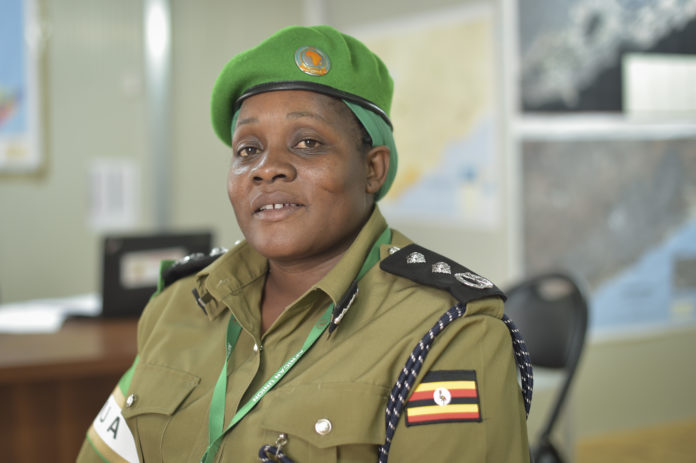
The late Christine Alalo.

The Special Representative of the Chairperson of the African Union Commission (SRCC) for Somalia, Ambassador Francisco Caetano Madeira, says he is in shock and saddened by the untimely death of Police Commissioner Christine Alalo who was, until her demise, the acting Police Commissioner of the African Union Mission in Somalia (AMISOM).

Police Commissioner Christine Alalo was aboard Ethiopian Airlines flight ET302 from Addis Ababa to Nairobi which crashed a few minutes after taking-off from Bole International Airport on Sunday.

Madeira said Alalo will be remembered for her dedication, commitment and professionalism with which she led the African Union Police component in Somalia since 2015 and for the very positive results she was able to obtain in that capacity.

He has extended his condolences to the Government and the people of Uganda, relatives, and friends of the late.

“The entire AMISOM family is with the people and the government of Uganda, with Emmanuel and Alvin, sons of our beloved C.P Christine Alalo, in this moment of sorrow and despondency. May her soul rest in peace,” Ambassador Madeira said.

Meanwhile the European Union (EU) and its member states have extended condolences to the late officer’s family, saying that she was a champion of human rights and a former winner of the EU Human Rights Defenders Award in Uganda.

At the time of her death, CP Alalo was serving as the Acting Police Commissioner AMISOM and her tour of duty was expected to end in June, 2019. She joined the police as a cadet/ ASP on August 18, 2001 and served as in various capacities of command. She was a highly respected member of the force who loved her job.

“She died while on duty and ably carried the image of the force and our country Uganda to greater heights and will be sadly missed,’ Mr Fred Enanga the Police Spokesperson said in the statement.
He said CP Alalo is survived by two sons, Emmanuel and Alvin.

Meanwhile, police have formed a task team to trace the remains of the Commissioner who was among the 157 people who died on Sunday in the plane crash.

Before working internationally (with UNMISS and AMISOM), Christine Alalo headed the Department of Child and Family Protection Unit in Uganda. In 2014, she was awarded the EU Human Rights Defenders Award for her work in tackling, among other things, child abuse. A quote from the award ceremony states that “Christine stood out in the Uganda Police Force as a change agent, who is readily accessible and approachable. She dares to tackle cultural practices and attitudes that relegate women and children to domestic abuses”.

Christine Alalo carried the same esprit de corps with her to her challenging job as AMISOM Police Commissioner. Without losing the glint in her eyes and with her booming laughter echoing the AMISOM HQ hallways, she stayed firm and did not give an inch when it came to issues such as integrity, human and gender rights.

“We will always remember her vibrant energy, her wisdom and poise, her positive outlook on life and the glint in her eyes. Over the years, she became an invaluable interlocutor to European Union Capacity Building Mission in Somalia (EUCAP) and we cherished the advice and wisdom she shared with us, which she had gained from her more than 15 years of experience working in the Ugandan police force,” EUCAP Somalia’s Head of Mission Maria-Cristina Stepanescu said in memory of the late.

Stories Continues after ad

US aviation agency gives nod to the 737 MAX as Boeing struggles to contain Ethiopia crash fallout

Ethiopian-plane

The United States Federal Aviation Administration has reaffirmed the airworthiness of the Boeing 737 MAX in the wake of the Ethiopian Airlines crash that killed 157 people. It comes after several countries and airlines grounded the aircraft.

There have been mounting concerns about whether Boeing’s best-selling single-aisle airliner is safe to fly, after crashes in Indonesia last October and in Ethiopia last week that dealt a heavy blow to its reputation. In a statement on Monday, the FAA said that, while “external reports are drawing similarities” between the accidents, which killed 346 people in total, it’s too early to judge if a common issue is to blame.

“This investigation has just begun and to date we have not been provided data to draw any conclusions or take any actions,” the agency said.

While the FAA opted to proceed with caution, aviation authorities in China, Indonesia and Ethiopia, have rushed to ground their respective fleets of the US aircraft manufacturer’s most popular plane, as a precaution.

Stock markets have also been reacting to Boeing’s woes, its shares sliding more than 5 percent on Monday.

With no definite conclusions reached from last October’s Lion Air crash yet, let alone last week’s Ethiopian Airlines disaster, speculation has been rife, with some experts suggesting that a common technical fault had doomed both planes.

What do the incidents have in common?
Desmond Ross, aviation security expert, former pilot and CEO of DRA consultancy, told RT that, although a complete set of data is not available on either of the crashes, “they do look very similar.”

There have been damning reports that the Ethiopian jet had experienced a violent nosedive shortly after departing from Addis Ababa airport this week, and that this incident was “possibly caused by similar issues to that of the … Lion Air crash.”

The brand-new jet is marketed as more fuel-efficient and technically superior to its direct competitor, the Airbus A320neo family. To beat the European jet, Boeing had installed larger engines that were moved a bit further forward, tilting the balance of the aircraft. To compensate for this, the company altered on-board software and the flight control system, Ross explained.

What makes the 737 MAX particularly (un)safe?
The MAX-series jet has not yet become the world’s most dangerous plane to fly. Other models, like the de Havilland Comet, the first commercial plane, or Tupolev Tu-154, the working horse of Soviet civil aviation, had poorer safety records. But allegations quickly spread that the Lion Air crash last year could have been prevented had Boeing tackled the technical glitch.

Nevertheless, shortly after the incident Boeing released an update to pilots flying the 737 MAX airliner, warning of the issue. But it could be that some pilots “have not been properly briefed or properly trained,” Ross speculated.

Meanwhile, Alexey Kochemasov, a Boeing 737 captain at Russia’s Pobeda airline, said it’s too early to say if the same system played a role in both incidents. The 737 is a reliable plane and everything a pilot should know to tackle the problem “was written up clearly” in Boeing’s safety directive. Kochemasov warned against drawing parallels between the two cases before getting the results of relevant studies and expert analyses.

Boeing goes into damage control
Boeing CEO Dennis Muilenburg sought to brush off speculation about the similarities between the two crashes and to reassure staff that it is working hard to discover and fix the underlying issue, if any.

“While difficult, I encourage everyone to stay focused on the important work we do. Our customers, business partners and shareholders depend on us to deliver for them,” Muilenburg wrote, adding that the company would be “further strengthening the support”to the “737 team.

In the letter to employees that circulated on social media shortly after the FAA announcement, Muilenburg argued that “speculating about the cause of the accident or discussing it without the necessary facts is not appropriate and could compromise the integrity of the investigation,” while highlighting the company’s vast output and its impressive track record of having delivered “more than 370 737 MAX airplanes to 47 customers.”

While Muilenburg preaches optimism in the face of trouble, others predict more financial and reputational setbacks for the aviation giant.

The outcomes of the Ethiopian disaster could become even more painful “if the results of the investigation turn out to be negative,” Ross predicted. “I know quite a few people who are selling the shares of Boeing as we speak and they’re getting out of any investment in the Boeing company,” he revealed.

Kochemasov, on the other hand, argued that the company would emerge relatively unscathed: saying that its reputation will be damaged “is like saying that three Mercedes cars crashing in one day will damage reputation of Mercedes company,” he believes.

Stories Continues after ad

Rashid Toha, Wasswa Bbosa win February UPL Awards

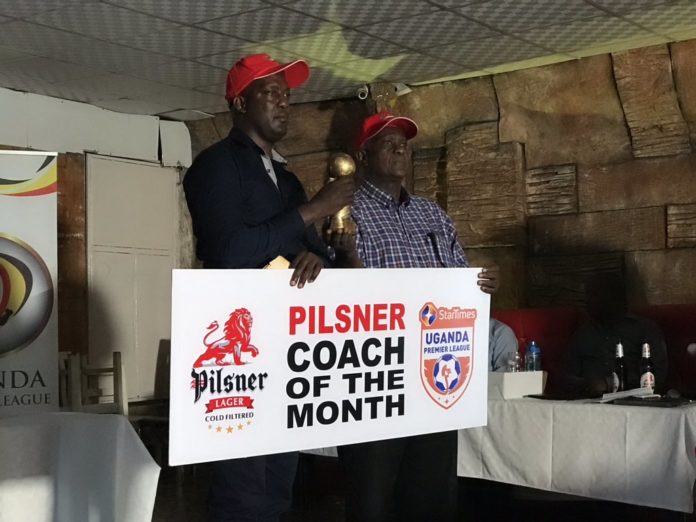
Wasswa Bbosa receiving his accolade.

The 2018/19 StarTimes Uganda Premier League monthly Awards for February 2019 took place today evening at Torino Bar & Restaurant off Logogo By-Pass in Kampala.

Onduparaka defender and Captain Rashid Toha was named the Pilsner player of the month while Tooro United manager Wasswa Bbosa was crowned coach for the month for February.

Toha beat KCCA FC midfielder Nicholas Kasozi and URA FC playmaker Shafik Kagimu to the top accolade while Wasswa Bbosa edged Vipers SC manager Michael Nam Ouma to the accolade.

Both Toha and Wasswa Bbosa walked away with a reward of one million Ugandan shillings.

Pilsner Lager signed a partnership deal with the StarTimes Uganda Premier League to award the competition’s best players and coaches for the next three years.

The awards are named ‘Pilsner man of the match award’ and the monthly awards named ‘Pilsner player of the month award’ and ‘Pilsner coach of the month award’.

The Pilsner man of the match walks away with one hundred thousand shillings (Ugx 100,000) after every match.

Stories Continues after ad