Stanbic Bank
Stanbic Bank
18.8 C
Kampala
Stanbic Bank
Stanbic Bank
Home Blog Page 1333

FUFA reduces bans for match officials and players

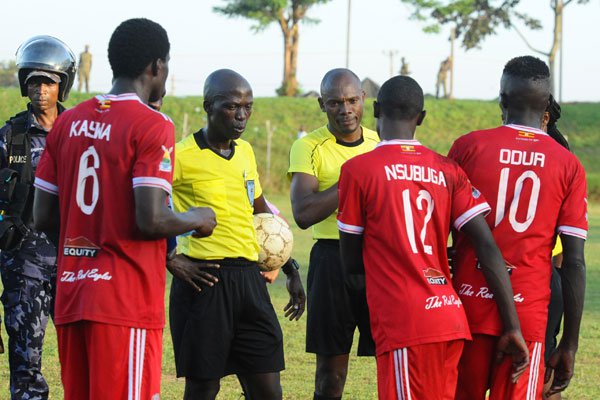
Referee Kirangwa Ronald who was in charge of the game.

Uganda football governing body FUFA, through its Appeals Committee has reduced on the bans it had given to the different match officials and players.

FUFA had banned the match officials following controversy around Tito Okello’s equalizer in the 1-1 draw between Vipers SC and Express FC at Wankulukuku in November 2018.

The FUFA Appeals Committee reduced referee Ronald Kirangwa’s ban from 3 years to 6 months. The new period includes the time he has been serving the ban.

The Committee also reduced assistant referee Samuel Kakembo’s ban from 5 years to 1 year but; the new period includes the time he has been serving the ban and will be demoted from top flight refereeing for one year after serving the new ban period.

Vincent Kasoki’s 365 days ban has been cut to 4 months. The Bumatte FC player was handed the initial ban and fined Shs300,000 by the FUFA Disciplinary Competitions Panel for unsporting behavior towards a match official in his team’s game against Kitara FC.

Twaha Ayiman’s 365 days ban has been reduced to five months. The Nkumba University Beach Soccer player was handed the initial ban by the FUFA Disciplinary Competitions Panel for unsporting behavior towards a match official in his team’s game against Talented BSC.

Stories Continues after ad

CocaCola and Pepsi top list of world’s 100 mega brands in 2017

UNITED STATES - APRIL 15: Cans of Pepsi and Coke are set up for a photograph in New York on April 15, 2004. PepsiCo Chief Executive Steve Reinemund introduced Gatorade X-Factor flavors and added Tropicana juice drinks, moving faster than rival Coca-Cola Co. to cater to health-conscious consumers. (Photo by Daniel Acker/Bloomberg via Getty Images)

CocaCola and Pepsi are first and second on the list of the world’s 100 mega brands, according to Euromonitor International’s megabrands report that ranks the top 100 most successful fast-moving consumer goods (fmcg) brands worldwide.

In the report launched Tuesday, fmcg encompasses packaged food, soft drinks, beauty and personal care, consumer health, tissue and hygiene, home care, hot drinks and pet care. Each of the brands making it into the top 100 qualifies based on their retail sales value for the year 2017.

While several major brands have maintained their ranking for some time, the report says the balance across the list is shifting. “People’s attitudes to health and premiumisation are evolving and brands that cannot meet new realities have lost out. Changes in how people research and shop online are having a profound impact. Also, the importance of different regions of the world has changed for many of these megabrands, raising the question of where companies should focus their resources most effectively,” it says.

In 2017 megabrands made up 14 per cent of all fmcg sales worldwide. According to the report, it was primarily driven by sales of packaged food, beauty and personal care, and soft drinks brands.

There are 41 packaged food brands in the top 100, more than any other category. Beauty and personal care brands take second position, with 25 brands in the top 100. Soft drinks brands are third, with 18 in the ranking. Beyond these three categories, 16 brands make the top 100, with five tissue and hygiene brands amongst them.

Asia Pacific accounts for the single biggest percentage of fmcg sales by region, with almost US $3 of every US $10 spent. North America and Western Europe each account for just over one-fifth of the total spent. They are followed by Western Europe (21.1 per cent) Latin America (12.1 per cent) and Middle East and Africa (7.7 per cent) of the total sales.

According to the report, in 2017, Coca Cola and Pepsi have had a brand value of US$35-45 billion and US$10-15 billion respectively.

Brands like Red Bull, Nivea, Colgate, Sprite, Gillette and Fanta which are also common in Uganda were ranked sixth, nineth, 11th, 13th and 20th respectively.

The report says since the 2014 data, retail sales of Coca-Cola and, Coca-Cola owned, Sprite have fallen in Latin America and Asia Pacific, but risen in North America, as the drinks giant pursues a strategy based on achieving higher value sales from each consumption occasion.

Meanwhile, Pepsi has seen retail sales fall in all three regions. However, increased sales in the Middle East and Africa helped solidify its global rank. Red Bull’s retail sales have risen strongly in China and the US since 2014 — these two countries by far its most important markets. Its rival Monster generates the vast majority of sales value from the US.

Nescafé, Pampers, Tide / Ariel and Huggies are all amongst the top 10 fmcg brands worldwide that do not belong to packaged food, beauty and personal care or soft drinks industries. The 10th ranked brand here, Always, resides at number 62 in the wider table. Mars’ leading position in the pet care category is clear, as it owns two of the three pet care brands to make it into the top 100 — Pedigree and Whiskas (31 and 68 in the overall ranking). However, the future may not be quite so assured for these two brands. Firmly mid-market for a number of years, they have been slowly losing share of global dog and cat food value sales as premium brands gain against them.

According to the report, Nivea is the most important brand owned by German company Beiersdorf, making up 86 per cent of its beauty and personal care sales in 2017. The brand is the global leader in skin care and sun care and is also present in deodorants, bath and shower products.

Stories Continues after ad

Empower girls to access and share information about sexual and reproductive health- Belgian envoy

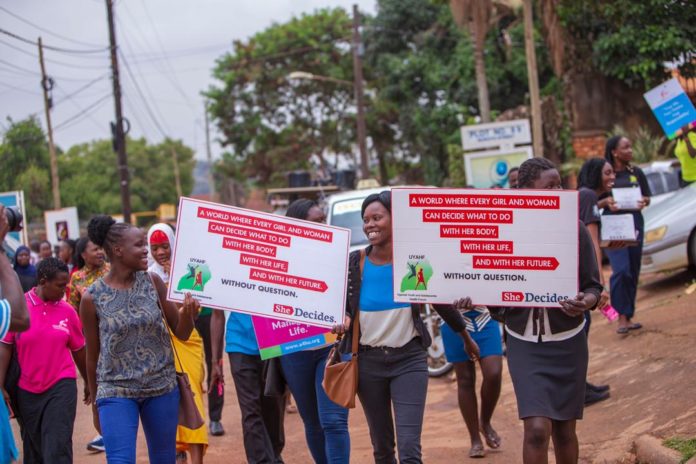
Youth matching on the street.

Belgium Ambassador to Uganda,Hugo Verbist has called for empowerment of girls through availing platforms to access and share information about sexual and reproductive health services.

The envoy was said this during the She Decides Festival Uganda celebrated on March 2, at Kira Road Police grounds, Kamwokya in commemoration of the global She Decides Day.

She Decides is a Global Movement that envisions a world where every girl and woman can decide what to do with her body, with her life and with her future. The movement is united is a fundamental right of every girl and every woman to make right the decision.

He revealed that one in four girls between ages of 15-19 years is already pregnant or with their first child and sadly, figures are shooting up.

According to Uganda Demographic Health Survey (UDHS-2016), annually, more than 300,000 teenagers get pregnant accounting for the bulk of unwanted pregnancies which result into unwanted births or unsafe abortions (estimated at 24 per cent). This has however increasing the risk of maternal mortality and morbidity among adolescent girls.

“For many of these girls, pregnancies has little to do with informed choices. Often times, it is a consequence of discrimination, rights violations including; child marriage, rape, and defilement,” he said.

Mr. Jackson Okweku the Executive Director of Reproductive Health Uganda called on government to ensure priority is given youth-friendly services in all health units in the country.

“With a population that is 70 per cent youth, why should services be packaged only for the older people? Empower the young people, understand who they are, and serve them with a smile”.

Dr. Charles Olara , the Director of Clinical Services in Ministry of health, while speaking on behalf of State Minister Sarah Opendi the State Minister for General Duties in the Ministry of Health, appreciated She Decides movement and partners for advocating for the rights of women and girls.

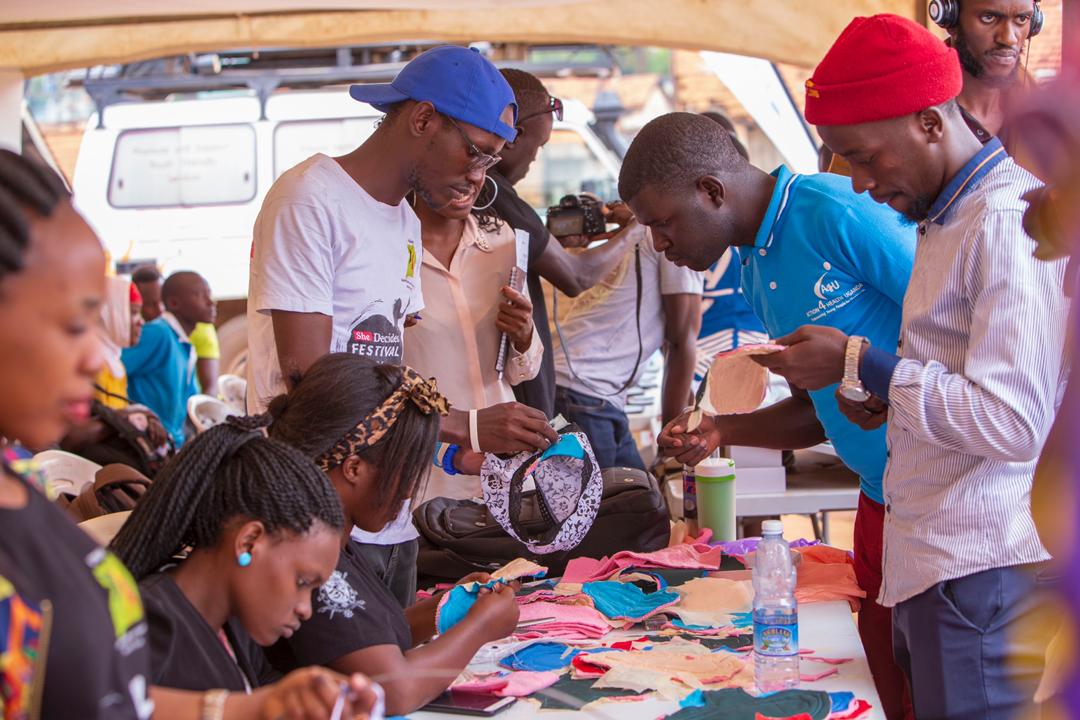
Demonstrations on the use of pads and other SRHR necessities was part of the event

He appreciated the She Decides Movement for the key role it’s playing in creating a platform where girls and women can be empowered to take on bold and life/career impacting decisions through giving right information, education and life skills to make informed and powerful decision that are key in supporting them to realize their full potential.

This includes having access to modern contraception, to sexual and relationship literacy, maternal and child health services and safe abortion among other SRHR services, Dr. Olara Explained.

He also noted that there is need to remember that more than 3 in 10 people in Uganda are young people of age 10-24 years, making Uganda one of youngest countries in the world hence the need to ensure that the right investments are made for the empowerment of these young people to enable them explore possibilities and full fill their potential.

Dr Victoria Namugala from the school of Women Gender studies Makerere University called on to women to make use of the justice system as the first channel, through which women rights can be achieved. She said, for women to confidently stand to their rights, they need the affirmation that justice system is there to serve them.

“Let’s make it easier for girls to access justice. For many victims of violence, justice has remained a nightmare due to prolonged processes, judgement and costs involved. For instance, asking the victim to prove that she was defiled and did not consent is tricky and victims will forever shy away”.

The Commissioner of Police in Charge of Community Policing Department, Hadijja Namutebi implored police officers to serve diligently and emphasized Uganda Police Force’s commitment to working together with communities in addressing Sexual and Gender based Violence and child trafficking that largely affects young girls

Stories Continues after ad

Munyagwa given last chance to appear before Anti-Corruption Court

COSASE chairperson, Mubaraka Munyagwa.

Kawempe South Member of Parliament who doubles as the chairperson of parliamentary Committee on Commissions, Statutory Authorities and State Enterprises (COSASE), Mubarak Munyagwa has been given up to April 5, 2019 appear before the Anti-Corruption Court over Corruption charges.

The MP is leveled with charges of soliciting a bribe of Shs100 million from a one Francis Kakumba in order to unduly influence Kawempe Division Urban Council to nominate his son as a member of the Kampala City Land Board representing Kawempe Division.

Appearing before the Chief Magistrate of Anti-Corruption Court, Pamela Lamunu, prosecution led by Alice Komuhangi Khaukha averred that the controversial MP received money in two installments of $20,000 and Shs 4million.

Komuhangi told court the office of the directorate of public prosecution (DPP) the case of corruption was brought up against the MP in January 2019 however efforts to secure his appearance have been unfruitful to date.

Munyagwa’s legal representative from Lukwago and Co Advocates undertook responsibility to produce his client in Court on the of April 5.

Stories Continues after ad

Uganda to face Ethiopia in 2020 Caf Women’s Olympic qualifying tournament

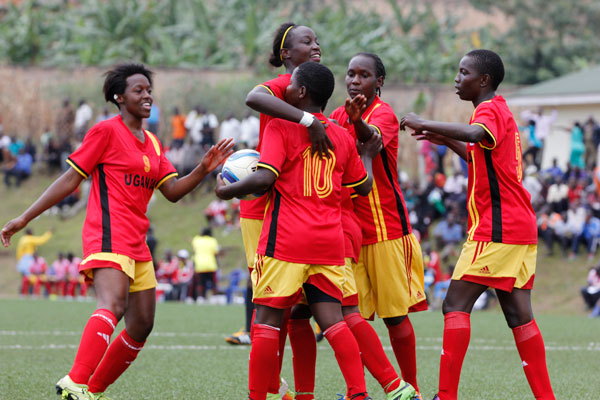
The Crested Cranes

The Uganda Women’s national football team, also known as Crested Cranes, have been drawn against Ethiopia in the first round of the African qualifiers for Women’s Olympics football in Tokyo 2020.

The first leg will be played in Addis Ababa with the second leg to be played in Kampala. Both legs will be played between 1st and 9th April 2019.

The winner over the two legs will have to face Cameroon in the second round of the qualifiers. The first leg and second leg will be played between 26th August and 3rd September 2019.

The countries that were given a bye into the second round are; Nigeria, Cameroon, Equatorial Guinea, Ghana, Kenya, South Africa and Zimbabwe.

Due to the current suspension of the Sierra Leone Football Association by FIFA, Sierra Leone is disqualified from the qualifiers of the Tokyo 2020 Olympic Games (Women’s). Following the decision, Cote d’Ivoire progresses to the next round.

Meanwhile, Angola has withdrawn from the qualifiers, earning Zambia, their opponents at the First Round passage to the Second Round.

Africa has 1.5 slots for the final tournament next year in Tokyo, Japan, meaning one team will go through automatically from the qualifiers, and second-placed team engaging their counterparts from CONMEBOL (South America) in a playoff.

First round fixtures:

Uganda vs Ethiopia

Mali vs Morocco

Chad vs Algeria

Congo DR vs Tanzania

Gabon vs Congo Brazzaville

Malawi vs Mozambique

Angola vs Zambia

Botswana vs Namibia

Stories Continues after ad

Six keys to the best social media platform for business

Martin Zwilling

By Martin Zwilling

An all-too-common question I get from startups and small businesses is “Which is the right social media platform for my business?” Is it Facebook, Twitter, LinkedIn, or one of the other 200 active platforms vying for attention these days? The right answer is that not all of these are worth your attention, but it’s probably more than one.

The “Tyranny of the OR” is a concept from the classic business best-seller “Built to Last,” by James C. Collins (Stanford Business School). Too many executives believe that things must be either A or B, and can’t be both. The reality is that most businesses need to embrace the “Genius of the AND,” meaning they should use and monitor more than one of the available platforms, based on objectives.

If you are in the 30 per cent of all small businesses who still ignore social media, you need to read the book by Dave Carroll, “United Breaks Guitars.” It highlights the story of how United Airlines paid no attention to social media while Dave’s story of his crushed guitar and poor customer service went viral around the world. United Airlines spent a long time recovering from that debacle.

Thus your objectives for social media should at least include monitoring your online reputation on the three top platforms, and hopefully taking the minimum actions to turn any negatives into positives for the rest of us. Of course, the right approach is to be proactive along all the following fronts:

Reputation management. You can’t ignore the fact that Facebook now has over 2.32 billion monthly active users who may be talking about you, and there are 25 others, per Wikipedia, that have over 100 million users. You need to protect and grow your brand, so the first step is to know what’s going on, and the best defense is a good offense.

Build your brand and expert visibility. Engaging in social media and blogging on a regular basis is a low-cost way to achieve visibility, and become the “go-to” person for that topic and the voice that people trust in your industry. That’s how you brand yourself as an expert in your niche and make your company the one that others seek out and turn to. Customers today trust those they know and those they see others trusting.

Increase customer leads and conversion. With over 77 per cent of the U.S. population now using social media, at least 30 per cent look at profiles on Facebook, Twitter and LinkedIn before buying any product or service. Of those, approximate 70 per cent said they wouldn’t deal with a new company if it didn’t have a social media presence. You need to be there.

Maximize customer retention. It’s a well-known axiom of business that efforts to retain existing customers have tremendous payback, compared to the costs of attracting new customers. Courting them with ongoing updates and special offers through their social networks is a natural way to keep their loyalty.

Proactive customer service. Without social media, companies must rely on incoming calls and letters to address customer problems and concerns with products and services. Why not ask them for feedback before there is a problem, and watch what they are telling their friends, both good and bad?

Keep up with the competition. Last year, Facebook’s revenue from advertising was over $55 billion, which was a 50 per cent year-over-year increase. Almost 40 per cent of small businesses that sell on Facebook say it is their sole sales channel. Ignoring what your competition does is sure to limit your business longevity.

So what are the best social media platforms for small business, according to these industry leaders? It never hurts to look at where the big boys are. According to data from Inc. 500 companies, major hitters are LinkedIn (98 per cent), Twitter (91 per cent), and Facebook (89 per cent). I recommend that these be the point of entry for every business.

For the new platforms and all the rest, that’s where tracking and testing comes in. Set some objectives, pick a likely platform, set some measurements, and do a 30-day trial. If you don’t get results, it might be a mismatch for your target market. If you see progress, double down and add even more content or focus to continue the positive momentum.

So there is no one magic social media platform for any business, just like there has never been just one marketing channel for any business. The best marketing programs today for small businesses are the “genius of the AND,” including traditional print and video advertising, complemented by proactive efforts in a selection of the new social media domains. Don’t put all your marketing eggs in one basket.

The writer is a veteran startup mentor, executive, blogger, author, tech professional, professor, and investor. Published on Forbes, Entrepreneur, Inc, Huffington Post.

Stories Continues after ad

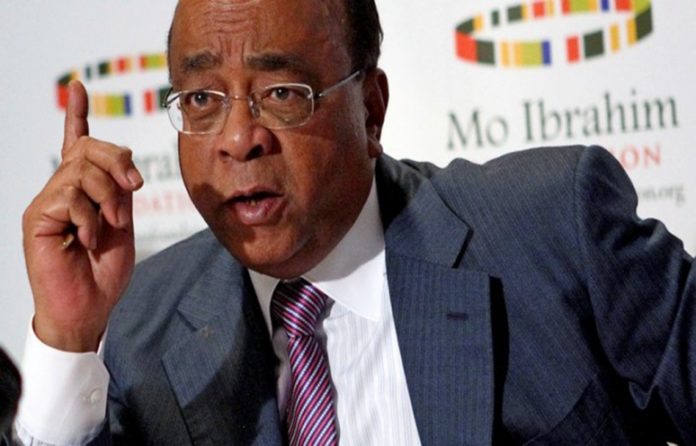
2019 Ibrahim Governance Weekend, 5-7 April 4-5 in Abidjan

Mohammed Mo Ibrahim is the brain behind Ibrahim Governance Week.

The Mo Ibrahim Foundation (MIF) will hold its flagship annual event, the Ibrahim Governance Weekend (IGW) from April 4-5, 2019, in Abidjan, Côte d’Ivoire, the organisers say in the latest media advisory.

The IGW brings together a coalition of decision makers from across the continent and beyond, encouraging informed and frank discussion about leadership and public governance in Africa to address the key challenges that the continent needs to tackle in order to deliver its potential.

On Friday, April 5 2019, the annual Ibrahim Leadership Ceremony will celebrate the life and legacy of Kofi Annan, looking forward at ways to pursue his leadership.

On Friday and Saturday, the 2019 Ibrahim Forum will focus on the key topic of African migrations. Migration, whether referring to economic migrants, or refugees and related issues, is currently too often the subject of an emotional or politically-driven debate, especially outside the continent, that overlooks both the real dynamics and the African viewpoint. The Ibrahim Forum will feature an African-led conversation about the challenges and opportunities of migrations from and within the continent, and its key relationship with youth expectations, jobs and mobility.

Confirmed speakers include: Akinwumi Adesina (President of the African Development Bank), Abdourahmane Cissé (Côte d’Ivoire’s Minister of Petroleum), Aliko Dangote (Owner of Dangote Group), Hailemariam Desalegn (Former Prime Minister of Ethiopia) and Ellen Johnson Sirleaf (Former President of Liberia) among other speakers.

On Friday 5, the Now Generation Forum (NGF), gathering young people from all over the continent, will see African youth debating these issues, in order for them to lay out their own analysis, expectations and potential solutions. Three NGF representatives will then participate in the Saturday High-level Forum.

Throughout the weekend, friend organisations will hold Africa-focused specific retreats or workshops, such as EU/Africa High-Level Group, the International Crisis Group (IGW), Open Government Partnership (OGP), The Africa Report (TAR) debates, The B-Team, African Philanthropy Forum, Africa 2.0, the Institute for New Economic Thinking (INET), and the Kofi Annan Commission on Elections and Democracy in the Digital Age.

The IGW will conclude with a public concert at Treichville Palais de la Culture on Sunday, 7 April 2019, open to the public, showcasing some of the best performers of the continent including Serge Beynaud, Safarel Obiang, Youssou N’Dour and Fally Ipupa.

Stories Continues after ad
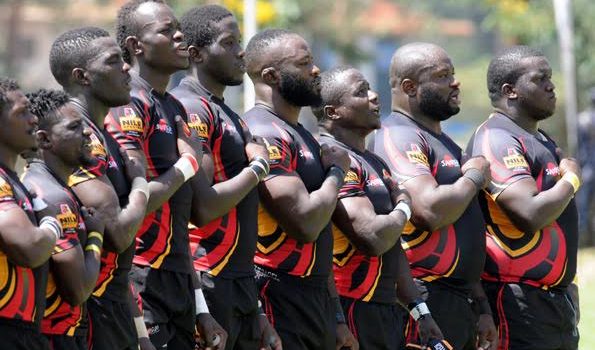
Uganda unmoved in latest World Rugby rankings

Rugby Cranes

The Uganda National Rugby team, known as the Rugby Cranes have remained unchanged in the World Rugby rankings that were released on March 4.

The Rugby Cranes remained in the 42nd position with a total of 48.34 points and are placed 6th on the continent.

South Africa (5), Namibia (22), Kenya (31), Zimbabwe (40) and Tunisia (41) are the top five African countries.

The top ten ranked teams are; New Zealand, Ireland, Wales, England, South Africa, Australia, Scotland, France, Fiji and Argentina.

Tonga, Italy, Uruguay, Russia and Spain were all climbers who improved by one slot to 13, 14, 16,18 and 19 respectively while USA and Romania both fell down by two places to 15 and 20 respectively.

The rankings are calculated using a ‘Points Exchange’ system, in which sides take points off each other based on the match result. Whatever one side gains, the other loses.

The exchanges are based on the match result, the relative strength of each team, and the margin of victory, and there is an allowance for home advantage.

Points exchanges are doubled during the World Cup Finals to recognize the unique importance of this event, but all other full international matches are treated the same, to be as fair as possible to countries playing a different mix of friendly and competitive matches across the world.

Any match that is not a full international between two member countries does not count at all. All member countries have a rating, typically between 0 and 100. The top side in the world will normally have a rating above 90.

Stories Continues after ad

UNRA demands for more money to fund major road projects

The Artistic impression of Kampala-Jinja-expressway

The Uganda National Roads Authority (UNRA) has requested for more funds in the coming 2019/2020 national budget to the tune of Shs 5.3 trillion to fund the many major road projects in the country. In the running financial year UNRA was allocated Shs 4.7 trillion.

According to UNRA’s internal audit director Eng. Moses Kasakya, among the road projects earmarked are; Kampala Flyover Project, Kampala Jinja Expressway ( under procurement), Mpigi Expressway ( under procurement ), Kira – Kasangati – Matuga – Buloba 32km and Najjanankumbi – Busabala – Kazi 11kms (under procurement).

Upgrading projects include expansion of the Kampala Northern bypass, rehabilitation of Nansana-Busunju, of which 96 percent of the work is done, upgrading of Mukono – Kyetume – Katosi/Kisoga – Nyenga (74km) of which 96 percent of the work is done.

The others are; Nyenga – Njeru (10kms) which is 15 percent done, Bweyogere – Bukasa road whose contract has been Contract, Lweza – Kigo Low volume seal project which is 50 percent done. And Kitala – Gelenge road Construction Unit which is 20 percent done

However, while interacting with Members of Parliament on the Physical Infrastructure Committee, UNRA officials were tasked to explain why they want more money yet on several occasions, they have failed to fully use the funds allocated to them.

The issue came up during UNRA’s stakeholders’ engagement organised to highlight the different projects the national roads manager will work on in the coming financial year.

Buikwe County South Member of Parliament David Mutebi wondered if UNRA has the capacity to absorb all the money request for. He asked them to plan better so as to utilise all resources given to them in time. MPs said it becomes difficult to defend UNRA’s budget increase requests when it keeps returning the money to the treasury.

Eng. Kafeero Ssekitoleko, Physical Infrastructure Committee of parliament pointed said that in the financial year 2017/2018 UNRA was allocated shs4 trillion whereby Shs2.8 trillion misused while some were returned to the consolidated fund.

Eng. Kasakya denied that UNRA returns money all the time. For instance, he said UNRA only returned the Shs3 trillion to the treasury as the procurement process hadn’t been finalized. He said they are ready and needs the money more than it did last year due to expansive road projects.

Stories Continues after ad
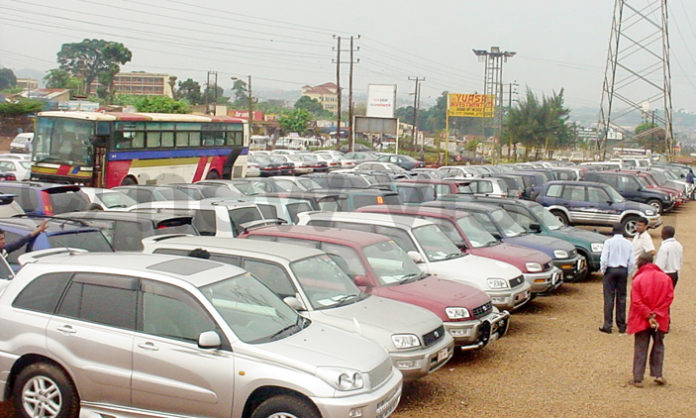
Standards body sets date for resumption of PVOC programme

Car bond

The Uganda National Bureau of Standards (UNB) has scheduled March 15, 2019 as the resumption of the inspection of imported used vehicles under the Pre-Export Verification of Conformity (PVoC) Standards programme where used vehicles are tested in the country of origin for road worthiness as well as health and environment concerns before being shipped into Uganda.

According to UNBS, Executive Director, Dr. Ben Manyindo, all used motor vehicle importers, dealers and the general public are supposed to observe the latest update.

He said in a public notice that used motor vehicles imported into Uganda are assessed for roadworthiness which includes checking for radiation before shipment.

“UNBS is mandated to protect the health and safety of the public and our environment through the implementation and enforcement of compulsory Uganda Standards,” he said.

The vehicles he said, must meet other regulatory requirements including the 15 years age limit passed recently by parliament.

PVoC is an inspection and verification programme carried out on goods by appointed inspection agents in the country of export. Verification of compliance to technical regulations and standards is provided for in Article 5 of the World Organization (WTO) Agreement on Technical Barriers to Trade (TBT). PVoC was designed in accordance to the provisions of Article 5 of the TBT Agreement and in compliance with the notification requirements of WTO.

The objective of PVoC is to minimize the risk of unsafe and substandard goods entering Ugandan and protect consumers against dangerous, shoddy and substandard imported products.

Stories Continues after ad