Stanbic Bank
Stanbic Bank
16.9 C
Kampala
Stanbic Bank
Stanbic Bank
Home Blog Page 1353

Uganda Premier League resumes on Tuesday

StarTimes UPL logo

After the international break, the 2018/19 StarTimes Uganda Premier League season resumes tomorrow with two matches of match day 24 to be played.

The Red Eagles of Express will be visiting the Tax Collectors URA FC at Namboole.

Express drew their last game 0-0 with Mbarara City at home and have no win in their last 3 league games such an unwanted statistic need to be erased even against a tough opponent like URA away from home.

The tax collectors through coach Sam Ssimbwa believe they can finish second in the league behind winners KCCA or Vipers and will need to win any game which comes their most especially at home. They drew their last game at home 1-1 with BUL.

URA have conceded only 10 goals this season the lowest in the league even better than top teams KCCA and Vipers.

But since the coming of George Ssimwogerere, the Red Eagles have also greatly improved in defense. They have only conceded twice in one game, the 2-0 loss against Vipers at Kitende. They have kept 5 clean sheets, 3 in the league and 2 in the Uganda cup that’s 5 clean sheets in 8 games.

The team news from Express FC are; they will be without striker Eric Kambale who aggravated his harm string injury and expected to be back after one week.

Frank Zaga Tumwesigye recovered from his hamstring injury but may not be match fit and may not be involved in the game on Tuesday.

Defender Hamisi Batega is also under medication suffering from a hamstring injury.

Other squad members are fit to play and a further update will be got from the manager George Ssimwogerere in his pre match interview on Monday evening.

The previous meeting ended 0-0 at Wankulukuku in the first round of this season’s UPL.

Defender Mbowa Patrick is suspended for the Tax collectors but they will rely on their captain Shafik Kuchi Kagimu to set up for attackers Charles Sempa, Cromwell Rwothomio. Moses Sseruyidde and Joachim Ojera are other dangerous players who will need to be watched.

URA are 4th with 39 points, ten ahead of their opponents Express who lie in 11th position with 29 points.

In the other game on Tuesday, Tooro United will host BUL FC in Wankulukuku.

Defending champions Vipers SC and table leaders KCCA will be in action on Wednesday against Maroons and Kirinya Jinja SSS respectively. Onduparaka will also be hosting SC Villa at the Greenlight Stadium in Arua.

KCCA still lead the 16-table log with 49 points, 4 ahead of second-placed Vipers with 7 matches left to play. Ndejje University, Nyamityobora and Paidha Black Angels are the bottom three in the relegation zone with 20, 16 and 12 points respectively.

Tuesday, 26 March

URA vs Express FC, Mandela National Stadium, Nambole.

Tooro United vs BUL FC, Betway Mutesa II Stadium, Wankulukuku.

Wednesday, 27 March

Vipers SC vs Maroons, St Mary’s Stadium, Kitende.

Kirinya Jinja SSS vs KCCA FC, The Mighty Arena, Jinja.

Onduparaka vs SC Villa, Greenlight Stadium, Arua.

Stories Continues after ad

WHO urges international community in push to end Ebola outbreak in DRC

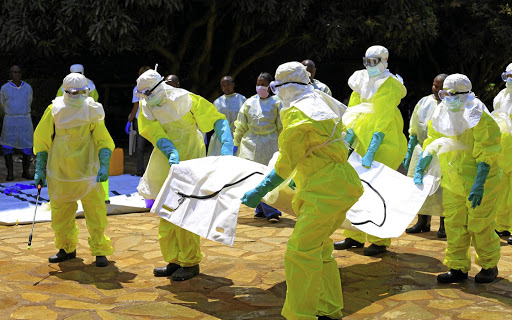
Congolese officials and the World Health Organization officials wear protective suits as they participate in a training against the Ebola virus near the town of Beni in North Kivu province of the Democratic Republic of Congo, August 11, 2018. REUTERS/Samuel Mambo

As the Ebola outbreak in the Democratic Republic of the Congo (DRC) approaches 1000 cases amid increased violence, the World Health Organisation (WHO) has reaffirmed its commitment both to ending the outbreak and working with the government and communities to build resilient health systems in the country.

Since the outbreak was declared in August 2018 there have been 993 confirmed and probable cases and 621 deaths in North Kivu and Ituri provinces.

“We use words like ‘cases’ and ‘containment’ to be scientific, but behind every number is a person, a family and a community that is suffering,” said Dr Tedros Adhanom Ghebreyesus, WHO Director-General. “This outbreak has gone on far too long. We owe it to the people of North Kivu to work with them in solidarity not only to end this outbreak as soon as possible, but to build the health systems that address the many other health threats they face on a daily basis.”

More than 96 000 people have been vaccinated against Ebola in DRC, along with health workers in Uganda and South Sudan. As of 21 March, 38 of 130 affected health areas have active transmission. More than 44 million border screenings have helped to slow the spread of Ebola in this highly mobile population. No cases have spread beyond North Kivu and Ituri provinces, and no cases have crossed international borders.

However, the risk of national and regional spread remains very high, especially when episodes of violence and instability impact the response.

“As we mourn the lives lost, we must also recognize that thousands of people have been protected from this terrifying disease,” said Dr Matshidiso Moeti, WHO Regional Director for Africa. “We are working in exceptionally challenging circumstances, but thanks to support from donors and the efforts of the Ministry of Health, WHO and partners, we have saved thousands of lives.”

WHO has more than 700 people in DRC and is working hard with partners to listen to the affected communities and address their concerns and give them greater ownership of the response, particularly in the current outbreak hotspots of Katwa and Butembo.

“The communities affected by this outbreak are already traumatized by conflict,” said Dr Tedros. ”Their fear of violence is now compounded by fear of Ebola. Community engagement takes time. There are no quick fixes. But we are learning and adapting to the evolving context every day.”

Despite the challenges, most communities accept response interventions. More than 90% of those eligible for vaccination accept it and agree to post-vaccination follow-up visits. Independent analysis of vaccination data indicate that the vaccine is protecting at least 95% of those who receive it in a timely manner. More than 80 per cent of people also accept safe and dignified burials, a key to preventing onward transmission.

“Despite the increased frequency of attacks by armed groups, WHO will stay the course and will work with communities to end this outbreak together with the Ministry of Health and partners,” said Dr Tedros. “We need redoubled support from the international community, and a commitment to push together to bring this outbreak to an end.”

For the next 6 months, the combined financial need for all response partners is at least US$ 148 million. As of 19 March, US$ 74 million had been received.

“We count on donors to help close the funding gap so we can end this outbreak as soon as possible,” said Dr Tedros. “We will still be in DRC long after this outbreak has finished, working with the government and communities on the road to universal health coverage. We are committed to improving the health of the people of DRC now and in years to come.”

Stories Continues after ad

UMEME customers jump 14.8% in 2018

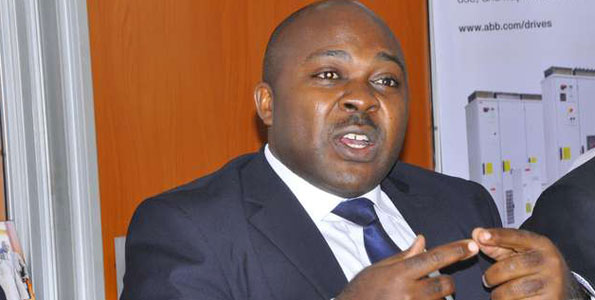
UMEME CEO Selestino Babungi says company is investing in new technology to reduce technical costs further

Uganda’s electricity distributor, Umeme had the number of households connected to the grid go up by 14.8 per cent to 1.3 million customers,according to its latest financial statement for the year ended 2018.

“Over the seven year period to 2018, Umeme exceeded the regulatory customer base target by 0.3 million customers (30 per cent),”said the company’s Managing Director Celestino Babungi.

The increase was partly attributed to the new policy launched by government through the Rural Electrification Agency in which it rolled out a free electricity connection policy to customers in distances which require one or none poles.

“We have seen an increase in applications from 600 to 1000 per day since the introduction of the program,” said Umeme Chief Operations Officer, Florence Nsubuga.

Officials says despite an overall increase in the number of individual households for the distribution company, the biggest growth has been realized among industries.

Babungi attributed it to stability in the neighboring countries including Kenya, DR Congo and South Sudan where Uganda sells some of her goods.
“The number of goods we sell to those countries has increased and because industries are as good as markets, the production has gone up and a high production means more demand for electricity.”

The Umeme boss also commended government for its policy that encourages industrialization that he said has seen the demand for electricity go up due to a sprout out of a number of industries.

Meanwhile, officials said said they had reduced the power losses from 17.2 per cent in 2017 to only 16.6 per cent, a thing they said is good for both the industry adding that this had fallen from 27.3 per cent in 2011.

“We invested over US $60 million last year and one of the main drivers of the investment was reduction in power losses. We have invested in transformers which reduce technical losses and also in technology,”

said Umeme Chief Operations Officer, Nsubuga. She explained that because their biggest power consumers contribute to over 70 per cent of the Umeme sales, they cannot allow power to be
stolen adding that they have invested heavily in their biggest power consumers to close any gaps of power losses.

“We have installed the automated metre reading where we are able to detect in real time if an industry is stealing power. It is important we invest in large power users through technology.”

Stories Continues after ad

Ugandan entrepreneur on list of ‘20 New Wealth Creators’ in Africa

Brenda Katwesigye

Forbes’s first list of ’20 New Wealth Creators’ in Africa, has Brenda Katwesigye as the only Ugandan to make the cut.

According to the list that is dominated by Nigerians, the 20 women were selected because they have made a significant impact in their respective sectors by transforming a market or company, or innovating a product / providing a service, and are pioneering their organization(s) in generating new untapped streams of income.

The financial magazine adds that, they may be wealth creators but their businesses, ironically, did not stem from a need to make money, but rather from the need to solve Africa’s persisting socio-economic challenges.

Ms Katwesigye is the Founder and CEO of Wazi Recycling Industries that produces affordable eco-friendly eye glasses by collecting, shredding and molding the plastic from water bottles and plastic bags.

Speaking in an interview Ms Katwesigye said being a new wealth creator is about creating revenue or value from unconventional places whilst making an impact.

Stories Continues after ad

Standard Chartered Bank to hold Belt and Road Relay event

Standard Chartered

Standard Chartered Bank is to hold Belt and Road Relay event where eight of its employees, one, a Ugandan Herman Kambgugu will run across 44 countries over 90 days to celebrate the bank connecting the markets across the ancient Belt and Road trading routes for over 150 years.

According to Cynthia Mpanga, the bank’s Corporate Affairs Manager, this unique event comes to Uganda for the first time. In Uganda the 10km relay event will began at Sheraton Kampala Hotel gardens on March 30, 2019. It will be followed by breakfast and a series of activities.

Participants at the event will done sportswear/causal wear. The media is expected to cover the event.

Stories Continues after ad

A wrap-up of the 2019 Afcon qualification campaign

Afcon trophy

After a qualification process involving 51 national football teams and lasting for almost two years, the list of the 24 sides to take part in the 2019 Africa Cup of Nations in Egypt has been confirmed.

The 32nd edition of the international men’s football championship of Africa will have three debutants – Burundi, Mauritania and Madagascar all qualified for their first ever Africa Cup of Nations tournament.

Sierra Leone went into the qualifying period, but were disqualified due to a suspension by CAF.

Chad were banned from entering by CAF due to their withdrawal from the 2017 Africa Cup of Nations qualification tournament.

Eritrea and Somalia did not enter the competition.

The qualification matches started on 22nd March 2017 and ended on 24th March 2019. A total of 350 goals were scored in the 147 games played.

Nigeria’s Odion Ighalo finished as the top scorer with 7 goals.

Four teams from East Africa; Tanzania, Uganda, Burundi and Kenya – will play at the finals in Egypt.

The 2019 AFCON tournament will be the first to host 24 teams from 16. The competition will be held from 21 June to 19 July.

The group stage draw will be held on 12 April 2019 in Cairo, Egypt.

Qualified teams: Senegal, Madagascar, Morocco, Cameroon, Mali, Burundi, Algeria, Benin, Nigeria, Ghana, Kenya, Guinea, Ivory Coast, Angola, Mauritania, Tunisia, Egypt, Guinea Bissau, Namibia, Uganda, Tanzania, South Africa, DRC and Zimbabwe.

Stories Continues after ad

New report says Tax dispute cases take long to be finalised by Tax Appeals Tribunal

IMPROVED DOMESTIC TAX TARGETS: URA Commissioner General Doris Akol

A new report authored in March 2019 finds that tax disputes at Tax Appeals Tribunal (TAT) take a long time to be finalized. “On average, only 6 cases worth Shs2.3 billion were finalized within 12 months of lodgment during the period of the study, representing yearly average completion rates as low as 16.6 percent,” says the report by7 the Economic Policy Research Centre (EPRC).

“The timeliness of tax dispute resolution by the TAT was taken into account by considering the number of tax dispute cases finalized within 12 months of lodgment,” report, dubbed ‘Court Actions and Boosting Domestic Revenue Mobilization in Uganda’says.

A total of 37 finalized tax cases spanning the period 2000 to 2017 were reviewed in order to identify the major facts of disputation involved in tax disputes at says EPRC in its report. The tax disputes were between the Uganda Revenue Authority (URA) and individual taxpayers and companies.

While the number of tax disputes finalized within 12 months of lodgment doubled between 2015 and 2016, overall, the number of cases finalized beyond 12 months of lodgment was greater for all years studied. “The high number of cases finalized beyond 12 months of lodgment partly explains the large amount of tax revenue trapped in tax disputes,” the report says.

Outcomes of tax dispute cases

According to Brian Sserunjogi and Paul Corti Lakuma, EPRC researchers, who authored the report, the results on the outcome of tax disputes indicate that during the study period, the tax commissioner’s assessment and… decisions were upheld in about 24 percent of the tax disputes and varied in only 13 percent of the cases.

In addition, about 25 percent of the tax disputes lodged at TAT were withdrawn by applicants while 13 percent of the tax disputes were dismissed by the tribunal. It is also worth noting that about 25 percent of the cases at TAT were finalized by mutual consent between URA and companies.

According to the report, the large percentage of cases finalized through mutual consent and withdrawn is an indication of the aggressive assessments and tax audits undertaken by URA in order to meet annual revenue targets. This is because after a review with TAT, most taxpayers reach an agreement with the URA.

“Taxpayers withdraw their applications in the interest of saving time, since the court process takes a long time. As already mentioned, the TAT does not have targets with regards to the number of cases to be finalized within a particular time. Unlike in Rwanda, where the law stipulates a maximum period of six months from filing to judgement for all courts, tax disputes in Uganda can last for significantly longer periods,” the report says.

It says the lack of performance targets derails the speed of resolution of the cases at TAT. Furthermore, a breakdown of the outcome of the tax disputes between URA and taxpayers reveals that during the study period, on average both sides won an equal number of cases. The findings reveal that there is no overt bias in the TAT ruling.

Nonetheless, the report says, the value of taxes involved for cases decided in URA’s favour were on average greater than that decided in the favour of taxpayers. “This is an indication that URA audits and reassessments tend to be skewed toward large taxpayers. The evidence further reveals that overall, both the number of cases decided in favour of the URA and taxpayers exhibited a declining trend during the study period,” it says.

The observed trend in the outcome of the tax disputes could be partly be attributed to an increasing number of cases that are either dismissed, consented or withdrawn before final TAT ruling is reached. Hence is a need to strengthen URA’s audit and assessment functions to reduce on aggressive assessments which sometimes result in frivolous cases which are either dismissed, withdrawn or consented after reassessment by TAT.

Appeals to the High Court

According to the report, with regards to the number of tax disputes for appeal to High Court, findings reveal that during the study period, an average of one case per year proceeded for appeal at the High Court from the TAT. The low number of cases that proceed for appeal to the High court is partly attributed to the heavy backlog of cases at the High Court. According to the National Court Case Census (2016), the High Court, registered the second highest number (32 percent) of pending cases in the Judiciary.

The report says: “The High Court registered a total of 36,313 pending cases of which 10,723 were civil cases. The high contribution of civil cases to the total pending cases at the High Court is an indication that tax disputes take significant amounts of time to be heard and let alone resolved. There is no priority given to tax related disputes at the High Court since all cases are treated the same way.”

The report cites Section 27 of the TAT Act states that appeals to the High Court from TAT are to be made on questions of law only. Therefore; it says, filing of appeals to the High Court implies that tax disputes are heard like conventional cases, requiring strict adherence to the Civil Procedure Act, which follows the law and court procedures strictly. “This slows down the process of tax dispute resolution at the High court,” it says.

Types of tax dispute cases

The report indicates that majority of tax disputes lodged at TAT are filed by the large taxpayers. Specifically, tax disputes filed by corporations averaged 24 cases per year worth Shs19 billion against an average of 2 cases per year worth Shs390 million from individual small tax payers.

The results confirm the barriers that confront small taxpayers in accessing tax justice in Uganda. A number of reasons are provided for the observed trend. First, small taxpayers are unable to pay the mandatory 30 percent of the tax assessed or that part of the tax assessed not in dispute whichever is greater as specified in the TAT Act, the report says.

Secondly, it says, small taxpayers lack the necessary requisite requirements such books of accounts, formal registration, and legal representation of a tax lawyer required for a formal TAT hearing. In addition, small taxpayers fear to approach the court because they fear that URA may harass them. Moreover, it says, URA tax audits have previously targeted large tax payers, with little or no concern on the small taxpayers. Also, the tax amounts involved with small taxpayers are usually small and do not attract small taxpayers to go through all the bureaucracy of the TAT process.

Stories Continues after ad

Kingdom Kampala Mall changes Kampala skylines

Kingdom mall

Kingdom Kampala Mall is the latest additions to Kampala’s skylines as Uganda’s city changes its outlook year in year out as it attracts investors who want to do business in the Central Business District (CBD).

The building yet to be used by the public offers 22000 square metres of retail and office space.

The state-of-the art building has a parking space of up to 450 cars, ensuring that owners don’t have stress looking for where to park in town.

Sprinkler fire suppression system, boosted by 400 CCTVs makes the building safe and secure for clients.

Backup generators to keep clients’ business and offices running.

The building has six lifts with 72 passenger capacity.

With an estimated height of 39.78 meters and 11 floors above ground, the building should provide the best shopping and business environment.

Stories Continues after ad

Do your part to get out of poverty, NRM has done it’s part – Lumumba

NRM-SG Kasule Lumumba appearing on radio.

Secretary General, Rt Hon Justine Kasule Lumumba has asked Ugandans to make use of the available infrastructure put in place by the National Resistance Movement (NRM) and get out of poverty.

The electricity which has reached almost all sub counties in the country coupled with the good roads constructed and the available peace, Lumumba says Ugandans should tap into them to generate household income.

“We have worked on the roads. Here in Busoga the Mayuge to Majanji road is under completion. The road from Iganga to Kaliro was worked on and soon we are working on the Jinja – Budondo to Kamuli road and Kamuli to Bukungu.

But the question is, how are you going to use that road to generate household income? Electricity is in every village and with the commissioning of Isimba Dam, we are going to connect more villages. It is now up to each of us to use this electricity in the fight against poverty,” said Lumumba.

The Secretary General was on Sunday night appearing on the Jinja based NBS FM 89.4’s Sunday Panel – a leading political talk show in the region.

She said that NRM has continued to maintain the peace and democratic governance they ushered into the country and developed the economic infrastructure such as roads, electricity, schools and health facilities that have seen Uganda generally develop.

Lumumba also assured Ugandans that president Museveni shall be presented as candidate in the 2021 presidential elections.

“I don’t want to stop anyone from coming try him but he is our candidate. And of course they will only feel his strength when they dare us by contesting against him,” she said.

The SG clarified that the NRM Central Executive Committee resolution of having Museveni as a sole candidate was not aimed at stopping the opposition from also presenting their candidates but should come knowing that the ruling party is this time much more organised than before.

Regarding democratic governance in Uganda, the Secretary General advised the youth to ignore emerging and other diversionary groups that want to interfere with the country’s democracy.

Stories Continues after ad
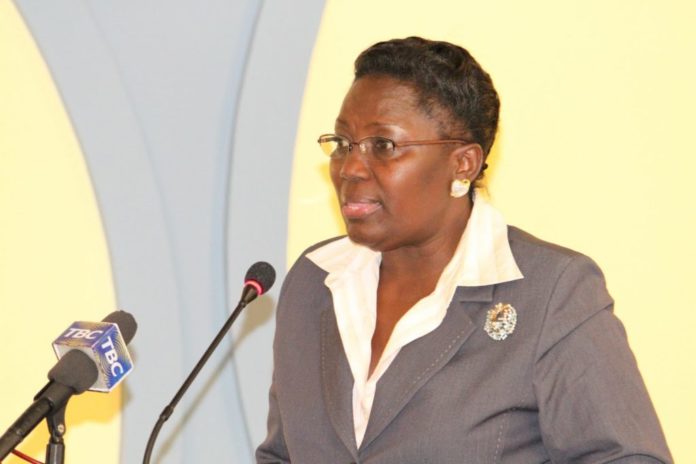
Busoga Diocese in special prayers for Speaker Kadaga

Speaker Rebecca Kadaga

Christians from Busoga Diocese led by Bishop, Paul Samson Naimanyhe Mukembe have this Sunday held special prayers for ailing Speaker of Parliament, Rt. Hon. Rebecca Kadaga.

While celebrating mass at Christ’s Cathedral, Bugembe – the Diocesan seat in Jinja district, Bishop Naimanyhe also asked all christians to put Kadaga in their daily prayers for a quick recovery.

Former Resident District Commissioner, Richard Gulume Balyaino who fellowships from Bugembe Cathedral said in a statement that the Christians had unanimously agreed to seek God’s healing hand upon Busoga’ number one daughter.

Kadaga is receiving treatment at Aga Khan Hospital in Nairobi after Nakasero Hospital referred the case for a ‘second professional opinion’.

Speaking on the behalf of the family, State minister of Karamoja affairs, Hon Moses Kizige said on Saturday that the speaker was in a stable condition and out of danger.

In a statement issued by the Office of the Speaker of Parliament on Friday, Kadaga became ill as a result of a hectic work schedule, fatigue and jet-lag upon her return from long haul flights to New York, USA and Rabat, Morocco.

Kadaga was in New York for the 63rd UN Commission on the Status of Women.

Prior to the meeting, she had attended the 14th session of the Parliamentary Union of the Organisation of Islamic Cooperation Conference (PUOIC) in Rabat, Morocco.

Upon her return, she was rushed to Nakasero Hospital in a critical condition on Thursday evening. She was admitted in the Intensive Care Unit before doctors advised that she is transferred to Aga Khan Hospital, Nairobi.

Stories Continues after ad