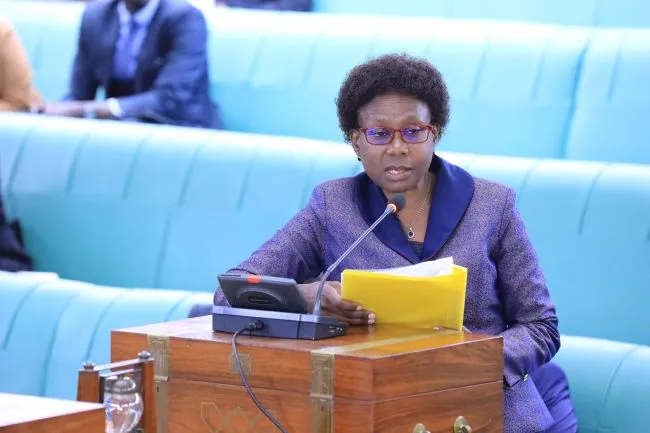
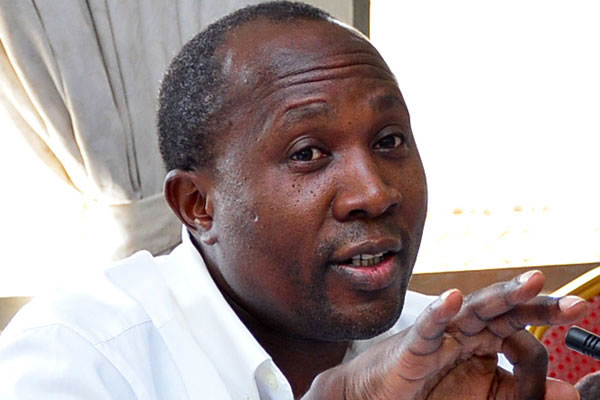
made the presentation, Health Minister, Dr. Ruth Aceng.
Parliament has approved a motion allowing Kabale Regional Referral Hospital to sublease five acres of land to Kabale University, clearing the way for the university to expand its Faculty of Medicine.
The Minister of Health, Ruth Aceng presented the proposal during the plenary sitting last Thursday.
Kabale University, a public institution, made the request for the land in August 2022.
The university aims to build new teaching and medical facilities, including specialized clinics, patient wards, lecture halls, and operating rooms.
Aceng said the move is a major boost for medical training and healthcare in southwestern Uganda noting that Kabale Regional Referral Hospital serves over 2.4 million people, including patients from Rwanda.
“This is more than just a land deal, it is an investment in better healthcare, stronger medical education and growth for the Kigezi sub-region and beyond,” Aceng said.
She noted that the expansion will help the university train more doctors and nurses for the region, addressing a critical shortage of healthcare workers in districts of Kabale, Rubanda, Kanungu, Ntungamo, Rukungiri, and Kisoro, all in southwestern Uganda.
Currently Kabale University’s Medical School operates out of run-down hospital building that is set for demolition. Aceng emphasised that the sublease will allow the university to create a modern medical school and teaching hospital.
“This will improve training, enhance research, and bring better healthcare closer to the communities that need it most,” she said.
The Koboko Municipality Member of Parliament [MP], Charles Ayume said the motion was timely considering the state of the Medical school and its symbiotic relationship with the Regional Referral Hospital.
“A Medical school and hospital have a symbiotic relationship where they all benefit. The University does the teaching, but the hospital benefits from extra services of lecturers and students during their training,” said Ayume, adding that, “We had queried the type of doctors that will come from that dilapidated building”.
On her part, Tororo District Woman MP, Sarah Opendi asked fellow legislators to look into the status of regional referral hospitals across the country, saying most are performing way below the capacity of a regional referral hospital.
“Kabale Regional Referral Hospital is challenged in terms of space and infrastructure, it remains a 100 bed capacity hospital which is below the requirement of a regional referral hospital,” Opendi added.
She noted that most of the regional referral hospitals are understaffed between 25 to 30 percent staffing level, praying that it should be addressed in the next budget cycle.
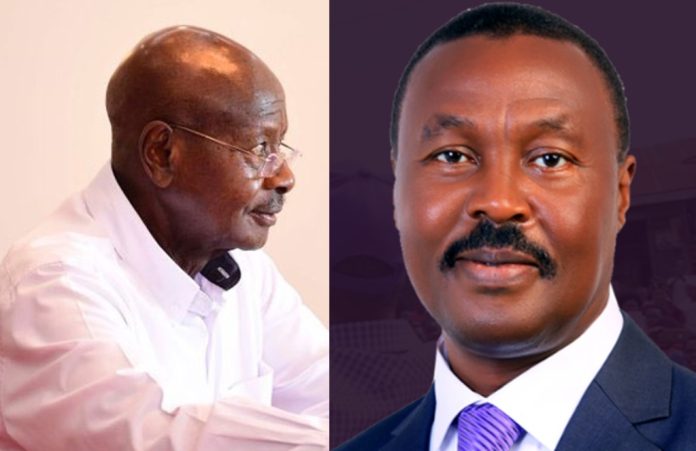
Gen. Museveni and Gen. Muntu hail from Western Region.
As Uganda gears up for the 2026 general elections, the political temperature is steadily rising not with noise and chaos this time, but with an intriguing, calculated alignment, each region has unleashed a flag bearer, signaling what may become Uganda’s most regionally balanced and ideologically competitive presidential race in decades.
This development is not coincidental but it is historic.
Central Region: Kyagulanyi’s People Power Still Roaring
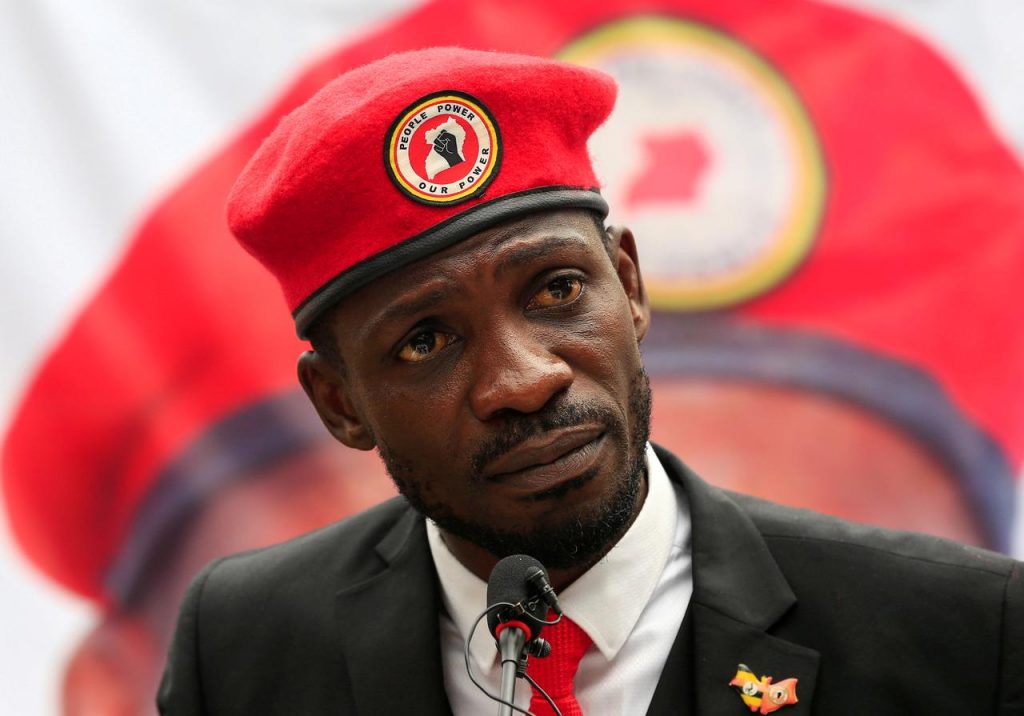
Robert Kyagulanyi aka Bobi Wine hails from Buganda.
Robert Kyagulanyi Ssentamu, also known as Bobi Wine, who was once seen as a political novice, is now arguably the most formidable opposition figure in Uganda. Representing the National Unity Platform (NUP), his message of generational change, social justice, and anti-corruption continues to resonate deeply with the youth across the country, especially in the central region, his stronghold.
But Kyagulanyi’s appeal is no longer limited to Buganda. His relentless grassroots mobilization and consistent criticism of the Museveni regime have transformed him into a national brand. His recent tours in the North and East were well attended, a sign that his People Power movement is evolving into a truly national force. Whether the state machinery lets him campaign freely in 2026 remains a lingering question.
Northern Region: Jimmy Akena carries UPC’s legacy with calculated precision
UPC’s Jimmy Akena hails from the Lango-Northern Region.
Jimmy Akena, the son of former President Milton Obote and the current president of the Uganda People’s Congress (UPC), is eyeing a larger role than ever before. Long viewed as lukewarm, Akena has surprised observers by signaling a more confrontational tone and rebranding UPC into a party with Northern muscle and a hint of national relevance.
His leadership of Lira City and deep roots in the Lango sub-region give him a base. But Akena’s biggest challenge lies in uniting a historically fragmented North under one umbrella. With Acholi, West Nile, and Lango historically pulling in different political directions, it remains to be seen whether Akena’s appeal can transcend regional loyalties and match up against his late father’s legacy.
Western Region: Museveni clings on, but the winds are changing
President Yoweri Museveni, now in power for nearly four decades has confirmed he will seek re-election in 2026, representing the National Resistance Movement (NRM). His grip on the western region, particularly in Ankole, Kigezi, and parts of Tooro, remains significant. However, that grip is loosening.
The youth bulge, growing economic discontent, and widespread fatigue with prolonged rule are eating away at NRM’s base. Museveni is banking on infrastructure achievements, security, and the controversial parish development model to regain the people’s faith.
But even within the West, there are cracks, and one of the most significant comes from within the system itself.
Eastern Region: Nandala Mafabi steps forward as the reformist patriot
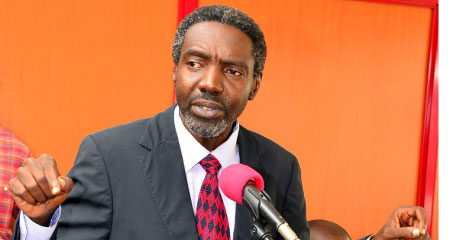
Nandala Mafabi, FDC’s presidential choice for the 2026 general elections, hails from Bugisu-Eastern Region.
Forum for Democratic Change (FDC) recently made headlines by endorsing Nathan Nandala Mafabi as its 2026 flagbearer after Patrick Amuriat stepped aside. A seasoned legislator from Budadiri West in the Bugisu sub-region, Nandala is known for his tough stance on corruption, economic discipline, and institutional reform.
Eastern Uganda has long been considered a swing region and Nandala’s candidacy could galvanize the East to assert itself politically. For years, Busoga and Bugisu have lacked a unifying candidate of national stature. Mafabi changes that dynamic. His technocratic background, combined with his no-nonsense political style could attract not just easterners, but also voters frustrated by both Museveni and Kyagulanyi.
Rwenzori and Greater Kigezi: Mugisha Muntu’s quiet thunder
Former army commander and Alliance for National Transformation (ANT) leader Gen. Mugisha Muntu remains an enigma in Ugandan politics. Often dismissed for being “too gentle,” Muntu has never veered from his core principles of institutional reform, accountability, and peaceful transition of power.
His strength lies in Kigezi and the Rwenzori sub-region especially among educated, middle-class voters and civil servants who find hope in his technocratic and policy-based approach. While his popularity has never hit Kyagulanyi or Museveni levels, he remains a critical player in coalition-building. Muntu may not win, but his support could tip the scales in a tight race.
What makes the 2026 election extraordinary is not just the number of candidates, it’s the regional clarity of their support and identity. Each region is betting on its son, each claiming a version of Uganda’s future.
This is a double-edged sword. On one hand, it shows that Uganda’s democracy is maturing; every region feels politically energized, represented, and ready to lead. On the other hand, it risks reinforcing ethnic and regional politics over national unity.
What remains to be seen is whether these candidates will exploit tribal affiliations or transcend them with issue-based campaigns.
Ugandans are increasingly aware of the stakes. A generational shift is palpable. The youth, which make up over 75% of the population, are restless. They want jobs, education, health services and leaders who speak their language.
Museveni represents stability, but to some, he also symbolizes stagnation. Kyagulanyi represents hope, but to critics, he’s inexperienced. Mafabi offers competence with over twenty years of experience as a Member of Parliament, but can he inspire mass emotion? Muntu has integrity but lacks the populist fire. Akena offers heritage, but will that translate into future power?
2026 is shaping up not just as an election, but as a referendum on the very soul of Uganda. Will the country vote for continuity or change? For regional loyalty or national unity? For charisma or competence?
The field is crowded, the ambitions are high and the electorate is more informed than ever before.
One thing is clear: this time, every region has a voice, a candidate, and a stake in the future.
A new and more accountable SACCO initiative is being rolled out across Uganda’s Skilling Centres following financial mismanagement in earlier phases of the program.
Dr. Faith Katana Mirembe, Head of the Skilling the Girl and Boy Child program, announced an engagement held at the Mulago Skilling Centre.
Dr. Katana revealed that the earlier provision of startup funds, up to Shs1 million, for pioneers in 2017, had since been affected by rising student numbers and increasing budget constraints.
“That’s why trainees no longer receive direct incentives,” she explained, although she affirmed that many graduates have successfully secured jobs.
Highlighting a major setback, Dr. Katana disclosed that a Shs200 million fund previously allocated to student SACCOs had been mismanaged, prompting a complete reset of the financial empowerment model.
“We are starting something very new and serious. The President has directed that SACCOs be created specifically for skilling students, and implementation is going to be immediate,” she said.
The new initiative, supported by the Microfinance Support Centre, includes training sessions on financial management and SACCO development. Students have already received lectures on how to utilize the funds responsibly, with the first sessions taking place at Mulago Skilling Centre.
SACCOs will now be established at six major centres: Wabigalo, Kigoowa, Mutundwe, Kikoni, Mulago, and Wandegeya. The goal is to empower trainees with practical financial tools to transition into sustainable employment and entrepreneurship.
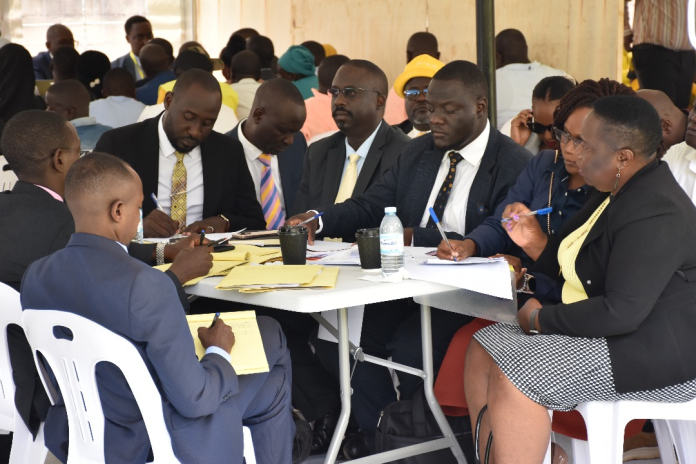
Lawyers listening to presentations at NRM headquarters before the commencement of the election disputes tribunal.
The National Resistance Movement (NRM) Election Disputes Tribunal has issued a formal notice announcing a supplementary hearing schedule for petitions challenging the outcomes of its recent party primary elections for parliamentary flag bearers.
The notice, dated July 31, 2025, and signed by Tribunal Chairperson John Musiime, outlines 45 separate petitions that will be heard on Tuesday, August 5, 2025, at the Tribunal headquarters located at Plot 30, Kyadondo Road, Nakasero in Kampala.
The cases involve a wide range of constituencies across the country, with petitioners contesting the conduct, results, and declarations made by the NRM Electoral Commission and other party officials in the party’s internal primaries.
“This notice serves as an official communication to all concerned parties. The hearing date and time for each petition is indicated alongside the petition details in the attached schedule. Parties must appear only on their allocated date and time,” Musiime stated.
Among the high-profile cases is PT/409/2025 involving Pius Wakabi, whose case is scheduled for hearing at 2:00 PM under Bugahya County. Others include PT/387/2025, where Omoding George Rotary is challenging Felix Olong in Dokolo South, and PT/388/2025, where Sheillah Princess Obia faces off with Mourine Osuru in Arua City, both set for 10:00 AM.
A number of constituencies such as Tororo North, Mbale, Nakaseke North, Kakumiro, Kyaka, and Bujumbura East feature multiple disputes, highlighting the intensity of the recently concluded primaries.
Notably, several cases are consolidated, such as PT/398/2025, PT/407/2025, and PT/401/2025, in which Amali Maureen, Sefulose Asiimwe Faith, and Akoth Angella challenge various respondents in Tororo North, all scheduled at 10:00 AM.
The Tribunal has urged all respondents who have not yet received copies of the petitions to collect them from the Tribunal Registry. Hearings will proceed strictly according to the provided schedule.
This development comes amid increasing pressure on the ruling party to ensure transparency, internal democracy and credible resolution of intra-party conflicts ahead of the 2026 general elections.
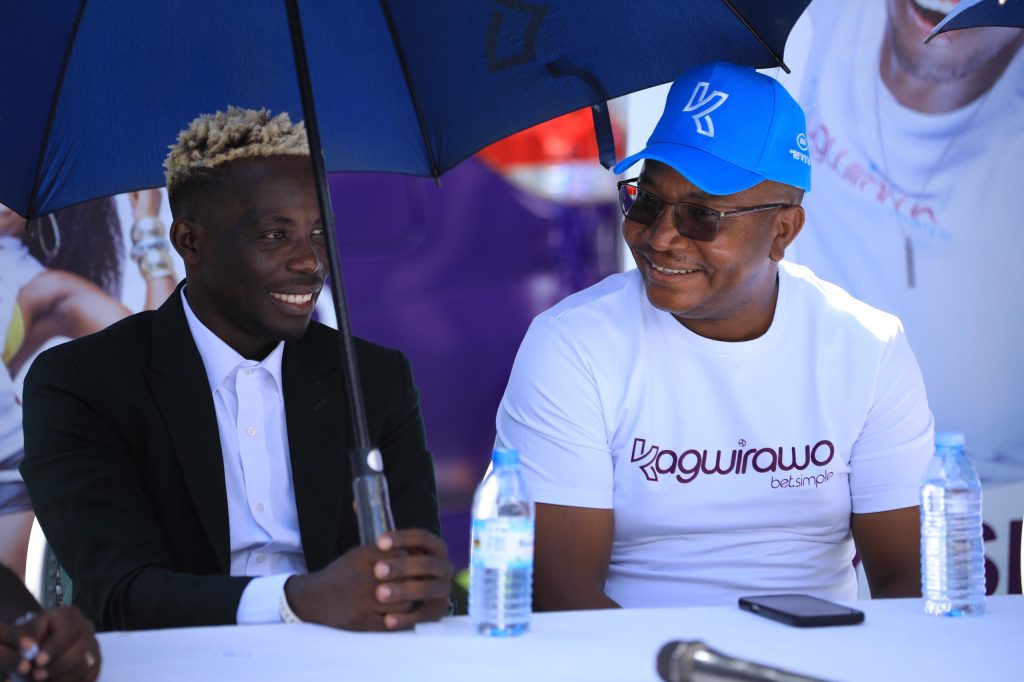
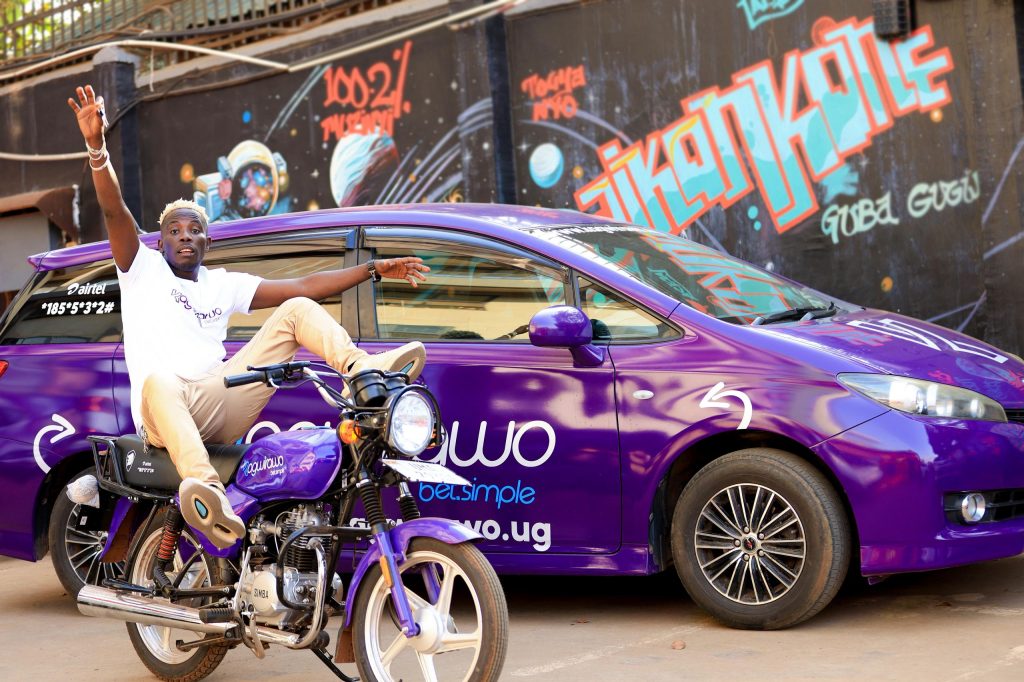
Kagwirawo, Uganda’s homegrown online betting platform, has today launched a three- month promo; on dubbed EYASE, where Ugandan bettors will stand a chance to win a brand-new Toyota Wish every month, a boda boda every week, and millions of shillings in instant bonuses just for placing bets on the platform.
The promotion is more than just prizes; it’s a bold statement of Kagwirawo’s commitment to giving back to its users and cementing its place as a proud Ugandan brand. The campaign launch, happening today at the company’s headquarters in Kansanga, is graced by the presence of top media personalities, influencers, and ambassadors.
“We’re excited to reward our loyal users in a way that reflects the heart and energy of this country,” said Rogers Mbalire, the Opera;ons manager, adding, “As a Ugandan-owned platform, this is our way of showing appreciation to our people while proving that homegrown solutions can deliver world-class experiences.”
The Minister of Works and Transport, Gen. Edward Katumba Wamala, has revealed that at least 27 major road and bridge projects across Uganda have been suspended due to a crippling government funding shortfall.
The Minister, who presented to Parliament a statement on the state of roads in the country on Wednesday, 30 July 2025, attributed this to delayed payments and land acquisition issues, affecting projects like the Masindi-Biiso and Kabale-Kiziranfumbi oil roads, Kampala-Mpigi Expressway, and Kampala-Jinja Highway.
“As of July 2025, 27 projects have been affected by either full suspension or significant reduction in progress. These include 18 fully funded by the Government of Uganda, where contractors have suspended or slowed down works due to delayed payments, and nine externally financed projects, where delays are primarily attributed to the Government’s inability to provide timely counterpart funding,” he said.
The funding shortfall is attributed to a massive gap of Shs2.472 trillion in the financial year 2025/2026, where only Shs682 billion of the required Shs3.153 trillion was provided. The government is also carrying over Shs1.071 trillion in arrears from previous years, accumulating commercial interest and monthly cost claims from contractors.
The situation is further complicated by land acquisition issues, with Shs443 billion needed for compensation and enabling access to sites, which has grounded externally funded projects.
“The cumulative effect of these suspensions and delays has led to slow absorption of project resources, exposure to financial claims, risk of asset deterioration, and reputational concerns,” he stated.
The minister said that Uganda’s road infrastructure is deteriorating rapidly, with 1,993 kilometers requiring urgent periodic maintenance and 260 kilometers needing rehabilitation.
“If not implemented, these roads degrade and instead require rehabilitation, which costs about Shs2.59 billion per kilometer, three times the periodic maintenance cost,” he warned, adding that “This could result in a preventable fiscal loss of up to Shs180 billion.”
Gen. Katumba warned that if not urgently addressed, these disruptions will compromise Uganda’s ability to deliver critical national infrastructure and maintain the existing network.
The minister called for urgent financial intervention, emphasizing the importance of the road network to economic growth, regional integration, and service delivery.
Despite the urgency of the situation, Parliament was unable to hold a substantive debate on the matter after it emerged that none of the ministers from the Ministry of Finance, Planning, and Economic Development were present to respond to the funding concerns raised in the report.
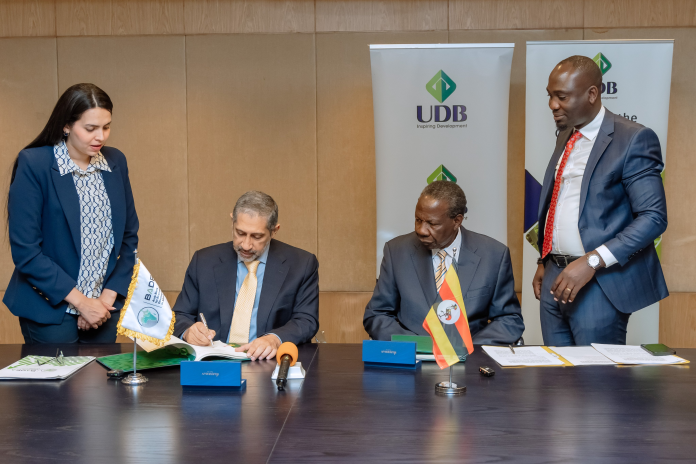
H.E. Abdullah Almusabeeh, President of BADEA, and Matia Kasaija, Uganda’s Minister of Finance, Planning and Economic Development, during the signing ceremony.
The Government of Uganda has signed two Facility Agreements totaling $150 million (approx. Shs570 billion) to support private sector development in Uganda.
On the sidelines of the 41st Board of Governors Meeting of the Trade and Development Bank Group (TDB Group), the Arab Bank for Economic Development in Africa (BADEA) and the Government of Uganda
The agreements were signed on Thursday by H.E. Abdullah Almusabeeh, President of BADEA, and H.E. Matia Kasaija, Uganda’s Minister of Finance, Planning and Economic Development.
Of the total amount, Shs100 million (approx. Shs380 billion)—secured under BADEA’s Private Sector window—will be channeled through the Uganda Development Bank Limited (UDB). These funds will be used for on-lending to key economic sectors, including agro-processing, infrastructure, manufacturing, healthcare, and education.
Speaking at the signing ceremony, H.E. Abdullah Almusabeeh emphasized the strategic importance of the partnership:
“Today’s loan agreement with the Government of Uganda is a prime example of how governments can leverage BADEA’s diverse financing instruments—across public sector lending, private sector support, and trade finance—to empower their private sectors and advance national development goals.”
The agreement underscores both parties’ commitment to fostering inclusive economic growth through strategic investment in Uganda’s productive sectors.
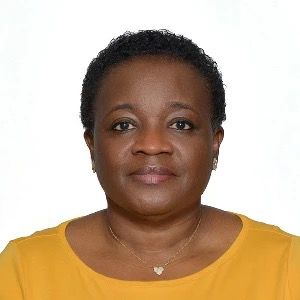
New World Bank country manager for Uganda, Dr. Francisca Ayodeji Akala.
The World Bank has named Nigerian health and development expert Dr. Francisca Ayodeji Akala as its new Country Manager for Uganda, effective August 1, 2025.
She replaces Mukami Kariuki, who completed a four-year tenure. She will be based at the World Bank Country Office in Kampala.
Akala, widely known as “Ayo,” will oversee the World Bank’s $4.5 billion portfolio in Uganda, which includes 18 active projects spanning energy access, education, health care, and refugee livelihood support.
She will also lead the bank’s ongoing dialogue with the Ugandan government and civil society, aligning development support with Uganda’s national priorities under Vision 2040 and the Third National Development Plan.
In an official statement, the World Bank said Akala “will lead the design and implementation of the World Bank’s evolving support program and daily dialogue with the government.” The bank added that it “will continue to align its support with Uganda’s development priorities and focus on helping to foster faster, more resilient, and inclusive growth that will create more, better, and more inclusive jobs.”
Akala brings over 25 years of experience in strengthening health systems and public service delivery across Sub-Saharan Africa, South Asia, and the Middle East. Her expertise includes immunization, HIV/AIDS, malaria, non-communicable diseases, and malnutrition.
She has led major initiatives in fragile and conflict-affected states and was a core member of the World Bank’s flagship Human Capital Project.
Before her appointment in Uganda, she served as the practice manager for Health, Nutrition, and Population in 13 countries across Eastern and Southern Africa. She has also held roles as a senior health specialist in the Western and Central Africa and South Asia regions, and as a public health specialist in the Middle East and North Africa.
Akala holds a medical degree from the University of Ibadan, a Master of Public Health from the University of Lagos, and a Master of Health Services Management from the London School of Hygiene and Tropical Medicine.
She assumes the role as Uganda tackles complex development challenges, including youth unemployment, poverty disparities, and rising health care demands. Her leadership is expected to support the bank’s growing focus on human capital development and inclusive service delivery.
The World Bank emphasized its commitment to working closely with Uganda to unlock sustainable growth opportunities.
“We are confident that Ayo’s leadership will further strengthen our partnership with Uganda and help scale up impact in areas critical to economic transformation and social inclusion,” the statement added.
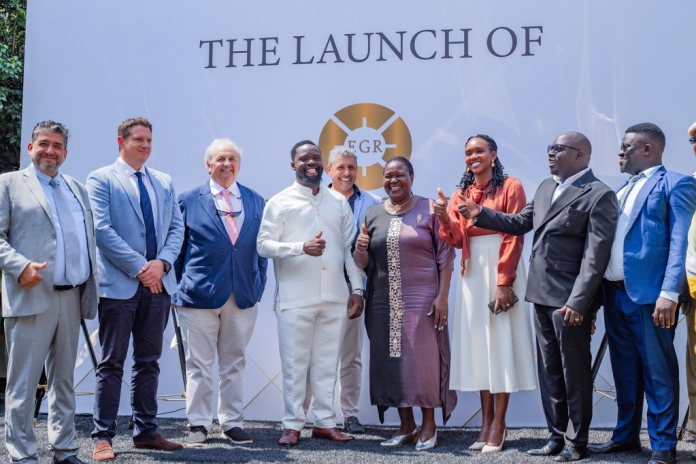
Uganda’s efforts to maximize its mineral wealth for national development have gained momentum with the official launch of Euro Gold Refinery (U) SMC Ltd, the country’s third licensed gold refinery.
The state-of-the-art facility, located in Kampala was commission in a high-profile event attended by the Minister of Energy and Mineral Development, Ruth Nankabirwa and state minister for Minerals, Phionah Nyamutoro.
“Today, with the Minister Nyamutoro, we officially opened Euro Gold Refinery (U) SMC Ltd in Kampala,” announced Minister Nankabirwa on X (formerly Twitter).
She added, “One of the only three licensed refineries in Uganda, this milestone strengthens our minerals sector through value addition, job creation, formalized trade and increases revenue.”
The facility is seen as a significant step in Uganda’s shift from exporting raw materials to refined products, in line with the country’s vision 2040 development blueprint. With a secured 79.8 square-kilometer gold mining concession in Yumbe district, the refinery is licensed to trade, refine and export gold.
Minister Nankabirwa emphasized the refinery’s importance in Uganda’s ambitious plan to grow the economy from a $50 billion GDP through industrialization and sustained resource management.
“As a country, we are ready for responsible mineral beneficiation,” she said.
She added, “Refineries like Euro Gold reaffirm our commitment to transparency, indu8strialization and attracting credible investors for sustainable growth in our mining industry.”
Her colleague, Nyamutoro echoed the message of inclusivity and empowerment.
“The ministry shall offer all the necessary support to see that more citizens are directly involved in mineral beneficiation, “she said.
The Euro Gold Refinery is also expected to benefit over 400,000 Ugandans employed in artisanal and small-scale mining, with a ripple effect on nearly two million people who depend on the sector indirectly. The facility promises a transparent and regulated platform for miners to trade their gold , providing a safer alternative to exploit and illicit networks that dominate the informal economy.
Additionally, the refinery is aligned with the Bank of Uganda Domestic Gold Purchase Programme aimed at boosting foreign reserves by allowing the central bank to buy refined gold locally.
During the launch, Bernard Feni, the refinery’s Director presented Nankabirwa with refined gold samples symbolizing appreciation for her ministry’s support and the refinery’s pledge to innovation and excellence.
As the country takes firmer control of its resources, the commissioning of Euro Gold Refinery marks a new chapter in value addition and economic transformation through responsible mineral development.
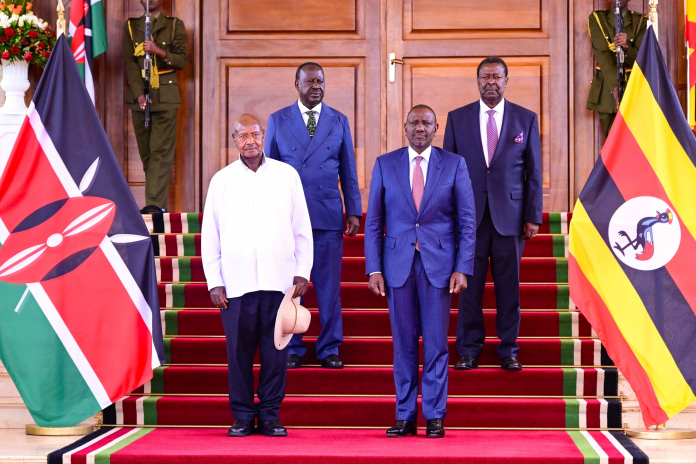
Presidents Museveni and Ruto of Uganda and Kenya respectively, are joined by former Kenyan Prime Minister Ralia Odinga and Cabinet Prime Secretary Musalia Mudavadi after singnal several trade pacts in Nairobi.
Ugandan President Yoweri Museveni and Kenyan President William Ruto have acknowledged that trade restrictions among East African Community (EAC) member states are hindering the region’s economic progress.
In a joint press statement yesterday at State House Nairobi, the two leaders voiced concern over partners’ reluctance to fully open markets to one another, a practice they said perpetuates a cycle of barriers. Their discussions covered trade, security, and regional peace, occurring amid a surge in non-tariff barriers (NTBs) that suppress the region’s trade potential by nearly three times its capacity.
President Museveni urged the region to “wake up” and make “rational” decisions about trade and the economy. He highlighted Uganda’s landlocked status, along with South Sudan, Rwanda, Burundi, Central African Republic, Chad, and Ethiopia, questioning the effectiveness of leadership that doesn’t prioritize market access for goods and services.
“If you are not solving the issue of access to the market… how will you solve that?” Museveni posed at the press briefing. “Whoever is president, you will solve that. When you produce goods and services, the next question is who buys? If you don’t answer that and you are a leader…the future is very bleak. I am glad the region is waking up.”
President Ruto said their talks focused on “persistent Non-Tariff Barriers (NTBs) that hinder the flow of goods and frustrate the objectives of regional integration under the EAC framework.” While specific countries weren’t named, the meeting followed Tanzania’s move to ban foreigners from 15 “small business” economic activities and reintroduce an industrial levy on goods from partner states, moves condemned by the private sector.
Despite internal squabbles, including ongoing trade disputes between Kenya and Uganda over products like milk and poultry, Ruto affirmed the EAC’s role as a model for regional integration. “We emphasise the centrality of unity, economic convergence and shared prosperity as guiding principles for deeper integration,” he said.
According to the EAC secretariat, intratrade among members rose by 9.35% in 2024 to $15.2 billion (about Shs54.2 trillion), making up 12.17% of the total trade volume. However, experts from the East African Business Council suggest this could reach 60% if member states fully implemented common external tariffs and eliminated NTBs, potentially unlocking $63.4 billion (about Shs226.1 trillion) in regional trade.
The two presidents stressed the need for principled, practical, and timely resolution of these barriers, citing their direct impact on livelihoods, especially for farmers and small traders. A Joint Monitoring Committee (JMC) is scheduled for a mid-term review in October to address cross-border trade issues.
During Museveni’s visit, the leaders reaffirmed their commitment to strengthening regional institutions and advancing EAC objectives: the Customs Union, Common Market, Monetary Union, and ultimately, Political Federation. They also signed eight new agreements covering trade, energy, mining, tourism, agriculture, animal industry, fisheries, aquaculture, investment promotion, and transport. This includes an MoU for cooperation between the Kenya Bureau of Standards and the Uganda National Bureau of Standards to enhance scientific and technical capacity.
The leaders also reiterated their commitment to regional peace and stability, agreeing to close collaboration in conflict resolution efforts.
President Ruto announced a major industrial initiative: “Kenya and Uganda have agreed to establish the largest steel factory in the region. This joint project will reduce our reliance on steel imports and allow us to produce for export.” President Museveni reiterated his call for East Africa and the wider continent to consolidate markets and strengthen local production, drawing parallels with the United States’ prosperity through its large market. He also reaffirmed Uganda’s commitment to resolving the Migingo fishing issue.