Stanbic Bank
Stanbic Bank
19.8 C
Kampala
Stanbic Bank
Stanbic Bank
Home Blog Page 1391

Sultan of Sokoto, Kabaka of Bugunda call on traditional leaders to come together to help keep girls in school

Kabaka Muwenda Mutebi

Assembling leaders from across the continent to champion initiatives for keeping girls in school

ABUJA, Nigeria, January 15, 2019/ — The Sultan of Sokoto (Nigeria), His Eminence Muhammadu Sa’ad Abubakar III, together with The Kabaka of Bugundu (Uganda), His Highness Ronald Edward Frederick Kimera Muwenda Mutebi II, today, chaired the ‘Keeping Girls in School Summit’; a convening of African leaders, traditional rulers, religious heads, youth groups, advocates and thought leaders, in Abuja, Nigeria.

The two-day event brings together influential traditional and religious leaders from across the continent to discuss the critical issue of keeping girls in school to complete primary and secondary education (i.e. 12 years of education) and find solutions from within the rich, diverse cultures and values of Africa’s thought leaders. With poverty being one of the key drivers of keeping girls out of school, the Summit also seeks to promote incorporating in-school skills that generate income.

For decades, African governments and international development partners have been trying to improve and reduce suffering as a result of pregnancy and child birth. Very few improvements have been recorded in the health of women and children, despite studies showing that the health of children substantially improves when the mother is educated. Completion of secondary education by girls has been found to significantly improve not only maternal and child health, but women’s decision-making, as well as their ability to earn a living; thus improving the health and nutrition of families and communities. This undeniable link between the education of the mother and health and development outcomes of families, shows that the future of African families is dependent on the education of the girl.

The Summit provides a platform for community leaders to share ideas and best practices and develop strategies and networks to keep girls in school. It also serves as a means to sensitize and equip these leaders with the right skills to motivate parents and care givers to be deeply committed to ensuring all girls in their constituencies complete at least 12 years of education.

Speaking at the event, The Sultan of Sokoto, His Eminence Muhammadu Sa’ad Abubakar III called on all traditional and religious leaders on the continent to focus on the development of their communities; stating, “A key factor in the development of our communities is the education of our girls.”

He further stated, “I believe traditional and religious leaders will lead in shaping the future of Africa by ensuring all girls complete secondary school education and learn life and livelihood skills in the process.”

In attendance were His Excellency, Muhammadu Buhari, President of the Federal Republic of Nigeria, The Emir of Kano (Nigeria) His Highness Muhammadu Sanusi II who presented a lead paper titled “Perspective on Development in Africa – population, education and investment”; The Emir of Argungu (Kebbi state, Nigeria) His Highness Alhaji Samaila Mera; The Nnabagereka of Buganda Queen Sylvia Nagginda; The Asantehene of Asante Ghana,; Archbishop of Abuja, Cardinal John Onaiyekan; Sheikh Sheriff Ibrahim Saleh ; Queen Mother of the Asante, Her Majesty, Nana Ama Konadu; Sultan of Zinder (Niger Republic) His Highness, Alh. Aboubacar Sanda as well as representatives from international organisations such as the Children’s Investment Fund Foundation (CIFF), the United Nations International Children’s Emergency Fund (UNICEF), the United Nations Educational, Scientific and Cultural Organization (UNESCO) Nigeria, the United Nations Population Fund (UNFPA), the Department for International Development (DFID) and others. Also in attendance were representatives of various ministries, departments and agencies in Nigeria including the Minister of the Federal Capital Territory (FCT), Muhammad Musa Bello and the Minister of Education, Mallam Adamu Adamu who in his remarks reiterated the importance of girls’ education.

The conference gives the attending traditional and religious leaders the opportunity to reflect and come up with ideas on how they would contribute to the movement of keeping girls in school in their communities by increasing enrolment, retention and completion of school as well as ensuring girls acquire life and livelihood skills. This initiative would be amplified through the support of gender and youth focused groups and organizations.

African Youth Groups will support the traditional and religious leaders by amplifying the initiative through encouraging the youth to mentor and actively participating in promoting Keeping Girls in School in their communities. The Initiative also brings together African female leaders who will use their influence to promote keeping girls in school; serving as mentors and role models in their communities

Following the conference, it is envisioned that traditional and religious leaders will continue to have a platform for regular engagement and knowledge-sharing on keeping girls in School in Africa.

About Keeping Girls in School:

Keeping Girls in School is an initiative aimed at starting a social movement in Africa that will rapidly set the stage to leap frog improvement in maternal and child health and the status of women and girls in Africa. This initiative will engage and support traditional and religious leaders who shape social norms, culture and behaviour of a mass majority of people in Africa, regardless of class, religion or gender, to develop strategies and solutions from within and use their positions to ensure African girls finish at least twelve of year of school.

Stories Continues after ad

Mike Mutebi, Gaddafi Gadinho win UPL December awards

Mike Mutebi recieiving his accolade.

The 2018/19 StarTimes Uganda Premier League monthly Awards for December 2018 took place today morning at Kati Kati restaurant in Kampala.

Onduparaka FC midfielder Gaddafi Gadihno and Kampala Capital City Authority (KCCA) FC manager Mike Hillary Mutebi were named the Pilsner player and coach for the month of December 2018 respectively.

Gadaffi beat SC Villa attacking midfielder and league’s current top scorer Bashir Mutanda to the top accolade. The Caterpillars playmaker won the Pilsner man of the match award twice in the same month compared to Mutanda’s one.

Mike Mutebi beat URA manager Sam Ssimbwa to the Manager of the month for December 2018.

Both Gadaffi and Coach Mike Mutebi each walked away with a reward of one million Ugandan shillings.

This is the third time the awards have taken place this season since their inception in October 2018.

Mbarara City football club midfielder Paul Mucureezi was crowned the Pilsner StarTimes Uganda Premier League player of the Month for November and their manager, Charles Livingstone Mbabazi, was voted the Pilsner StarTimes Uganda Premier League Coach of the Month.

Pilsner Lager announced a new partnership deal with the StarTimes Uganda Premier League to award the competition’s best players and coaches for the next three years.

The awards are named ‘Pilsner man of the match award’ and the monthly awards named ‘Pilsner player of the month award’ and ‘Pilsner coach of the month award’.

Stories Continues after ad

Former BoU senior staff Katimbo Mugwanya rejected on Centenary Bank board

Katimbo Mugwanya

Centenary Bank has rejected former Bank of Uganda senior staff Edward Katimbo Mugwanya to sit on its board, following the MPs probe of BoU senior staff over the controversial sale of seven commercial banks which are now defunct.

The Auditor General John Muwanga in his special audit report of Bank of Uganda on defunct banks blamed its current and former staff of liquidating banks without producing reports related to the transactions. Katimbo Mugwanya is the key witness in the closure of the banks and when asked by MPs probing BoU staff to respond to Mr. Muwanga’s report, he has always failed provide convincing answers.

Mr. Mugwanya was both the liquidator of Crane Bank Limited (CBL) and Global Trust Bank Uganda Limited (GTBU) which were respectively sold to Dfcu Bank in January 2017 and July 2014. He worked closely a with another senior BoU staff Ben Sekabira, who was also liquidator of Greenland Bank, now defunct.

Katimbo and former BoU executive director for bank supervision Ms. Justine Bagyenda failed to convince MPs on Parliamentary Committee on Commissions, Statutory Authorities and State Enterprises (COSASE) on insolvency of CBL. They also failed to produce reports on the closure of the two banks.

BoU while exercising its powers under Section 87(3), 88(1) (a) & (b) of the Financial Institutions Act 2004, took over the management of Crane Bank Limited and claimed to have put Shs478 billion before selling it to Dfcu Bank at Shs200 billion, paid in installments. Then officials have failed to account for the money.

The­­­­­ main reason why the Bank of Uganda took over the management control of Crane Bank was because “it lacked sufficient capital and posed a systemic risk to the financial system.”

Stories Continues after ad

37 summoned for 2019 Netball World Cup preparations

Uganda-she-cranes

The Netball World Cup is exactly six months away. The tournament is scheduled for July 12th-21st at the Echo Areno in Liverpool, England.

And in a bid to start the preparations early, the Uganda Netball Federation through their technical department headed by William Mwanja listed a pool of thirty seven (37) locally based players.

The listing of players was done by coaches of different clubs in the league including She Cranes coach Vincent Kiwanuka during a meeting at the National council of Sports in Lugogo on Saturday, January 12.

It should be noted that the list is subject to revision depending on the budget of the federation as well as the availability of the players.

There will be another technical meeting on Wednesday, January 16 to review the list, and also the budget for the preparations.

The team also recently played England in the Vitality International Series to gauge their strength against their World Cup group opponents. She Cranes lost the series 3-0.

Uganda She Cranes are among the sixteen countries and are in group D alongside Samoa, England and Scotland.

The 2019 Netball World Cup will be the fifteenth staging of the premier competition in international netball, contested every four years. Australia are the defending champions.

Players summoned:

Goal Shooters: Zam Serra (NIC), Stella Oyella (Prisons), Martha Soigi (NIC), Amish (UCU), Kevin Abel (Police) and Brenda Nakibuule (UPDF).

Goal Attackers: Iren Eyaru (KCCA), Rachael Nanyonga (NIC), Vicky Nantumbwe (NIC), Hadijja Nakabuye (Prisons), Ali Kuluthum (Police) and M. Batamuliza (Police)

Wing Attackers: Susan Atino (KCCA), Norah Lunkuse (KCCA), Hope Birugi (Police), Enid Abalo (Police) and J. Nakafeero (Prisons)

Centre Players: Ruth Meeme (NIC), Jessica Achan (Prisons), Harriet Babirye (Police), Annet Najjuka (KCCA), Vero Namatovu (KCCA) and Betty Kiiza (NIC)

Wing Defenders: Hindu Namutebi (Police), Fauzia Nakisule (KCCA), Sylvia Nanyonga (Prisons), Irene Mirembe (UPDF), Tausi Mumena (Prisons) and Florence Adunia (NIC)

Goal Defenders: Lillian Ajio (Prisons), Joan Nampungu (NIC), Wycline Nantweta (KCCA) and Irene Akello (KCCA)

Goal Keepers: Stella Nanfuka (Prisons), Muhayimina Namuwaya (NIC), Shaffie Nalwanja (KCCA) and Nusura Sebbi (Police)

Stories Continues after ad

Kadaga to corrupt officials: Don’t expect protection from parliament, we shall expose you

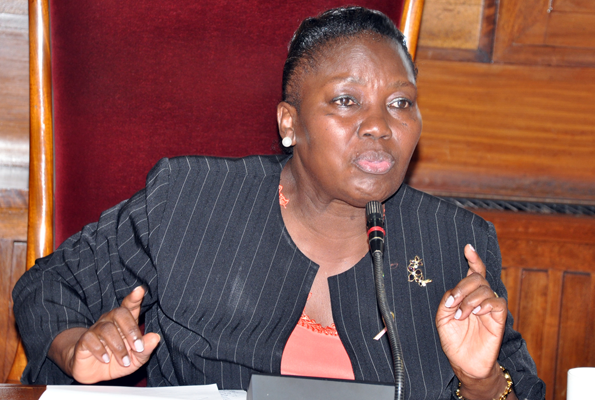
Speaker Rebecca Kadaga

The Speaker of Parliament, Rebecca Kadaga, has lashed out to government officials who have occasionally tried to stop her from speaking about corruption saying, she will not retard from fighting the evil vice that is eating up the Country.

Speaking at the opening of parliament week, Kadaga said there are people in this country who think when you belong to certain political party, you should not speak about corruption and other evil things lamenting that the move tarnishes the image of the country.

She said they believe that if you are leader, you should not speak about corruption, you should not speak about corruption that you are spoiling the name of the party, name of the country.

“I did tell members last year when a complaint about the harassment of Ugandans on Lake Victoria by the army, there is a minister who came to my office to tell me that I should stop talking about the army,” she narrated. adding “I said what do you mean by stop talking about the army, he said am spoiling their name, I told him you can tell them to stop their atrocities then I stop talking and I chased him out of my office,” she said.

she further explained “Can you imagine someone coming to threaten the Speaker, I want to just say I will not stop speaking about corruption, I will continue speaking about atrocities,” She said

As a leader in Uganda she said, “We have no common agenda to commit atrocities, we have never had an agreement on that issue, and we have no common agenda to be corrupt and those who are corrupt, they are corrupt in their individual capacity and they should not expect protection from this house because we shall expose them until they go where they deserve,”

The 2019 parliament Week is premised on the theme ‘Championing accountability to improve service delivery’, with the objective of sharing information about Parliament with its stakeholders.

Stories Continues after ad

Increase budget for PWDs- Gender Minister

Peace Mutuzo

The Minister of State for Gender and Culture, Peace Mutuzo has called on Parliament to consider approving the proposed budget increase for Persons With Disabilities (PWDs).

She said that the current budget of Shs2 billion is insufficient and cannot support the 12.8 million PWDs.

“In our framework, we propose that this budget should be increased to shs12 billion. This money will support the councils for PWDs to be able to register PWDs to enable us effectively and efficiently plan for them,” said Mutuzo.

Speaking at the Third Annual Parliament week 2019 activities, Mutuzo said her ministry is working with the Ministry of Education and Sports to ensure that special interest and special needs education centres are established in every region to increase access to education for children with disabilities.

“This is what the Ministry of Education is intending to do at least within the next financial year,” said Mutuzo.

The Member of Parliament representing PWDs in the Central Region, Safia Nalule noted that people living with albinism still face the challenge of access to education and sunscreen among others. She added that people with albinism are prone to trafficking and sacrifice.

She said that in a bid to protect the rights of people living with albinism, a private member’s Bill titled, “The protection of the rights of persons with albinism Bill, 2018 has been drafted”.

“I request that we scrutinize this Bill and make our contributions before I seek leave of Parliament to allow me introduce this Bill,” said Nalule.

She noted the need to organised international conferences aimed at bringing together stakeholders to discuss strategies to improve the lives of persons living with albinism.

People living with albinism called on the Ministry of Education and Sports to give students with albinism extra time during national examinations.

The Executive Director, Uganda Albino Association, Jude Ssebyanzi said that given their visual inaccuracy, persons living with albinism cannot read as fast as other students.

“We need at least 30 extra minutes during national examinations so that we can compete with the rest of the students,” said Ssebyanzi.

He also asked the Ministry of Education and Sports to ensure that students with albinism are given front seats in classrooms and reading material with bigger fonts.

The Commissioner, Physical Education at the Ministry of Education and Sports, Lamex Omara Apita promised that the Ministry of Education will discuss the issues raised.

“As a Ministry, we do pursue the laws of the land and policies regarding persons who are marginalized. We shall do the same for persons with albinism within our means,” said Omara Apita.

Parliamentary Commissioner, Cecilia Ogwal who represented the Speaker of Parliament, Rebecca Kadaga pledged that the protection of the Rights of Persons with Albinism Bill, 2018 will be handled expeditiously.

She said that people living with albinism need to be given hope, courage and absorbed into the community.

“People with albinism are living in agony. Silent discrimination is worse than open discrimination. Your lives are in danger all the time,” said Ogwal.

Ogwal also called on stakeholders to find ways of mobilizing funds to support Parliament’s efforts to establish a centre for people living with albinism, besides the charity walk.

“The Speaker of Parliament has requested me to remind you that we have so far raised only shs72 million out of the expected shs5 billion. If only our partners could find other avenues of raising this money so that we can make this centre a reality,” said Ogwal.

Stories Continues after ad

Isimba hydropower dam ready for commissioning

Isimba dam

The Uganda Electricity Generation Company Limited (UEGCL), has said Isimba Hydropower Dam is set for commissioning at the end of this month The revelation was made by Mr Simon Kasyate, the UEGCL Corporate Affairs’ Manager,

All the dam’s four Kaplan turbine generator units were running by Friday last week when UEGCL board of directors concluded their routine appraisal of the project.

The appraisal was led by the chairperson, Eng. Proscovia Njuki. “We have written to the President, inviting him for the commissioning of this project on January 24. We are still waiting for response from him,” Mr Kasyate said.

He said commercial production and trade of power from Isimba dam will begin in March.

“That is when our commercial rates and charges will be applicable,” he said.

In April 2015, China International Water & Electric Corporation under UEGCL’s supervision, commenced the construction of the $567.7million (Shs2.1 trillion) Isimba hydropower

Tests on the functionality of the generator units started in December last year with Unit 2 and subsequently the rest were carried out until last week.

Attachments area

Stories Continues after ad

Airtel seeks to buy Telkom Kenya in bid to catch up with Safaricom

Airtel

Bharti Airtel has commenced talks with view to buying out Telkom Kenya. Sources in government say the talks involve Helios, the majority shareholder, and top officials from both the ministry of Information, Communications and Technology as well as Telkom Kenya.

Bharti Airtel chairman Sunil Bharti Mittal is in the country to take part in the talks. Bharti Airtel initiated the move after a proposal to merge the two telcos in order to take on market leader Safaricom collapsed last year.

President Uhuru Kenyatta is also said to be keenly following the matter. The deal is expected to be completed by the end of this quarter, according to sources.

Helios Investment Partners, an Africa-focused, London-based equity fund, owns 60 per cent of Telkom Kenya, which it acquired from France’s Orange in 2016. The Government owns the other 40 per cent.

Both Airtel Kenya, a subsidiary of Indian-based Bharti Airtel and Telkom Kenya have long been seeking to have Safaricom declared a dominant player to no avail.

M/S Analysys Mason revealed Safaricom, which was tasked by the Communications Authority of Kenya to conduct a Telecommunications Competition Study, last year concluded that Safaricom enjoys an upper hand based on strong presumption of dominance based on market share of subscribers, volume and value confirmed by analysis of qualitative factors. It, among others, proposed a reduction of M-Pesa charges.

The report showed that apart from boasting of more subscribers, minutes and revenue, Safaricom also benefits from a very high share of on-net traffic, paying out less than Airtel.

It also recommended prohibition of on-net discounts and individually tailored loyalty schemes so as to reduce the barriers to entry for smaller players.

Its proposal to split Safaricom from M-Pesa, its most profitable unit, was flatly rejected by the government with ICT Cabinet Secretary Joe Mucheru saying it would have been tantamount to punishing success.

Safaricom, Airtel and Telkom have, however, since implemented M/S Analysys Mason’s proposal for mobile money interoperablity by agreeing to allow subscribers transfer cash without incurring any charges.

The sector has been difficult to manoeuvre for small players with Yu Mobile being forced to cease operations in 2014, selling off its assets and subscribers to its competitors, Airtel and Safaricom for around US $100 million from its parent company, the Indian group Essar.

The deal saw Airtel take over Yu’s 2.7 million connections, while Safaricom took control of Yu’s network.

Safaricom PLC boasts of 64.2 per cent of the market share while Airtel Networks has 22.3 per cent and Telkom Kenya 9.0 per cent, according to latest statistics from Communications Authority of Kenya.

Stories Continues after ad

Uganda’s oil and why U.S. companies face long odds in Africa as they compete against Chinese loans

US Ambassador to Uganda Deborah Malac

Growing up in suburban Ohio, Rajakumari Jandhyala never imagined she would end up in the oil business, much less on the front line of America’s global competition with China. She spent two decades as a policy adviser on Africa, most recently as an aid official in the Obama administration.

But in 2016, she heard about a call for proposals to build an oil refinery in Uganda that could be the largest in East Africa, and she put together a bid. She landed an investor in Kenya. She recruited oil and gas executives from General Electric. An Italian contractor joined the group of companies that formed a consortium, too.

The main problem was the big advantages enjoyed by the competition: two Chinese energy companies, one of them a state oil giant with Beijing’s support.

China is aggressively seeking investments and contracts around the world, and perhaps nowhere is this more visible than Africa, where Chinese companies have won contracts to build dams, roads, stadiums, airports and railways. In country after country, governments have borrowed heavily from China to pay for these projects.

China’s investments in Africa are central to President Xi Jinping’s signature Belt and Road Initiative, a trillion-dollar program to build infrastructure and extend Beijing’s influence around the globe.

The Trump administration has accused China of engaging in predatory lending aimed at trapping countries in debt, acquiring strategic assets like ports, and spreading corruption and authoritarian values. In response, the United States has announced an effort to help American businesses compete.

“We’re streamlining international development and finance programs, giving foreign nations a just and transparent alternative to China’s debt-trap diplomacy,” Vice President Mike Pence said in a speech in October. The White House has also unveiled an Africa strategy aimed at China.

The idea is to challenge China’s infrastructure program while also pushing back against its trade practices, cybertheft and expanding military facilities and presence in the Pacific and Indian Oceans. But the threat posed by the Belt and Road Initiative to American interests is debatable, and it is unclear how far the United States should — or can — go to compete. The funds set aside by the Trump administration amount to just a fraction of Beijing’s commitment.

Ms. Jandhyala’s bid for the $4 billion refinery project was a case study in the long odds the United States faces as it tries to go head-to-head against China in infrastructure development — and in the conditions under which American companies could prevail.

The competition came to a head early last year, when Ms. Jandhyala and other consortium executives faced off in a conference room above Lake Victoria against Ugandan officials backing the Chinese companies. Uganda’s strongman president for the past 33 years, Yoweri Museveni, had called the meeting in his compound to try to resolve the bitter dispute.

In a sign of the intense infighting, Uganda’s domestic intelligence agency investigated three officials believed to favor the American consortium and questioned its ability to finance the project, according to a copy of the agency’s report reviewed by The New York Times.

In an April speech, Mr. Museveni praised Western companies for finally “waking up” to Africa. But he also noted that “the Chinese have already woken up — they are really, really, really very active and fast.”

“So why not take advantage of both?” he asked.

Scramble for a Prize

The African Great Lakes have long tempted outsiders seeking riches, including the European nations that began plundering the continent in the 19th century. But in 2006, four decades after the end of British rule in Uganda, a prize untapped by the colonialists was discovered: oil deposits by Lake Albert that are among the largest in East Africa, enough to transform parts of impoverished Uganda.

Mr. Museveni’s government negotiated for years with foreign companies before agreeing to a plan for extraction and the construction of a pipeline southeast to the Tanzanian coast, where the oil could be shipped around the world.

But Mr. Museveni also insisted on building a refinery in Uganda to ease the region’s dependence on imported fuel. The contract went to Russians at first, but they withdrew.

In Africa, American businesses have been largely absent while Chinese companies have put down roots, nurturing powerful allies through both legitimate and illegal means. Some target individual African officials and their family members with cash bribes or deals for services, like legal representation or insurance.

Ms. Jandhyala, 53, heard about the plans on a scouting trip to Uganda in 2016, her first visit since working for the Ugandan prime minister’s office a decade earlier as an adviser on a peace process to end an insurgency.

From a shared work space in Washington, she recruited partners for what she hoped would be the first project for Yaatra Ventures, which she founded in 2015 to invest in African infrastructure.

“With G.E., here was an American company that could bring capabilities,” she said.

She was not alone in sensing the opportunity. Uganda received more than 40 proposals to build the refinery.

Leading one bid was Dongsong, a private hydropower and mining company in the southern Chinese city of Guangzhou. A proposal made outside formal channels came from the China National Offshore Oil Corporation, or CNOOC, the country’s third-largest state oil company.

Both companies had offices in Kampala, the capital of Uganda, and had worked closely for years with the Ministry of Energy and Mineral Development. Dongsong was building a $620 million phosphate mine and fertilizer factory in eastern Uganda. CNOOC was one of three foreign companies that had struck deals to extract oil.

But their proposals included tough terms, according to interviews and an internal government assessment reviewed by The Times.

Dongsong wanted a sovereign loan guarantee — making the Ugandan government responsible for the project’s debt if it failed — and insisted that 60 percent of labor and materials come from China. CNOOC, meanwhile, wanted greater access to the oil fields themselves.

The American consortium tried to set itself apart, proposing that Uganda’s state oil company and other East African nations own up to 40 percent of a new private company that would build and run the refinery. The consortium would finance the project by selling shares to investors as well as by borrowing, but it was not asking for a sovereign guarantee.

The American proposal meant less debt risk for Uganda, but there were questions about the consortium’s ability to raise the money. The Chinese bids, by contrast, promised immediate financing from Chinese state banks. And at the energy ministry, officials were longtime proponents of Chinese companies.

“At the end of the day, we are developing a lot of capital-intensive projects,” said Robert Kasande, a top energy official. “We need the financing. The Chinese can do that.”

‘Remember My Name’

Ugandan soldiers with Kalashnikov rifles stand guard at Dongsong’s headquarters in Kampala, a hilltop villa with a swimming pool and sweeping views of the capital. Lü Weidong, the company’s founder, flies in several times a year.

“My biggest ambition is that when I walk into Ugandan villages, villagers line up and welcome me with applause,” he said at his China office, seated behind a rosewood tea table inlaid with carved dragons. “I hope to drive the industrial development of Uganda, and let the history of East Africa and Uganda remember my name.”

Slim, bald and vegetarian, Mr. Lü personifies Beijing’s “going out” strategy, which encourages Chinese businesses to establish footholds around the world. After focusing on domestic hydropower projects, Dongsong sought opportunities in mining overseas.

Mr. Lü, 50, a former bank manager who belongs to a political advisory body controlled by the Communist Party, said he ventured to Uganda after a chance meeting with the country’s consul general in Guangzhou. Soon, he got the mine deal. “Every decision is made by heaven,” he said.

But Dongsong’s presence in Uganda has been laced with controversy.

In 2016, the Ugandan inspector general’s office concluded that its mining license had been acquired through fraud and recommended it be revoked, according to the inspector general’s report. (Officials never did.)

Dongsong has also been accused of fraud in a lawsuit by one of Mr. Lü’s early partners in Uganda, and it is mired in property disputes around the mine. In 2017, two finance ministry officials were arrested on suspicion of demanding and accepting bribes from Dongsong.

The company has faced problems in China as well. A court in Hebei Province said last year that Mr. Lü had set up a shell company to pay bribes to two state bank officials who were convicted on corruption charges.

Mr. Lü denies any wrongdoing, and his legal problems do not appear to have bothered Ugandan officials. They put Dongsong’s refinery proposal on their short list and traveled to Guangzhou in 2017 to conduct due diligence interviews.

Mr. Lü impressed the team with slick presentations and punctual shuttle buses, an official on the trip said. The team noted that Dongsong’s consortium included a Chinese state company with experience building refineries in Africa.

Dongsong also secured a promise of financing from one of China’s largest state banks — as long as Uganda guaranteed the loan.

The model is common across Africa, where loans from Chinese state banks have financed a construction boom, largely by Chinese companies and workers. These loans generally have tougher termsthan World Bank aid packages. Though interest rates can be low, recipients must repay the loans much faster, according to AidData, a research center at William and Mary, a university in Williamsburg, Va.

That has left some nations at high risk of debt distress, analysts say. In Kenya, for example, a Chinese bank could take over a port if Nairobi defaults on a $3.2 billion loan for a railway project.

Uganda’s debt burden is manageable, analysts say, though the country has increased borrowing. From 2000 to 2014, it received at least $1.24 billion in Chinese loans, AidData said. In 2015, it agreed to borrow an additional $1.9 billion for two dams to be built by Chinese companies, and it now seeks a $2.2 billion loan for a railway.

Still, Mr. Museveni and other officials appear to be rethinking the nation’s reliance on China. While Western energy companies have also been implicated in Ugandan corruption cases, China took a hit in the most recent big scandal: In 2016, officials uncovered shoddy construction at the two dams, which remain unfinished.

And yet, Dongsong enjoyed unique advantages in the refinery competition.

Since 2013, it has retained Abmak Associates as legal counsel in Uganda, according to corporate filings.

The law firm’s chief executive is Henry A. Kaliisa, the son of Fred Kabagambe Kaliisa, who for more than two decades was Uganda’s most powerful energy official. He lost his job in the fallout from the dam scandal but still wields enormous influence.

Americans in the Arena

The Ugandan team put the American consortium on its short list as well and also flew to Washington. Ms. Jandhyala and a financing partner, Ronald Mincy, hosted them in a shared work space. One official asked them, “Do you have money?”

In an internal report afterward, the team gave Dongsong a higher rating but also recommended inviting the Americans and Chinese to Kampala for parallel negotiations. The government set a date in June 2017.

But Mr. Lü asked whether Dongsong was the preferred bidder and declined to attend or send anyone. The Ugandan officials decided to enter final talks with just the Americans after they appeared.

In a letter to the Ugandan energy minister reviewed by The Times, Mr. Lü responded by threatening to challenge the process.

Around that time, the other Chinese bidder, CNOOC, quietly emerged with a late push to build the refinery and take control of additional oil fields. (CNOOC did not respond to written questions on the project.)

Ms. Jandhyala sought help in Washington.

The Overseas Private Investment Corporation, the American government’s development finance agency, could not commit to the kind of billion-dollar financing offered by Chinese banks, but it provided a letter saying it would consider lending $250 million and providing loan insurance.

“That lent confidence to other people,” Ms. Jandhyala said.

The Commerce Department also determined the project was in the “national interest,” giving the United States Embassy in Uganda permission to lobby for it.

The United States ambassador, Deborah Malac, said she made the case for the American consortium with the energy minister, Irene Muloni, whom she described as resistant. She also spoke to Mr. Museveni a dozen times, she said. Commerce Secretary Wilbur Ross sent two letters and called.

“There were a lot of interested parties beholden to the Chinese who tried to derail the process,” Ms. Malac said.

Among the skeptics was Sam Kutesa, the foreign minister, she said.

Last December, a New York court convicted a representative of a Chinese energy company of paying bribes to African officials, including $500,000 to Mr. Kutesa. In an interview, Mr. Kutesa described the payment as a donation to his foundation and said he did not have a strong view on who should win the refinery project.

In Uganda, all major decisions end up before Mr. Museveni. Officials jockey for his ear, and the president is adept at playing them off one another.

That gave the Americans an opening. Despite naysaying by energy officials, Mr. Museveni liked the idea of balancing the Americans and Chinese in the oil industry, and he was intrigued by G.E.’s involvement, Ugandan officials said.

Last January, he called the meeting at Lake Victoria and forced energy officials to sit down with Ms. Jandhyala and her partners. He then got cabinet approval. The deal was signed in April.

“I think the big lesson is that we have to be aggressive,” Ms. Malac said. “We have to be willing, as the U.S. government, to find our opportunities to advocate on behalf of our companies.”

Abigail Grace, a researcher at the Center for a New American Societywho worked on the White House National Security Council, said American diplomats around the globe should be trained to deal with China issues.

“This example shows that despite the idea that China might prevail, we can win if we get our act together,” she said.

In October, President Trump signed a bill creating a new agency to replace the Overseas Private Investment Corporation and give out $60 billion in financing — double the previous amount, though still a fraction of what China has pledged to spend.

Meanwhile, G.E. has begun selling its stake in the oil field services company in Ms. Jandhyala’s consortium. Its exit could weaken Ugandan confidence in the deal, and there is still uncertainty about the group’s ability to secure financing.

The Chinese appear to have moved on. Mr. Lü said he planned to open a mine in Mozambique. And in September, CNOOC got what it really wanted: Uganda agreed to give it a new parcel to explore at Lake Albert.

At the Beijing signing, Mr. Museveni and Mr. Kutesa smiled as they shook hands with Chinese executives.

Lydia Namubiru contributed reporting from Kampala, and Keith Bradsher from Guangzhou, China. Research was contributed by Ailin Tang from Guangzhou and Shanghai, Luz Ding from Beijing, and Kitty Bennett from Washington.

In October, President Trump signed a bill creating a new agency to replace the Overseas Private Investment Corporation and give out $60 billion in financing — double the previous amount, though still a fraction of what China has pledged to spend.

Meanwhile, G.E. has begun selling its stake in the oil field services company in Ms. Jandhyala’s consortium. Its exit could weaken Ugandan confidence in the deal, and there is still uncertainty about the group’s ability to secure financing.

The Chinese appear to have moved on. Mr. Lü said he planned to open a mine in Mozambique. And in September, CNOOC got what it really wanted: Uganda agreed to give it a new parcel to explore at Lake Albert.

At the Beijing signing, Mr. Museveni and Mr. Kutesa smiled as they shook hands with Chinese executives.

Adopted from the New York Times

Stories Continues after ad

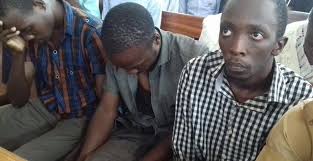
High Court sets date for ISO boss son’s plea bargain option

Brian Bagyenda

High Court Judge, Anthony Ajok has granted an adjournment to allow Brian Bagyenda, the son to the ISO boss’ two co-accused who hadn’t decided on the plea bargaining option to make final decision or go for the full trial.

Bagyenda, Innocent Bainomugisha, a cleaner and Vincent Rwahwire a casual labourer from Kimwanyi zone in Luzira are grappling with charges of murdering Twijukye the then 22year old former student at Ndejje University.

The three were in 2017 produced before Nakawa Court Grade one Magistrate, Annyu Margaret before committing them to High Court IN 2018.

IN High Court, Bagyenda pleaded guilty to the offence, however sought a lighter sentence in exchange for an admission of guilt.

Appearing before Court this morning, justice Anthony Ajok set 21st January for Brian Bagyenda to plead guilty to the offense allowing him a week’s time for conclusion of the terms and processes of plea.

It is alleged that on January 3, 2017, the pharmacist, Brian Bagyenda, invited his girlfriend Twijukye to his apartment in Luzira and on checking her phone on January 4, 2017, Bagyenda found pictures that his girlfriend Twijukye had taken with another man.

This raised jealousy, and with the help of Innocent Bainomugisha and Vincent Rwahwire they suffocated her, put the body in a green Ipsum car and drove to Namanve where she was dumped.

Stories Continues after ad